My Friend Promised Strangers a Ride in My Car Without Asking — AITA for Saying No?

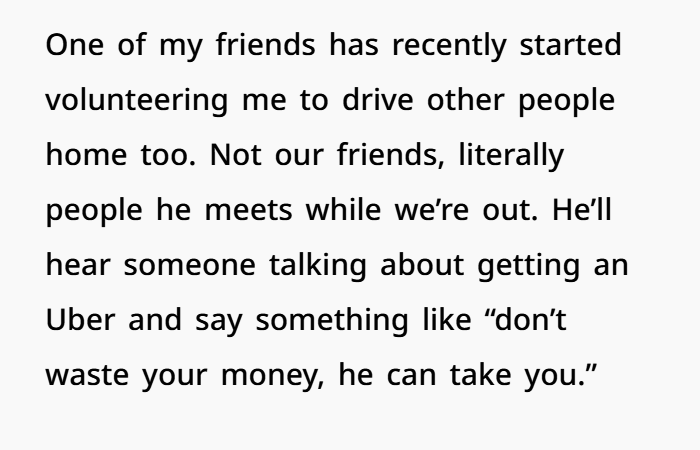
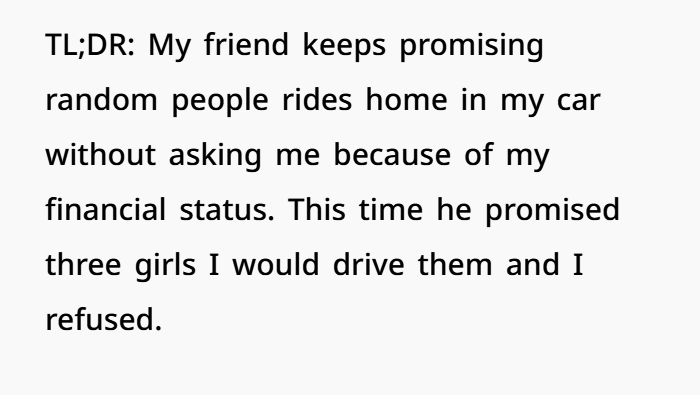
A person shared a problem about being the regular driver in their group of friends. Since they do not drink, they often help by driving their friends home after social events. They do not mind helping people they know, but the situation changed when a friend started making plans for them without asking.
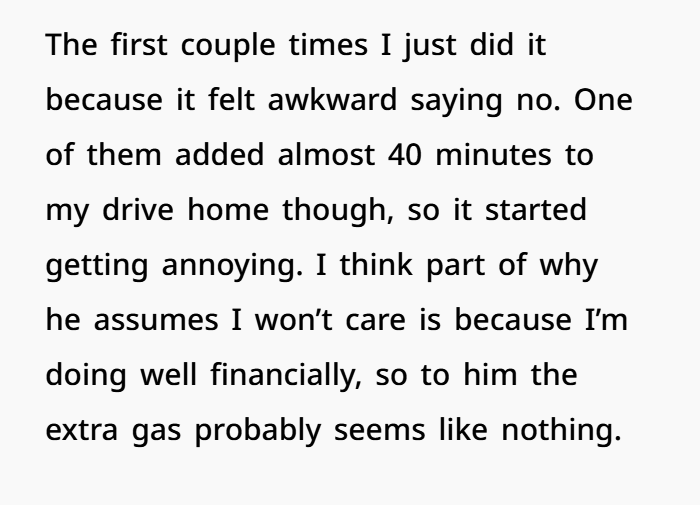
The friend began telling new people that they could get a ride home from the driver. These requests were made without permission. At first, the driver agreed because they did not want to create an uncomfortable moment, but the extra passengers started causing delays and frustration.
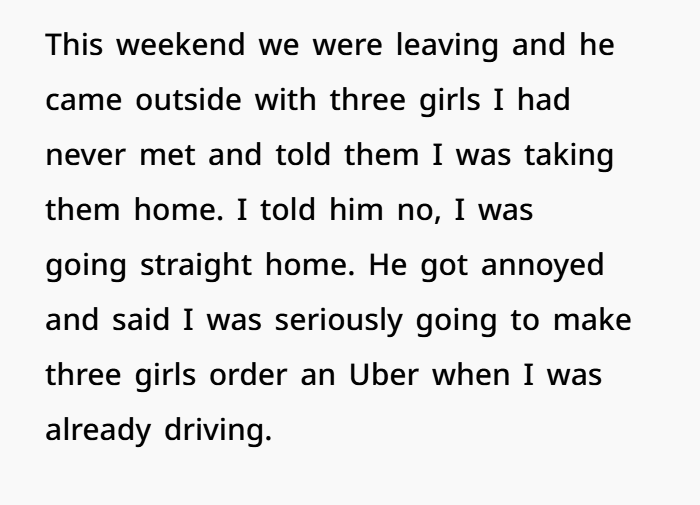
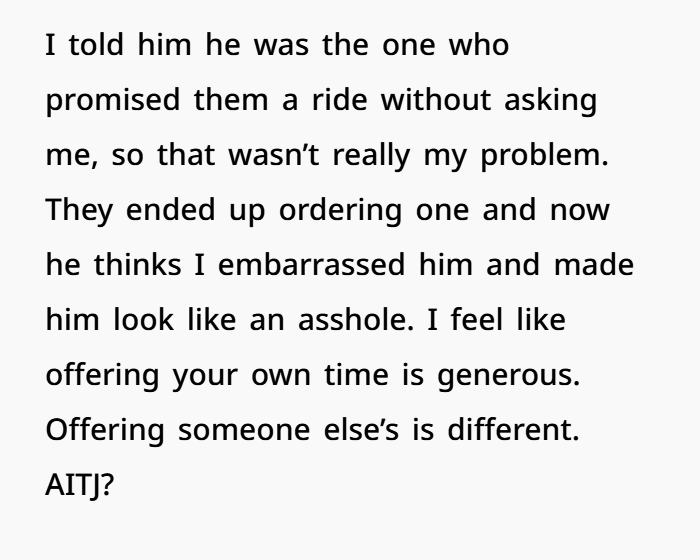
The final problem happened when the friend brought several people over and said they had a ride. The driver refused because they had not agreed to the plan. The friend felt embarrassed, but the driver believed the responsibility was not theirs because the offer was made by someone else.
The disagreement was not only about transportation. It was about respecting personal choices, time, and boundaries. The driver felt that being helpful should always include communication and agreement before making commitments.


Helping Others, Personal Boundaries, and Asking for Permission
Helping people is usually seen as a kind and positive thing. Many friendships are built on trust, support, and doing favors for each other.
A common example is when one person in a friend group offers rides home after an event. This person may become known as the helpful friend who makes sure everyone gets home safely.
However, there is an important difference between offering your own help and allowing someone else to offer your help without asking.
Why Permission Matters
The main issue in situations like this is consent and personal boundaries.
A person who often gives friends rides may be comfortable helping people they know. But that does not always mean they are comfortable driving strangers, making extra stops, taking longer routes, or changing their plans.
Being helpful does not mean someone is available at all times.
Everyone has limits, even when they enjoy helping others.
A Favor Is Still a Choice
Sometimes people assume that a favor is easy because the person has done it before.
For example, a friend might think:
“You are already driving, so giving a few extra people a ride should not be a problem.”
But a favor involves more than money.
Other things matter too, such as:
- Time
- Energy
- Privacy
- Personal comfort
- Safety
- Changes to planned schedules
Someone’s financial situation does not mean their time and effort are automatically available to others.
When Kindness Turns Into an Expectation
People who are generous often say yes because they want to help.
However, over time, others may start expecting that help without asking.
This can create frustration.
For example, if someone always offers rides, friends may begin to assume rides are always available. But the person giving the rides may still want the ability to decide each time.
A healthy relationship includes respect for another person’s choices.
Why Personal Boundaries Are Important
Personal boundaries help people maintain healthy relationships.
A boundary is simply a limit that explains what someone is comfortable with.
For example:
- “I can give my close friends a ride home.”
- “I prefer not to drive people I do not know.”
- “I need to go straight home after the event.”
These boundaries are reasonable.
Setting limits does not mean someone is unkind. It means they are being clear about their own comfort level.
Safety Should Always Be Considered
Giving rides can also involve safety concerns.
Many people have personal rules about driving others, especially late at night or after social gatherings.
A person may consider:
- Who is getting in the vehicle
- Whether the route is safe
- How late it is
- Whether they feel comfortable
Even if someone wants to help, they should have the final choice about who they drive.
The Better Way to Ask for Help
If a friend wants to offer someone a ride, the respectful approach is simple: ask first.
For example:
“Would you be okay giving these people a ride home, or are you ready to leave?”
This allows the driver to make their own decision.
They can say yes if they feel comfortable, or they can say no without feeling pressured.
Respecting Each Other’s Time and Effort
Friendships work best when people appreciate each other’s kindness without taking advantage of it.
A person who helps others is offering a favor, not creating a permanent responsibility.
The person receiving the help should respect that the other person has the right to choose when and how they help.
Final Thoughts
Helping friends and being generous are wonderful qualities, but kindness should always come with respect.
A favor only works when the person giving it has the freedom to choose.
Good communication, mutual respect, and clear personal boundaries help create stronger friendships and healthier relationships.
The Comments Are In