My In-Laws Traveled 24 Hours for Our Wedding—Then Refused to Stay Where We Agreed

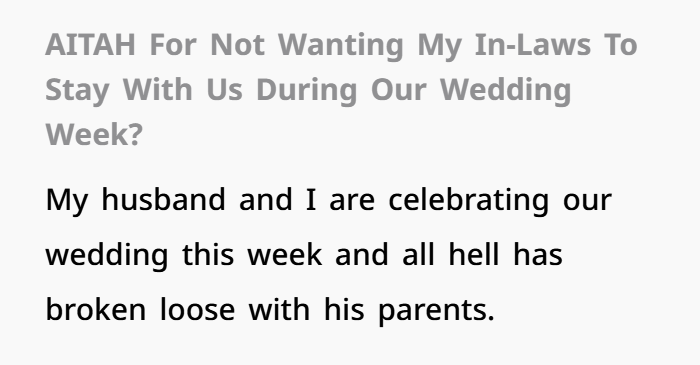
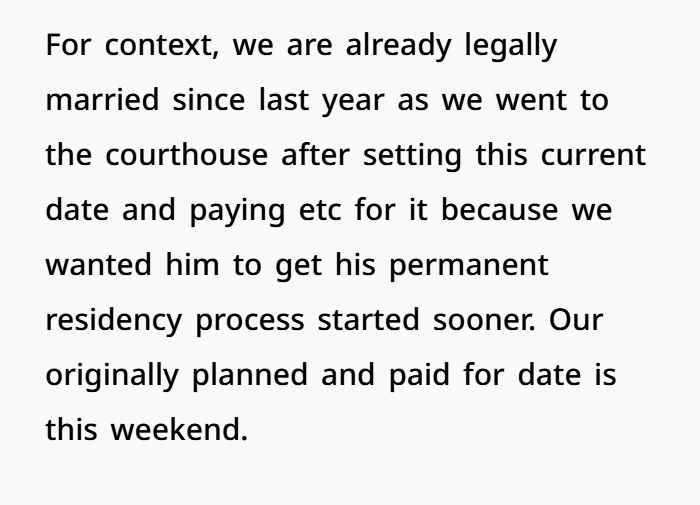
This bride should be enjoying the final days before her wedding, but instead she’s dealing with a stressful family problem. She and her husband actually got legally married at the courthouse last year so they could begin his permanent residency and immigration process sooner. Their bigger wedding celebration is happening this weekend, and both families have traveled a long way to attend.
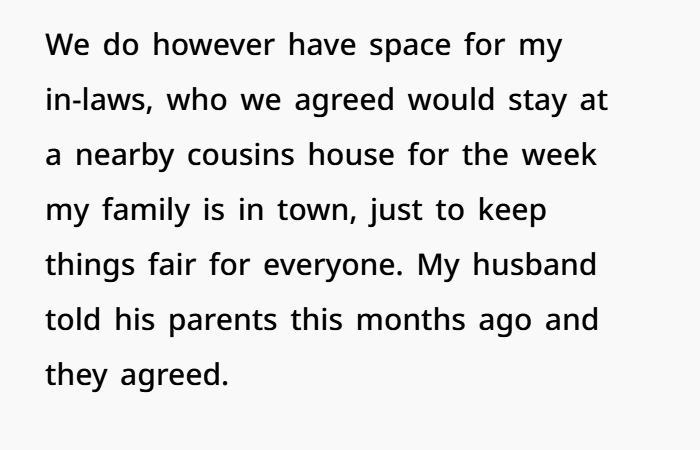
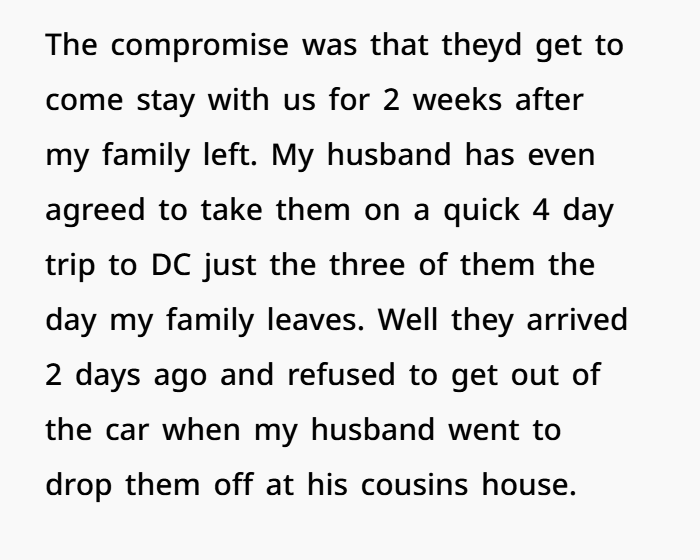
There was already some tension with her husband’s parents because of problems during a previous visit. After an apology, the bride agreed to try again. For this visit, everyone had a plan. His parents would stay with relatives nearby while the bride’s family was in town. Once her relatives went home, the in-laws could stay with the couple for two weeks. Her husband also arranged a separate four-day trip to Washington, D.C., giving him plenty of time alone with his parents.
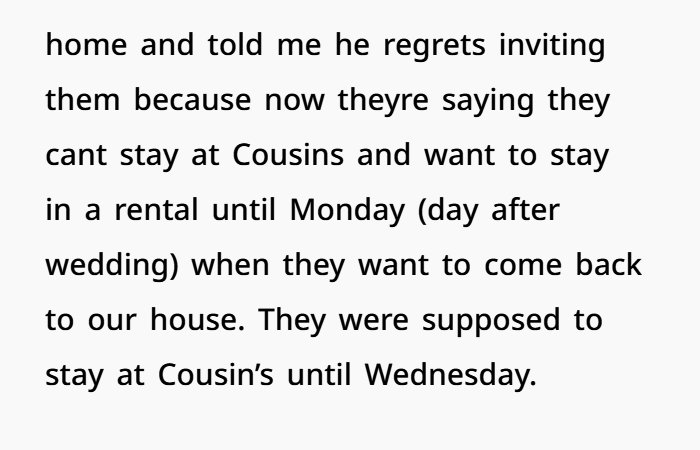
The trouble started as soon as his parents arrived. They didn’t want to stay at the relative’s house, even though the arrangement had been made months earlier. They kept asking to stay with the couple instead. Now they are talking about booking a vacation rental or short-term rental and then moving into the couple’s home immediately after the wedding. That would be earlier than the original plan and would change the couple’s wedding week at the last minute.
The husband is upset with his parents, but the bride is beginning to feel guilty. She wonders if changing the plan would make the wedding easier for everyone. At the same time, wedding planning already comes with travel costs, accommodation, wedding expenses, and plenty of stress. She’s now left wondering if keeping a boundary they all agreed to is reasonable, or if she should give it up just to avoid more family conflict.


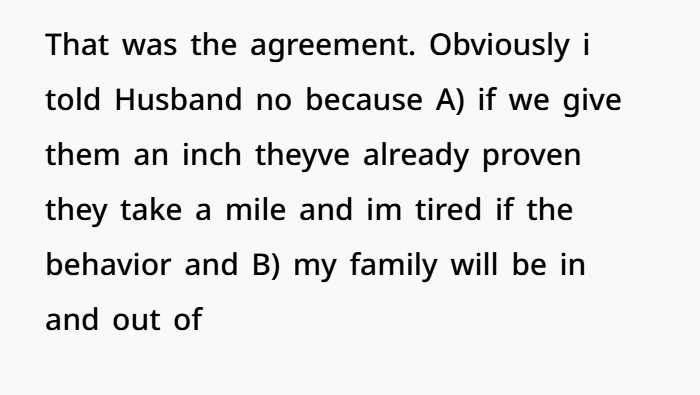
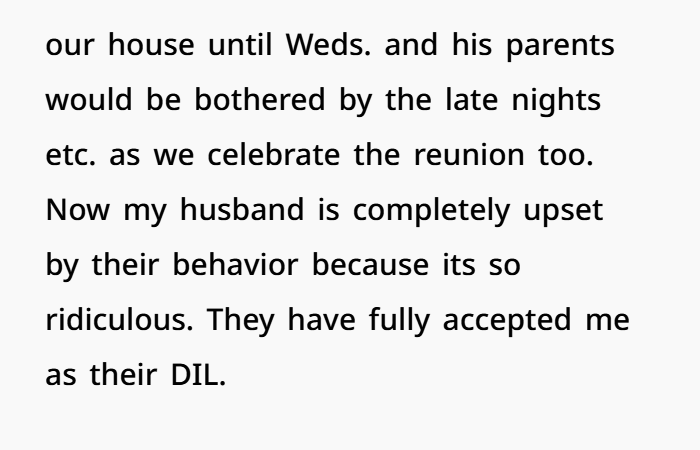

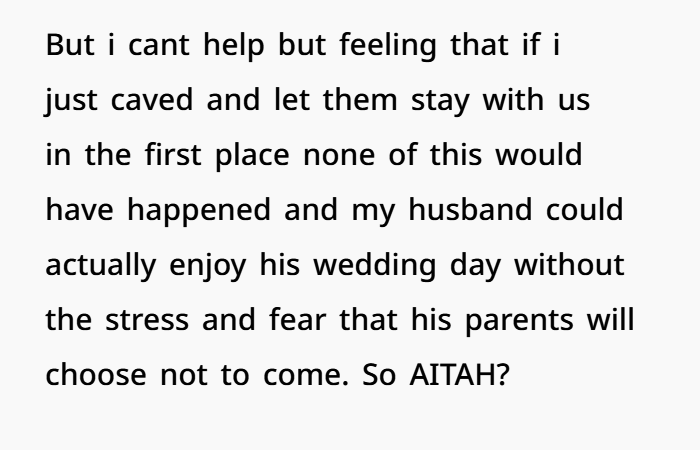
This does not seem to be a simple argument about where the groom’s parents will sleep.
The bigger issue is whether the family should respect a plan that was already agreed on.
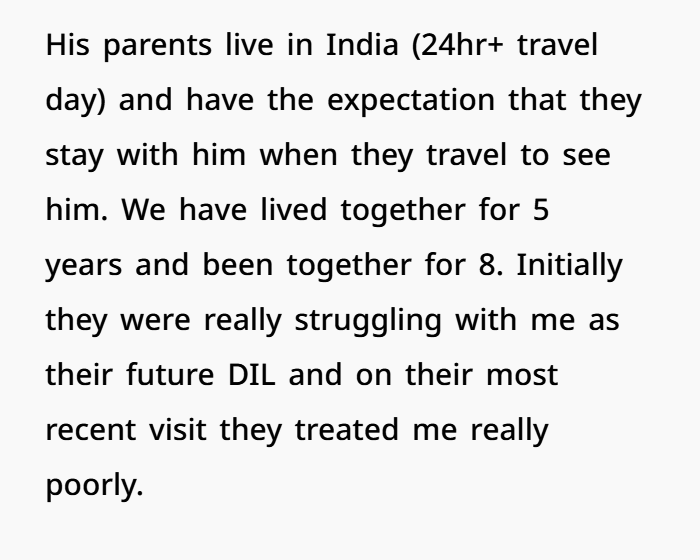
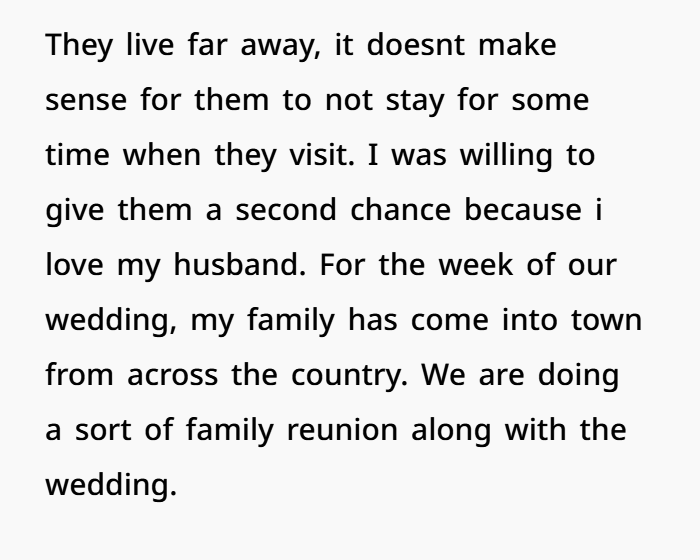
The bride is not refusing to host her in-laws. She and her husband have already agreed that his parents can stay in their home for two weeks after the bride’s family leaves.
Her husband also plans to spend several days traveling with his parents.
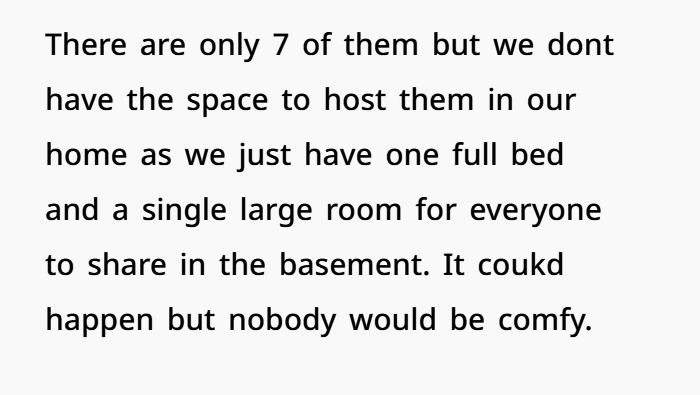
There is only one time when the couple has asked them to stay somewhere else: the busy week around the wedding.
And this was not a last-minute surprise.
According to the story, the parents knew about the plan months before making the trip. They agreed to stay with relatives who live nearby.
That makes a big difference.
The Parents Already Agreed to the Plan
Imagine traveling for 24 hours and finding out after you arrive that you cannot stay where you expected.
Most people would be upset.
But that does not appear to be what happened here.
The family travel and accommodation plan had already been discussed.
The parents knew they would stay with a cousin during wedding week.
The trouble started when they arrived and no longer wanted to follow that plan.
According to the story, they did not want to leave the car when they reached the cousin’s home.
They wanted to go back to their son’s house instead.
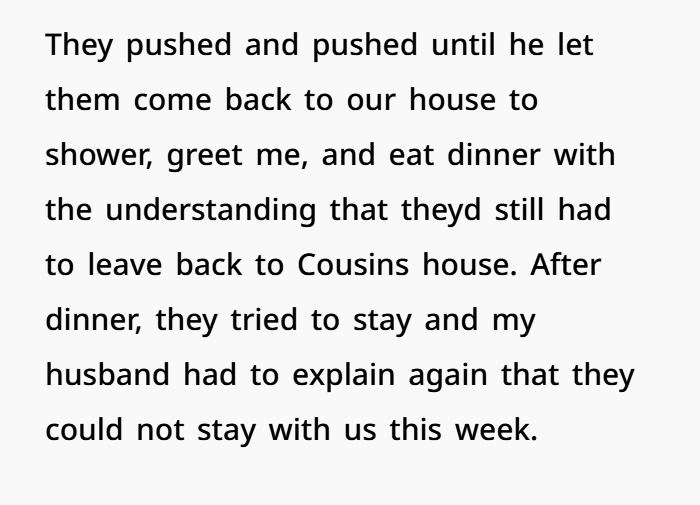
Later, they visited the couple’s home to shower and have dinner. After dinner, they reportedly tried to stay there for the night.
At that point, this became more than a question about a guest room.
It became a question about boundaries.
Cultural Differences May Be Playing a Part
There may also be a cultural difference here.
In many Indian families, spending time with parents and extended family is very important. Hosting family members can be seen as an important part of showing love and respect.
The parents traveled a very long distance for their son’s wedding.
They may have expected to stay with him for most of the trip.
That expectation is worth understanding.
At the same time, the bride may have different expectations about privacy and overnight guests.
This can happen in intercultural marriages.
Two people may grow up with very different ideas about family visits, holidays, household rules, money, childcare, and personal space.
Neither family gets to automatically decide how the married couple should run their home.
The couple needs to create rules that work for both partners.
The Husband Supports the Decision
One of the most important details is that the groom appears to support this boundary too.
This is not simply the bride saying she does not want her husband’s parents around.
Her husband told his parents about the arrangement.
He has also explained why staying at the house during wedding week will not work.
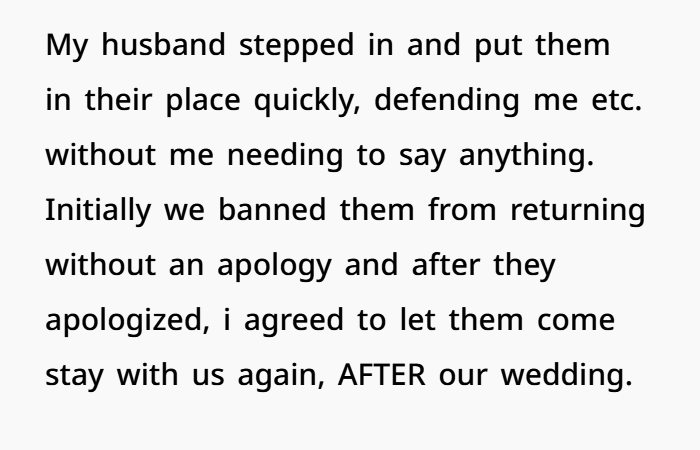
According to the story, he previously spoke to his parents after they treated his future wife poorly and asked them to apologize.
Now he also seems frustrated that they are trying to change an arrangement they had already accepted.
That matters.
The bride should not be made responsible for a decision the couple made together.
Good marriage communication means presenting shared decisions as shared decisions.
The husband can simply tell his parents, “We made this plan together, and we’re going to keep it.”
There is no need to blame his wife.
Feeling Guilty Does Not Mean She Has to Say Yes
It is easy to understand why the bride feels guilty.
Nobody wants a family argument right before a wedding.
She may be thinking that everything would become easier if she simply allowed her in-laws to stay.
In the short term, that might be true.
But it could create a different problem later.
If the couple changes an agreed plan because of enough pressure, what happens the next time they set a boundary?
The parents first agreed to stay with the cousin.
After arriving, they resisted that arrangement.
The couple then allowed them to come to the house to shower and eat.
That small change reportedly became an attempt to stay overnight.
Now another option, such as a short-term rental, is being discussed. Yet there still seems to be pressure to move into the couple’s house sooner.
That is why the bride is worried about giving in.
Healthy Family Boundaries Are Not Punishment
Setting healthy boundaries does not mean someone is being unkind.
A boundary simply tells other people what you are comfortable with.
In this case, the couple is not cutting the parents out.
They can attend the wedding.
They can visit their son.
They can spend time with the couple.
The husband even has travel plans with them.
Most importantly, they will be staying in the couple’s home for two weeks later in the visit.
The only request is that they use different accommodation during wedding week.
That seems like a reasonable limit.
Wedding Week Is Already Busy
There is also a very practical reason for keeping the original plan.
Wedding week can be exhausting.
There are often last-minute calls, guests arriving, transportation plans, appointments, vendor questions, and unexpected changes.
There are also plenty of wedding expenses to manage, including catering, photography, transportation, clothing, decorations, hotels, and other costs.
Good wedding planning is often about reducing unnecessary stress.
Adding unhappy houseguests during one of the busiest weeks of the couple’s lives could make things harder.
The bride’s family will apparently also be coming and going from the house.
Some family members may arrive home late.
If the groom’s parents are uncomfortable with that, the couple could end up dealing with more disagreements inside the home.
A nearby hotel, family home, or vacation rental may give everyone more space during those few days.
The In-Laws Are Allowed to Be Disappointed
This does not mean their feelings are unimportant.
They traveled a long way for their son’s wedding.
They may feel disappointed that they cannot stay in his home during the entire trip.
They may even feel hurt.
Those feelings are valid to express.
They can talk to their son about how they feel.
If they do not like staying with the cousin, they can discuss another suitable accommodation option.
A hotel or rental may feel more comfortable.
But being disappointed does not mean they automatically get to change the couple’s decision.
Both people living in a home should be comfortable with overnight guests.
A useful rule for couples is simple:
Overnight guests need two yeses.
If one partner is not comfortable, another arrangement should be considered.
The Bride Cannot Control Their Wedding Decision
There is also the question of whether the parents will attend the wedding.
If they decide not to attend because they cannot stay at the couple’s house for a few nights, that is their decision.
The bride cannot control it.
They have been offered nearby accommodation.
They will also have another two weeks to stay with their son afterward.
So they are not being excluded from the family visit.
The bride should not feel responsible for every decision another adult makes in response to a boundary.
This Matters Beyond the Wedding
The wedding will eventually be over.
The family relationship will continue.
That is why this situation matters.
Similar disagreements could happen again around holidays, vacations, future visits, overnight guests, children, or childcare.
Money can also become part of these discussions.
Flights, hotels, extended family visits, and long vacations can become expensive. Clear financial planning can help couples decide what they can realistically offer visiting relatives.
The couple should talk about these issues now.
How long can family members stay?
How much notice should overnight guests give?
What happens if one partner is uncomfortable?
Who pays for alternative accommodation?
These may sound like small questions, but clear answers can prevent bigger arguments later.
If family disagreements become a regular source of stress, couples counseling can also help partners improve communication and agree on household boundaries.
So, Is the Bride Wrong?
Based on the facts shared, NTA.
She is not banning her in-laws from the wedding.
She is not refusing to see them.
She is not keeping her husband away from his parents.
And she is not refusing to let them stay in the home at all.
The couple is actually hosting them for two weeks.
She is simply asking them to follow a temporary accommodation plan that they agreed to months earlier.
The parents are allowed to dislike that arrangement.
They are allowed to feel disappointed.
But the couple is also allowed to keep the boundary they set for their own home.
Changing the plan now might make this particular argument disappear.
However, it could also create an expectation that family rules will change whenever enough pressure is applied.
The better solution is for the bride and groom to remain polite, stay united, and keep the arrangement they made together.
They can love their families while still protecting their privacy and their peace during a very busy wedding week.
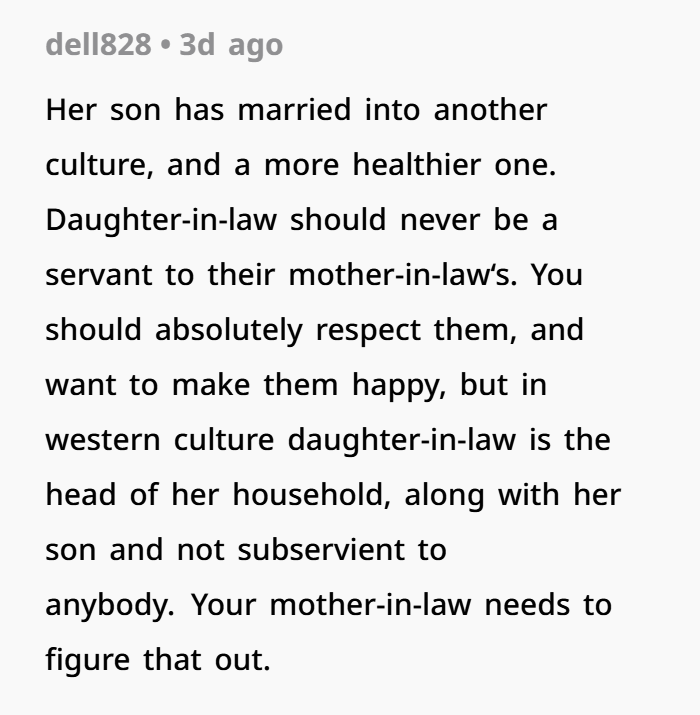
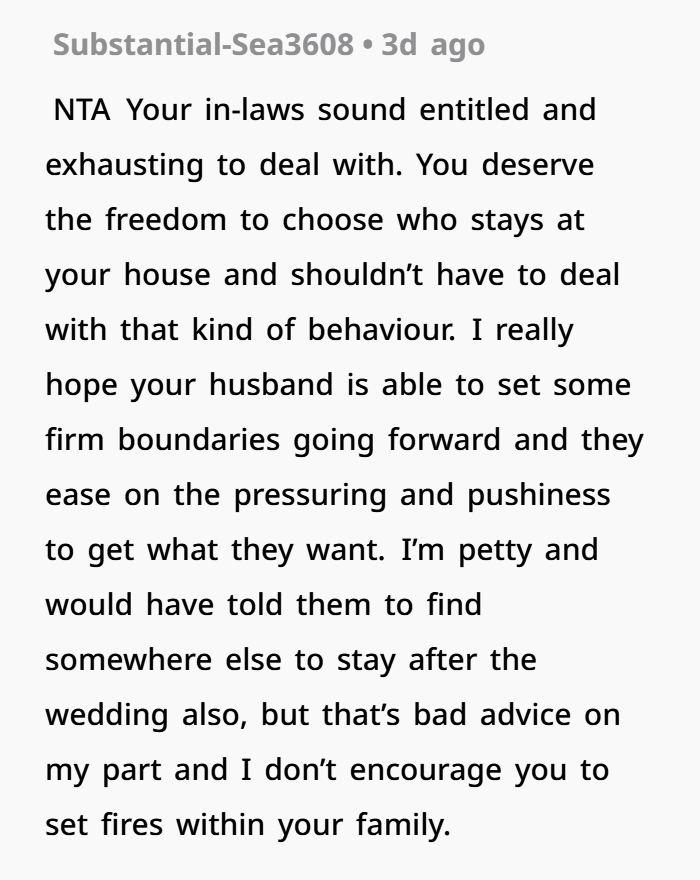
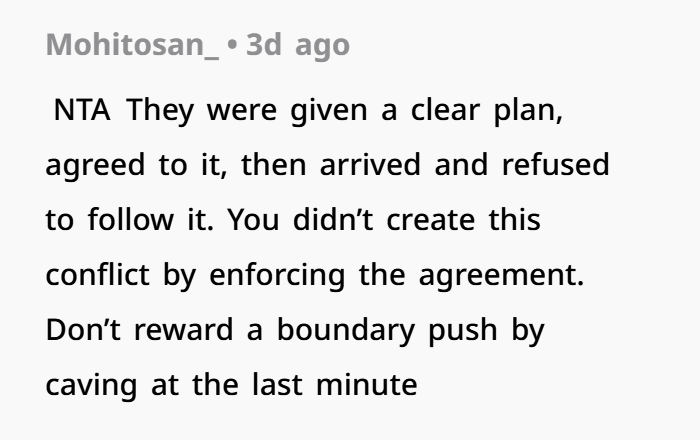
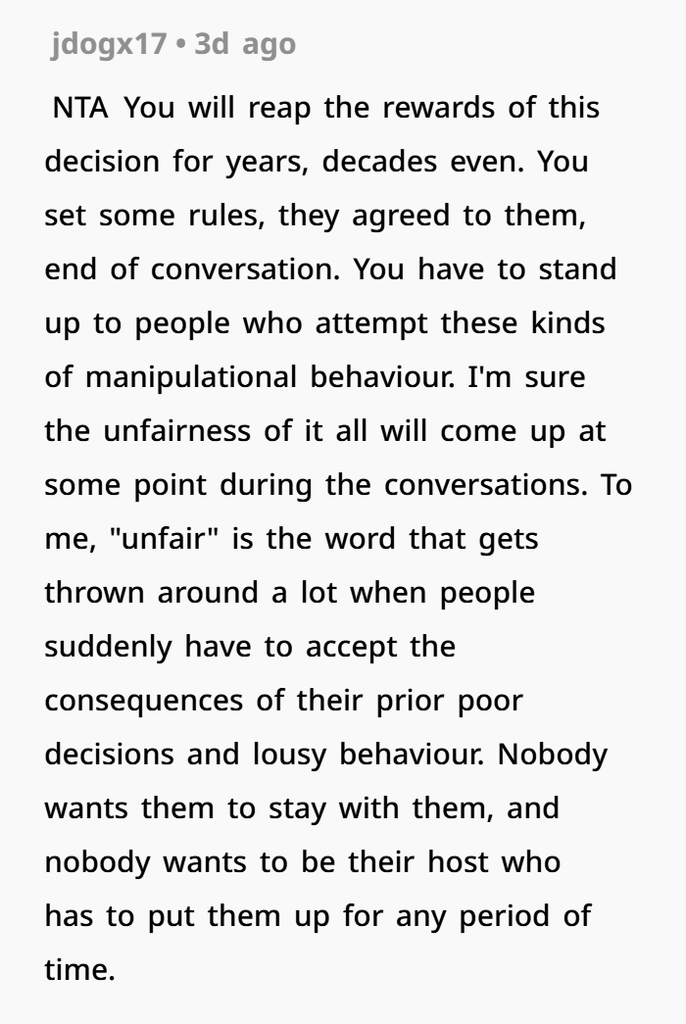
What People Had To Say