My Friend Secretly Timed Me on Their Nanny Cam—Now I Refuse to Visit
A woman thought she had spent a wonderful day catching up with an old friend. She and her husband had driven three hours to visit her friend and meet her little daughter after eight months apart. She asked about life as a new mom, how work was going, and how the family was doing. She also spent time holding the baby and playing with her on the floor. Her husband joined in, and they all shared a few funny moments as he tried to get comfortable holding the little one. Later, while the baby slept, the adults talked about their marriages, careers, and daily routines. Everything seemed normal and friendly.
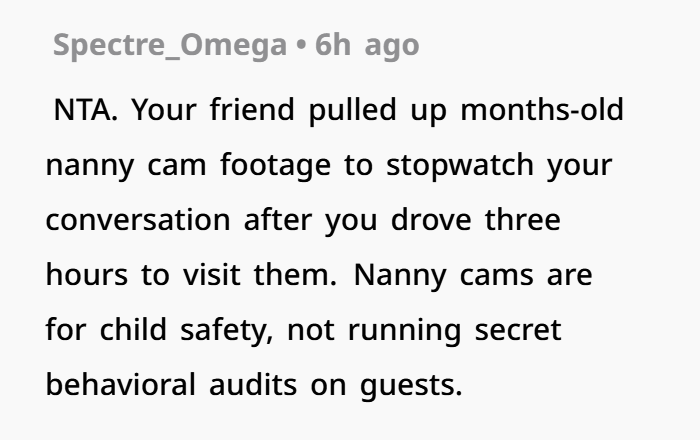
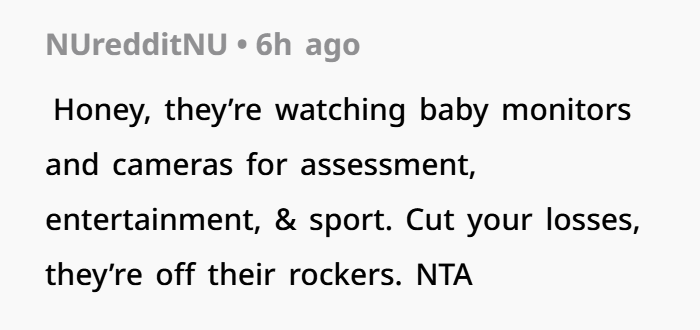
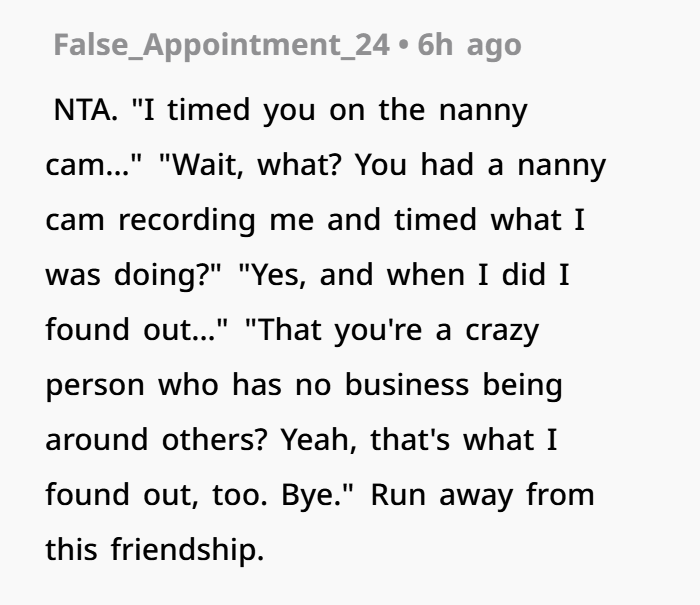
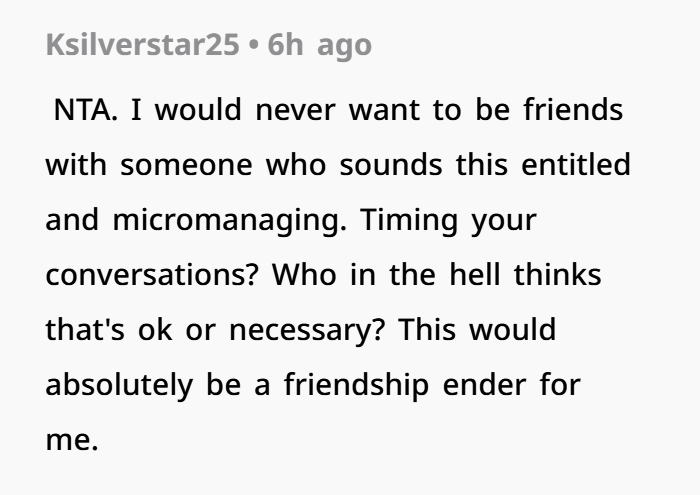
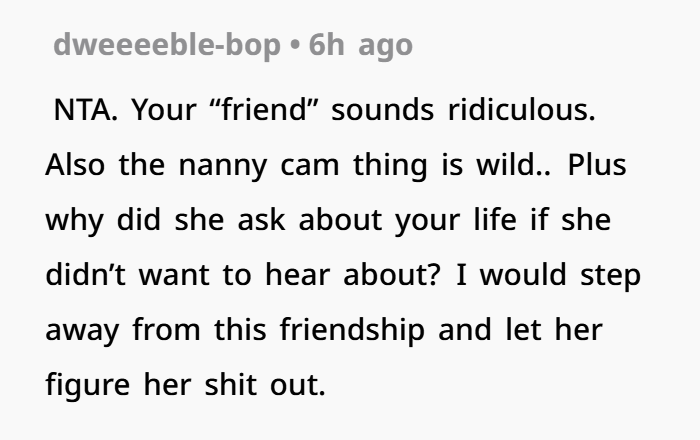
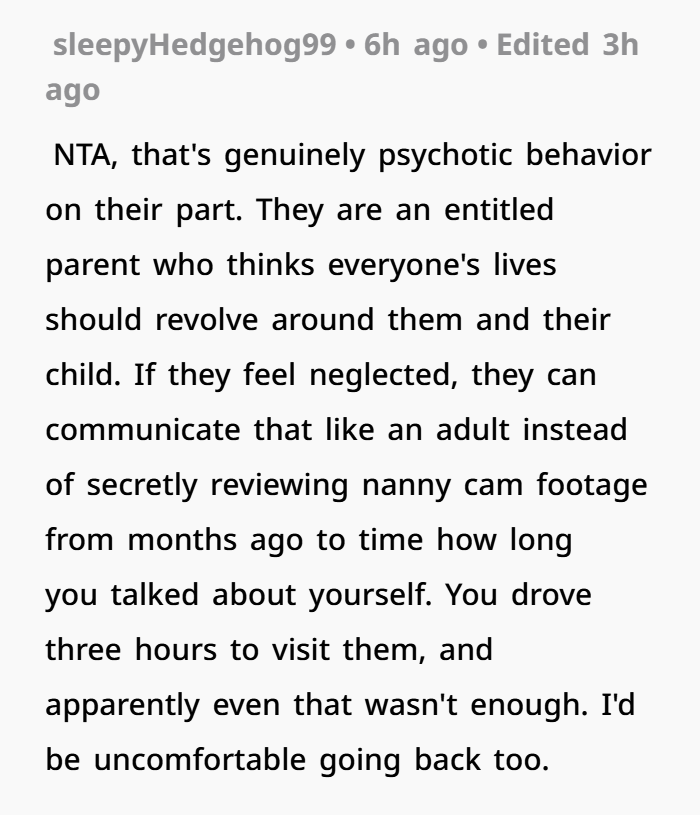
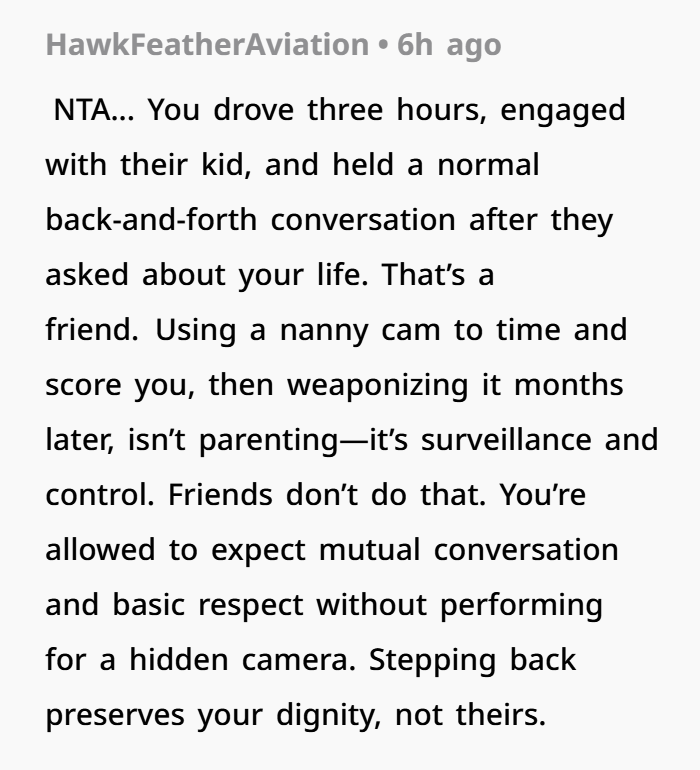
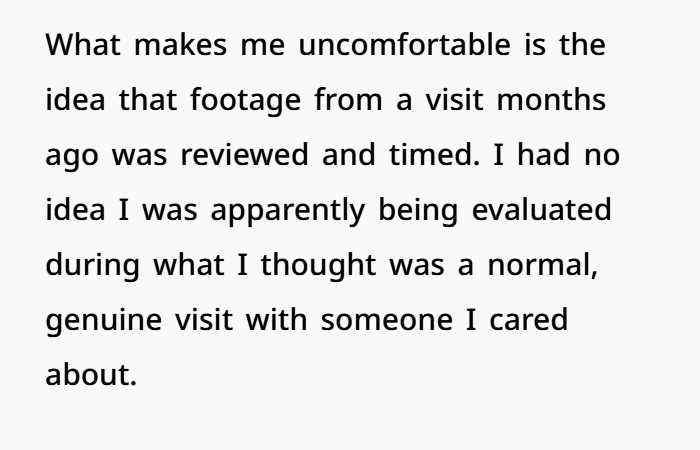
But months later, she found out that her friend had looked back at the visit in a very different way. During an argument, her friend revealed that she had watched the nanny cam footage and counted how much time the woman spent talking about her own life. She felt the woman had not paid enough attention to her daughter and called her a bad friend. This came as a surprise because the friend herself had asked about her job and personal life. The woman had simply answered those questions. She had no idea that an ordinary chat would later become part of a disagreement.
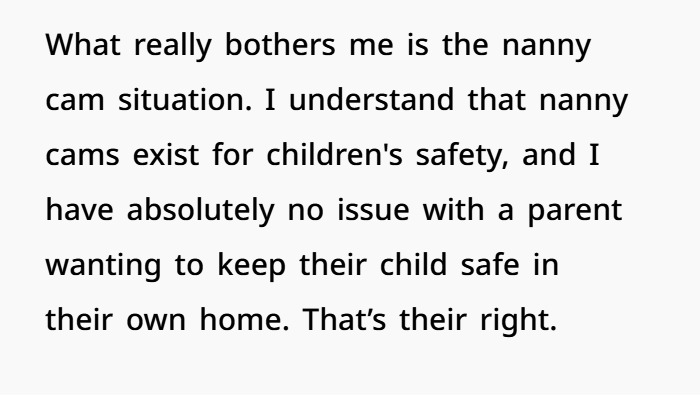
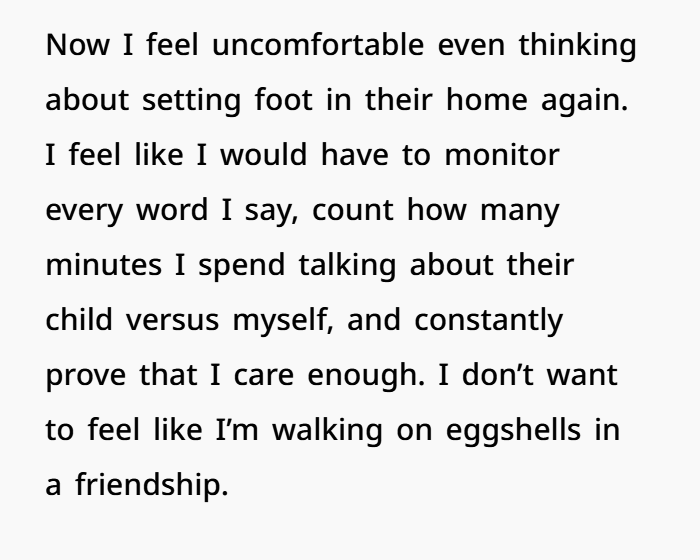
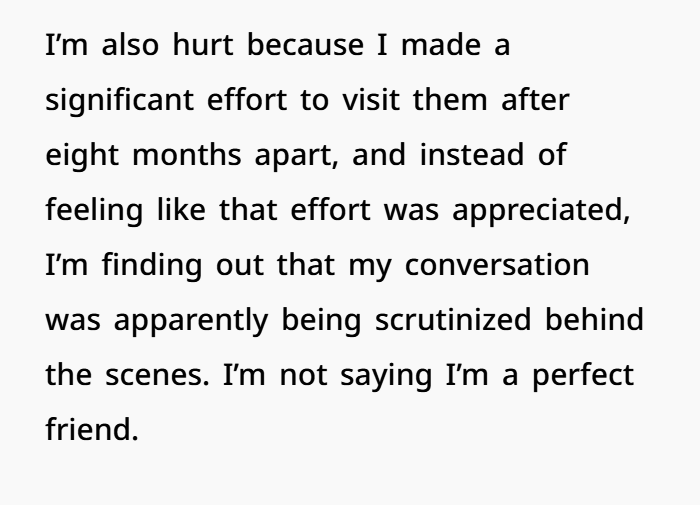
She has no problem with parents using home security cameras, indoor cameras, or baby monitors. She knows many families use these devices for home safety and peace of mind. What bothers her is that her friend used the camera recordings to study her behavior long after the visit was over. She had traveled six hours in total because she wanted to spend quality time with someone she cared about. Now, she feels uncomfortable thinking that her conversations may have been watched and judged. She wonders whether she could ever relax in that home again.
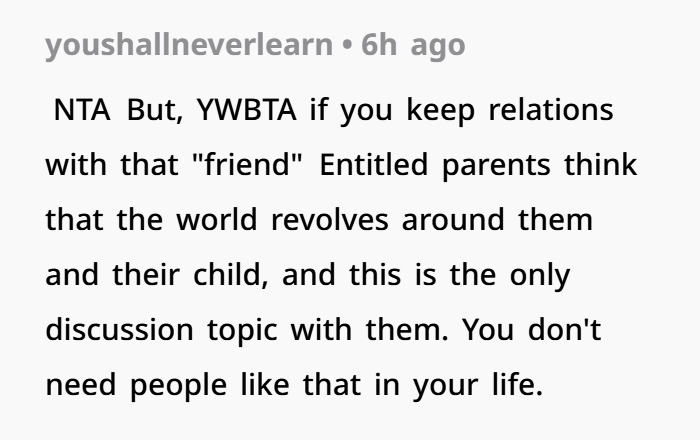
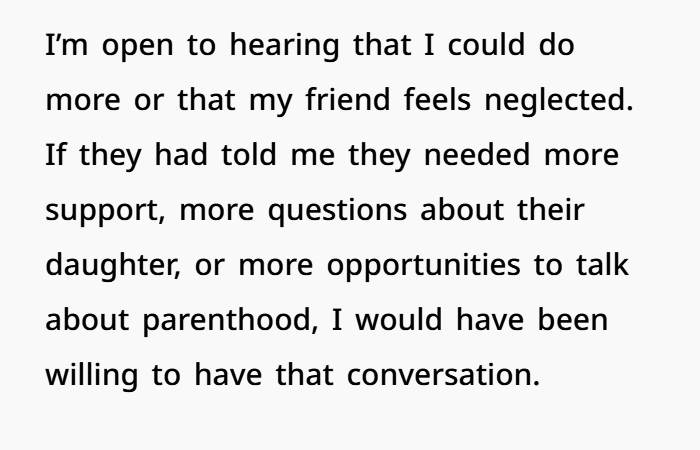
The woman is not against talking things through. If her friend wanted more attention or support, she would have been happy to hear that. But she believes a good friendship should not feel like a test. Both people should be able to share their thoughts, ask questions, and enjoy spending time together. Trust, healthy boundaries, and open communication are important in any relationship. After this experience, she is thinking carefully about whether she wants to continue the friendship in the same way.

When a Nanny Cam Causes Problems Between Friends
Friendships are supposed to feel comfortable. You visit each other, share stories, laugh, and catch up on life.
But imagine finding out that a friend may have watched a recording of your visit to judge how much attention you gave their child.
That is what one woman says happened after she traveled three hours to visit a friend.
She thought they had enjoyed a normal day together. They talked about work, family, parenting, and what had been happening in their lives.
Months later, her friend complained that she had not shown enough interest in the baby. According to the woman’s account, her friend used nanny cam footage to support that complaint.
Now, the woman is questioning whether she can ever feel comfortable visiting that home again.
The situation raises some interesting questions about home security cameras, personal privacy, friendship boundaries, and healthy communication.
1. When a Home Security Camera Feels Too Personal
Many parents use nanny cams and indoor security cameras to keep an eye on their children.
These devices can be helpful, especially when parents are working, checking on a sleeping baby, or monitoring a caregiver.
A home security camera can also give families peace of mind.
But there is a difference between using a camera for safety and using recordings to judge a friend’s behavior.
In this story, the woman was not upset simply because her friend had a nanny cam.
She understood why parents might want one.
What bothered her was the idea that her conversations and actions may have been reviewed after she left.
She believed she was visiting a friend, not being evaluated.
This is where personal privacy becomes important.
Even when guests know a camera is present, they may not expect someone to review their conversations later.
Privacy is not always about hiding something. Sometimes, it is about feeling comfortable enough to act naturally.
And when that comfort disappears, trust can become difficult to rebuild.
2. Friendships Should Not Feel Like a Competition
Good friendships are built on trust, kindness, and spending time together.
Of course, both people should make an effort.
One friend should not always be the person calling, visiting, or offering support.
But that does not mean every conversation needs to be measured.
In this situation, the woman believed she had made a real effort to connect with her friend.
She drove three hours to visit.
During their time together, she asked about her friend’s life, work, and experience as a parent.
She also shared updates about her own life.
To her, that sounded like a normal conversation between friends.
Her friend apparently saw things differently.
She seemed to believe that the visitor should have spent more time talking about the baby.
The problem was that this expectation had not been clearly explained.
If her friend wanted more attention for her child or needed extra emotional support, she could have said so.
Instead, the complaint came months later.
And the reported mention of camera footage made the situation even more uncomfortable.
Healthy friendship boundaries allow people to share their feelings without making every visit feel like a test.
3. Having a Baby Can Change Friendships
Life changes when someone becomes a parent.
There are new routines, less free time, and many more responsibilities.
A parent may spend most of the day thinking about feeding schedules, sleep, childcare, and family needs.
It is natural for those topics to become a big part of their conversations.
Friends who do not have children, or whose children are older, may have different things happening in their lives.
That does not mean they care any less.
It simply means they are at different stages of life.
In this story, the friend may have wanted more attention focused on her daughter.
Perhaps she hoped the visitor would ask more questions about the baby or spend more time interacting with her.
Those feelings are worth discussing.
But the woman also wanted to catch up with her friend as a person.
She wanted to hear about her friend’s work, daily life, and personal experiences.
And she wanted to share her own news, too.
Neither person has to be wrong for wanting a different kind of conversation.
The real problem begins when expectations are not shared openly.
Good communication and emotional support can help friendships adjust to major life changes, including parenthood.
4. Are Indoor Security Cameras Legal?
The use of indoor security cameras can also raise questions about privacy laws.
Many homeowners install cameras to monitor their property, protect their belongings, or check on children.
However, the rules for recording visitors can vary depending on where someone lives.
In the United States, laws covering video recording and audio recording are not always the same.
For example, recording a conversation may involve different consent rules depending on the state.
Some states have stricter audio recording requirements than others.
The location of a camera can also matter.
A camera in a living room may be treated differently from a camera in a private area where someone would normally expect more privacy.
In this particular story, several details are unclear.
We do not know whether the nanny cam recorded sound, whether guests knew about the recording, or whether the friend actually watched the footage.
Because of that, there is not enough information to say that any privacy law was broken.
Anyone concerned about their own situation should check local recording laws or speak with a qualified legal professional.
Still, something can be legally allowed and feel uncomfortable at the same time.
Home security systems, smart home cameras, and baby monitoring devices can be useful tools, but clear communication about their use can help avoid misunderstandings.
5. Feeling Watched Can Change How Someone Acts
One of the biggest concerns for the woman is how she would feel during future visits.
Before this disagreement, she could relax and enjoy spending time with her friend.
Now, she worries that her words and actions might be judged later.
Would she need to spend more time talking about the baby?
Would sharing too much about her own life seem selfish?
Would she have to think carefully about every conversation?
Those are not things most people want to worry about while visiting a friend.
When someone feels constantly evaluated, it can become harder to relax.
Instead of enjoying the moment, they may spend more time wondering whether they are doing something wrong.
This can affect emotional well-being and make social visits feel stressful.
Friendships should leave room for normal conversations, different opinions, and occasional misunderstandings.
Not every visit will be perfect.
Sometimes, one person will talk more. Other times, the conversation will focus on someone else’s problems.
That is part of being human.
The important thing is being able to talk about concerns without making the other person feel like every mistake is being recorded.
6. Could Better Communication Save the Friendship?
This disagreement does not necessarily mean the friendship has to end.
Both women may simply have different expectations.
The visitor has already admitted that she is not a perfect friend.
She seems willing to listen if her friend feels unsupported or needs more attention.
That is a good place to start.
But her friend also needs to understand why the nanny cam issue feels uncomfortable.
A calm conversation could help them clear up what happened.
For example, the woman could explain that she values the friendship but does not want to feel as though her visits are being reviewed later.
Her friend could explain what she had hoped for during the visit.
They could also talk about how to handle concerns in the future.
Sometimes, a simple conversation can prevent a small disagreement from becoming a much bigger problem.
Relationship counseling and communication skills are often discussed in the context of marriage, but many of the same ideas can help with friendships.
Listening, respecting boundaries, and speaking honestly are useful in almost every close relationship.
7. Meeting Somewhere Else Might Be a Good Solution
The woman may decide that she no longer feels comfortable visiting her friend’s home.
That does not mean she has to end the friendship.
There are other ways to stay connected.
They could meet at a coffee shop, have lunch together, take a walk, or spend time at a local park.
A neutral place might help both women feel more relaxed.
It would also allow them to focus on their friendship instead of worrying about cameras.
Of course, meeting outside the home may be harder when someone has a young child.
They would need to choose a place and time that works for both of them.
But making that effort could show that they still value their relationship.
A healthy boundary is not always about staying away from someone.
Sometimes, it is about finding a way to spend time together that feels comfortable for everyone.
8. What This Story Teaches About Trust and Privacy
The biggest lesson from this situation is that technology can sometimes create unexpected problems in personal relationships.
Smart home technology has made it easier than ever to monitor what happens inside a house.
Video doorbells, baby monitors, and wireless security cameras are now common in many homes.
These devices can provide useful safety features.
But the way people use them matters.
A camera that helps parents check on their child serves a different purpose from a recording used to review a guest’s social behavior.
That difference can affect how visitors feel about being in the home.
Homeowners have reasons to protect their families and property.
Guests also have reasonable expectations about privacy and respectful treatment.
Being open about cameras and how recordings are used can help both sides feel more comfortable.
And when a disagreement happens, talking directly is usually more helpful than trying to prove who was right.
Final Thoughts
Friendships change as people grow older, become parents, move away, or take on new responsibilities.
Sometimes, those changes lead to misunderstandings.
In this story, one woman believed she was making an effort to stay close to her friend.
She traveled three hours, spent time with her, and showed interest in her life.
Her friend apparently expected something different.
The disagreement became more difficult when nanny cam footage was reportedly brought into the conversation.
Now, the woman has to decide whether she can rebuild that trust.
The friendship may still be worth saving, especially if both women are willing to listen and respect each other’s feelings.
But one thing is clear: a good friendship should not require someone to count every minute of a conversation to prove they care.
Sometimes, simply showing up and making time for each other says more than any recording ever could.
The Comments Are In