AITA for Having a Child-Free Wedding After My Friend Called Me a “Bitch” and a Horrible Friend?
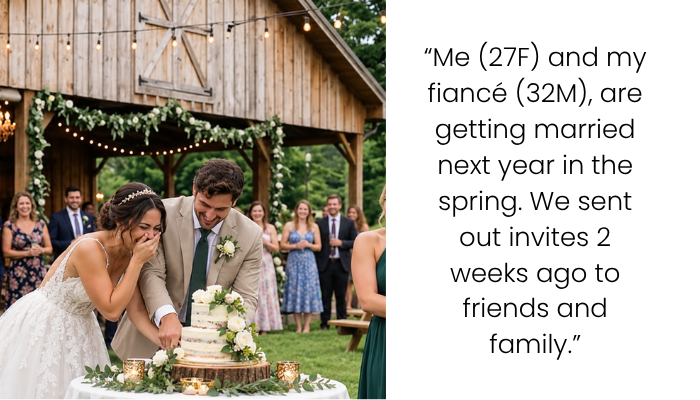
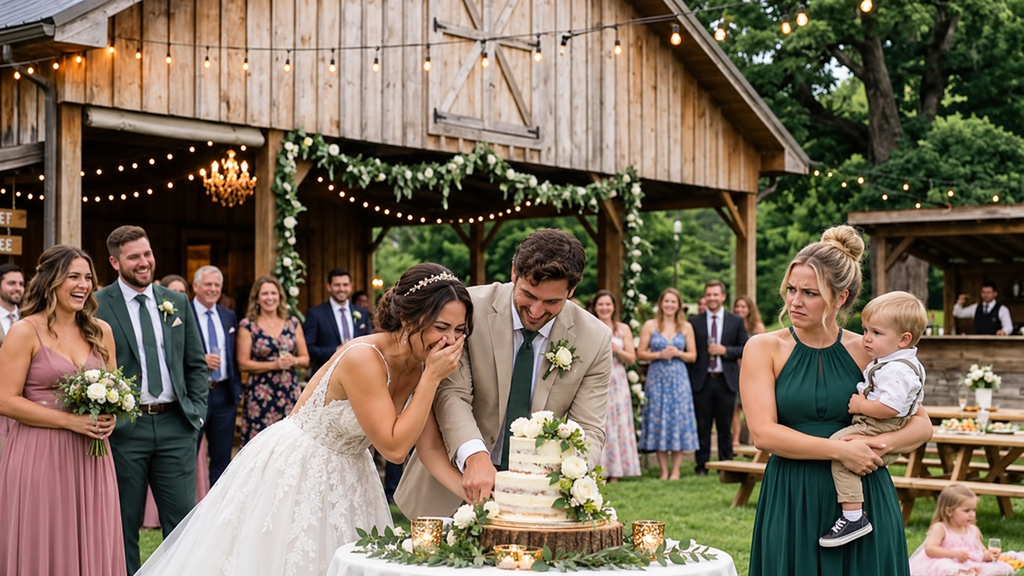
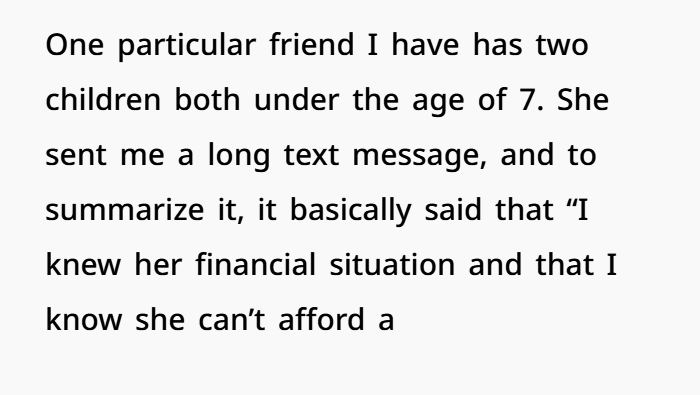
A bride-to-be, 27, was busy getting ready for her spring wedding with her 32-year-old fiancé. Like many couples, they had spent time making important wedding planning decisions. One of those decisions was to have a wedding without children. They wanted an adult-only wedding reception with games, drinks, and fun activities. Everything seemed fine until one of the bride’s close friends, who had two children younger than seven, raised a concern.
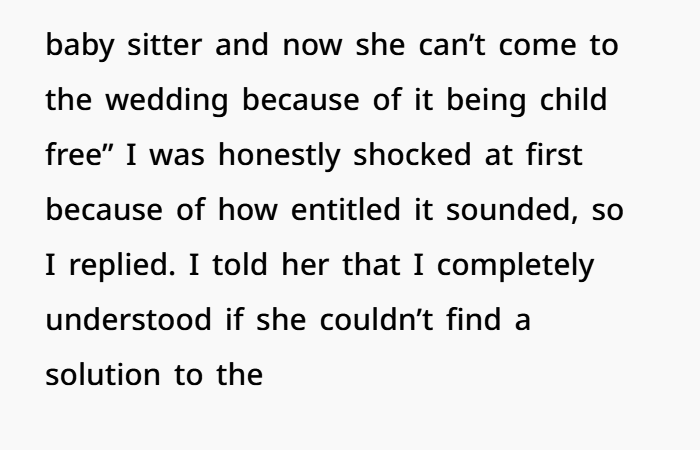
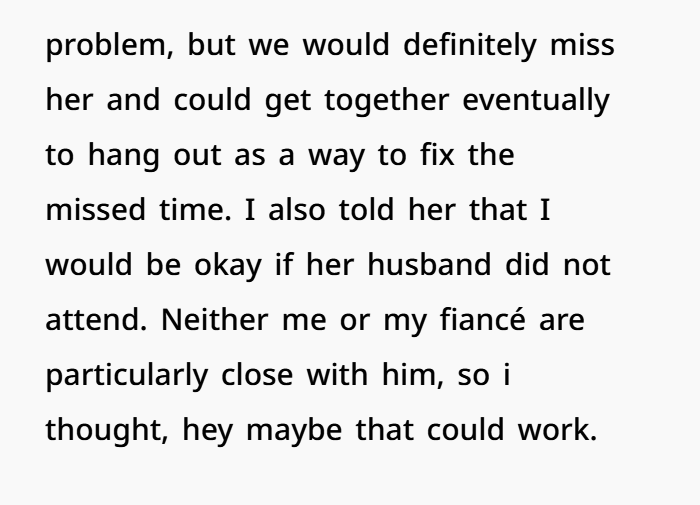
The friend explained that she was having money problems and could not pay for a babysitter. Childcare costs were simply too much for her family budget. The bride felt sorry for her but wanted to keep the same rule for every guest. She said she would understand if her friend had to miss the wedding. She also suggested meeting another time or having the friend’s husband look after the children for the day. Since the couple did not know him very well, the bride thought this was a fair option.
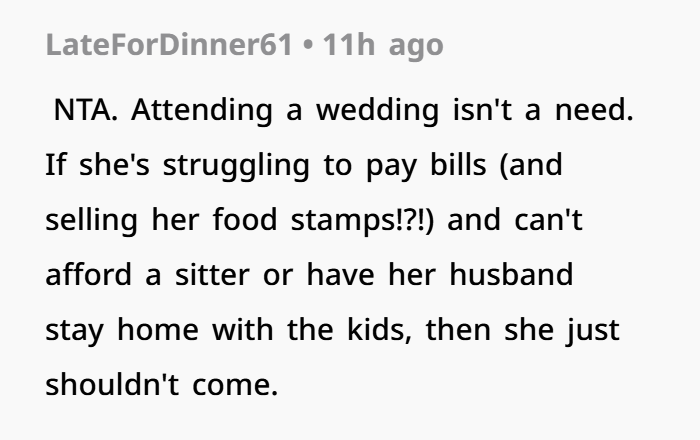
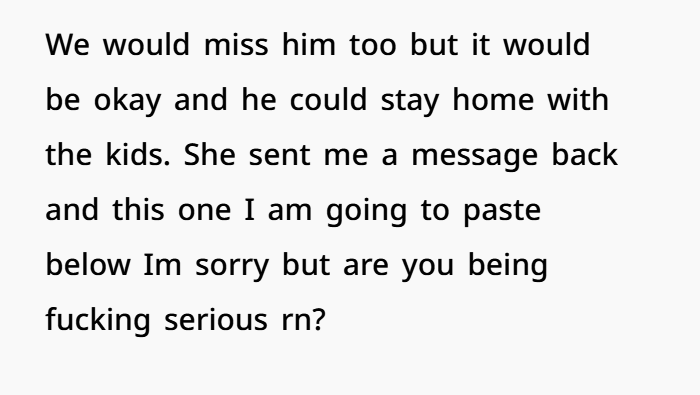
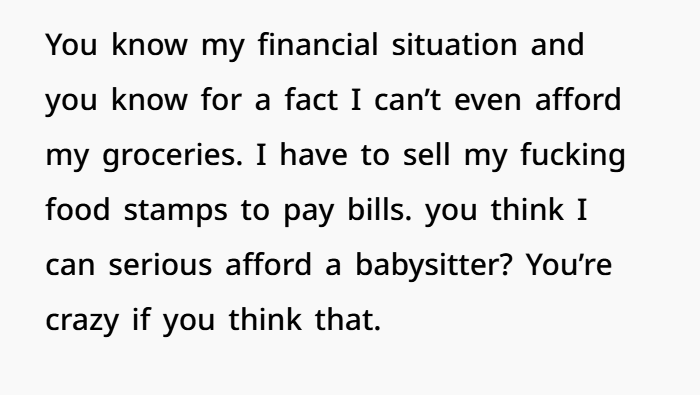
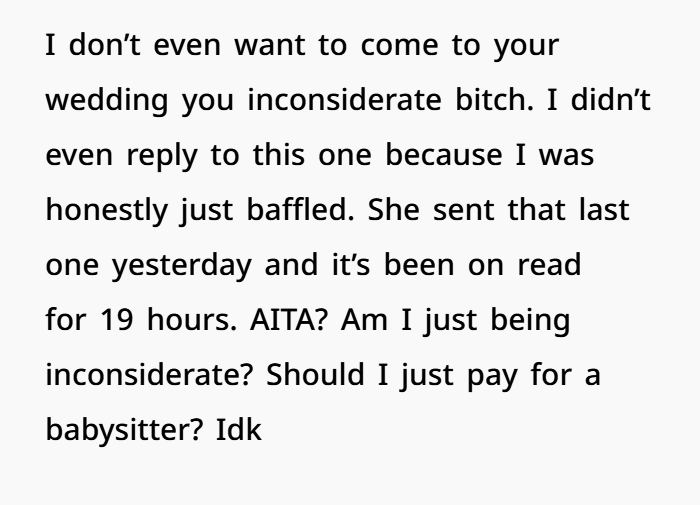
But her friend did not see it that way. She became angry and shared more details about her financial struggles. She said things were so difficult that she had sold food assistance benefits to help pay household bills. She felt the bride was not being supportive during a hard time. The conversation quickly became unpleasant, and the friend sent a message with unkind words before saying she would not come to the wedding.
The bride did not know how to respond, so she stayed quiet for nearly 19 hours. She now feels confused about the whole situation. Should she help pay for childcare so her friend can attend? Should she change her wedding guest rules? Or should she accept that her friend cannot come? The bride wants to enjoy her special day, but she also does not want to lose a friendship over a wedding budget and childcare disagreement.
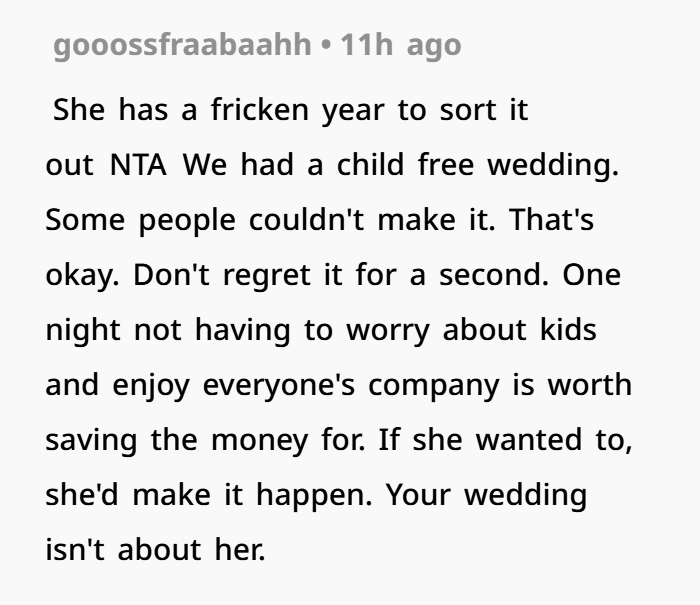
Bride Refuses to Change Child-Free Wedding Rule for Friend Who Can’t Afford Childcare
A wedding is supposed to be a happy day. But sometimes, even a simple rule can lead to a big disagreement.
One bride faced this problem when her friend said she could not afford a babysitter for her child-free wedding.
The bride understood that her friend was struggling with money. She did not force her to attend and even suggested another way to make things work.
But her friend was not happy with the suggestion. The conversation became tense, and the bride was left wondering if she had done something wrong.
So, should she change her wedding plans for one friend, or is it okay to keep her original rules?
Why Some Couples Choose Child-Free Weddings
Child-free weddings are becoming a common choice for couples who want an adults-only celebration.
Some couples prefer a quiet evening without young children. Others may have limited space at their wedding venue or want to keep their wedding budget under control.
Wedding planning already involves plenty of expenses, including catering, decorations, photography, and venue costs.
Adding more guests can increase the total cost.
For these reasons, some couples decide not to invite children.
However, this decision can make things difficult for parents.
They may need to hire a babysitter or ask a family member to watch their children.
And if they do not have someone available, attending the wedding may not be possible.
That does not mean the couple is wrong for having a child-free wedding.
It simply means some guests may need to decline the invitation.
The Friend Could Not Afford a Babysitter
In this situation, the bride’s friend was having serious money problems.
According to the story, she was struggling to afford groceries and other basic needs.
With so many household expenses to manage, paying for childcare was not something she could easily do.
And that is understandable.
When a family is already working with a tight budget, extra costs can create more stress.
Even a few hours of babysitting can become another expense that parents need to plan for.
The friend may have felt disappointed because she wanted to attend the wedding.
She may also have felt embarrassed about her financial situation.
Money problems can affect how people feel and how they respond to difficult situations.
The American Psychological Association has discussed how financial stress can affect emotional well-being and relationships.
Still, being upset about money does not make it okay to insult someone.
The friend had every right to explain that she could not afford childcare.
But she could have done that without making the conversation personal.
The Bride Suggested That the Husband Stay Home
Instead of arguing, the bride offered a possible solution.
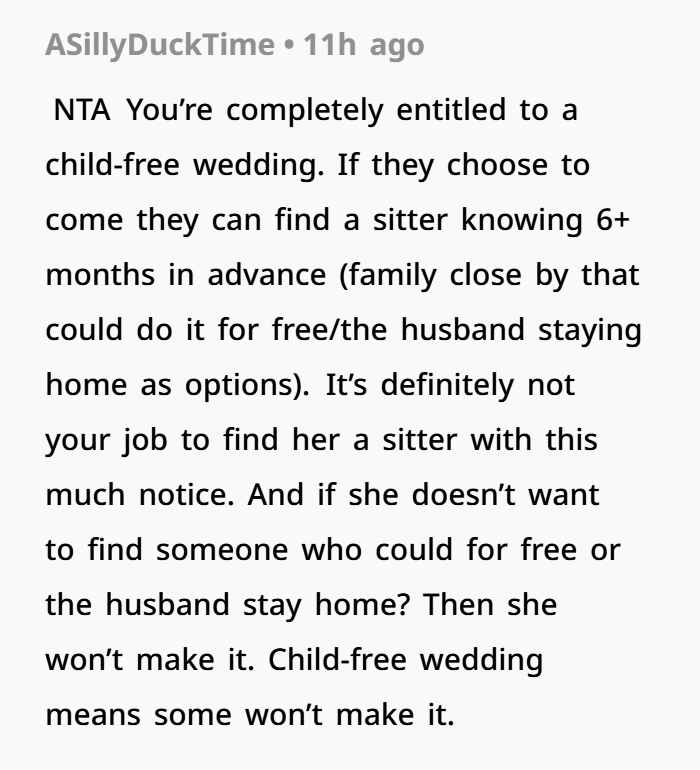
She suggested that her friend’s husband could stay home with the children while her friend attended the wedding.
That way, there would be no babysitting costs.
The bride also explained that she and her partner were not especially close to the husband.
So, if he missed the wedding, it would not be a problem for them.
From the bride’s side, this seemed like a simple way to help.
But her friend did not see it that way.
Maybe she wanted to attend the wedding with her husband.
Maybe she felt uncomfortable going alone.
Whatever her reason, she did not like the idea.
And that is fine.
She did not have to accept the suggestion.
But there is a big difference between saying an idea will not work and becoming upset with someone for offering it.
The bride was trying to find an option that would not add to her friend’s family expenses.
She was not demanding that her friend leave her husband at home.
Should the Bride Cover the Childcare Costs?
Some people might wonder why the bride did not simply offer to pay for a babysitter.
After all, helping a close friend during a difficult time can be a thoughtful gesture.
But childcare costs are not automatically the responsibility of the couple getting married.
Weddings can already be expensive.
Many couples spend months saving money, comparing wedding venues, planning catering services, and finding ways to reduce wedding expenses.
Even with careful financial planning, staying within a wedding budget can be challenging.
Paying for a guest’s childcare would add another cost.
There is also the question of what happens if other parents ask for the same help.
The bride may not be able to cover babysitting expenses for everyone.
Of course, if she has the money and wants to help, she can offer.
There is nothing wrong with being generous.
But she should not feel pressured into paying simply because her friend is upset.
Helping a friend is a kind choice, not something that should be demanded.
The Friend’s Feelings Matter, but So Do the Bride’s
It is easy to understand why the friend felt disappointed.
She was dealing with financial hardship and could not afford something that would allow her to attend an important event.
That can be frustrating.
But the bride also had feelings to consider.
She was planning her wedding and had already decided that children would not be included.
She was not trying to embarrass her friend or make her financial situation harder.
In fact, she accepted that her friend might not be able to attend.
She even suggested that they could spend time together on another day.
That seems like a reasonable response.
A good friendship should allow people to make different choices without turning every disagreement into an argument.
The friend did not have to agree with the wedding rule.
But she could still respect it.
Why Respect Matters in Friendships
Disagreements happen in every friendship.
Sometimes friends have different opinions about money, family responsibilities, or important life events.
That is normal.
What matters is how they handle those differences.
There is a difference between explaining that something hurts your feelings and making hurtful comments about another person.
The Gottman Institute explains how personal criticism can create problems in relationships.
Although much of its advice focuses on couples, the same idea can be helpful in friendships.
Instead of blaming someone, it is often better to explain the problem calmly.
For example, the friend could have said that she was sad about missing the wedding because she could not afford a babysitter.
That would have helped the bride understand her feelings.
Personal insults, however, can make it harder to solve the original problem.
And sometimes, the argument becomes more important than the issue that started it.
Can the Two Friends Move Past This?
The bride decided not to respond immediately after the argument.
That may have been a good choice.
When emotions are high, taking some time before replying can prevent the situation from getting worse.
But if the bride values the friendship, she may eventually want to talk things through.
She could explain that she understands her friend’s financial struggles.
She could also make it clear that the hurtful comments were not okay.
The friend may have been having a difficult day, but that does not mean the bride has to ignore how she was treated.
If both women are willing to listen, they may be able to move forward.
But if the friend continues to blame the bride for keeping her wedding rules, the relationship may become harder to maintain.
Friendships work best when both people feel respected.
What Couples Can Learn From This Wedding Disagreement
This situation offers a useful reminder for anyone planning a wedding.
Clear communication matters.
If a couple wants a child-free wedding, they should tell guests early.
This gives parents time to look into babysitting services, compare childcare costs, and make arrangements that fit their family budget.
It also gives them time to decide whether attending is possible.
Couples should remember that not everyone has the same financial situation.
Some guests may have travel costs, hotel expenses, childcare needs, or other financial responsibilities.
Missing a wedding does not always mean someone does not care.
Sometimes, attending simply costs more than a family can afford.
At the same time, guests should understand that couples have their own wedding expenses and personal preferences.
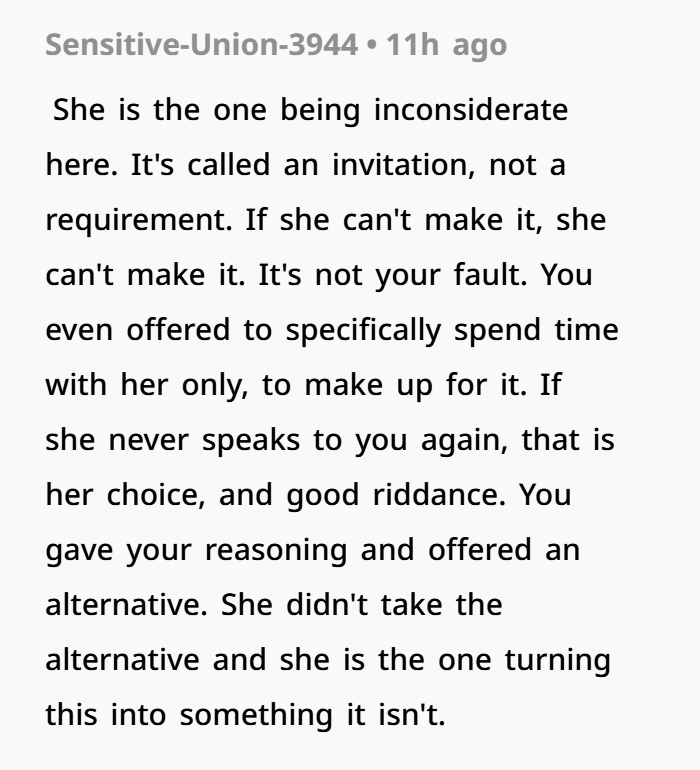
A wedding invitation is an offer to celebrate together, not a requirement.
A little patience and understanding can make these situations easier for everyone.
Final Verdict: The Bride Was Not Wrong
Based on the bride’s account, she was not wrong for keeping her child-free wedding rule.
She did not force her friend to attend.
She understood the childcare problem and offered a possible solution.
When attending seemed difficult, she was willing to accept that her friend might miss the wedding.
Her friend had every right to feel disappointed about the situation.
But financial stress does not make personal insults acceptable.
The bride is not required to change her wedding plans or pay for a babysitter.
She can choose to help if she wants to, but that decision should come from kindness rather than pressure.
In the end, this situation is about more than wedding planning or childcare expenses.
It is about understanding other people’s financial limits while respecting their personal choices.
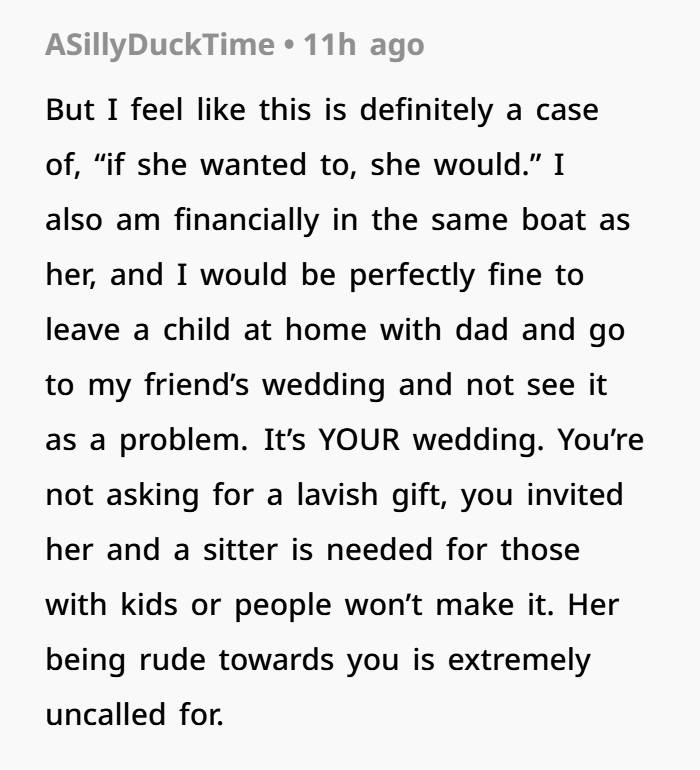
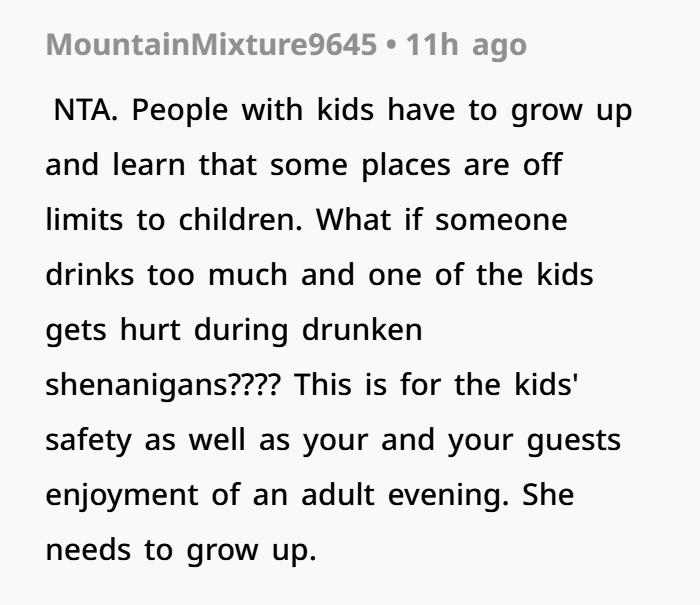
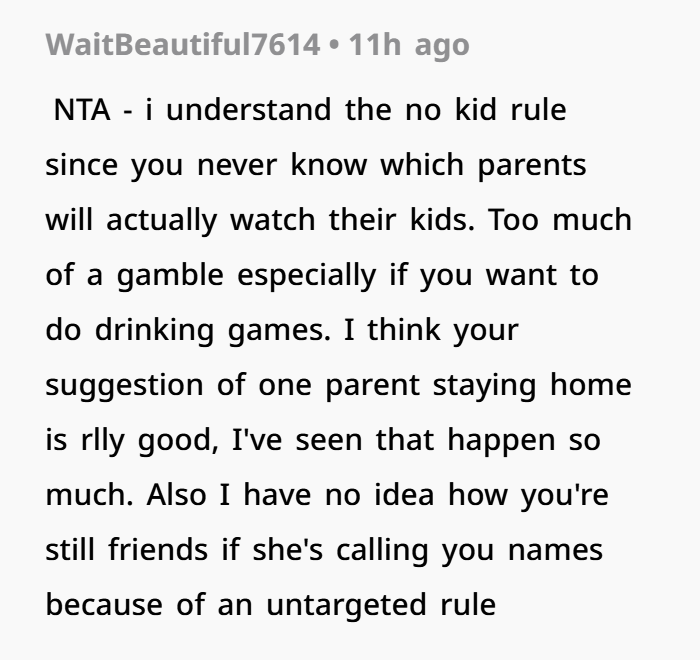
What do you think? Should the bride have made an exception for her friend, or was she right to keep her child-free wedding rule?
Here’s How Everyone Reacted