Mother-in-Law Secretly Invites Husband’s Ex to Family Dinners While Excluding His Wife
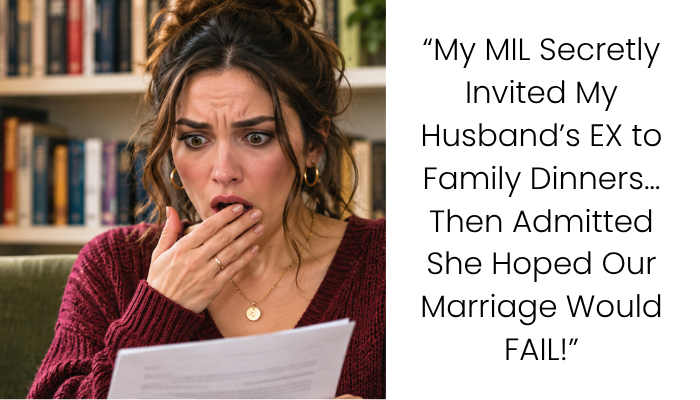
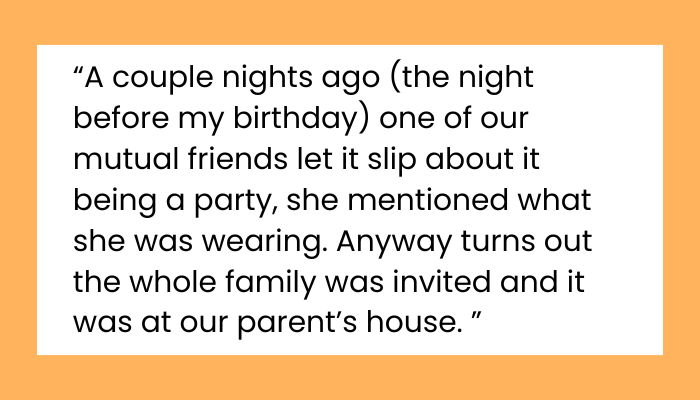
A young mother was shocked after learning that her mother-in-law had been secretly inviting her husband’s former girlfriend to family gatherings. The 30-year-old woman had been married for two years and recently welcomed a baby daughter. She thought her marriage was strong and her family life was peaceful. Her mother-in-law could be difficult at times, but she always said she wanted a close family. Everything changed during a barbecue when a cousin mentioned a recent dinner with the old family group. The woman had not heard about the dinner, so she became curious. After checking family photos, she discovered that her husband’s ex had attended three family events in the past six months. The wife had been left out because she was told the gatherings were small and her baby needed rest.
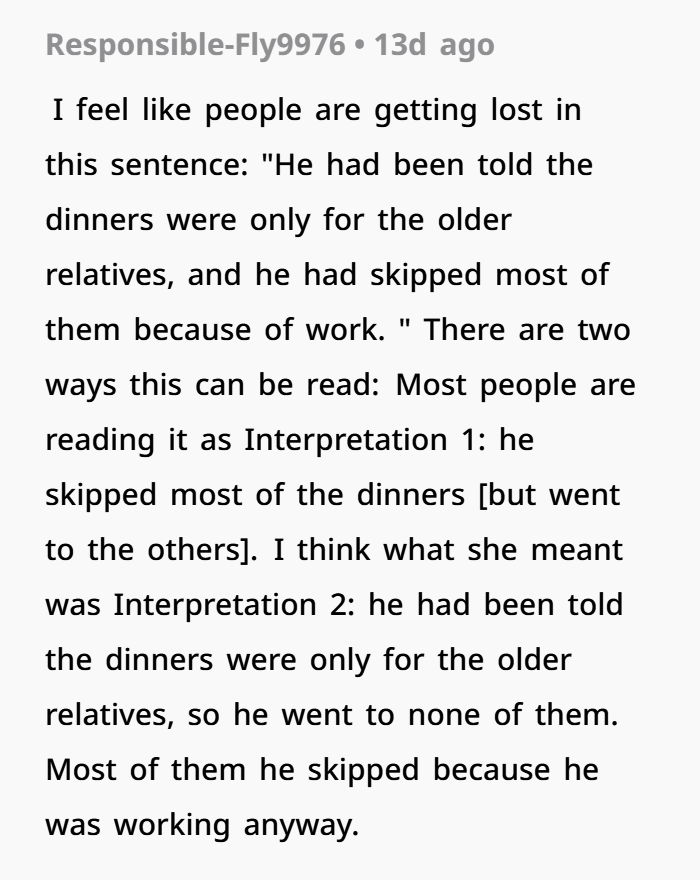
She showed the photos to her husband, who said he knew nothing about the situation. He explained that his mother had told him the dinners were mainly for older family members. Since he was busy with work, he had not attended most of them. The wife decided to speak directly with her mother-in-law. During their phone call, the older woman admitted that she still had a close relationship with her son’s ex. She said the former girlfriend felt like family and that she had never fully accepted her son’s marriage. She also explained that she wanted the ex to remain part of their lives in case the couple ever separated. The wife was deeply upset and decided to set a clear boundary. She told her mother-in-law that she was not welcome in their home until she gave a sincere apology.
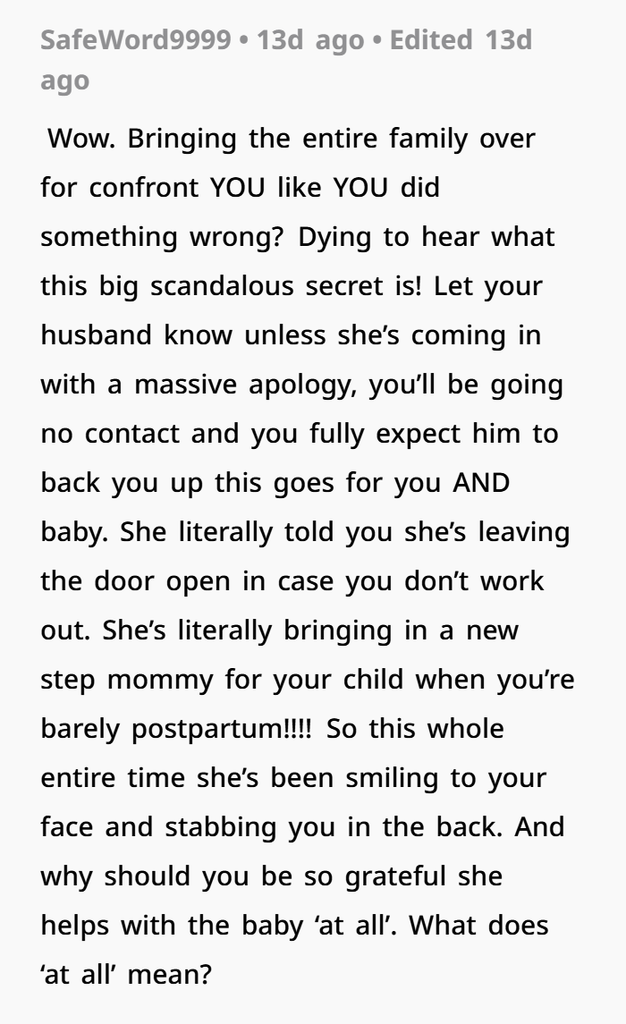
The mother-in-law reacted badly and said the wife was making a big problem out of nothing. She accused her of trying to keep her granddaughter away from her. Other relatives soon joined the disagreement, with some saying the wife was being unfair. One family member even brought up the mother-in-law’s past help with baby care. The argument became more serious when the older woman said she would come to the couple’s home on Sunday with the rest of the family. She wanted everyone to discuss the matter together, even though the couple had not agreed to the visit. She also hinted that she knew something about the wife that might change her husband’s opinion of her.
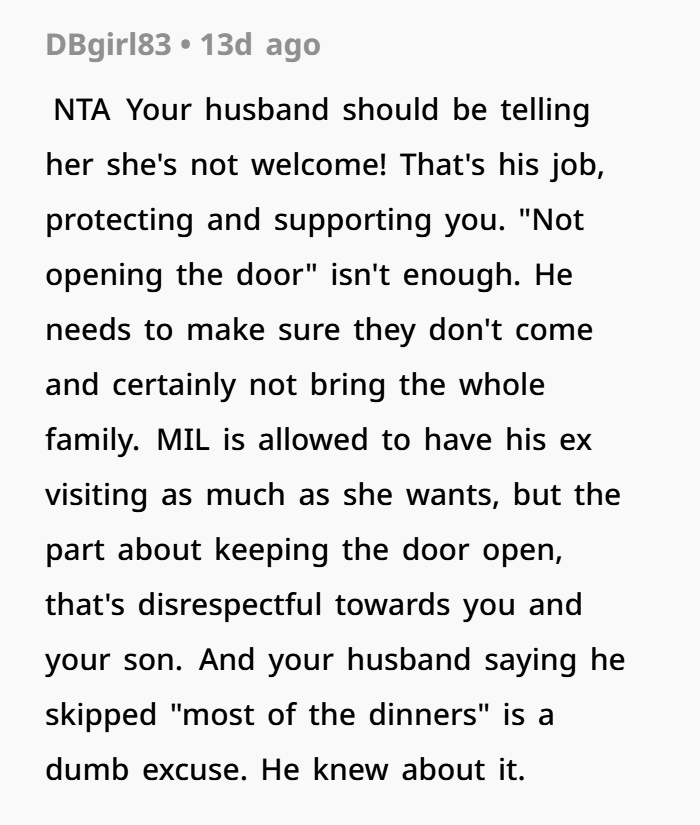
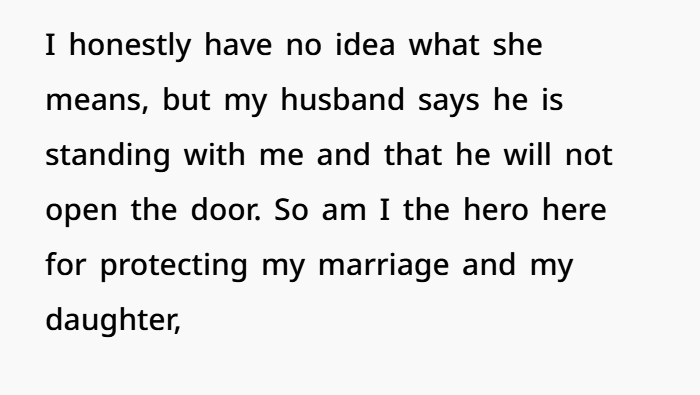
The wife felt worried about the coming visit and the unknown claim her mother-in-law might make. However, her husband stood by her and said he would not allow anyone to enter their home without permission. Their experience shows how important trust, privacy, and healthy boundaries can be in marriage. Family relationships often become harder when relatives do not respect a couple’s decisions. Parenting a new baby also brings extra responsibilities, making emotional support and clear communication even more important. Family counseling may help in some situations, but respect must come from everyone involved. The woman now wants to know whether she was right to protect her home or whether she should have handled the disagreement differently.




When a Mother-in-Law’s Friendship With Her Son’s Ex Creates Problems in His Marriage
Getting along with in-laws is not always easy. Every family has different opinions, habits, and expectations.
But things can become especially difficult when a parent gets involved in their adult child’s marriage.
That is what happened when a married woman discovered that her mother-in-law was still inviting her husband’s ex-girlfriend to family gatherings.
The friendship itself was not the biggest problem.
According to the woman’s account, her mother-in-law admitted that she kept the ex-girlfriend close because she hoped her son’s marriage would eventually end.
The wife was hurt by this.
She felt that her mother-in-law was not respecting her marriage or her place in the family.
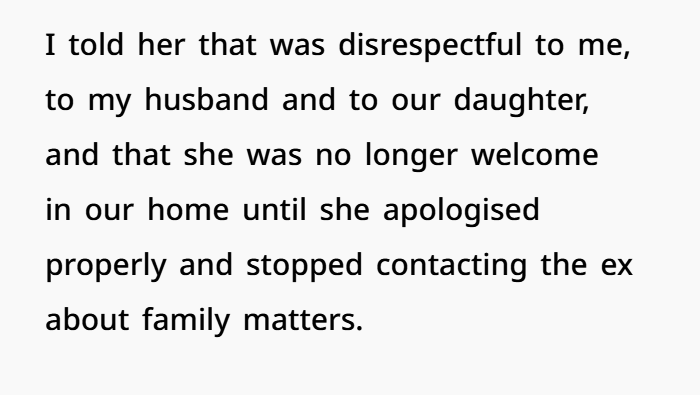
After talking with her husband, the couple decided that his mother would not be welcome in their home until she apologized and changed her behavior.
But instead of ending there, the disagreement began involving more relatives.
The situation raises an important question about marriage boundaries, trust, and healthy family relationships.
Is Staying Friends With Your Son’s Ex Really a Problem?
Not every friendship with a former partner is inappropriate.
Sometimes, parents remain close to someone their child dated for years.
They may have shared holidays, birthdays, and family celebrations together.
Even after the relationship ends, those friendships can continue.
There is nothing automatically wrong with that.
However, the situation changes when a parent starts treating the former partner as a possible replacement for the current spouse.
In this story, the mother-in-law reportedly invited her son’s ex-girlfriend to family gatherings while leaving his wife out.
That could make anyone feel uncomfortable.
But the bigger concern was her reported admission that she hoped the marriage would fail.
The wife was not simply upset about an old friendship.
She felt that her mother-in-law was quietly working against her relationship.
That is why the disagreement became much more serious.
Why Setting Boundaries Is Important in Marriage
Marriage brings two people together, but it also connects their families.
Parents, siblings, and other relatives may want to stay involved in the couple’s lives.
That can be wonderful when everyone respects each other.
However, problems can happen when family members try to influence private decisions or create tension between spouses.
This is why healthy marriage boundaries matter.
A couple should be able to decide what happens in their home and how much involvement they want from extended family.
Psychiatrist Murray Bowen developed family systems theory, which looks at how relationships within families affect one another.
One idea from this theory is that problems between two people can sometimes pull other family members into the disagreement.
That appears to be happening here.
What started as a problem between the wife and her mother-in-law eventually involved the husband, the ex-girlfriend, and several other relatives.
The more people became involved, the harder the situation became to manage.
The Husband’s Reaction Was Important
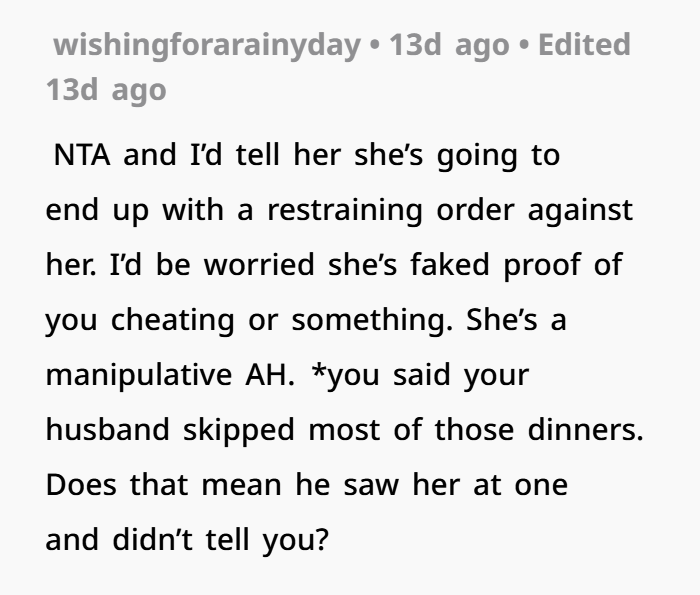
One detail that stands out is how the husband handled the disagreement.
Instead of ignoring his wife’s feelings, he reportedly listened to her concerns.
He also supported the decision to keep his mother out of their home until the issue was addressed.
That matters because couples often face pressure from relatives.
If one partner feels unsupported, family problems can create tension inside the marriage.
But when spouses communicate and make decisions together, they may find it easier to handle difficult situations.
Relationship researcher John Gottman has written about the importance of trust, respect, and teamwork in close relationships.
These ideas are also useful when couples are dealing with family disagreements.
Marriage counseling and relationship communication often focus on helping partners listen to each other and work through problems as a team.
In this situation, the husband and wife appeared to agree on what they wanted.
That shared decision could help them stay focused on solving the problem rather than arguing with each other.
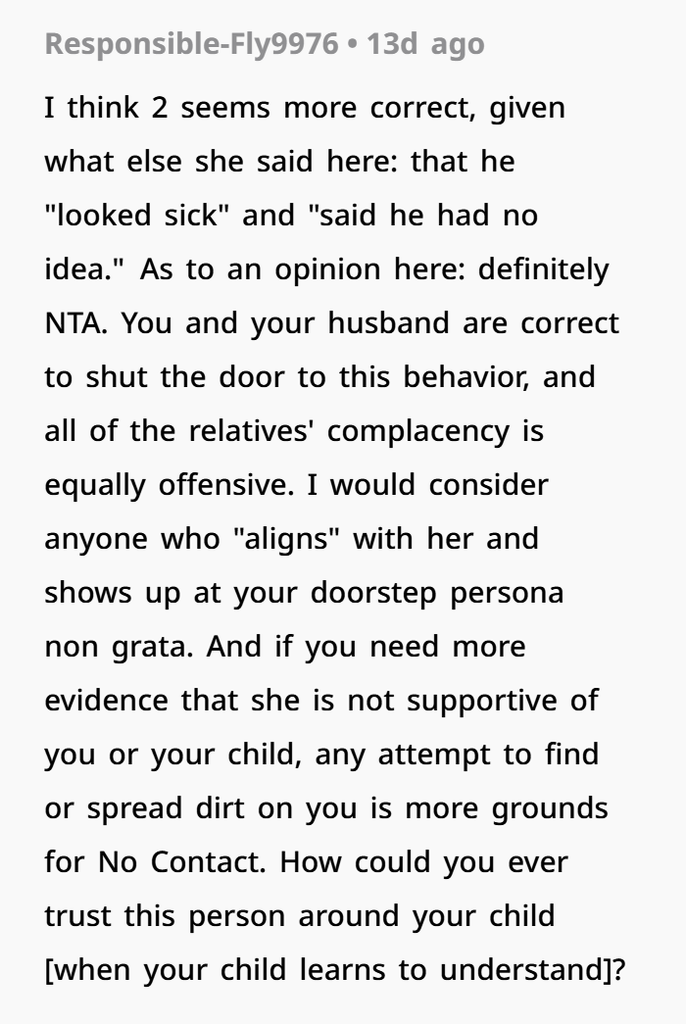
Was the Wife Wrong to Ban Her Mother-in-Law From the House?
The wife’s decision to stop her mother-in-law from visiting caused even more family tension.
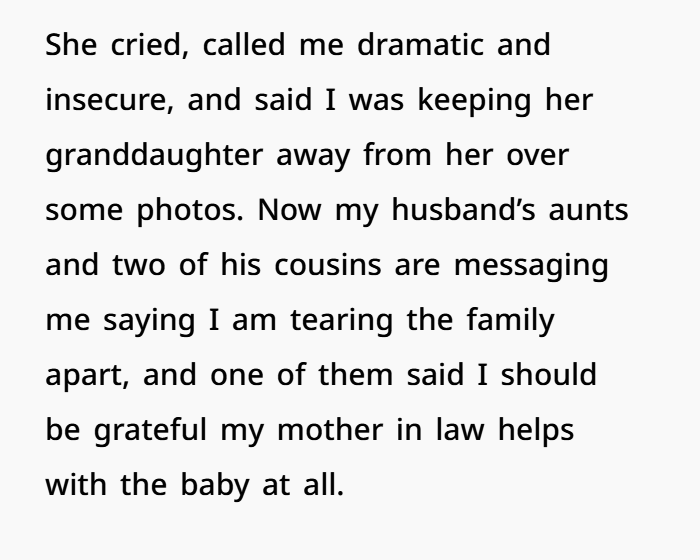
Some relatives believed she was being unfair.
Others accused her of keeping a grandmother away from her grandchild.
But according to the story, the wife was not trying to end the relationship forever.
She wanted an apology and a change in behavior.
There is a difference between setting a boundary and trying to punish someone.
A boundary is about deciding what behavior you are comfortable accepting.
For example, a couple might ask relatives to call before visiting.
They may also decide not to welcome someone who repeatedly makes disrespectful comments about their marriage.
These are personal household decisions.
The wife was not demanding that her mother-in-law stop being friends with the ex-girlfriend.
Her concern was about being excluded from gatherings and hearing that her mother-in-law hoped the marriage would fail.
From that point of view, wanting some distance is understandable.
Does Helping With Childcare Give Grandparents Special Rights?
Grandparents can be an important part of family life.
They may help care for children, offer advice, and support busy parents.
Many families appreciate having grandparents involved.
But helping with childcare does not automatically give someone unlimited access to a family’s home.
Parents generally make everyday decisions about their children and household.
This includes setting visiting rules and choosing who helps with childcare.
In some situations, legal questions about grandparent visitation may arise. Those rules vary depending on where the family lives.
However, the main disagreement in this story was about visiting the couple’s home.
The wife and husband wanted their household boundaries to be respected.
For families struggling with similar issues, parenting support, family counseling, and legal advice about family matters may help explain available options.
A healthy grandparent relationship should ideally be based on trust and mutual respect.
Why the Planned Sunday Visit Made Things Worse
The situation became more stressful when the mother-in-law reportedly announced that she planned to visit the couple’s home on Sunday.
She also intended to bring several relatives with her.
The couple had already made it clear that they did not want her visiting until the disagreement was resolved.
Arriving with a group of family members could make the situation more uncomfortable.
A calm conversation is difficult when several people are involved and emotions are already high.
There is a difference between asking someone to talk and expecting them to participate in a large family meeting.
If the couple does not want visitors, they can communicate that clearly.
They may also choose to discuss the issue through messages or phone calls instead of meeting in person.
Sometimes, giving everyone time to calm down is the best first step.
Can Relatives Enter Someone’s Home Without Permission?
In many places, homeowners and lawful residents generally have the right to decide who may enter their home.
Being related to someone does not automatically give a person permission to visit whenever they want.
However, property laws and trespass rules are different depending on the location.
For example, in the United States, states have their own laws about entering or remaining on private property without permission.
The story does not identify where the family lives, so it is impossible to know which specific laws would apply.
Simply saying that someone plans to visit does not automatically mean a law has been broken.
If the couple wants to avoid an unwanted visit, they can clearly explain their decision in writing.
They can also keep records of concerning messages and avoid arguments at the door.
If a situation becomes threatening or visitors refuse to leave, local authorities may be able to help.
For more serious concerns, a qualified family law attorney or legal consultation service can explain the rules that apply in the family’s location.
What Was the Mother-in-Law’s Secret About?
Another surprising part of the story was the mother-in-law’s claim that she knew something about the wife.
She reportedly suggested that her son needed to hear this information.
However, she did not explain what the secret was.
That makes it difficult to know what she meant.
She may have been trying to pressure the couple into meeting with her.
It is also possible that she believed she had something important to share.
Without more details, nobody can know for sure.
Vague statements like this can create worry because they leave people guessing.
Instead of focusing on the original disagreement, the couple may feel pressured to respond to an accusation that has not even been explained.
A better approach would be to ask for any genuine concern to be shared clearly.
The husband and wife should avoid making assumptions until they know what is actually being claimed.
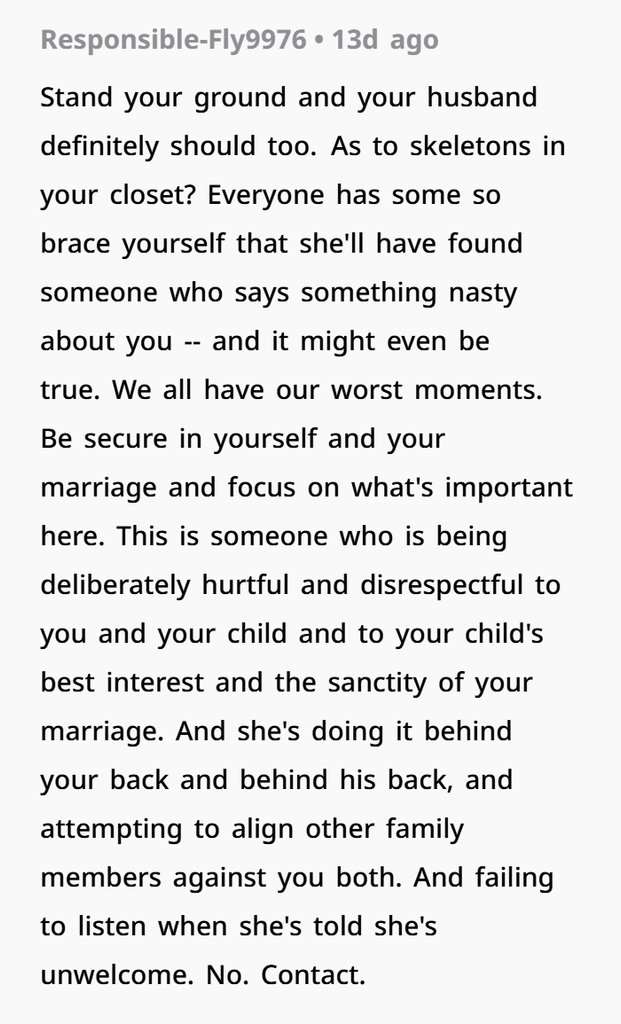
Why Other Family Members Started Taking Sides
Family disagreements often become more difficult when relatives get involved.
In this case, the husband’s aunts and cousins reportedly began defending the mother-in-law.
Some accused the wife of causing problems in the family.
Others appeared more concerned about the grandmother being kept out of the home than about what had led to that decision.
But relatives may not know the full story.
They may have heard only one person’s version of events.
They may also want everyone to get along again, even if the original problem has not been resolved.
Unfortunately, pressuring someone to ignore their feelings does not always create peace.
Sometimes, it makes the disagreement worse.
This is why family conflict resolution and professional mediation can be helpful.
A neutral person may be able to help relatives discuss the problem without turning it into a larger argument.
How the Couple Can Handle the Family Pressure
The husband and wife do not have to solve everything in one conversation.
They can begin by agreeing on what they need before they feel comfortable welcoming the mother-in-law back.
For example, they may want her to acknowledge why the secret gatherings were hurtful.
They may also want clear expectations about future family events.
The couple can explain that they are not trying to control every friendship their relatives have.
They simply expect their marriage to be respected.
If conversations become too emotional, taking a break may help.
It is also important to avoid asking other relatives to choose sides.
The main issue is between the couple and the mother-in-law.
If the disagreement continues, licensed family therapists and marriage counselors may help everyone communicate more clearly.
Can the Mother-in-Law Rebuild Trust?
It may still be possible for the family to move forward.
But rebuilding trust would likely require an honest conversation.
The mother-in-law would need to understand why her reported comments and actions upset the couple.
She could also explain her own feelings without making negative statements about their marriage.
A sincere apology might help.
However, an apology means more when it is followed by respectful behavior.
The couple could then decide what kind of relationship they feel comfortable having with her.
That might include family visits, celebrations, or spending time with the grandchild under agreed-upon arrangements.
There is no need to rush the process.
Trust can take time to rebuild, especially after a disagreement involving several relatives.
The Real Problem Was About Respect and Trust
At first, this story might sound like a wife becoming upset because her mother-in-law stayed friends with an ex-girlfriend.
But the reported details suggest something more serious.
The wife felt excluded from family gatherings.
Her mother-in-law allegedly admitted that she hoped the marriage would end.
And when the couple set a boundary, other relatives became involved.
The husband supported his wife’s concerns, making it a shared decision rather than something she did alone.
Still, the story comes from the wife’s point of view, and the mother-in-law’s unexplained claim about a secret leaves some questions unanswered.
Based on the account, the couple had understandable reasons to want some space while they worked through the disagreement.
Being family does not mean someone can ignore another person’s boundaries.
Grandparents can remain loving and involved without interfering in their adult children’s marriages.
And couples can protect their home and relationship without permanently cutting off relatives.
The bigger question is whether the mother-in-law is willing to respect the marriage and rebuild trust.
Because sometimes, keeping a family together starts with respecting the people who are already part of it.See The Comments Below