I’m Allowing Kids at My Wedding, but I Want to Ban My Cousin’s Son—His Behavior Is So Bad I’m Losing Sleep Over It
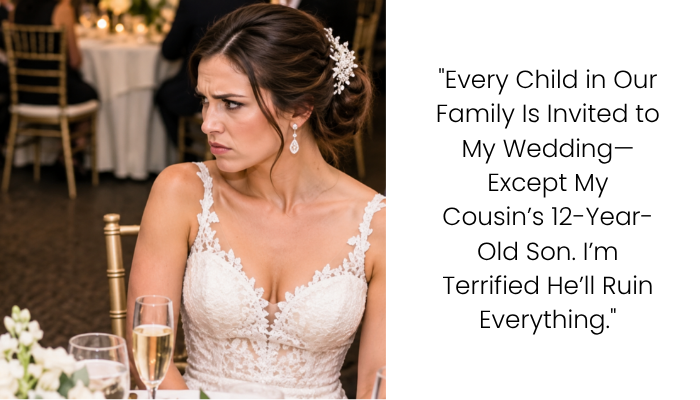
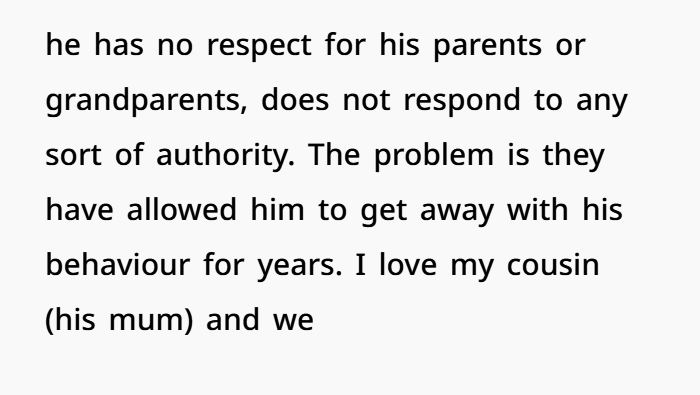
A woman was excited about planning her wedding, but one guest was making her very nervous. She and her fiancé wanted a large family wedding with children included. However, she did not want her cousin’s 12-year-old son to attend. She explained that the boy had a history of shouting, using rude words, hitting people, and ignoring adults. She believed his parents often allowed this behavior to continue. With so much time and money going into their wedding planning, she worried that his behavior could affect the ceremony and reception.
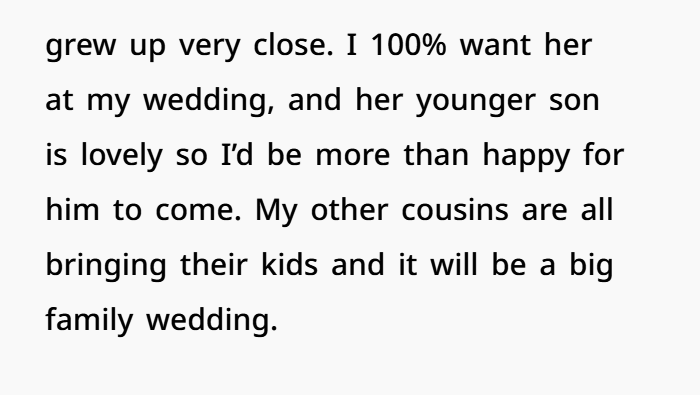
The bride’s biggest problem was that she loved the boy’s mother. The two cousins had been close since childhood, and she really wanted her at the wedding. She also liked the cousin’s younger son and had no concerns about inviting him. But asking one child to stay home while his brother attended would be difficult to explain. She knew her cousin might feel hurt or embarrassed. The bride did not want to create family problems over her wedding guest list, but she also wanted to feel comfortable on her special day.
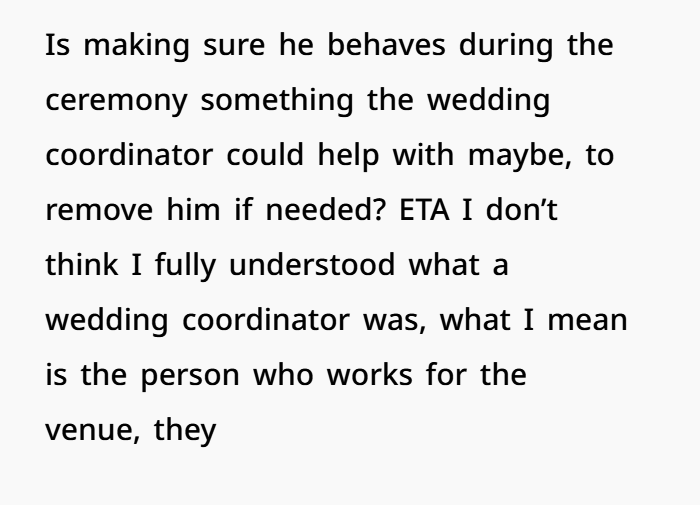
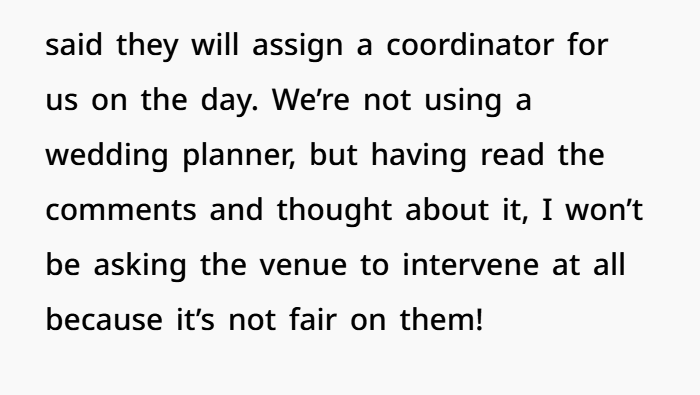
Her fiancé had already made up his mind. He did not want the 12-year-old at their wedding venue. He worried that the child might interrupt important moments or accidentally damage something at the location. The couple also had to think about their wedding venue security deposit and other event planning costs. The bride briefly considered asking the wedding coordinator to step in if any problems happened. However, she later felt it would be unfair to expect a venue employee to manage a family guest.
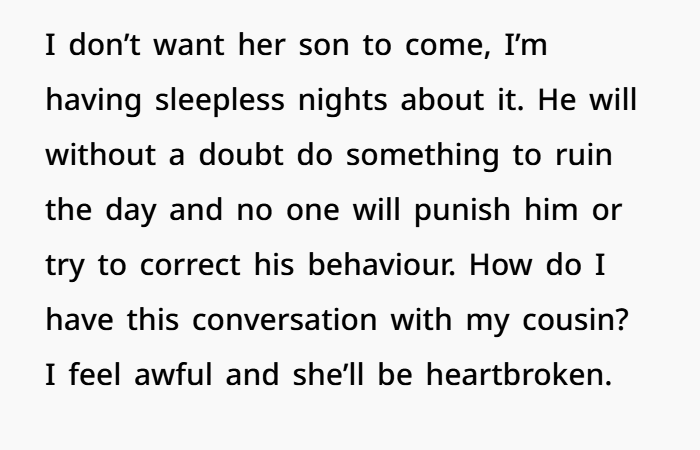
Now the bride was stuck between protecting her wedding plans and keeping peace with her family. She could invite the boy and hope everything went well, or have an uncomfortable conversation with her cousin before the wedding. Neither choice seemed easy. She wanted everyone to enjoy the celebration without worrying about arguments or interruptions. In the end, she turned to Reddit for advice and asked whether excluding one child because of his past behavior would make her unfair.
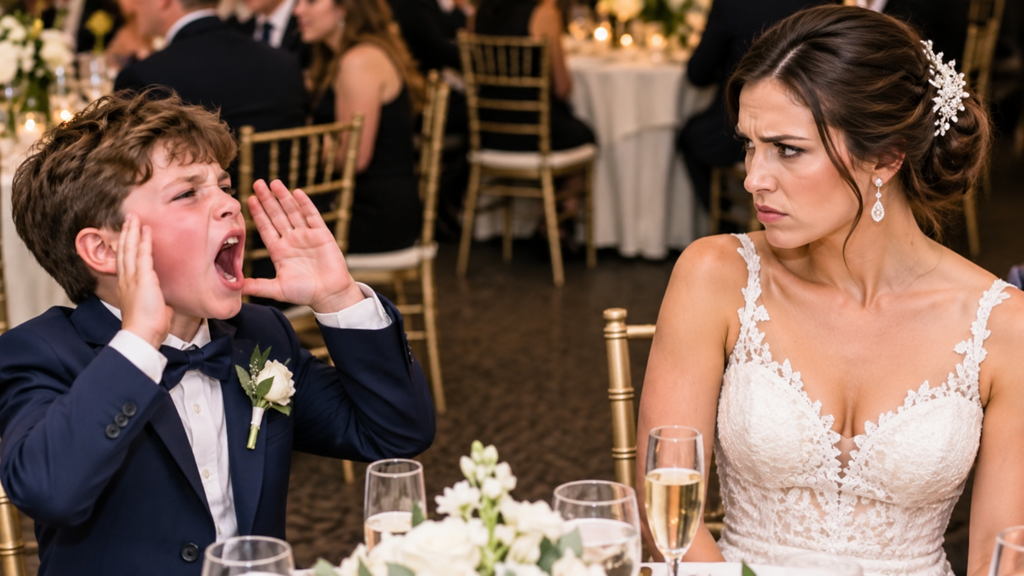


Bride Doesn’t Want Her Cousin’s 12-Year-Old Son at Her Wedding, but His Younger Brother Is Invited
Planning a wedding can be exciting, but choosing who to invite isn’t always easy.
One bride is facing a difficult situation with her cousin’s family.
She wants her cousin to attend her wedding. She also plans to invite several children, including her cousin’s younger son.
But she doesn’t want her cousin’s 12-year-old son there.
The reason isn’t his age. It’s his behavior at previous family gatherings.
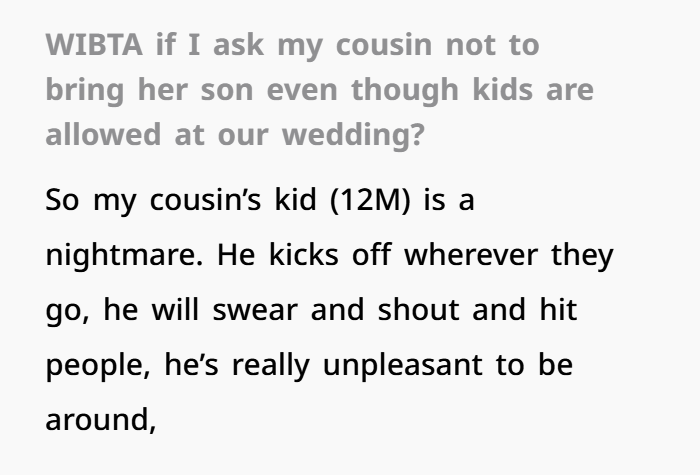
According to the bride, the boy has shouted, used rude language, ignored adults, and acted aggressively.
She worries that he might behave the same way at her wedding.
Her fiancé agrees with her concerns.
Now she’s wondering whether leaving one child off the wedding guest list would make her unfair.
Why the Bride Is Worried About the Boy’s Behavior
The bride says the boy has caused problems at family events before.
She describes times when he shouted, argued with adults, and had trouble following instructions.
She is also concerned about his past aggressive behavior.
Because of this, she doesn’t feel comfortable inviting him to a formal wedding.
A wedding is different from a regular family gathering.
There are important moments when guests are expected to stay quiet.
There may also be expensive decorations, wedding photography equipment, and other items around the venue.
The bride doesn’t want to spend her special day worrying about possible problems.
She wants everyone to enjoy the celebration.
Of course, this is only her side of the story. We don’t know everything about the boy or why he behaves this way.
But her concerns are still worth discussing.
Why His Younger Brother Is Welcome
One detail makes the situation more difficult.
The bride is inviting the boy’s younger brother.
Other children in the family are also welcome.
So this isn’t a child-free wedding.
The bride is thinking about leaving out one child because of his past behavior.
That could be upsetting for his parents.
Imagine being invited to a family wedding and learning that one of your children is welcome, but the other isn’t.
Even if the bride has a reason, the decision may still feel hurtful.
The older boy may also feel left out when he learns that his younger brother can attend.
This is why the bride needs to handle the situation carefully.
She can make decisions about her wedding guest list, but she should also think about how those decisions may affect her family.
Her Fiancé Is Concerned About the Wedding Venue
The bride’s fiancé is also worried about possible problems.
He doesn’t want anything to happen that could damage the wedding venue or interrupt the celebration.
One of his concerns is the venue’s security deposit.
Many wedding venues require couples to pay a deposit before the event.
Some also have rules about property damage and extra cleaning fees.
If something gets damaged, the couple may have to pay additional costs, depending on their venue contract.
And weddings can already be expensive.
Couples often spend money on wedding venue rental, catering services, decorations, photography, and other arrangements.
The fiancé doesn’t want an unexpected expense to affect their wedding budget.
That doesn’t mean the boy will damage anything.
But based on what the bride has described, the couple wants to avoid a situation they feel could be difficult to manage.
Could the Couple Lose Their Wedding Deposit?
The couple is worried about losing money if something goes wrong.
That’s a reasonable concern when planning a large event.
However, losing a wedding venue deposit isn’t automatic.
It depends on the terms of the venue agreement.
Some venues may charge for damage or additional cleaning.
Others may have different policies.
Before making assumptions, couples should read their wedding venue contract carefully.
It’s also useful to understand what wedding insurance covers.
Some event insurance policies may offer protection for certain types of property damage or other covered incidents.
But coverage depends on the policy, and not every situation is included.
For this couple, reviewing their venue rules could help them understand the possible financial risks.
Still, their main concern is having a peaceful wedding day.
Should the Wedding Coordinator Handle the Problem?
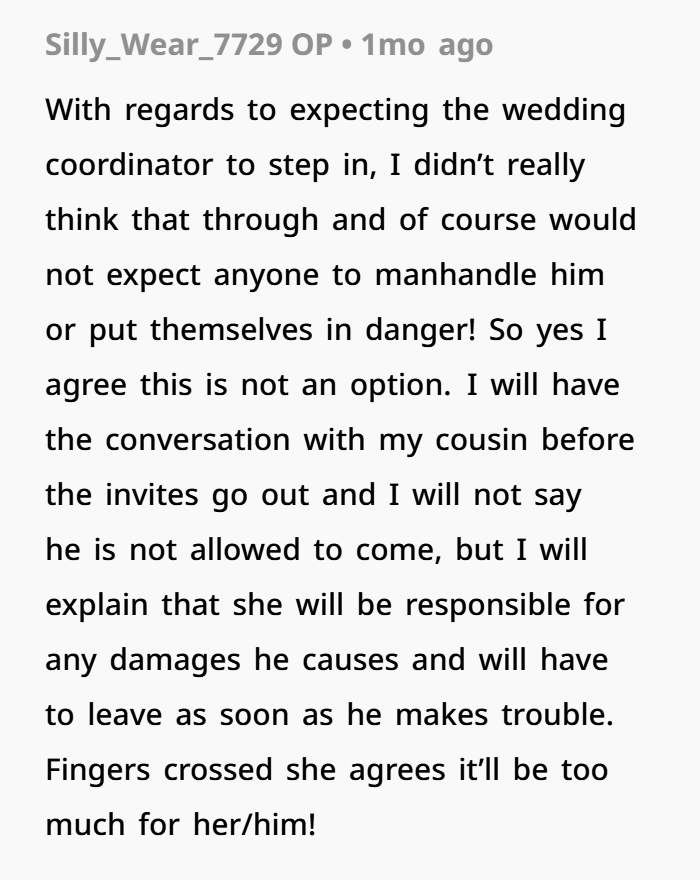
The bride originally thought about asking the wedding coordinator to step in if the boy caused trouble.
But she later realized that might not be fair.
Wedding coordinators already have important jobs.
They help manage the wedding schedule, communicate with vendors, and make sure the event runs smoothly.
They aren’t normally responsible for supervising children.
If a child becomes upset or disruptive, the parent or another responsible adult should usually handle the situation.
The bride shouldn’t expect the coordinator to become a babysitter or deal with family disagreements.
If the boy attends, his parents would need to take responsibility for supervising him.
They would also need a plan for what to do if he became overwhelmed or disrupted the event.
Is It Wrong to Invite One Child but Not Another?
This is probably the hardest question in the story.
On one hand, the bride and groom have the right to choose their wedding guests.
They are planning the event and paying for the celebration.
On the other hand, inviting one child while excluding his sibling can feel unfair.
The cousin may see the decision as a personal rejection of her older son.
She may also worry about how he will feel.
Both sides have understandable concerns.
But treating everyone fairly doesn’t always mean making exactly the same decision for every person.
If the couple has genuine concerns about someone’s previous behavior, they can consider those concerns when planning their guest list.
The important thing is to focus on the behavior rather than making hurtful comments about the child.
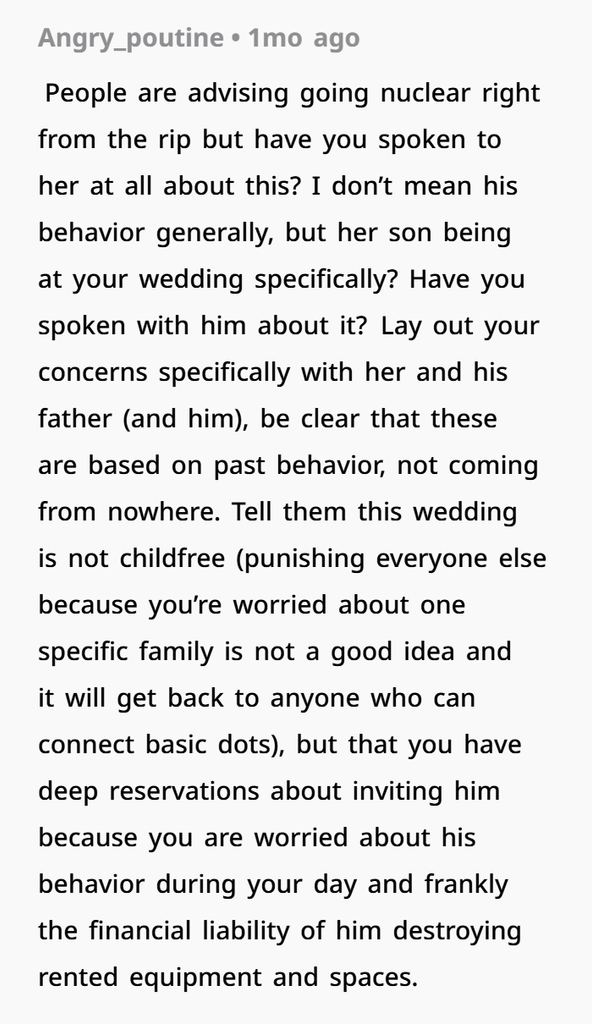
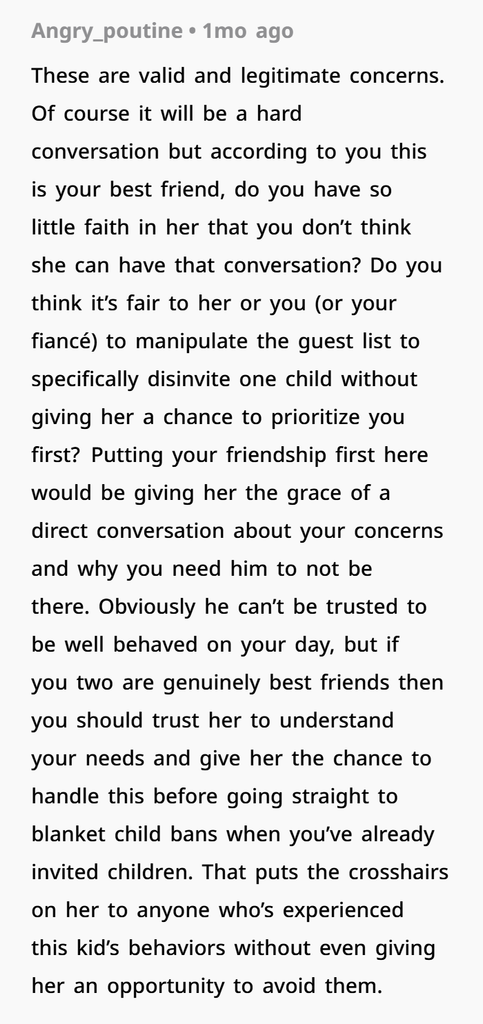
Should the Bride Speak to Her Cousin First?
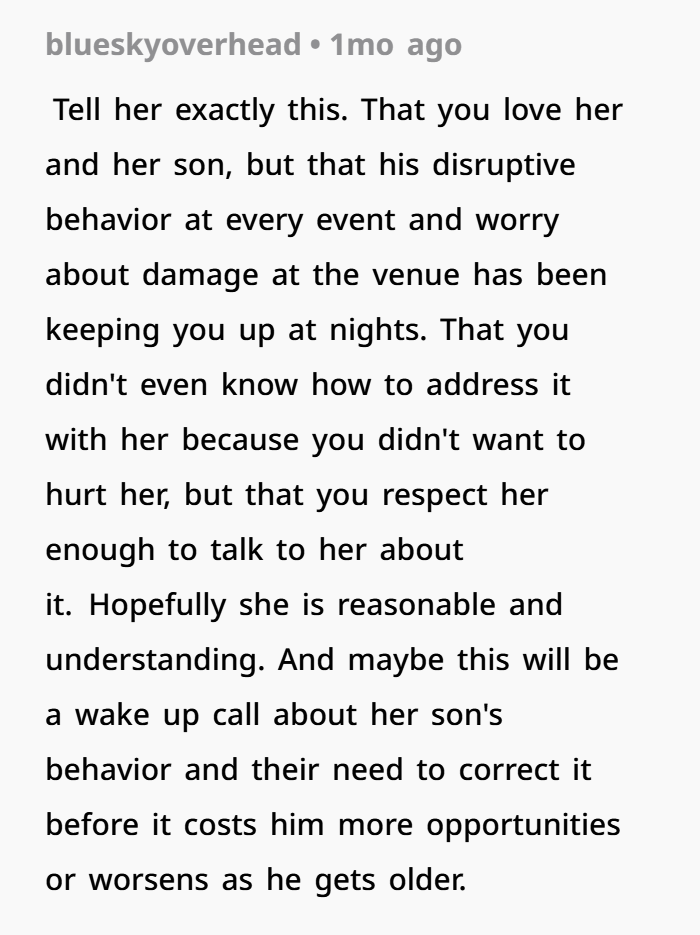
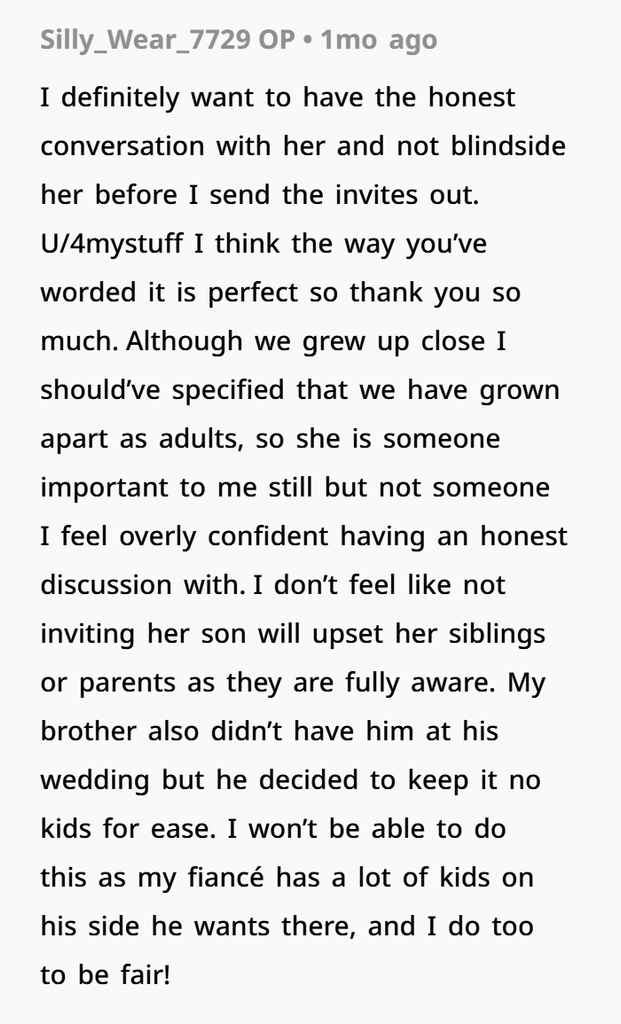
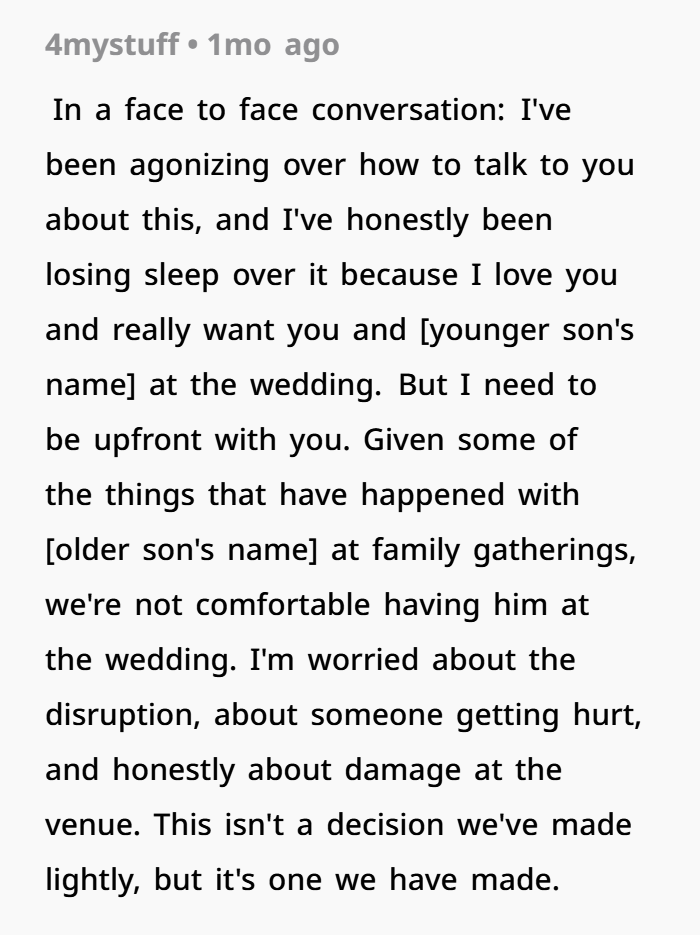
Before making a final decision, the bride could have a private conversation with her cousin.
She doesn’t need to start by saying that her son is badly behaved.
Instead, she could explain what has made her worried.
She could mention previous family events where there were problems with shouting, following instructions, or aggressive behavior.
Then she could explain why she feels nervous about having similar problems at the wedding.
Her cousin may have a different view of those situations.
She may also be able to suggest a way to manage the event.
Having this conversation doesn’t mean the bride has to change her mind.
It simply gives both sides a chance to understand each other.
Could There Be a Fair Compromise?
If the bride and groom are comfortable with it, they could consider inviting the boy with clear expectations.
His parents could agree to supervise him during the ceremony and reception.
They could also agree to take him outside if he needs a break.
If his behavior becomes unsafe or seriously disrupts the wedding, they would need to be ready to leave.
But this would only work if his parents were willing to follow the plan.
The bride and groom would also need to agree.
If they already feel that inviting him would create too much worry, they don’t have to offer this option.
A compromise should make everyone more comfortable, not create another problem.
What If Her Cousin Decides Not to Attend?
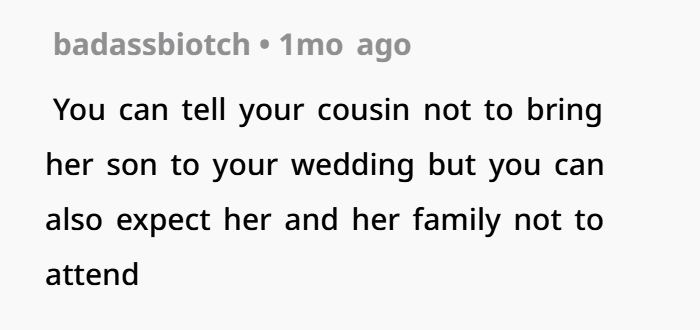
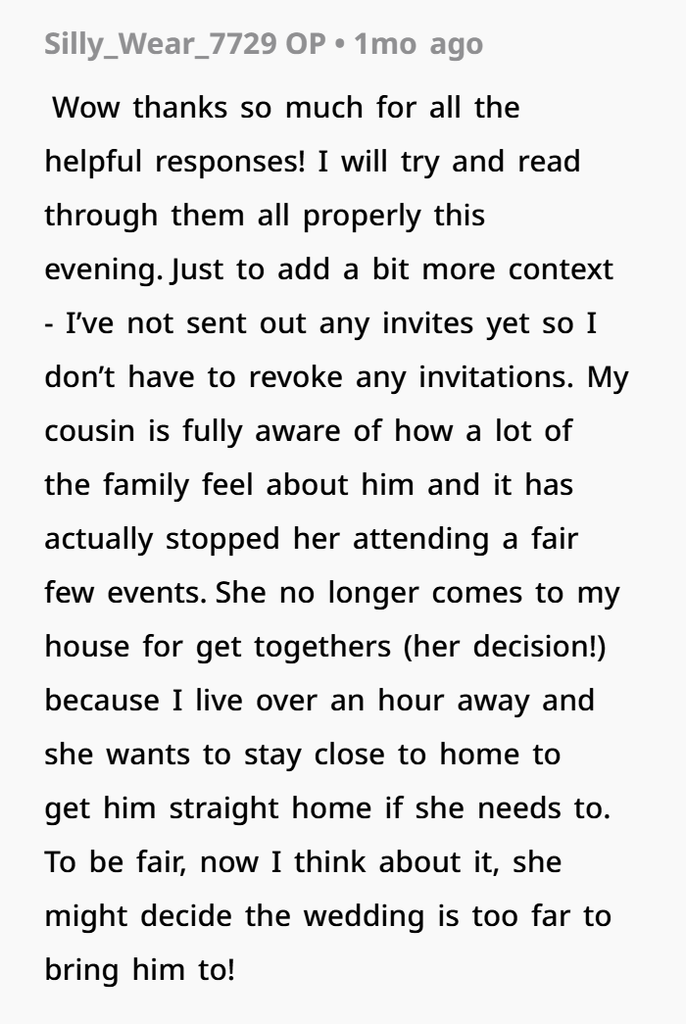
The bride should also prepare for the possibility that her cousin may decline the invitation.
A parent may not want to attend a family wedding when one of their children has been left out.
The cousin might feel hurt or uncomfortable with the decision.
She may also want to protect her older son’s feelings.
If she decides not to attend, the bride may be disappointed.
But she should respect that choice.
Just as the bride and groom can decide who attends their wedding, guests can decide whether they want to come.
Both sides may have to accept a decision they don’t like.
Why Clear Wedding Guest List Rules Matter
This situation shows why wedding guest list planning can be complicated.
Some couples choose to have a child-free wedding.
Others invite children from close family members.
Some have rules about plus-ones or the number of guests each family can bring.
There isn’t one perfect rule for every wedding.
But clear communication can help avoid confusion.
Couples should decide who is invited before sending wedding invitations.
They should also understand their wedding venue’s rules and any limits on guest numbers.
If children are attending, it’s helpful to know who will supervise them.
Good wedding planning isn’t only about decorations, catering, and choosing a beautiful venue.
It’s also about helping guests feel comfortable and making sure the event runs smoothly.
How the Bride Can Handle This Without Hurting Her Family
The bride should avoid discussing the boy’s behavior with several family members.
That could embarrass his parents and make the situation worse.
A private conversation would be more respectful.
She should focus on specific concerns rather than calling the boy names or criticizing how he was raised.
She can explain that she wants a calm and enjoyable wedding.
She can also acknowledge that her decision may be upsetting.
If she and her fiancé decide not to invite him, they should be clear about that choice.
They should also understand that her cousin may not agree.
Sometimes, even a carefully explained decision can hurt someone’s feelings.
That doesn’t automatically mean the decision was wrong.
Final Verdict: Would the Bride Be Wrong?
Based on the bride’s account, NTA (Not the A-Hole), as long as she handles the situation with care.
She has concerns about the boy’s past behavior, and her fiancé shares those concerns.
They want to enjoy their wedding without worrying about possible disruptions or safety problems.
They aren’t required to invite every child simply because other children are attending.
However, leaving out one child while inviting his younger brother is a sensitive decision.
The bride should understand that her cousin may feel hurt or decide not to attend.
She should also avoid blaming the child or making negative comments about his parents.
A calm, private conversation would be the best way to handle the situation.
At the end of the day, the couple should be able to enjoy their wedding while also treating family members with kindness.
What do you think? Should the bride leave the 12-year-old off the wedding guest list because of his past behavior, or should she give him a chance to attend?
See The Comments Below