AITA for Refusing to Help My Bedbound Sister Unless She Gives Up the Dog That Saved Her?
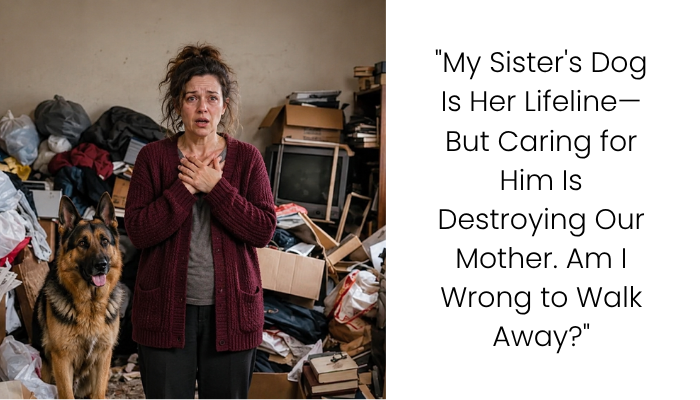
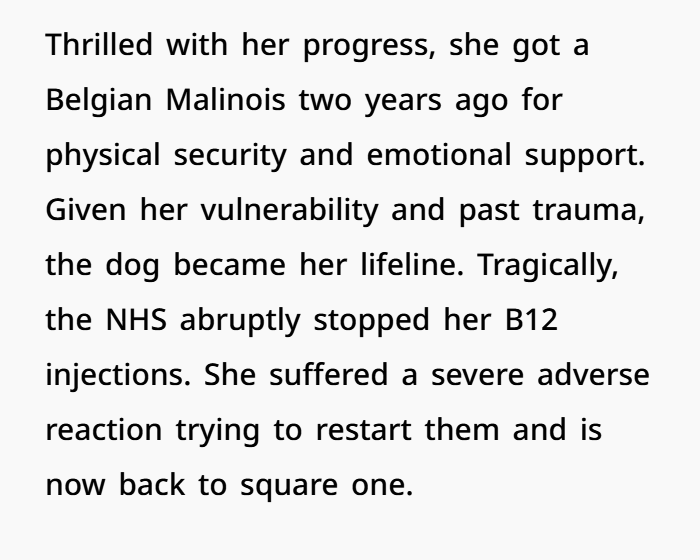
Taking care of a sick family member is never easy, especially when everyone has different opinions about what is best. One Reddit user shared a family problem involving their sister and her beloved Belgian Malinois. The sister has autism and several long-term health conditions that have made daily life very difficult. She spent almost ten years mostly in bed before her health improved with diet changes and vitamin B12 injections. For a while, she could walk up to 20,000 steps a day. She decided to get a dog for protection and company, and the pet soon became one of the most important things in her life.
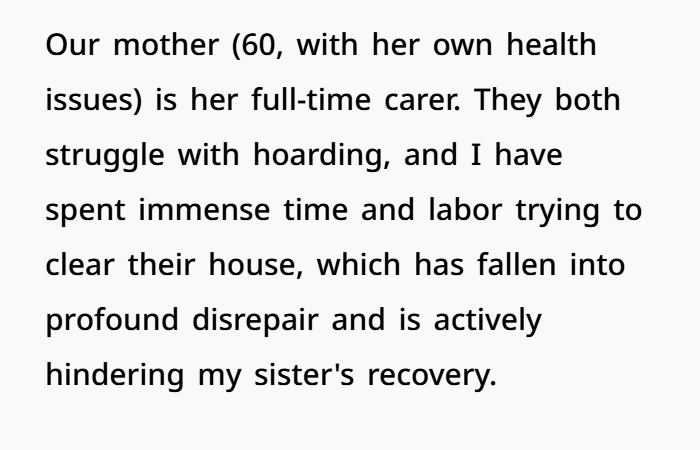
Things changed when her health became worse again. According to the Reddit post, her B12 injections were stopped, and she later had a bad reaction when treatment was restarted. She is now back in bed and needs help with basic daily tasks. Her 60-year-old mother provides most of her home care, despite having health concerns herself. The family is also dealing with a cluttered house that needs serious cleaning and home organization. The Reddit user has been helping with these problems, but the extra responsibility of caring for a large, energetic dog has made everything harder.
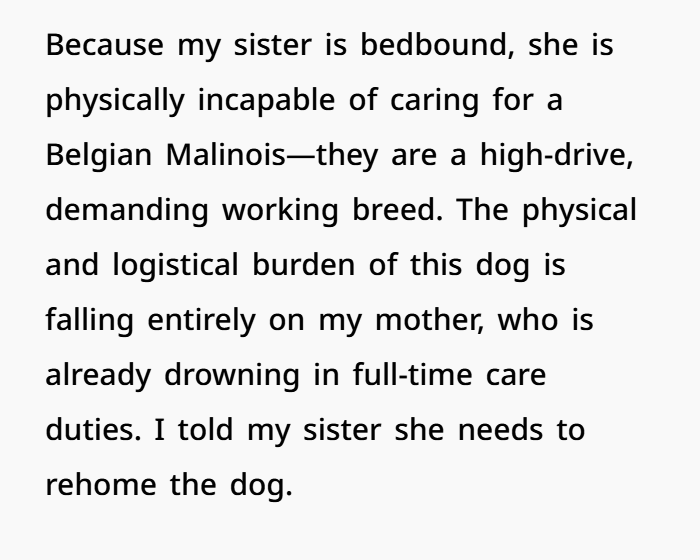
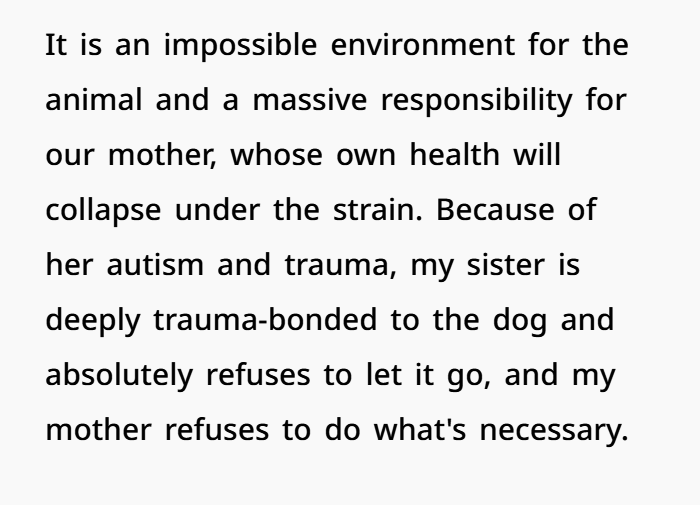
The sibling thinks finding a new home for the dog would be the best choice. Belgian Malinois dogs need daily exercise, training, and attention to stay healthy and happy. With the sister unable to provide that care, much of the work falls on their mother. The Reddit poster worries that she is already doing too much. They believe that proper pet care and family caregiving should not come at the cost of an older parent’s health. But the sister does not agree. She loves her dog and feels safer knowing it is nearby. Their mother also refuses to force her to give it up.
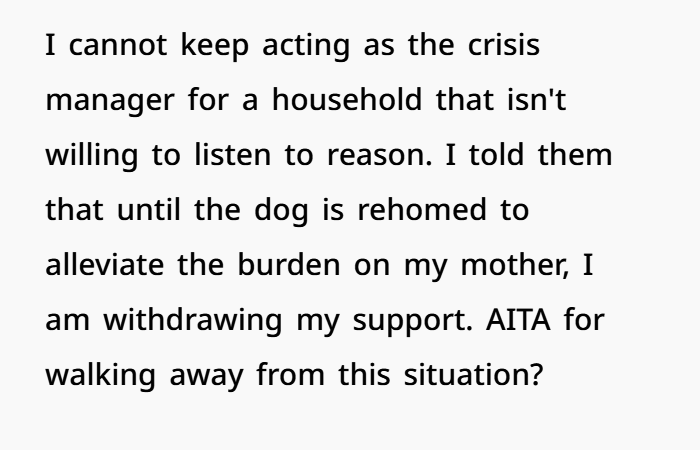
Eventually, the Reddit user reached a point where they felt they could no longer help. They told their family that they would stop providing support unless the dog was rehomed. Their decision has started a debate about family boundaries, caregiver support, and long-term care responsibilities. Some people may understand why the sibling wants to protect their mother’s well-being. Others may feel that taking away the dog would be too painful for someone who has already faced so many challenges. What would you do if you were in this family’s position?

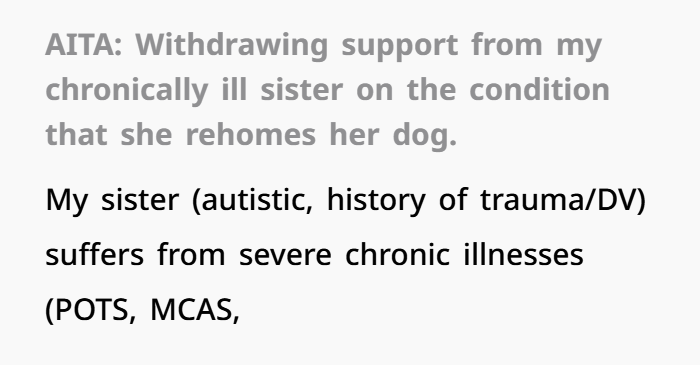


Family Caregiver Burnout: Should a Disabled Woman Have to Give Up Her Dog?
Taking care of a family member can be hard, especially when that person needs help every day. But what happens when the caregiver becomes too tired to keep going?
That is the problem one family is facing.
A mother is caring for her adult daughter, who is unable to get out of bed because of serious health problems. The daughter also owns a Belgian Malinois, a large and active dog that needs regular exercise and attention.
Another family member believes the dog is making life harder for the mother. They want the sister to find the dog a new home before they offer more help.
But the sister loves her dog and depends on it for emotional comfort.
Now the family is stuck between two difficult choices.
Should the sister give up her beloved pet, or should the family find another way to manage the caregiving responsibilities?
Why Family Caregiving Can Become Too Much
Caring for someone you love is important, but it can also be exhausting.
Many family caregivers spend their days cooking, cleaning, helping with personal care, and arranging medical appointments.
Some also manage household bills, transportation, and other daily needs.
When one person handles most of these responsibilities, there may be little time left for rest.
According to Carers UK, unpaid caregivers often deal with stress, financial problems, and health concerns.
In this family, the mother already has a lot on her plate.
She provides full-time care for her daughter while also trying to manage a home that needs cleaning and repairs.
On top of that, she may have to help care for an energetic dog.
It is easy to understand why another family member is worried about her health.
This is where caregiver burnout becomes a serious concern.
Caregiver burnout happens when someone becomes physically and emotionally tired from caring for another person over a long period.
Without enough support, even simple daily tasks can start to feel overwhelming.
Professional home care services, respite care, and caregiver support programs may help families dealing with these challenges.
Why the Dog Is So Important to the Sister
For the sister, her dog is not just another pet.
The dog became part of her life during a time when her health had improved and she was able to enjoy more independence.
Now that she spends her time in bed, the dog may be one of the few things that still brings her happiness.
Pets can provide comfort, friendship, and a daily routine.
For someone living with a long-term disability, that companionship can be especially meaningful.
A 2018 review published in BMC Psychiatry found that companion animals can provide emotional support for people living with mental health conditions.
However, the researchers also noted that caring for pets can sometimes create additional responsibilities.
In this case, the sister may see her dog as a source of comfort during a very difficult time.
Losing the dog could be deeply upsetting.
That is why the family should take her feelings seriously.
At the same time, loving a pet also means making sure it receives proper care.
The sister’s emotional needs matter, but so do the needs of the dog and the people helping to care for it.
Why a Belgian Malinois Needs Extra Care
Belgian Malinois are known for being smart, energetic, and hardworking dogs.
They are often used in jobs that require training, focus, and physical activity.
Unlike some quieter dog breeds, Belgian Malinois usually need plenty of exercise and mental stimulation.
The American Kennel Club describes them as active dogs that do best when they have regular training and meaningful activities.
A Belgian Malinois generally needs:
- Daily walks and physical exercise
- Regular training and playtime
- Mental activities to prevent boredom
- Proper grooming and veterinary care
- Attention and time with people
These responsibilities can be difficult for a family that is already managing full-time caregiving.
However, having a disability does not mean someone cannot own an active dog.
Many disabled pet owners provide excellent care with the help of family members, professional dog walkers, and pet care services.
The important question is whether the dog is getting everything it needs.
If the mother is struggling to provide that care, the family may need additional help.
Hiring a dog walker or using a trusted pet care service could reduce some of the pressure.
Can Family Members Be Expected to Provide Full-Time Care?
Many people help their relatives because they care about them.
But family members also have their own health, work, and personal responsibilities.
No one can provide unlimited help without considering their own well-being.
In England, the Care Act 2014 provides a process for assessing the needs of adults who require care and the people who look after them.
Under Section 10, a carer’s assessment considers whether someone is able and willing to continue providing care.
This could be important for the mother in this situation.
If her responsibilities are affecting her health, she may be able to request an assessment through her local council.
The NHS explains that a carer’s assessment is free and can help identify support options.
Depending on individual needs and eligibility, assistance may include respite care, practical support, or information about local services.
Families may also explore home health care services, adult social care, and long-term care planning.
These options can help reduce the pressure on unpaid family caregivers.
However, available services and financial assistance depend on individual circumstances and location.
What Caregiver Burnout Research Tells Us
Caregiver stress is a problem that affects many families.
Carers UK’s 2025 State of Caring research reported that many unpaid caregivers were struggling with their health and well-being.
According to the reported survey findings:
42% said caring had made their physical health worse.
74% reported feeling stressed or anxious.
The research involved more than 10,500 unpaid caregivers.
These findings help explain why the family member is worried about the mother.
Providing daily care can affect sleep, physical health, social life, and emotional well-being.
Some caregivers also face financial pressure when they reduce their working hours or pay for additional support.
This is why caregiver assistance programs and financial planning can be important for families managing long-term disabilities.
Getting help early may prevent a difficult situation from becoming even harder.
Is Asking the Sister to Rehome Her Dog Fair?
This is the most difficult question in the family dispute.
On one side, the family member wants to protect the mother’s health.
That is a reasonable concern.
If the mother is already struggling with full-time care, adding more responsibilities may not be sustainable.
On the other side, the sister has a strong emotional connection with her dog.
She has already lost much of her independence because of her health.
Giving up her pet may feel like losing another important part of her life.
Both sides have understandable concerns.
The real problem may not be the dog itself.
It may be that the family does not have enough help to manage everything.
Before deciding to rehome the dog, they could explore professional dog walking, pet sitting, or help from trusted friends.
They could also look into home care assistance to reduce the mother’s other responsibilities.
Of course, these services may not be affordable or available for every family.
If the dog cannot receive proper care, finding a suitable new home may eventually be necessary.
But the decision should be based on the dog’s actual needs and the family’s available support.
The Difference Between Healthy Boundaries and Ultimatums
Setting boundaries is an important part of family relationships.
A person can decide how much time, money, or energy they are able to give.
For example, the family member may reasonably say they can no longer help with cleaning, pet care, or household responsibilities.
That is a personal boundary.
But saying the sister must give up her dog before receiving any help is a different situation.
It puts pressure on someone who already depends heavily on others.
A better approach may be to explain which responsibilities are no longer manageable.
The family could then discuss other ways to get those tasks done.
This might involve professional caregivers, community support services, or a new household care plan.
If the sister depends on family assistance for essential daily needs, any changes should be arranged carefully.
Her safety and well-being should remain a priority.
How the Family Could Make Life Easier
There may not be one perfect answer, but several practical options could help.
Getting Professional Home Care Support
A professional home caregiver may be able to help with personal care and daily activities.
This could give the mother more time to rest and take care of her own health.
Even a few hours of support each week might make a difference.
Using Respite Care Services
Respite care gives family caregivers a temporary break.
Depending on the available services, care may be provided at home or in another suitable setting.
This can be especially helpful when the main caregiver is older or dealing with health problems.
Hiring a Professional Dog Walker
A Belgian Malinois needs regular exercise.
If the mother cannot manage daily walks, a professional dog walker may be able to help.
Pet sitting and dog daycare services could also be considered if they are suitable for the dog’s needs and behavior.
Looking Into Disability Benefits and Financial Support
Long-term caregiving can be expensive.
Families may need help with medical supplies, home modifications, transportation, and professional care.
Depending on eligibility, disability benefits and local assistance programs may help with some expenses.
A qualified benefits adviser can explain which support options may be available.
Creating a Long-Term Care Plan
A family care plan can help everyone understand their responsibilities.
It should explain who handles medical appointments, household tasks, pet care, and emergency situations.
Having a clear plan may prevent one person from being expected to do everything.
Why the Mother’s Health Matters Too
It is natural for parents to want to help their children, even when those children are adults.
But parents can also become exhausted.
In this situation, the mother may feel responsible for keeping her daughter comfortable and happy.
She may not want to make a decision that could upset her.
However, ignoring her own health is not a long-term solution.
If the mother becomes too tired or unwell to continue providing care, the entire family could face more difficulties.
This is why her needs should be part of every discussion.
Regular breaks, medical care, emotional support, and practical assistance can all help protect a caregiver’s well-being.
The goal should be to make caregiving manageable, not to expect one person to handle everything alone.
What Is the Best Solution for This Family?
There are several people to think about in this situation.
The sister needs daily support and wants to keep the dog she loves.
The mother needs rest and help with her responsibilities.
The other family member wants to protect the mother’s health while setting limits on their own involvement.
And the dog needs regular exercise, attention, and proper care.
None of these needs should be ignored.
The best first step may be an open family conversation about what each person can realistically manage.
A social worker or care professional may also help the family understand its options.
If outside assistance can make the situation manageable, the sister may be able to keep her dog.
If not, the family may need to discuss other arrangements.
The important thing is to make a thoughtful decision rather than one based only on frustration.
Final Thoughts: When Family Caregiving Becomes Overwhelming
This family dispute is about much more than a dog.
It is about the challenges of caring for someone with a long-term disability while trying to protect the health of everyone involved.
The sister deserves emotional support and respect.
The mother deserves rest and a manageable daily routine.
The other family member deserves to set reasonable boundaries.
And the dog deserves a safe home where its needs are met.
Rehoming the dog may be one possible solution, but it is not necessarily the only one.
Home care services, respite care, pet care assistance, and better family planning may help reduce the pressure.
Helping a loved one should not mean sacrificing your own health or expecting one person to manage everything.
What do you think? Should the sister be asked to find a new home for her dog, or should the family focus on getting more support first?
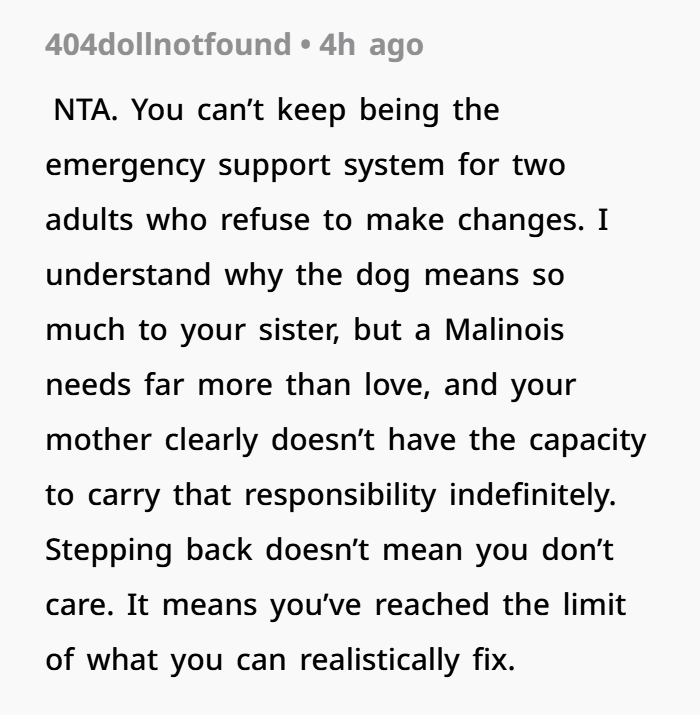
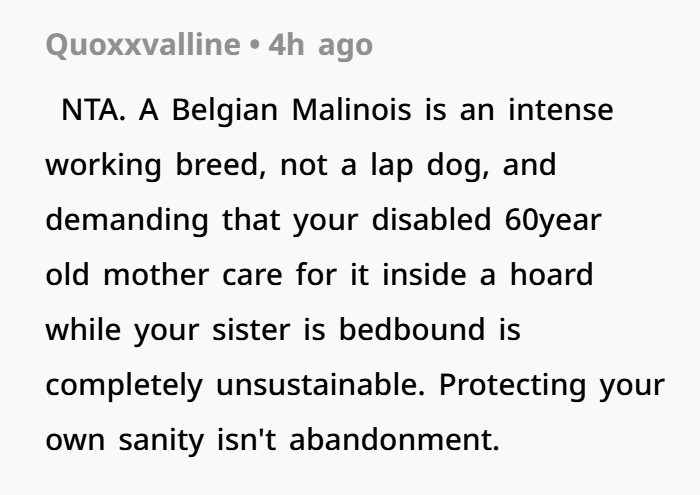
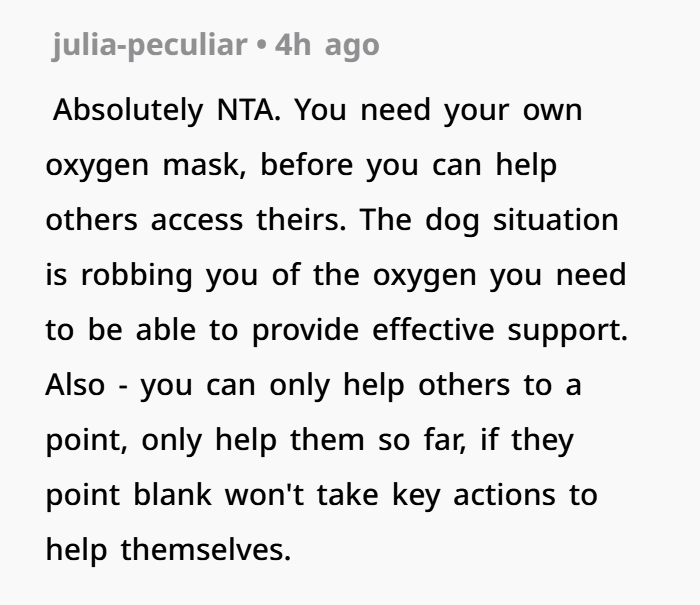
Readers’ Comments Speak Out