AITA for Refusing to Reimburse My Best Friend $240 After She Quit Being My Bridesmaid?

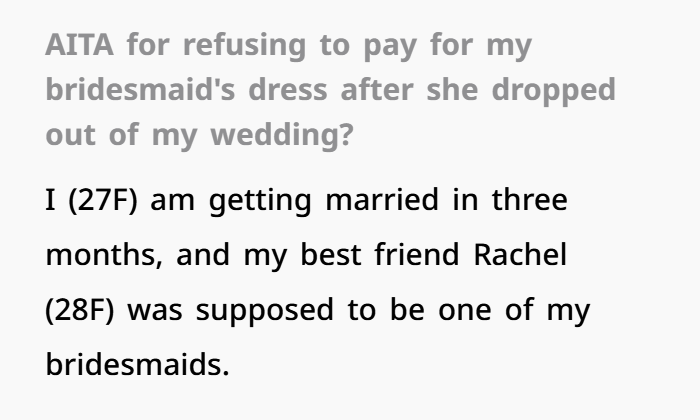
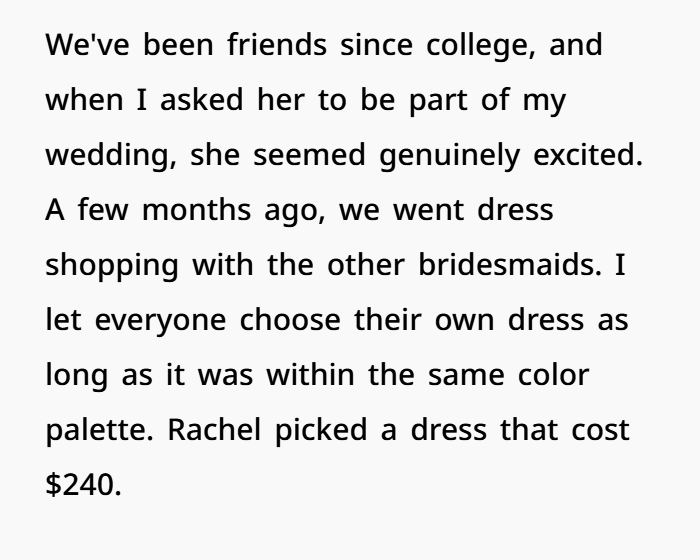
Planning a wedding can be expensive, but one bride never expected a $240 bridesmaid dress to cause problems with her best friend. The 27-year-old woman had asked her longtime friend Rachel to be a bridesmaid, and Rachel happily agreed. The bride wanted everyone to feel comfortable, so she let her bridesmaids choose their own dresses within a matching color theme. Rachel found a dress she liked for $240. Since Rachel was trying to save money, the bride suggested looking at more affordable bridesmaid dresses. However, Rachel decided to buy the expensive one anyway. The bride had no problem with her choice, and they continued making wedding plans.
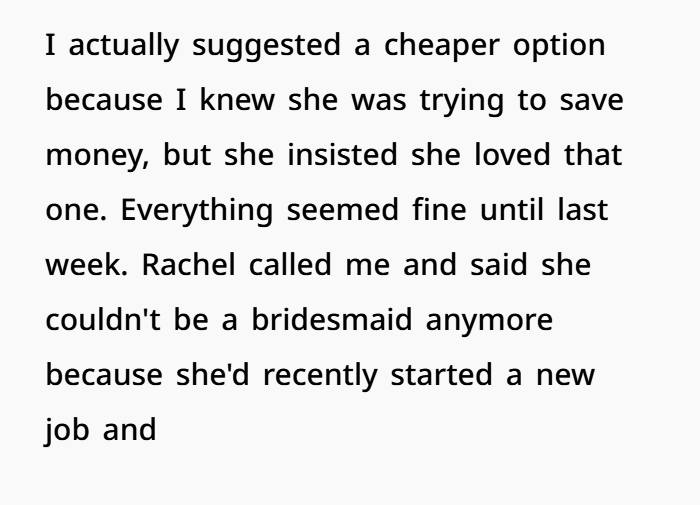
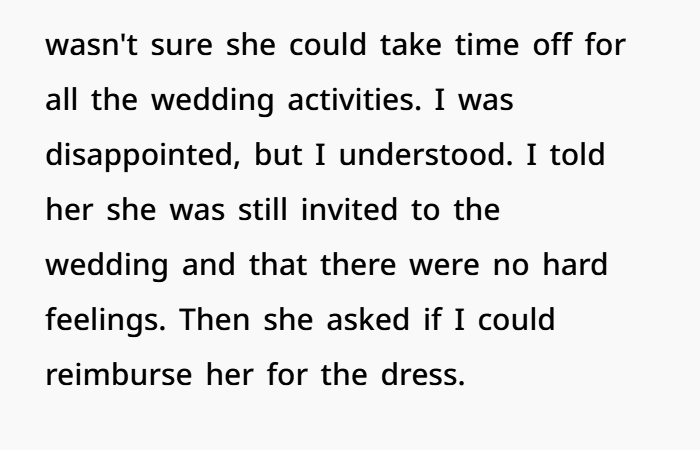
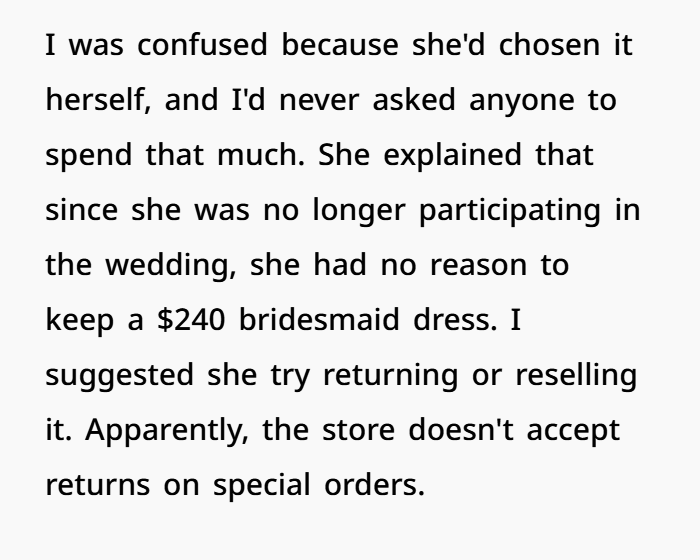
Everything changed when Rachel got a new job. With only three months left before the wedding, she told the bride that she could no longer be a bridesmaid because she was unsure about getting time off work. The bride understood and told her not to worry. She even invited Rachel to come to the wedding as a regular guest. But then Rachel asked for something the bride did not expect. She wanted her $240 back for the dress she had purchased. Rachel said she bought the outfit only because she was going to be in the wedding. Since that was no longer happening, she felt the bride should cover the cost. The bride suggested selling the dress, but Rachel said it was a custom order and could not be returned.
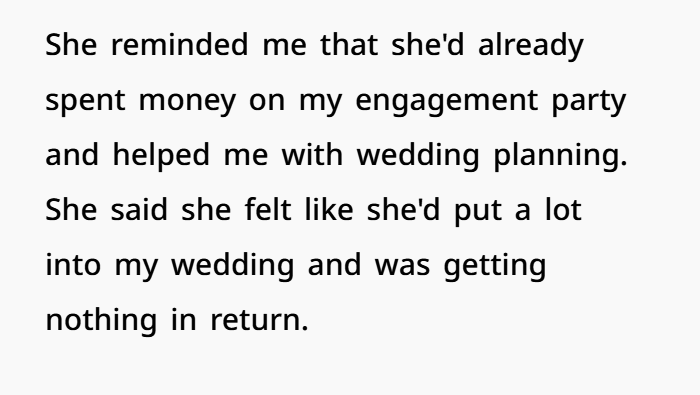
Rachel was also upset about the other wedding expenses she had already covered. She reminded the bride that she had spent money on the engagement party and helped with wedding preparations. She felt that all her time and money had gone to waste. Things became even more uncomfortable when a mutual friend told the bride that Rachel had been talking about the disagreement. According to the friend, Rachel believed the bride was choosing $240 over their years of friendship. The bride felt hurt by this because she had never asked Rachel to spend so much on a dress. She and her fiancé were already handling most of the wedding costs and working hard to stay within their wedding budget.
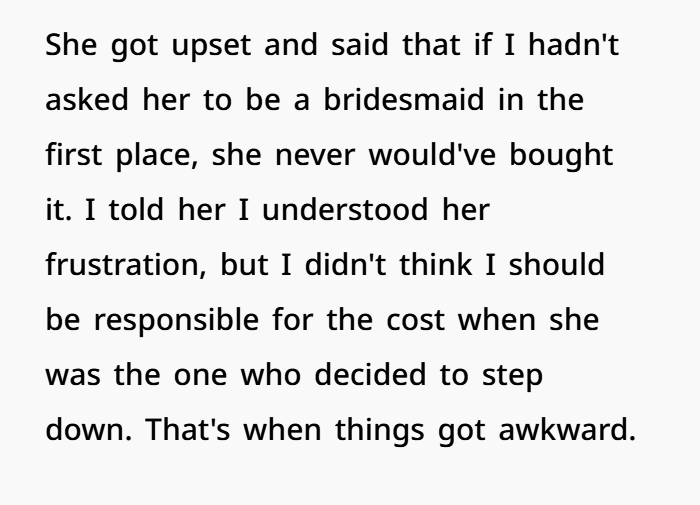
The bride now feels stuck between protecting her money and keeping her friendship. She admits that paying $240 would not be impossible, but she does not think it is her responsibility. Rachel chose the dress, and she was also the one who decided to step down from the wedding party. Still, the bride knows their friendship is worth much more than the price of a bridesmaid dress. What started as a small wedding planning problem has now become a bigger disagreement about fairness and money. Do you think the bride should pay for the dress, or should Rachel accept the cost of her own decision?

Bride Refuses to Pay $240 for Bridesmaid Dress After Friend Drops Out of Wedding
A bride is having a disagreement with one of her closest friends over a $240 bridesmaid dress.
Her friend Rachel bought the dress when she agreed to be part of the wedding. But after starting a new job, Rachel decided she could no longer be a bridesmaid.
The bride understood her decision and still invited her to attend the wedding as a guest.
Then Rachel asked for her money back.
The bride refused because Rachel had picked the dress herself, even though a cheaper option was available.
Now the two friends are upset with each other, and their longtime friendship is being tested.
It raises a question many people might have during wedding planning: If a bridesmaid drops out after buying her dress, should the bride pay her back?
Who Usually Pays for a Bridesmaid Dress?
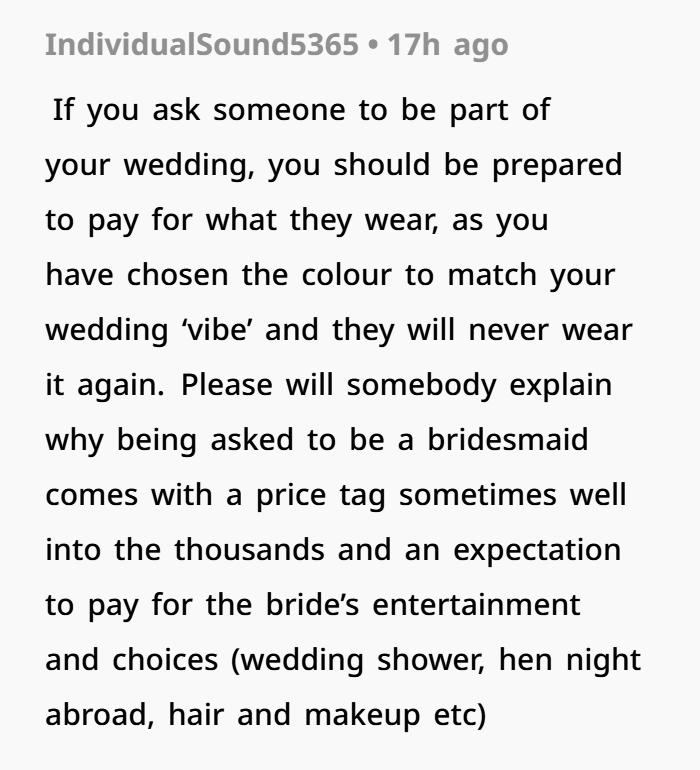
In the United States, bridesmaids normally pay for their own dresses unless the couple offers to cover the cost.
This is a common wedding tradition, but it is not the same everywhere.
Some families prefer to pay for the entire wedding party’s outfits. Others expect bridesmaids to buy their own clothing.
Wedding etiquette resources, including The Knot and the Emily Post Institute, generally describe bridesmaids as responsible for their own attire.
That may include dresses, shoes, accessories, and alterations.
Sometimes there are additional costs for hair and makeup.
This is why it is important to discuss wedding expenses before agreeing to be a bridesmaid.
In Rachel’s situation, the bride tried to make dress shopping easier.
She did not require everyone to buy the same designer gown.
Instead, she let each bridesmaid choose a dress within a certain color range.
Rachel selected a dress that cost $240.
The bride even suggested a cheaper dress, but Rachel preferred the one she bought.
That makes the disagreement a little more complicated.
Why Rachel Decided to Leave the Wedding Party
Rachel had already agreed to be a bridesmaid.
She was helping with wedding preparations and had contributed to the engagement party.
But then she started a new job.
Starting a new job often means adjusting to a different schedule.
Taking time off can also be difficult, especially during the first few months.
Rachel became unsure whether she could manage her work responsibilities and the wedding.
She eventually decided to step down.
The bride accepted her decision.
She did not pressure Rachel to remain a bridesmaid.
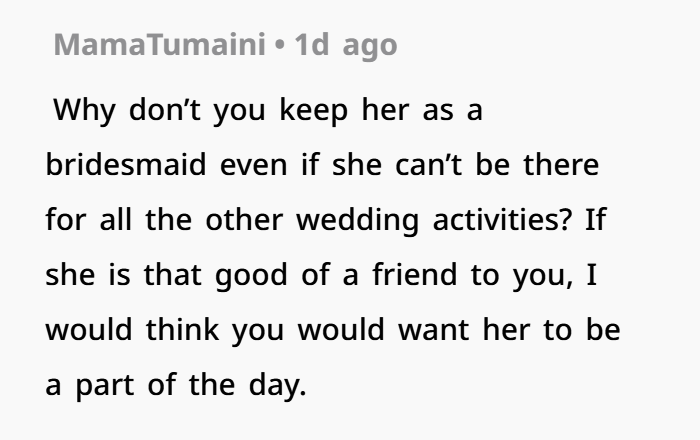
She also told Rachel that she was still welcome to attend the wedding as a guest.
At that point, the situation seemed settled.
But Rachel had already purchased her bridesmaid dress.
The store would not accept a return.
Now Rachel was left with a $240 dress she no longer needed for the wedding.
Why Rachel Wants Her $240 Back
Rachel believes the bride should reimburse her for the dress.
She bought it because she expected to be a bridesmaid.
Now that she is no longer part of the wedding party, she feels that the money has gone to waste.
For someone starting a new job, losing $240 may be frustrating.
Rachel may also have other personal expenses to manage.
From her point of view, the dress was a wedding expense.
But the bride sees the purchase differently.
She did not ask Rachel to buy an expensive dress.
She also did not remove Rachel from the wedding party.
Rachel made both decisions herself.
The bride feels it would be unfair to add the $240 to her wedding budget.
Both women have reasons for feeling upset.
But that does not mean both have the same financial responsibility.
Why Being a Bridesmaid Can Be Expensive
Being a bridesmaid sounds exciting.
You get to support someone you care about on an important day.
But the costs can add up quickly.
A bridesmaid may need to pay for a dress, shoes, accessories, and alterations.
There may also be travel expenses, hotel costs, bridal showers, bachelorette parties, and wedding gifts.
Even a simple wedding can involve several extra purchases.
This is why wedding budget planning is important for brides and their wedding parties.
A bride should try to explain expected costs before anyone commits.
Bridesmaids should also be comfortable discussing what they can afford.
Choosing affordable bridesmaid dresses can help keep expenses manageable.
In this case, the bride gave everyone freedom to choose their outfits.
She also suggested a lower-priced dress to Rachel.
That shows she was not insisting on an expensive option.
Does Dropping Out Change Who Pays for the Dress?
This is one of the most important details in the story.
Rachel chose to leave the wedding party because of her new job.
The bride did not ask her to step down.
That difference matters.
Imagine a bride asking someone to buy a special dress and then removing that person from the wedding.
In that situation, the bridesmaid might have a stronger reason to ask for reimbursement.
But Rachel’s situation is different.
She bought the dress while planning to attend.
Then her circumstances changed.
The bride accepted the change without making things difficult.
There was also no mention of an agreement that the bride would pay for unused dresses.
Because of that, the bride does not appear to have a clear obligation to reimburse Rachel.
She could still offer help if she wanted to.
But choosing to help someone and being required to pay are not the same thing.
Why Losing Money on a Dress Feels So Frustrating
Nobody likes spending money on something they may never use.
Rachel bought the dress for a specific event.
Now she cannot return it.
In personal finance, money that has already been spent and cannot easily be recovered is called a sunk cost.
For example, someone might buy an outfit for a party and later find out they cannot attend.
The money is already gone.
That can be disappointing.
But it does not automatically mean the party organizer should cover the cost.
Rachel may feel that her $240 purchase was wasted.
However, the dress may still have value.
She could try to sell it online or wear it to another formal event.
It may not be possible to recover the full amount, but she could potentially get some money back.
That might be a better option than expecting the bride to pay for the entire dress.
Why Rachel Mentioned Her Help With the Engagement Party
The disagreement became more personal when Rachel brought up everything she had already done for the wedding.
She had helped with planning and spent money on the engagement party.
She may feel that she has given a lot of time and effort to support her friend.
Now she wants that support to be recognized.
This suggests that the disagreement may not be only about the dress.
Rachel may also feel unappreciated.
Wedding planning can take a lot of work.
Helping organize an engagement party, arrange decorations, or plan celebrations requires time and energy.
Those contributions deserve thanks.
But helping a friend does not always create a financial obligation.
The bride may have seen Rachel’s support as a kind gesture between close friends.
Rachel may now feel differently because she is losing money on the dress.
That difference in expectations could explain why the argument became so emotional.
Does Helping With Wedding Planning Mean the Bride Owes Money?
Rachel’s contributions to the wedding matter.
She spent time helping someone she cares about.
But there is a difference between showing appreciation and paying someone back.
Unless there was an agreement about reimbursement, Rachel’s previous help does not automatically make the bride responsible for her dress.
The bride can thank Rachel for everything she has done.
She can also acknowledge that losing $240 is upsetting.
But she can do both without agreeing to pay the money.
Rachel also has the right to explain why she feels hurt.
A calm conversation may help both women understand what is really bothering them.
Sometimes a disagreement about money is also a disagreement about feeling valued.
Is the Bride Legally Responsible for the $240 Dress?
In general, legal responsibility for a purchase depends on who bought the item and whether another person agreed to pay.
If Rachel purchased the dress herself, she would normally be responsible for the transaction.
The fact that she bought it for a wedding does not automatically make the bride responsible.
The store’s no-return policy also does not necessarily change who owes the money.
However, the situation could be different if the bride had clearly promised to reimburse Rachel.
The story does not mention such a promise.
That is why discussing financial expectations before making wedding purchases is important.
The bride may decide to help Rachel as a personal favor.
But that is different from having a legal duty to pay.
The exact legal answer would depend on the facts and applicable law.
Could Rachel Sell the Bridesmaid Dress Instead?
Rachel may have another option besides asking the bride for money.
She could try selling the dress.
Many shoppers look for secondhand formalwear because it can be more affordable than buying something new.
Online resale marketplaces often have listings for bridesmaid dresses, evening gowns, and other special occasion clothing.
If Rachel’s dress is still new and has not been altered, she may have a better chance of finding a buyer.
She could include clear photos, the brand, size, color, and condition.
She could also mention whether the dress still has its original tags.
Another option would be asking if anyone else in the wedding party is interested.
The bride could even help share the listing.
This would be a practical way to support Rachel without taking responsibility for the full $240.
Rachel might not get all her money back.
But recovering part of the cost could make the situation easier.
Is $240 Worth Losing a Longtime Friendship?
The bride and Rachel have been friends since college.
That means they have shared years of memories and important moments.
Now their friendship is facing a difficult situation over one dress.
The bride has said she could afford to pay Rachel.
But she and her fiancé are already paying for most of their wedding.
An extra $240 is not something she wants to add to the budget.
Rachel may see the refusal as a sign that her friend does not care about her financial situation.
The bride may see Rachel’s request as unfair pressure.
This is where money can make friendships complicated.
If the bride pays just to end the argument, she may feel upset afterward.
If Rachel continues to demand the money, the bride may feel that their friendship depends on payment.
Neither outcome would solve the deeper problem.
A direct conversation may be more helpful.
Both women need to explain their feelings without turning the disagreement into a test of friendship.
Why Involving Mutual Friends Could Make Things Worse
The bride later heard that Rachel had been discussing the situation with mutual friends.
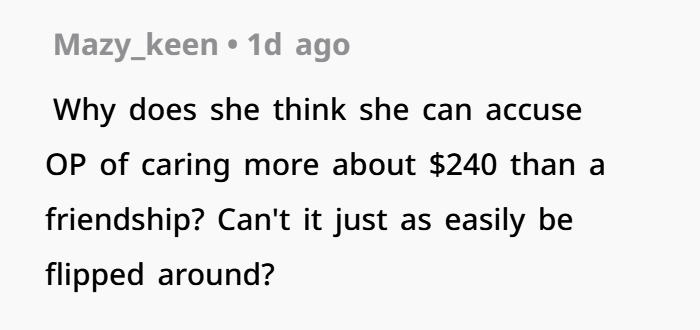
According to another friend, Rachel suggested that the bride cared more about $240 than their friendship.
That would be upsetting to hear.
However, the bride received this information through someone else.
She may not know exactly what Rachel said or what the conversation was about.
Rachel may have simply been sharing her disappointment.
Still, involving other friends can make a private disagreement harder to solve.
People may feel pressured to take sides.
The bride may feel judged.
Rachel may feel even more frustrated.
It would probably be better for the two women to speak directly.
That would give them a chance to clear up misunderstandings without involving their wider friendship group.
What Would Be a Fair Solution?
There may be a way to handle this without damaging the friendship.
The bride could start by thanking Rachel for her help with wedding planning and the engagement party.
She could also acknowledge that losing $240 on a dress is frustrating.
Then she could explain why she does not feel responsible for the purchase.
Rachel chose the dress herself.
She also made the decision to step down.
The bride did not require either choice.
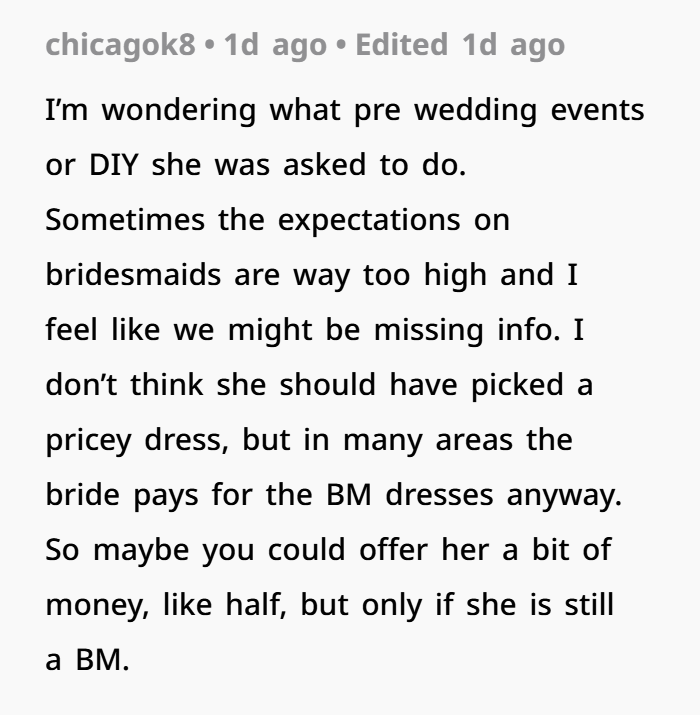
As a practical compromise, the bride could help Rachel sell the dress.
She might also choose to offer a small contribution if she genuinely wants to help.
But that should be a personal choice, not something she feels forced to do.
Rachel could also recognize that wedding plans sometimes change and that purchases may come with financial risks.
A fair solution should respect both women’s feelings.
How Brides Can Avoid Similar Wedding Money Problems
Money disagreements can happen during even the happiest celebrations.
That is why clear communication is important.
Before bridesmaids purchase dresses, couples can explain the expected costs.
They can also discuss who will pay for alterations, hair, makeup, and travel.
Giving bridesmaids affordable outfit choices can make the experience less stressful.
It is also helpful to check return policies before ordering formalwear.
Some special-order dresses cannot be returned, even if they have never been worn.
Bridesmaids should also think about their work schedules and personal commitments before making expensive purchases.
Not every change can be predicted.
But planning ahead can reduce the chance of a financial disagreement.
Final Thoughts: Should the Bride Pay Rachel $240?
Rachel spent $240 on a bridesmaid dress she may never wear.
She also helped with wedding planning and the engagement party.
Her disappointment is understandable.
But the bride did not require her to buy an expensive dress.
She suggested a cheaper option and allowed Rachel to choose her own outfit.
When Rachel stepped down because of her new job, the bride accepted her decision.
Based on those details, the bride does not appear to have a clear responsibility to reimburse Rachel.
Helping her sell the dress may be a reasonable compromise.
More importantly, both women may need to talk about their feelings before the disagreement causes lasting damage.
Friendship should include kindness and appreciation, but it should also allow room for healthy financial boundaries.
What do you think? Should the bride pay $240 to keep the peace, or should Rachel accept the cost of the dress she chose herself?
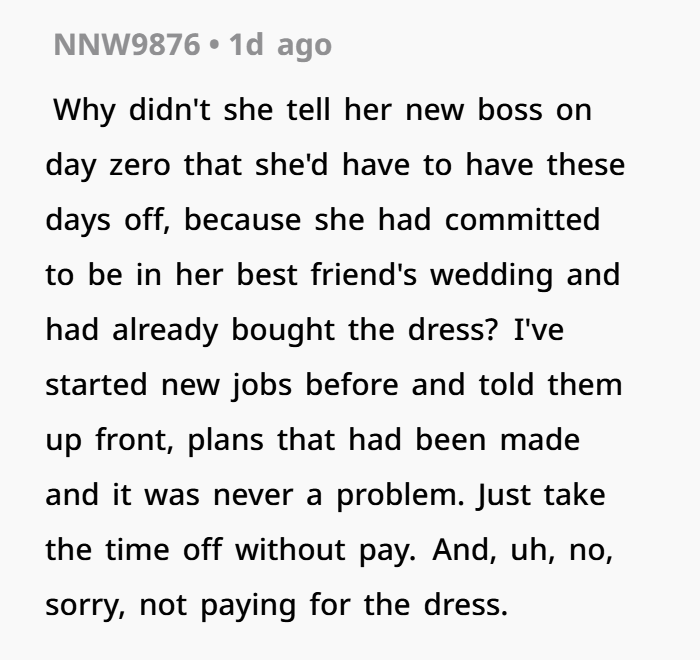
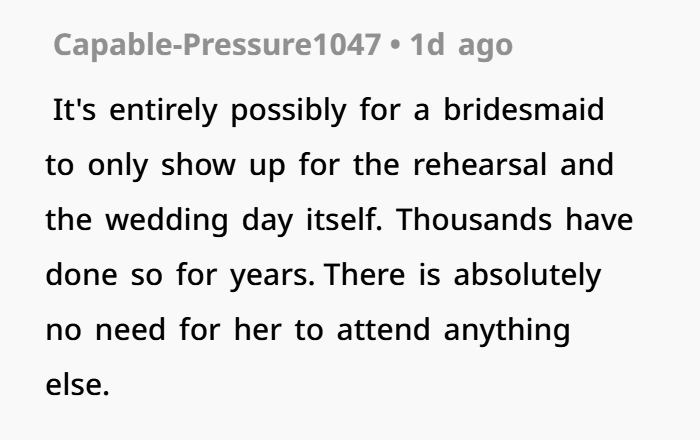
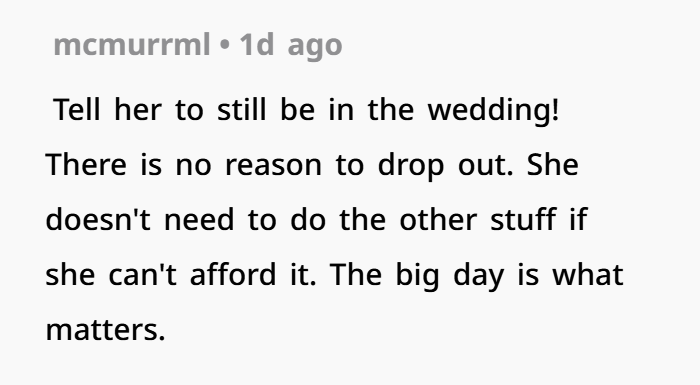
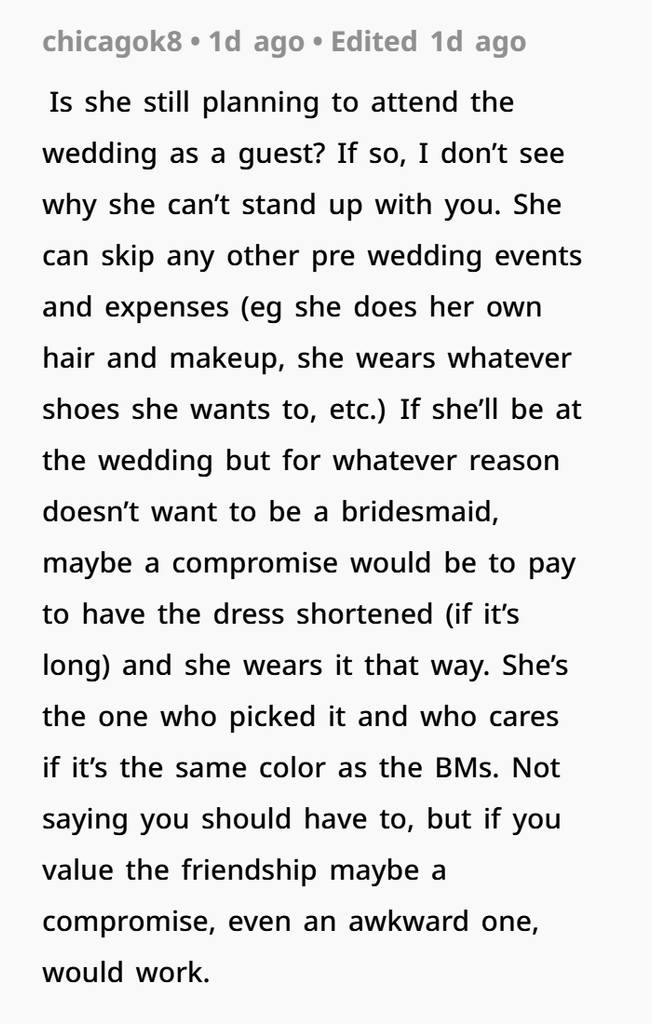
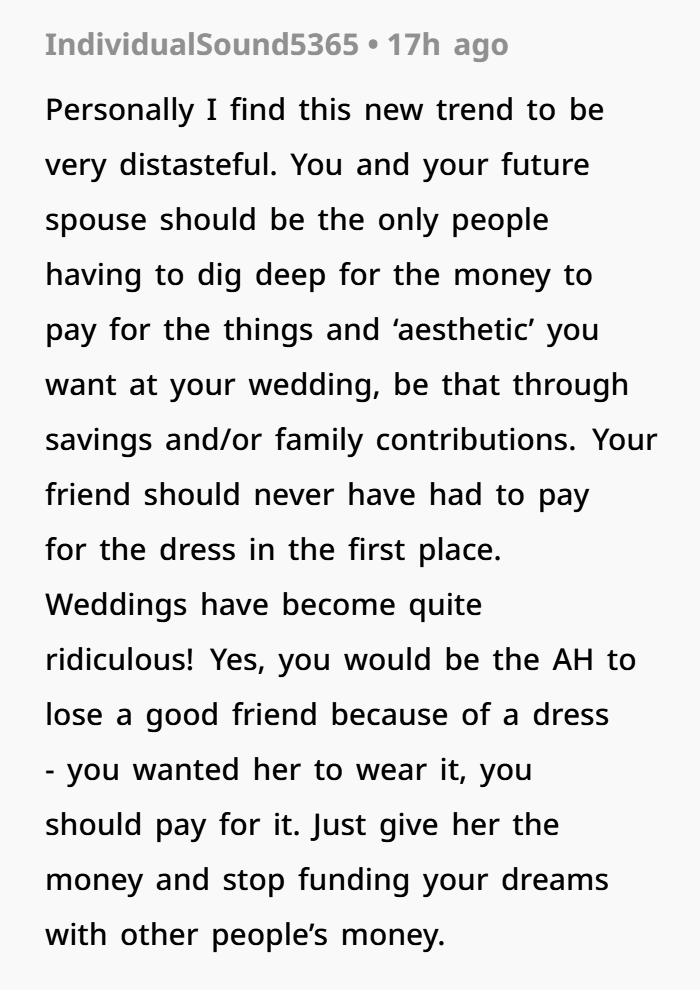
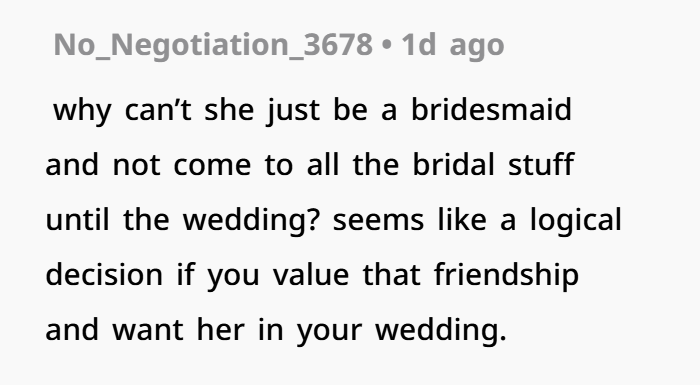
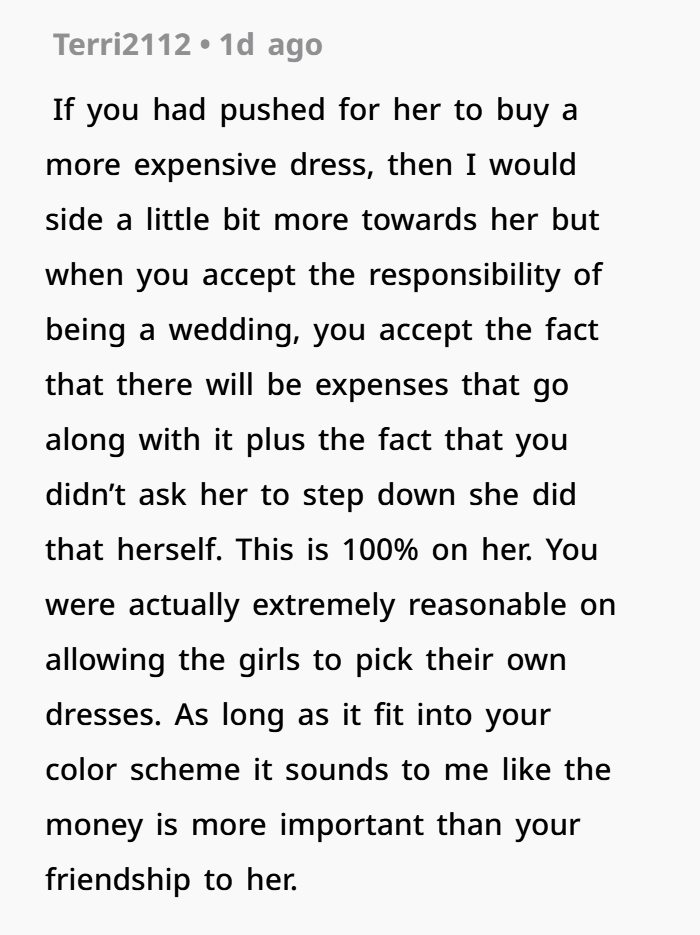
The Most Honest Comments