My Friend Called Me an Eco-Warrior After I Refused to Throw Away My Bedsheets
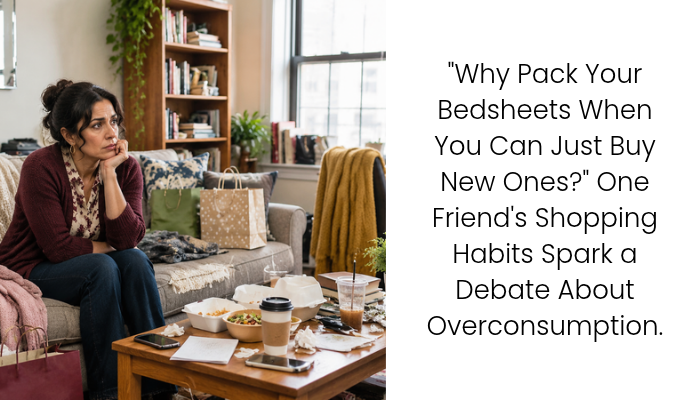
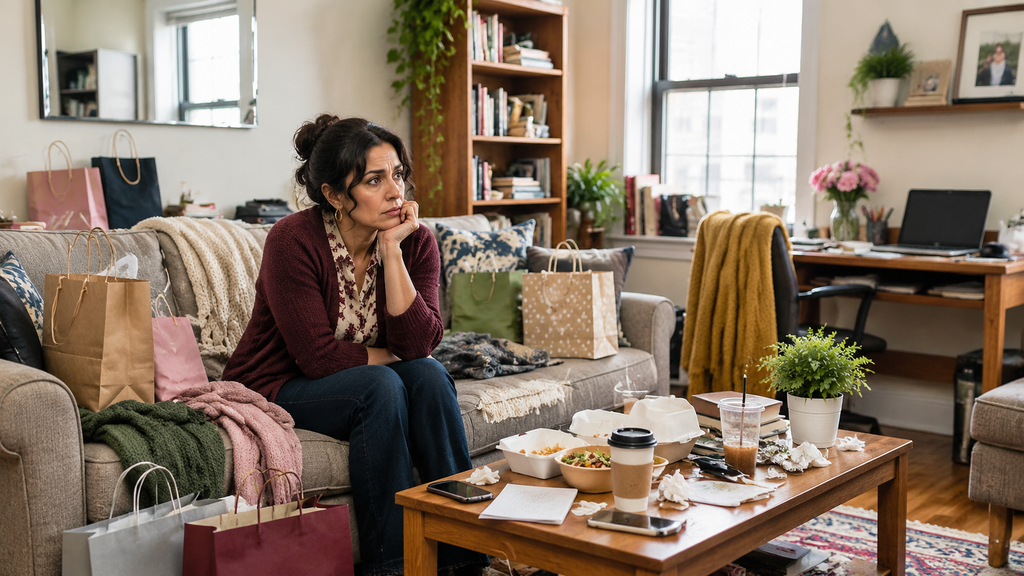
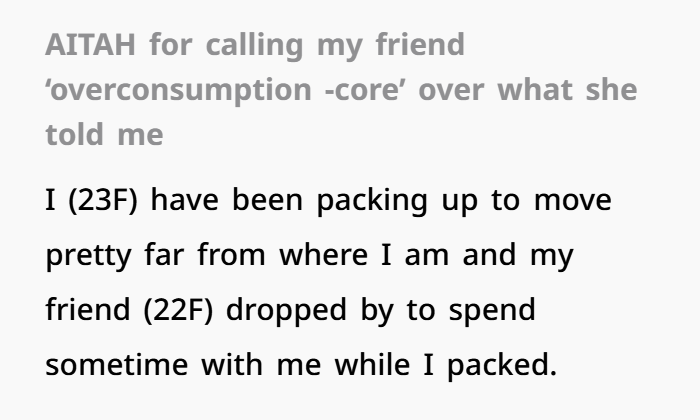
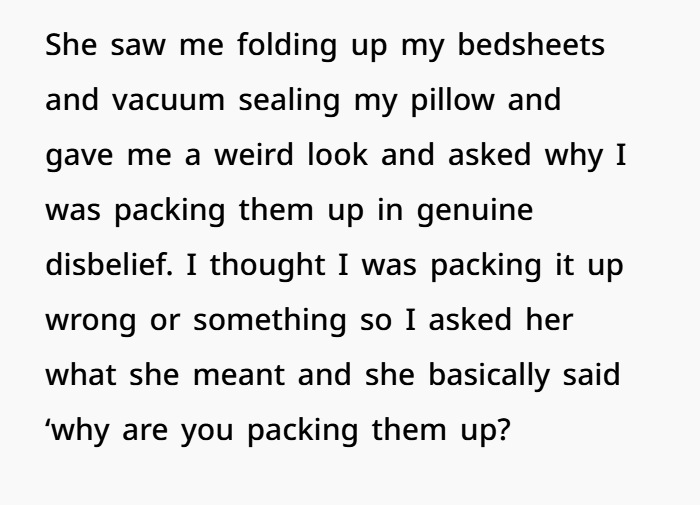
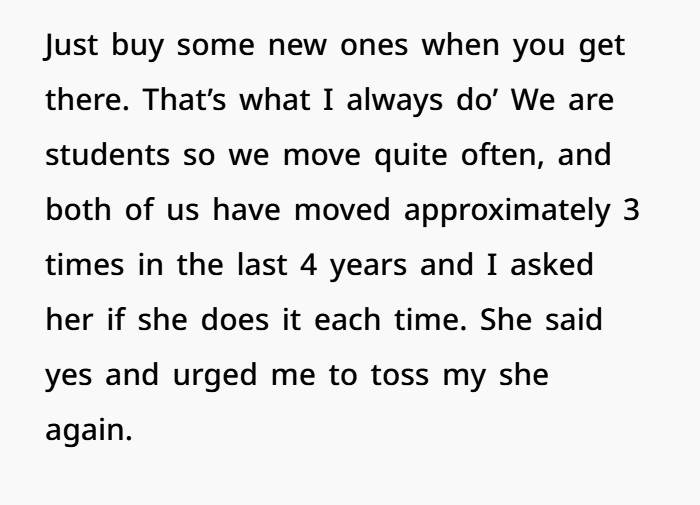
A young woman was preparing to move when her friend came over to spend some time with her. While packing, she carefully folded her bedsheets and pillowcases and placed them in vacuum-sealed bags to save space. Her friend noticed what she was doing and asked why she was taking the bedding to her new home. She suggested that buying new sheets would be easier. The woman found this surprising because her bedding was less than a year old and was still in great shape.
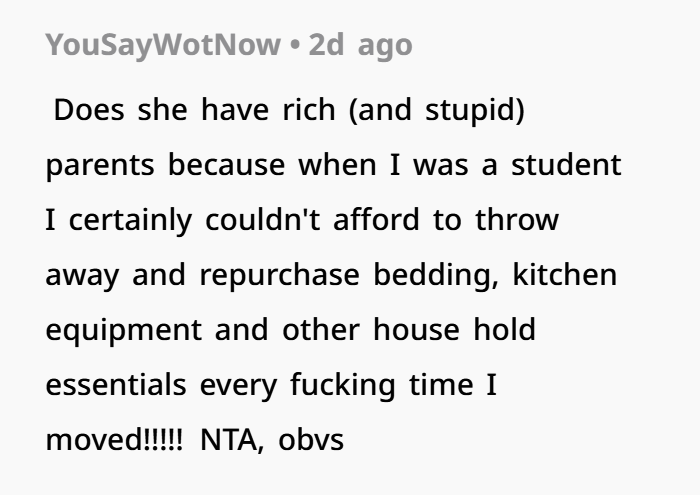
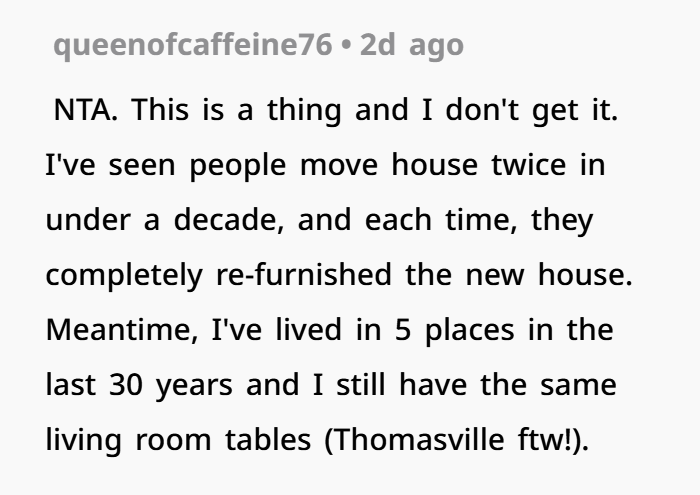
The woman explained that she did not see any reason to replace something that was still useful. However, her friend kept suggesting that she should throw the sheets away and buy new ones. Both women had moved several times as students, but they had very different ideas about packing and shopping. The original poster believed that keeping useful household items was a sensible choice, especially when moving could already involve many expenses.
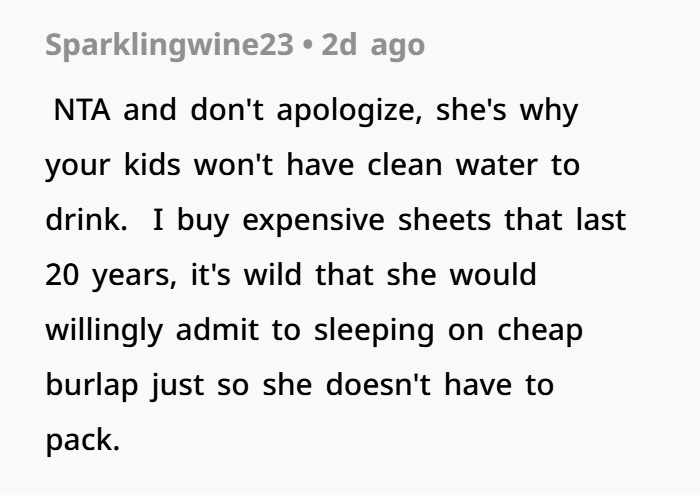
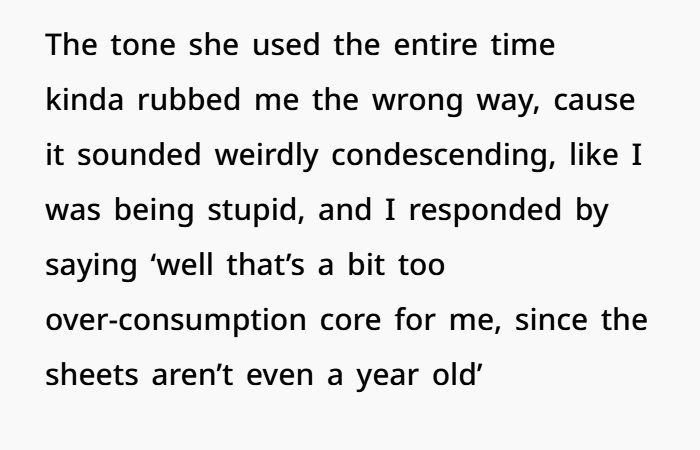
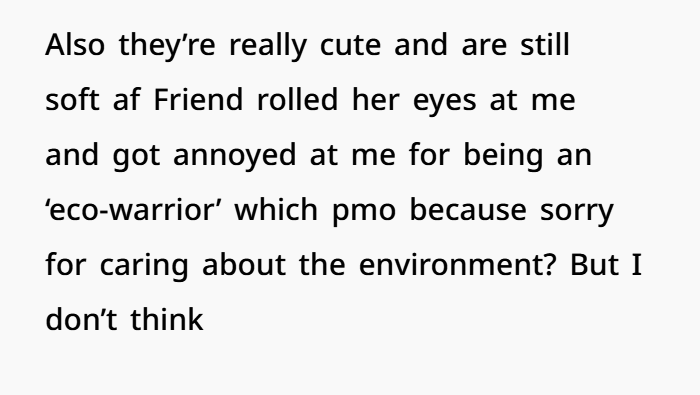
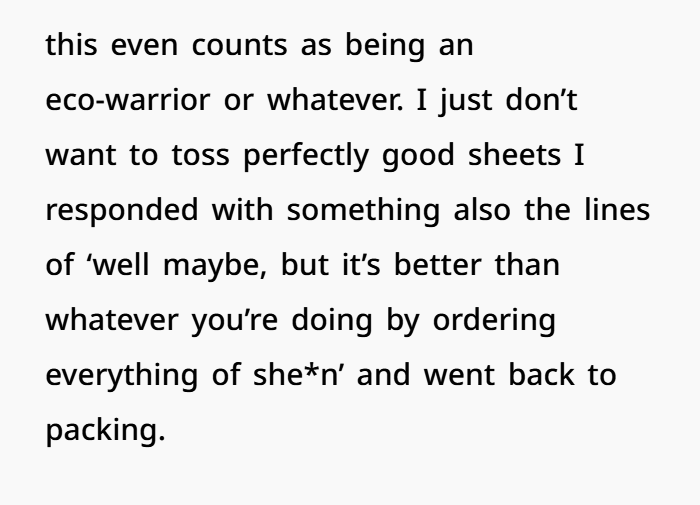
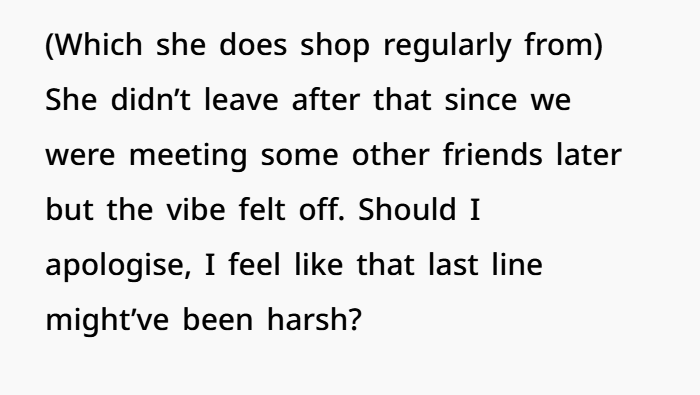
After hearing the same comments again and again, she became frustrated and described her friend’s behavior as unnecessary overconsumption. Her friend did not take the comment well and accused her of acting like someone who wanted to promote environmental causes. The woman then mentioned her friend’s regular Shein shopping habits. She felt that someone who often purchased fast-fashion clothing should not criticize her for trying to reduce waste by reusing her own belongings.
The two women still went out together, but the mood was no longer the same. After thinking about the conversation, the woman began questioning whether she had handled things properly. She wanted to support sustainable living and make practical choices, but she also wondered if bringing up her friend’s shopping habits was too much. Her experience raises an interesting question about modern shopping habits: should people replace useful items simply because they are moving, or is reusing what they already own a better choice for their budget and the environment?
Overconsumption and Fast Fashion: The Importance of Making Thoughtful Shopping Choices
Buying new products is part of everyday life. We purchase clothing, furniture, bedding, kitchen supplies, and other household essentials to make our lives more comfortable.
But sometimes, we replace items even when they are still in good condition.
A simple disagreement about packing bedsheets before moving brings attention to this habit. It also raises an important question about consumer behavior: Should we replace useful products simply because buying new ones is more convenient?
There are several reasons why reusing existing belongings can be a better choice.
Understanding the Environmental Impact of Textile Waste
Textile products require natural resources throughout their production process.
From growing or producing raw materials to manufacturing, packaging, and transportation, each stage requires energy and other resources.
This applies to everyday products such as:
- Clothing and shoes.
- Bedsheets and pillowcases.
- Curtains and blankets.
- Towels and other household fabrics.
- Decorative cushions and fabric accessories.
The United Nations Environment Programme (UNEP) recognizes the fashion and textile industry as an important area of environmental concern.
When consumers regularly replace products that are still usable, more resources are needed to produce replacement items.
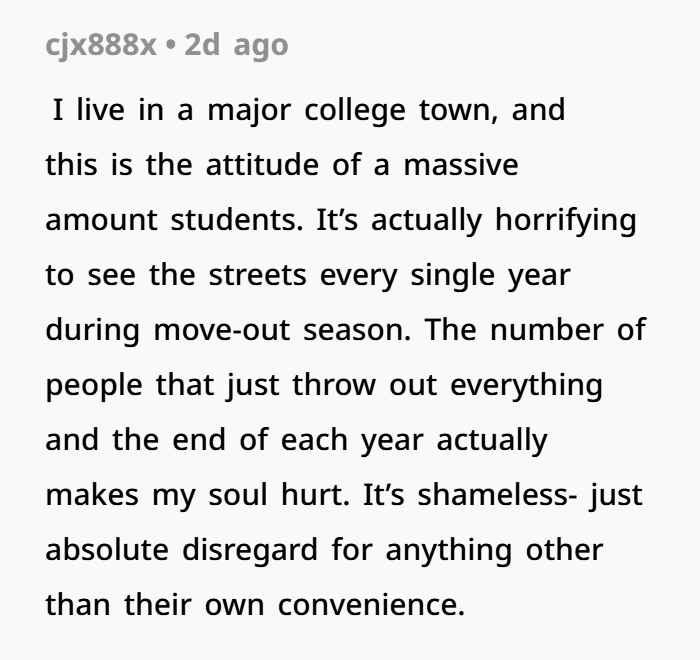
Unnecessary disposal also increases the amount of waste that needs to be managed.
For this reason, reducing unnecessary purchases and extending the life of household products are useful parts of responsible consumption.
How the Circular Economy Encourages Reuse
The circular economy is based on a simple idea: Products should stay useful for as long as possible.
Instead of following a pattern of buying, using, and throwing things away, this approach encourages people and businesses to reduce waste through better product use.
Some common examples include:
- Reusing household products.
- Repairing items instead of replacing them.
- Donating unwanted furniture and clothing.
- Choosing durable products.
- Finding new uses for older belongings.
This approach can also help households manage their budgets more carefully.
For example, keeping existing bedsheets after moving is a simple form of reuse. Packing them in vacuum storage bags can help save space and make transportation easier.
If the bedding is clean and in good condition, purchasing a complete new set may not be necessary.
Fast Fashion and Changing Shopping Habits
Fast fashion is another important part of the overconsumption discussion.
Companies such as Shein are known for affordable clothing and frequent product updates. Online shopping has also made it easier for consumers to browse new styles and purchase products quickly.
Affordable prices can be helpful, especially for people shopping on a limited budget.
However, frequent purchasing can sometimes encourage people to buy more clothing than they need.
When products are used for a short time and quickly replaced, textile waste can become a concern.
The European Environment Agency has examined the environmental challenges connected with textile consumption, including the use of resources and the growing amount of textile waste.
A more thoughtful shopping approach can help consumers get better value from their purchases.
This does not mean avoiding every affordable fashion brand. Instead, it means considering quality, usefulness, personal needs, and how often an item will actually be used.
The Financial Benefits of Reusing Household Products
Environmental concerns are not the only reason to avoid unnecessary replacements. There is also a financial benefit.
Moving to a different home often comes with several expenses.
Students and renters may need to pay for transportation, packing supplies, furniture, cleaning products, and other household essentials.
Replacing usable belongings can increase these costs.
For example, buying new bedding, kitchen supplies, and home accessories may seem like small expenses individually. However, the total can become much higher when several items are replaced at once.
Keeping existing products can help reduce these expenses.
It can also make unpacking easier because you already have familiar items ready for your new space.
Still, every situation is different. If an item is damaged or transportation costs are too high, replacing it may be the more practical option.
The important thing is to compare the actual costs before making a decision.
Responsible Shopping Does Not Require Perfect Habits
It is also important to understand that environmental responsibility is not an all-or-nothing choice.
Someone may purchase affordable clothing but make an effort to reuse household items. Another person may buy fewer clothes but replace their home accessories more frequently.
People have different priorities, budgets, and lifestyles.
Rather than judging individuals, it is more useful to encourage practical habits that reduce unnecessary consumption.
The original disagreement started because one person wanted to keep her existing bedsheets while the other preferred to replace them.
The first person had a reasonable reason to reuse something that was still useful. However, bringing up her friend’s shopping choices made the discussion more personal.
A conversation about waste and mindful shopping is more productive when it focuses on choices rather than personal criticism.
Practical Ways to Make More Thoughtful Purchases
Making better purchasing decisions does not need to be complicated.
Before replacing household products or buying something new, consider the following:
1. Check what you already own.
Look through your home before purchasing new bedding, storage products, furniture, or accessories.
2. Think about product quality.
Consider whether a product is likely to last and whether it offers good value for your money.
3. Reuse items whenever practical.
Old household products may still be useful for cleaning, storage, or other everyday tasks.
4. Plan your shopping budget.
Make a list of essential purchases to avoid spending money on things you do not really need.
5. Choose practical storage solutions.
Storage bags, organizers, and space-saving containers can help protect household items and make moving easier.
These small steps can support a more organized home and more responsible spending habits.
Final Thoughts: Use What You Have Before Buying More
The disagreement about bedsheets may seem like a small everyday issue, but it highlights a much bigger habit.
Modern shopping makes replacing products easy. However, convenience should not always be the only reason for buying something new.
Reusing household items, choosing durable products, and planning purchases carefully can help reduce waste and manage everyday expenses.
There is no need to follow a perfect sustainable lifestyle. Even simple decisions can be useful.
Sometimes, the most practical and responsible choice is to keep using what you already have instead of spending money on a replacement you do not really need.
The Comments Are In