When Thanksgiving Cooking Becomes a Boundary and Why That’s OK
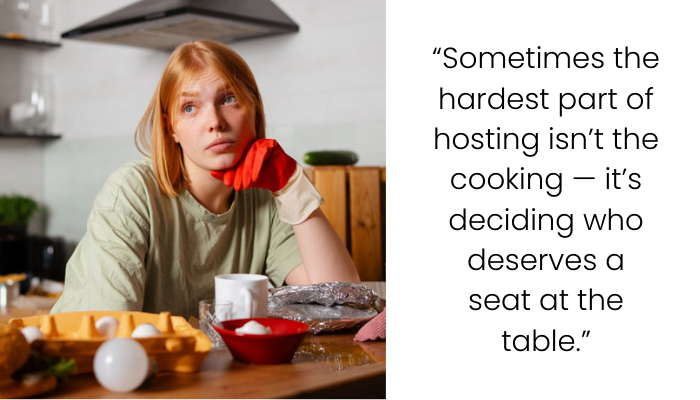
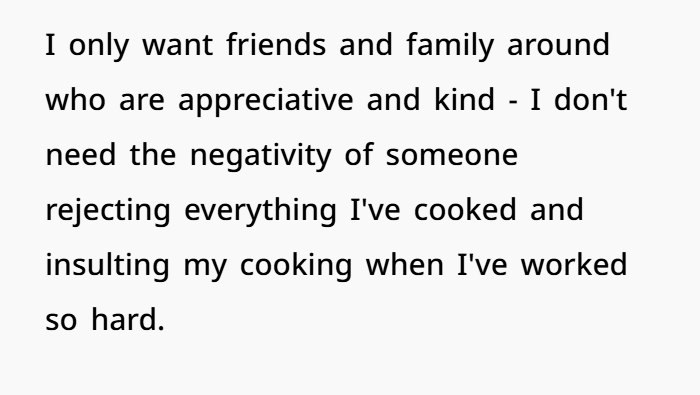
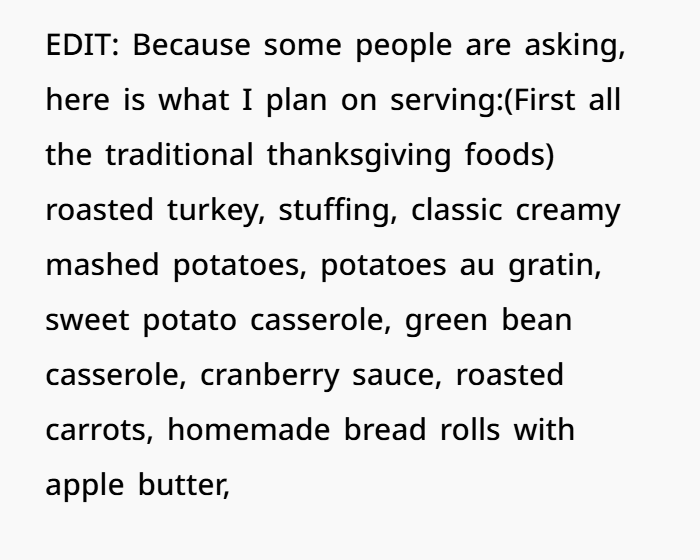
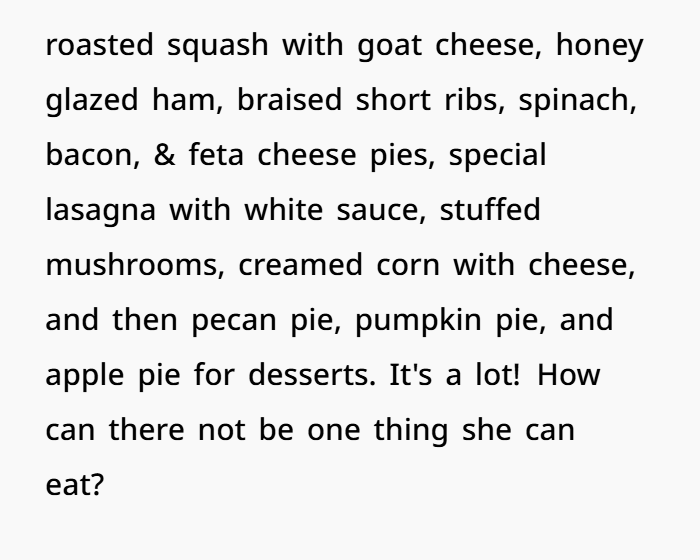
A 32-year-old woman spent a lot of time planning a Thanksgiving dinner at her home. She carefully chose recipes, bought all the ingredients, and prepared a full holiday menu. She was excited to host her husband, family, and friends for a warm and traditional Thanksgiving meal.
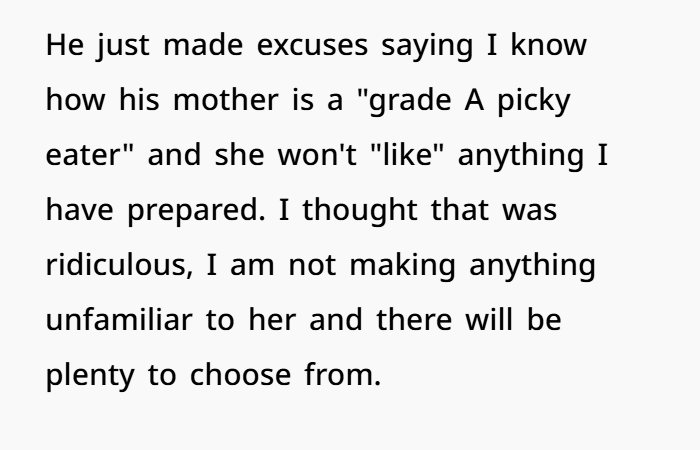
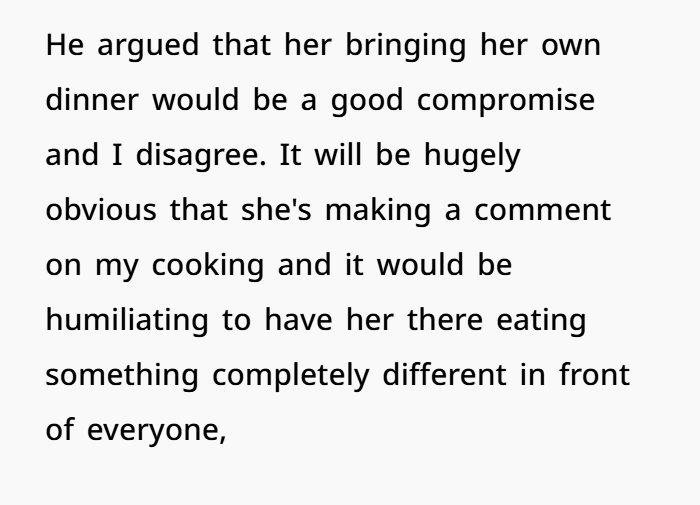
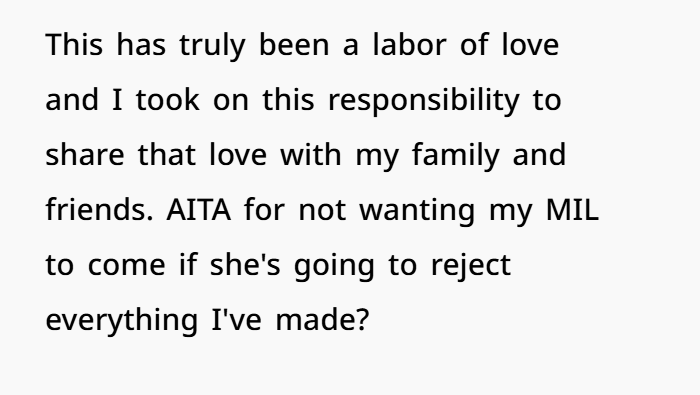
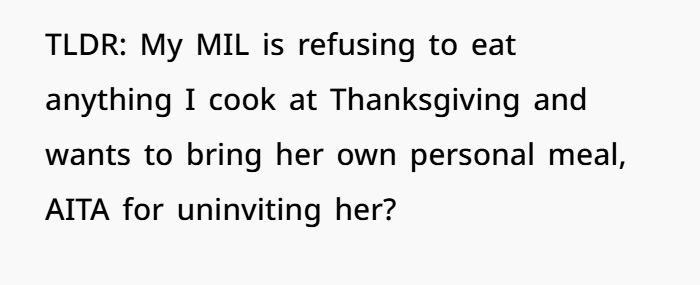
But just before the event, her husband told her that his mother wanted to bring her own separate meal. The mother-in-law said she might not like the food being served and preferred to eat something she made herself. This surprised and hurt the host, who felt her effort and cooking were being disrespected.
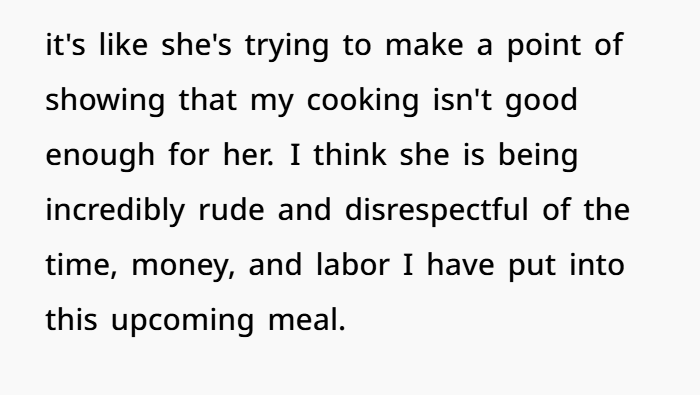
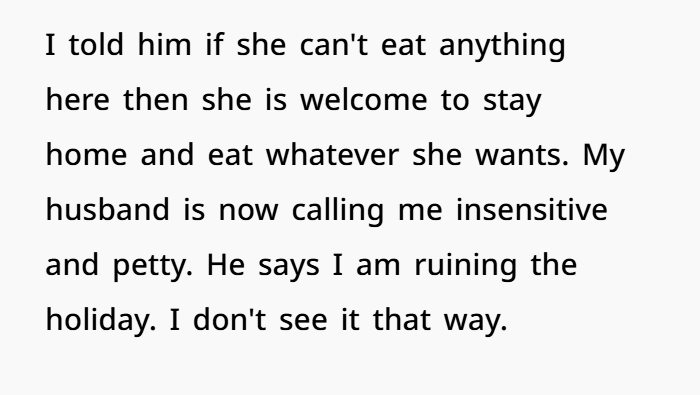
The woman felt that allowing someone to bring and eat a separate meal at the table would make the dinner feel uncomfortable and awkward. She told her husband that if the mother-in-law would not eat the food provided, it might be better for her not to attend. This led to disagreement, and her husband accused her of overreacting and ruining the holiday mood.
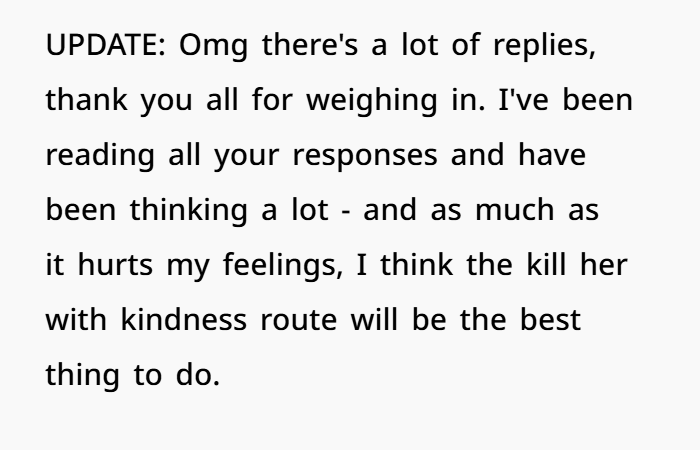
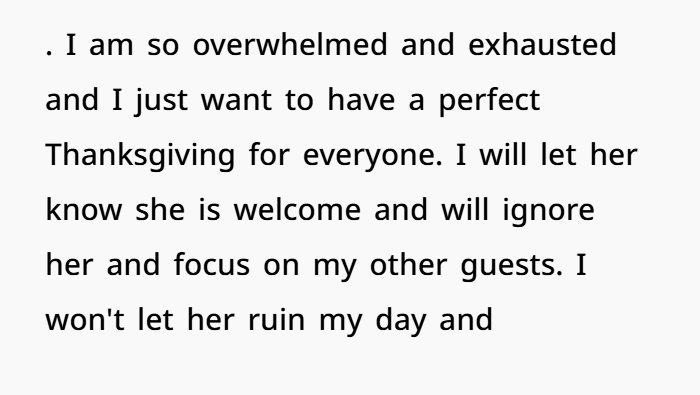
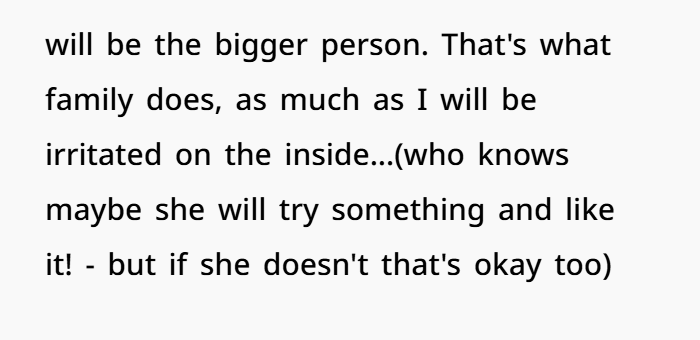
After thinking about it more, she decided to allow the mother-in-law to attend, as long as she tried the food and remained respectful. She still feels unsure, but she hopes the focus will stay on family bonding, gratitude, and enjoying a peaceful Thanksgiving dinner without conflict.
The author of the post and her husband were recently preparing to host a family Thanksgiving party, and did their best to prepare some really delicious food
Holiday Dinners, Food Preferences, and Family Boundaries: A Simple Guide
Big holiday meals like Thanksgiving or Christmas dinner are not just about food. They are about family, tradition, and spending time together. For the person hosting, it can take a lot of time, effort, and emotional energy.
So when something goes wrong at the table, it can feel very personal.
1. Hosting a Big Meal Takes a Lot of Effort
Preparing a holiday dinner is not easy. The host usually:
- Plans the menu
- Shops for ingredients
- Cooks for hours
- Tries to make everything special for guests
Because of this, food is not just food. It represents care, effort, and love.
So when a guest says they will bring their own meal, it can feel upsetting or disrespectful to the host.
2. Food Is Connected to Emotion and Respect
Food is linked to culture, family memories, and tradition. A shared meal is often a way of bonding.
At a holiday dinner, people usually expect everyone to eat together from the same table. When someone refuses the food and brings their own, it can feel like:
- They do not trust the cooking
- They are rejecting the effort
- They are not fully joining the group
Even if that is not the intention, it can feel that way to the host.
3. Some People Have Food Preferences or Sensitivities
Not everyone can eat every type of food. Some people may:
- Be picky eaters
- Have food anxiety
- Have allergies or sensitivities
- Prefer simple or familiar meals
These are real reasons and should be respected.
However, in large family dinners, this can create tension if expectations are not discussed in advance.
4. Shared Meals Are About Togetherness
Holiday meals are often about unity and sharing the same experience.
When everyone eats the same food, it creates:
- A sense of togetherness
- A shared tradition
- A group experience
If one person eats something completely different, it can break that shared feeling for the group.
5. Why Hosts May Feel Hurt
Even if the guest does not mean harm, the host may feel:
- Their cooking is not appreciated
- Their effort is being ignored
- Their traditions are being disrespected
This emotional reaction is very common in family gatherings and holiday hosting situations.
6. Setting Boundaries Is Not Being Rude
A host is allowed to set rules for their own event. This may include:
- Asking guests to eat the provided meal
- Not allowing separate meals at the table
- Choosing who is invited based on comfort and respect
Setting boundaries helps protect emotional wellbeing and reduce stress.
7. Finding a Middle Ground
In some situations, a compromise can help. For example:
- Offering simple “safe” food options
- Asking guests about food preferences ahead of time
- Allowing small adjustments without changing the whole menu
This can help balance respect for the guest and respect for the host’s effort.
8. Communication Matters Most
Many conflicts around food can be avoided with clear communication before the event.
Talking in advance can help everyone understand:
- What food will be served
- What guests are comfortable eating
- What expectations the host has
This reduces misunderstandings and holiday stress.
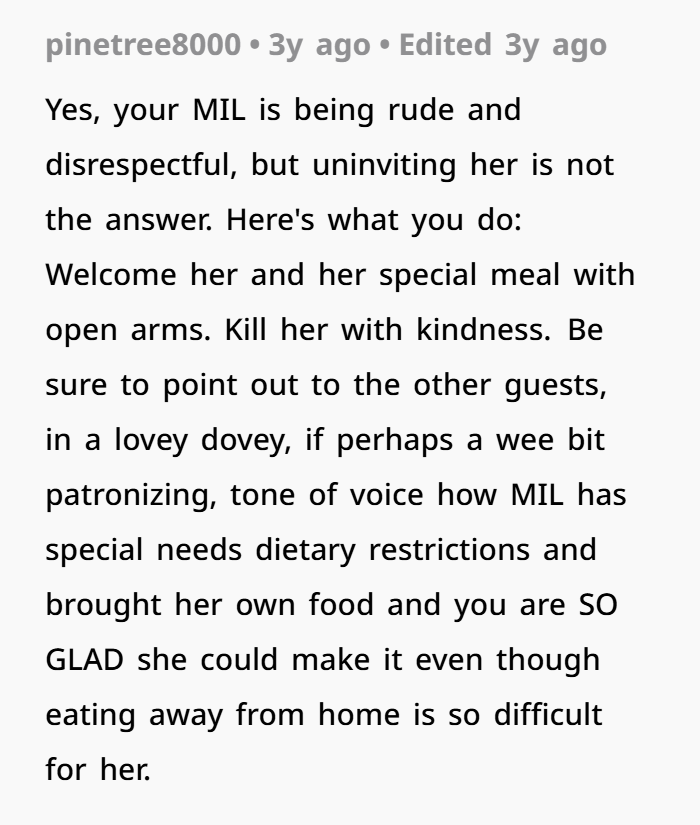
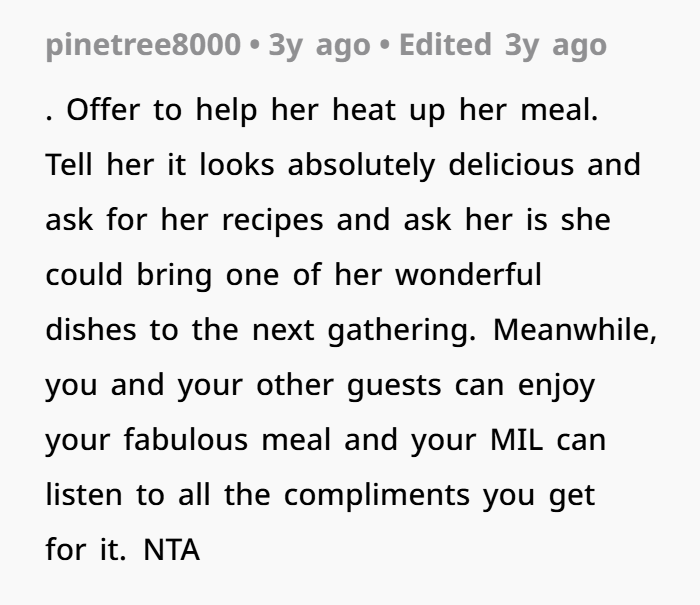
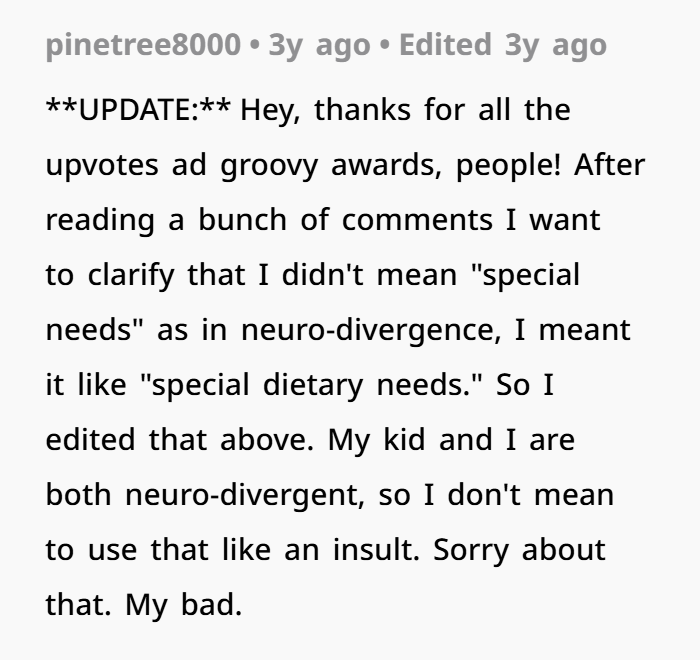
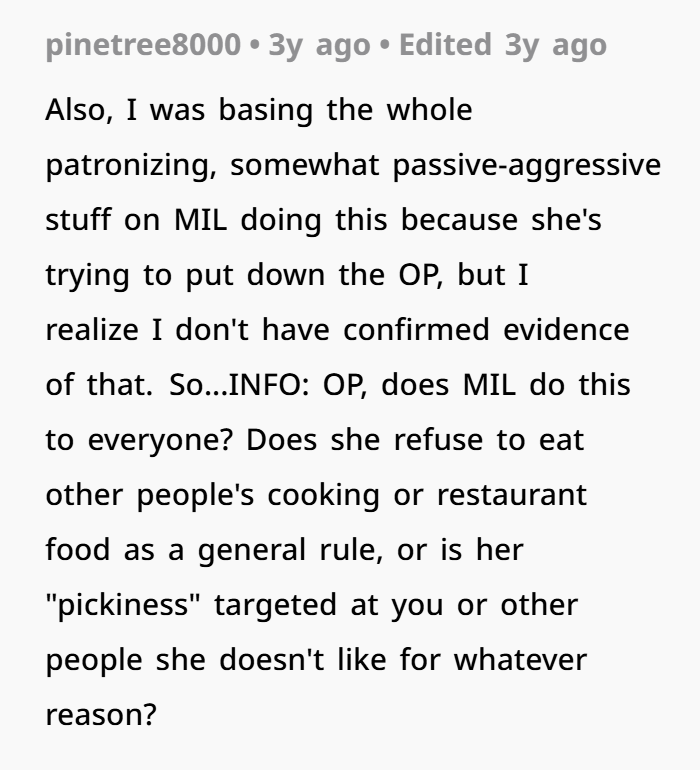
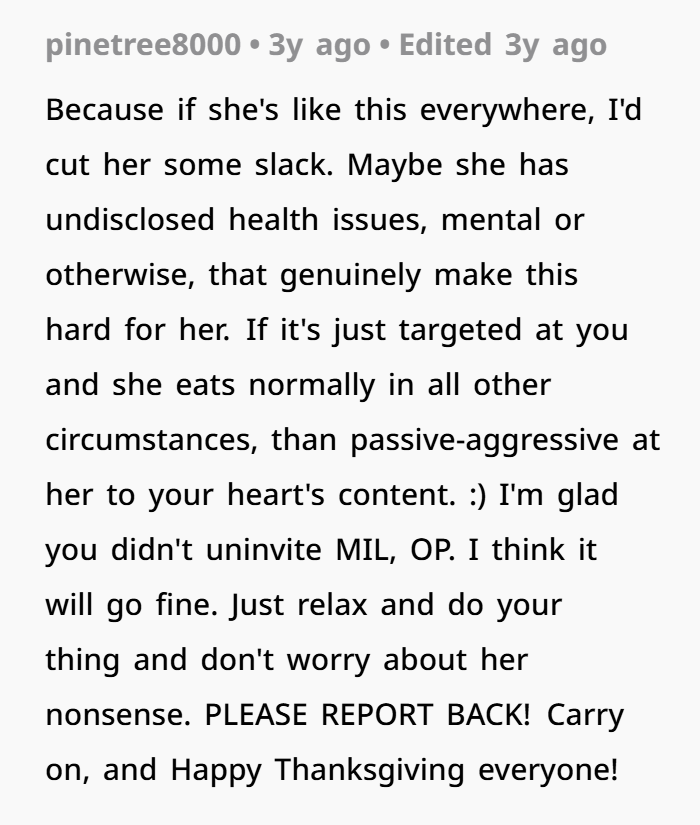
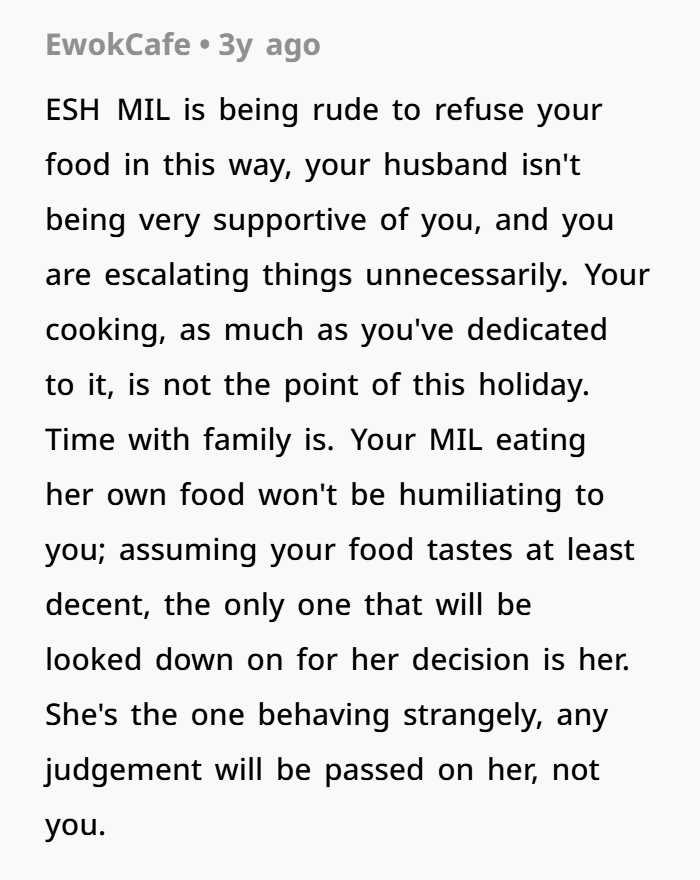
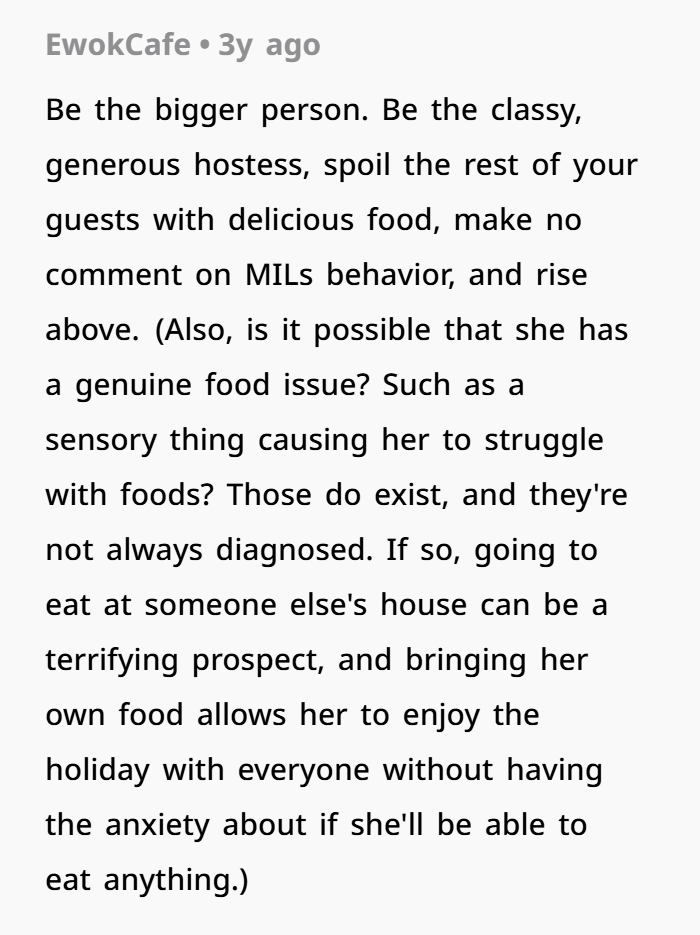
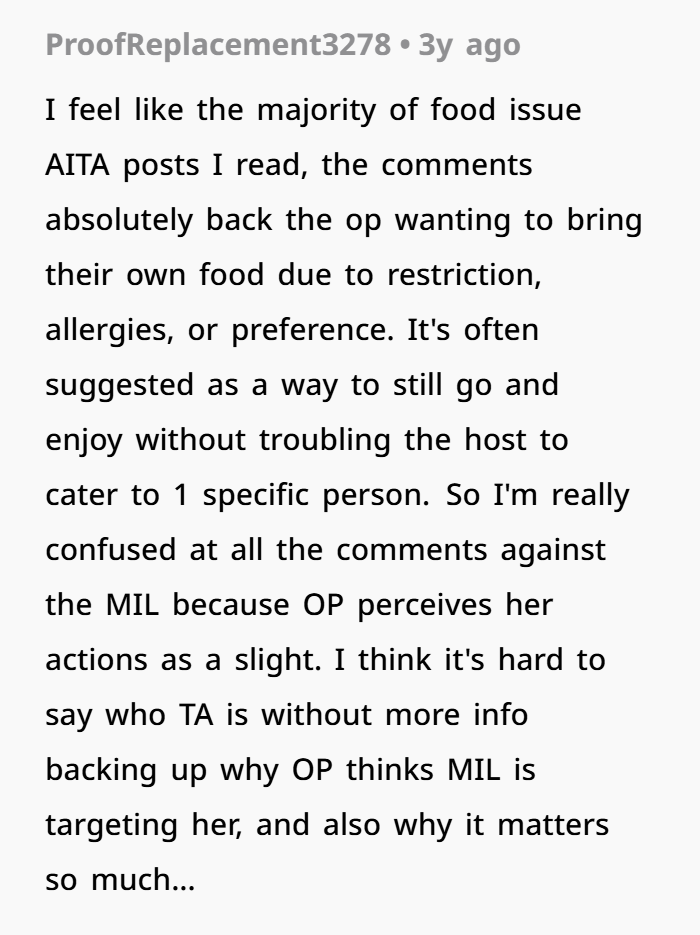
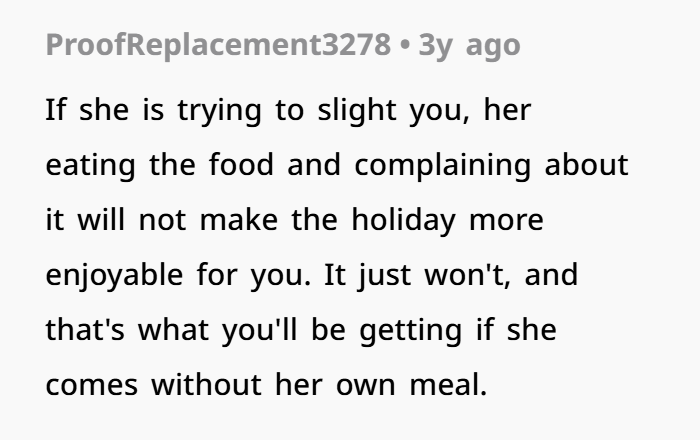
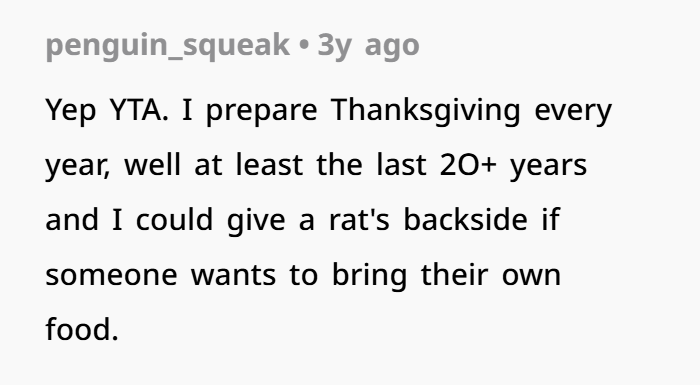
The commenters were actually very divided here, but the author herself then added, that she’ll follow the Thanksgiving traditions and invite the mother-in-law anyway
Final Thoughts
Holiday dinners are emotional moments, not just meals. They bring together family, tradition, and expectations.
Food preferences, personal comfort, and respect for the host all need to be balanced.
The key is simple: clear communication, mutual respect, and understanding that both the host and guests have valid feelings.