My Fiancée Wants Me to Cut Off My Parents Forever
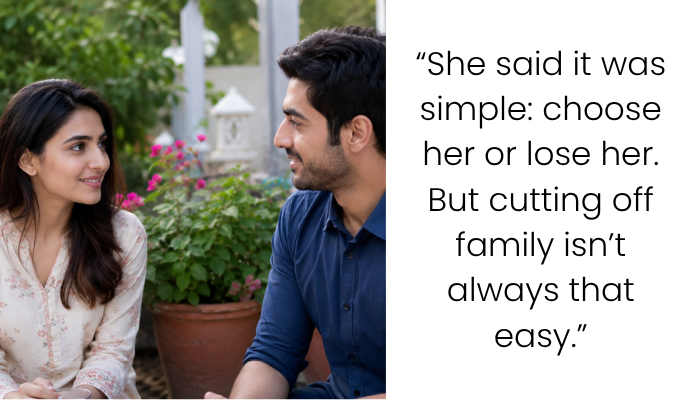
For almost 10 years, this couple built their life together. They lived together, got engaged, spent holidays together, traveled, and made future plans like many long-term couples do. From the outside, their relationship looked stable and normal.
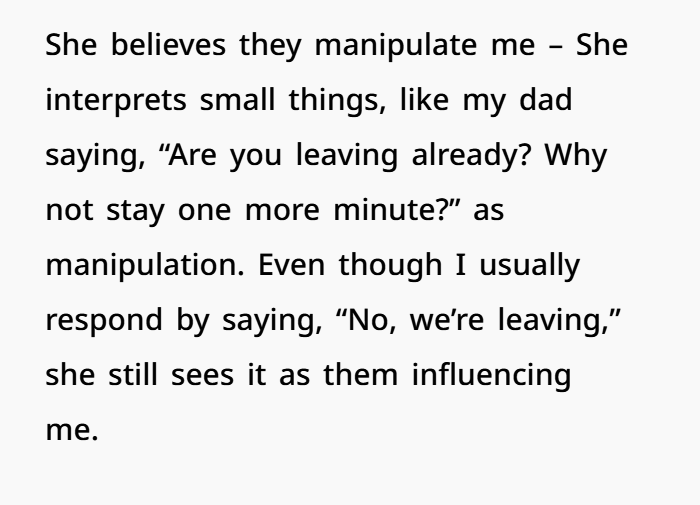
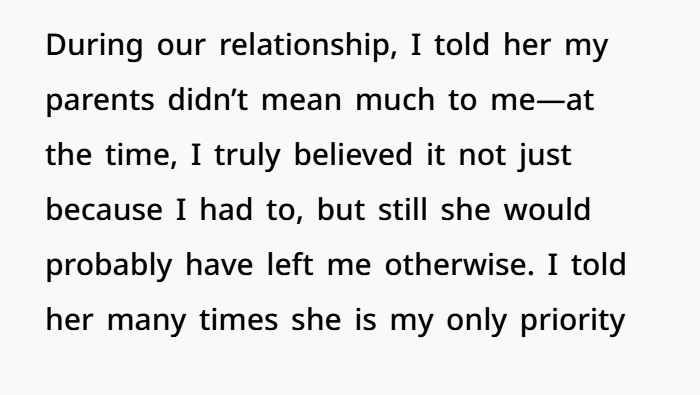
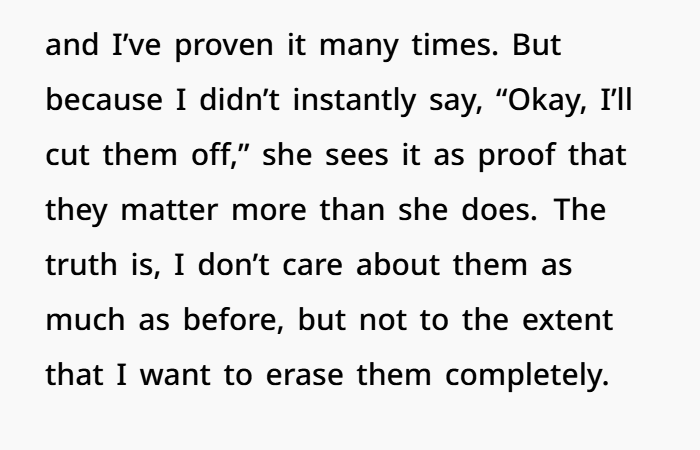
But over time, one issue kept causing problems. It was his relationship with his parents. What started as small disagreements slowly turned into serious relationship stress and emotional pressure. His partner began to feel uncomfortable with how often he communicated with his family, and the situation turned into ongoing conflict about strict family boundaries and emotional expectations.
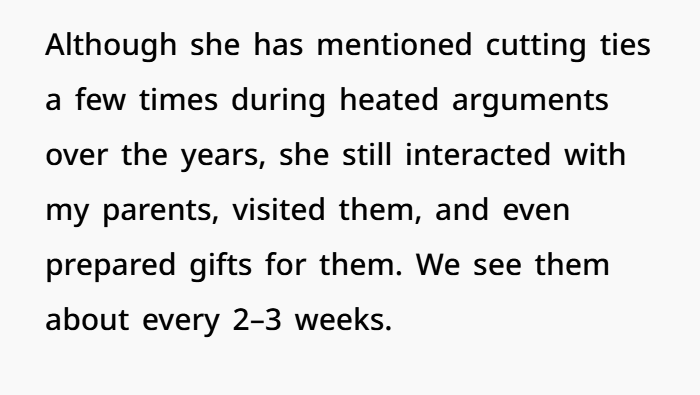
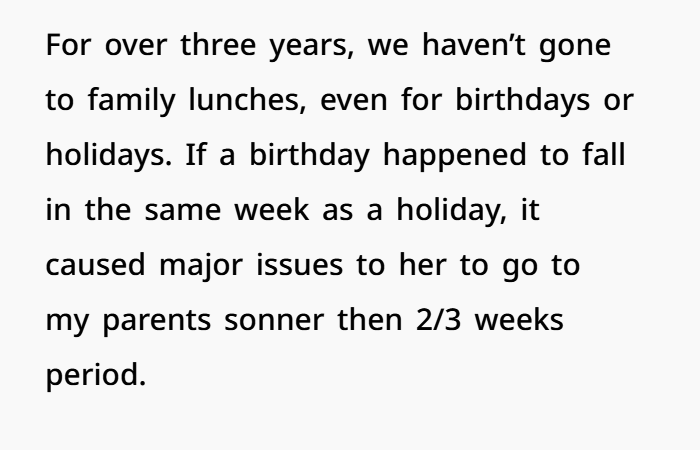
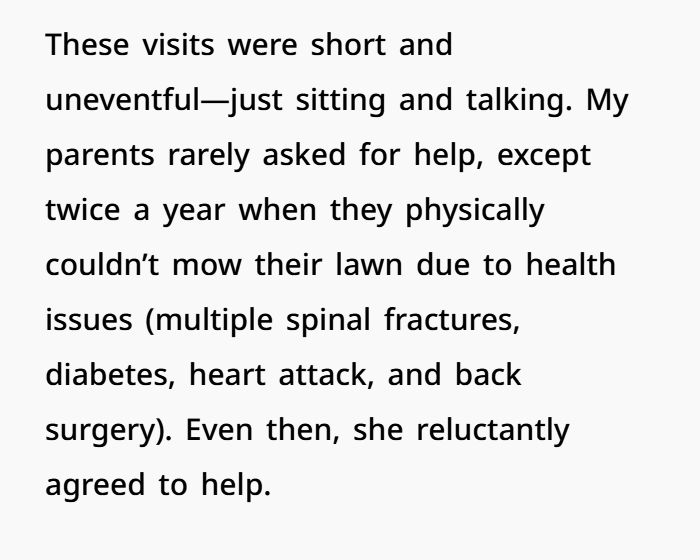
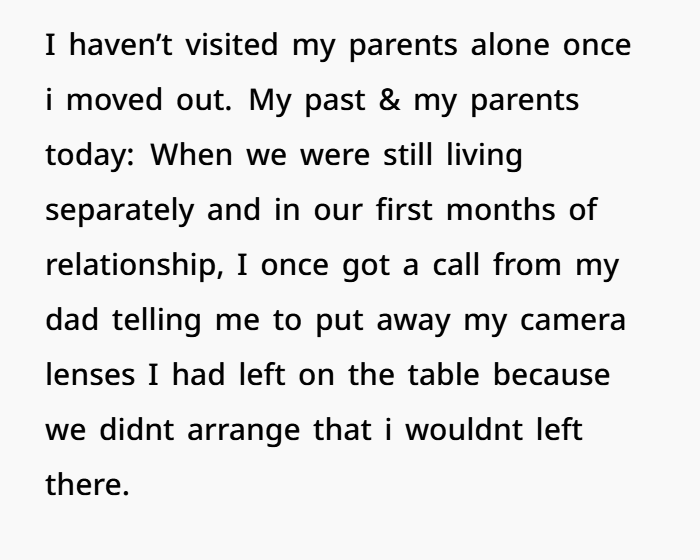
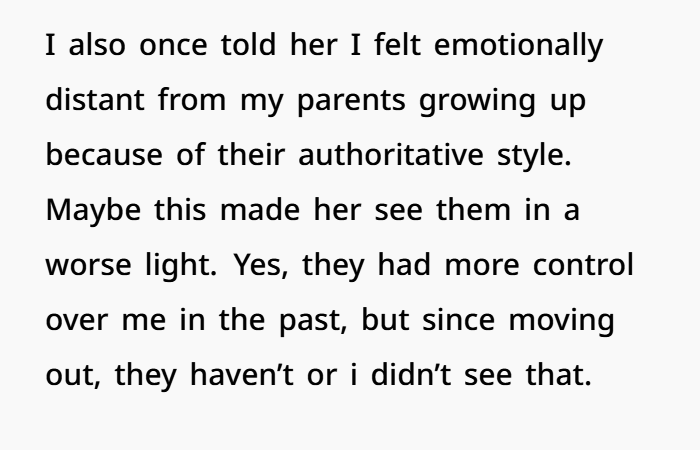
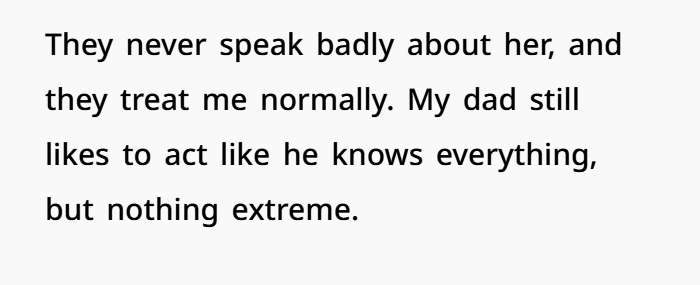
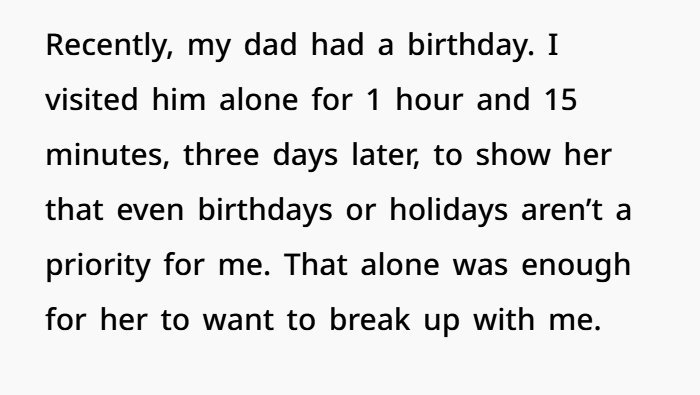
From his side, his parents did not seem extreme or abusive. His father could be a bit strict or opinionated, but most interactions sounded like regular family contact such as visits, phone calls on birthdays, and support during health or medical situations. These are things many families experience in everyday life. However, the relationship tension kept growing, and it started affecting trust and communication in the couple’s relationship.
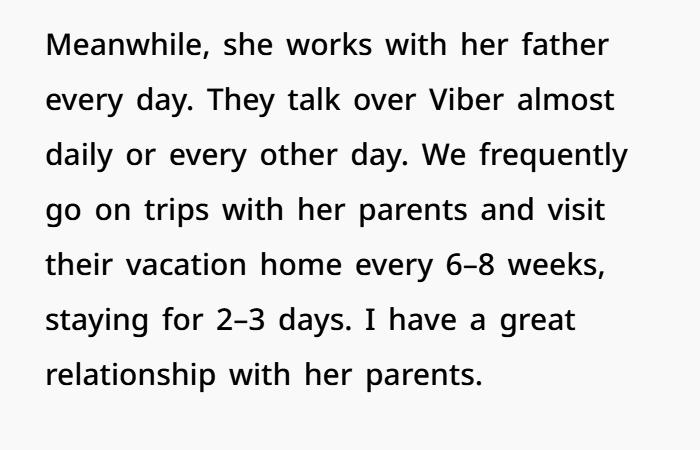
At the same time, his fiancée remained very close to her own family. She worked closely with her father and often spent weekends with her parents. This difference in family closeness created even more emotional stress. Now he feels stuck between loyalty to his family and fear of losing his long-term relationship. The situation shows how difficult family dynamics, emotional boundaries, and relationship conflict can become when both partners have very different expectations about family involvement.

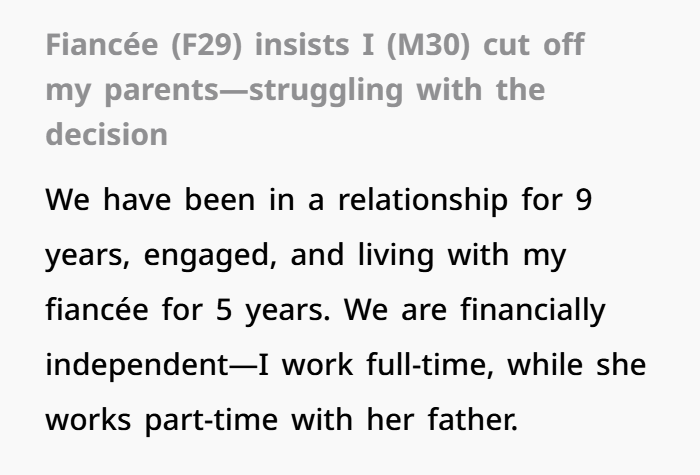
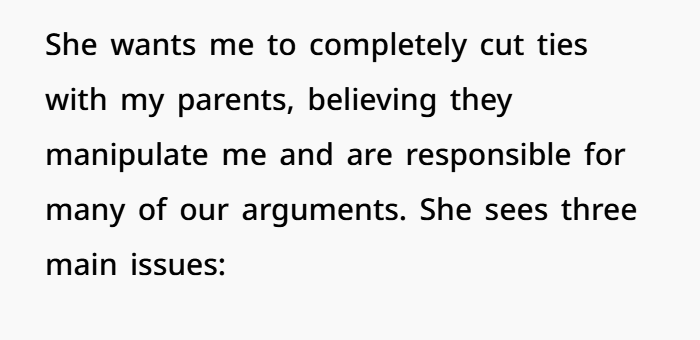
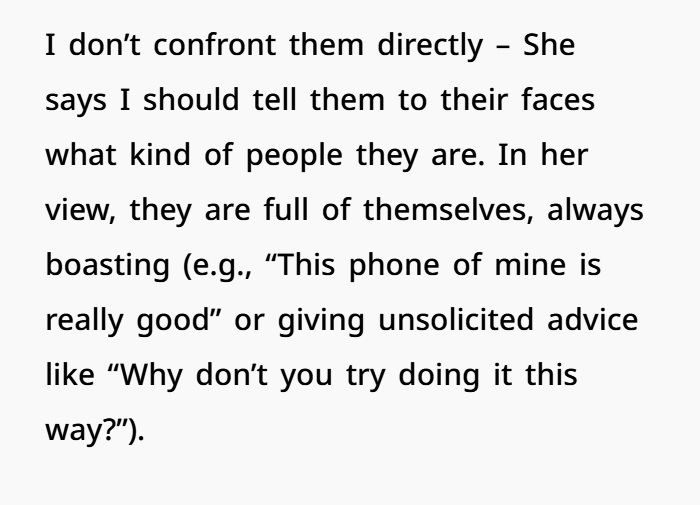
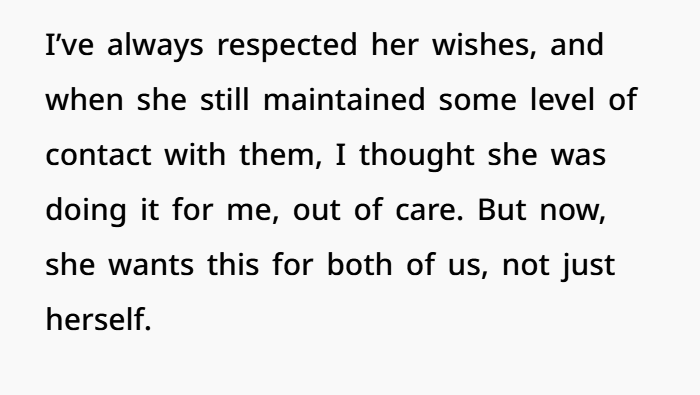
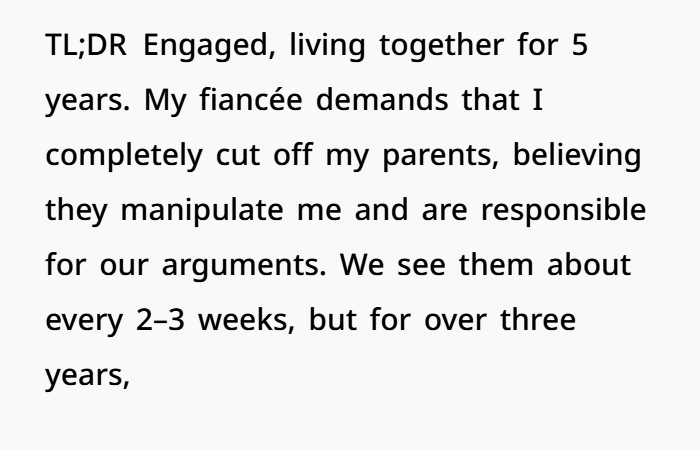
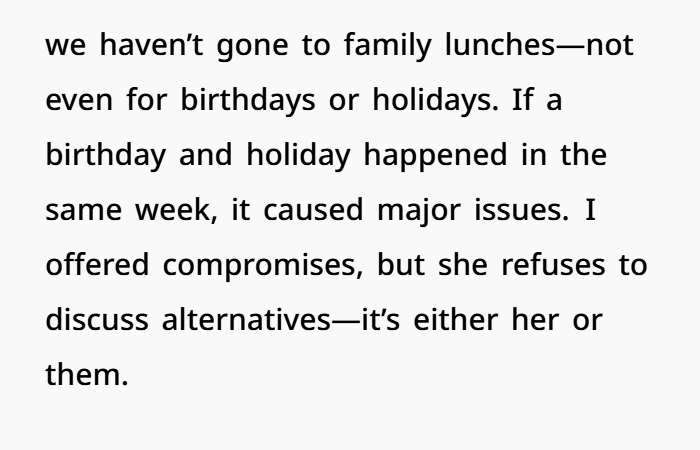
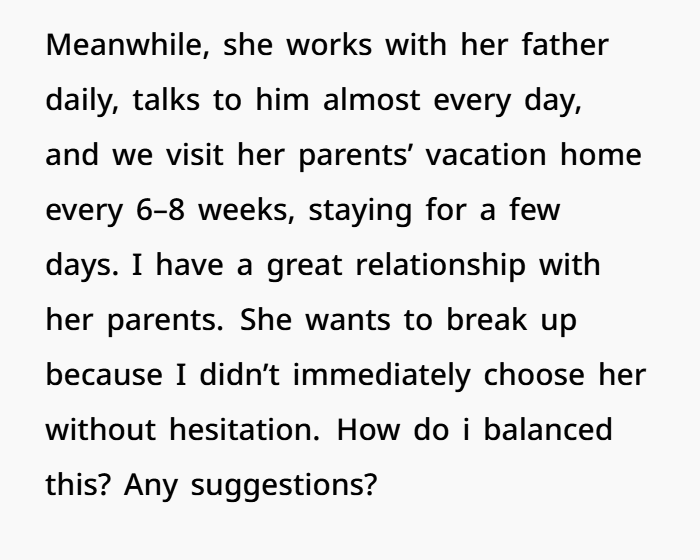
This story feels heavy because it is not just about family arguments. It is about relationship boundaries, emotional control, and long-term trust in marriage and family life.
Over time, relationships can slowly shift without people noticing. What starts as small disagreements can turn into bigger issues about control, loyalty, and emotional pressure.
When “your partner comes first” becomes complicated
In healthy relationships, it is normal that a husband or wife becomes your closest emotional partner. That is a normal part of marriage and commitment.
But there is an important difference between:
- prioritizing your partner
and - cutting off your family completely because of pressure or fear
Healthy relationships should allow balance, not total isolation.
The problem with ultimatums in relationships
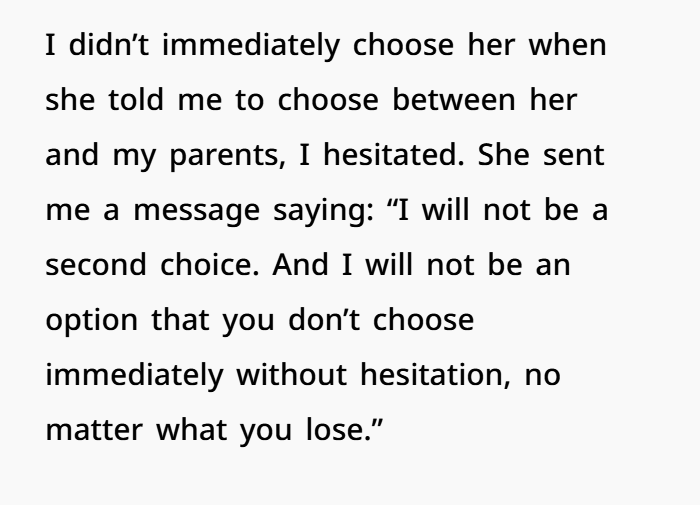
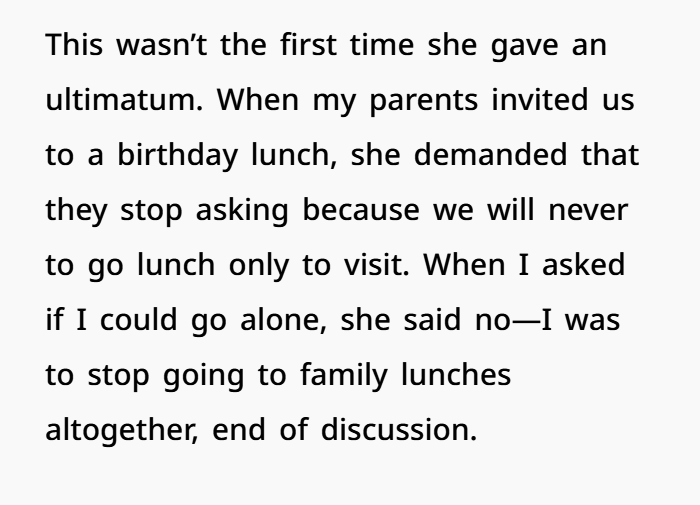
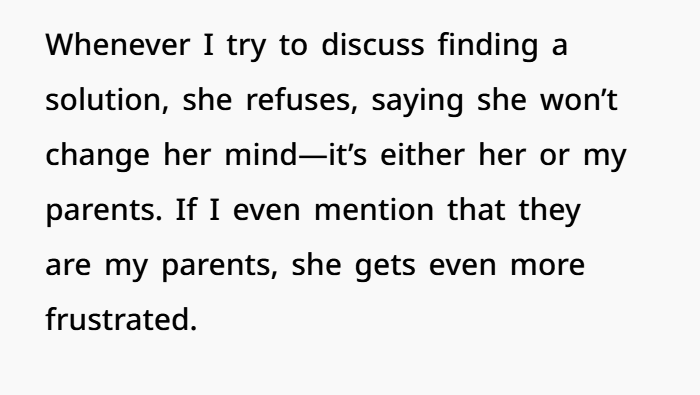
In this situation, one partner is asking for full distance from the other’s parents. Not just fewer visits or better boundaries, but complete separation.
This includes:
- no family visits
- no shared holidays
- no birthday meetings
- no one-on-one time with parents
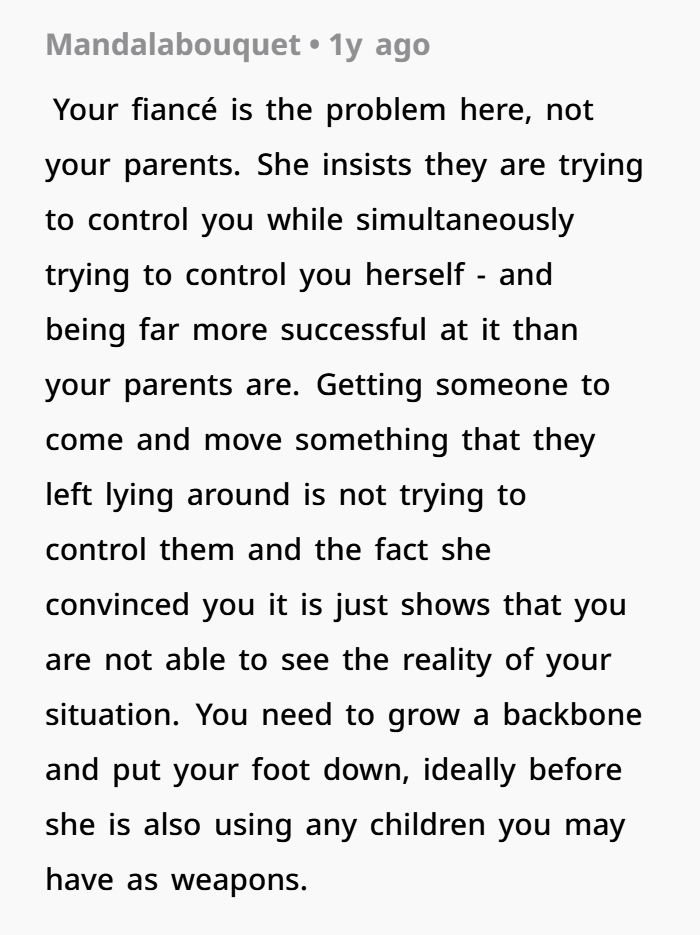
When even small visits cause threats of ending the relationship, it creates emotional pressure.
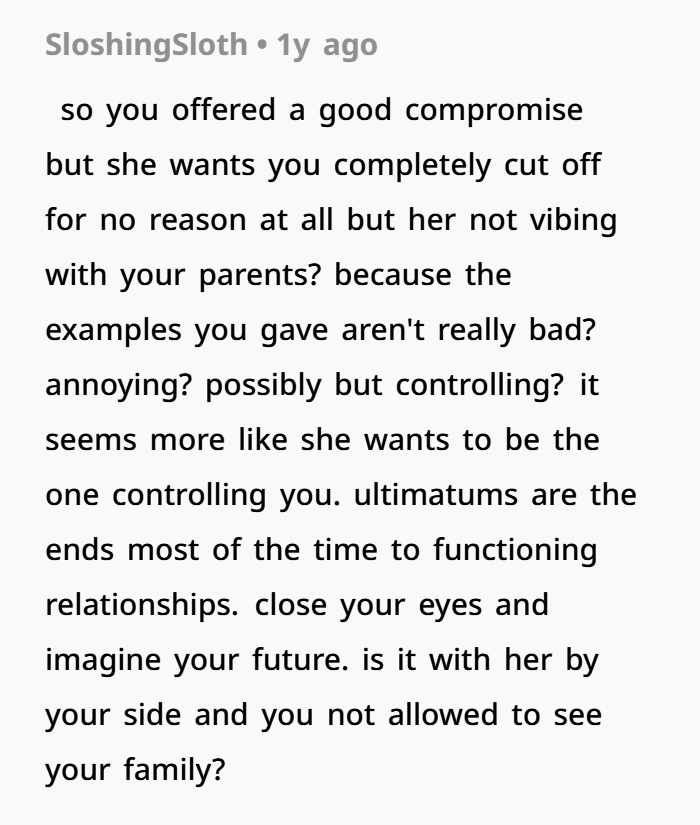
In healthy relationship communication, problems are usually solved through discussion and compromise, not ultimatums.
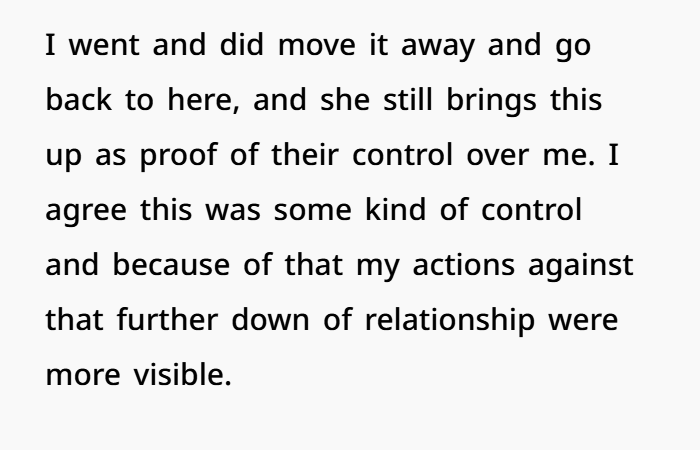
Why this can feel like emotional control
Over time, repeated ultimatums can start to feel like:
- emotional pressure
- loss of independence
- fear of making personal decisions
- walking on eggshells
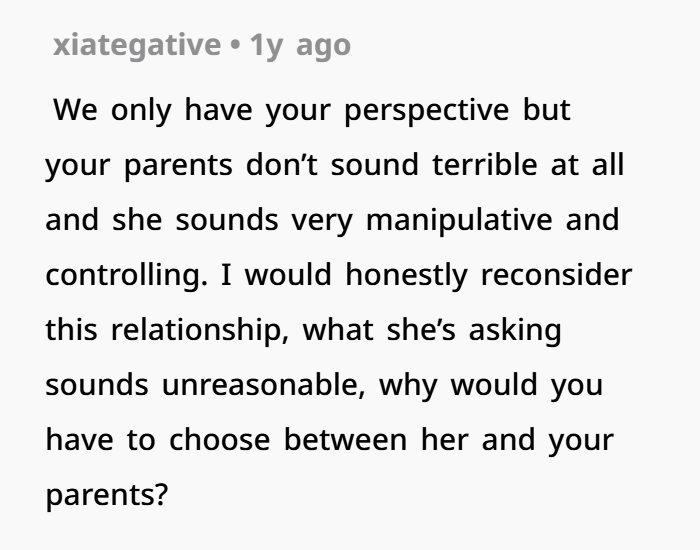
This is why many readers see this situation as a possible relationship control issue, even if it is not intentional.
But it is not always simple
It is also important to understand the other side.
Some people have difficult family backgrounds. Parents can be:
- emotionally controlling
- overly strict
- difficult to communicate with
- or not respectful of boundaries
Because of this, some people feel unsafe or stressed around their family and want distance for their own mental peace.
So the concern may come from fear, not control.
The imbalance in family relationships
One major issue in this story is imbalance.
- One partner stays close with their own family
- The other partner is asked to cut ties completely
This creates feelings of unfairness.
In marriage counseling and relationship therapy, experts often say that boundaries should work both ways. If one person would not accept the same rule, it can create long-term resentment.
Why family estrangement is a serious decision
Cutting contact with family is a major life decision. It can affect:
- emotional support systems
- mental health
- long-term stability
- social connections
In some cases, family estrangement is necessary, especially in abusive or toxic situations.
But in other cases, it can create emotional isolation if it happens too quickly or under pressure from a partner.
Emotional pressure builds over time
Even small patterns can slowly change behavior in a relationship.
For example:
- avoiding family visits to prevent arguments
- overthinking every decision
- worrying about partner reactions
- feeling stressed about simple plans
Over time, a person may start changing their life just to avoid conflict.
This can lead to emotional exhaustion in long-term relationships.
Why compromise matters
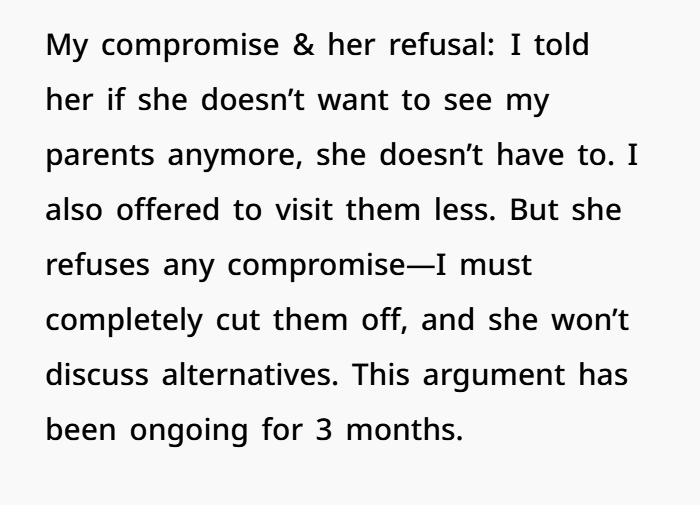
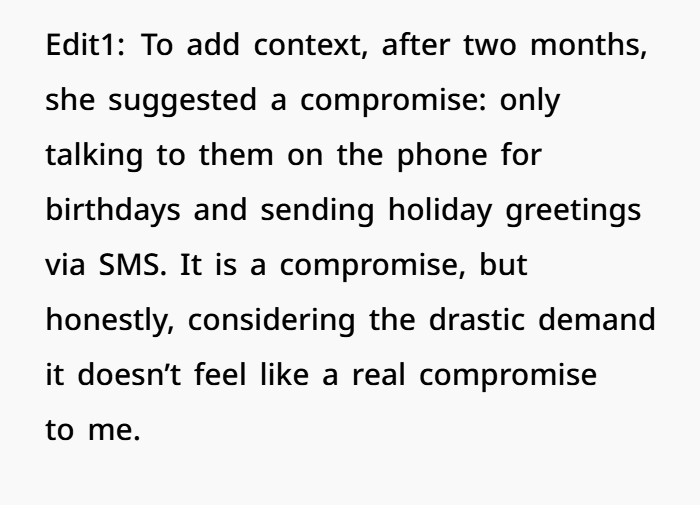
In this situation, some compromise did happen:
- fewer family visits
- separate visits when needed
- reduced family contact
But it still did not feel enough.
When only one outcome is accepted, it becomes harder to find balance in family relationship dynamics.
Healthy relationships usually need middle ground, not extreme decisions.
The emotional toll on both sides
This situation is difficult for everyone involved:
- One person feels they are protecting themselves from a harmful family situation
- The other feels they are slowly losing connection with their parents
Both sides may feel stressed, misunderstood, and emotionally tired.
Why this story feels so relatable online
Many people relate to this because modern relationships often deal with:
- in-law boundaries
- family pressure
- emotional dependency
- trust issues in marriage
- communication breakdowns
These are common topics in modern relationship advice, marriage counseling, and family therapy discussions.
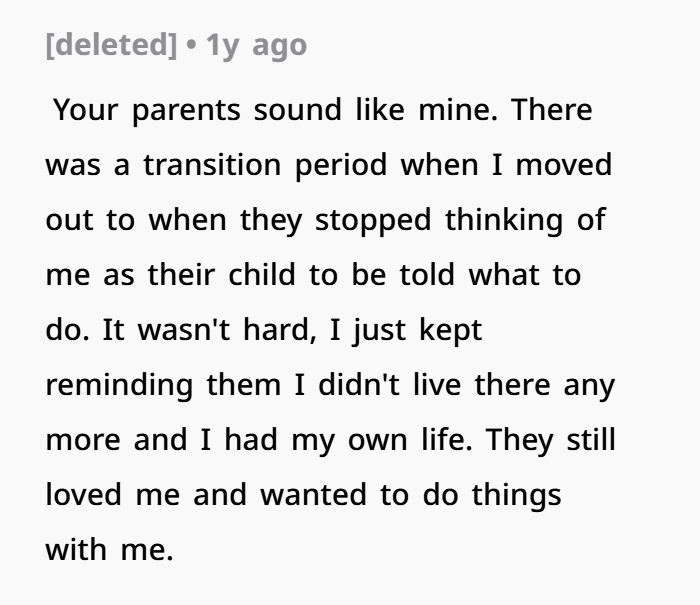
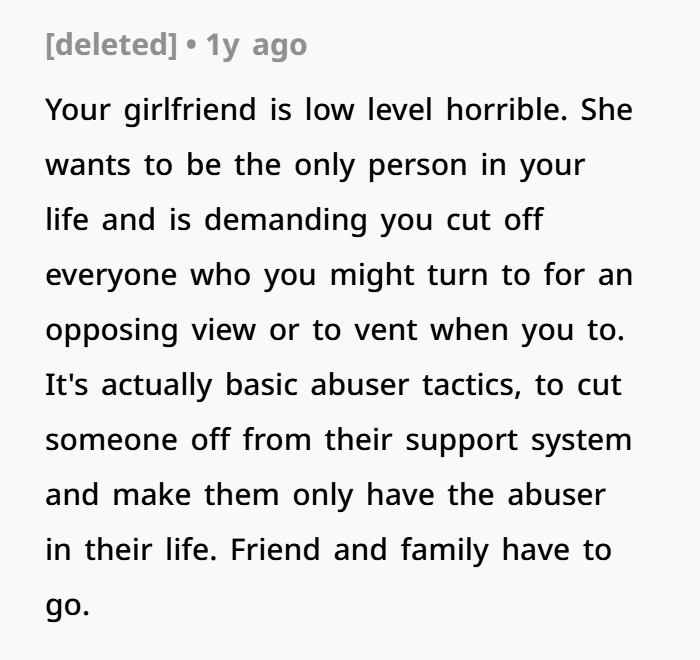
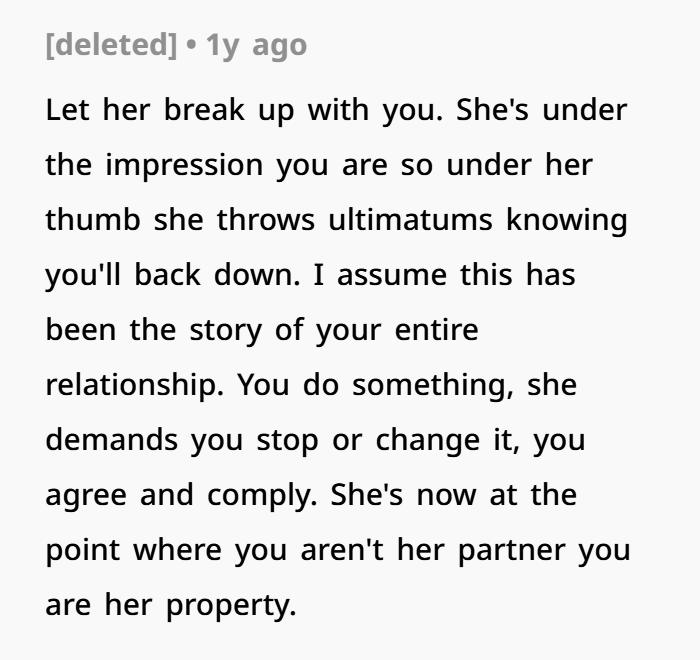
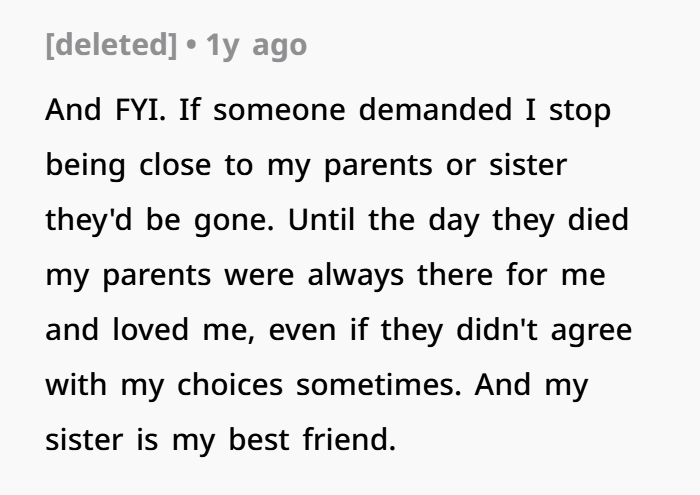
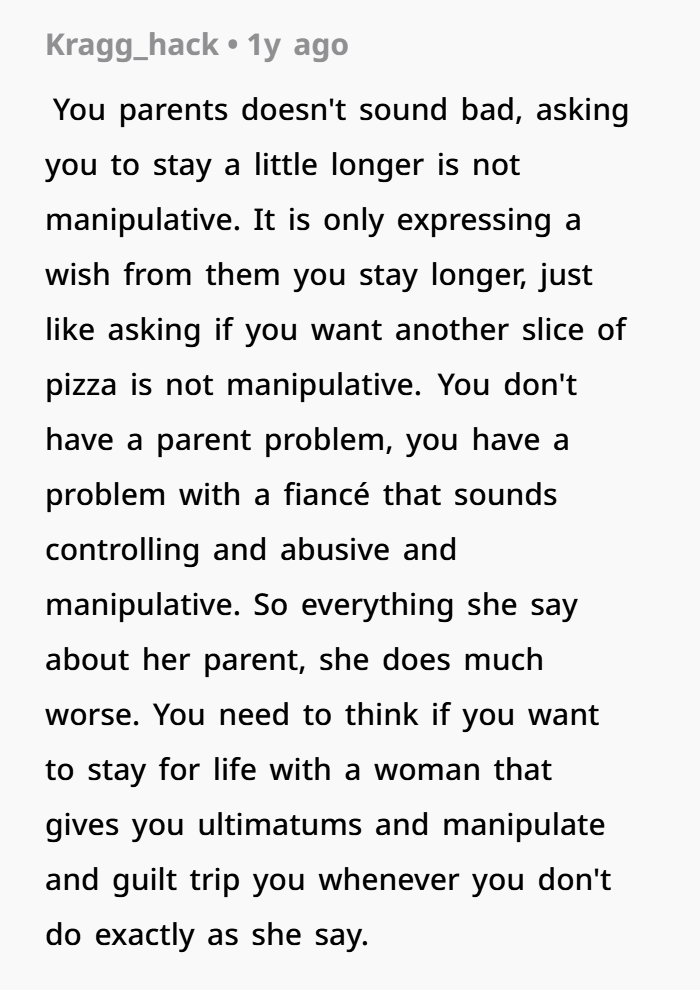
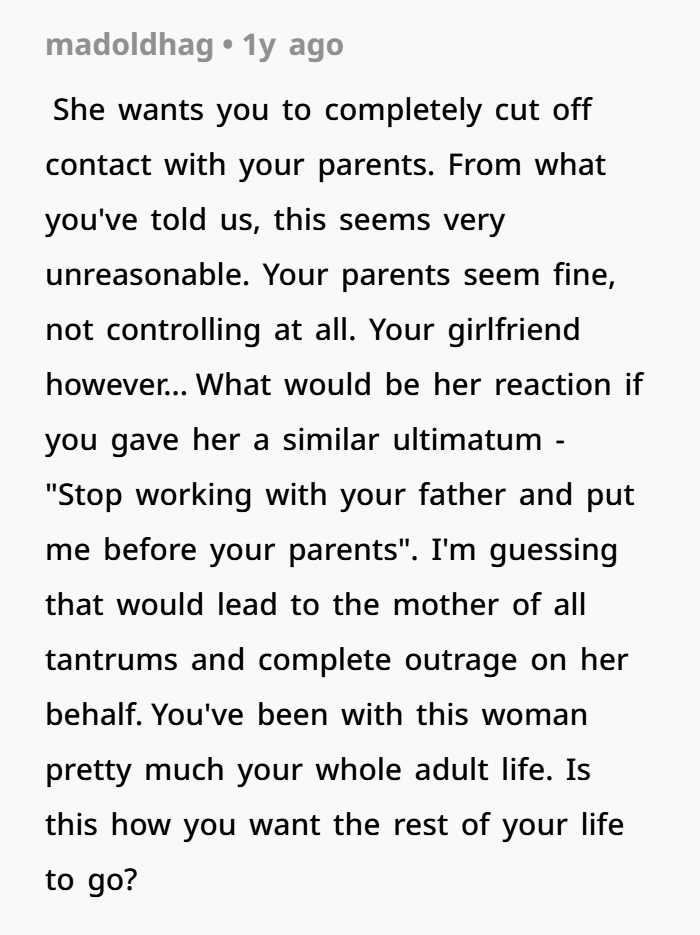
The Comments Are In
Final thoughts
This story is complicated because there is no simple right or wrong side.
It includes:
- fear
- emotional pain
- family history
- relationship insecurity
- and communication struggles
But one important lesson stands out clearly:
A healthy long-term relationship should not feel like emotional isolation or constant pressure to choose one side forever.
Marriage works best when there is trust, respect, and space for both partners to maintain healthy relationships outside the marriage, without fear or control.