A Coworker Kept Stealing Office Lunches… So One Employee Set a Spicy Trap That Got Them Fired
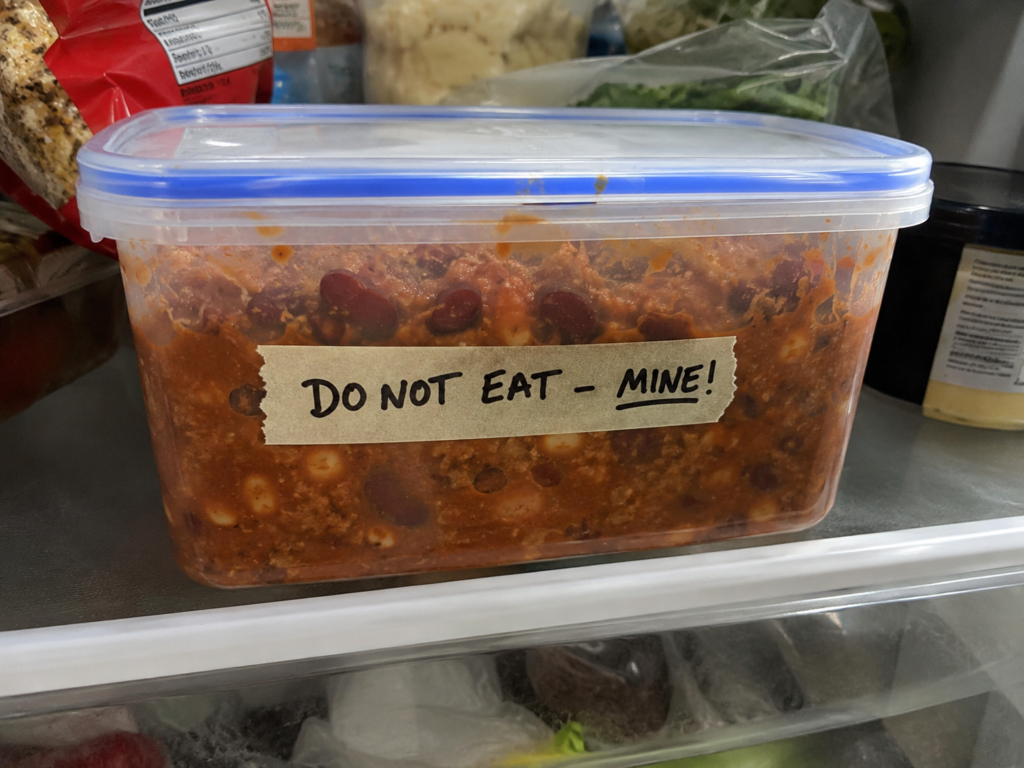
Office food theft is one of those weird workplace issues everybody jokes about until it starts happening to them constantly. For one employee, it became a recurring office nightmare after a coworker repeatedly “accidentally” ate lunches that were clearly labeled and stored inside the shared company fridge. Every time someone complained, the coworker apologized and claimed they simply missed the name written on the container. Management mostly ignored the situation because the thefts happened just infrequently enough to avoid becoming a formal workplace complaint. But after months of losing homemade meals and dealing with ongoing frustration, one fed-up employee finally decided to fight back in a way nobody would forget.
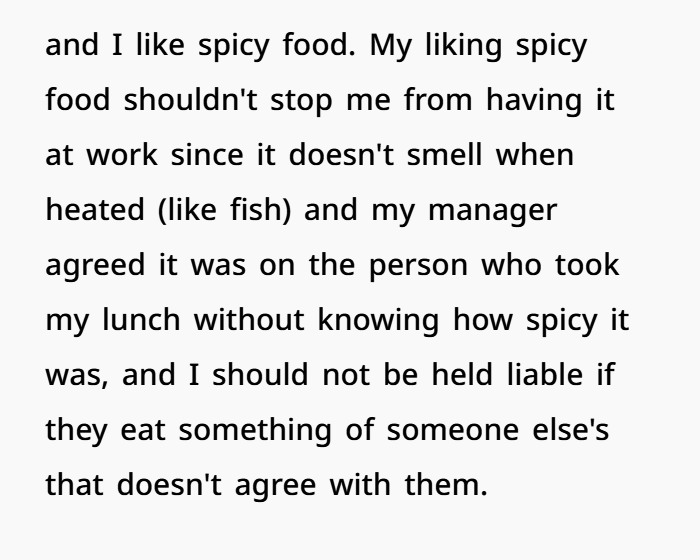
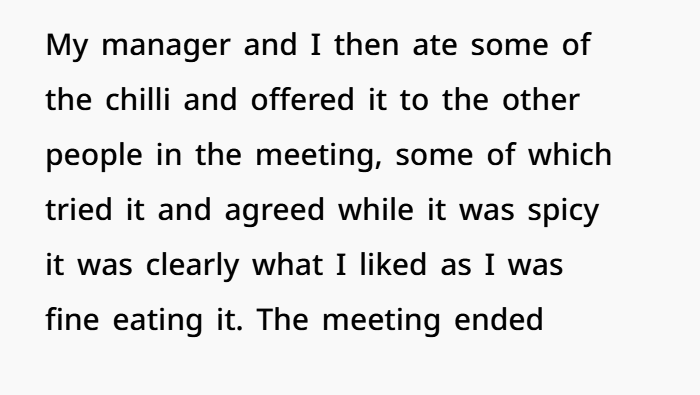
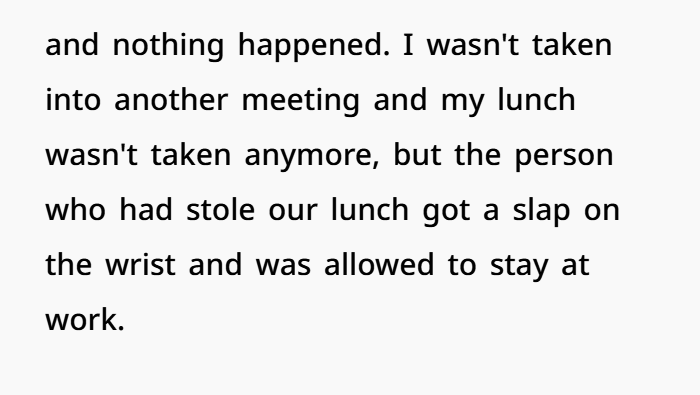
Since they genuinely enjoyed extremely spicy food, the employee made a huge pot of homemade ghost pepper chili loaded with some of the hottest peppers on earth and brought it to work over several days. Eventually the lunch vanished again like always. But this time, the suspected lunch thief reportedly got so sick from the spicy food that they had to leave work and seek medical treatment for severe stomach pain. HR quickly became involved and accused the employee of intentionally poisoning a coworker with dangerous food. But during the HR meeting, everything suddenly changed when the accused employee casually ate the exact same ghost pepper chili in front of everyone, proving it was simply food they personally enjoyed eating. The situation escalated even further when the admitted office lunch thief continued stealing food afterward, giving management additional evidence of repeated workplace theft. In the end, the coworker lost their job — not because of the ghost pepper incident itself, but because they had been stealing lunches from employees the entire time.


Honestly, this story sounds hilarious at first because it feels like classic office revenge comedy. Somebody keeps stealing lunches, somebody finally fights back with ridiculously spicy ghost pepper chili, chaos erupts, and the internet cheers. But underneath all the humor, there’s actually a surprisingly messy workplace conflict and potential legal issue sitting underneath the story.
Because technically, the employee walked a very risky line here.
The biggest reason they probably avoided getting fired comes down to one extremely important detail:
they genuinely ate the food themselves.
That changes everything legally and professionally.
If someone secretly adds harmful substances to food specifically intending to injure another person, companies and courts can absolutely treat it as poisoning, workplace misconduct, or intentional harm. But ghost peppers are still legitimate food ingredients, even if they’re unbelievably spicy. Since the employee openly ate the exact same chili and could prove they regularly enjoyed spicy foods, HR suddenly lost the easiest argument they had for proving malicious intent.
And honestly, bringing the same chili into the HR meeting and casually eating it in front of everyone was a very smart move.
That moment completely changed the narrative. Suddenly this wasn’t “booby-trapped food” anymore. It was simply somebody’s homemade lunch that happened to be extremely spicy.
And that distinction matters a lot in workplace disputes and legal situations.
The manager backing up the employee became important too. Office investigations often come down to credibility and consistency. Once management openly agreed employees should be allowed to bring food they personally enjoy eating, HR’s position became much weaker. Especially because the suspected lunch thief had already admitted to repeatedly taking food that didn’t belong to them.
That admission basically destroyed their entire complaint.
And honestly, the coworker’s behavior becomes weirder the more you think about it.
Accidentally grabbing the wrong lunch once? Completely believable.
Twice? Maybe understandable.
Repeatedly stealing labeled lunches for months while somehow “missing” names every single time? That stops sounding accidental very quickly.
Most offices have at least one coworker who becomes infamous for stealing food, and honestly, it creates way more resentment than people outside workplace culture realize. Lunch theft feels weirdly personal because meals aren’t just random items sitting in a fridge. People spend money buying groceries, meal prepping, budgeting food costs, and sometimes cooking for hours after work.
So when somebody repeatedly steals those meals, the message starts feeling very clear:
“My convenience matters more than your time, effort, and money.”
That’s why people react so emotionally to office food theft stories online.
After a while, it stops being about the lunch itself.
It becomes about disrespect.
Another reason this story exploded online is because ghost peppers have this almost legendary reputation for being absurdly intense. For people unfamiliar with them, ghost peppers are among the hottest chili peppers in the world, massively stronger than normal spicy foods. Eating too much can absolutely trigger severe stomach pain, sweating, nausea, vomiting, cramps, digestive distress, and full-body regret for somebody unprepared.
But here’s the important part: they’re still normal food ingredients.
Restaurants literally sell ghost pepper wings, burgers, hot sauces, spicy food challenges, and chili dishes commercially all the time. So HR couldn’t realistically argue the employee created some illegal toxic substance or intentionally poisoned somebody with chemicals. The coworker voluntarily stole food without knowing what ingredients were inside it.
And honestly, that’s where personal responsibility enters the conversation.
If you steal someone else’s food, you automatically accept the risk that you have no idea what’s inside it.
It could contain allergens.
It could contain ingredients you dislike.
It could upset your stomach.
Or apparently… enough ghost peppers to temporarily destroy your soul.
That’s a huge reason why so many people online sided with the employee instead of the lunch thief.
But honestly, there’s another side to the debate too.
Some commenters argued the employee absolutely expected the theft to happen and intentionally made the chili painfully spicy to punish whoever stole it. And realistically? They probably did. Even the title basically admits it. The employee clearly wanted the lunch thief to get some kind of unforgettable shock after months of stealing food from coworkers.
That creates a gray area morally.
Because honestly, while extremely spicy food isn’t technically poison, intentionally escalating a workplace situation instead of handling it through official channels can still become very risky. Imagine if the coworker had a serious medical condition, severe food sensitivity, digestive disorder, or allergy complication. Suddenly the entire situation could’ve turned into a massive legal and workplace disaster.
That’s probably why HR reacted so aggressively in the beginning.
Most companies panic immediately around anything involving food tampering or employee medical emergencies because workplace liability issues can become terrifying very fast. The second someone ends up sick or hospitalized after eating something connected to another employee, HR departments immediately start thinking about lawsuits, insurance claims, legal exposure, and corporate risk management.
Ironically though, HR accidentally helped get the lunch thief fired later anyway.
And honestly, that’s probably the funniest part of the entire story.
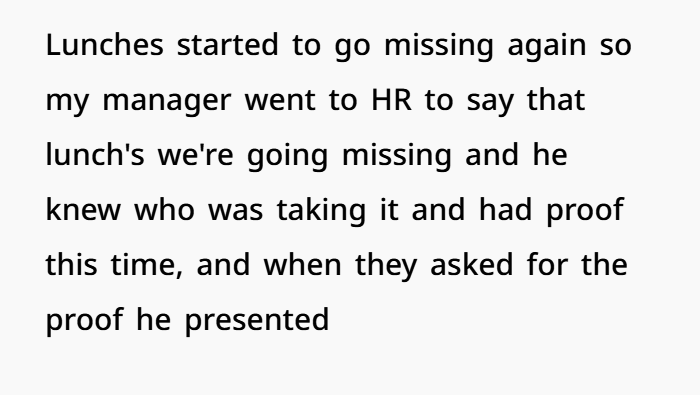
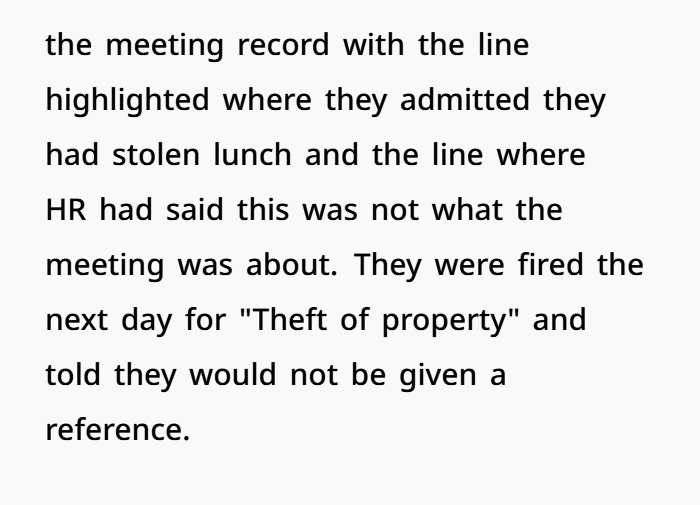
During the HR meeting, the coworker openly admitted to stealing food while HR simultaneously tried insisting “that’s not what this meeting is about.” Later, management reportedly used that documented admission as evidence once the theft continued afterward.
That’s such perfect corporate logic honestly.
The company ignored repeated complaints about workplace theft until someone got physically sick. Then once HR accidentally documented the theft officially during their investigation, management suddenly had enough evidence to finally act on the situation properly.
And importantly, the employee wasn’t even fired because of the ghost pepper chili itself.
They were fired for repeatedly stealing coworkers’ lunches.
That distinction matters because some people online frame the story like the revenge itself directly got someone fired. But realistically, the termination happened because management finally had undeniable proof of ongoing workplace theft and policy violations.
Honestly, the manager deserves way more credit here too.
A lot of supervisors would’ve immediately folded under HR pressure just to avoid workplace conflict or legal risk. Instead, this manager publicly supported the employee, ate the same chili personally, and later helped push the theft issue through proper workplace channels. That support probably protected the employee’s job more than people realize.
Without management backing them up, HR could’ve handled the situation very differently.
And honestly, there’s something weirdly satisfying psychologically about the fact that the lunch thief basically caused their own downfall. Nobody forced them to steal food repeatedly. Nobody forced them to admit it during an HR investigation. They slowly built the entire case against themselves through one bad decision after another.
And honestly, the social embarrassment was probably brutal too.
Imagine becoming known around the office as:
- the lunch thief
- the person destroyed by ghost pepper chili
- the employee fired over stolen leftovers
That reputation follows people forever.
This story also connects to a much bigger workplace frustration a lot of employees quietly deal with all the time: small repeated problems getting ignored until they eventually explode into something much worse. People complain. Managers downplay it. HR avoids getting involved because it seems “minor.” Then eventually somebody reacts emotionally, creatively, or dramatically because they feel completely ignored.
And honestly, that’s exactly what happened here.
The office lunch theft should’ve been taken seriously months earlier. Instead, everyone tolerated it because stealing food sounded like a small workplace annoyance instead of an actual pattern of disrespect and theft. But repeated boundary violations build resentment fast, especially when employees feel management refuses to protect basic fairness in the workplace.
That’s why situations like this escalate emotionally over time.
At first, it’s just irritation.
Then frustration.
Then anger.
Then eventually somebody decides to solve the problem themselves.
And honestly, the employee’s smartest move may have been making another batch of ghost pepper chili specifically before the HR meeting. That detail shows they already understood exactly how the situation was probably going to unfold. They anticipated needing proof that this wasn’t some one-time “revenge trap” but actual food they genuinely enjoyed eating regularly.
That kind of preparation probably saved their job.
Because the second they calmly sat there eating the exact same painfully spicy chili in front of HR and management, the entire argument shifted. Suddenly it became much harder to frame the situation as intentional poisoning or workplace sabotage. Instead, it looked like an employee simply bringing their normal homemade lunch to work while another employee repeatedly stole food that didn’t belong to them.
That’s either incredibly clever…
or hilariously petty.
Probably both.
At the end of the day, the real lesson here honestly isn’t “don’t eat ghost peppers.”
It’s:
don’t steal other people’s stuff and then act shocked when consequences eventually catch up to you.
Especially in an office full of stressed adults with access to industrial-strength chili peppers.
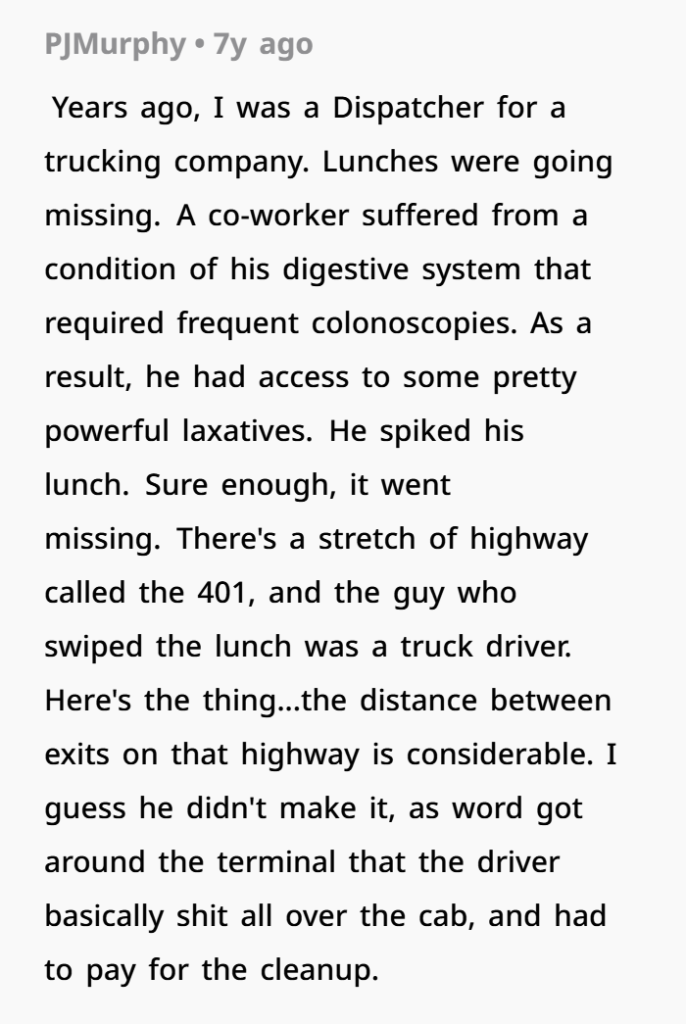
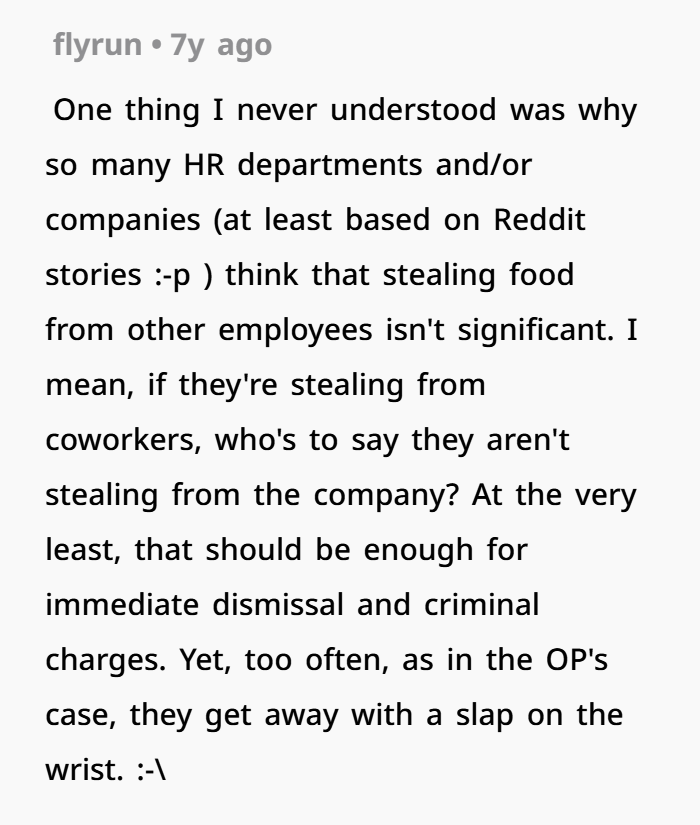
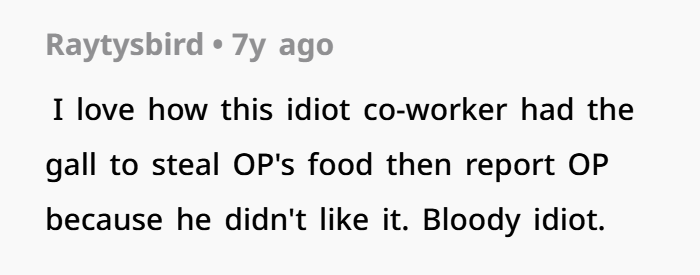
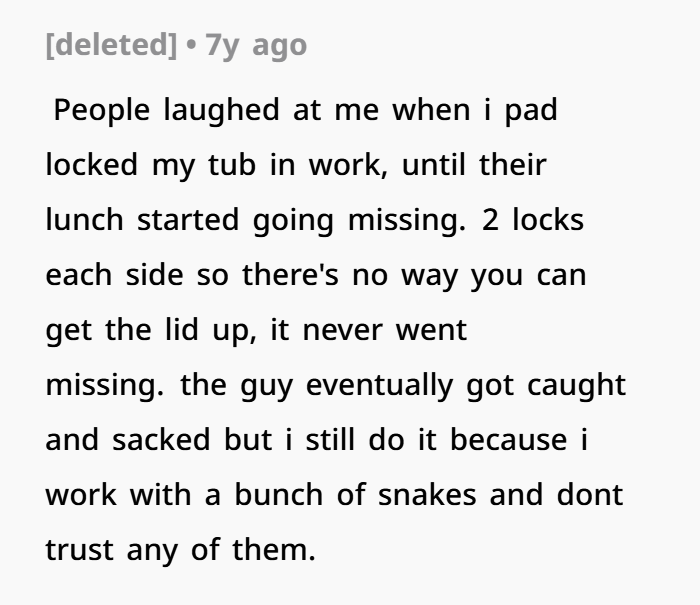
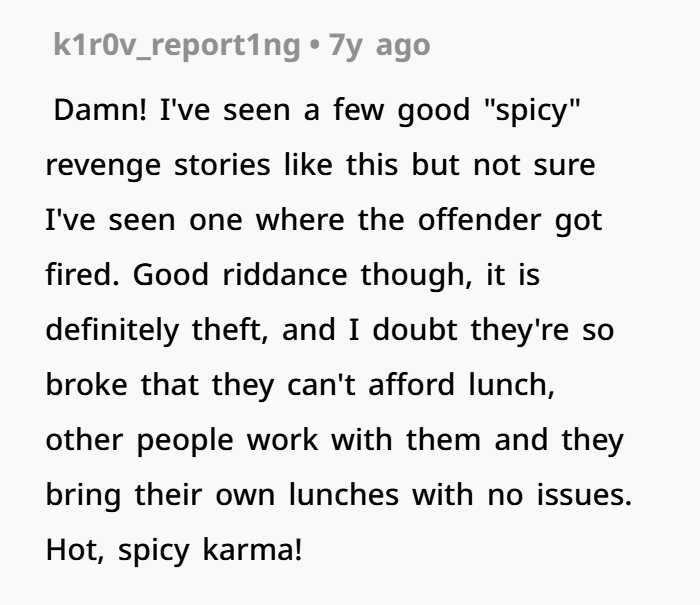
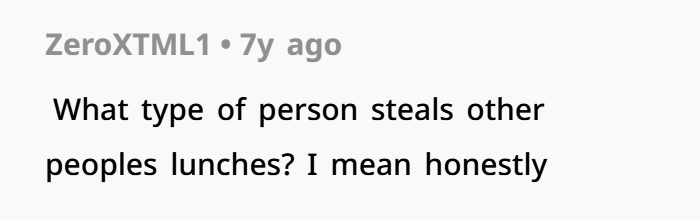
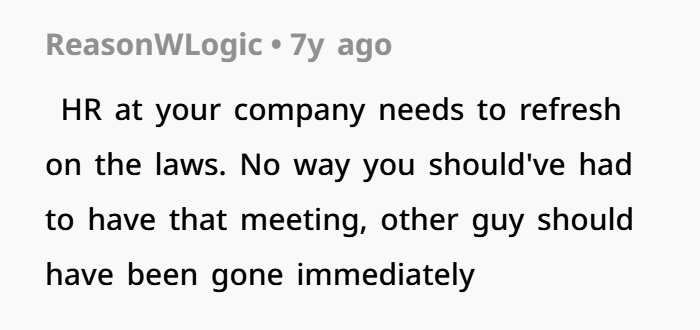
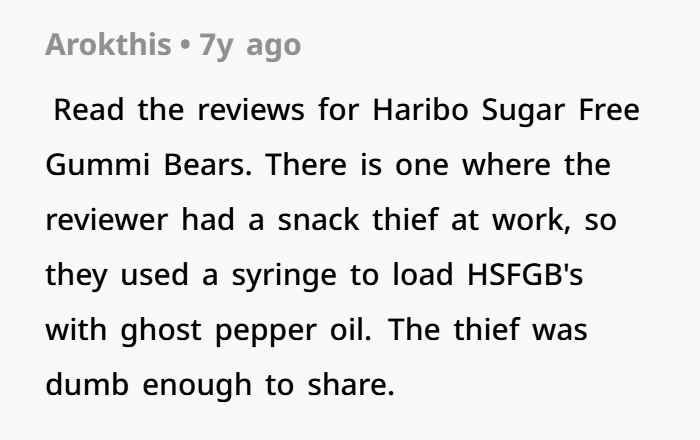
Netizens were strongly critical of HR systems, with many calling for stricter consequences and clearer accountability in workplace theft cases