Friend Group Sets Boundaries After Woman With OCD Treats Member Like She’s “Contaminated”
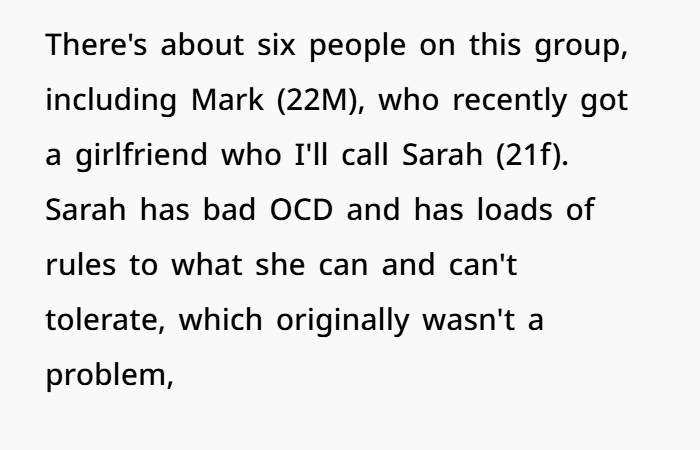
A 20-year-old woman recently shared a difficult situation involving her longtime friend Mark and his girlfriend Sarah, who has severe OCD (Obsessive-Compulsive Disorder).
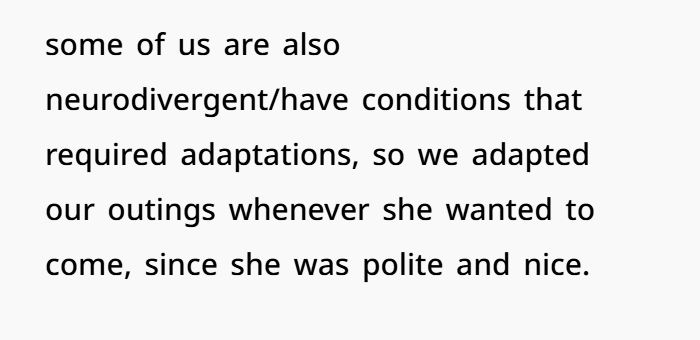
For years, the friend group did their best to support Sarah. They changed plans when needed, made small adjustments, and tried to create an environment where she felt comfortable and safe during group activities.
At first, everyone welcomed Sarah. She was kind, respectful, and easy to get along with, so the group was happy to include her.
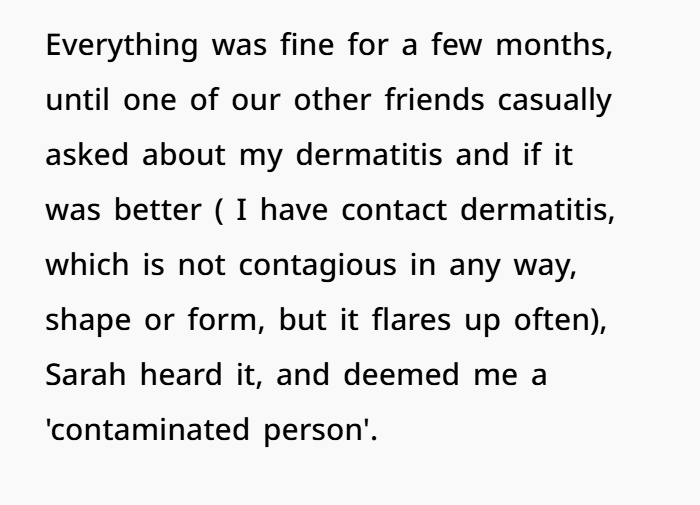
Things began to change after Sarah learned that one person in the group had contact dermatitis. This is a common skin condition, and it cannot be passed from one person to another.
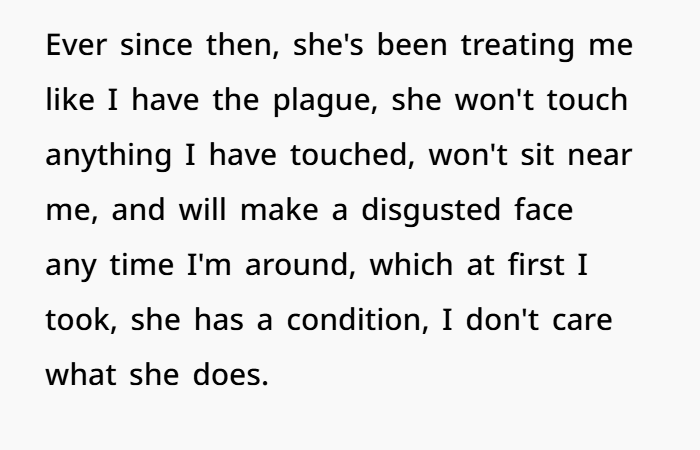
After hearing about it, Sarah started treating that friend differently. She avoided sitting near her, did not want to touch items she had touched, and warned others that they could become “contaminated.”
The behavior made the group uncomfortable. It also hurt the feelings of the person who was being treated as if she was dangerous.
The friends understood that OCD can create intense fears and anxiety. They knew Sarah’s reactions were connected to her condition, but they also felt that making someone feel rejected or unsafe was unfair.
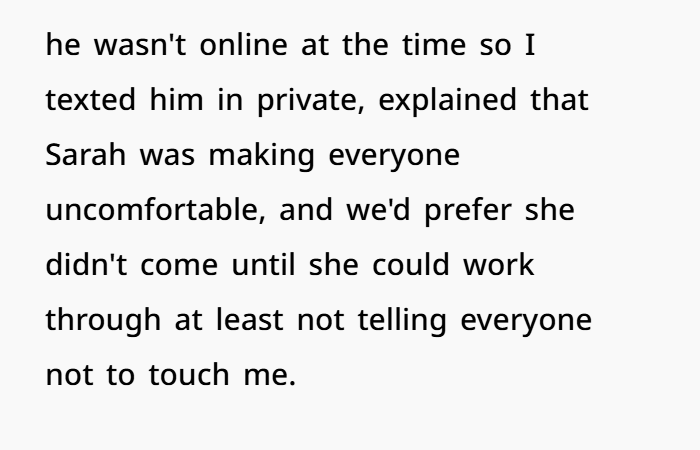
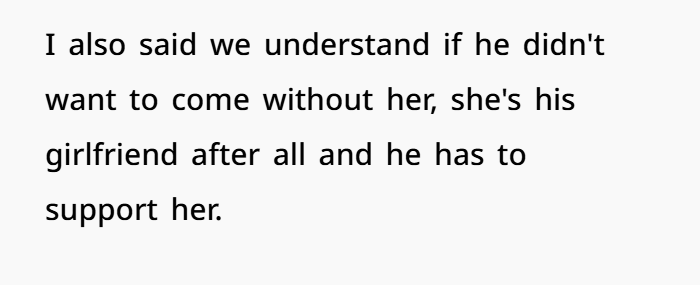
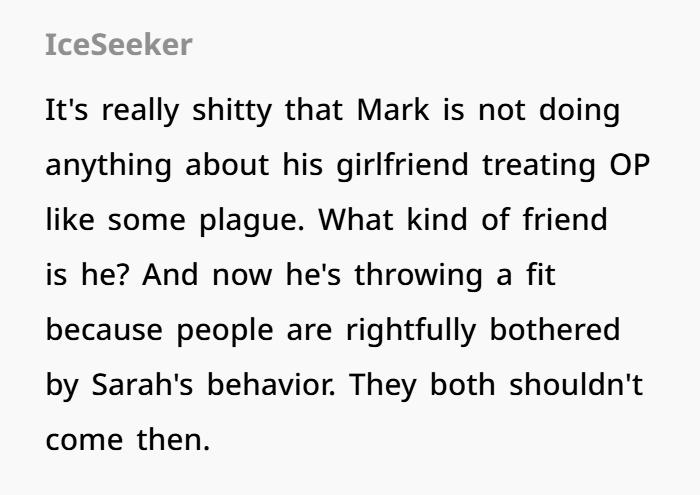
After discussing the issue, the group decided to set a boundary. They told Mark that he was still welcome to join future outings, but Sarah would not be invited unless she stopped making comments that hurt his friend.
It was a painful situation for everyone involved. The experience showed that friendships can require both compassion and clear boundaries when mental health struggles begin affecting other people.
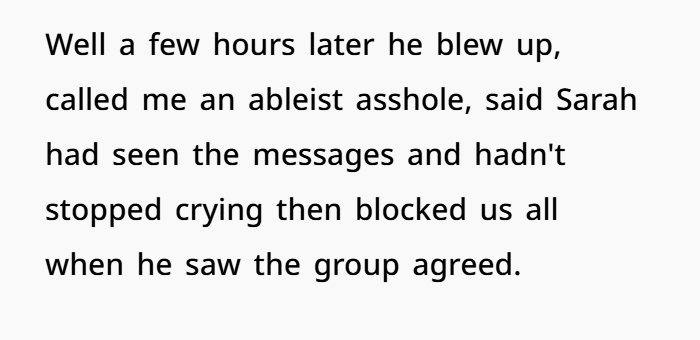
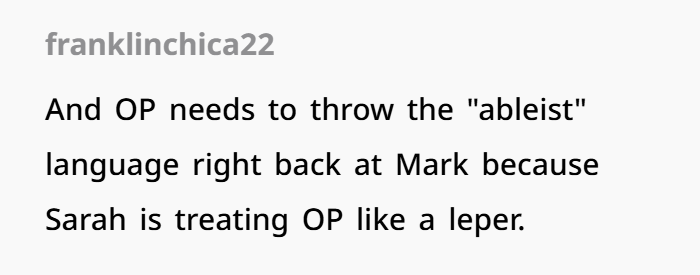
Mark became angry, accused them of being ableist, and blocked everyone after Sarah saw the messages.
The Group Tried to Be Supportive at First
When Sarah first joined the group, nobody had a problem with her OCD-related needs. The friends understood that mental health conditions can affect how people experience everyday situations.
Many people with OCD deal with unwanted thoughts, fears, and repeated behaviors linked to anxiety. Treatment options such as cognitive behavioral therapy (CBT) and exposure-based therapy are often used to help people manage these fears.
The group was willing to make changes because they wanted Sarah to feel included.
That part shows compassion. Friends often support each other by making reasonable adjustments when someone is struggling.
But support does not mean someone else has to accept being treated badly.
The Situation Changed After the Dermatitis Comment
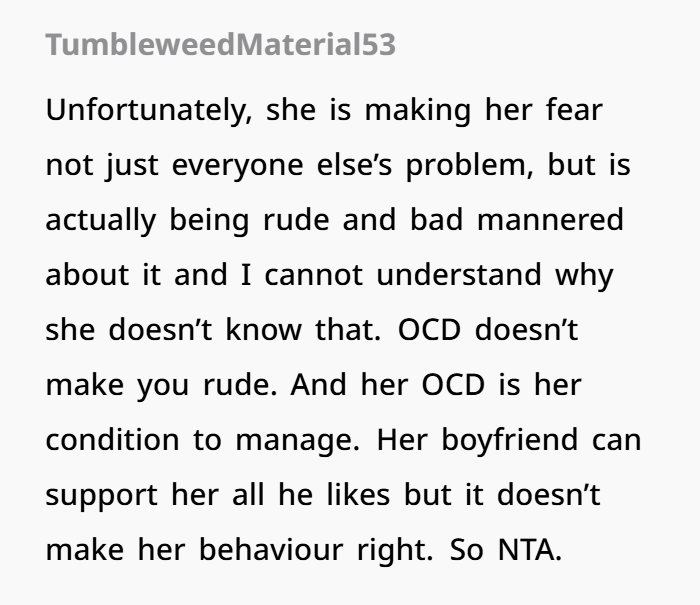
The main problem was not that Sarah had OCD. The problem was how she treated another person because of her fear.
Contact dermatitis is an irritation or allergic reaction of the skin. It is not an infection and cannot spread from one person to another.
After hearing about the condition, Sarah decided that the person was “contaminated.” She avoided her completely and began acting as if being near her was unsafe.
The situation became worse when Sarah started involving other people.
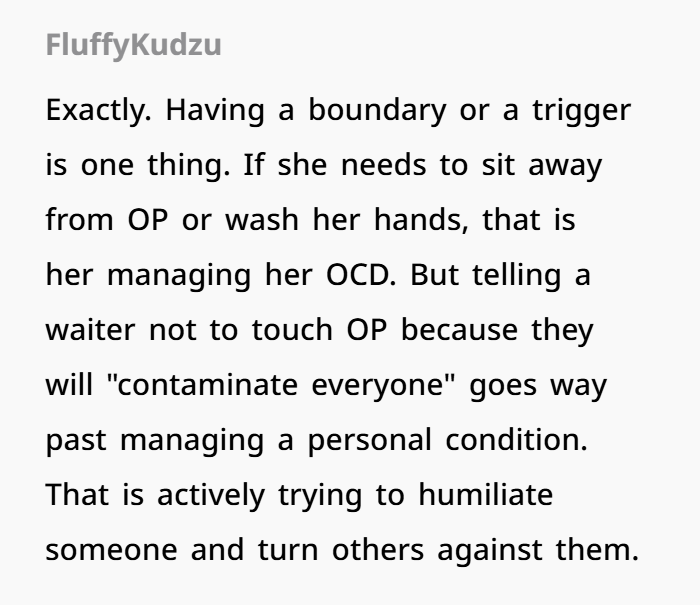
Warning others not to sit near someone, telling a waiter to avoid touching them, and making disgusted expressions can feel humiliating. Even if the fear comes from anxiety, the impact on another person still matters.
Having OCD Does Not Mean Someone Can Hurt Others Without Consequences
A mental health condition can explain why someone behaves a certain way, but it does not automatically make every action acceptable.
People living with OCD often understand that their fears may not match reality, but the condition can make those fears feel extremely real.
The difficult part is finding a balance between kindness and personal boundaries.
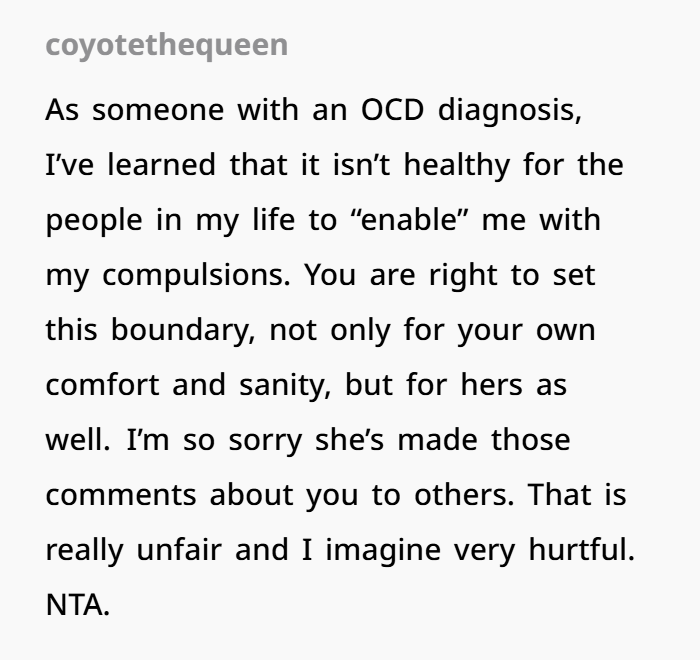
Friends can support someone’s recovery, but they are not required to accept discrimination, insults, or being treated like a threat.
The group was not asking Sarah to magically stop having anxiety. They were asking her to stop involving other people in her fear and stop spreading the idea that someone with a harmless skin condition was dangerous.
Was the Friend Group Wrong for Excluding Sarah?
This is where opinions may differ.
Some people may argue that excluding Sarah could make her OCD worse or feel like rejection. They may believe the group should have had a deeper conversation with her first.
That is a fair concern.
However, the group had already tried to be understanding for months. They also did not demand that Mark leave her. They simply said they did not feel comfortable being around behavior that targeted one person.
Setting boundaries is a common part of healthy relationships. A boundary is not the same as punishment. It is a way of saying, “This behavior is hurting me, and I cannot continue accepting it.”
Was Mark’s Reaction Reasonable?
Mark may have felt like he needed to defend his girlfriend, especially because she has a mental health condition.
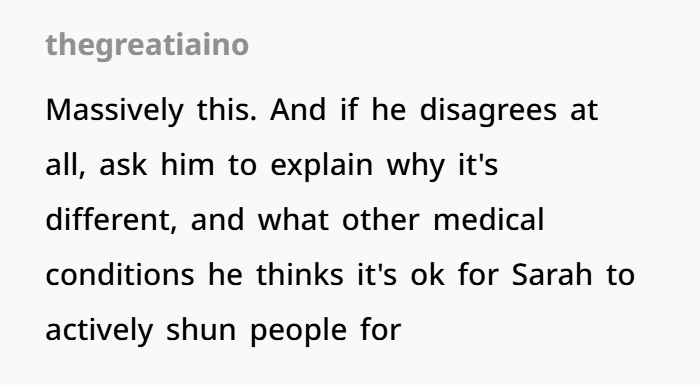
But calling everyone ableist without acknowledging the harm caused by Sarah’s actions ignores an important part of the situation.
The group was not rejecting Sarah because she had OCD. They were reacting to how she treated another person.
A supportive partner can care about someone’s struggles while also encouraging them to take responsibility for harmful behavior.
Based on the story, the friend was not wrong for speaking up.
She did not attack Sarah for having OCD. She did not mock her condition or refuse to make reasonable adjustments. Instead, she objected to being treated like a danger because of a harmless medical condition.
The biggest issue was not Sarah’s anxiety. It was the way that anxiety was placed onto another person and turned into public shame.
The group showed patience, but they also had the right to protect their own comfort and dignity.
A person can deserve compassion for their struggles while still being responsible for how they treat others.
See the comments to know what people said

This situation was never really about Sarah having OCD. It was about how her fears affected another person.
The friend group tried to be patient and supportive, but they reached a point where they felt hurt and uncomfortable. Having a mental health condition can explain someone’s actions, but it does not mean others have to accept being treated unfairly or made to feel unsafe.
The friend was not wrong for setting a boundary. She did not reject Sarah because of her OCD. She simply asked for basic respect and wanted the harmful comments and behavior to stop.
Mark may have wanted to protect his girlfriend, but defending someone does not mean ignoring the impact their actions have on others. A healthy friendship needs understanding from both sides.
In the end, the group’s decision was about protecting someone’s dignity while still recognizing Sarah’s struggles. Compassion matters, but so do respect and personal boundaries.