He Said I Should ‘Man Up’ Over Marvel—But My Twin Brother Died Watching WandaVision
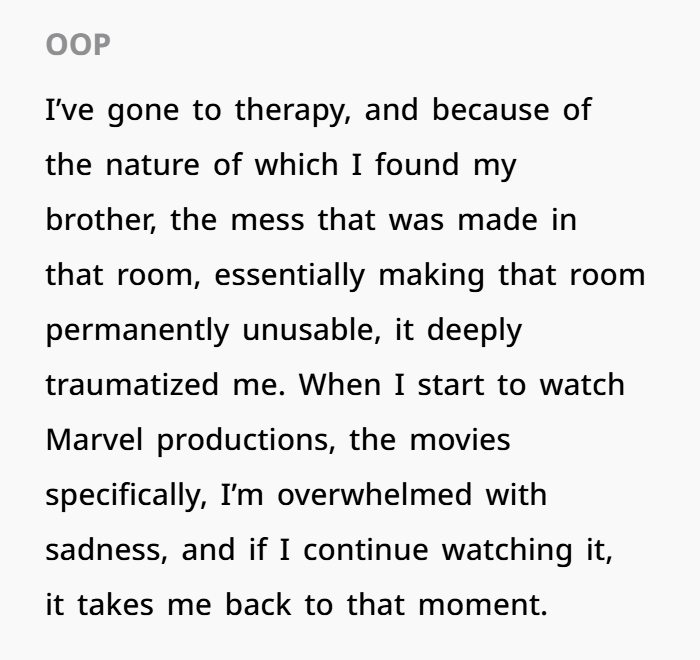
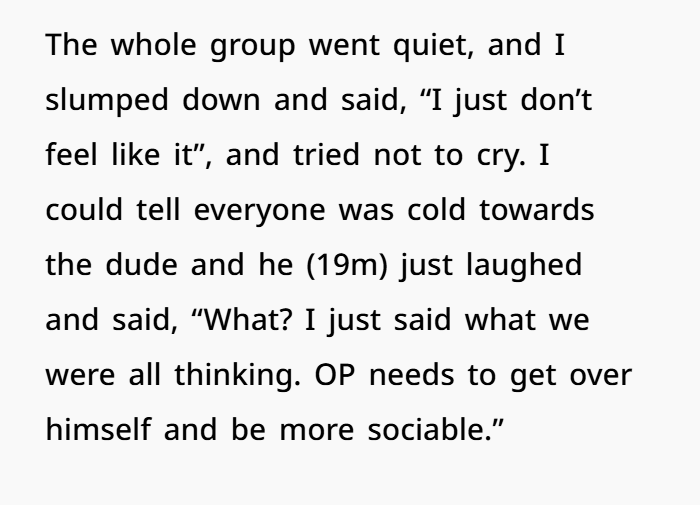
Losing a sibling is a trauma that doesn’t just fade. Especially when it’s your twin. For this 17-year-old Redditor, the grief hits even harder because of how it happened. His brother passed away in their shared room while they were watching WandaVision. Since then, anything Marvel is a straight-up emotional trigger. PTSD-level stuff. He’s tried therapy, grief counseling, all the mental health support people suggest. Still, superhero movies are a hard no. So when his friend group planned a Marvel watch party, he politely declined. No drama. Everyone respected it. Everyone except one guy who didn’t know the story and decided to make a cruel joke about him “avoiding” Marvel.
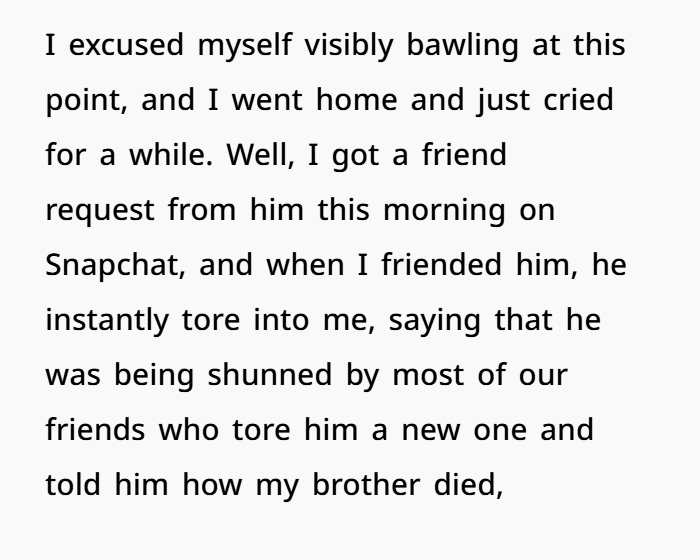
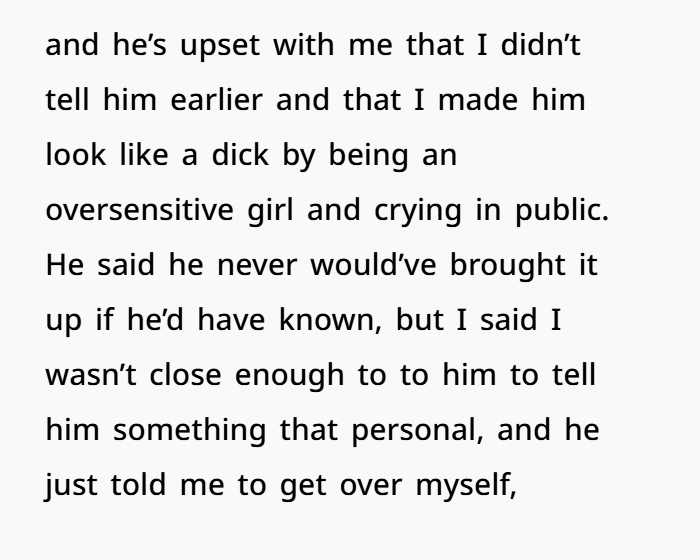
When OP didn’t laugh it off, things escalated fast. The guy doubled down, mocking him for being emotional, awkward, and “unsociable.” Total lack of empathy. Later, once the group found out the truth, they shut that guy out quick. Now the dude is mad, blowing up OP on Snapchat, blaming him for “making him look like a dick,” calling him names, and dumping the guilt on him. And now OP’s stuck second-guessing himself. Should he have trauma-dumped just to protect someone else’s feelings? Or was it okay to protect his mental health, his grief, and his boundaries? This hits on trauma triggers, emotional safety, social pressure, and the idea that no one is owed your pain as an explanation.
Some folks are so obsessed with their “reputation,” they would cross all lines of decency just for themselves
The 17-year-old poster was very close to his twin, but lost him while watching a Marvel movie, and the series became a PTSD trigger for him
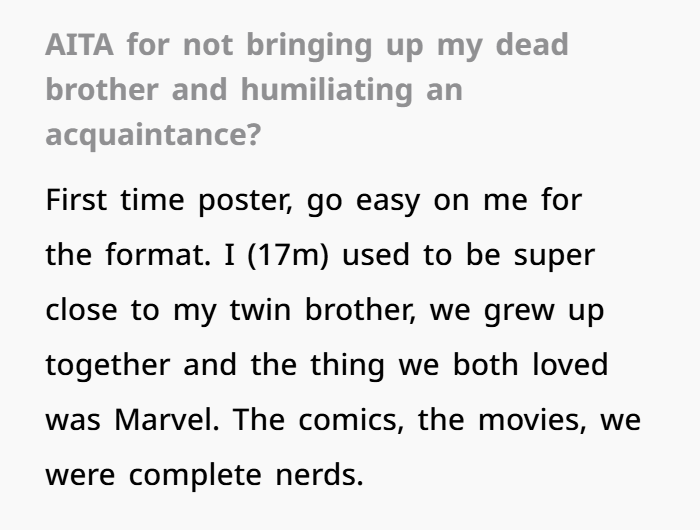
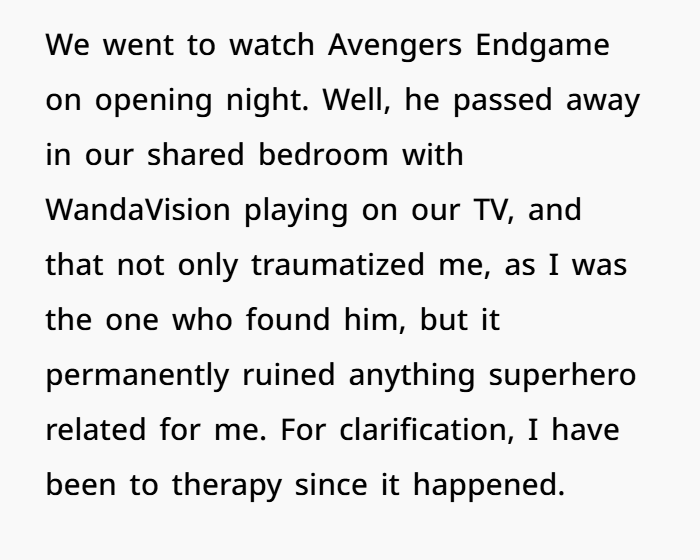
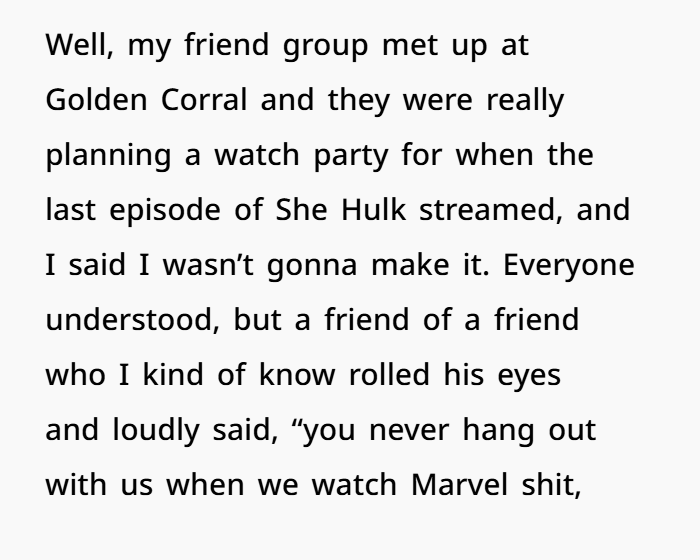
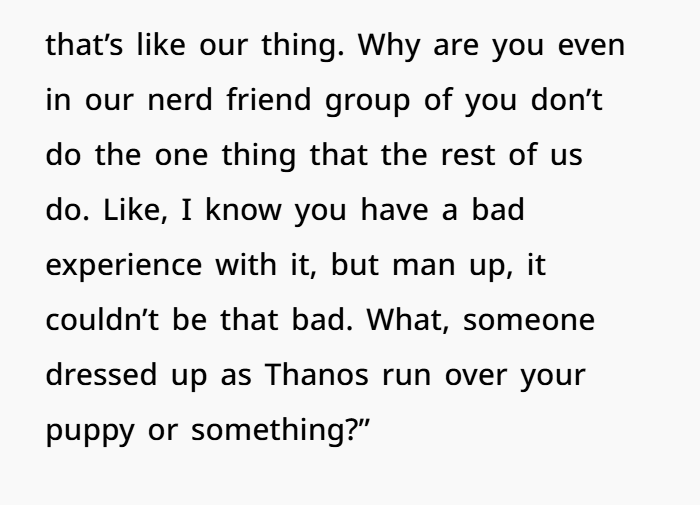
Grief is weird, right? Especially when it’s tied to something that used to feel safe or fun. Movies, music, shared hobbies, all of it. In this case, OP and his twin bonded over Marvel. It wasn’t just superhero movies or flashy CGI. It was connection. Comfort. Quality time. That kind of emotional bond runs deep. So when his brother died while watching a Marvel show, those memories got hard-wired to the trauma. That’s not drama. That’s how the brain works after loss.
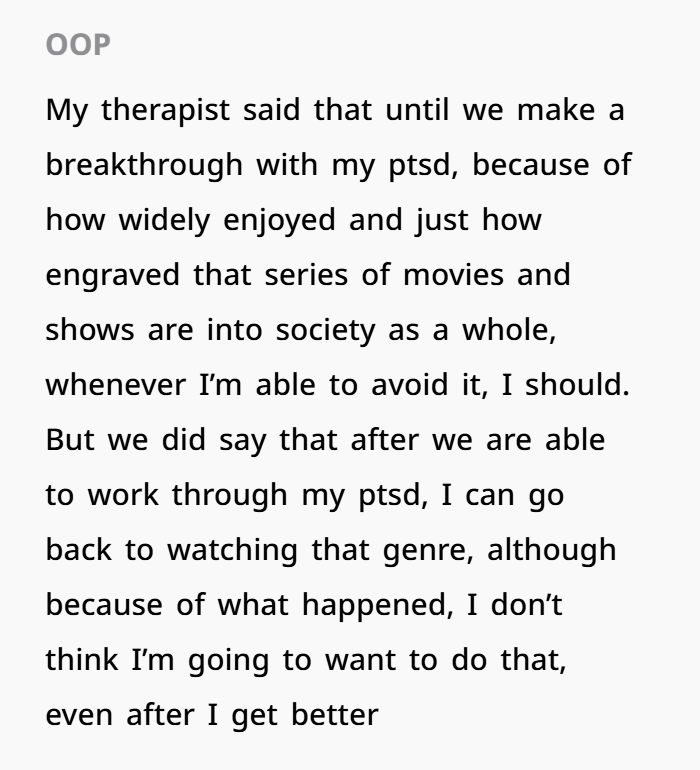
Mental health professionals call this a trauma trigger. Basically, your brain links a sight, sound, or situation to a past traumatic event and hits the panic button. Psychologists talk about this all the time in trauma therapy and PTSD treatment. In OP’s case, Marvel isn’t entertainment anymore. It’s grief. It’s shock. It’s loss. A brand turned into an emotional landmine.
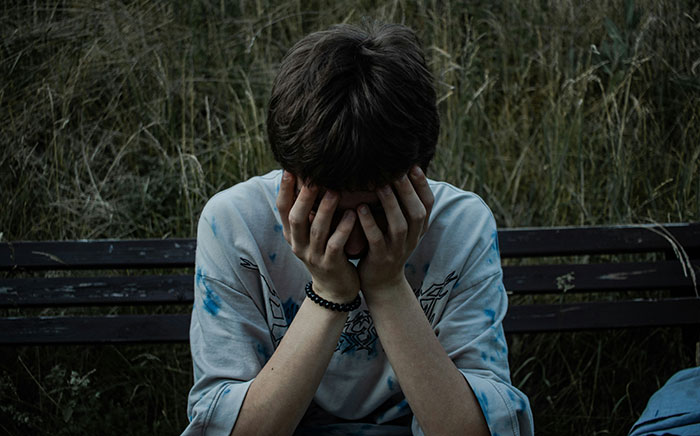
Now let’s talk about that dinner. Because the acquaintance’s behavior screams toxic insensitivity. Some people think being edgy or sarcastic is the same as being funny. It’s not. Especially when they’re joking about someone’s pain. That comment about a “Thanos cosplay running over a puppy”? That wasn’t dark humor. That was cruel. Mocking someone’s boundaries because you don’t understand them is emotional immaturity, plain and simple.
OP’s reaction was honestly restrained. He didn’t snap. He didn’t scream. He didn’t make a scene. He tried to remove himself. That’s a healthy response, especially for a teenager dealing with unresolved grief, anxiety, and emotional triggers. That shows emotional intelligence. Something the other guy clearly didn’t have in that moment.
Then there’s the Snapchat meltdown. Once the guy learned the truth, instead of apologizing, he flipped it. Blamed OP. That’s classic shame response behavior. Therapists talk about this all the time. When people feel exposed or embarrassed, they go defensive. “You made me look bad.” No. He did that himself. Accountability is hard for people who don’t want to grow.
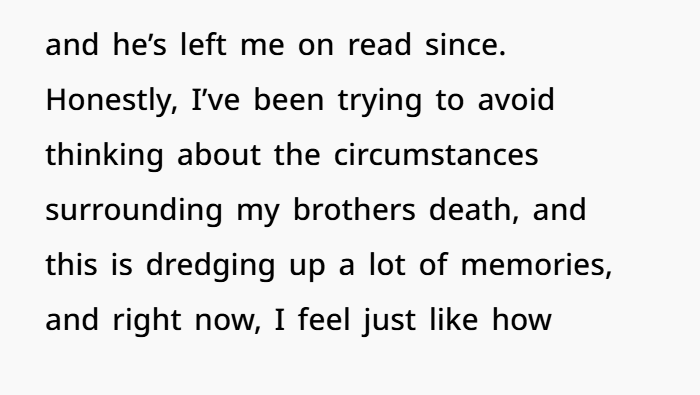
We also can’t ignore the emotional impact on OP. That one interaction dragged him right back to the day he found his brother. That’s not mild discomfort. That’s trauma reactivation. Anxiety spikes, panic responses, intrusive memories. This isn’t something you just “get over.” And telling someone to “man up” or calling them sensitive feeds straight into toxic masculinity and harmful gender stereotypes that mess with mental health long-term.
And just to be clear, OP doesn’t owe anyone his trauma story. Not legally. Not socially. Not emotionally. Mental health privacy matters. You’re allowed to keep your pain private. You don’t need to justify your boundaries to acquaintances. Consent applies to emotional labor too.
Ethically, was OP wrong for not explaining sooner? No. He tried to handle it quietly. The guy wasn’t a close friend. Trauma dumping in the middle of dinner while being mocked isn’t reasonable. That would’ve put OP in an even more vulnerable position just to protect someone else’s ego.
Look at the friend group’s reaction. They backed OP. They didn’t excuse the behavior. That’s social validation, and it matters more than people realize. Support systems are huge for grief recovery and mental health stability. Being believed and defended helps undo some of the damage.
OP even wondering if he should’ve made things easier for the other guy says a lot about his empathy. But it’s misplaced. The responsibility never falls on the grieving person to keep everyone else comfortable. That’s like asking someone with a broken leg to apologize for needing crutches.
This whole situation is really about boundaries and consent. You decide what you share and when. If someone doesn’t disclose trauma, the correct response is empathy, not entitlement. Saying “you should’ve told me” is basically saying “you should’ve warned me before I hurt you.” And that’s not how real friendship works.

Another angle people keep missing is the age gap. OP is 17. The other guy is 19. Not massive, but it matters. At 19, you’re legally an adult. There’s an expectation of basic emotional awareness, empathy, and impulse control. Mocking someone for crying, calling them “oversensitive,” and piling on when they shut down? That’s not edgy humor. That’s middle school bully energy. It shows emotional immaturity, poor social skills, and zero understanding of mental health, trauma response, or grief psychology.
At the end of the day, OP is just trying to heal. And grief doesn’t follow a timeline, a checklist, or some self-help rulebook. There’s no “correct” way to react to trauma triggers. Avoidance can be self-preservation. Silence can be self-care. OP’s response wasn’t manipulative. It wasn’t passive-aggressive. It wasn’t an attack. It was protective. And protecting your mental health, especially after loss, anxiety, and emotional trauma, is not just okay — it’s necessary.
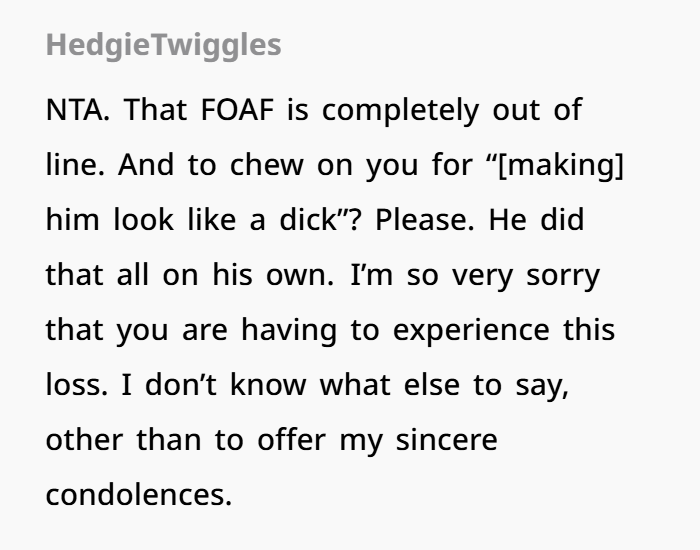
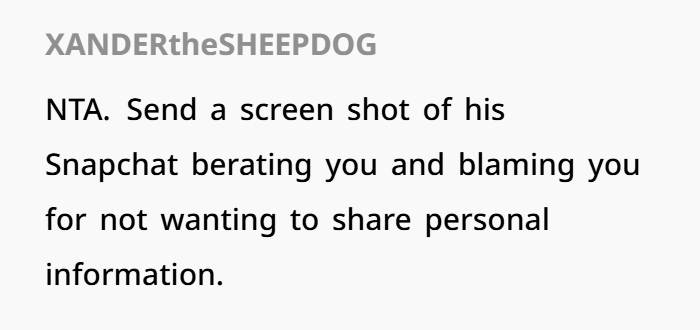
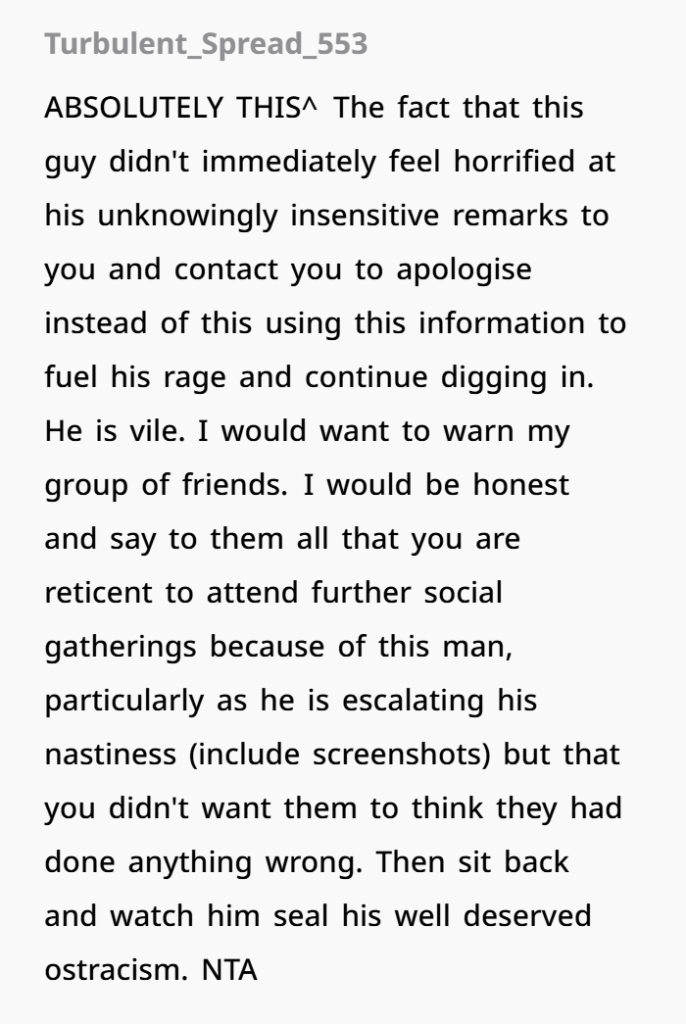
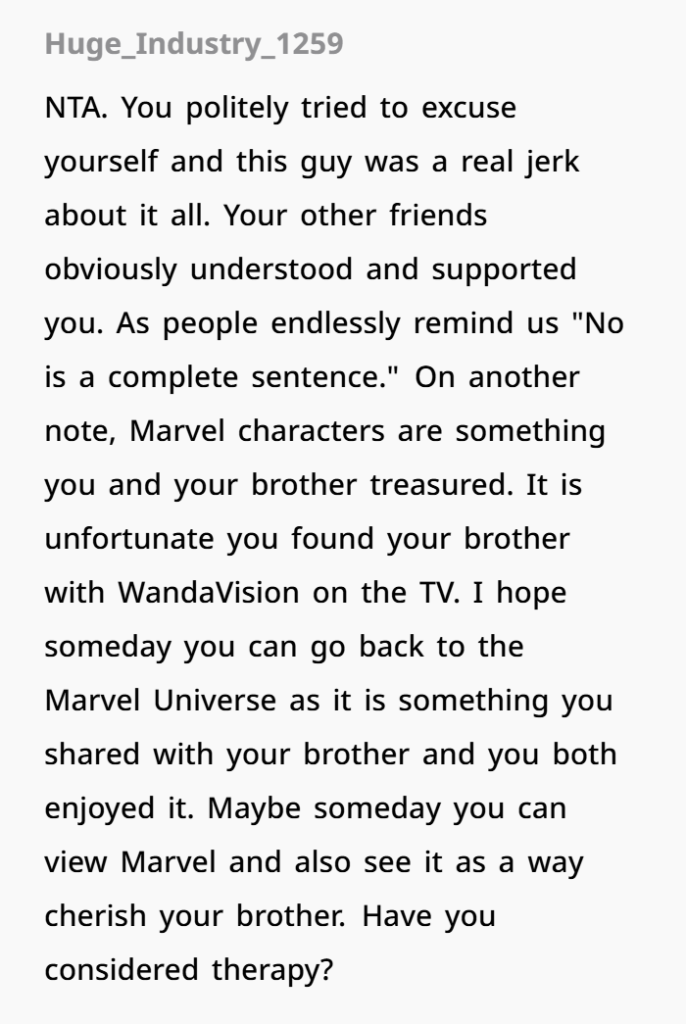
Netizens expressed their sympathy to the poster, while also applauding his other friends for kicking the toxic guy out of their group