His “Best Friend” Wants Me Gone… And I Think She’s Playing Me
In the beginning, it all made sense. The relationship felt strong, almost like something you’d read about in healthy relationship tips or even couples therapy success stories. Good communication. Emotional connection. Stability. Living together, building daily routines, handling small conflicts—it all pointed toward something serious. Something long-term. Since it was his first real relationship, she tried to be supportive. Patient. Not overly reactive. She didn’t want to be controlling or insecure. She wanted trust, especially when it came to his female friendships.
And then… the best friend entered the picture.
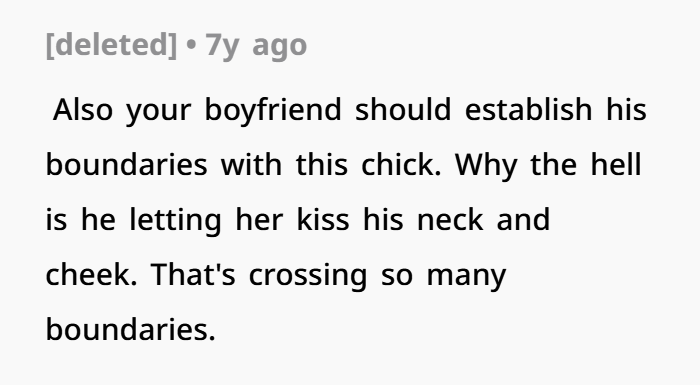
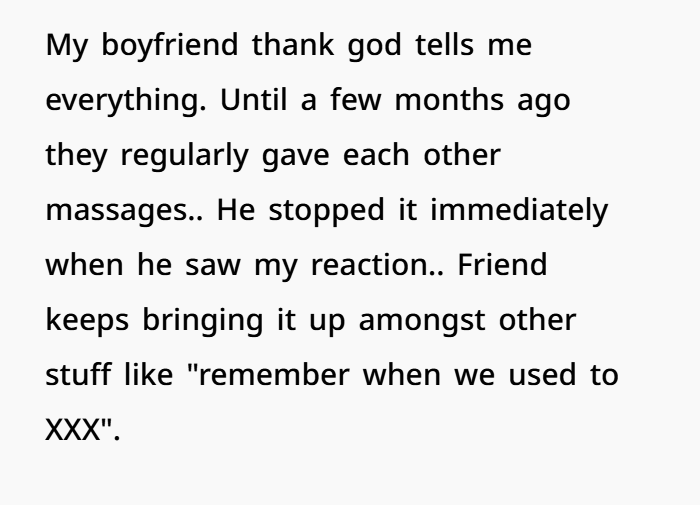
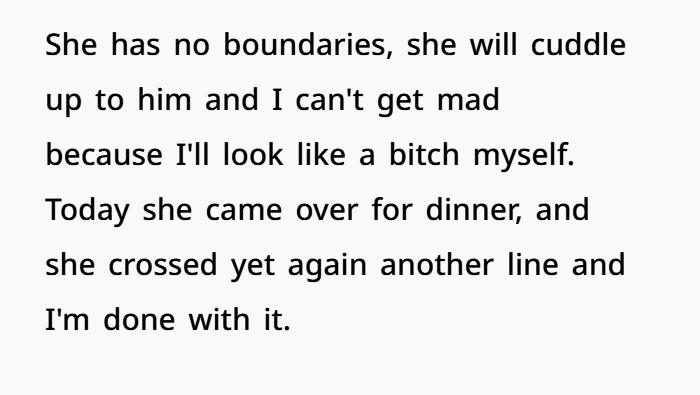
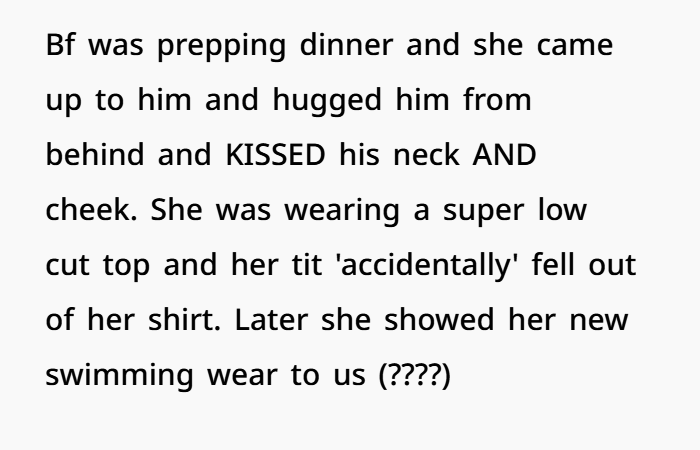
From the start, the vibe was weird. In front of him, she was warm, sweet, almost overly nice. But when they were alone? Completely different energy. Cold looks. Subtle tension. Nothing clear enough to confront, but enough to feel uncomfortable. And slowly, things got worse. More physical contact. Casual intimacy that didn’t sit right. Talking about their past in ways that crossed boundaries. And now it’s more obvious—touching, closeness, even a kiss on the neck right in front of her. Little comments that feel like quiet attacks. Things that are hard to prove but impossible to ignore. Meanwhile, the boyfriend either doesn’t notice… or avoids seeing it. Now she’s trapped in a tough spot. Speaking up risks looking jealous or insecure. Staying silent feels like accepting disrespect. And leaving? That feels like giving up something good because of a third person creating tension. It’s the kind of emotional stress that slowly drains you.

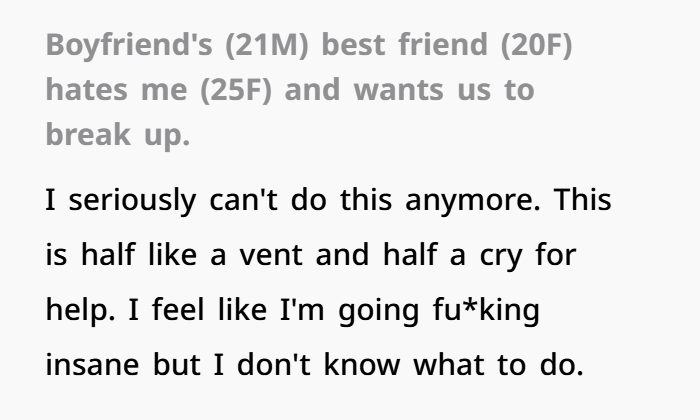
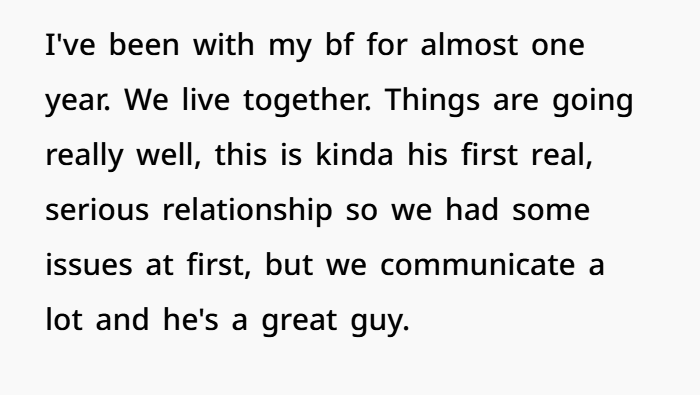
This isn’t just about a jealous friend. What you’re dealing with is a boundary issue mixed with covert emotional manipulation—something often discussed in psychology and relationship counseling. It’s subtle, controlled, and very hard to call out in real time. That’s why it feels confusing. Like you can’t fully prove it, but you can definitely feel it.
Let’s slow it down.
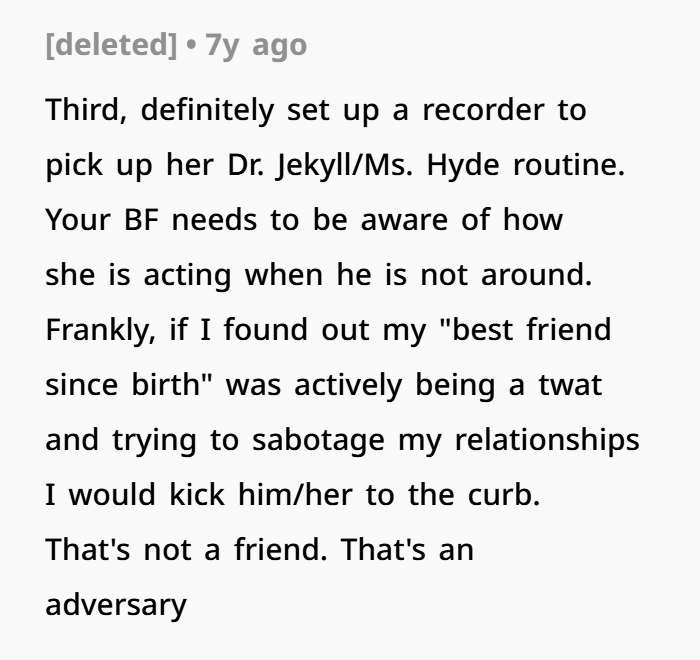
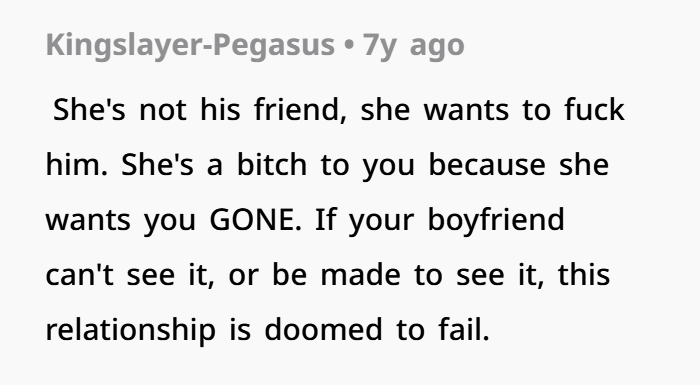
Her behavior is patterned. Not random. She’s nice, friendly, almost overly sweet when your boyfriend is around. But when it’s just you? The energy shifts. Cold. Dismissive. Slightly hostile. That kind of personality switch is a big red flag in social and romantic dynamics. It means she’s managing perception. Keeping her image clean while slowly making you feel uncomfortable or unstable.
And yeah… that’s intentional.
Now look at the physical side of things. This is where it gets serious. Touching, cuddling, kissing his neck—those aren’t small things. In any committed relationship, that crosses clear emotional and physical boundaries. Research in emotional cheating and relationship behavior shows that these “friendly” interactions are often how deeper feelings start forming. It creates attachment confusion, even if no one admits it openly.
Then there’s what she said to you: “he’s going to leave you eventually.”
That’s not a random comment. That’s calculated.
She’s not just sitting on the sidelines. She’s actively trying to create cracks in your relationship.
And then comes your boyfriend’s role in all this.
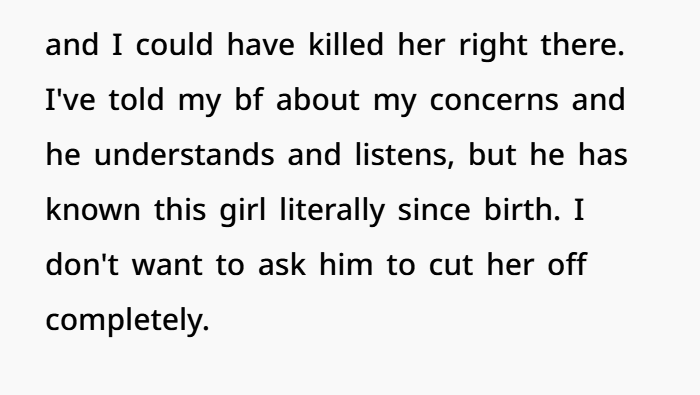
He doesn’t sound like a bad partner. He communicates. He made adjustments when you brought things up. He checks in, which shows some level of respect. But here’s the issue… he’s minimizing the situation. He’s not reacting at the level this actually requires. And that gap? That’s exactly where problems start growing.
That’s likely because of history.
When someone has been in your life “forever,” your brain puts them in a safe category. Trusted. Familiar. Almost like family. From a psychology point of view, it’s really hard to suddenly see that person as a threat or someone acting inappropriately. That’s why he might not fully recognize what’s happening. It’s a mental blind spot.
But even with that… healthy relationship boundaries are still his responsibility.
And honestly, right now? They’re not strong enough.
Let’s address that fear in your head—the idea that she’s somehow “better.” Prettier, younger, more exciting. That thought feels convincing, but it’s not grounded in reality. It’s comparison anxiety, something that shows up when your relationship security feels unstable.
Attraction isn’t the same as compatibility. Not even close. If he wanted her, he had plenty of time to go there. Years of opportunity. But he didn’t. Instead, he chose you. Built a life with you. Lives with you. That says way more than surface-level attraction ever could.
Looks don’t build long-term relationships. Choices do.
That said… being around someone who constantly pushes boundaries with your partner will affect you. No matter how confident you are. Over time, it creates stress, doubt, and emotional exhaustion. So the way you’re feeling? It’s not weakness. It’s a normal response to a stressful relationship dynamic.
So what now?
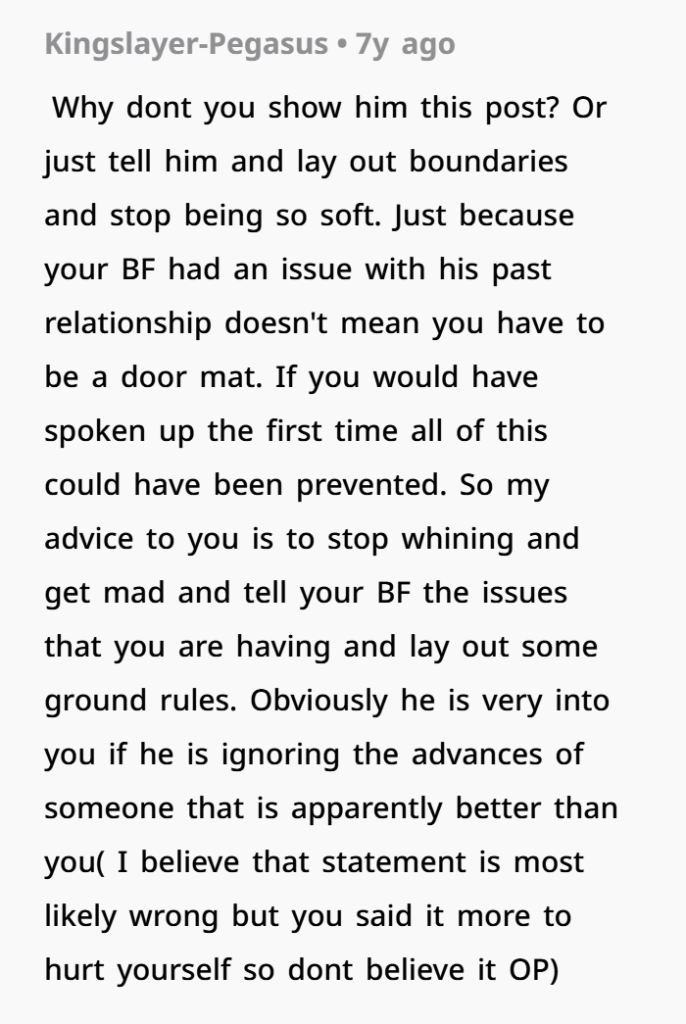
You need to shift your focus a bit. Right now, it feels like she’s the problem. And yes, her behavior is crossing lines. But the bigger issue is what your boyfriend is allowing in the relationship dynamic.
Because boundaries only work when they’re enforced.
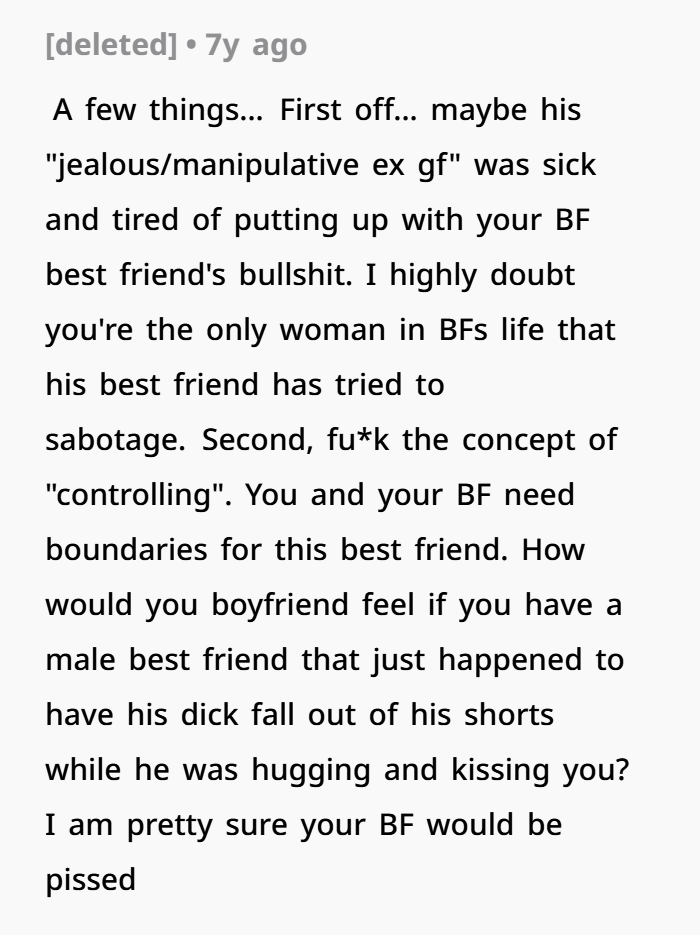
You don’t have to demand he cuts her off completely. That can backfire. But you do need clear, direct boundaries. Not hints. Not soft conversations. Real, non-negotiable limits. That’s what protects trust, respect, and emotional safety in a relationship.
For example:
- No physical affection beyond what’s appropriate (no kissing, cuddling, etc.)
- No one-on-one situations if she continues disrespecting you
- No conversations that bring up past intimacy in a suggestive way
These aren’t controlling. These are baseline respect rules in a relationship.
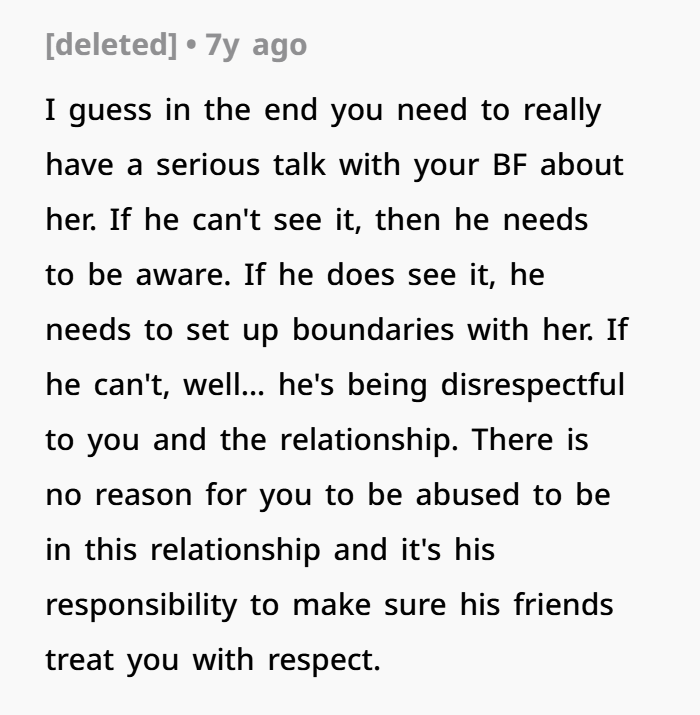
Second, you need to have one very direct conversation with him. Not emotional. Not reactive. Just clear.
Something like:
“I trust you. But I don’t trust the situation. And the way things are right now is hurting me. I need stronger boundaries, not because I want to control you, but because I want this relationship to feel safe.”
Watch how he responds.
Because his response will tell you everything.
If he steps up—great. There’s something to work with.
If he minimizes, deflects, or makes you feel like you’re overreacting—that’s a bigger problem than the best friend.
Third… about confronting her.
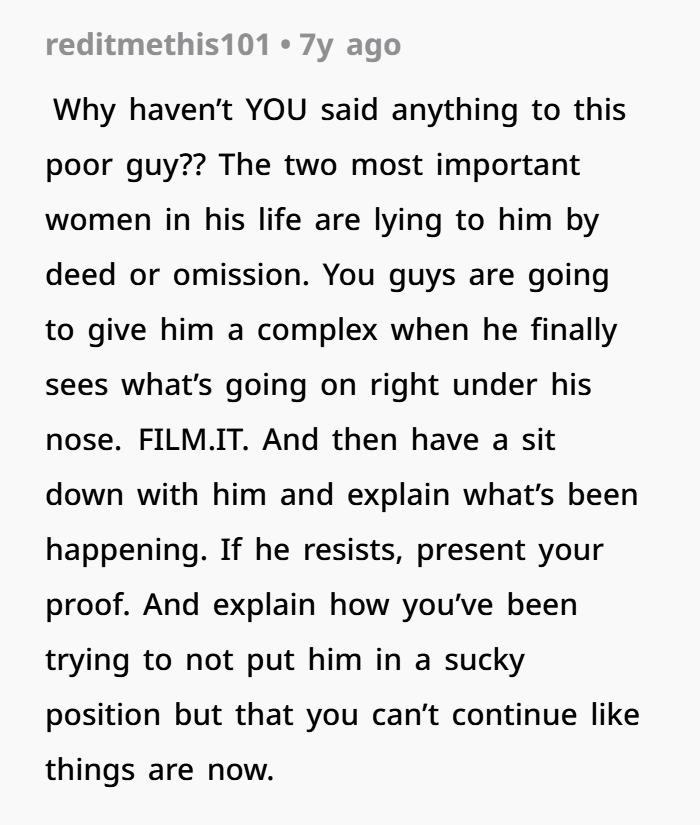
You can, but it likely won’t go the way you hope. People who behave like this rarely admit fault. More often, they twist things, deny, or escalate subtly. If you do confront her, keep it short and neutral. No emotion. No accusations. Just boundaries.
But honestly? The real change has to come from him.
Because at the end of the day, you’re not in a relationship with her.
You’re in a relationship with someone who needs to decide how much access another person gets to your shared space.
And right now, she has too much.
The Comments Are In