
Employee’s Meditation Protest Over Prayer Breaks Sparks Workplace Controversy
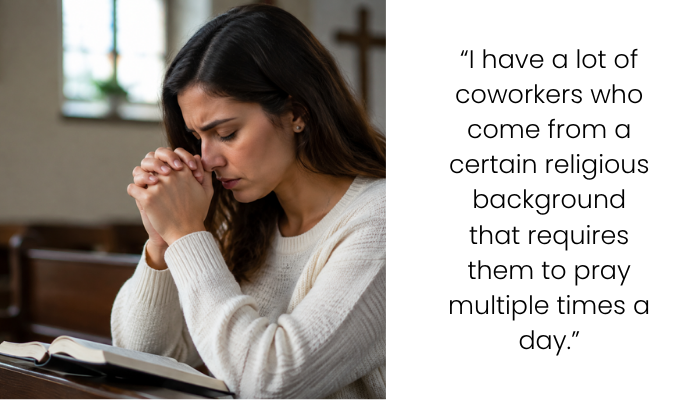
Managing workplace policies can be challenging because employees may have different views about what feels fair. Extra time off, paid breaks, and reasonable accommodations are important workplace topics that can sometimes lead to misunderstandings.
One worker became concerned after noticing that a group of coworkers who followed the same faith appeared to receive additional break time. The employee felt unsure about whether the arrangement was fair and wanted to understand the company’s approach.
The situation became an HR matter as the employee looked for answers about workplace fairness and employee accommodation policies. Human resources teams often help employees understand company guidelines and find solutions that support everyone.
After sharing the story with an online community, the employee received feedback about workplace rules, diversity, inclusion, and maintaining a respectful work environment. The discussion showed why open communication is important in any workplace.

Employee Asked for Meditation Breaks After Coworkers Received Prayer Time at Work
A simple workplace request turned into a bigger discussion about fairness, employee rights, and company policies.
An employee at an international company noticed that many coworkers regularly took short breaks during the day for religious prayers. These breaks were allowed by the company as part of its workplace religious accommodation policy.
The employees would step away from their desks a few times each day, while still receiving their regular salary. They also continued taking their normal lunch breaks.
Over time, another employee started wondering why they could not have similar personal time during the workday.
A Question About Workplace Equality
The employee, known as the original poster (OP), felt that the situation did not seem equal. From their point of view, some coworkers were receiving extra paid time away from work while everyone was completing similar job responsibilities.
OP asked their manager about the policy and learned that the company allowed these breaks because religious practices may require special workplace accommodations.
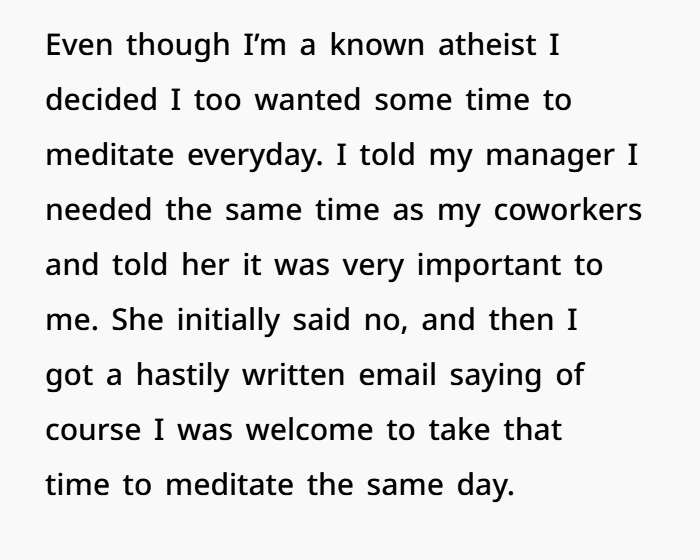
Instead of arguing against the policy, OP decided to make a different request.
Since they were not religious, they asked if they could have the same amount of time each day for meditation. They explained that meditation was important for their personal well-being and mental focus.
At first, the request was rejected.
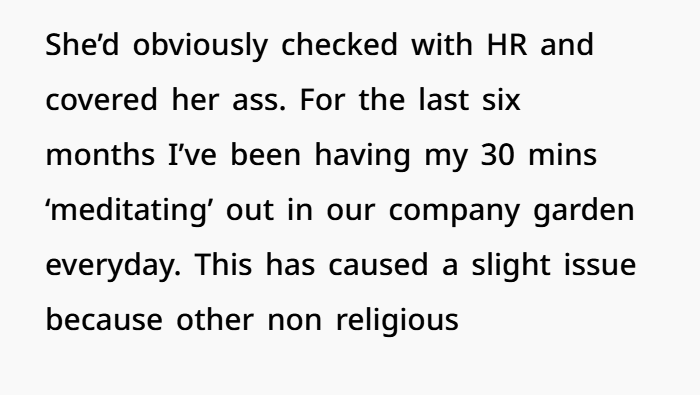
However, after HR reviewed the situation, the company changed its decision. OP was later allowed to spend about 30 minutes each day in the office garden for meditation.
The Decision Created More Requests
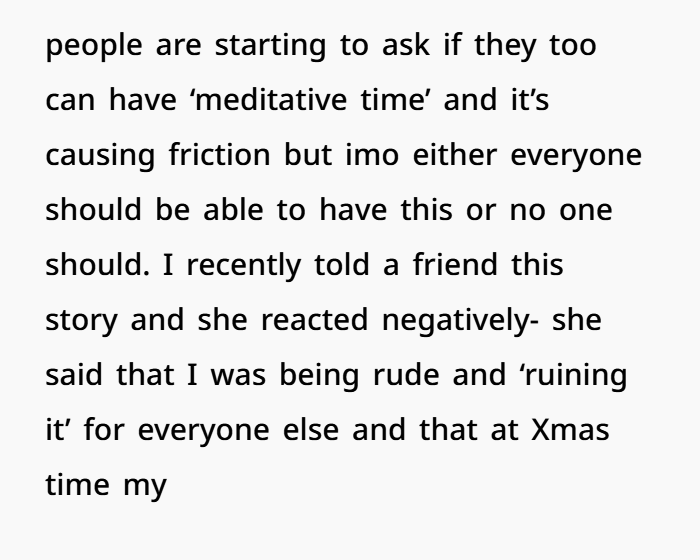
After other employees learned about OP’s meditation break, some non-religious coworkers also wanted similar benefits.
This created a new challenge for the company. A policy that originally focused on religious needs was now becoming a conversation about general employee wellness and workplace flexibility.
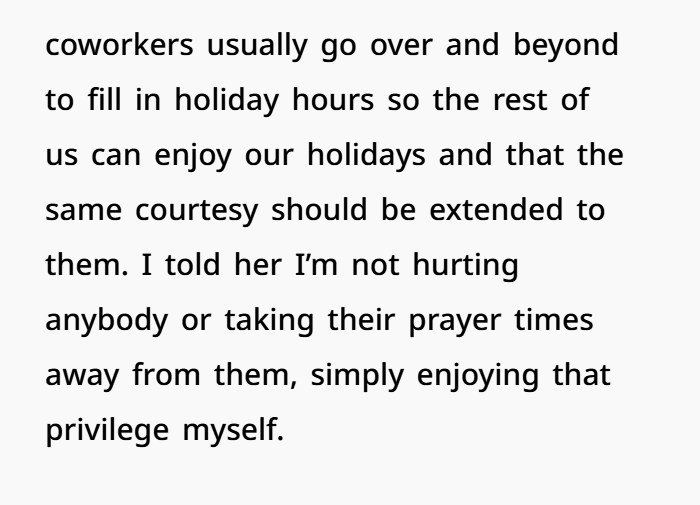
OP believed they were simply using the same opportunity available to others. They said they were not trying to remove anyone’s rights or create problems for coworkers.
But the situation raised an important question:
How should companies balance religious accommodations, employee benefits, and workplace fairness?
Understanding Religious Accommodation at Work
Many businesses have policies that support employees who need time for religious practices.
In many regions, employers are required to provide reasonable workplace accommodations for religious beliefs and practices, as long as those adjustments do not create serious problems for the business.
These accommodations can include schedule changes, time adjustments, or other workplace solutions.
The goal is not to give certain employees special treatment. Instead, the goal is to make sure employees can follow important personal or religious commitments while continuing their work.
Fairness Does Not Always Mean the Same Rules for Everyone
Workplace fairness can be complicated.
Some employees believe fairness means everyone should receive the exact same benefits. Others believe fairness means employees should receive support based on their individual needs.
Human resources experts often explain that employee satisfaction depends heavily on how people view workplace policies.
If employees feel that rules are unclear or unfair, it can affect workplace culture, teamwork, and employee morale.
That is why companies often create detailed HR policies to explain how different workplace benefits and accommodations work.
The Growing Importance of Employee Wellness Programs
The discussion also connects with a larger workplace trend: employee mental health and wellness.
Many companies today offer wellness programs designed to reduce stress and improve employee productivity.
Benefits such as meditation sessions, flexible work schedules, mental health support, and employee assistance programs are becoming more common.
Businesses understand that supporting employee well-being can lead to better focus, stronger engagement, and improved job satisfaction.
Because of this, a meditation break may be viewed by some companies as part of a modern employee wellness strategy rather than just extra personal time.
Companies Must Find the Right Balance
When workplace policies expand, companies often need to review their guidelines.
A benefit created for one specific purpose can sometimes lead to new questions from other employees.
Businesses must consider several factors, including:
- Employee rights
- Workplace productivity
- Company policies
- Legal responsibilities
- Team fairness
A clear and consistent approach can help prevent confusion and maintain a positive work environment.
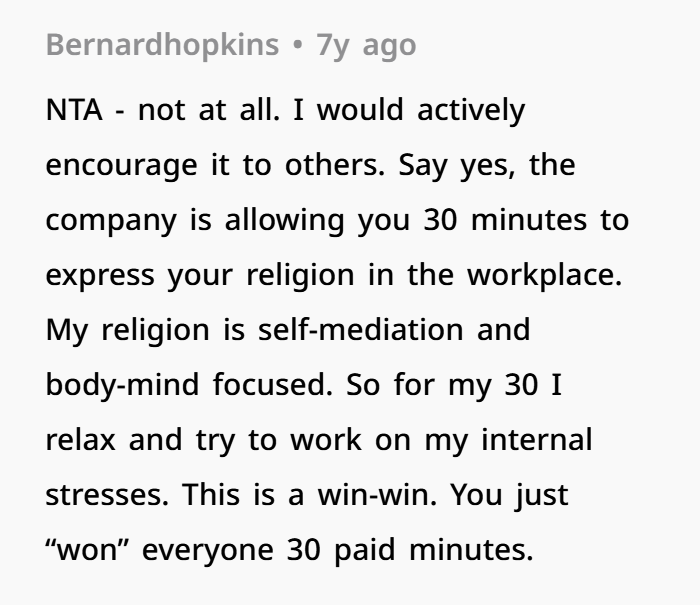
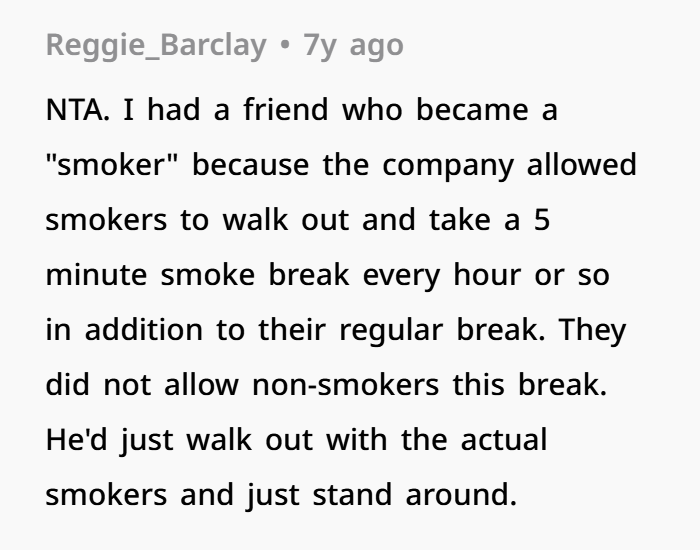
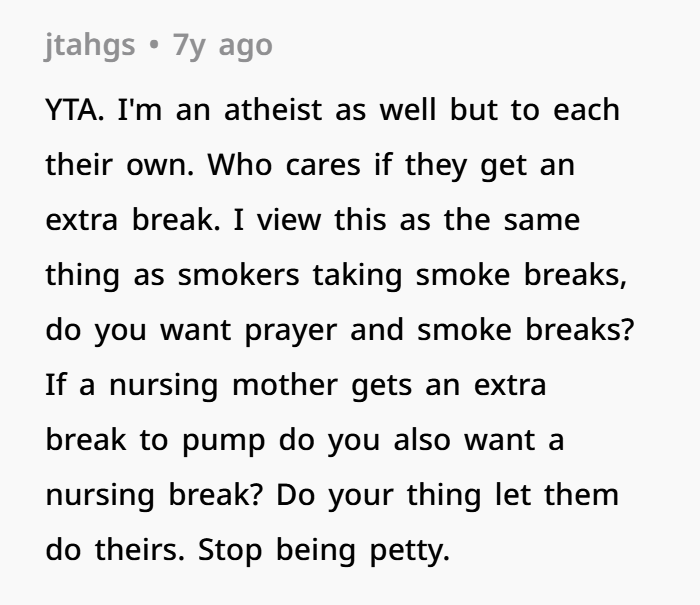
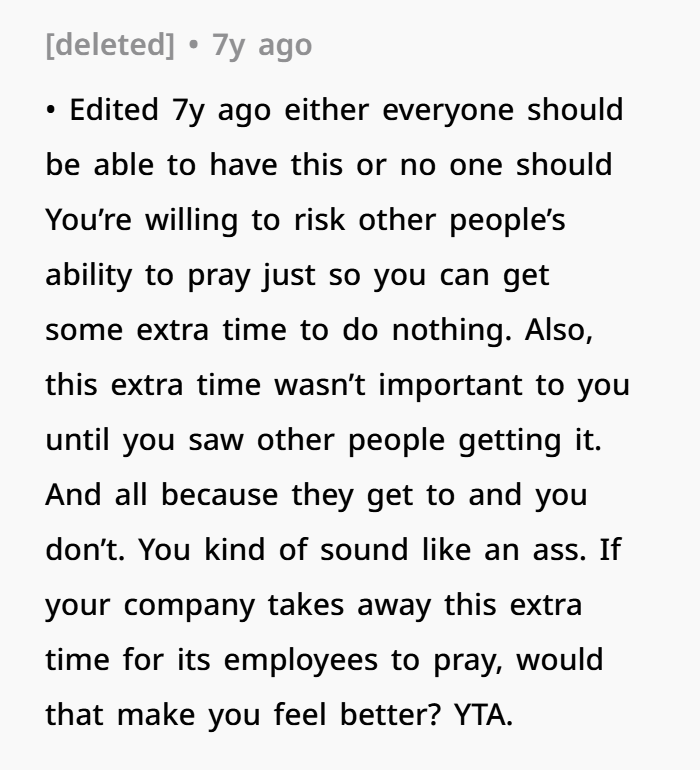
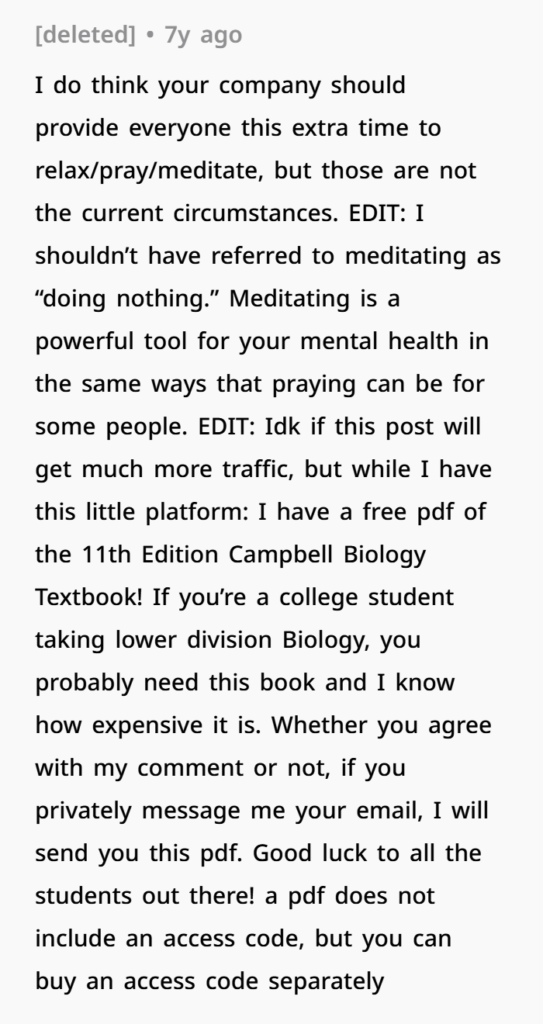
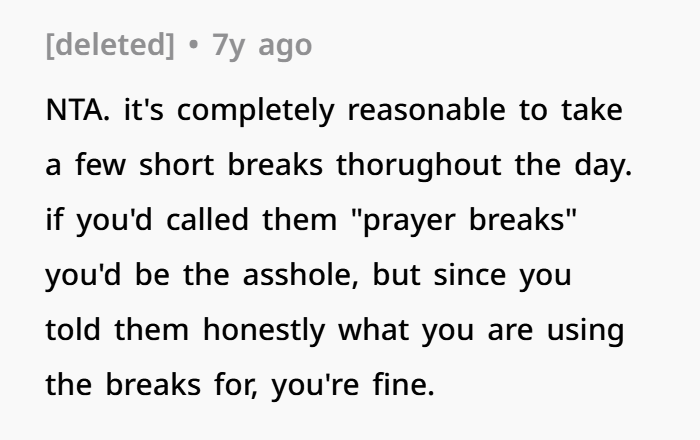
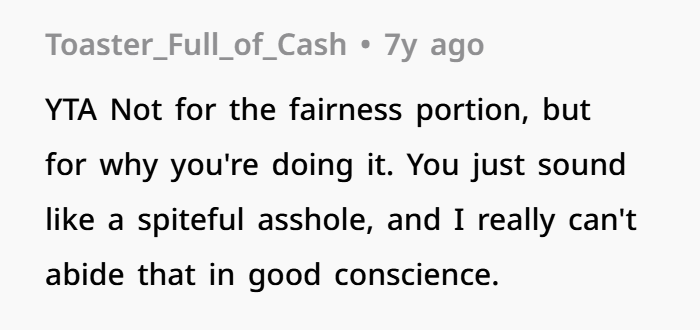
Readers’ Comments Speak Out
Final Thoughts
This workplace situation shows how difficult it can be to create policies that feel fair to everyone.
Some people may see OP’s request as a reasonable example of equal treatment. Others may feel that religious accommodations and general employee benefits should remain separate.
Either way, the discussion highlights an important issue for modern workplaces: employees want companies to provide fair policies, flexibility, and support.
As businesses continue improving their HR strategies and employee benefits programs, finding the right balance between individual needs and workplace responsibilities will remain an ongoing challenge.
What do you think? Should companies provide similar break options for all employees, or should workplace accommodations depend on specific needs?