Man Refuses to Pay Spousal Support, Takes Ex to Court, and Loses His 401(k)
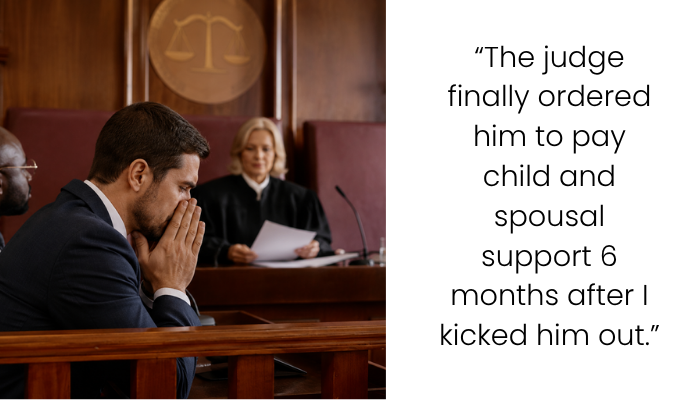
Divorce can become complicated when couples cannot agree on money, support payments, or shared assets. Many legal issues, including child support and spousal support, require careful attention during the divorce process.
One man faced unexpected consequences after taking his divorce dispute to court. The legal decision included changes related to financial support and the division of retirement benefits.
The outcome resulted in his former spouse receiving part of his 401(k) retirement account. While this was not something she originally planned for, the court’s decision followed the rules of the divorce agreement.
This story highlights why understanding family law, financial planning, and legal responsibilities is important. Making informed choices during a divorce can help both parties handle the process more smoothly.

Woman Takes Legal Action After Ex-Husband Stops Paying Spousal Support
Divorce can be a challenging time, especially when children, financial responsibilities, and legal agreements are involved. One woman shared her experience after her former husband stopped making the support payments ordered by the court.
The woman explained that during their marriage, she felt her husband was controlling. She said he asked her to leave her job after they had their first child. She also claimed that he had an affair and expected her to accept his behavior, even though she believed it was affecting her and their children.
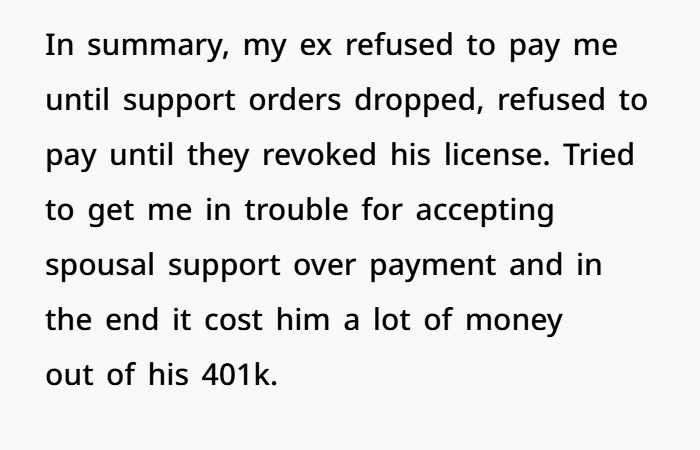
After years of problems, she decided to file for divorce. However, she was surprised when her ex-husband refused to continue paying child support and spousal support.
What Happens When Someone Does Not Pay Court-Ordered Support?
When a person does not follow a court order for support payments, the other person can take legal action.
Family law professionals usually recommend speaking with a lawyer in this situation. An attorney can help collect records, show proof of missed payments, and request help from the court.
Depending on the laws in that area, possible actions may include:
- Wage garnishment
- Additional court hearings
- Financial penalties
- Collection efforts
The goal is to make sure court orders are respected and that children and former spouses receive the financial support they are legally entitled to.
The Court Ordered Wage Garnishment
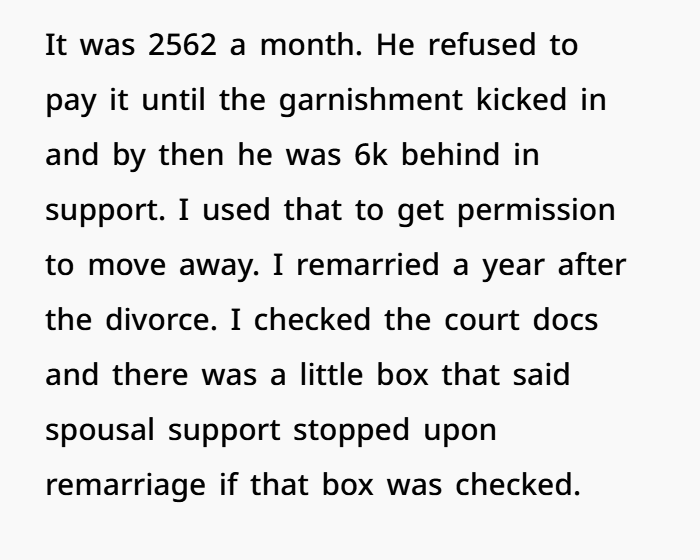
The woman said her former husband had unpaid support payments totaling around $6,000. Because of this, she returned to court, and a judge approved a wage garnishment.
This meant that a portion of his income could be collected to cover the money he owed.
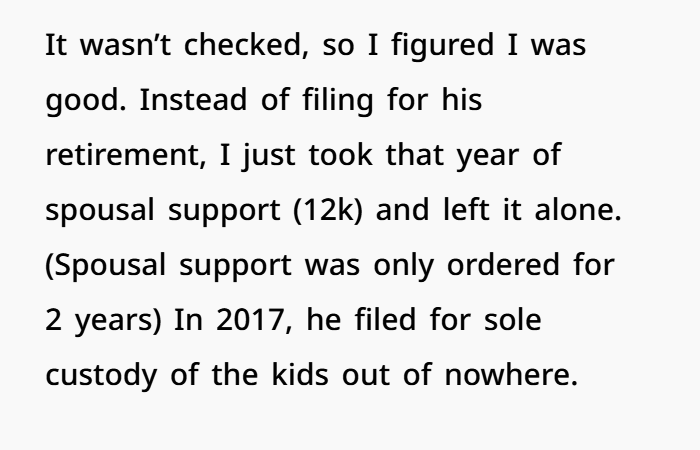
The arrangement continued for some time. Later, the woman remarried, but she did not select the option that would end her spousal support after marriage.
In some parts of the United States, spousal support laws can vary. In certain situations, support payments may continue after remarriage depending on state rules, court orders, and the details of the divorce agreement.
Divorce Can Affect Retirement Savings
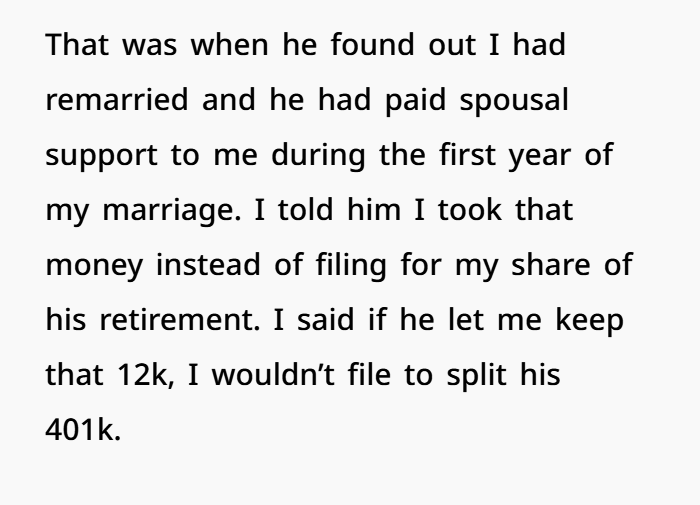
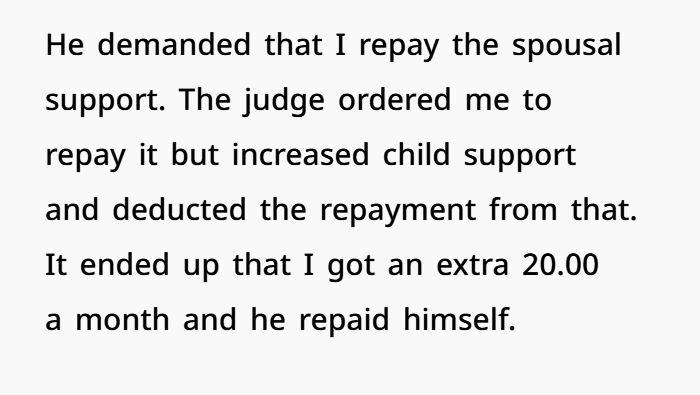
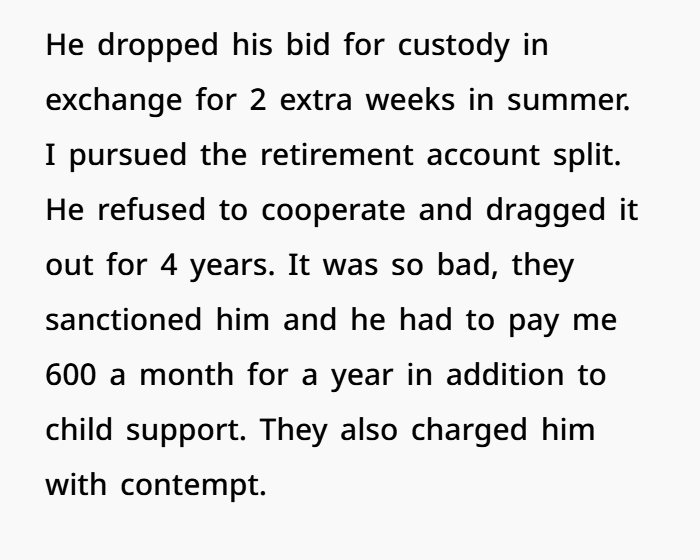
The situation became more complicated when the ex-husband tried to change custody arrangements and wanted to recover the support payments he had already made.
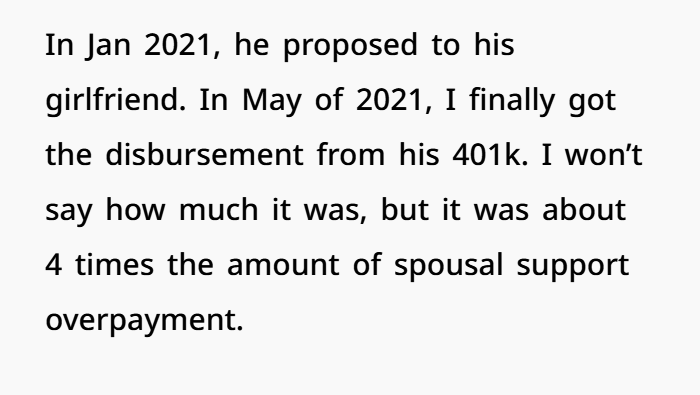
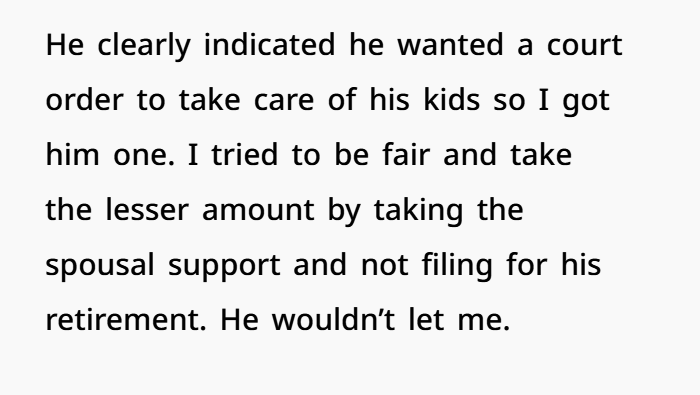
The woman then decided to pursue a portion of his retirement savings instead.
Many people do not realize that retirement accounts can become part of a divorce settlement. In many cases, money saved during a marriage may be considered marital property and could be divided between spouses.
This can include accounts such as a 401(k) retirement plan.
How 401(k) Accounts Are Handled in Divorce
The rules for dividing retirement accounts depend on several factors, including state laws, the length of the marriage, and the court’s decision.
Experts often recommend speaking with a divorce attorney or financial advisor before making decisions about retirement assets.
A professional can help explain:
- Which assets may be divided
- How retirement savings are valued
- What financial impact the decision may have
- How to plan for the future
Understanding these details can help people make informed choices during divorce proceedings.
The Disagreement Created More Conflict
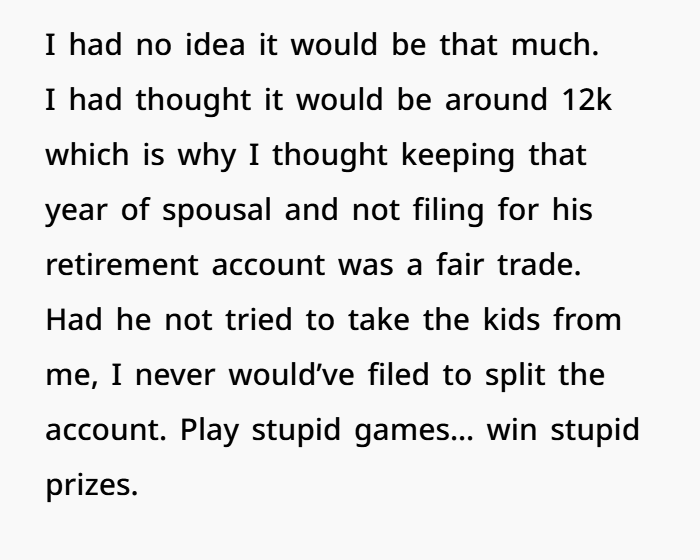
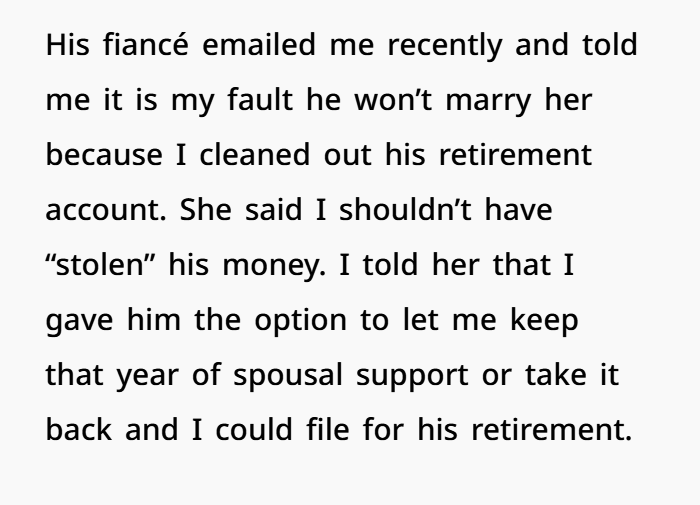
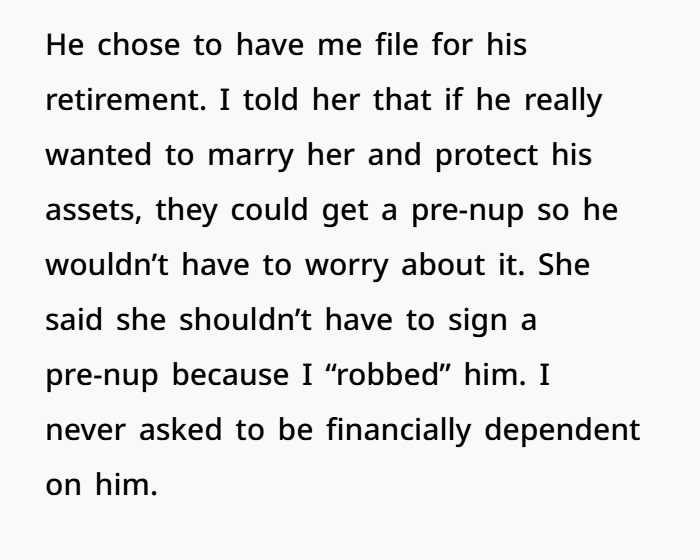
The woman said she had given her ex-husband the opportunity to continue paying spousal support, but he refused. Because of this, she decided to take legal steps involving his retirement account.
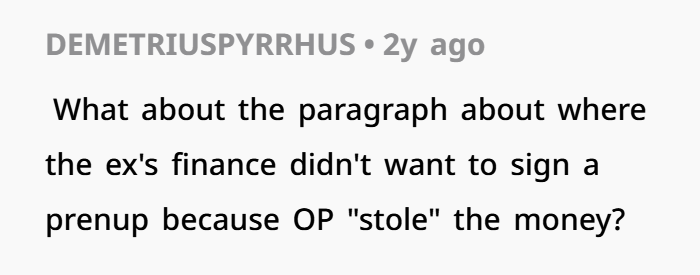
Her ex-husband’s fiancée disagreed with the decision and accused the woman of taking too much from him. She felt that the situation was creating problems in their relationship and affecting their plans for marriage.
However, the woman believed she was simply using legal options available to her after unpaid support issues.
The Importance of Knowing Your Legal Rights
Divorce and family law cases can involve many complicated financial decisions. Issues like child support, spousal support, custody, and property division often require careful planning.
Every situation is different, and people facing similar challenges should consider getting advice from qualified legal and financial professionals.
Understanding your rights and responsibilities can help you make better decisions during difficult life changes.
What do you think about this situation? Should unpaid support payments affect a person’s retirement savings? Share your thoughts below.
See The Comments Below