Sister Demanded I Take Her Daughter On Our Disney Cruise Instead Of My Adoptive Daughter
Family jealousy can stay hidden for many years and then suddenly come out during stressful situations. In this case, a man who often felt unwanted while growing up had finally built a calm and happy life with his husband. Later, after a sad family tragedy, a young girl lost her mother. The couple decided to take care of her and became her legal guardians.
They planned a Disney Cruise vacation as a way to give the child a positive and healing experience. However, this led to conflict within the family. The man’s sister believed her own daughter should have been the one to go on the luxury trip instead of the child they were raising.
The disagreement grew worse and was not only about the vacation. It also brought up old family issues such as sibling rivalry, feelings of favoritism, money concerns, and long-term resentment that had never been resolved. The situation became very emotional when the sister said that the adopted child was “not real family,” which deeply hurt everyone involved.
After that, the conflict spread to other family members, and people began taking sides. The situation shows how unresolved family problems, emotional tension, and lack of understanding can turn even a simple holiday plan into a serious family dispute.

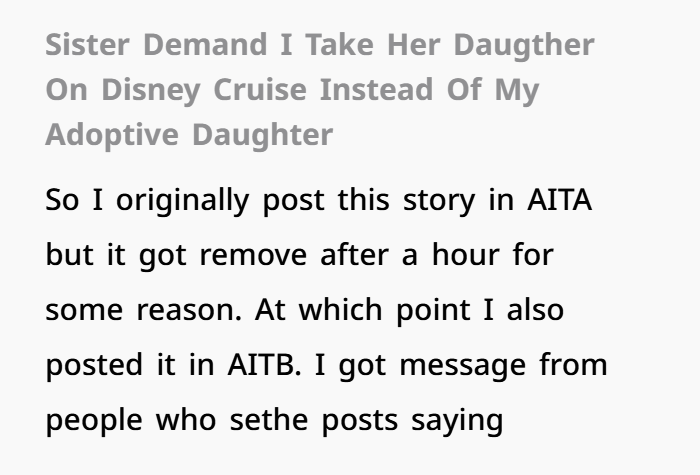
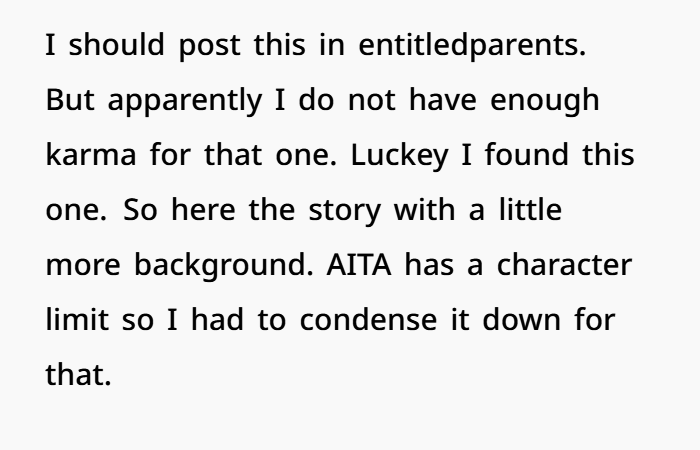

Family problems don’t always start with big events like inheritance fights or legal issues. Sometimes, they begin with something small that slowly turns into a serious conflict. In this case, it was a Disney Cruise vacation.
But as the full story shows, the cruise was never the real problem.
A Difficult Childhood and Family Favoritism
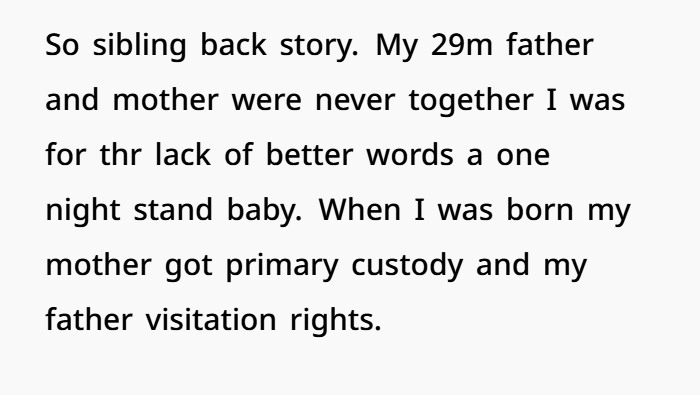
The man sharing the story grew up in a very unstable family situation. His parents were never in a real relationship. He was born from a short relationship, and later his mother had twins with another man.
After that, family attention changed. The twins became the “main children,” and he slowly felt left out.
Many people in blended families or stepfamily situations understand this kind of emotional neglect. It can lead to long-term feelings of rejection and low self-worth.
Moving to His Father’s Home
At age 13, he moved in with his father. His father’s side of the family was wealthy and financially stable. They could afford things like expensive gifts, education support, and a comfortable lifestyle.
Instead of improving relationships, this created more jealousy in the family.
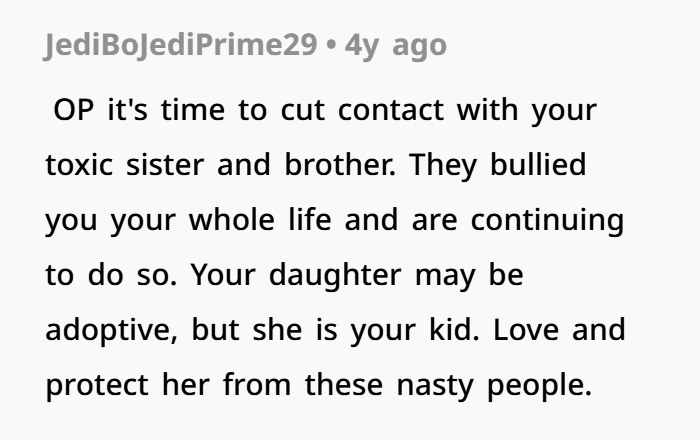
His sister, in particular, became more distant and bitter. Over time, their relationship became more toxic.
Serious Family Conflict
One of the most painful moments in their relationship happened when his sister revealed his sexual orientation at school when he was 15.
This caused emotional stress, embarrassment, and safety concerns, especially in a conservative environment.
Events like this often damage family trust for life.
Building an Independent Life
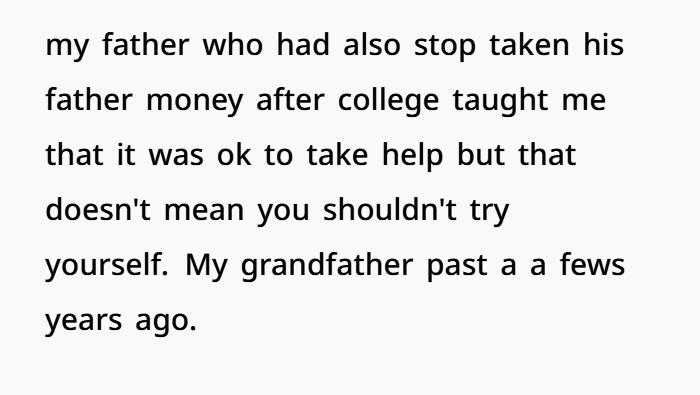
Even with a difficult childhood, he worked hard and built a stable adult life. He completed college, started a career, and became financially independent.
His father also taught him that accepting help is okay, but personal responsibility and hard work still matter.
A Tragic Loss and New Responsibility
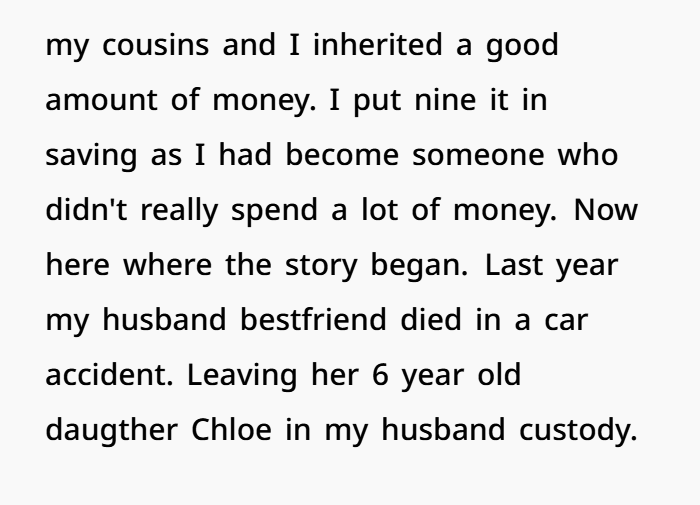
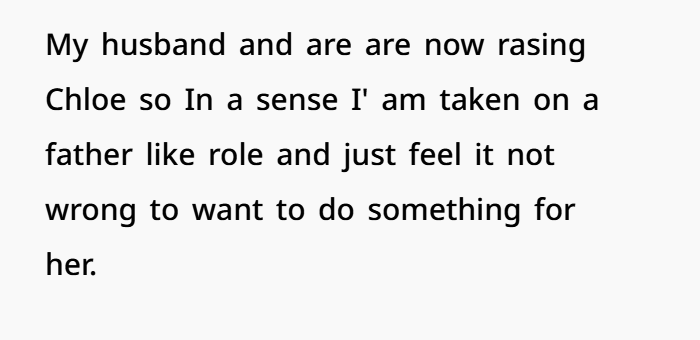
Later in life, his husband lost a close friend in a car accident. The friend had a young daughter named Chloe.
Before her death, legal guardianship was arranged so the couple would take care of Chloe if anything happened.
Suddenly, the couple became full-time caregivers.
This is a very emotional situation for any family, especially when a child is dealing with grief and trauma.
Supporting a Grieving Child
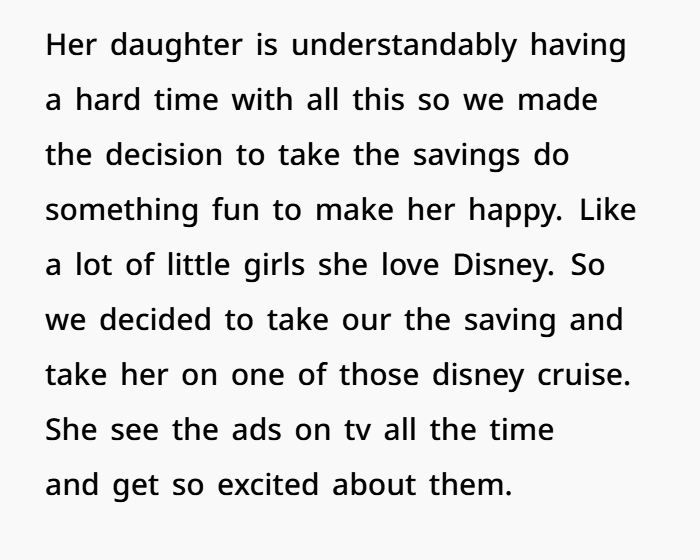
Chloe struggled after losing her mother. Like many children in grief, she felt sad, confused, and insecure.
To help her, the couple decided to create positive experiences. One of those was planning a Disney Cruise vacation because Chloe loved Disney.
The goal was not luxury. It was emotional healing, comfort, and stability.
Small happy moments can be very important in childhood grief recovery and mental health support.
Family Reaction and Conflict
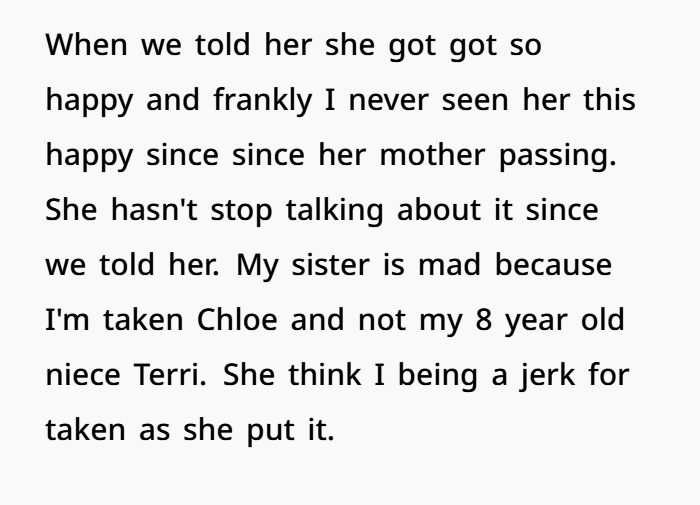
When the sister found out about the Disney Cruise, she became upset.
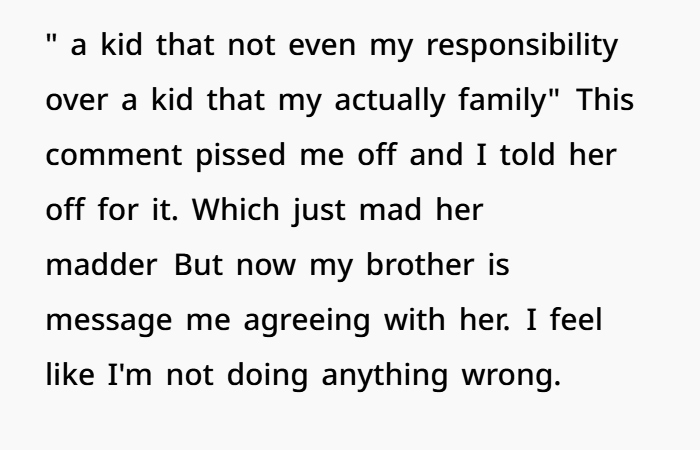
She wanted her own daughter to be included in the trip. She accused the couple of favoring a child who was “not real family.”
This created a major family argument.
Many readers felt this comment was hurtful because adopted or non-biological children are still part of the family, especially in blended families and guardianship situations.
Financial Jealousy and Old Resentment
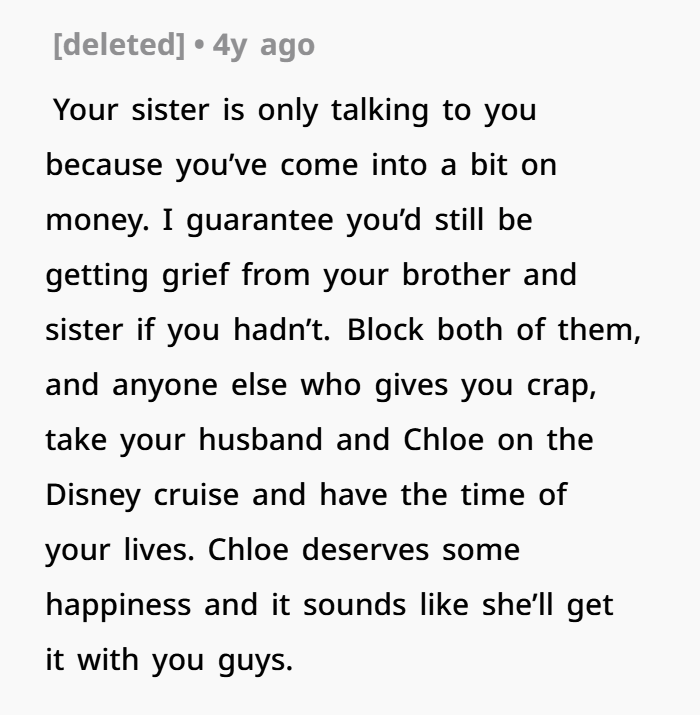
Some of the sister’s anger also seemed connected to long-term financial jealousy.
Growing up, she saw her brother receive more financial support and better opportunities from his father’s wealthy side of the family.
Even years later, that resentment still seemed to affect their relationship.
Seeing him afford a Disney Cruise may have brought back old feelings of unfairness.
Why the Couple Said No
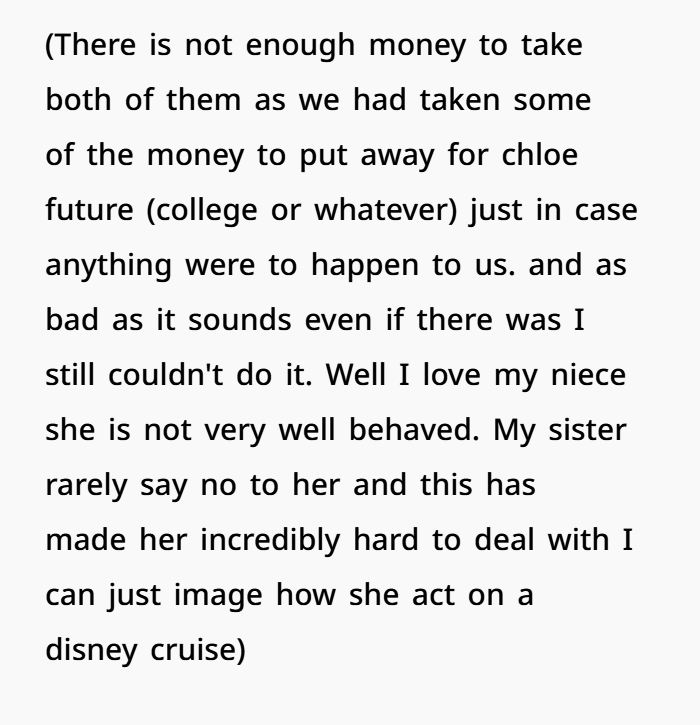
The couple chose not to include the niece in the trip. They were focused on supporting a grieving child who needed stability and emotional care.
They also felt that managing multiple children on a Disney Cruise would be too stressful, especially while helping Chloe through grief.
Anyone familiar with parenting stress, child behavior challenges, or grief counseling knows how important structure and calm environments are in these situations.
The Bigger Issue: Family Entitlement
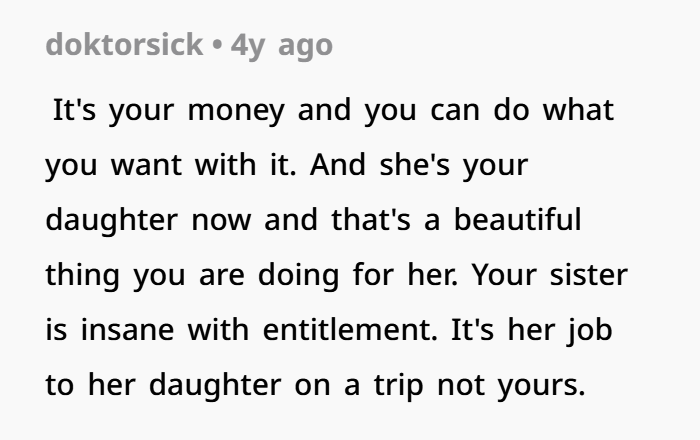
This situation highlights a common family problem: entitlement.
Sometimes relatives believe they should be included in everything, even when they are not part of the plan or purpose.
But in reality, family members are not owed vacations, money, or travel experiences.
Each family makes their own decisions based on their situation, budget, and emotional needs.
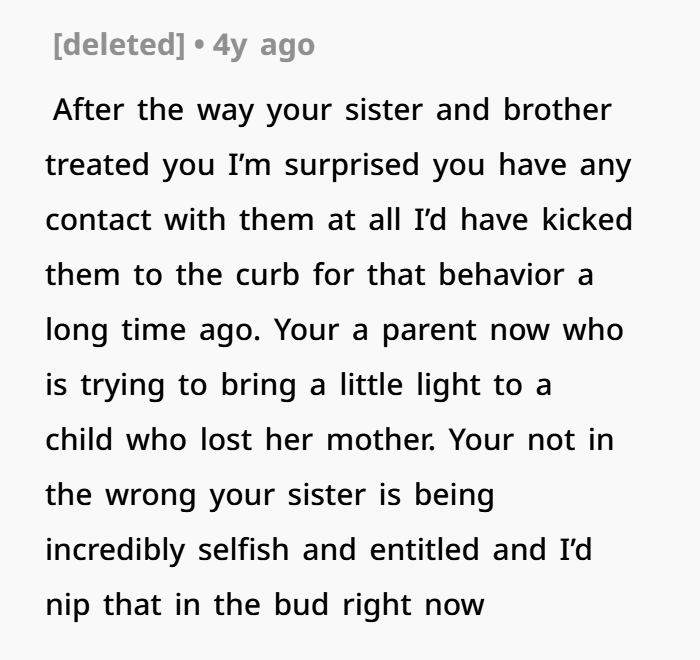
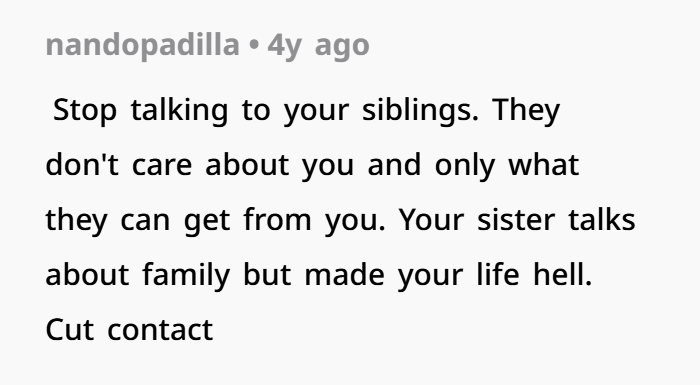
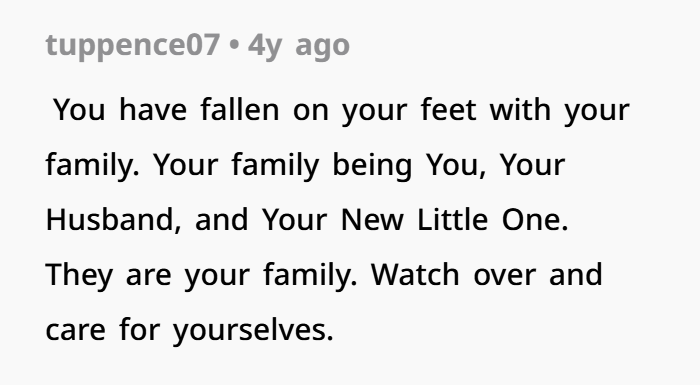
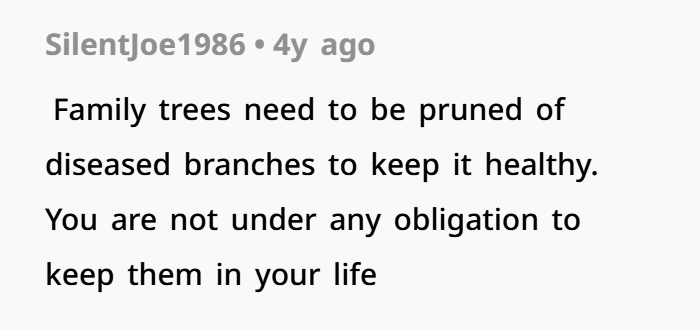
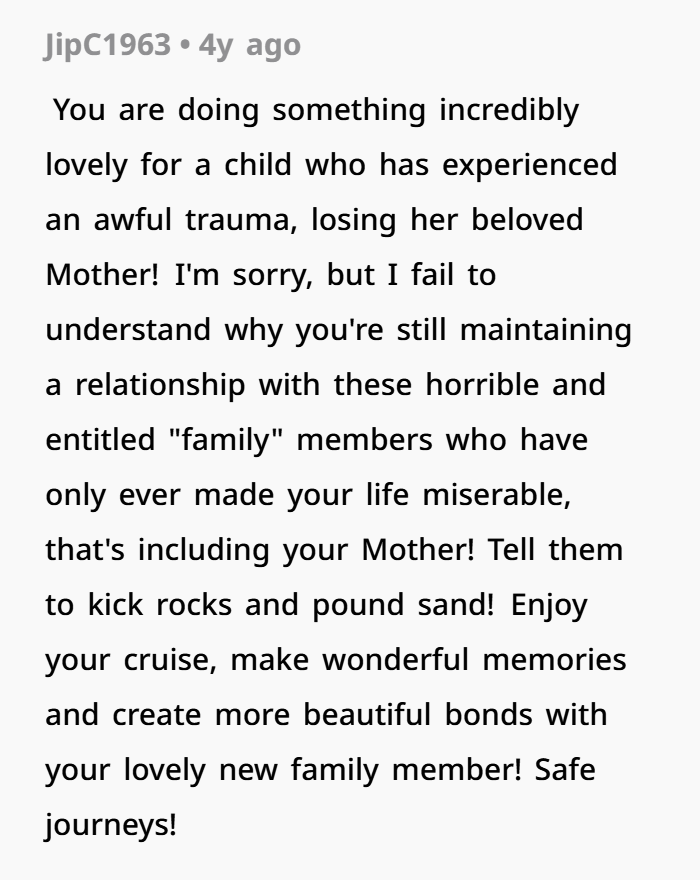
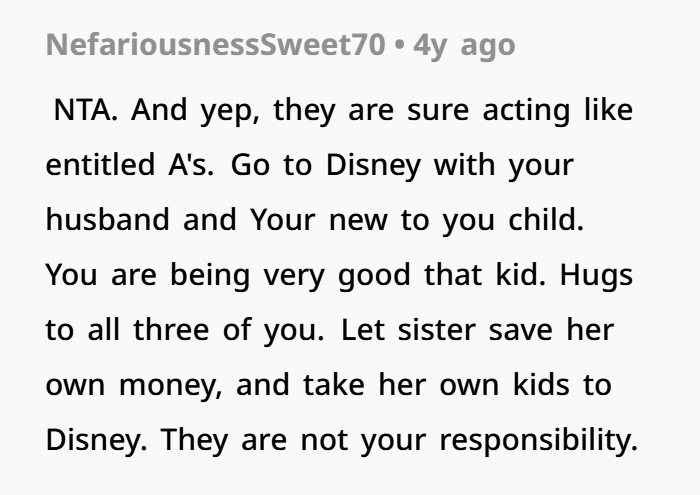
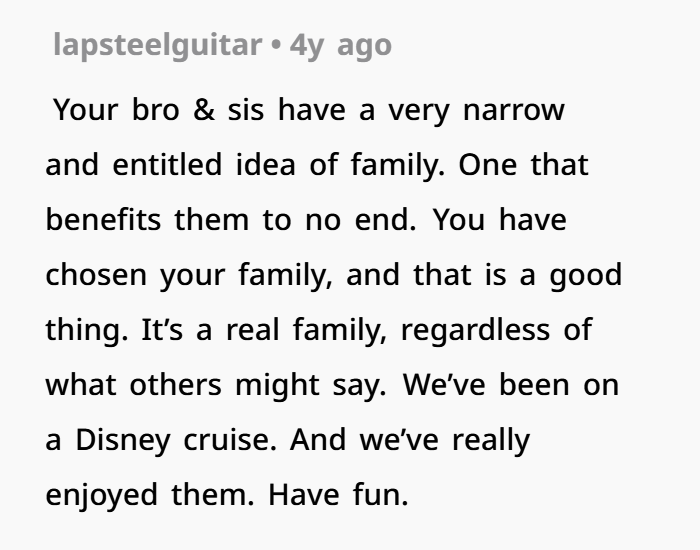
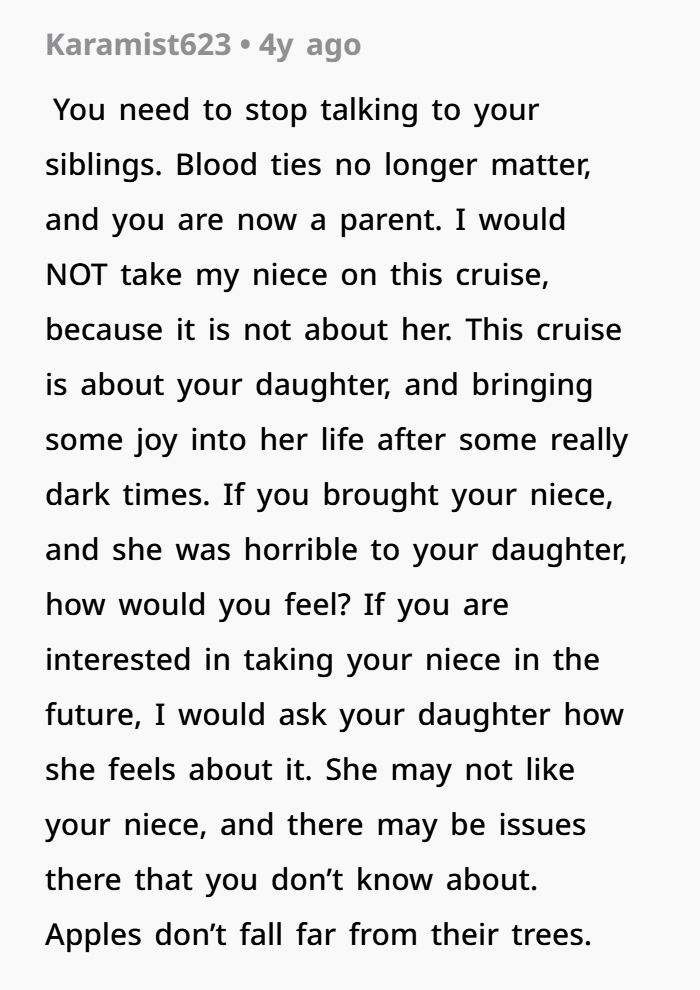
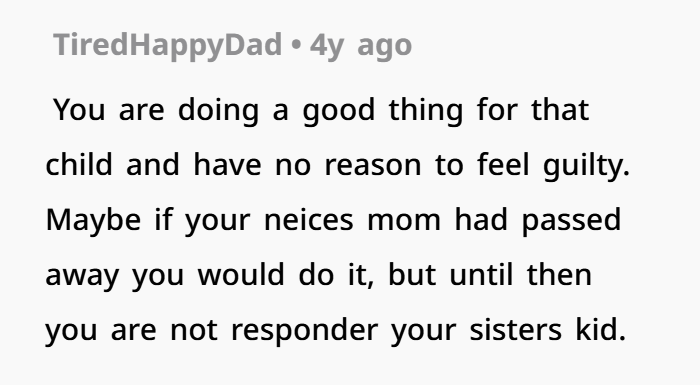
The story started going viral, and the author shared more context in the comments
Final Thoughts
At its core, this story is not really about a Disney Cruise.
It is about:
- Childhood emotional neglect
- Blended family conflict
- Financial jealousy
- Grief and child trauma
- Family boundaries
- Emotional support for adopted or guardian children
The most important part of the story is Chloe.
She was a grieving child who lost her mother and needed care, love, and stability. The couple tried to give her that through a meaningful experience.
Instead of understanding that, the family conflict turned it into an argument.
This story is a reminder that in real life, emotional needs and healing often matter more than money, status, or family arguments.