I Warned My Wife Our Son Wouldn’t Pay the Car Loan. I Was Right.
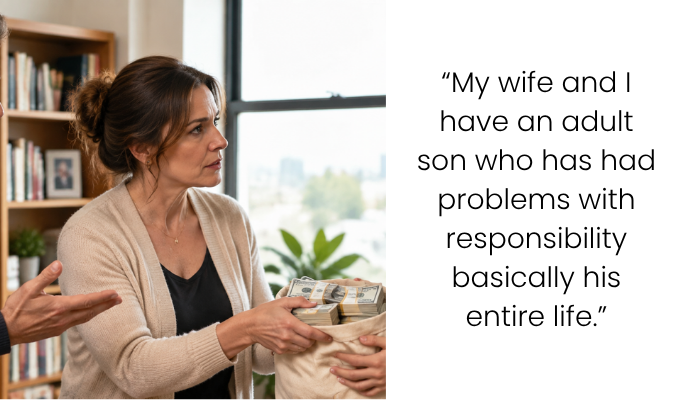
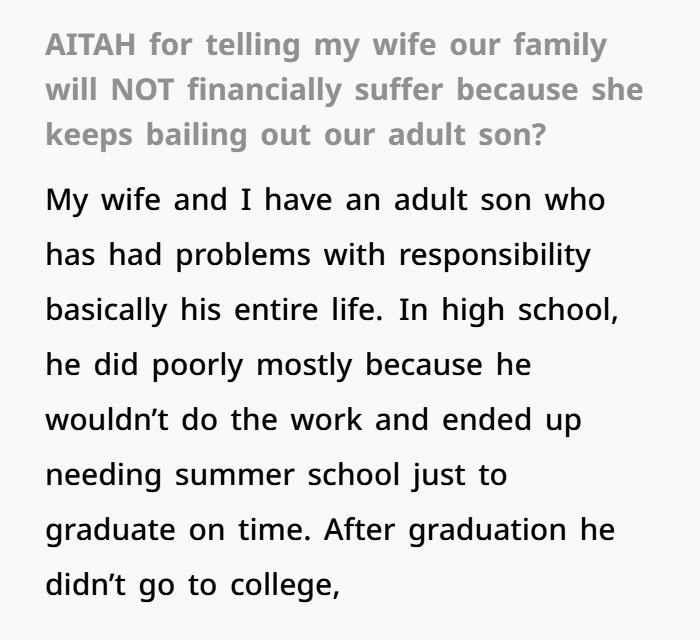
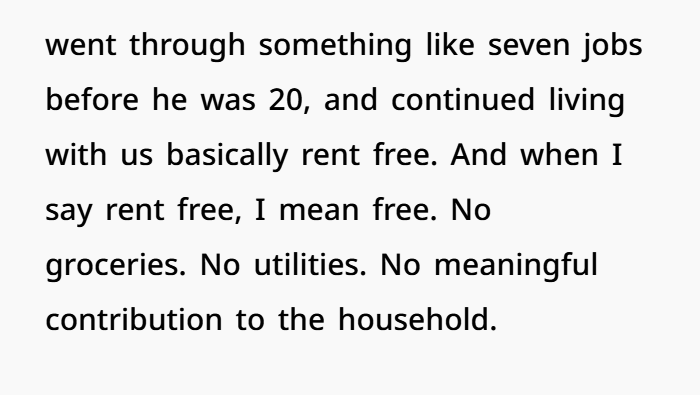
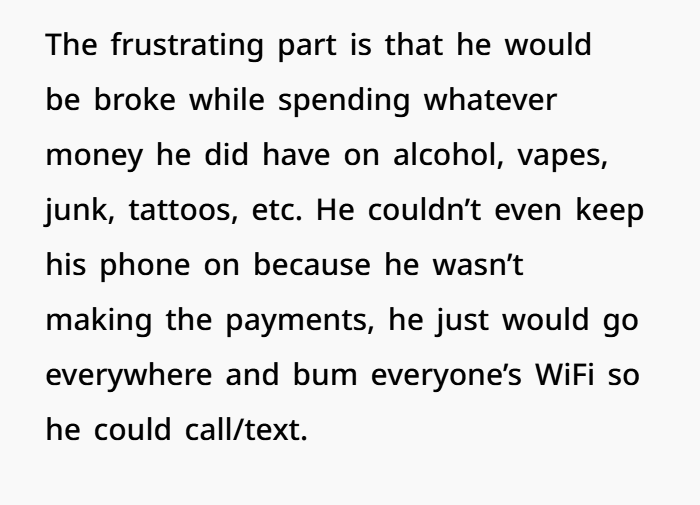
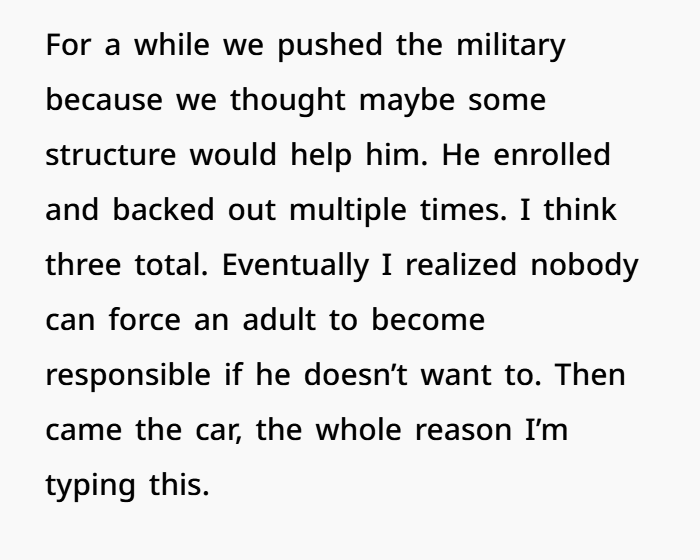
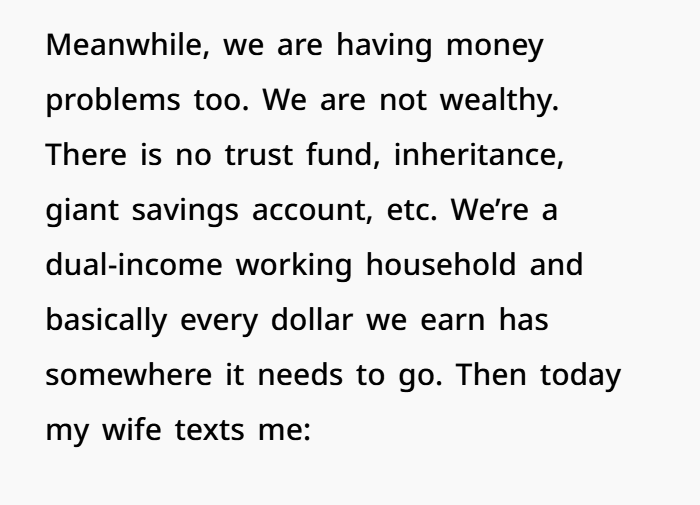
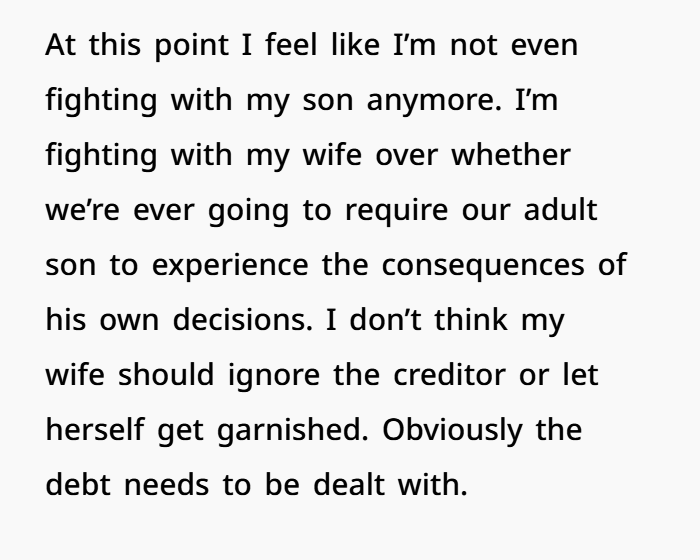
A couple faces a serious disagreement because they have different ideas about helping their adult son. Their son, who is 21 years old, has had trouble managing important parts of life. He has struggled with education, employment, budgeting, and paying bills, often turning to his parents for support.
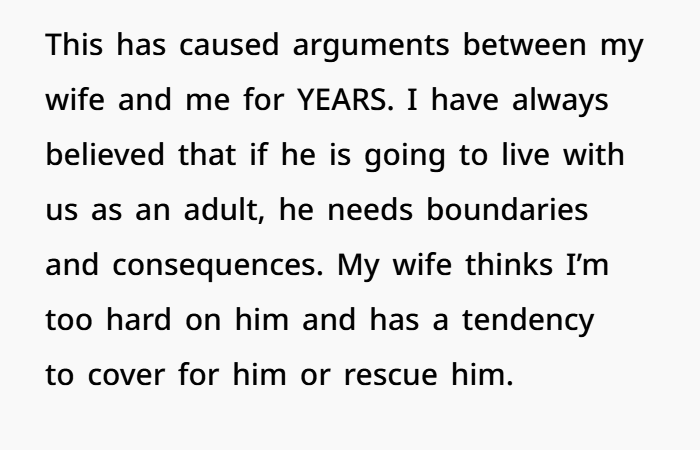
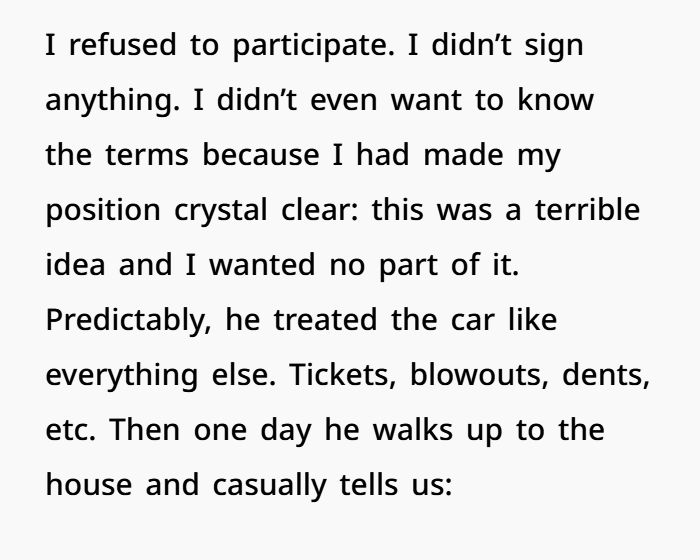
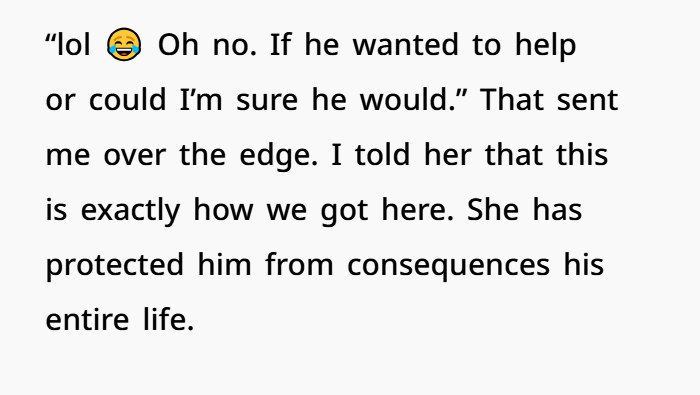
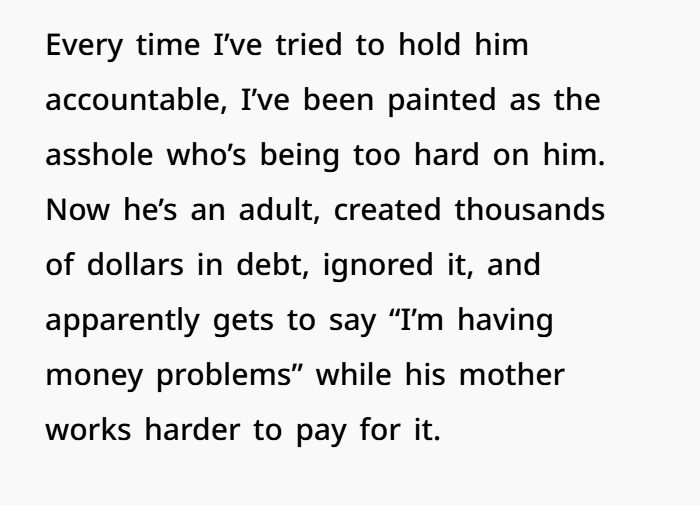
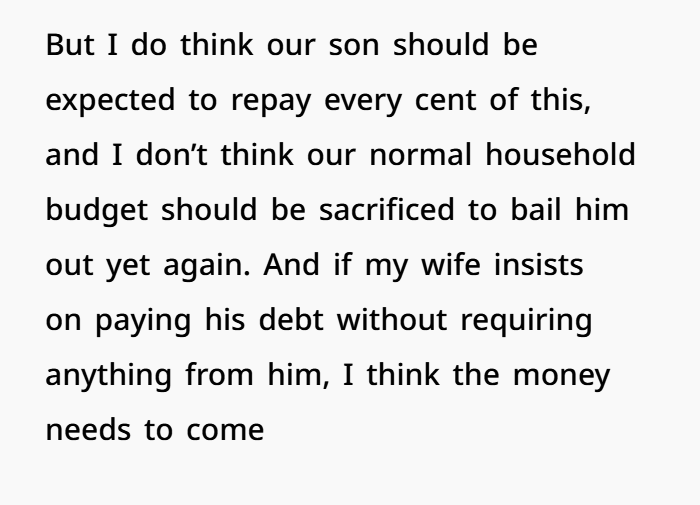
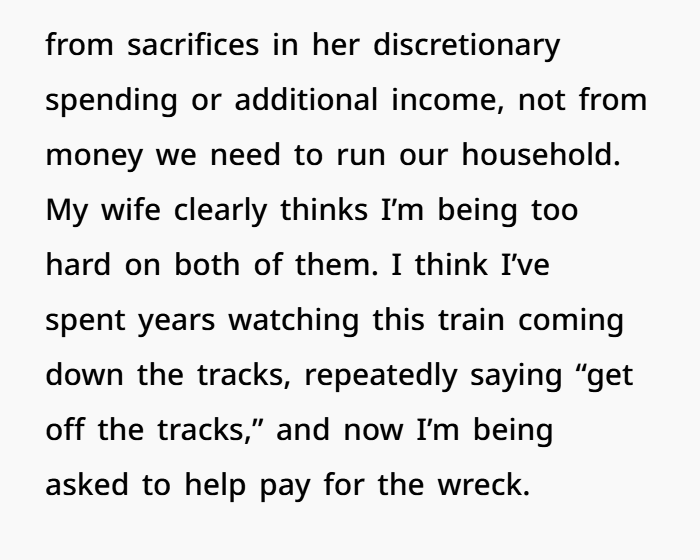
The father believes that continuing to solve every problem for their son may prevent him from learning valuable life skills. He wants their son to understand the importance of financial responsibility and making careful decisions. The mother, however, feels the need to protect and support him whenever he faces challenges.
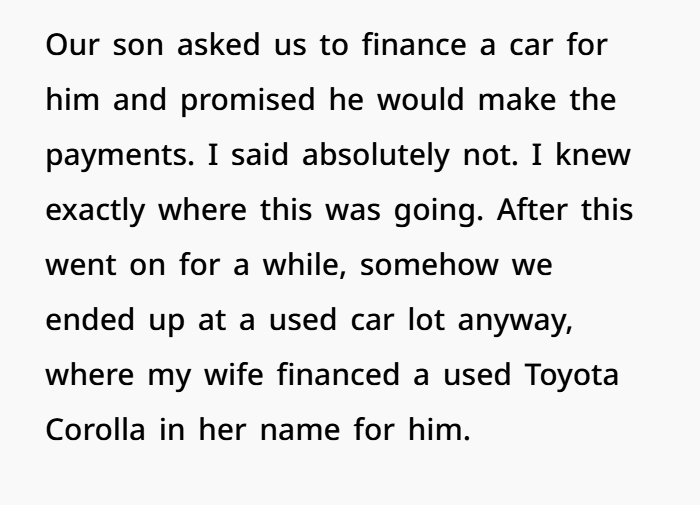
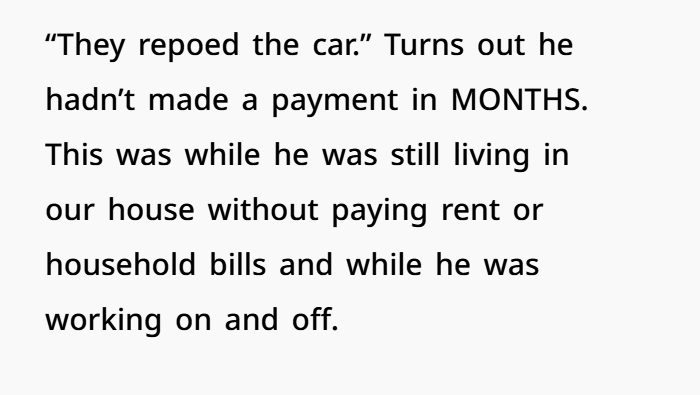
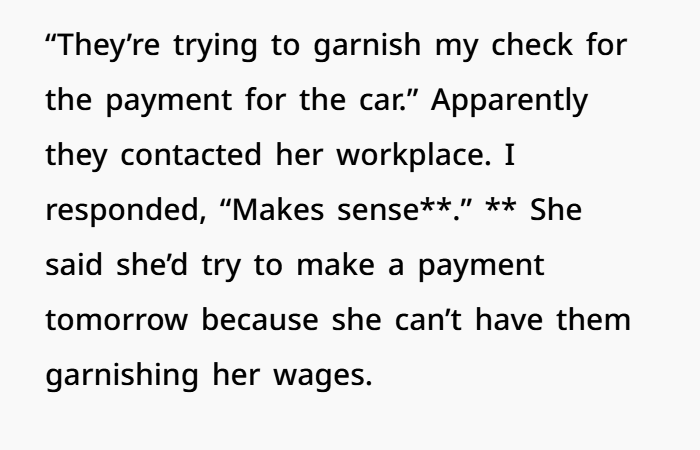
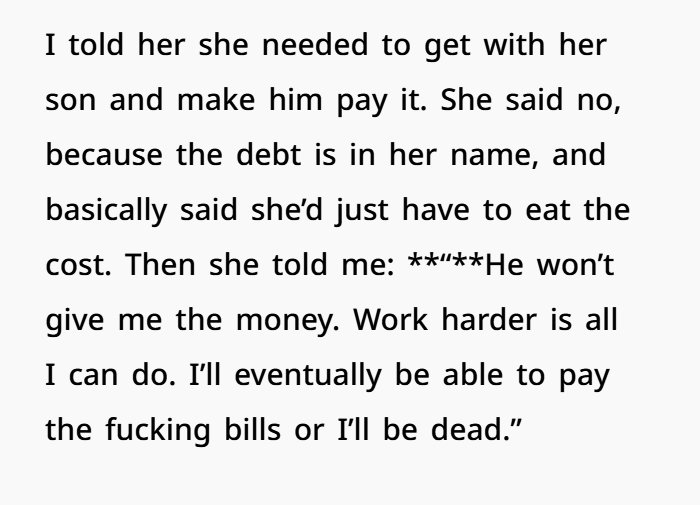
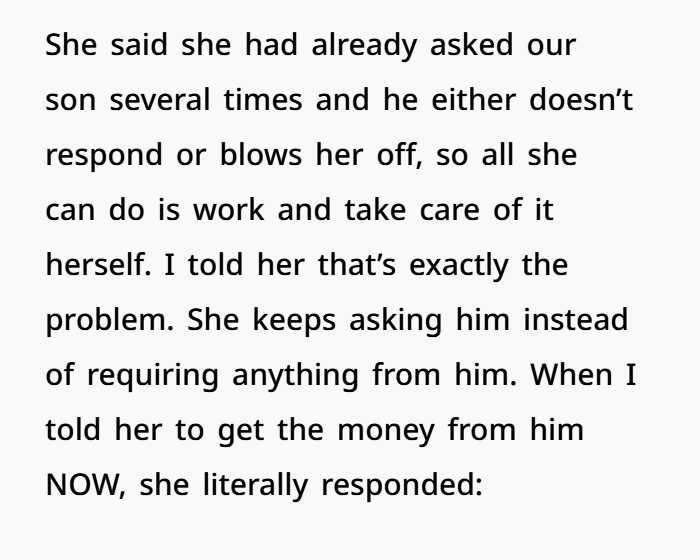
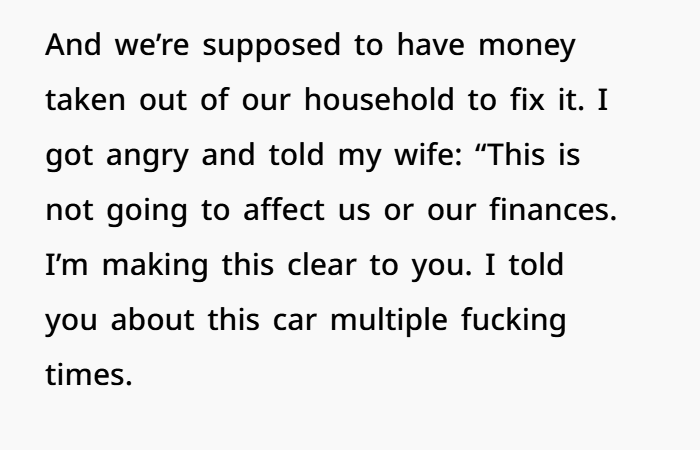
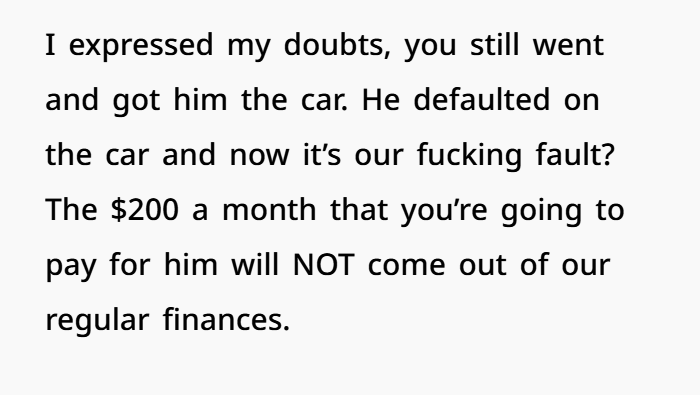
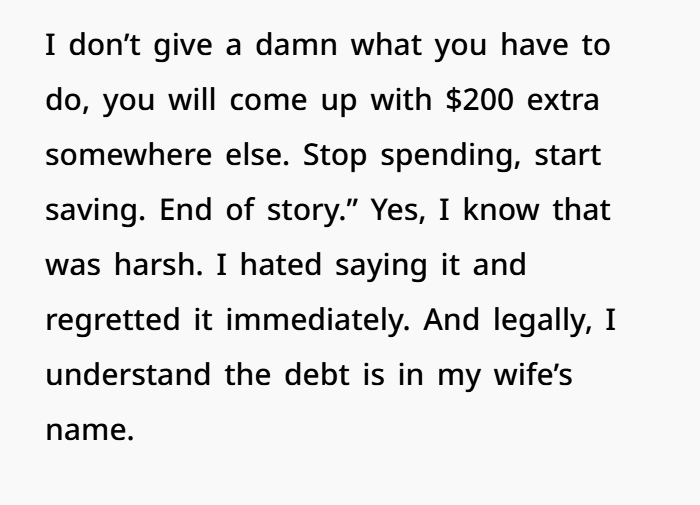
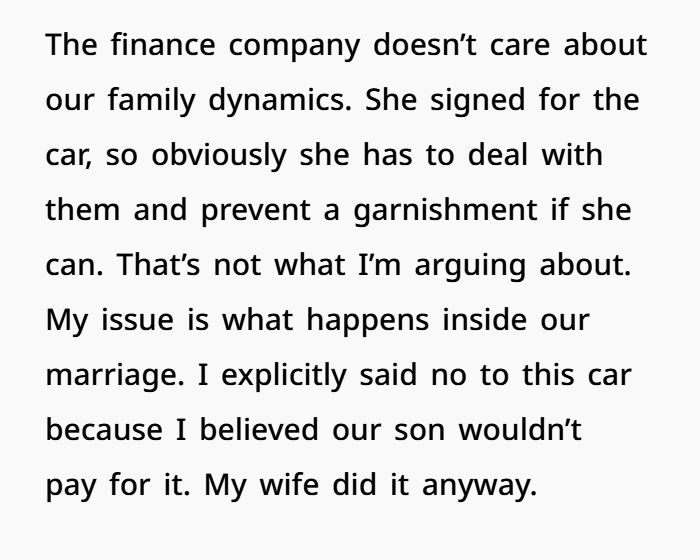
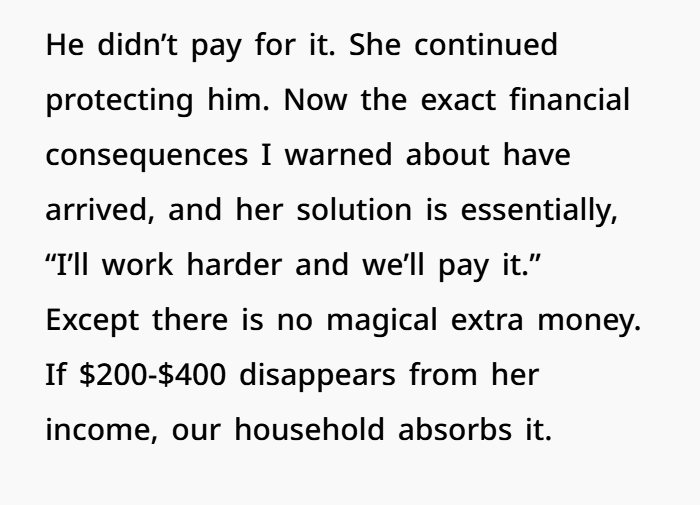
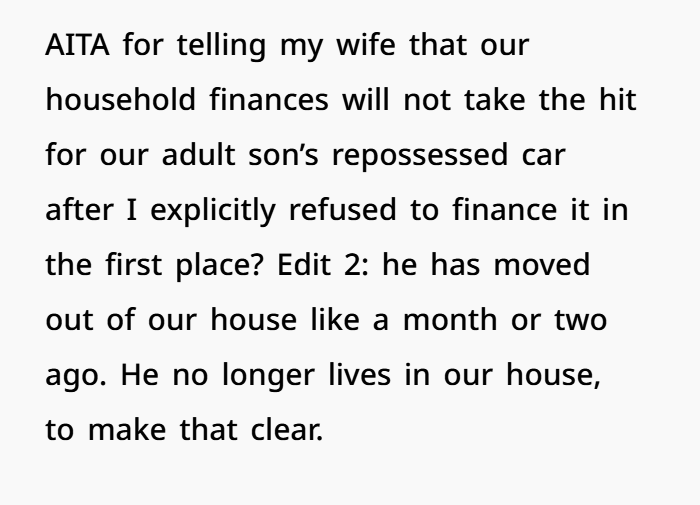
Their conflict becomes worse when the son asks his mother to help pay for a used vehicle. She agrees to take responsibility for the loan, even though her husband disagrees. When the payments stop and the car is repossessed, the unpaid balance creates a new financial burden for the family.
This situation shows how difficult it can be for parents to balance love and support with healthy boundaries. It also highlights the importance of communication, shared financial decisions, and planning for long-term family stability.

Helping Adult Children: The Difference Between Support and Enabling
Many parents want to protect their children from difficulties, even after their children become adults.
Helping your child is a natural part of being a parent. However, sometimes too much help can create new problems. This situation is often called parental enabling.
Enabling does not usually come from a bad place. It often comes from love, worry, guilt, or the fear of watching a child struggle.
The problem begins when helping someone means protecting them from every consequence of their choices.
What Is Parental Enabling?
Parental enabling happens when a parent repeatedly solves problems for an adult child instead of allowing them to learn responsibility.
At first, this type of help may seem caring. A parent may think:
“I just want to make things easier for my child.”
However, when the pattern continues, the adult child may stop learning important life skills because someone else keeps fixing the problems.
Over time, the parent can become a permanent safety net instead of a source of occasional support.
Support vs. Rescuing
There is an important difference between helping someone and rescuing them.
Support helps a person improve while allowing them to stay responsible.
Examples of healthy support include:
- Helping create a budget
- Offering advice about finding work
- Helping someone make a realistic plan
- Providing temporary help during a true emergency
Rescuing removes the consequences of repeated choices.
Examples may include:
- Paying the same debts again and again
- Taking responsibility for someone else’s financial mistakes
- Fixing problems while the person refuses to change
Support helps someone grow. Rescuing can sometimes keep the same problems going.
When Helping With a Car Loan Becomes Risky
A car can be an important need for an adult.
Many people need transportation for:
- Going to work
- Attending appointments
- Managing daily responsibilities
However, taking a car loan for someone with a history of financial problems can create risks.
When a parent co-signs a loan, they are not just helping emotionally. They are accepting financial responsibility.
If the borrower does not make payments, the co-signer may be responsible for the debt.
This is why many financial experts recommend carefully considering a co-signed loan before agreeing to it.
A lender looks at the names on the loan agreement. Promises from family members do not remove the legal responsibility connected to the debt.
How Financial Choices Affect Marriage
Money decisions can affect an entire household, especially in a marriage.
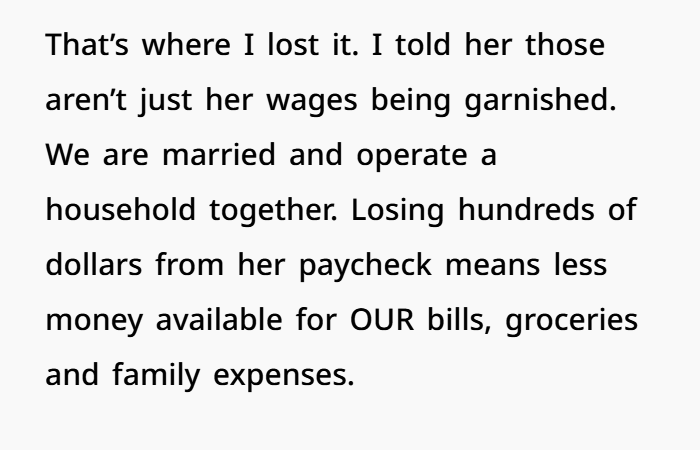
Even if only one spouse makes a financial decision, the effects may still impact both partners.
A large expense can affect:
- Household savings
- Monthly budgeting
- Future financial goals
- Retirement planning
- Stress levels
This is why many couples discuss major financial decisions together.
A disagreement about money is often not only about the amount being spent. It can also be about trust, teamwork, and feeling heard.
When Parents Disagree About Helping Their Adult Child
Many couples struggle when they have different parenting styles.
One parent may focus on protecting the child from hardship.
The other parent may believe the child needs to experience consequences to learn responsibility.
Over time, these roles can create tension.
One partner may feel:
“My spouse does not care enough.”
The other partner may feel:
“My concerns are ignored.”
Both parents may be coming from a place of love, but they may have different ideas about what help should look like.
Why Resentment Can Build Over Time
In situations like this, the conflict is often about more than money.
A spouse may feel frustrated because:
- They warned about a possible problem
- Their concerns were ignored
- The same pattern keeps happening
- They feel forced to handle the consequences
The frustration may not be about one payment or one mistake. It may be about years of feeling that financial decisions are being made without agreement.
On the other hand, the parent who wants to help may feel that refusing support means abandoning their child.
This emotional conflict is common among parents of adult children.
Learning to Let Adult Children Face Consequences
One of the hardest parts of parenting is accepting that adult children must make their own choices.
Allowing an adult child to experience consequences does not mean a parent does not love them.
Sometimes consequences help people:
- Understand responsibility
- Learn better habits
- Make healthier choices
- Become more independent
Parents can still offer emotional support without taking over every problem.
Creating Healthy Family Boundaries
Families often benefit from clear boundaries around money and support.
Healthy boundaries may include:
- Not taking loans in someone else’s name
- Avoiding repeated financial rescues
- Offering help only when it is realistic
- Creating clear expectations before providing assistance
- Making important financial decisions together as a couple
Boundaries are not a punishment.
They are a way to protect relationships and encourage personal growth.
Finding Balance Between Love and Responsibility
Parents naturally want to protect their children. That love does not disappear when children become adults.
However, protecting someone from every difficult situation can sometimes prevent them from learning how to handle life’s challenges.
The goal is not to stop caring.
The goal is to find a healthy balance between compassion and responsibility.
Helping an adult child does not always mean solving every problem for them.
Sometimes the most loving thing a parent can do is provide guidance, encouragement, and support while allowing their child to take responsibility for their own choices.
What The Internet Thinks