My 9-Year-Old Daughter Was Bullied Until She Cried Every Day—Then Her Principal Said She Was “Annoying” Her Bully
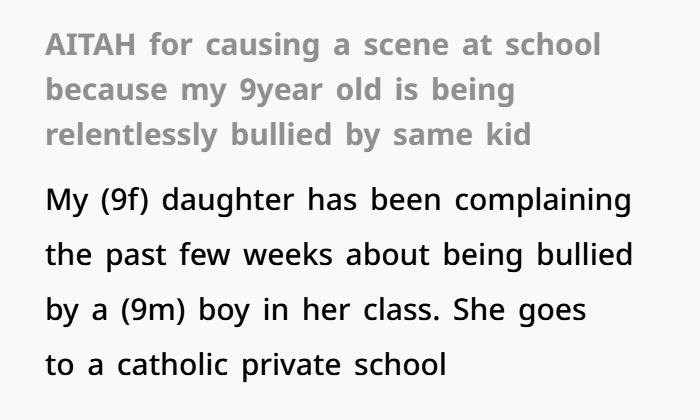
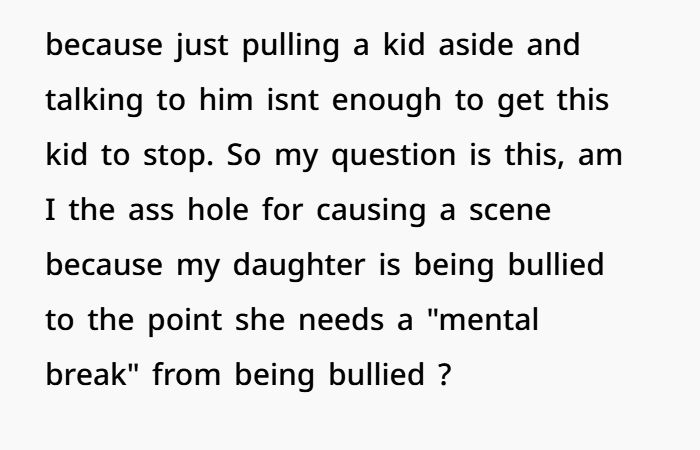
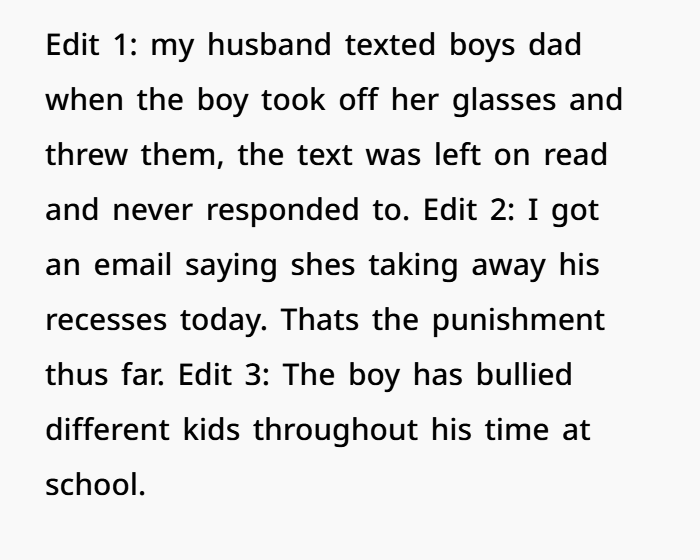
A nine-year-old girl had started to dread going to school, and her mother was running out of ways to help her. The girl attended a small Catholic private school with just 18 children in her grade. She had two close friends, but one boy in her class had reportedly been making her days miserable. He often told her friends not to play with her or sit beside her at lunch. He also called her annoying and tried to leave her out of group activities. The situation became more upsetting when he allegedly took her glasses and threw them. Another time, he spilled yogurt on her during lunch. After weeks of these problems, the girl began coming home crying and asking to stay home instead of going back to school.
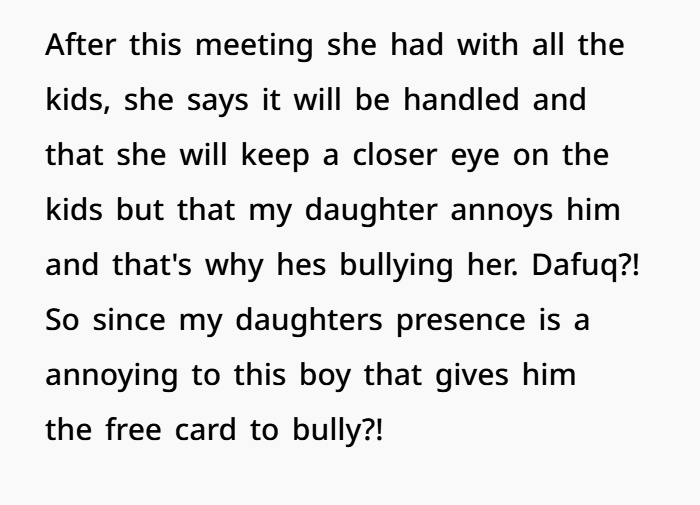
Her mother decided it was time to get help from the school administration. She contacted the teacher and principal, hoping they would take steps to protect her daughter. But the teacher said she was unaware of the situation, even though the girl had reportedly spoken up before. The principal held a meeting with the children involved and said she would pay closer attention. However, she also suggested that the boy behaved this way because he thought the girl was annoying. The mother was disappointed by this response. She believed that every child deserved a safe learning environment and that schools should have clear rules for handling bullying.
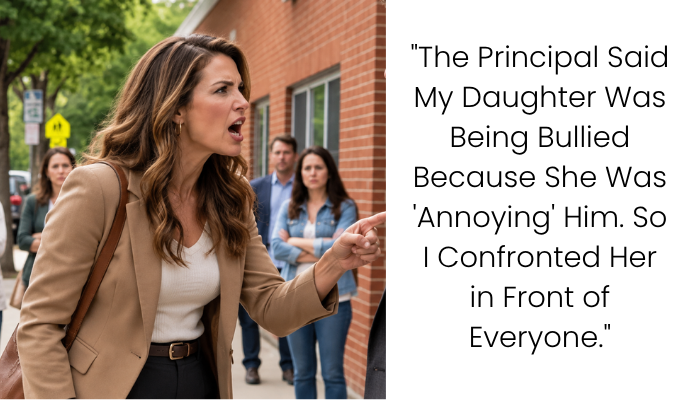
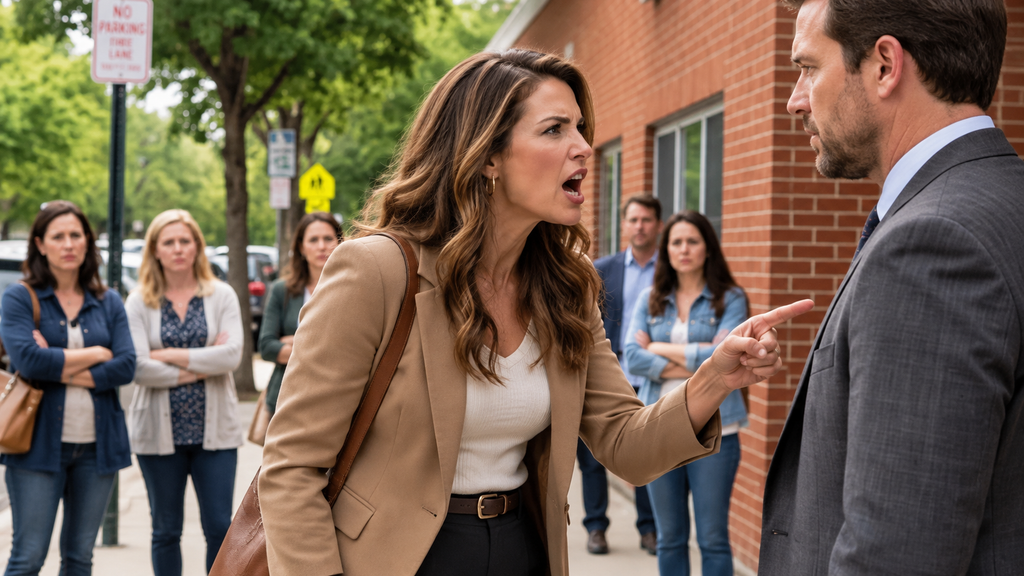
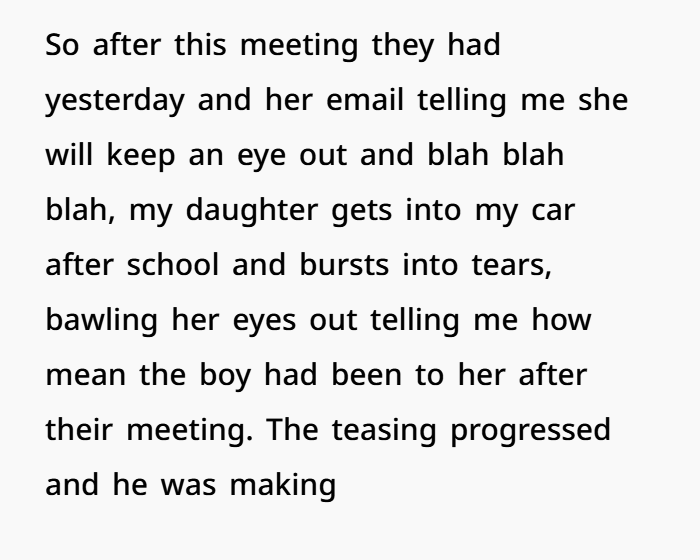
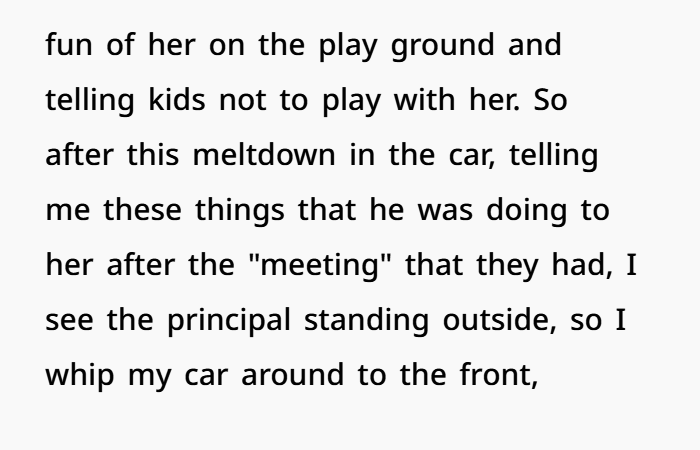
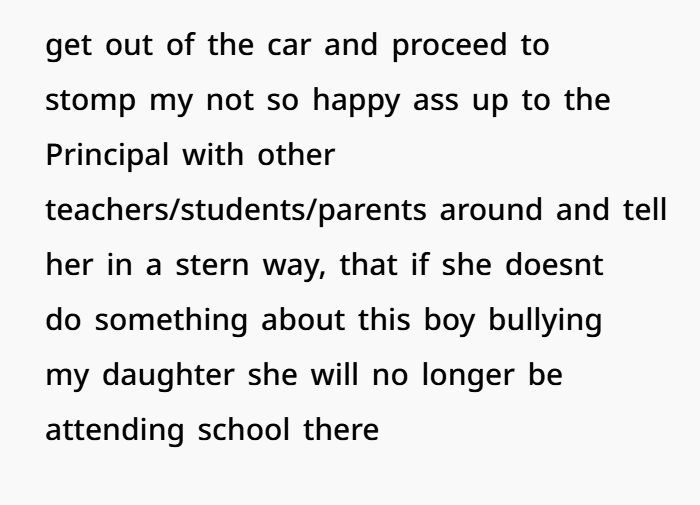
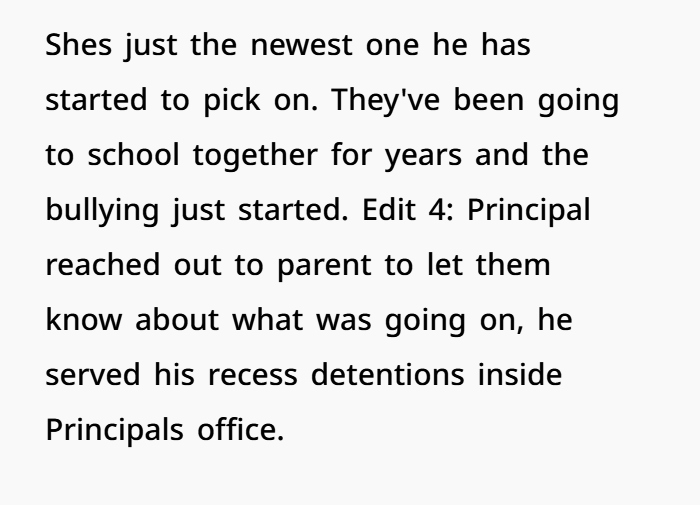
The mother became even more upset when her daughter came home crying again that same afternoon. According to the girl, the boy had continued making comments about her and telling other children not to include her at recess. The mother felt that the school had not done enough to stop the behavior. When she saw the principal outside, she went over and demanded stronger action. The conversation happened in front of other parents, teachers, and students. She also made it clear that she was ready to transfer her daughter if the school could not keep her safe. Later, she heard that the same boy had reportedly bullied other children in previous school years.
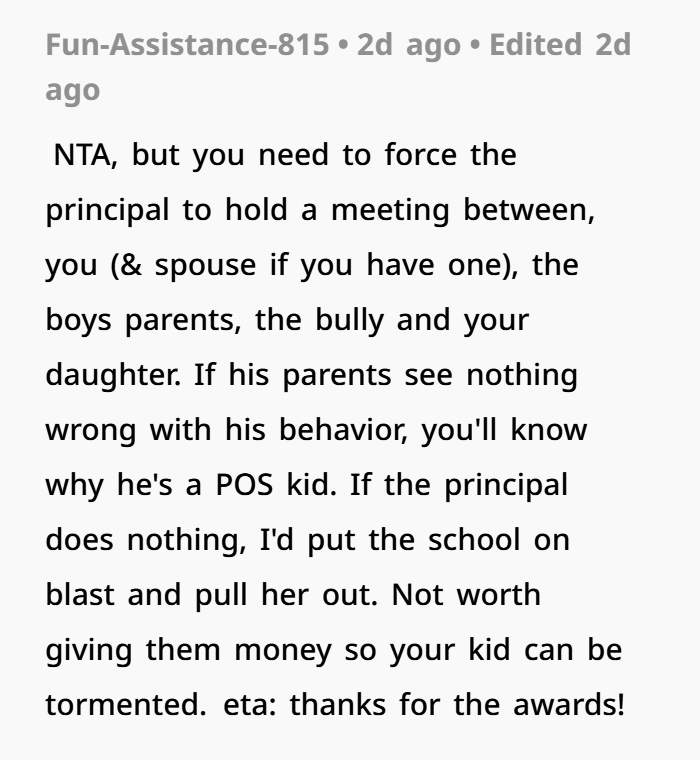
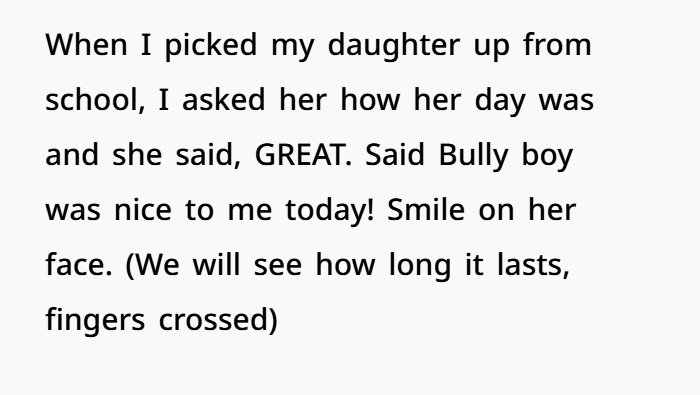
After the mother’s complaint, the principal spoke with the boy’s parents and gave him recess detention. The change seemed to help. The girl came home smiling after school and told her mother that she had a wonderful day. She was especially happy because the boy had finally treated her kindly. Although her mother was relieved, she knew that school bullying prevention requires continued attention from teachers and parents. She wanted her daughter to feel safe, confident, and happy at school. Now she is questioning whether confronting the principal in public was too harsh, even though it appeared to help her daughter.
What Research Says About Childhood Bullying, School Safety, and Parents Speaking Up
No parent wants to hear that their child is afraid to go to school.
School should be a place where children learn, make friends, and feel comfortable. But for one nine-year-old girl, going to class had become stressful.
According to her mother’s account, a boy at school repeatedly bothered her. He tried to keep her away from friends, made embarrassing comments, and interfered with her belongings.
At one point, he reportedly grabbed her glasses and threw them.
Her mother contacted the school, hoping the problem would stop. Instead, her daughter continued coming home upset.
This story raises an important question: What should parents do when bullying continues, even after they ask the school for help?
How Can Parents Tell the Difference Between Bullying and Teasing?
Children sometimes argue with classmates.
They may disagree about games, get upset with friends, or say something unkind.
One disagreement does not always mean bullying is happening.
The Centers for Disease Control and Prevention (CDC) explains that bullying involves unwanted aggressive behavior, a real or perceived difference in power, and behavior that happens more than once or is likely to happen again.
Bullying can take different forms.
Some children use hurtful words. Others try to embarrass classmates or stop them from joining group activities.
Physical actions, such as grabbing another child’s belongings, can also be part of bullying.
In this girl’s situation, the reported behavior happened repeatedly.
That is why her mother’s concerns went beyond an ordinary disagreement.
Why Being Left Out Can Be So Painful
One of the first things the boy reportedly did was try to control the girl’s friendships.
He allegedly told other children not to sit with her or play with her.
For adults, this might sound like a small problem.
But friendships are a big part of a child’s school day.
Children look forward to talking with friends, eating lunch together, and playing during recess.
When someone repeatedly tries to leave a child out, school can become a lonely place.
Researchers call this type of behavior relational aggression.
It means hurting someone through friendships, social groups, or reputation.
A 1995 study by Crick and Grotpeter, published in Child Development, helped researchers better understand how this behavior can affect children.
The study showed why adults should take social aggression seriously, even when there is no hitting or pushing.
In this story, the girl’s grade reportedly had only 18 students.
With such a small group, avoiding one classmate or finding new friends may have been difficult.
Why Taking Her Glasses Was Not Harmless Fun
The boy reportedly took the girl’s glasses and threw them.
That incident deserves special attention.
Glasses are not just an accessory for children who need them.
They help with reading, seeing the board, and moving around comfortably.
Having them taken away can leave a child feeling upset or unsafe.
The glasses could also be damaged.
Schools should respond when students repeatedly interfere with another child’s personal belongings.
School safety policies and classroom behavior rules are meant to help create a learning environment where children feel protected.
Children should understand that taking or throwing someone else’s belongings is not an acceptable way to handle frustration.
Why the Principal’s Explanation Made Things Worse
According to the mother, the principal suggested that the boy bothered her daughter because he found her annoying.
That response was troubling.
Children do not have to be best friends with everyone.
It is normal for classmates to have different personalities.
But not liking someone does not make it acceptable to repeatedly embarrass or mistreat them.
StopBullying.gov, a U.S. government resource, advises adults to respond to bullying and avoid blaming the child who is experiencing it.
Instead of excusing hurtful behavior, adults can teach children how to handle disagreements respectfully.
For example, a child who wants to play with someone else can say so politely.
They do not need to make another student feel unwanted.
Good school bullying prevention programs help children understand these differences.
Was Putting the Children in One Meeting a Good Idea?
The principal reportedly brought the girl, the boy, and another student together to discuss what had happened.
A meeting may sound like a simple way to solve a problem.
But bullying is not always the same as a disagreement between two classmates.
StopBullying.gov advises against forcing children involved in bullying into immediate joint discussions or peer mediation.
One reason is that bullying can involve a difference in power.
The child who has been targeted may feel nervous about speaking honestly in front of the other student.
They may also worry about being teased afterward.
In this case, the boy reportedly continued bothering the girl after the meeting.
There is not enough information to say the meeting caused the later incidents.
However, the continued behavior showed that the school needed to do more.
Closer supervision and regular follow-up could have helped the adults understand whether the situation was improving.
How Bullying Can Affect a Child’s Mental Health
The girl reportedly came home crying more than once.
She also asked for a break from school and said she wanted to leave.
Those reactions matter.
When a child starts feeling unhappy or worried about school every day, parents should pay attention.
Research has linked repeated bullying with problems such as anxiety, sadness, loneliness, and avoiding school.
A 2013 review by Gini and Pozzoli, published in Pediatrics, also found a connection between bullying involvement and physical complaints in children and teenagers.
Some children dealing with ongoing stress may report headaches or stomachaches.
That does not mean every child who experiences bullying will develop a medical or mental health condition.
But it does show why repeated distress should be taken seriously.
Child mental health services, school counseling, and family support can be helpful when a child is struggling.
A qualified child therapist or school counselor may also help a student talk about difficult experiences.
What Are Schools Expected to Do About Bullying?
Schools have an important responsibility to create a safe place for learning.
When a student reports repeated bullying, staff should take the complaint seriously.
That may involve speaking with the students separately, gathering information, checking with teachers, and following school behavior policies.
Schools should also watch for repeated incidents after an intervention.
In the United States, bullying laws vary by state.
Public schools and private schools may have different legal requirements.
Some bullying cases may also involve federal civil rights protections, especially when harassment is connected to a legally protected characteristic and meets the relevant legal standard.
The U.S. Department of Education’s Office for Civil Rights provides guidance about these responsibilities.
However, there is no clear evidence that the incidents in this story involved a protected characteristic.
It would therefore be wrong to assume that a federal civil rights law was violated.
Even without a legal violation, parents can still ask schools to follow their own student safety policies and anti-bullying procedures.
Why Parents Should Keep Written Records
One helpful thing the mother did was contact the school through email.
Written communication makes it easier to remember what happened and when.
It also helps parents keep track of the school’s response.
For example, a parent can record the date of an incident, what their child reported, and which staff member was informed.
If the behavior continues, those details can help during future conversations.
Parents can also ask the school for a clear safety plan.
That might include closer supervision during recess, regular check-ins with a teacher, or a simple way for the child to report problems.
Strong parent-teacher communication can make it easier to notice patterns and respond before problems become worse.
Was the Mother Wrong to Confront the Principal?
The mother reportedly became very upset with the principal after learning that her daughter had been bothered again.
Her frustration is understandable.
She had already contacted the school, but her daughter was still coming home in tears.
At the same time, a public confrontation may not always be the most effective way to solve a school problem.
It can make conversations more difficult and may draw unwanted attention to the child’s private experiences.
A calm meeting with written notes may be more productive.
Parents can explain their concerns, ask what the school plans to do, and request a follow-up date.
But the mother’s emotional reaction should not distract from the main issue.
Her daughter needed help, and the earlier response had not stopped the reported behavior.
What Changed After the School Took Action?
Later, the principal reportedly contacted the boy’s parents.
The school also gave him recess detentions.
After those steps, the girl came home with better news.
She said she had a good day and that the boy had been kind to her.
That was an encouraging sign.
It suggested the situation may have started improving.
Still, one good day does not prove the problem is over.
The teacher and parents should continue checking in with the girl.
She should also know that she can speak up if the behavior starts again.
Consistent follow-up is an important part of student safety and bullying prevention.
How Parents Can Support a Child Who Is Being Bullied
Children may not always know how to explain what is happening at school.
Some worry that adults will not believe them.
Others may feel embarrassed or think they caused the problem.
That is why listening matters.
When a child talks about bullying, parents can ask gentle questions and give them time to explain.
It helps to stay calm, even when the details are upsetting.
Parents can reassure their child that asking for help was the right thing to do.
They can also work with the teacher to decide what should happen next.
If a child continues feeling anxious, sad, or unwilling to attend school, professional support may be useful.
Child counseling services and school-based mental health support can give families another way to address ongoing emotional concerns.
The goal is not to make the child responsible for stopping the bullying.
It is to make sure the adults around them provide appropriate help.
Why School Accountability Matters
A school cannot prevent every disagreement between children.
But it can set clear expectations for behavior.
Teachers and school leaders can explain why teasing, exclusion, and taking another student’s belongings are unacceptable.
They can also respond consistently when problems are reported.
Children notice how adults handle these situations.
When a teacher listens and takes action, students may feel more comfortable asking for help.
When complaints are dismissed, children may stop believing that speaking up will make a difference.
In this story, the girl reportedly told her teacher about the problems before her mother became involved.
That detail shows why early intervention is so important.
A timely response may prevent a difficult situation from continuing.
Final Thoughts
This story is about more than one mother getting upset with a school principal.
It is about a nine-year-old girl who reportedly faced repeated teasing, social exclusion, and problems with her belongings.
Over time, she became so unhappy that she wanted to stop attending school.
Her mother tried to get help and became frustrated when the situation continued.
After the school took stronger action, the girl finally reported a better day.
That was a positive step, but continued attention will still be important.
Every child deserves to feel safe, included, and respected at school.
When parents speak up, teachers listen, and school leaders respond consistently, children have a better chance of enjoying their education without the stress of repeated bullying.
The Comments Are In