My Neighbors Stopped Paying for Our Shared WiFi, So I Cut Them Off
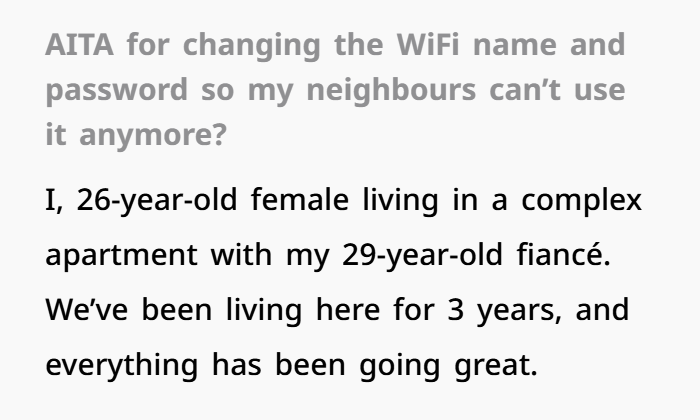
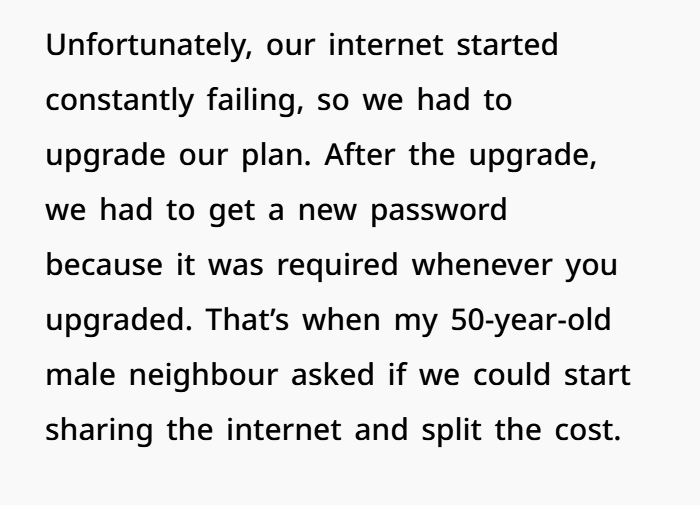
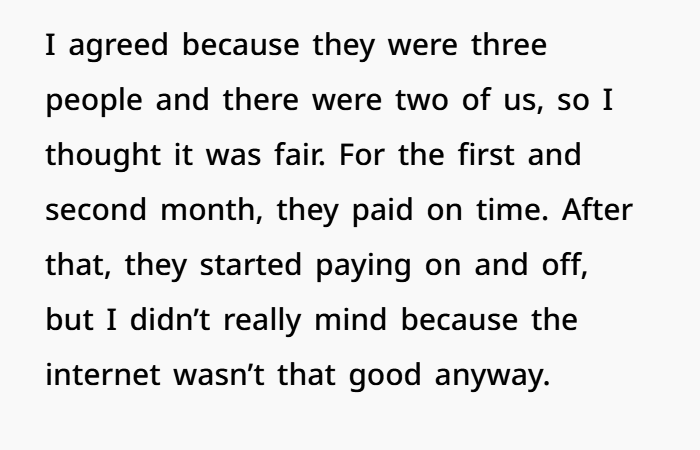
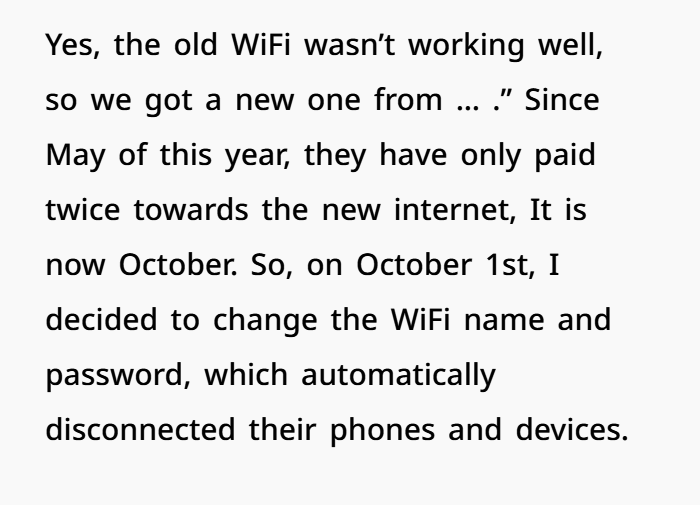
Sharing household expenses can save money, but only when everyone follows the agreement. A 26-year-old woman and her fiancé learned this after sharing their home internet with a neighbor. Their 50-year-old neighbor suggested using the same WiFi connection and helping with the monthly bill. The arrangement seemed practical for apartment living, and during the first couple of months, the neighbor paid as promised.
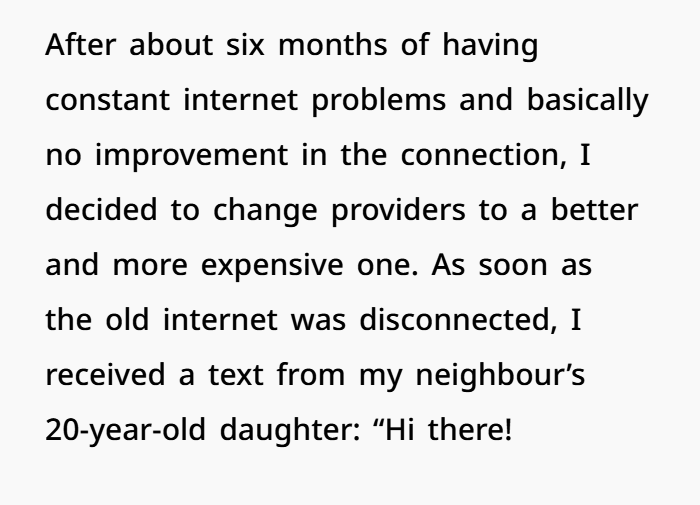
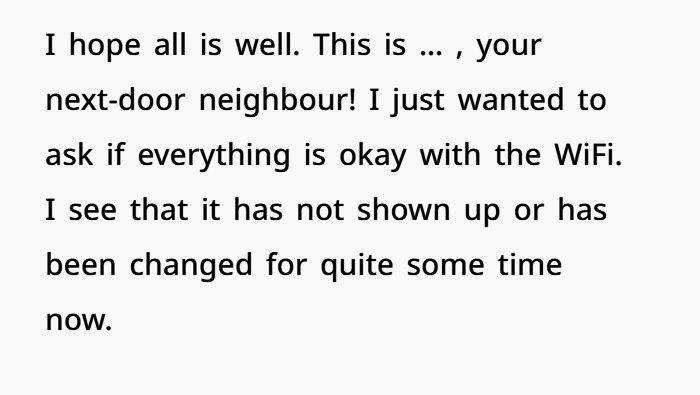
Things slowly changed. Payments started arriving less often, even though three people in the other apartment continued using the internet service. Meanwhile, the woman and her fiancé remained responsible for the full bill. After dealing with an unreliable connection for about six months, they chose a better internet provider with a more expensive plan. The neighbor’s 20-year-old daughter soon asked for access to the new WiFi because she needed internet at home and wanted to avoid expensive mobile data costs. The woman agreed to share it again.
From May through October, however, the neighbors only contributed to the internet bill twice. The woman felt she was spending too much time asking for money that had already been agreed upon. She and her fiancé also had their own monthly expenses and household budget to manage. Finally, on October 1, she changed the network name and WiFi password. The neighbors immediately lost access to the internet they had been using.
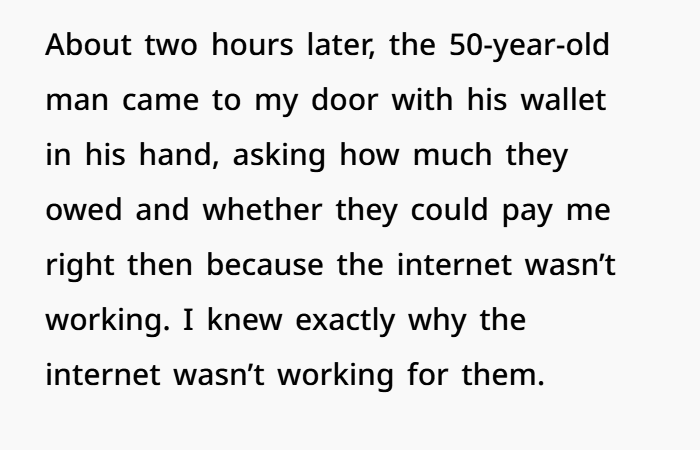
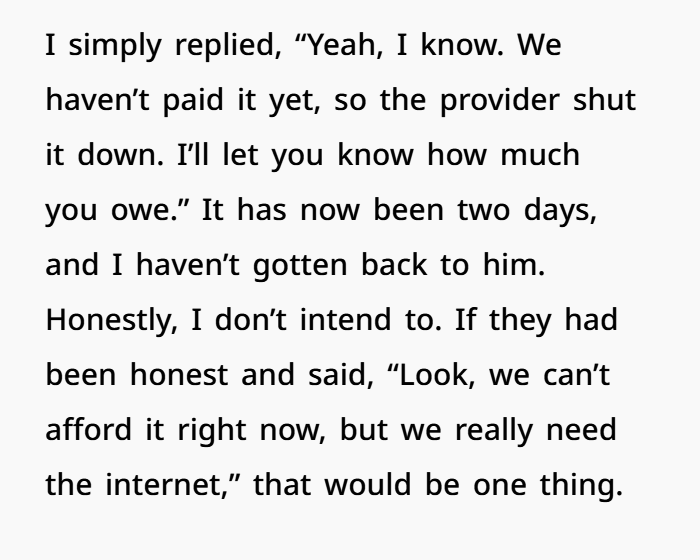
Just two hours later, the neighbor arrived with his wallet and offered to pay what he owed. The woman told him she would calculate the amount, but she did not give him the new password. Two days passed, and she decided she no longer wanted to continue the shared WiFi arrangement. Her frustration was mainly about the repeated missed payments, not the family’s personal finances. The situation shows why clear payment rules and financial boundaries can be important when neighbors agree to share utilities or other monthly services.

Sharing WiFi Is a Favor, Not an Unlimited Subscription
The main issue here is pretty simple.
Was the narrator supposed to keep sharing her WiFi after the neighbors stopped paying their share?
No.
The internet account belonged to the narrator. She paid the bill and was responsible for the service.
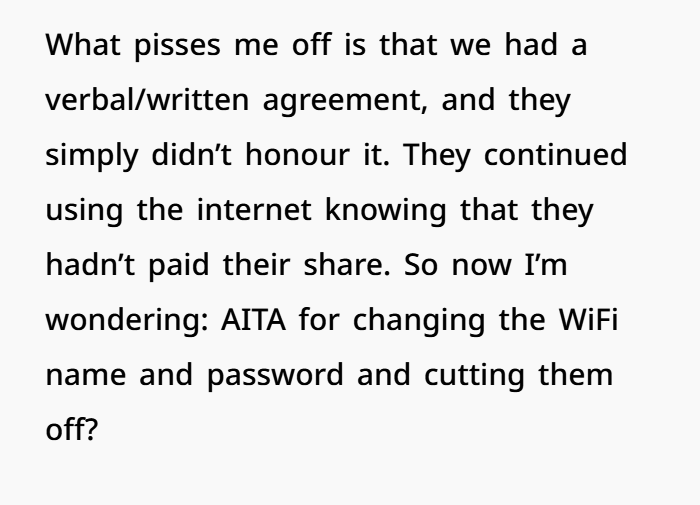
She had simply made a private agreement with her neighbors. They could use her home internet connection if they helped pay part of the monthly cost.
Once they stopped paying regularly, that agreement was no longer working.
Being Late Once Is Different From Not Paying for Months
Anyone can forget a payment.
A busy month, an unexpected household expense, or a simple mistake can happen. If someone is late once, a friendly reminder is usually reasonable.
But that is not what happened here.
According to the story, the neighbors only paid twice between May and October.
Meanwhile, they continued using the WiFi.
That changes the situation.
The narrator was still responsible for paying the internet service provider every month, whether the neighbors contributed or not.
At some point, she had every reason to decide that the arrangement was no longer fair.
Everything Changed When the Password Changed
One part of the story is especially interesting.
For months, the missing payments did not seem urgent.
Then the narrator changed the WiFi password.
About two hours later, the neighbor reportedly showed up with his wallet and asked how much he owed.
That does not automatically mean he was intentionally avoiding payment.
Money can be tight. Families often have several monthly bills, including housing, utilities, groceries, insurance, transportation, and internet service.
Sometimes people deal with the bill that has the most immediate effect first.
Still, the timing is hard to ignore.
When the internet continued working, there was little pressure to pay.
Once the connection stopped working, payment suddenly became important.
Sometimes a clear consequence gets someone’s attention faster than another reminder.
WiFi Security Is Another Good Reason to Be Careful
The monthly cost is only one part of the issue.
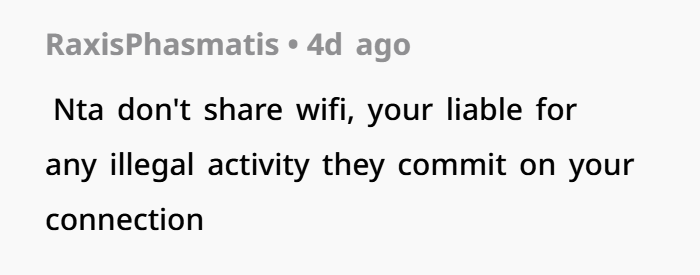
There is also home WiFi security to think about.
Most households now have many devices connected to their wireless network.
That can include smartphones, laptops, tablets, smart TVs, gaming systems, security cameras, printers, and other smart home devices.
Because of this, controlling access to a home network is an important part of basic cybersecurity.
The Federal Trade Commission recommends securing home WiFi networks and routers. Strong security can help protect connected devices and personal information.
The U.S. Cybersecurity and Infrastructure Security Agency also recommends good router security practices, including changing default credentials and using appropriate wireless security settings.
So changing a WiFi password is not unusual.
It can be part of good online privacy and home network security.
Sharing With Another Household Means More Connected Devices
Giving a neighbor your WiFi password may sound simple.
But you may not be connecting just one phone.
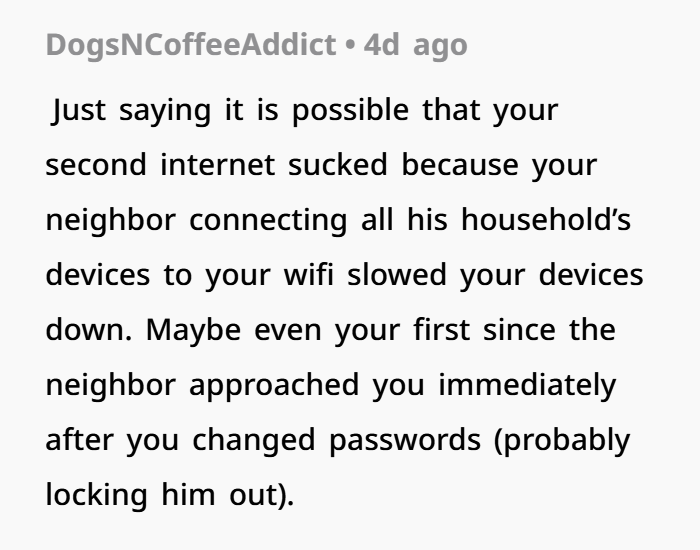
The other household could have several phones, computers, televisions, tablets, and other devices.
Even when you completely trust your neighbors, you have less control over how many devices are connected to your home internet.
There is also the possibility that the password gets shared with someone else.
That does not mean anyone has bad intentions.
It simply means that a private password can become harder to control once several people have it.
For that reason, homeowners should think carefully before permanently sharing access to their primary WiFi network.
A Guest WiFi Network Can Be a Better Option
If the narrator ever decides to share internet access again, she could consider using a guest network.
Many modern WiFi routers offer this feature.
A guest network gives visitors internet access through a separate network instead of simply giving everyone access through the main WiFi connection.
This can be useful when friends, relatives, or visitors need temporary internet access.
It can also make home network management easier.
But there is an important point here.
The narrator does not have to create a guest network for her neighbors.
She is allowed to stop sharing completely.
The Daughter’s Message Deserves Some Understanding
The neighbor’s 20-year-old daughter makes the situation a little more complicated.
According to the story, she sent a polite message.
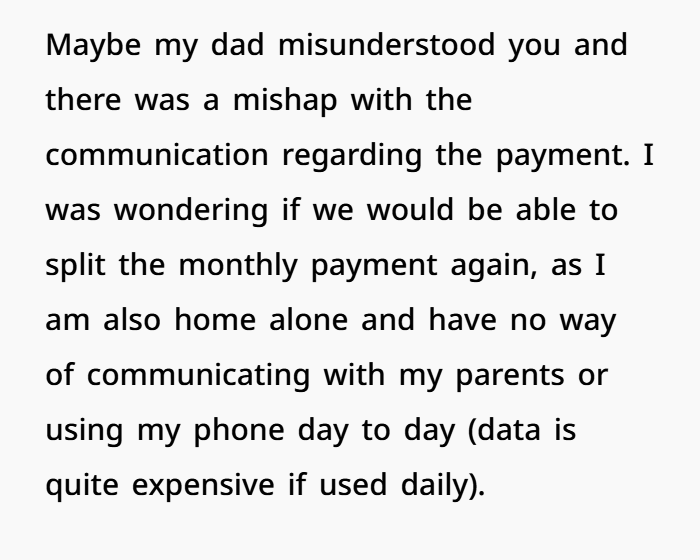
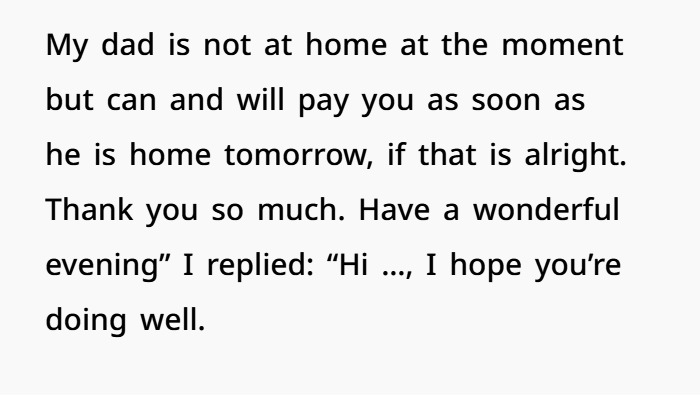
She explained that she was alone and did not have affordable mobile data. She also suggested there may have been some confusion about the payment and offered to have her father pay when he returned.
That deserves some sympathy.
Reliable internet access is important today.
People use home internet for work, online education, banking, job applications, communication, shopping, entertainment, and many other everyday tasks.
Losing internet access can be frustrating.
But feeling sorry for someone’s situation does not mean you have to provide that person with free WiFi.
The Daughter Shouldn’t Take All the Blame
It is also worth remembering that the daughter may not have been responsible for the agreement.
If her father was the person who agreed to make the payments, she may not know exactly what was discussed.
She may have believed everything was fine.
So there is no real need to blame her.
At the same time, the narrator is not required to continue providing internet to the entire household because the daughter needs a connection.
If reliable internet is important to the family, they need a long-term solution.
That could mean getting their own home internet plan or making sure they consistently pay whatever amount they agree to contribute.
Depending on a neighbor’s private WiFi connection for months can easily create problems.
This story shows exactly why.
The Narrator Made One Mistake
The narrator had a good reason to change the password.
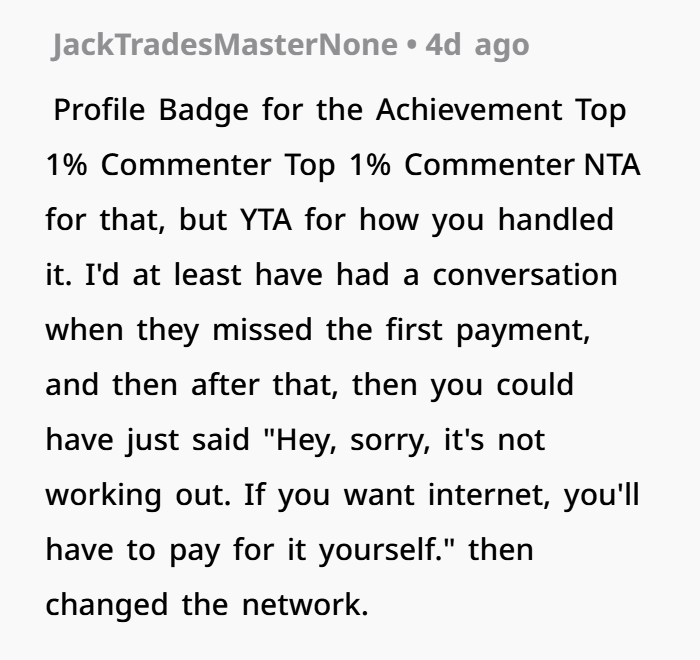
But she made the situation more complicated by not being honest about it.
When the neighbor came over, she reportedly told him that the internet provider had disconnected the service because the bill was unpaid.
That was not what happened.
The narrator had personally changed the WiFi password.
There was no need to make up another explanation.
She could simply have told him the truth.
The neighbors had only paid twice since May, and she was no longer comfortable sharing her internet connection.
That would have been clear and direct.
Honest Communication Would Have Been Better
The narrator was allowed to end the agreement.
She did not need an excuse.
This is important whenever money is involved.
Whether people are sharing an internet bill, utilities, rent, subscriptions, or other household expenses, clear communication can prevent a lot of problems.
If the narrator no longer wanted to share the WiFi, she could simply say so.
That would also prevent the neighbor from believing that paying the old balance would automatically restore his internet access.
If the arrangement is over, everyone should know that it is over.
The Old Debt Is a Separate Question
There are really two different issues here.
One is future WiFi access.
The other is the money the neighbors previously agreed to pay.
Changing the password deals with future access.
It means the neighbors no longer have permission to use the narrator’s internet connection.
But that does not automatically settle the previous unpaid amount.
If the amount is small, the narrator may decide that continuing the disagreement is not worth the stress.
She might simply consider it a lesson about sharing household services informally.
If the unpaid amount is significant, she could give the neighbors a simple record of what was agreed upon and what remains unpaid.
Either way, she does not have to give them the new password.
Clear Money Agreements Can Prevent Problems
This story is also a useful reminder about personal finance and household budgeting.
Informal money arrangements can work well when everyone follows the same rules.
But problems can start when expectations are unclear.
If two households are sharing the cost of something, it helps to decide in advance how much each person will pay and when the payment is due.
Keeping the agreement in a text message can also prevent confusion later.
This applies to more than internet bills.
The same idea can help with shared utilities, subscriptions, rent, travel expenses, and other recurring costs.
Clear expectations make money conversations much easier.
Your WiFi Password Is Still Your Password
There is another simple point worth remembering.
Giving someone your WiFi password once does not mean they have permanent access to your network.
The account holder can change the password.
They can also decide who is allowed to connect.
This is especially reasonable when circumstances change.
Maybe a guest no longer visits.
Maybe too many devices are connected.
Maybe there are concerns about internet speed, cybersecurity, online privacy, or network management.
Or maybe a payment agreement simply stopped working.
A WiFi password can be changed when needed.
This Story Is Really About Trust
In the end, this is not really a story about technology.
It is about trust.
The narrator continued providing internet access.
The neighbors were supposed to contribute toward the monthly bill.
When the payments became inconsistent for several months, the arrangement stopped feeling fair.
And there is an important difference here.
The narrator did not cancel the neighbors’ own internet account.
She stopped allowing them to use her home internet connection.
They can still choose another internet service provider, use mobile data, or find another legitimate option that fits their household budget.
Having someone’s WiFi password in the past does not create a permanent right to their private network.
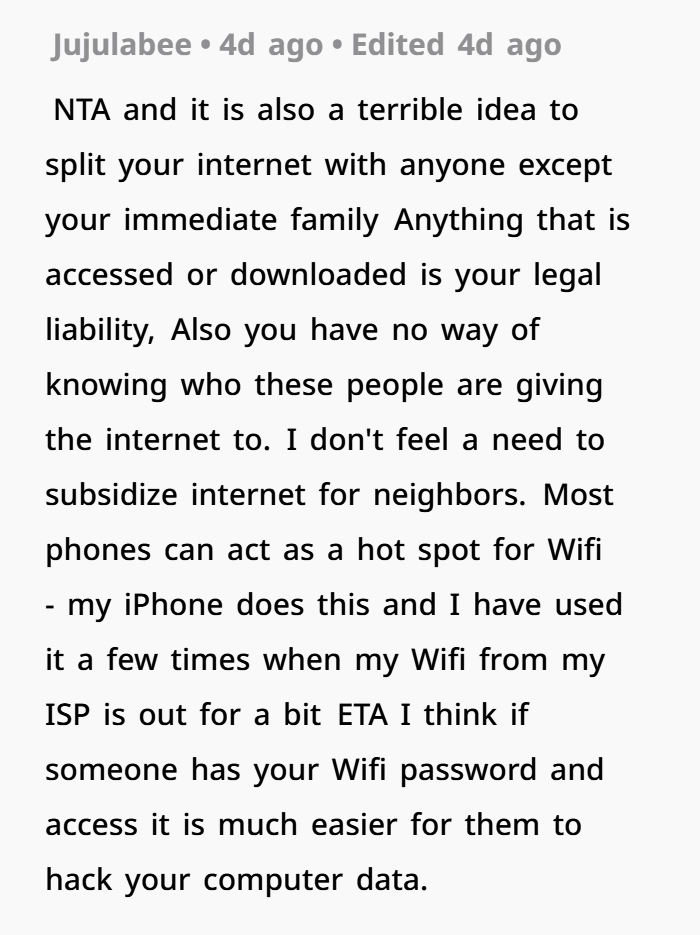
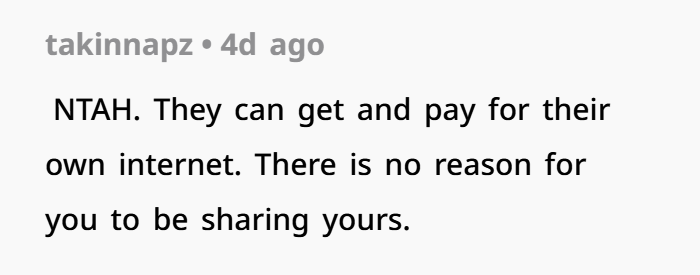
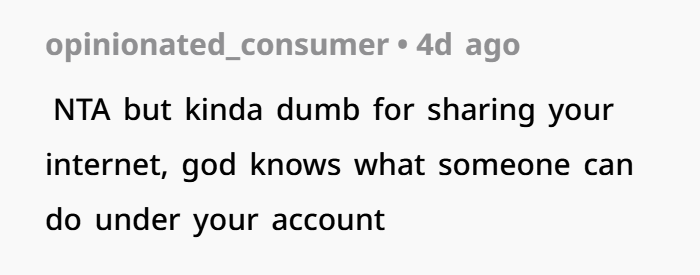
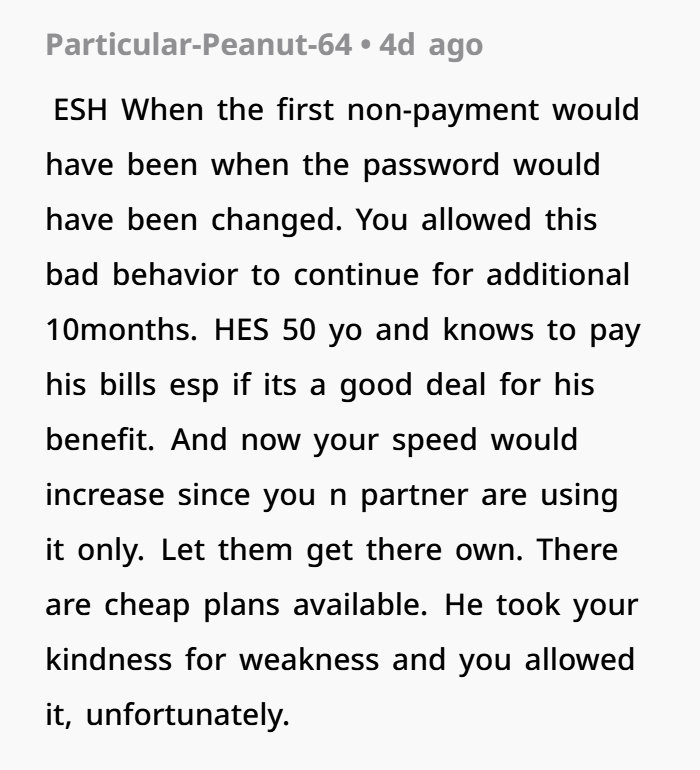
Final Verdict: NTA
The narrator was reasonable to change her WiFi password and end the arrangement.
She was paying for the home internet service and had agreed to share it only because the neighbors were supposed to contribute toward the cost.
After months of inconsistent payments, she did not have to keep providing access.
There were also practical reasons to reconsider the arrangement, including WiFi security, cybersecurity, online privacy, router security, and control over connected devices.
The one thing she should have handled differently was the conversation afterward.
Instead of saying the internet provider had disconnected the service, she could have simply explained that the sharing arrangement was over.
That would have been more honest and would have prevented further confusion.
But that mistake does not mean she has to give the neighbors the new password.
Sharing WiFi was a favor based on an agreement. It was never an unlimited free subscription.
When the agreement stopped working, the narrator had every right to stop sharing her connection.
See The Comments Below