I Almost Died While My Husband Slept—Now I’m Thinking of Leaving Him
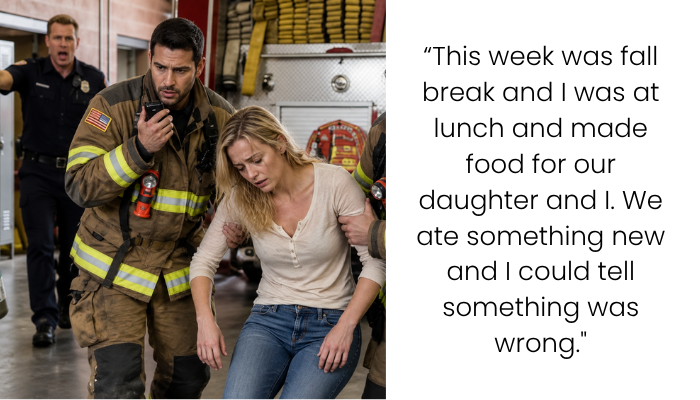
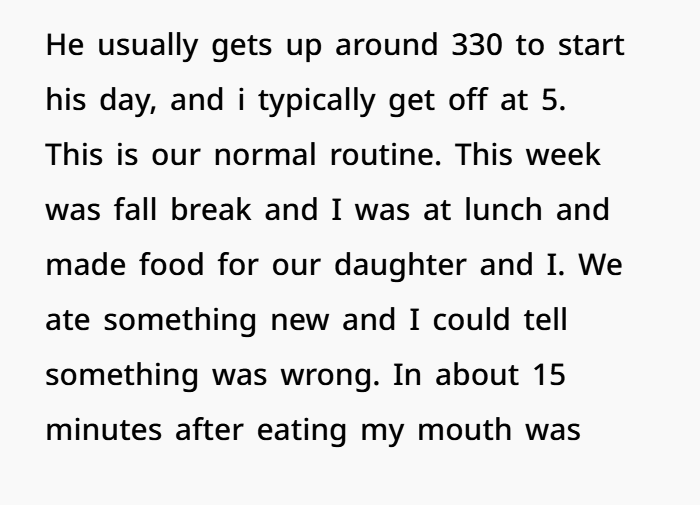
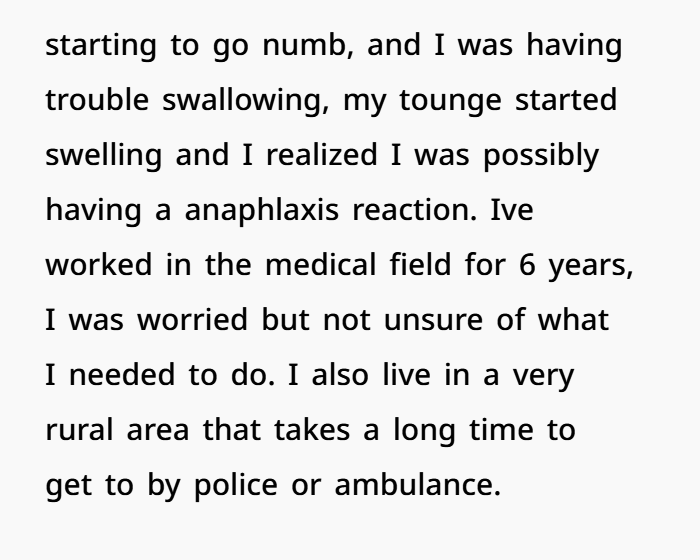
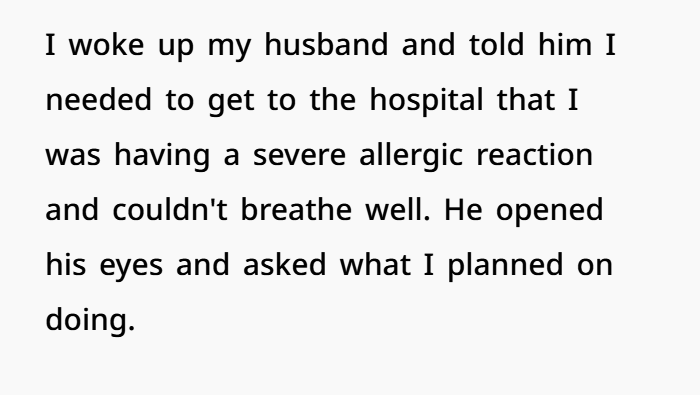
A woman who has been married for more than 11 years is now wondering if she can still depend on her husband. The 31-year-old recently went through a frightening health emergency while working from home with her daughter. She had prepared lunch, but about 15 minutes after eating something unfamiliar, she started feeling strange. Her mouth became numb, her tongue began to swell, and she struggled to swallow and breathe. With six years of medical work experience, she understood that she might be having a serious allergic reaction. She rushed to wake her husband, who had been sleeping after a night shift. But when she told him what was happening, he simply asked what she planned to do.
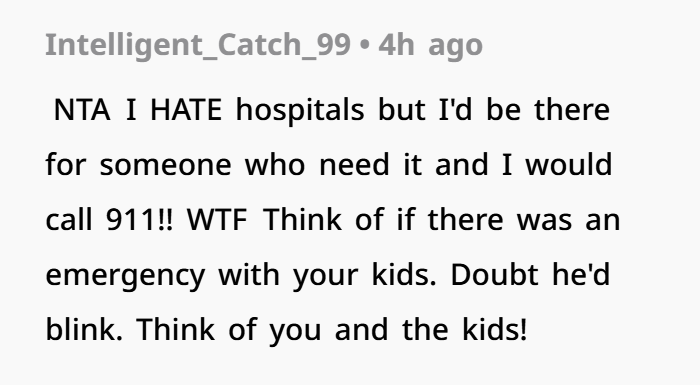
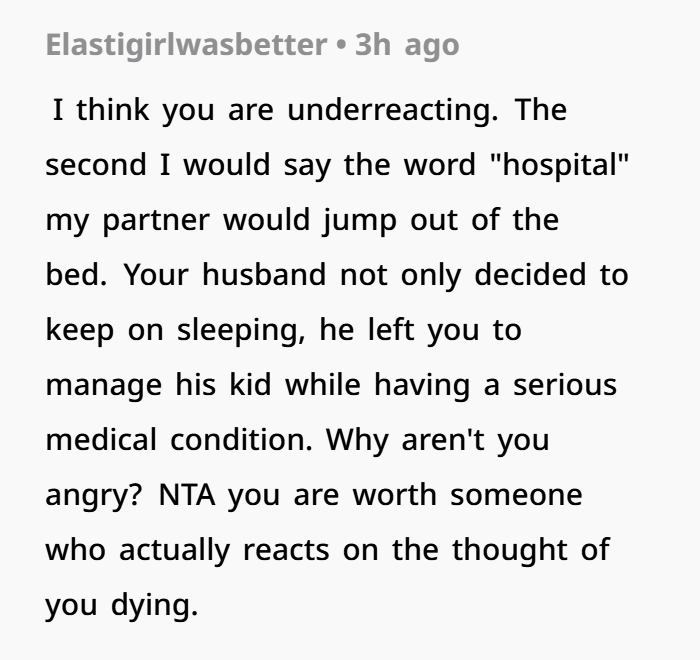
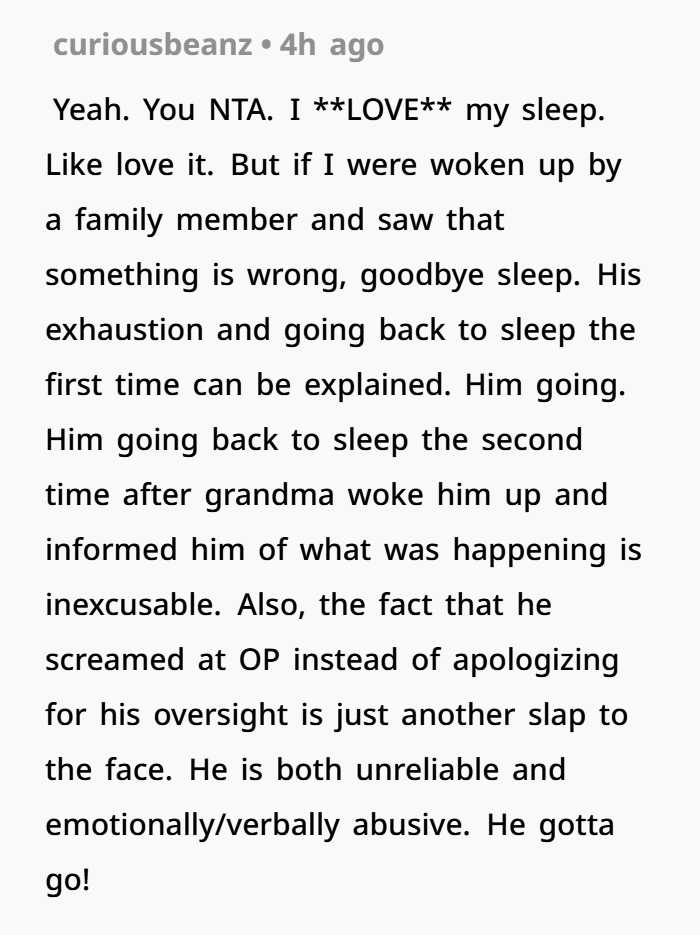
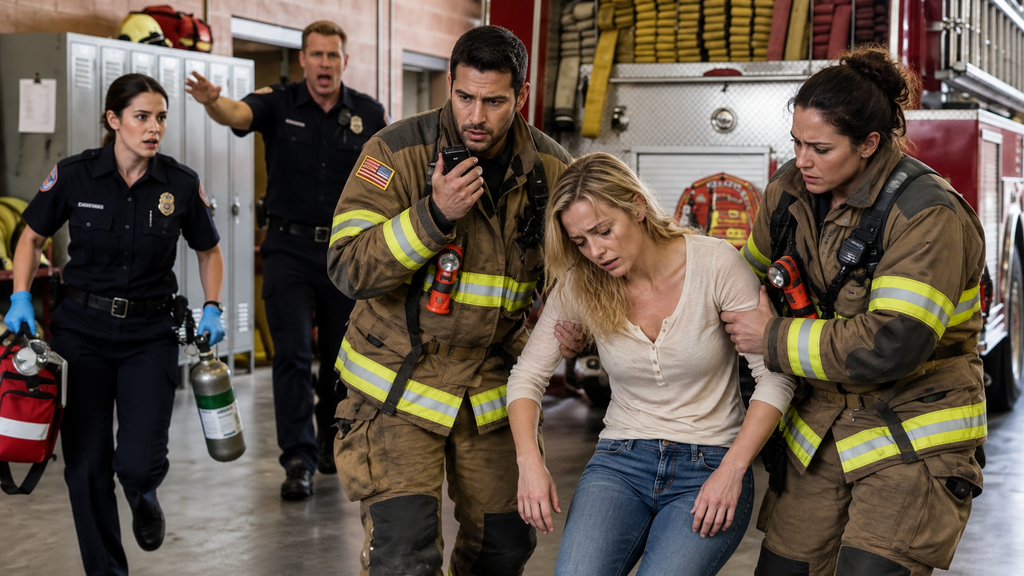
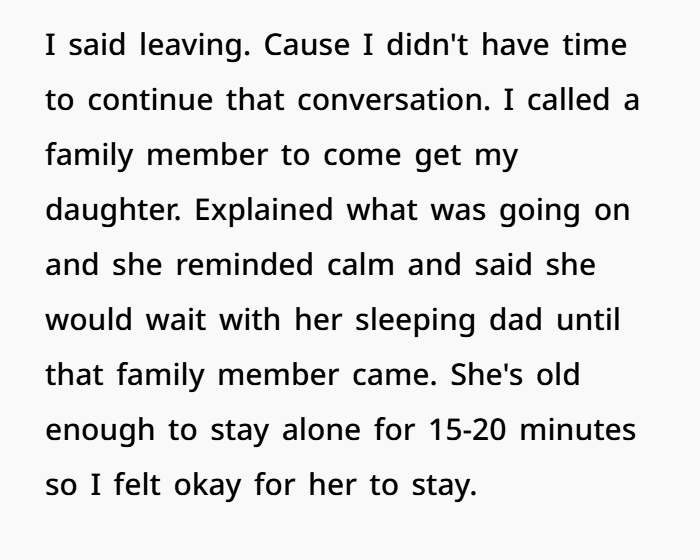
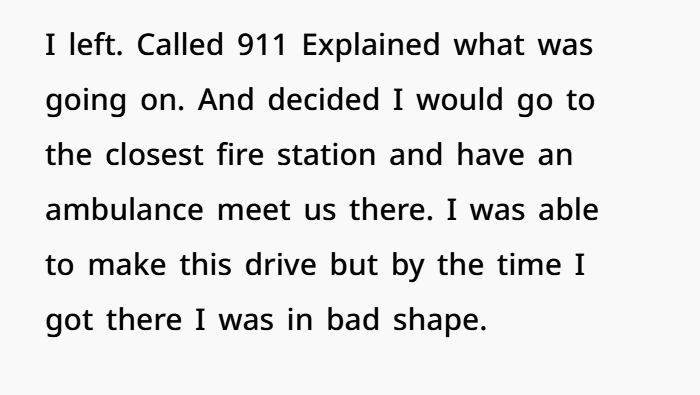
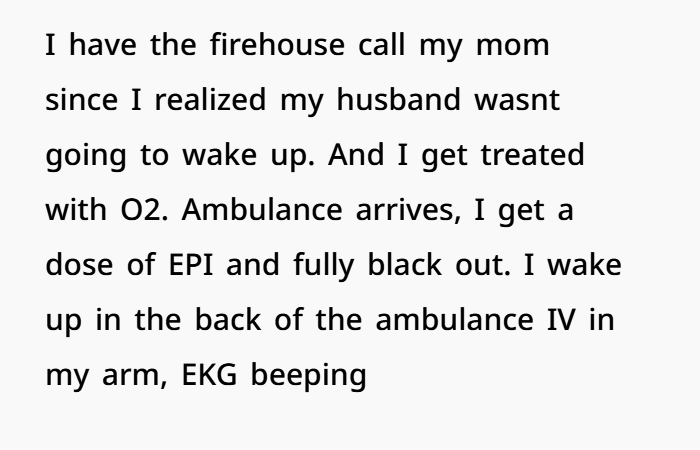
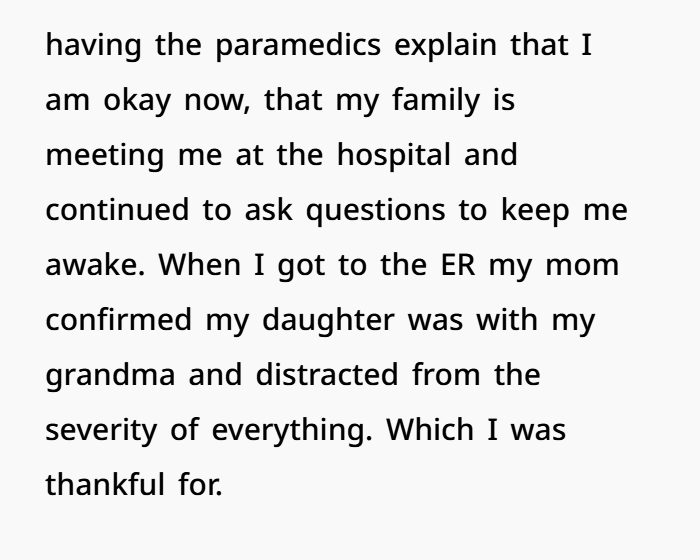
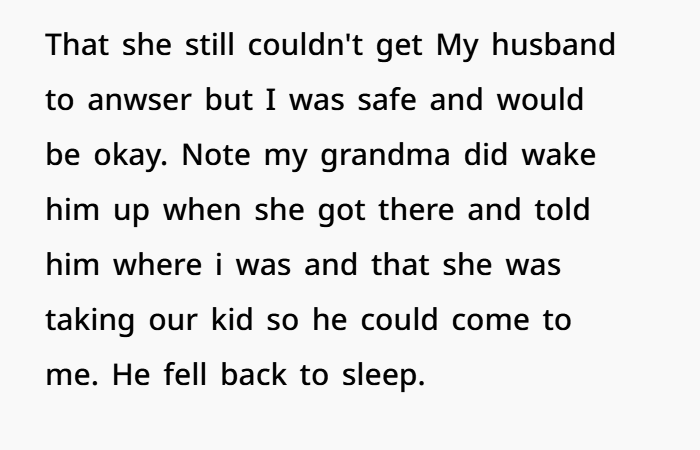
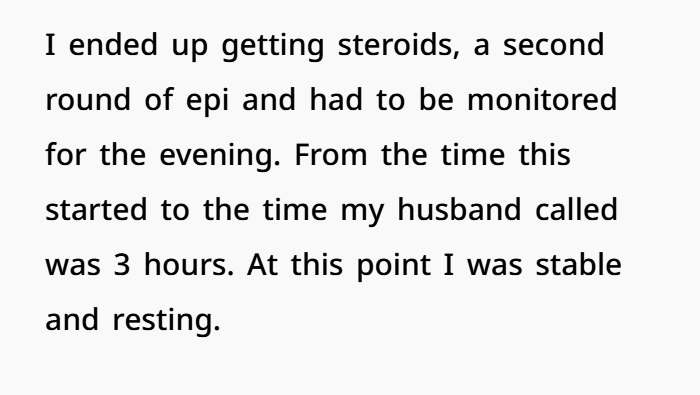
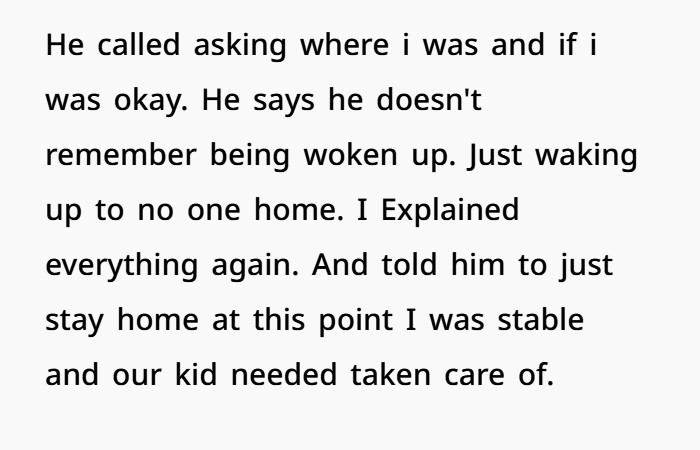
She quickly realized she had to handle the emergency herself. Because their home was in a rural area, she believed waiting for an ambulance could take too long. She called 911, arranged for someone to care for her daughter, and drove toward the closest fire station to meet emergency medical services. When she arrived, firefighters gave her oxygen, and paramedics treated her with epinephrine. She later lost consciousness and woke up inside an ambulance with an IV and heart monitor. Her mother and grandmother were helping with childcare and trying to contact her husband. Her grandmother even went to wake him and explain that his wife needed hospital care. According to the woman, he went back to sleep and only called three hours later to ask where she was.
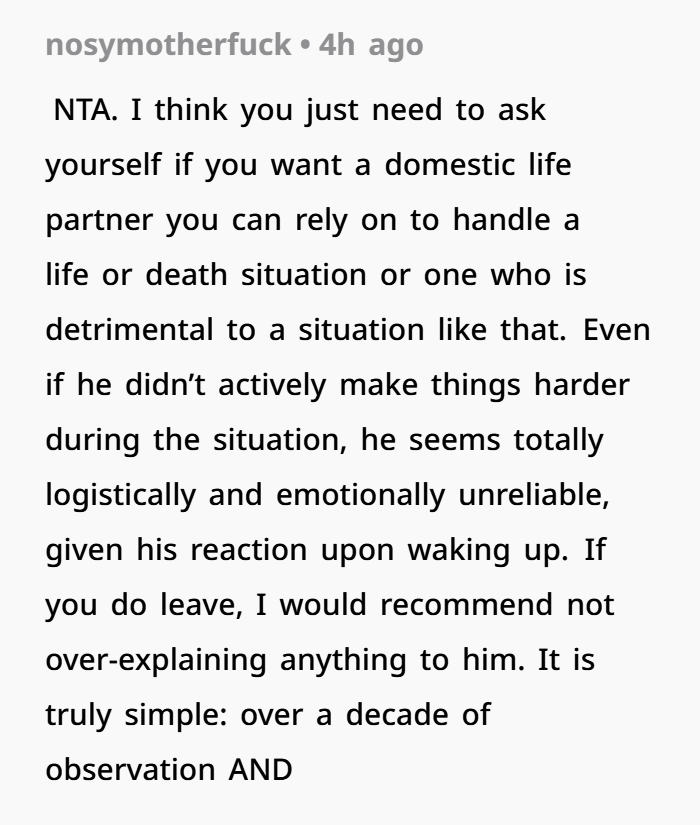
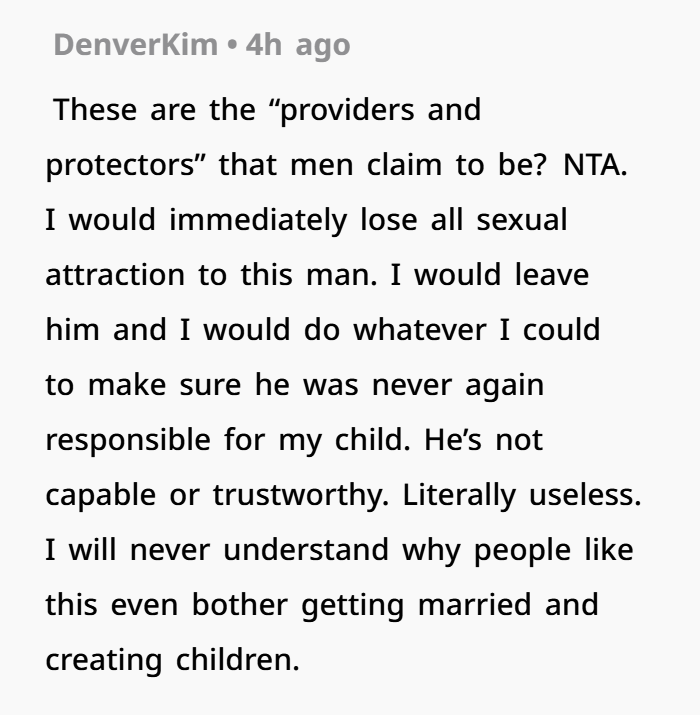
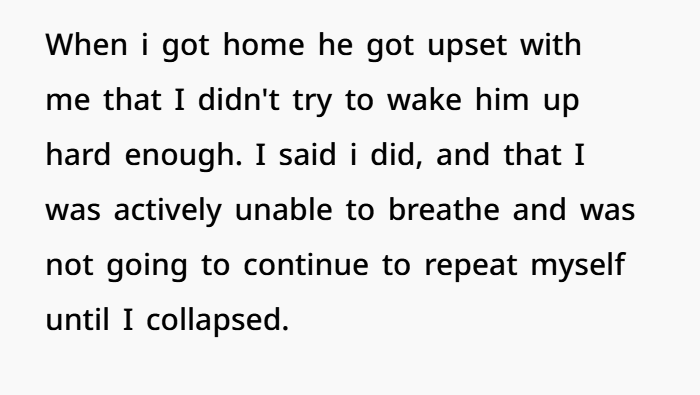
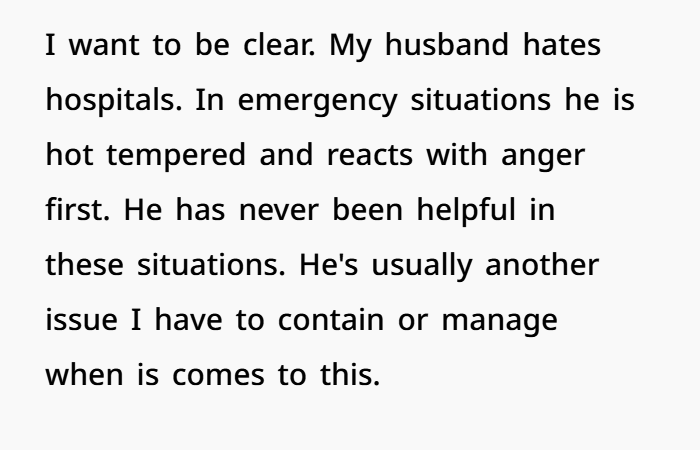
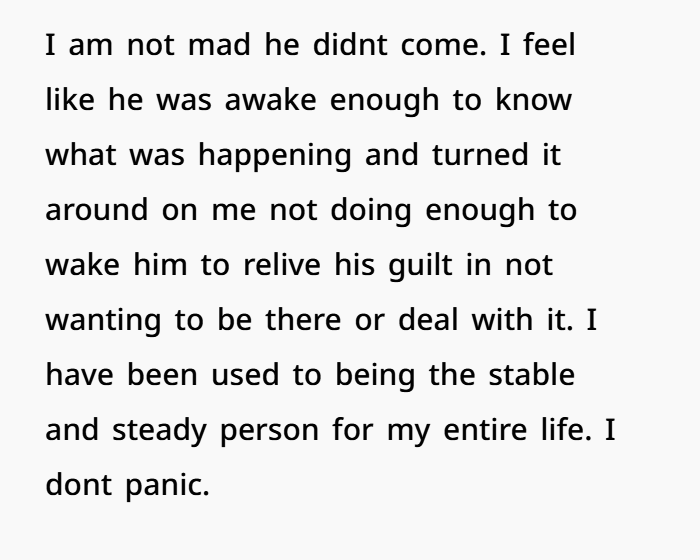
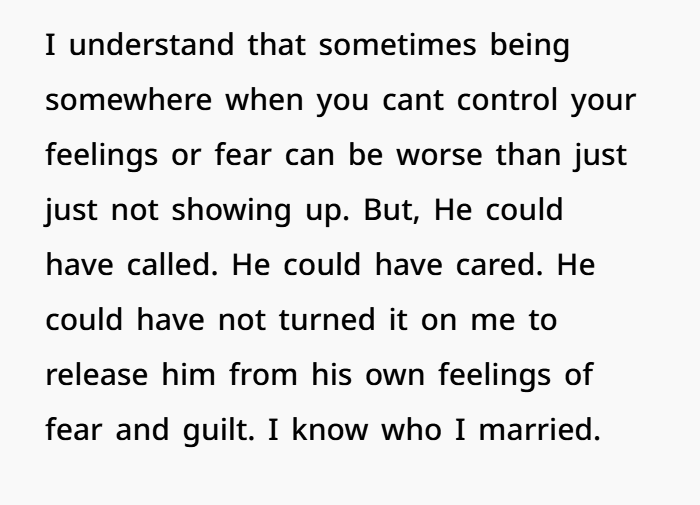
The hardest part came after she returned home. Instead of asking how she felt or showing concern, her husband said she had not done enough to wake him. He claimed he did not remember the emergency and thought she should have made more effort to get his attention. The woman was deeply upset by his response. She explained that he had struggled with stressful medical situations before and often reacted with anger. Over the years, she had become the person who stayed calm, made decisions, and handled family problems. But this time, she had needed someone to support her, and she felt completely alone.
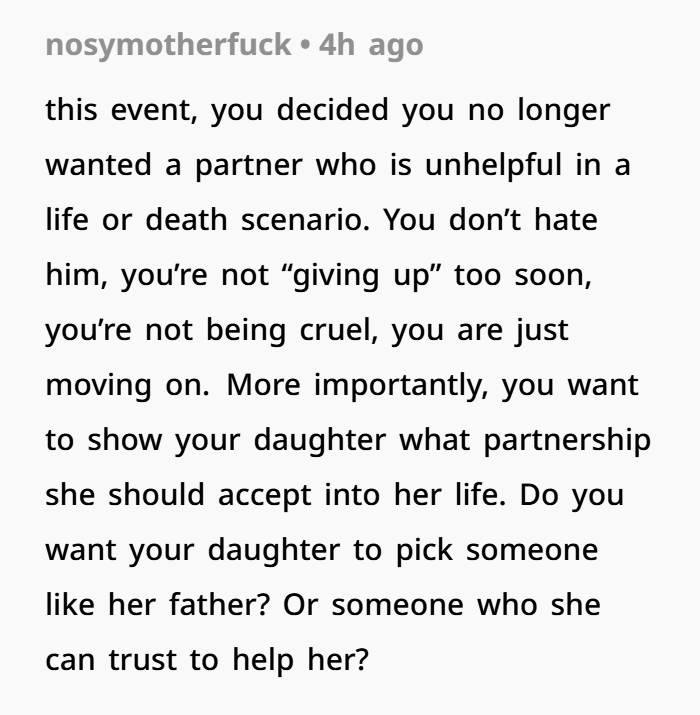
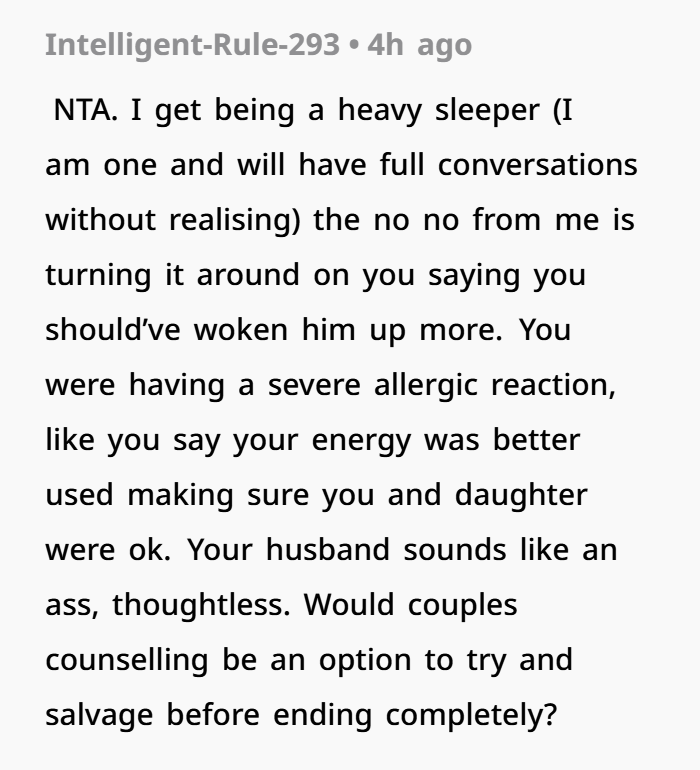
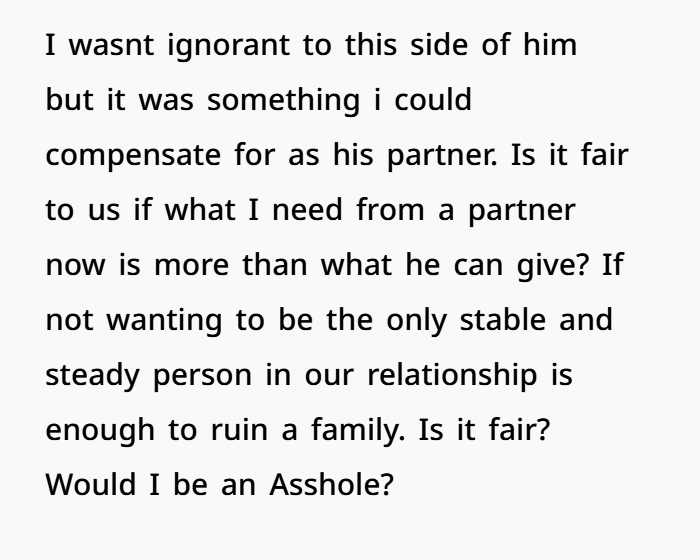
Now she is thinking carefully about her marriage and what she wants for the future. She knows ending an 11-year relationship would be a major change for her family, especially her daughter. Still, she wants a husband she can trust during a medical emergency or other serious situation. She believes healthy relationships need emotional support, responsibility, and honest communication. Marriage counseling might help them discuss these problems, but she is not sure whether she can rebuild her trust. She is left wondering if wanting a dependable partner is enough reason to make a difficult decision about her marriage.
Husband Sleeps Through Wife’s Medical Emergency, Leaving Her Questioning Their 11-Year Marriage
A woman went through a frightening medical emergency while her husband was asleep at home.
She tried to wake him, but he did not seem to understand what was happening.
With her symptoms getting worse, she had to arrange help for herself and make sure their daughter was cared for.
Hours later, her husband finally called to ask where she was.
But the missed phone call was not what hurt her most.
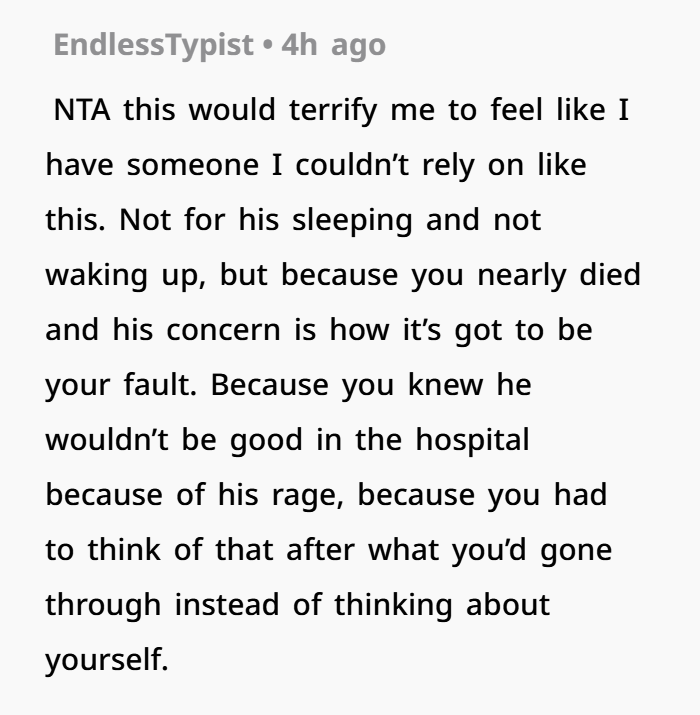
According to her story, he later blamed her for not waking him properly.
Now, after 11 years of marriage, she is wondering whether she can continue being the person who handles every difficult situation alone.
Her experience raises an important question about marriage: What happens when you love someone but do not feel you can depend on them during an emergency?
1. A Normal Day Turned Into a Medical Emergency
The woman says everything started shortly after she ate.
Within about 15 minutes, her mouth began to feel numb.
Then her tongue started swelling, and swallowing became difficult.
She realized something was seriously wrong.
These symptoms can be signs of anaphylaxis, a severe allergic reaction that needs emergency medical care.
Anaphylaxis can affect breathing and blood circulation. Symptoms can become worse very quickly.
The woman tried to wake her husband.
He had been sleeping after working an overnight shift.
When she could not get a useful response from him, she took action herself.
She arranged childcare for their daughter, called 911, and headed toward a nearby fire station.
Emergency workers helped her, and she received epinephrine.
She later lost consciousness and was taken to the hospital.
At the hospital, she received more treatment, including another dose of epinephrine.
She remained there for observation.
According to her account, her husband did not call until about three hours after the emergency began.
By then, she had already gone through an experience that could have ended very differently.
2. Why Severe Allergic Reactions Need Fast Treatment
A severe allergic reaction is not something to ignore.
Symptoms such as tongue swelling, breathing problems, or feeling faint can be signs of a serious emergency.
Epinephrine is the first-line treatment for anaphylaxis.
People who have been prescribed an epinephrine auto-injector should use it promptly when indicated by their allergy action plan and call emergency services.
Other treatments may also be given by medical professionals, but they do not replace epinephrine.
One concerning part of this story is that the woman drove while experiencing serious symptoms.
Although she managed to reach the fire station, driving during suspected anaphylaxis can be dangerous.
A person may suddenly become dizzy, confused, or unconscious.
The safer response is to call emergency services, use prescribed epinephrine promptly when indicated, and follow the dispatcher’s instructions.
For people with known severe allergies, having an emergency allergy plan can be helpful.
This may include keeping prescribed medication available, knowing when to use it, and making sure family members understand what to do.
Regular discussions with an allergy specialist can also help people understand their personal risks and treatment needs.
3. Her Husband’s Night Shift May Explain Some of His Behavior
The husband works overnight and usually gets home around 7:30 in the morning.
He then sleeps during the day.
Night-shift work can be difficult on the body.
Many people who work overnight struggle to get enough quality sleep.
Some experience heavy tiredness, poor concentration, and difficulty waking up.
There is also something called sleep inertia.
This is the confused or groggy feeling that can happen right after waking.
During this time, a person may have trouble thinking clearly or remembering a conversation.
So it is possible that the husband genuinely did not understand what his wife was telling him when she first tried to wake him.
But there is another detail.
The woman’s mother reportedly woke him later and explained that his wife was in the hospital.
She also told him she was taking their daughter so he could go to his wife.
According to the story, he went back to sleep.
We do not know how alert he was during either conversation.
We also do not know whether he has a sleep disorder or was dealing with severe sleep loss.
It would not be fair to make a medical judgment about him based on this account alone.
Still, the wife was left without the support she needed.
And the way he reacted afterward became a separate problem.
4. She Was More Hurt by His Blame Than His Absence
The woman says she understands that her husband was sleeping.
She knows his overnight work schedule is difficult.
She is not simply angry because he missed the hospital visit.
What upset her was the argument that followed.
After returning home from the hospital, she says her husband focused on why she had not tried harder to wake him.
That was painful for her.
She had been struggling to swallow and breathe.
She had arranged care for their daughter.
She had called for emergency help and received serious medical treatment.
Yet she felt she was being asked to explain why she had not done more.
She may have wanted to hear that he was relieved she was safe.
She may have wanted him to ask how she was feeling.
Instead, she felt blamed.
We cannot know exactly what her husband was thinking.
He may have been frightened or embarrassed. He may have reacted poorly because he did not know how to handle what happened.
But those possibilities do not change how his wife experienced the conversation.
Emotional support in marriage matters, especially after a frightening event.
Sometimes, a few caring words can make a person feel less alone.
5. She Has Been the Strong One for Years
The medical emergency seems to have brought up feelings that were already there.
The woman describes herself as the dependable person in the relationship.
She is used to staying calm, making decisions, and solving problems.
She also says her husband has never been particularly good at handling medical emergencies.
For years, she accepted that difference.
When something went wrong, she handled it.
When he became upset or overwhelmed, she tried to remain calm.
Over time, this became their normal way of dealing with difficult situations.
But there is a difference between being capable and wanting to do everything alone.
A person can be strong and still need help.
The woman seems to have reached a point where she no longer wants to carry every responsibility herself.
This is sometimes connected to the mental load in marriage.
The mental load includes remembering tasks, making plans, managing problems, and keeping track of what the family needs.
When one person carries too much of that responsibility, the relationship can start to feel unequal.
The woman is now questioning whether that has happened in her marriage.
6. Can a Marriage Work When One Person Struggles During Emergencies?
Not everyone reacts to emergencies the same way.
Some people stay calm and know what to do.
Others freeze, panic, or struggle to make decisions.
That does not automatically mean they are uncaring partners.
But couples still need to prepare for situations where someone may need urgent help.
In this case, the husband already had a history of struggling with emergencies.
That makes planning even more important.
The couple could create a family emergency plan that explains who to call, who can care for their daughter, and what to do if one partner needs medical treatment.
They could also keep important medical information in an easy-to-find place.
If the husband regularly has trouble waking up, speaking with a healthcare professional about sleep concerns may be useful.
But planning alone will not fix everything.
The woman also needs her husband to understand how frightened and unsupported she felt.
She wants him to take her concerns seriously.
Without that understanding, even a detailed emergency plan may not rebuild her trust.
7. Marriage Counseling May Help Them Talk About the Bigger Problem
After 11 years together, ending a marriage is not a small decision.
There may be shared responsibilities, financial concerns, family routines, and years of memories.
The woman may want to explore whether the relationship can improve before deciding what to do.
For some couples, marriage counseling or couples therapy can help with difficult conversations.
A qualified counselor may help partners discuss communication problems, emotional needs, and unequal responsibilities.
The goal is not to decide which person wins an argument.
It is to understand what each partner needs and whether both are willing to make changes.
In this situation, the husband would need to hear that his wife is not simply upset about one missed hospital visit.
She is worried about a much bigger pattern.
She wants to know that when she cannot handle everything, he will make an effort to help.
Counseling cannot guarantee that a marriage will improve.
But if both people are willing to listen and take responsibility for their actions, it may provide a useful starting point.
8. Their Daughter Makes the Situation More Difficult
The couple also has a daughter.
That makes the woman’s decision even more emotional.
She worries about what might happen to their family if the marriage ends.
Many parents feel this way when they face serious relationship problems.
They want their children to feel safe, loved, and supported.
But a child’s well-being depends on more than whether the parents live in the same home.
Children benefit from stable routines, caring adults, and respectful communication.
Staying married does not automatically mean everything will be healthy.
And separating does not automatically mean a child will have an unhappy future.
Every family situation is different.
In this story, the woman arranged childcare while dealing with a medical emergency.
Her relatives also stepped in to help.
That support mattered.
Whether the couple stays together or not, having trusted people available during emergencies will remain important for their daughter.
9. Why Families Should Prepare for Medical Emergencies
This story is also a reminder that emergencies can happen when people least expect them.
A simple family emergency plan can help reduce confusion.
Families can keep emergency phone numbers, allergy information, medication lists, and childcare contacts in one place.
They can also discuss what should happen if a parent becomes ill while the other parent is at work or asleep.
For people with severe allergies, prescribed emergency medication should be kept accessible according to their healthcare professional’s instructions.
It is also helpful for household members to understand when to call emergency services.
A plan cannot prevent every problem.
But it can make it easier for family members to respond when time matters.
Medical emergencies can also affect family finances
Unexpected medical treatment can create financial pressure.
Ambulance services, hospital care, follow-up appointments, and prescription medications may involve costs.
For families in the United States, understanding health insurance coverage, emergency room costs, and out-of-pocket medical expenses can help with financial planning.
An emergency savings fund may also help cover unexpected bills or missed work.
The story does not say whether this woman faced medical debt or insurance problems.
These are general planning considerations, not reported problems in her case.
Still, reviewing health coverage and emergency savings can be a useful part of preparing for unexpected events.
10. Is She Wrong for Wanting More After 11 Years?
The woman says she knew her husband struggled with emergencies when they married.
For a long time, she believed she could manage that part of their relationship.
She was comfortable being the calm one.
But surviving a serious medical emergency changed how she felt.
She realized that there may be times when she cannot be the person who solves every problem.
She may need someone else to take charge.
She may need comfort instead of criticism.
And she may need to know that her husband is willing to help, even when a situation is difficult for him.
People’s needs can change over time.
Something that seemed manageable at the beginning of a marriage may feel different years later.
That does not automatically mean the marriage must end.
But it does mean the couple may need to have an honest conversation about what is no longer working.
The story does not provide enough information to decide whether separation is the right choice.
That is a personal decision the woman must make based on her full relationship, her safety, and her family’s needs.
What is clear is that she wants to feel supported.
And that concern deserves attention.
Final Thoughts: Even the Strongest Partner Needs Support
This woman’s medical emergency was frightening enough on its own.
She experienced serious symptoms, needed emergency treatment, and spent time in the hospital.
Her husband’s overnight work schedule may help explain why he struggled to wake up.
But the argument afterward left her feeling even more alone.
She says she has spent years being the dependable person in her marriage.
Now, she is wondering whether she can continue carrying that responsibility without more support.
The relationship may still have a path forward if both partners are willing to communicate, prepare for future emergencies, and work on the problems she describes.
But after 11 years, she is also allowed to think about what she needs from her marriage.
Being strong does not mean a person should have to face every difficult moment alone.
Sometimes, the person who takes care of everyone else needs someone to take care of them too.
Comments You Can’t Miss