My Girlfriend Takes Half My Salary Every Month, Threatens My Career, and Turns Aggressive When I Try to Stop Paying Her

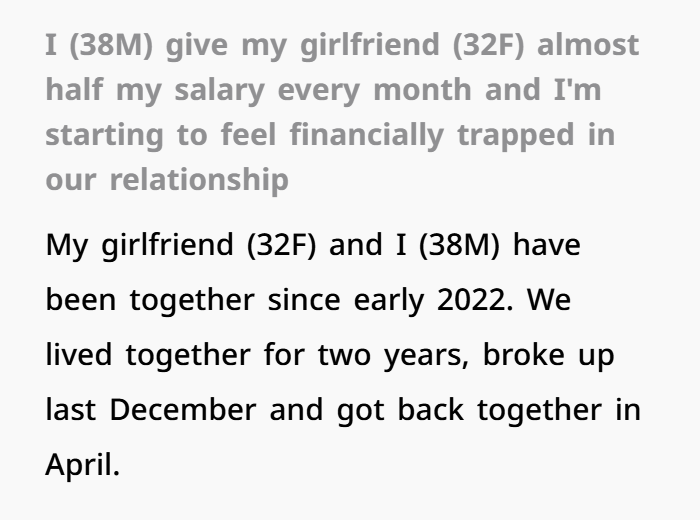
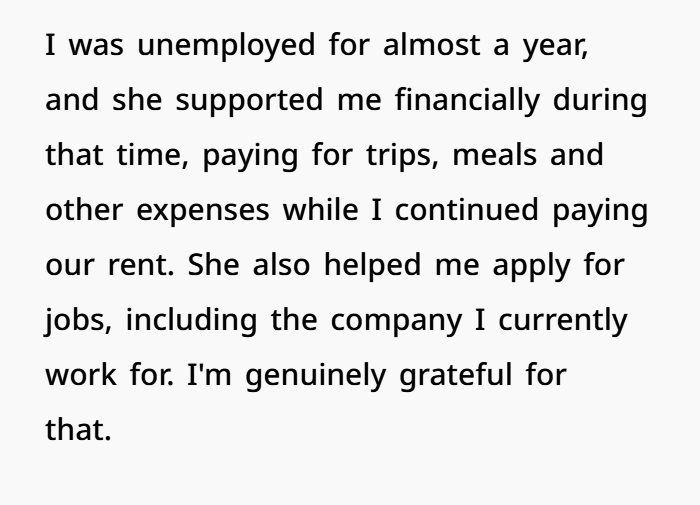
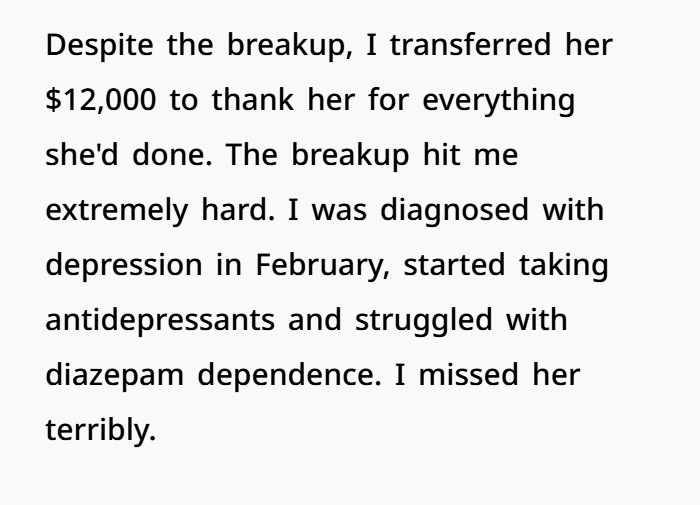
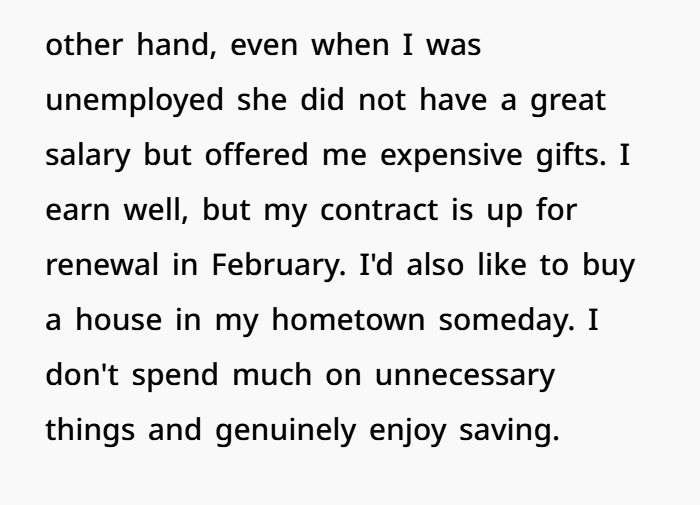
A man has started wondering whether his relationship has become unfair, especially when it comes to money. He is 38, and his girlfriend is 32. They started dating in 2022 and briefly separated before getting back together in April. During a time when he was out of work for almost a year, she helped him financially. She paid for meals, trips, and other expenses while he continued covering his rent. She also helped him with job applications, which played a part in helping him find his current job. After their first breakup, he gave her $12,000 because he appreciated everything she had done for him.
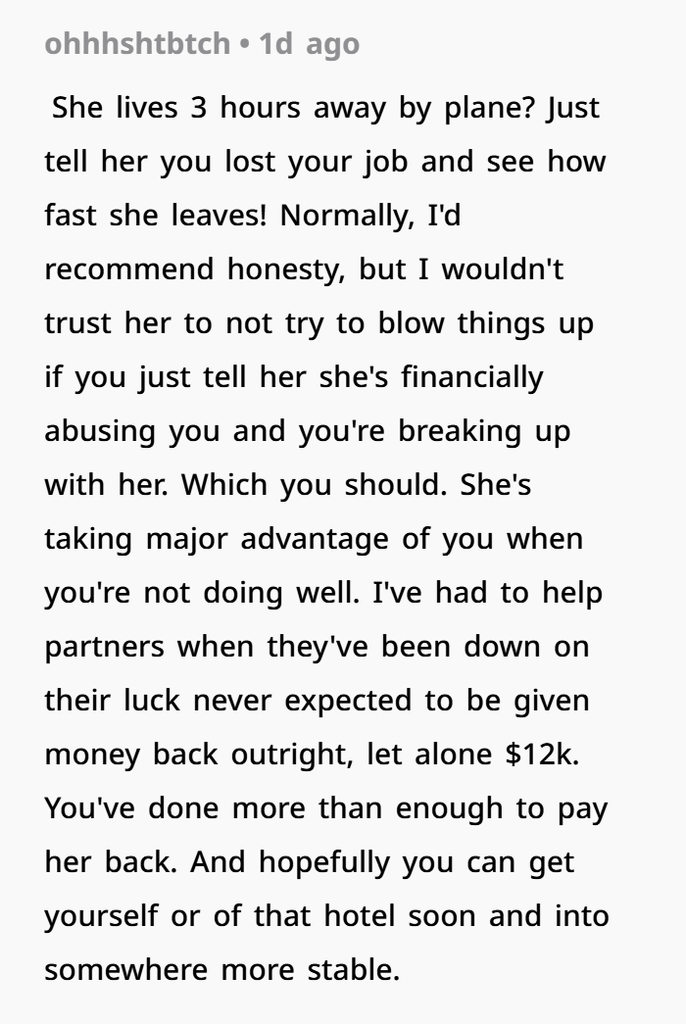
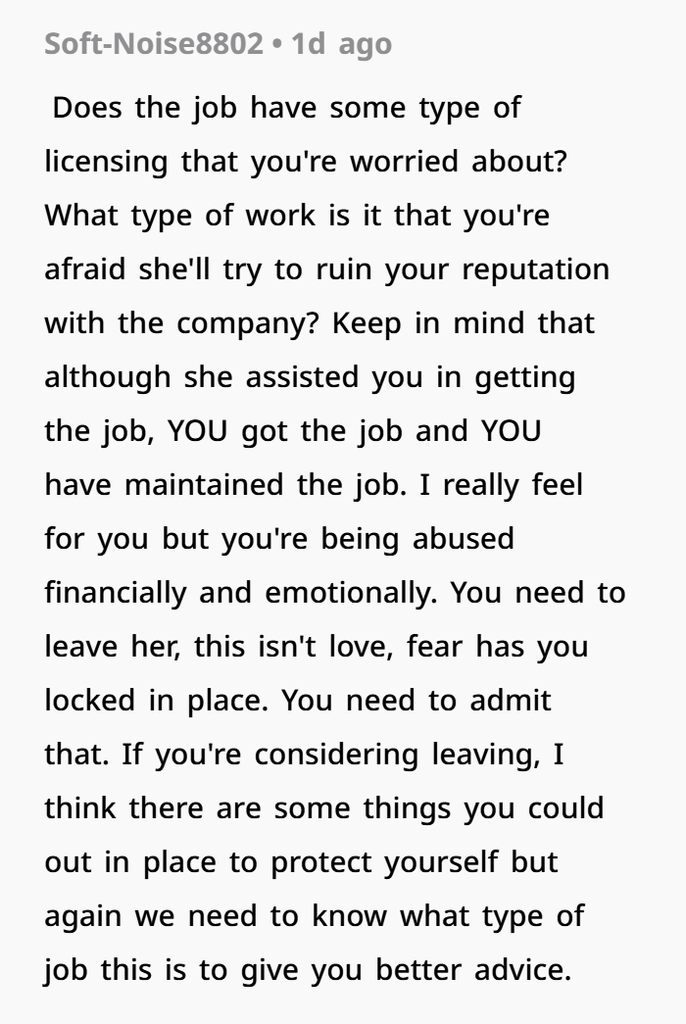
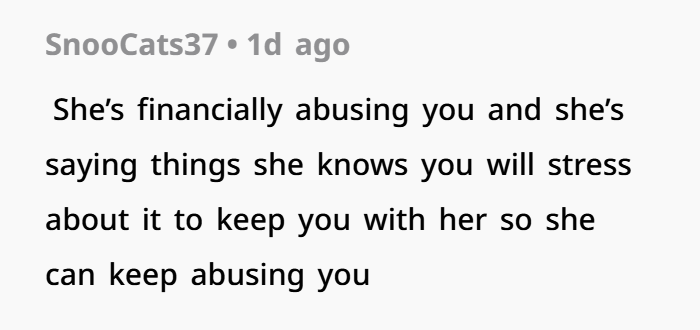
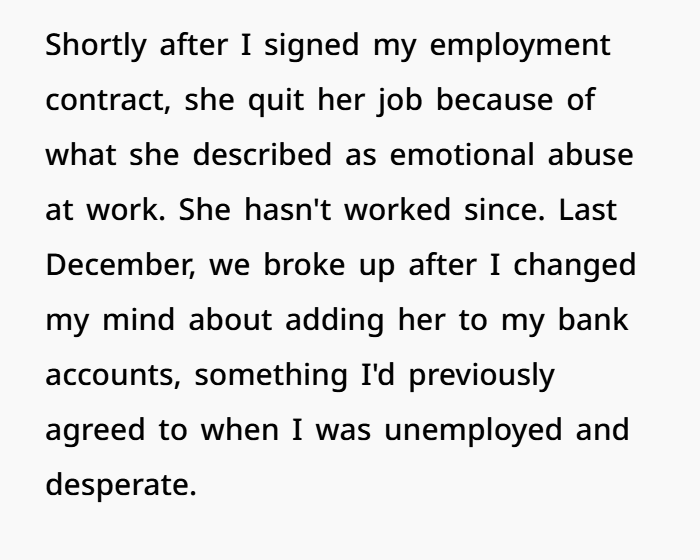
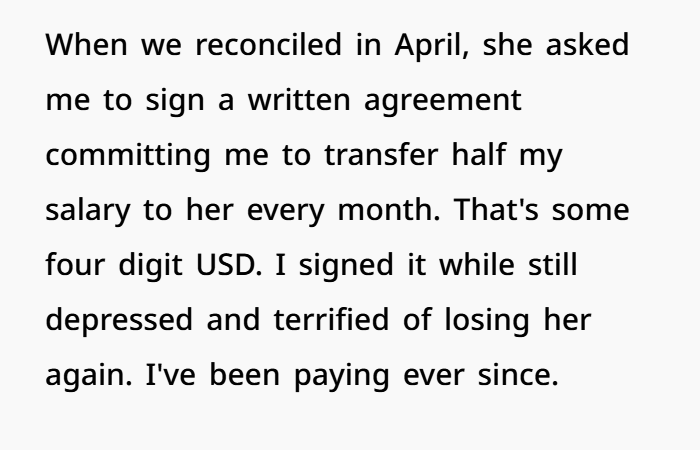
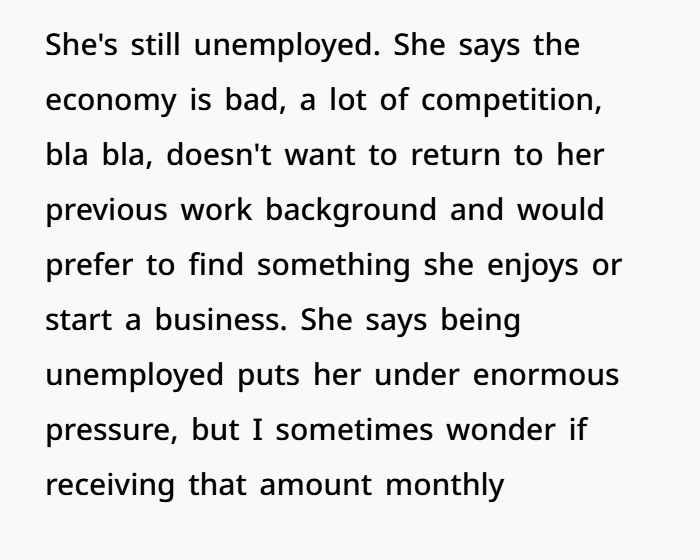
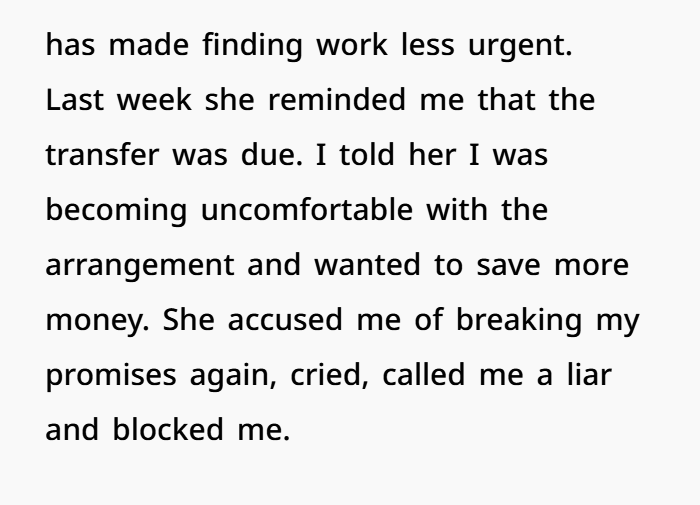
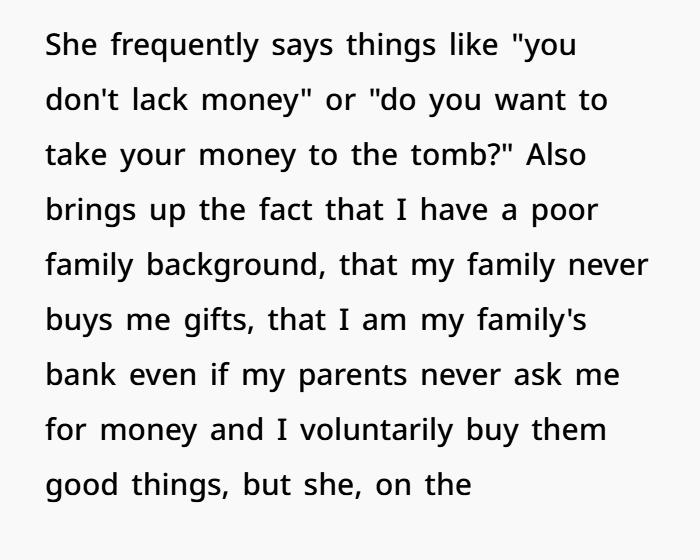
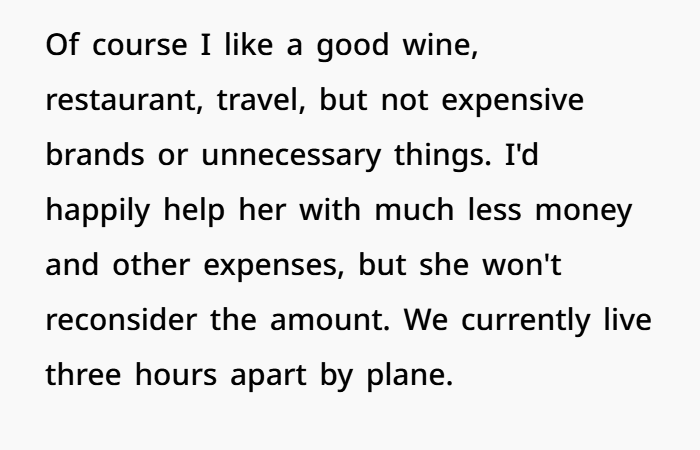
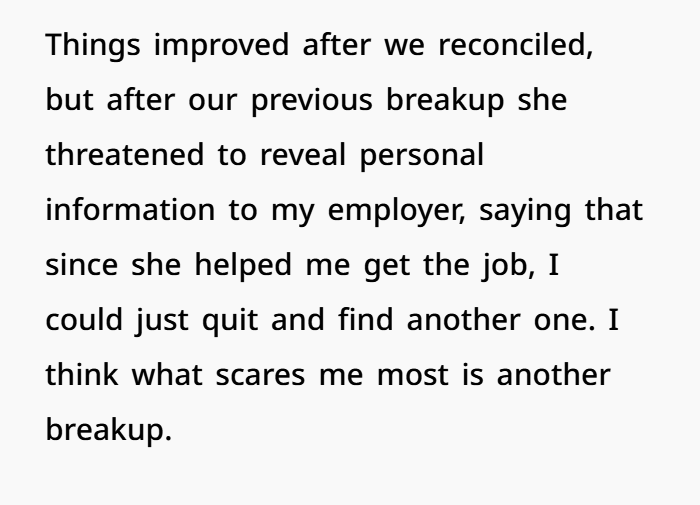
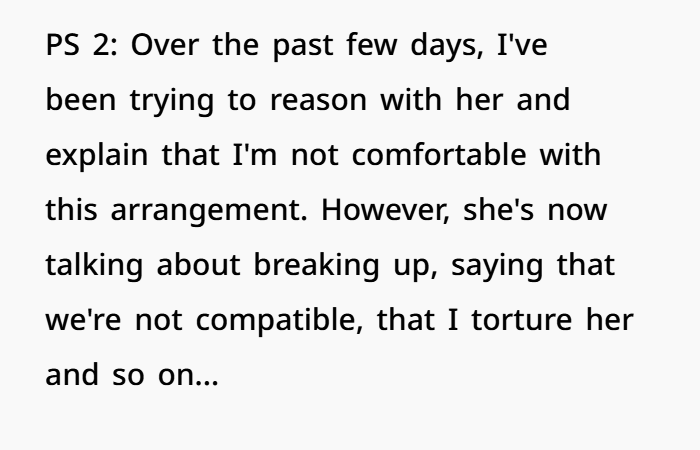
When they decided to try again, she asked him to agree to a written payment arrangement. Under the agreement, he would transfer almost half of his monthly salary to her. He accepted because he was worried about losing her again and was going through a difficult time emotionally. But as the months passed, he started thinking about his own financial goals. He wanted to build savings, secure his employment contract, and work toward buying a house. His girlfriend, who was still unemployed, refused to discuss changing the agreement. Their conversations about money often ended with accusations and threats of another breakup.
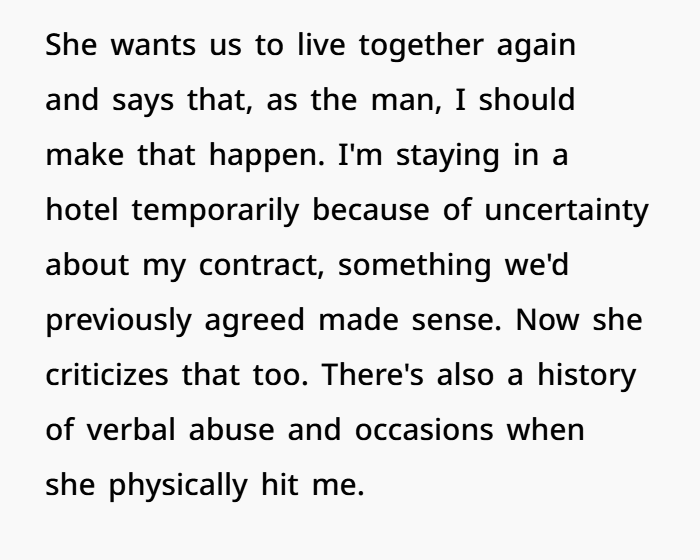
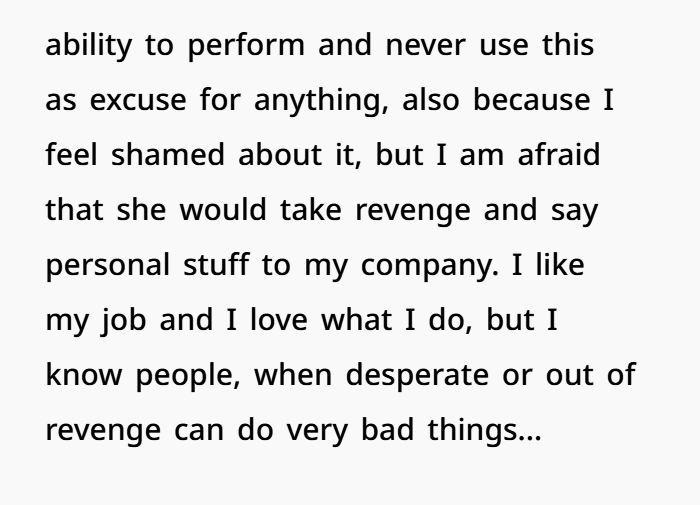
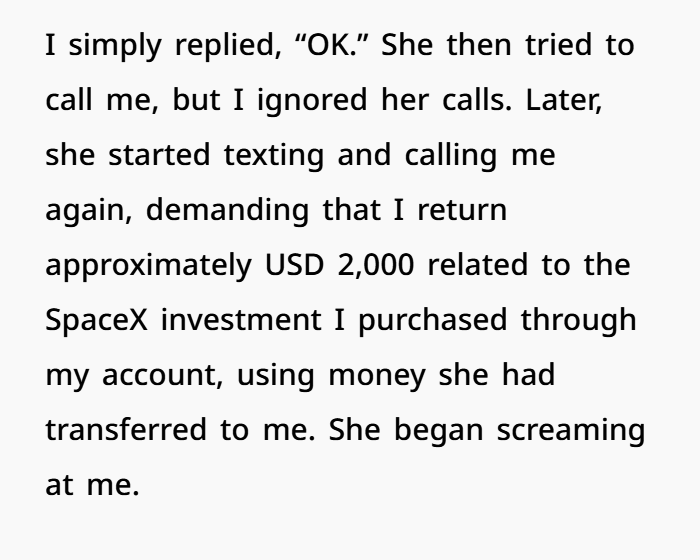
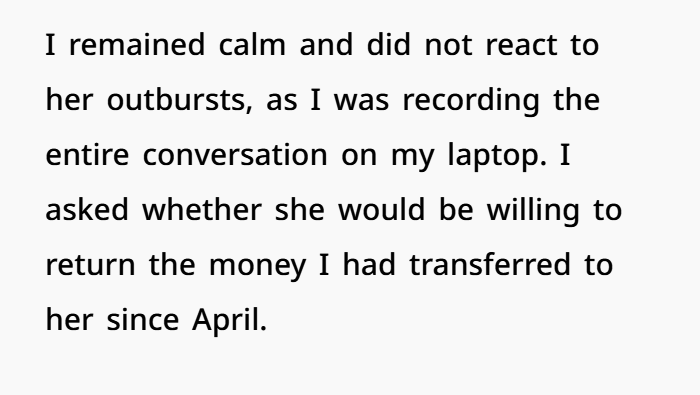
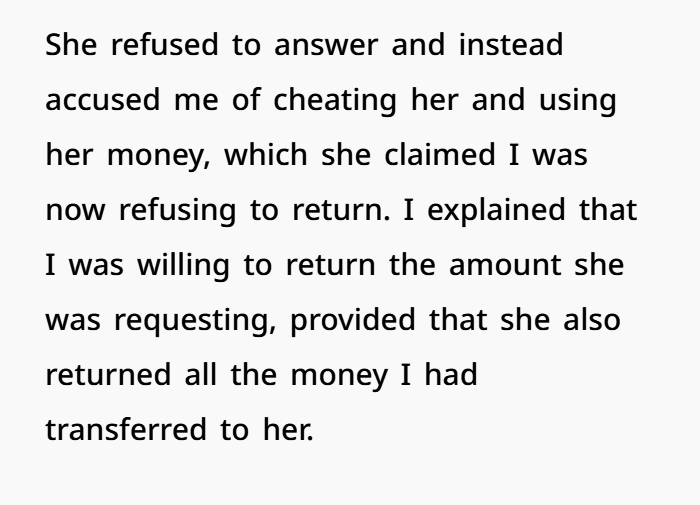
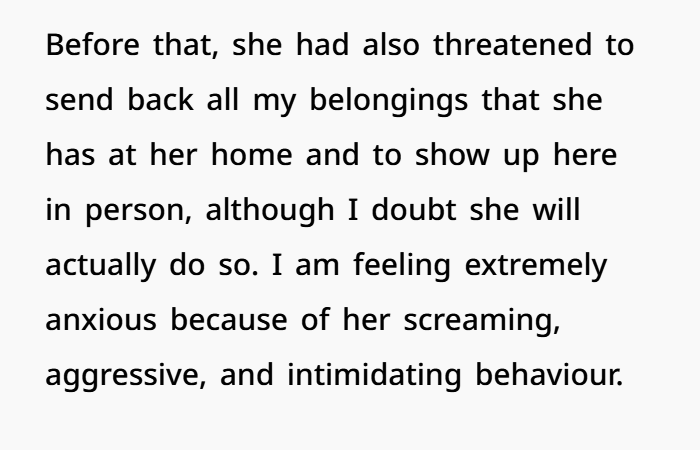
He also explained that their problems were not only about finances. He described past arguments involving hurtful words, physical behavior, and threats to share private details with his employer. These experiences made him worried about his job and personal safety. The situation became more difficult when his girlfriend demanded about $2,000 connected to a SpaceX investment made through his account. He asked her to discuss the money he had been sending her since April, but she accused him of taking advantage of her and threatened legal action instead.
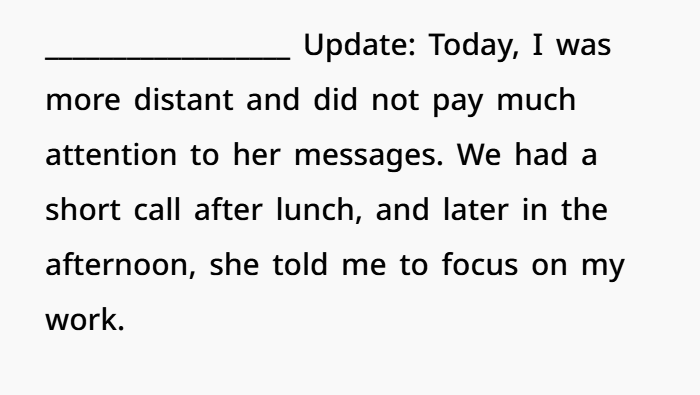
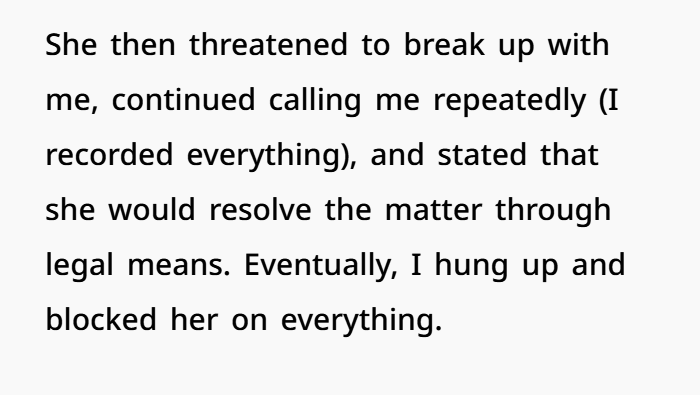
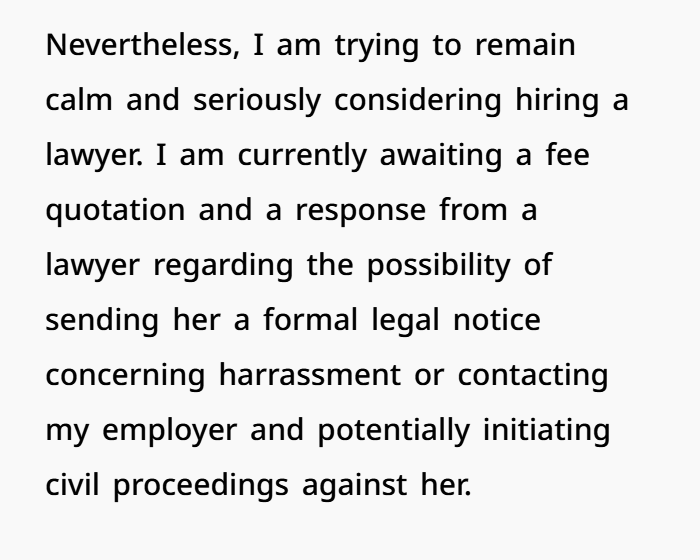
After another difficult conversation, he decided to stop responding to her messages, recorded their confrontation, and blocked her on different platforms. He is now considering getting legal advice about the financial agreement, the investment, and his concerns about unwanted contact. He also wants to protect his employment and future financial stability. Now he is asking himself whether his girlfriend’s behavior has changed because he is finally trying to manage his own money and establish healthy boundaries in the relationship.


Financial Abuse and Coercive Control: Understanding the Warning Signs in Relationships
Financial problems can put pressure on any relationship. Couples may disagree about bills, savings, monthly expenses, or how money should be shared.
However, there is a difference between a normal disagreement about finances and a situation where one person feels controlled by the other.
This story highlights several concerns involving financial pressure, emotional stress, and personal safety. A man describes feeling obligated to transfer a large part of his salary to his girlfriend, even though his financial situation has changed.
He also reports threats, physical aggression, and repeated arguments when he tries to question their financial arrangement.
These experiences raise important questions about financial abuse, coercive control, and the support available to people experiencing unhealthy relationship behavior.
1. Understanding Financial Abuse and Economic Control
Financial abuse is a form of controlling behavior that involves money, income, or other financial resources.
It can happen when one partner tries to control how the other person earns, spends, saves, or uses their money.
Not every financial arrangement between couples is abusive. Many partners willingly share their income, divide household expenses, or provide financial support during difficult times.
The important difference is whether both people have a genuine choice.
The United Nations recognizes economic abuse as behavior that can create financial dependence by limiting access to money and resources.
The Australian Attorney-General’s Department also describes economic abuse as a pattern of behavior that can restrict someone’s ability to acquire, use, or maintain financial resources.
In this story, the man reports several behaviors that deserve attention:
- His girlfriend expects him to transfer almost half of his monthly salary.
- She is reportedly unwilling to reconsider the arrangement when his circumstances change.
- She reminds him of previous promises when he questions the payments.
- She criticizes his financial decisions.
- She has reportedly threatened his professional reputation.
- He feels uncomfortable making independent financial decisions.
These concerns do not automatically prove financial abuse under the law. However, they may indicate an unhealthy pattern, especially when combined with reports of physical aggression and intimidation.
2. Domestic Abuse Can Affect People of Any Gender
Domestic abuse is often discussed in the context of women experiencing violence. However, men can also experience abuse in intimate relationships.
The Centers for Disease Control and Prevention (CDC) recognizes intimate partner violence as a problem that can affect people of different genders.
It can involve physical violence, psychological aggression, stalking, and controlling behavior.
In this case, the man reports being physically hit, verbally mistreated, and threatened during disagreements.
These experiences should not be ignored.
A person’s gender does not determine whether their experiences deserve attention or support. Physical aggression and intimidation are serious concerns regardless of who is responsible.
People experiencing domestic abuse may also feel embarrassed about asking for help. This can make it harder to discuss their situation with friends, family members, or professionals.
Access to appropriate domestic violence support and confidential guidance can help people understand their options.
3. The Connection Between Emotional Dependence and Financial Decisions
The man’s fear of another breakup is one of the most important details in this story.
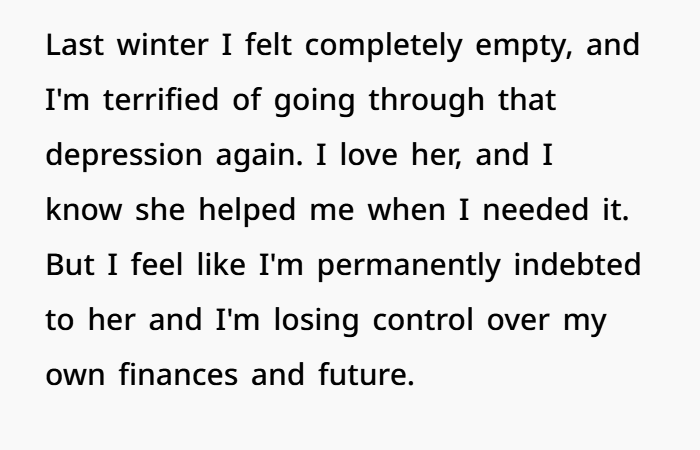
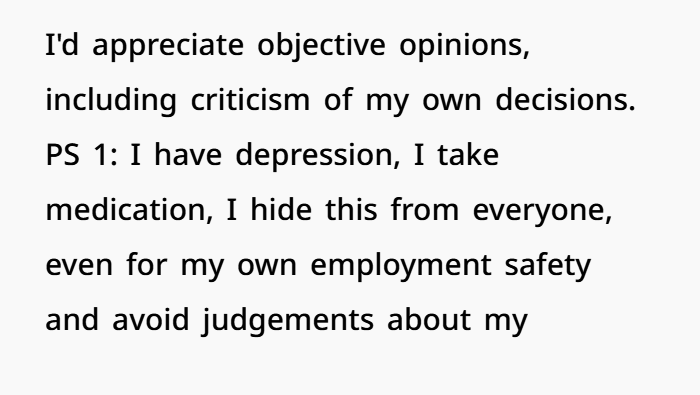
He explains that their previous separation had a serious effect on his mental health. He experienced depression, required medication, and struggled with diazepam dependence.
After the couple reunited, he agreed to transfer half of his salary to his girlfriend.
He believes his fear of experiencing the same emotional pain again influenced his decision.
This shows how emotional stress can affect financial choices.
When someone becomes deeply afraid of losing a relationship, they may find it difficult to say no. They may agree to financial arrangements that do not suit their circumstances or avoid conversations that could create conflict.
They may also put their own needs aside to keep the relationship stable.
This does not mean the person lacks strength or independence. Emotional attachment can make difficult decisions harder, especially when someone has already experienced significant mental health challenges.
Professional mental health support may help him understand his feelings and make decisions without being overwhelmed by fear.
Because he has a history of depression and medication dependence, it is important to remain in contact with his healthcare provider. Any concerns about diazepam or other prescribed medication should be discussed with a qualified doctor. Medication should not be stopped or changed without appropriate medical guidance.
4. Setting Financial Boundaries in a Relationship
Healthy relationships allow both partners to discuss money openly.
Income, savings, debt, household expenses, and personal spending should be handled through clear communication.
Financial boundaries are not necessarily a sign of selfishness. They help people understand what they can afford and what financial responsibilities they have agreed to accept.
In this situation, the man believes his girlfriend became more aggressive after he started questioning the monthly transfers.
According to his account, she accused him of breaking his promises, threatened another breakup, and became upset when he stopped responding to repeated calls.
There was also a disagreement involving money connected to an investment.
We cannot determine her intentions based on one person’s description. However, repeated threats and intimidation should not be treated as normal ways to resolve financial disagreements.
The UK Crown Prosecution Service recognizes that domestic abuse can include psychological and financial behavior intended to control another person.
The focus should remain on the reported actions, the wider circumstances, and any available evidence.
5. Legal Rights and Financial Responsibilities: Understanding the Agreement
The financial arrangement includes several separate issues.
The man reportedly gave his girlfriend $12,000 after their first breakup as a way of thanking her for previous financial support.
After they reconciled, he signed a written agreement to make monthly payments.
There is also an investment worth approximately $2,000 connected to SpaceX.
These details may have different legal implications.
A lawyer would need to review the documents and applicable local laws before explaining what either person is legally entitled to receive.
Some important questions include:
Was the $12,000 a gift or a repayment?
The wording of messages, payment records, and any written agreement may help establish what the payment was intended to cover.
Is the monthly payment agreement legally binding?
The exact terms, signing circumstances, and applicable contract law may affect whether the arrangement can be enforced.
Who owns the investment?
The account registration, purchase records, and investment documents may help establish ownership.
What happens if someone threatens professional retaliation?
If there are threats involving an employer or private information, a lawyer can explain possible legal protections.
It is important not to assume that a signed agreement is automatically invalid because someone felt emotional pressure. It is equally important not to assume that every signed condition is automatically enforceable.
Independent legal advice is the best way to understand these issues.
6. Important Steps for Financial Protection and Personal Safety
When someone is dealing with financial pressure and relationship conflict, practical planning can make a difference.
The following steps may help:
Review personal bank accounts.
Check account access, update passwords, and enable two-factor authentication. Review financial statements for transactions you do not recognize.
Keep financial documents organized.
Save copies of bank statements, payment confirmations, investment records, and signed agreements.
Avoid making new financial promises under pressure.
Before agreeing to additional payments or repayment terms, seek independent legal advice.
Protect personal information.
Be careful about sharing passwords, account details, private medical information, and workplace information.
Take threats seriously.
If there is a risk of physical harm, avoid meeting alone and consider contacting a local domestic violence support organization. If there is immediate danger, contact emergency services.
Find professional mental health support.
A qualified therapist or counselor can help with depression, emotional stress, and the challenges of leaving an unhealthy relationship.
Speak with someone trustworthy.
Having support from a reliable friend, family member, or professional can make it easier to understand the situation and plan the next steps.
If recordings are available, a lawyer should review local recording and privacy laws before they are shared or used as evidence.
7. Why Getting Help Is Important
Financial abuse and coercive control can affect more than someone’s bank balance.
They may also affect confidence, emotional well-being, employment, and the ability to make independent decisions.
This is why a person dealing with these concerns may need support in several areas.
A lawyer can review financial agreements and explain legal options. A financial professional may help with budgeting and protecting personal accounts. A mental health professional can provide support for depression and emotional difficulties.
Domestic violence organizations may also provide information about personal safety planning and available support services.
Getting help does not mean someone has to make an immediate decision about their relationship. It simply gives them access to information and professional guidance.
Final Thoughts
Financial support can be an important part of a healthy relationship, but it should never become a tool for controlling another person’s income or personal decisions.
The situation described here involves reported financial pressure, emotional distress, physical aggression, and concerns about legal responsibilities.
Rather than making decisions out of fear, the man may benefit from reviewing the financial agreement with a lawyer, protecting his personal accounts, and continuing to receive appropriate mental health care.
Both partners have the right to make their own decisions, but those decisions should respect each other’s safety, dignity, and financial independence.
A healthy relationship is built on trust and mutual respect. Financial support should help people through difficult times, not leave them feeling controlled or afraid.
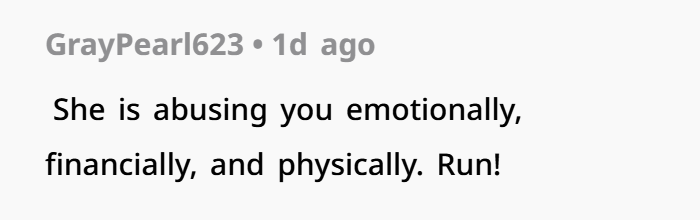
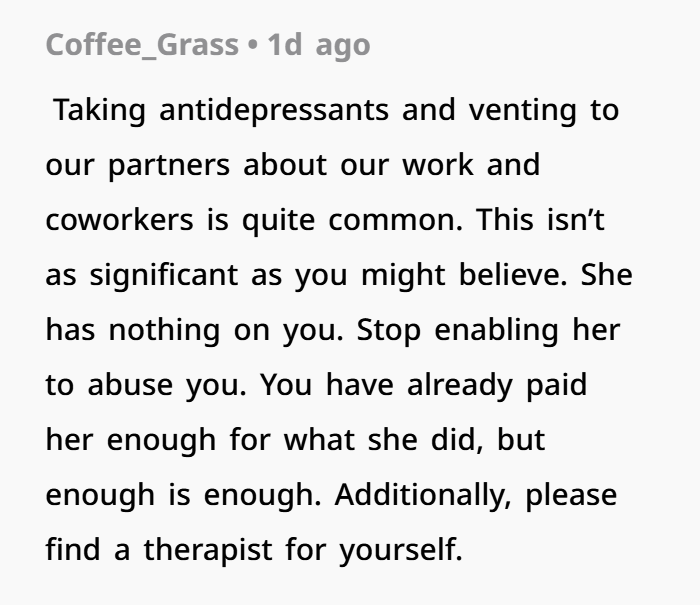
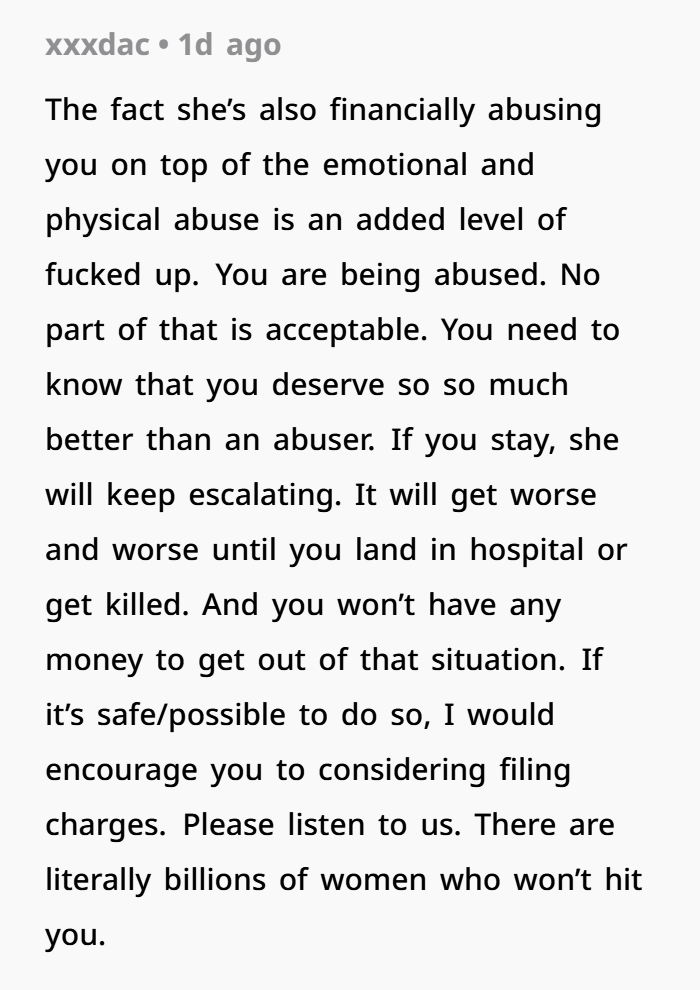
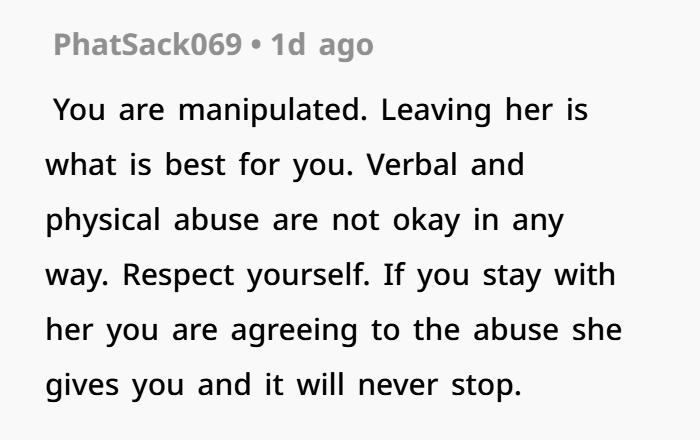
Readers’ Comments Speak Out