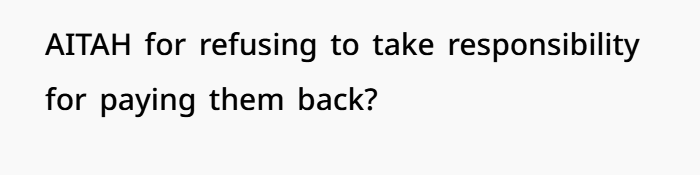
AITAH for Refusing to Use My Entire Paycheck to Repay My Fiancé’s Family?

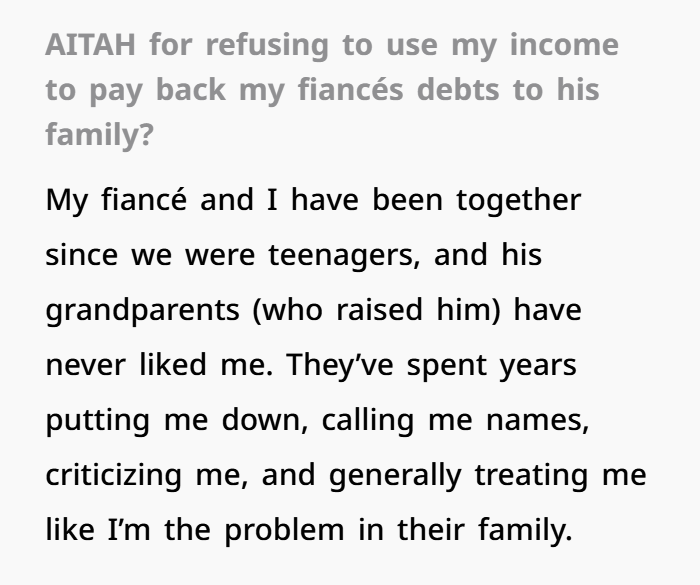
A young mother is asking if she is wrong for not giving her full income to help pay her fiancé’s debt to his grandparents. She and her fiancé have been together since they were teenagers, but his grandparents never approved of their relationship. Over time, they often criticized her, judged her situation, and blamed her for family problems, especially because she was not working and stayed home with their child.
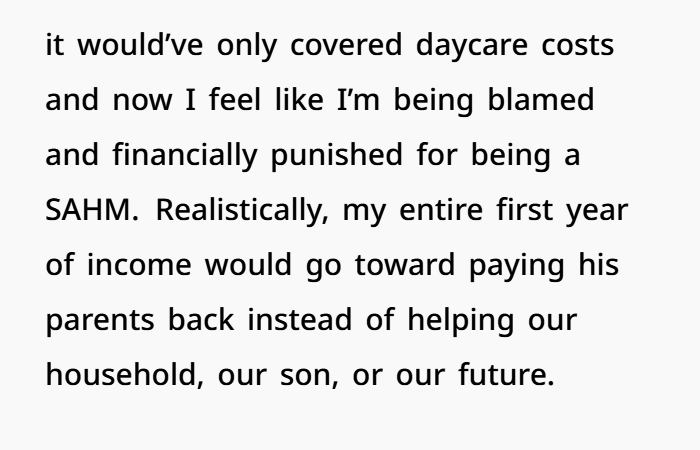
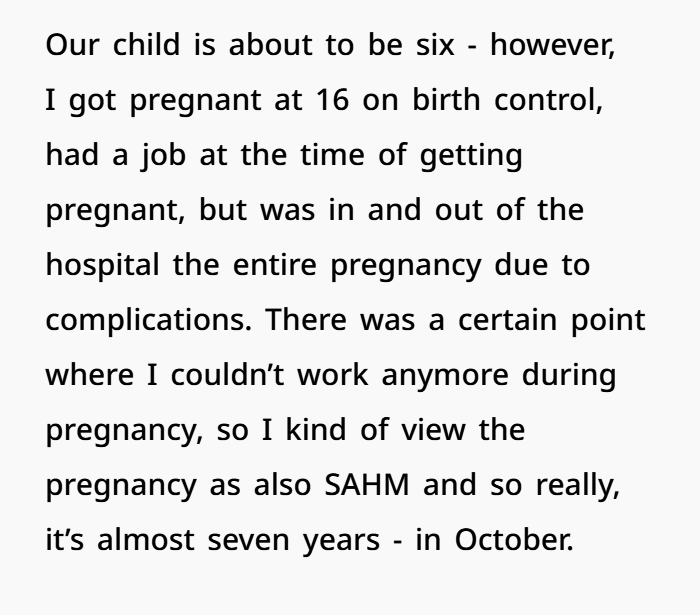
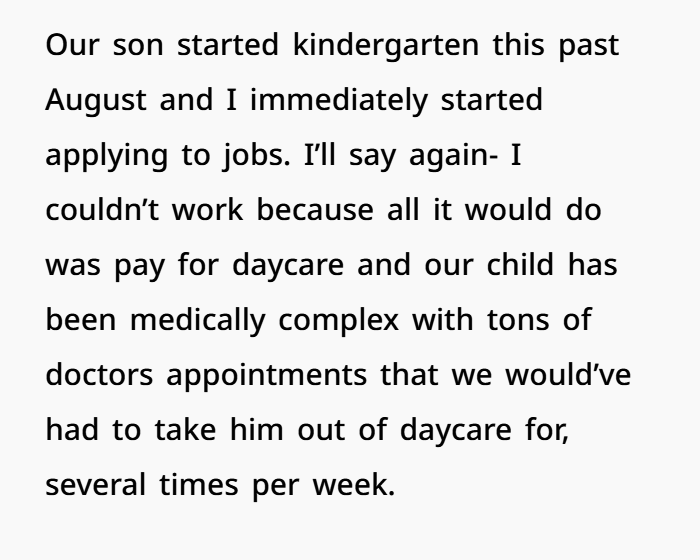
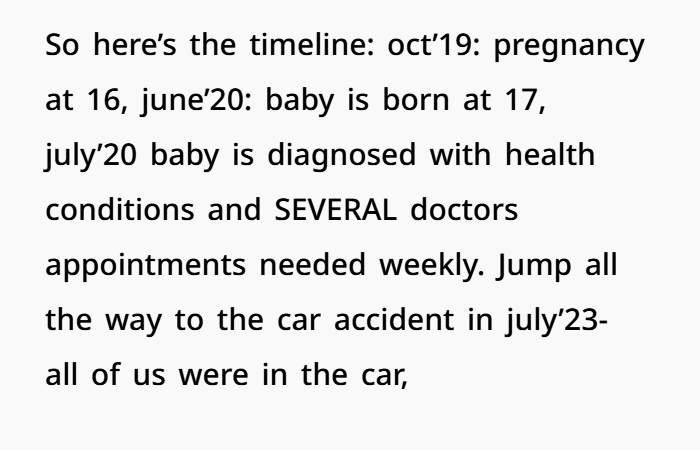
Her situation was not simple. She became pregnant at 16 while trying to build a stable job. During her pregnancy, she faced serious health complications, which made it impossible for her to continue working. After their son was born, he also needed regular medical care and doctor visits for ongoing health issues. Because childcare costs were very high, the couple decided it made more financial sense for her to stay at home and take care of their child.
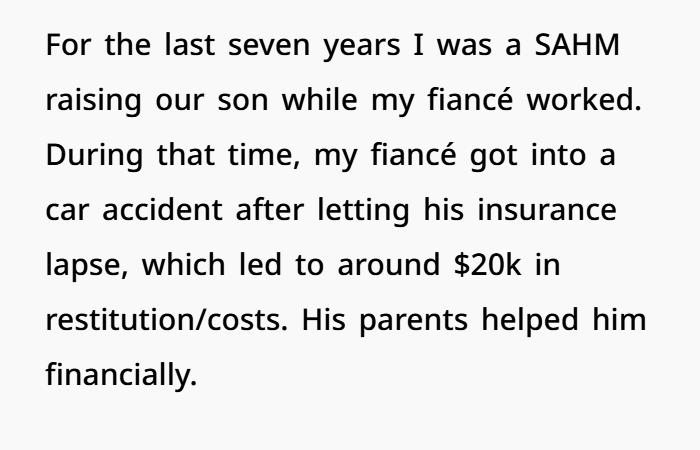
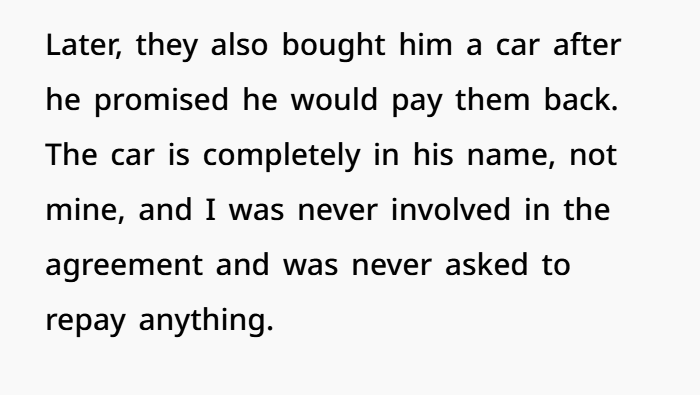
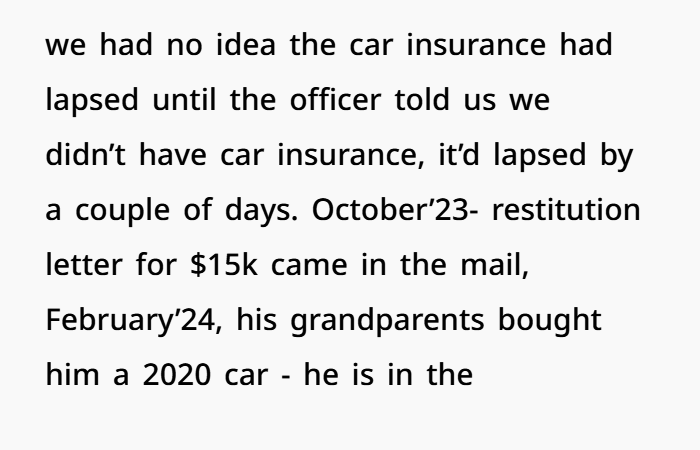
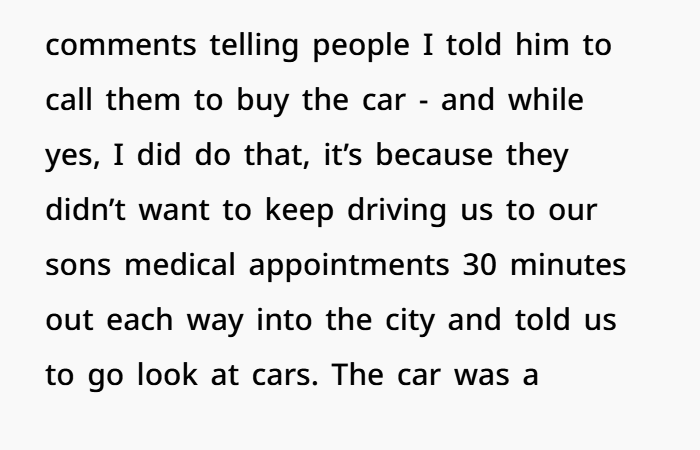
At the same time, her fiancé faced his own financial problems. He let his car insurance lapse and later got into an accident, which led to a large debt of around $15,000 to $20,000, including repayment and legal costs. His grandparents helped him financially and also provided another vehicle, with the expectation that he would pay them back over time.
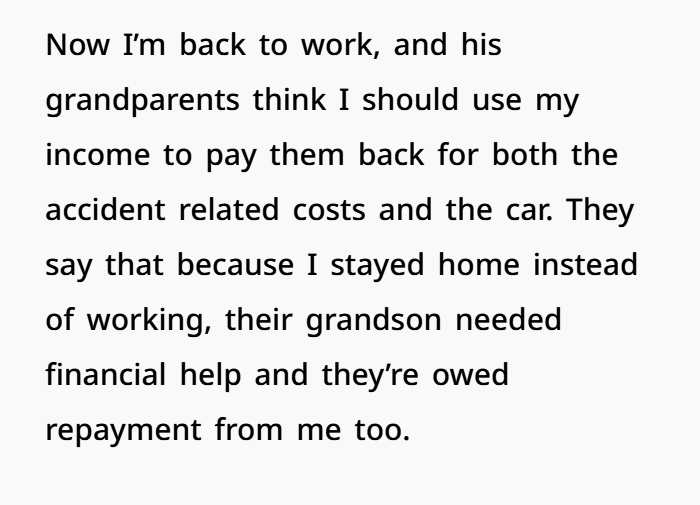
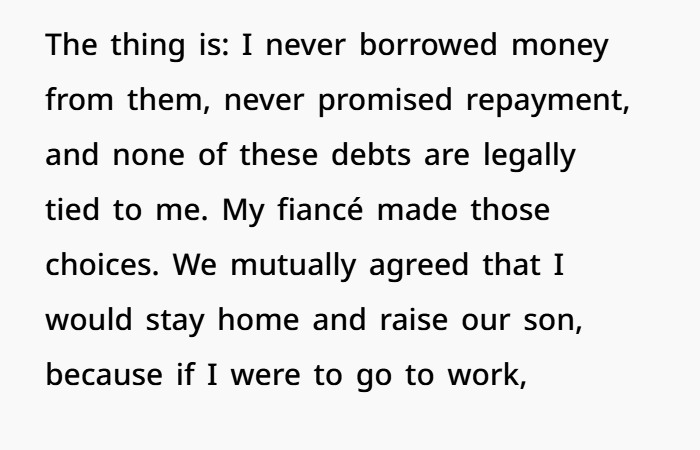
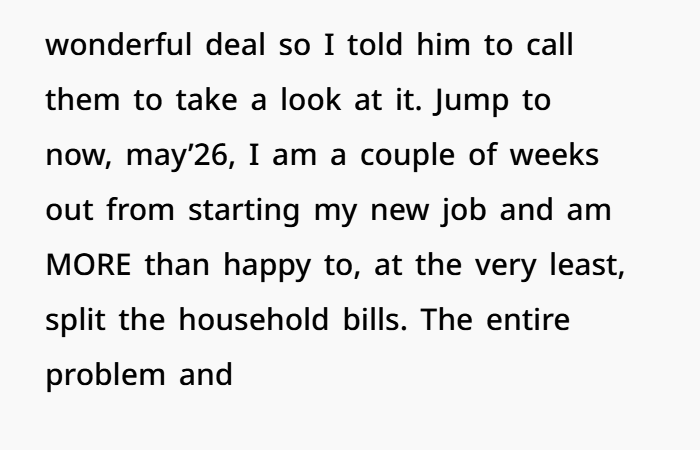
Now that the mother is finally preparing to start earning money again, her fiancé’s family expects her income to be used for repaying his debt. However, she feels this is not fair because she was never part of that agreement and did not take on that financial responsibility. The situation has created tension around family finances, debt repayment, marriage expectations, childcare responsibilities, and financial independence in relationships.




This situation is not just about money. It is about caregiving, family pressure, and financial stress inside a relationship. Many people are reacting strongly because it shows how complicated money problems can become in families.
Why This Situation Is More Complicated Than It Looks
At first, it may look like the issue is a stay-at-home mom not earning money. But the full situation is more complex.
She was not working because she was:
- Taking care of a child full-time
- Managing ongoing medical needs
- Handling daily caregiving responsibilities
- Dealing with transport and hospital visits
In family caregiving and childcare research, full-time caregiving is considered real work, even if it is unpaid.
The Financial Pressure and Debt Problem
Her fiancé’s family is blaming her for financial problems. But many of the debts came from decisions she did not make.
The situation includes:
- A car accident that caused insurance issues
- Medical and transportation needs for the child
- A vehicle purchase needed for daily life
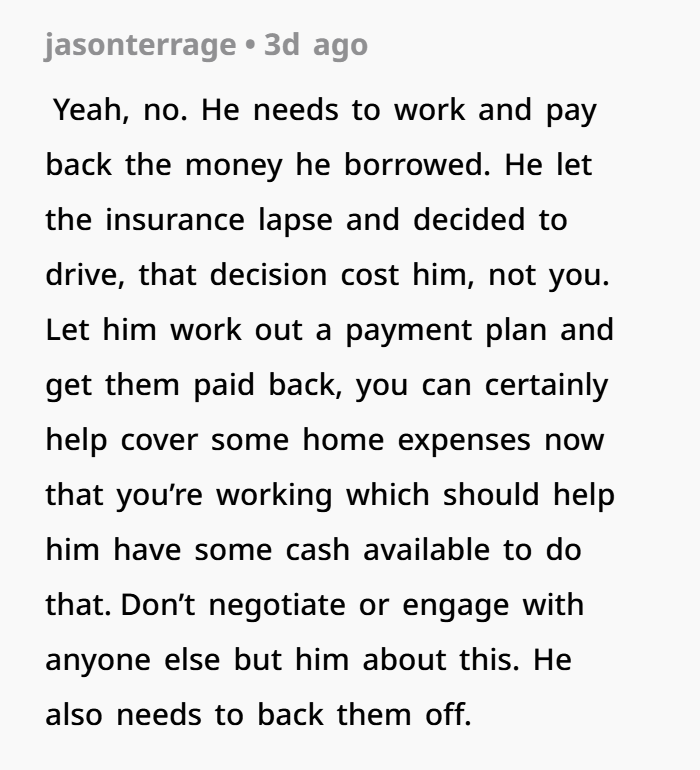
In personal finance and debt management, responsibility usually depends on who agreed to the loan or financial contract. In this case, the debts are mainly in his name.
Unpaid Caregiving Has Real Value
A major point many people miss is the value of unpaid caregiving.
In economics and family finance studies, stay-at-home parents provide work such as:
- Full-time childcare
- Emotional support for children
- Household management
- Medical care coordination
If these services were paid, they could cost thousands of dollars per month.
So even without a salary, this type of work has real financial value.
Emotional Stress From Family Judgment
The situation also includes emotional pressure from her fiancé’s grandparents.
She feels:
- Judged for not working in the past
- Blamed for financial problems
- Unwanted or not respected in the family
- Pressured now that she has a job
In family relationship psychology, long-term criticism can create emotional resentment and stress, especially when money is involved.
The New Job and Paycheck Pressure
Now that she has started working again, there is pressure for her entire income to go toward debt repayment.
This is where many people online are concerned.
In financial counseling and relationship finance, experts usually recommend:
- Shared discussion about budgets
- Agreement on debt repayment plans
- Protection of basic living expenses
Expecting one person to give their full salary without flexibility can create financial instability and stress.
Why Her Age and Situation Matter
She became a mother as a teenager and spent years dealing with:
- Early parenthood
- Financial struggle
- Medical responsibilities
- Limited job opportunities
In young parenthood and social support research, early caregiving can significantly limit education and career growth.
This context helps explain why rebuilding financial independence takes time.
Disability and Work Limitations
The child’s medical condition and wheelchair use also affect work options.
In disability care and employment studies, caregivers often face:
- Limited work hours
- Lack of flexible job options
- High daily caregiving demands
- Difficulty maintaining stable employment
This is why simple advice like “just get another job” does not always fit real life situations.
Family Conflict Over Money
A key issue is that her fiancé is not clearly protecting her from family pressure.
In healthy relationships, partners should:
- Set boundaries with relatives
- Protect each other from financial pressure
- Make joint financial decisions
- Communicate clearly about debt plans
If one partner allows family members to pressure the other, it can create long-term relationship stress.
Legal vs Moral Responsibility
Legally, she does not owe the grandparents money because:
- The debts are not in her name
- She did not sign the agreements
- There is no legal contract with her
In legal finance and debt law, repayment responsibility depends on signed agreements.
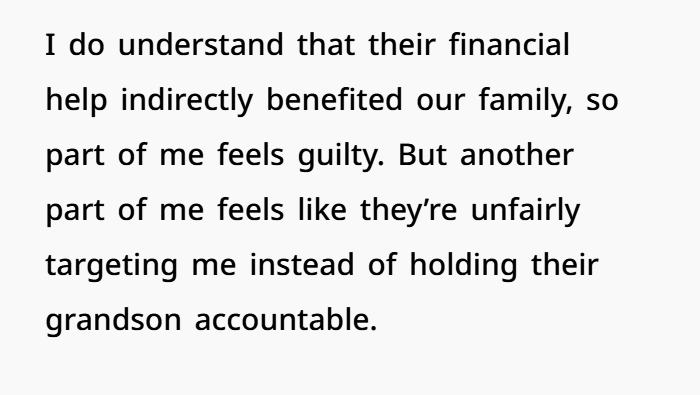
However, emotionally it feels more complicated because the grandparents did help the family during difficult times.
Why People Relate to This Story
Many people understand this situation because it reflects common issues in:
- Family financial stress
- Stay-at-home parenting challenges
- Caregiver burnout
- Debt pressure in relationships
A lot of families struggle when one person sacrifices income to care for children and later feels judged for it.
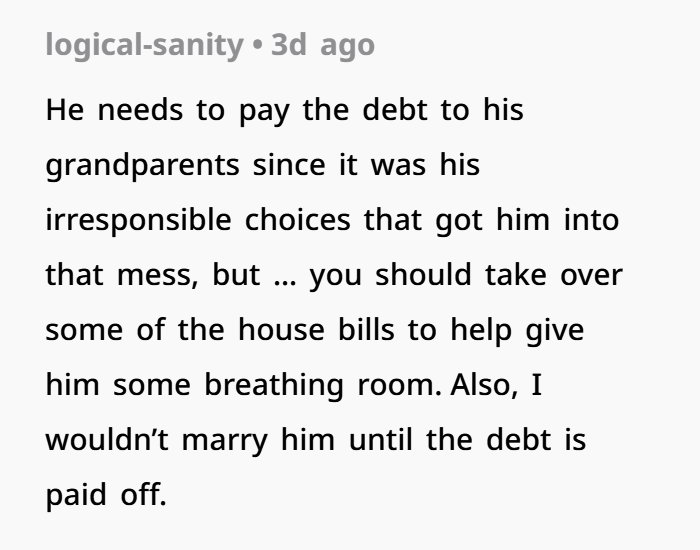
See The Comments Below






Final Thoughts
This is not simply a story about refusing to pay money.
It is about:
- Years of unpaid caregiving work
- Financial hardship and survival
- Family pressure and judgment
- Debt expectations and financial control
In personal finance and relationship counseling, the most important part is finding a fair and realistic plan that supports both financial stability and emotional well-being.
At the core, this situation shows how quickly money stress, family expectations, and caregiving responsibilities can become a serious conflict in a relationship if there is no clear communication and boundaries.