My Husband Volunteered Me to Babysit for Mother’s Day Weekend Without Asking
A 28-year-old mother is trying to decide if she was wrong for refusing to babysit her family friends’ children the night before Mother’s Day. She and her husband have an 8-year-old son, and for years they have done babysitting swaps with another couple. This arrangement usually works well and helps both families with childcare support and parenting responsibilities.
This time, however, things did not go smoothly. The father from the other family asked if they could watch his daughters late into the night so he could surprise his wife with Mother’s Day concert tickets. Before properly discussing it with his wife, the woman’s husband assumed it was fine and agreed to babysit until very late, around 2 or 3 AM.
The main issue is that most of the childcare work usually falls on the mother. She is the one who handles cooking, bedtime routines, and keeping the kids settled, while her husband often relaxes and does other things. Because she already feels tired and overwhelmed with parenting duties, she felt frustrated that such a big decision was made without asking her first.
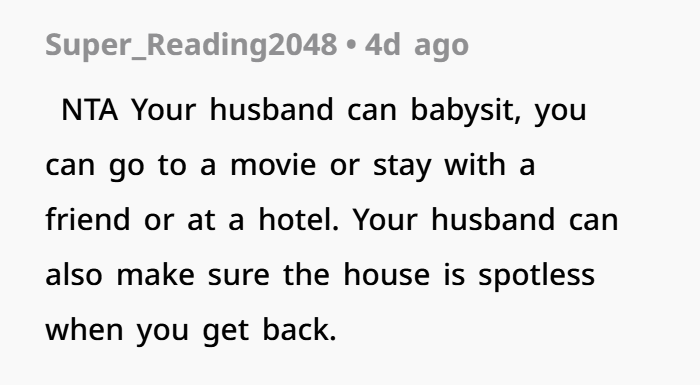
After feeling ignored and taken for granted, she decided she did not want to take responsibility for the late-night babysitting plan. She told her husband that if he wanted to agree to it without consulting her, then he should handle the childcare himself while she takes the night off. The situation highlights common issues around parenting workload, childcare responsibilities, family boundaries, and communication problems in marriage.

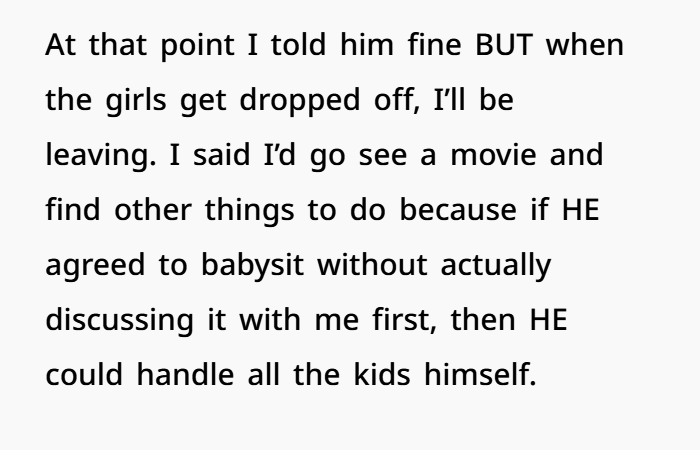
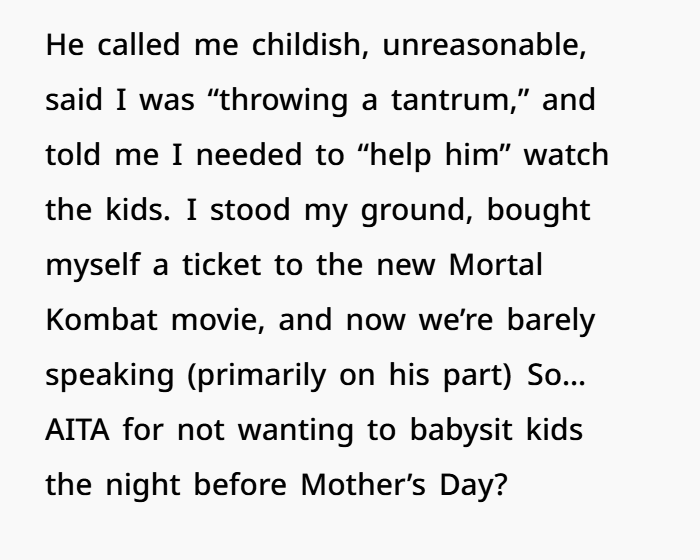
This situation is not really just about babysitting. It is about stress, emotional burnout, and feeling unappreciated in a relationship. Many parents, especially mothers, can relate to this feeling very quickly.
Why This Situation Became a Big Argument
On the surface, it looks simple. The husband agreed to babysit his friend’s children on Mother’s Day so they could go out for a concert date night.
But the main problem is this:
he agreed to it without properly asking his wife first.
In relationship communication and marriage counseling, this is a common cause of conflict. One partner makes a decision involving shared time or effort, and the other partner feels left out.
Feeling Like Your Time Was Decided for You
There is a big difference between:
- “Are you okay helping with the kids?”
and - “I already said yes for you.”
The second one can feel unfair because it removes choice.
In emotional wellness and relationship psychology, this is often called feeling “voluntold” — when someone is told what they will do instead of being asked.
This can quickly lead to frustration and resentment.
Mother’s Day Emotional Pressure
Mother’s Day is not just one day on a calendar. For many parents, it has emotional meaning.
In family relationship studies, it is often linked to:
- Feeling appreciated
- Getting rest from daily responsibilities
- Emotional recognition from family
So when her husband said it was “just another day,” it likely felt dismissive to her.
She also shared that she often feels unnoticed during other special days like birthdays and holidays. This made the situation feel like a pattern, not just one event.
The “Default Parent” Problem
This story also shows a common issue called “default parenting.”
In many homes:
- One parent handles most childcare tasks
- One parent manages routines and emotional care
- The other parent helps only when asked
In parenting and family psychology, this can lead to burnout for the main caregiver.
In this case, the wife often:
- Cooks meals
- Handles bedtime routines
- Manages behavior issues
- Deals with emotional stress from the children
Meanwhile, the husband often stepped back and said he was unsure how to help.
Over time, this imbalance can create resentment.
The Extra Stress of ADHD Parenting
The situation becomes even harder because the children have ADHD.
In child development and ADHD parenting support, it is known that children with ADHD may:
- Have high energy levels
- Struggle with sleep routines
- Need constant supervision
- Become easily overstimulated
Caring for multiple children with ADHD late at night can be very exhausting and emotionally draining.
The Real Problem Was Not Babysitting
The wife did not refuse to help because she dislikes the children.
She refused because:
- She was not asked first
- She was already emotionally tired
- She felt her time was not respected
- She felt taken for granted
In marriage counseling and emotional burnout research, this is a common breaking point in relationships where one partner carries most of the household load.
Emotional Burnout Builds Over Time
What makes this situation more serious is that it did not come from one event.
It likely came from:
- Years of feeling overworked
- Feeling emotionally unsupported
- Feeling like responsibilities are assumed
- Lack of appreciation in daily life
When emotional burnout builds up, even small requests can feel overwhelming.
Communication Problem in the Relationship
The husband likely did not mean harm. He may have thought he was simply helping friends.
But in healthy relationship communication, important decisions should be discussed first.
The main issue was:
- He made a commitment without asking
- She felt forced into responsibility
- Neither side felt fully understood
Why Her Reaction Included Self-Time
After the argument, she chose to go out and spend time alone.
This was not about the movie itself. It was about:
- Taking a break from stress
- Reclaiming personal time
- Getting emotional space
In mental health and self-care research, this kind of action is often a sign that someone feels overwhelmed and needs recovery time.
Why People Relate to This Story
Many parents understand this situation because it reflects:
- Unequal parenting responsibilities
- Lack of communication in marriage
- Emotional exhaustion
- Feeling invisible in the home
In family wellness and parenting support discussions, this is a very common issue in long-term relationships.
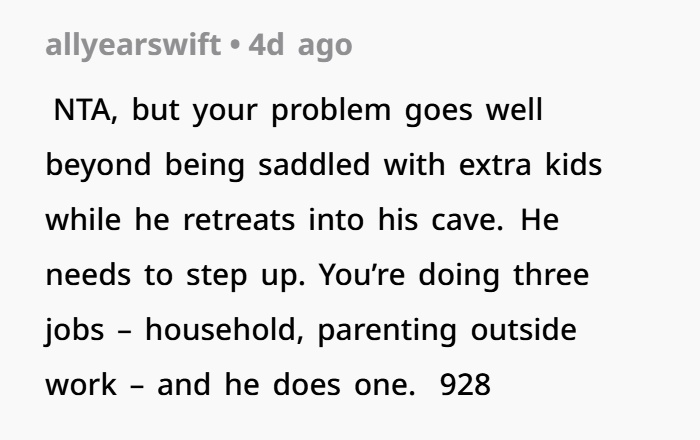
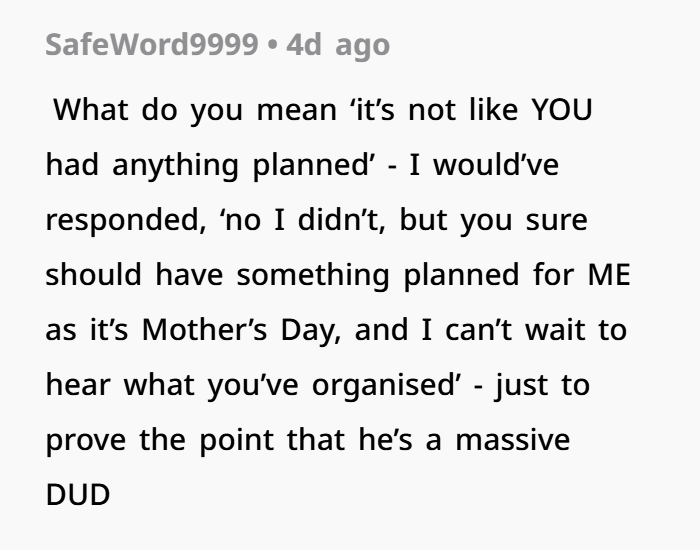
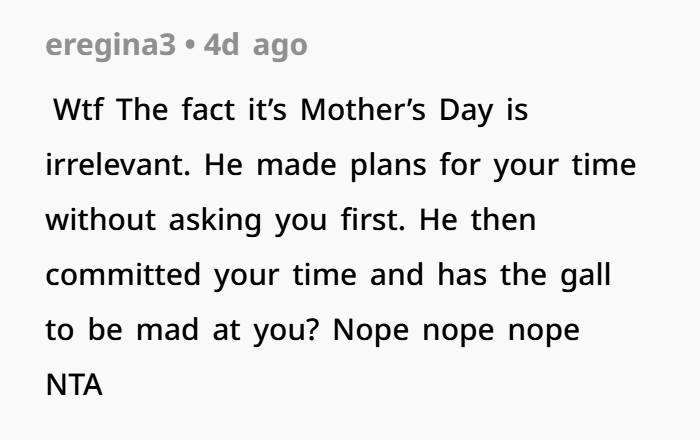
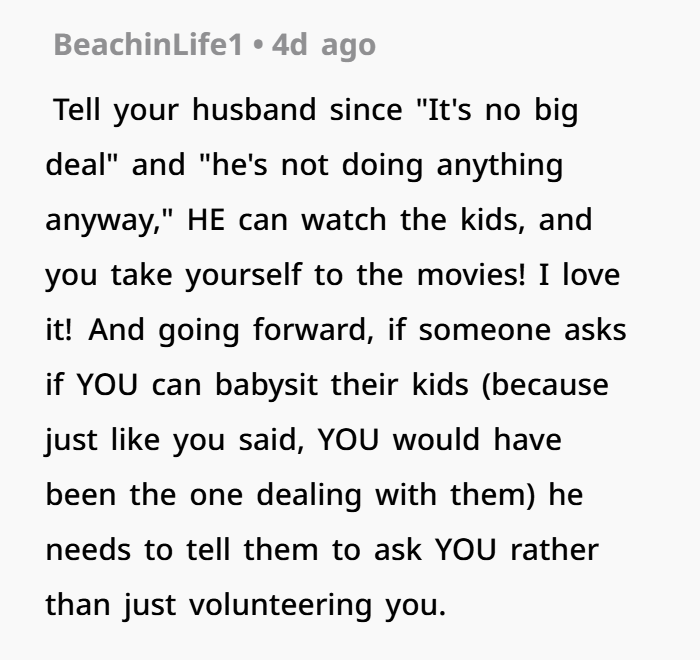
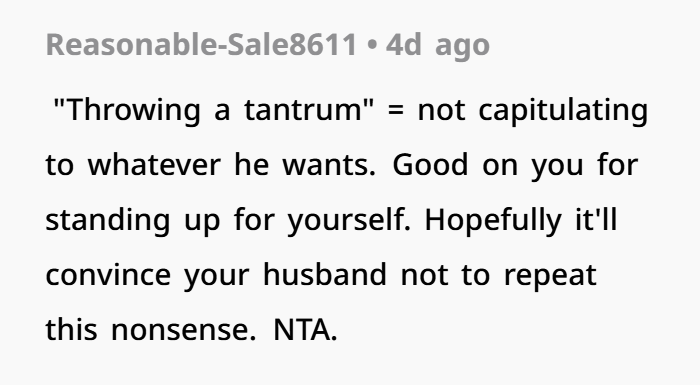
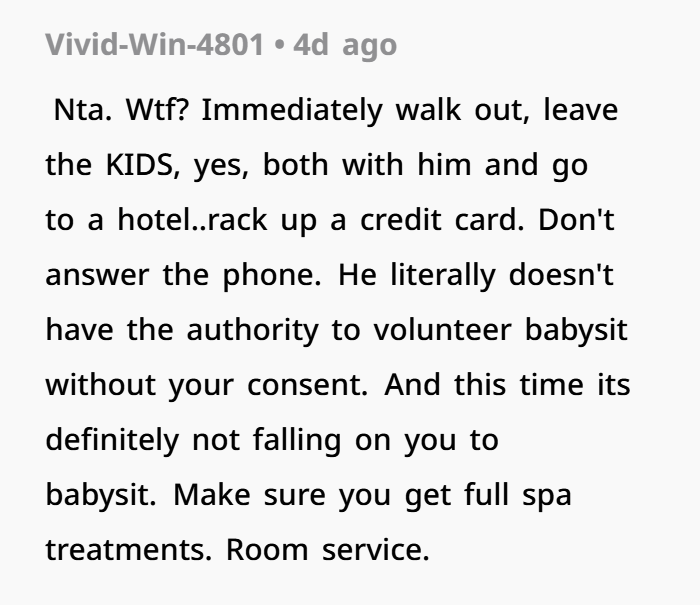
The Comments Are In

Final Thoughts
This is not just a fight about babysitting or one holiday plan.
It is about:
- Emotional burnout in parenting
- Lack of communication in marriage
- Unequal household responsibilities
- Feeling unappreciated in a relationship
At the core, this story shows something very simple:
When one partner makes decisions without involving the other, it can slowly create frustration that builds over time.
And when emotional exhaustion is already high, even small situations can become the final breaking point.