MIL Made My 7-Year-Old Cross Out “Best Grandma Ever” Because It Wasn’t Fair to Her
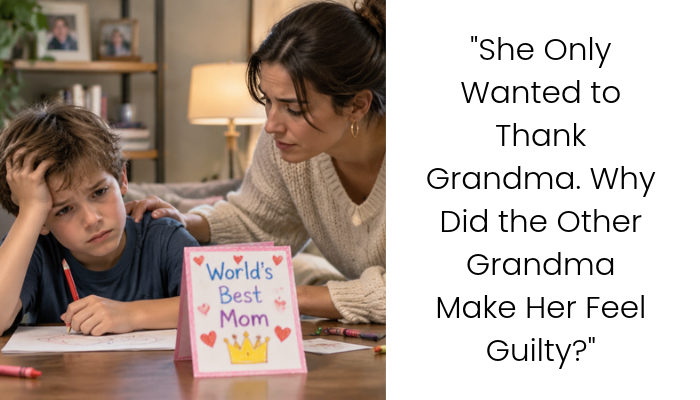
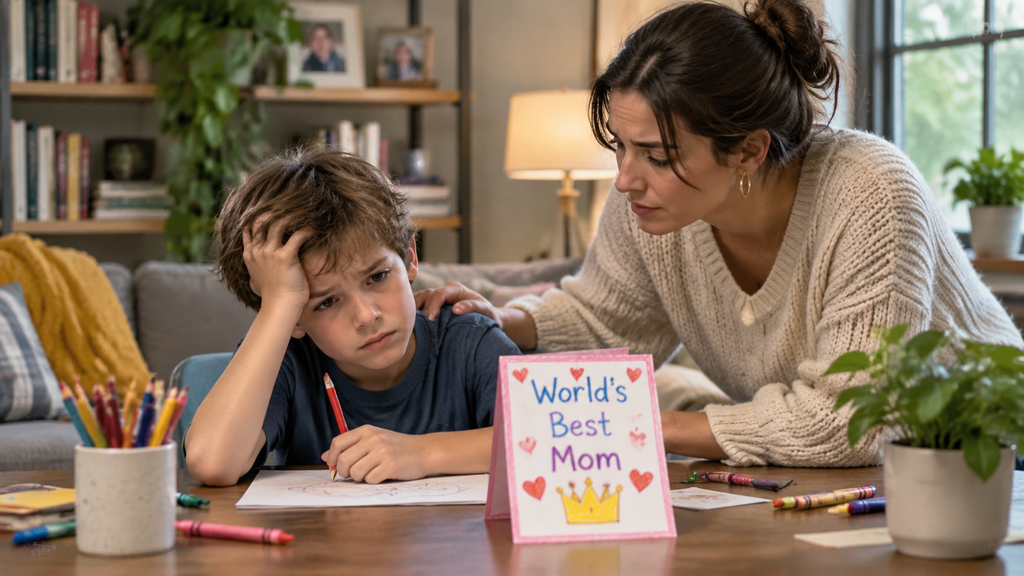
A simple handmade card recently caused an unexpected disagreement in one family. A mother was surprised when she found out that her seven-year-old daughter’s thank-you card had been changed by her mother-in-law. The little girl had spent the afternoon building a cardboard dollhouse with her maternal grandmother. She was so happy about their time together that she decided to make her a special thank-you card. She proudly wrote, “To the best grandma ever.” However, someone had crossed out the word “best” and replaced it with “a very nice.”
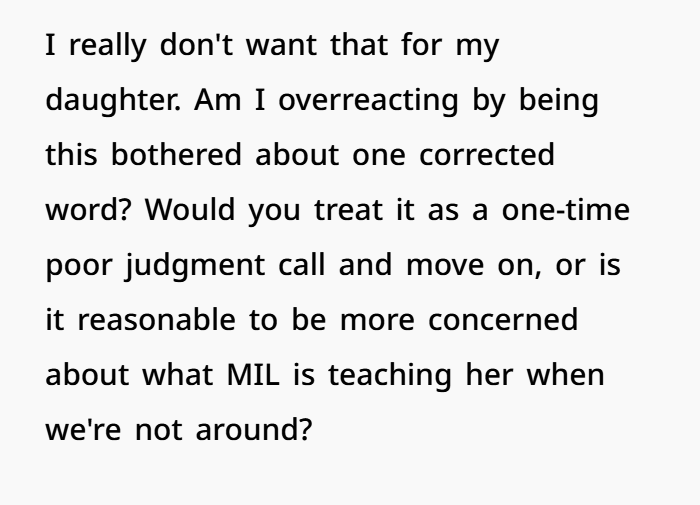
The little girl explained that her paternal grandmother had made the change because she thought the original words might hurt her feelings. She told the child that calling one grandmother the best was not fair to the other. She also suggested making a similar card for both grandmothers. The mother did not like this idea because she felt her daughter was being asked to change a sweet and honest message just to keep an adult happy.
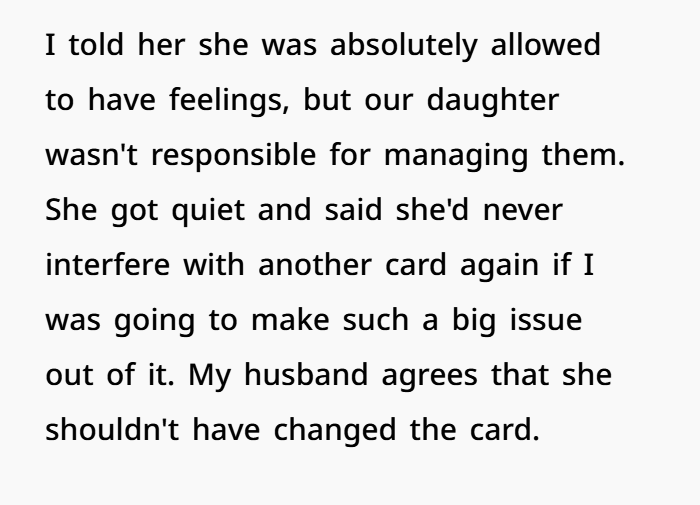
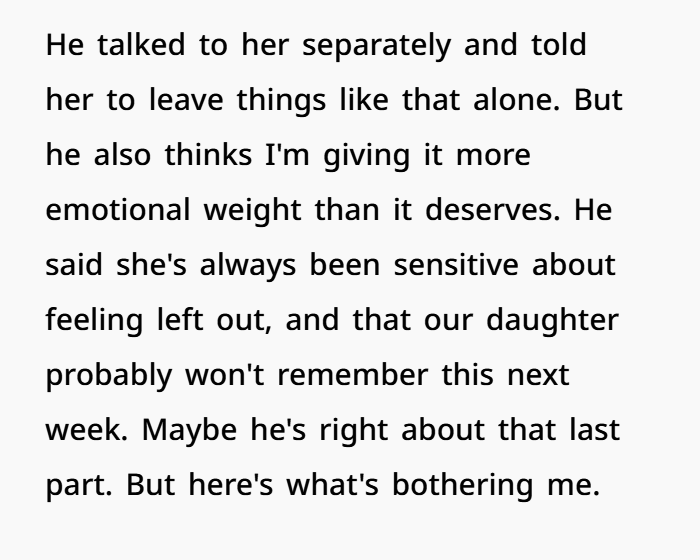
Things became more uncomfortable when the mother decided to talk to her mother-in-law. The grandmother said she was only trying to teach the child about good manners and being considerate. She also felt hurt by the mother’s reaction and said she was not allowed to have feelings. The child’s father agreed that changing the card was not right, but he believed his wife was taking the matter too seriously. The disagreement soon became about more than just a handmade card.
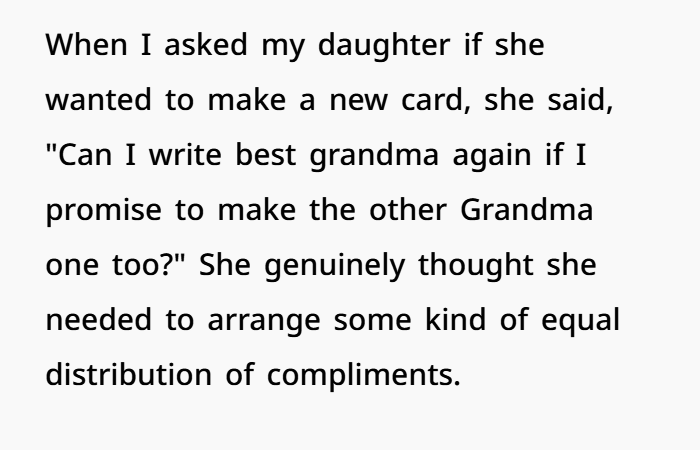
The mother’s biggest concern came from her daughter’s response. The little girl wanted to make another card with the words “best grandma,” but only if she promised to create another special card for her other grandmother. This made her mother wonder whether the child was starting to feel responsible for keeping everyone happy. She believes children should learn to be kind, but they should not feel that showing love to one person means they are being unfair to someone else. Healthy family relationships should give children room to express their feelings naturally.
When Adults Make Children Feel Guilty About Their Feelings
Children Are Not Responsible for Keeping Everyone Happy
Children are still learning how to understand feelings, relationships, and family connections.
At seven years old, a child is just beginning to understand why people sometimes feel happy, sad, disappointed, or left out.
It is good for parents and grandparents to teach children kindness. They should learn to think about other people’s feelings and treat everyone with respect.
But there is one thing children should not have to learn: that they are responsible for making every adult happy.
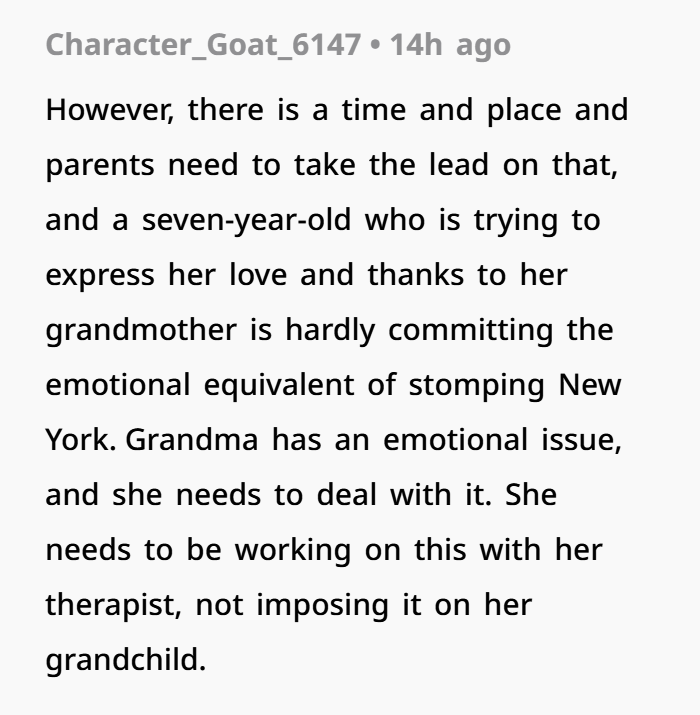
In this situation, the grandmother may have wanted her granddaughter to treat both grandmothers fairly.
However, her reaction may have made the little girl feel that she had done something wrong by calling one grandmother the best.
That is a difficult message for a young child.
Children should not feel guilty for showing love or appreciation to someone who makes them happy.
They need to know that having a special bond with one family member does not take love away from someone else.
Every Grandparent Relationship Is Different
Think about it for a moment.
One grandmother may enjoy baking cookies with her granddaughter. Another may love taking her shopping or helping her with school projects.
These little activities create special memories.
Does that mean the child loves one grandmother more?
Not at all.
Children naturally develop different relationships with different people. They may have favorite activities, special jokes, or little traditions with each family member.
There is nothing wrong with that.
Fairness does not mean every person must receive the same card, compliment, or amount of attention.
A child can enjoy spending an afternoon with one grandmother and still have a loving relationship with the other.
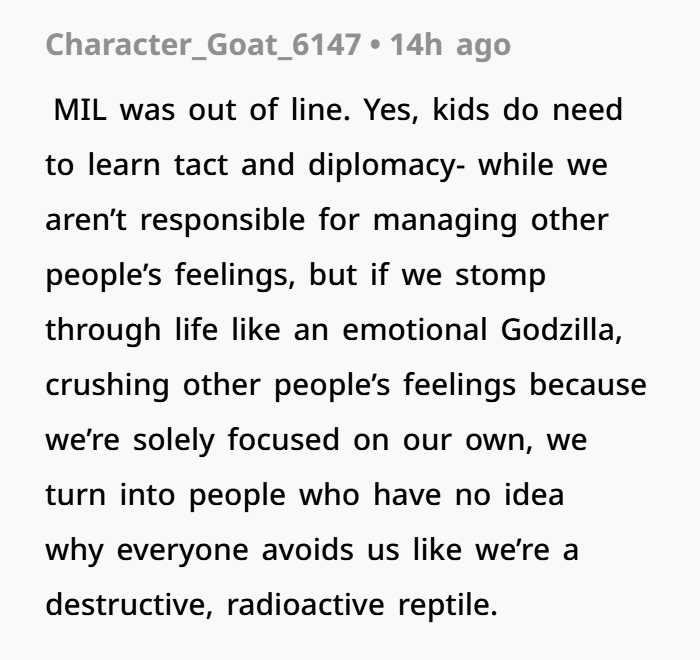
The grandmother could have simply smiled when she saw the card and appreciated the effort her granddaughter had made.
There was no need to turn a happy moment into a lesson about who deserved equal attention.
Why Making Children Feel Guilty Can Be Harmful
Children often take adults’ words very seriously.
When someone they love says they feel sad because of something the child did, the child may believe they are responsible for fixing the situation.
For a seven-year-old, this can be confusing.
She may start thinking that she needs to change her words or actions to prevent someone from feeling upset.
If this becomes a regular experience, it may encourage people-pleasing behavior.
The child might become afraid to express her true feelings because she does not want to disappoint anyone.
For example, she may stop talking about fun activities with one grandmother when speaking to the other.
She may also feel that she must give everyone the same attention, even when she does not naturally feel that way.
This is why healthy parenting includes teaching children about emotional boundaries.
The American Psychological Association emphasizes the importance of supportive communication and helping children understand emotions in ways that match their age.
Parents can explain that it is okay for people to have different feelings, but nobody needs to hide their happiness just to prevent another person from feeling disappointed.
One incident does not mean a child will develop long-term problems. Still, parents should pay attention when they notice repeated pressure.
Grandparents Should Not Turn Love Into a Competition
Grandparents naturally want to feel special in their grandchildren’s lives.
They enjoy receiving cards, hearing sweet words, and spending time together.
But sometimes, adults start comparing how much attention they receive from a child.
One grandmother may feel left out when the other receives a special gift or compliment.
These feelings can happen, but they should not become a competition.
Family relationships are not about keeping scores.
Family systems theory, developed by Dr. Murray Bowen, helps explain how feelings and relationships within a family can affect one another.
When adults have disagreements or feel insecure, children can sometimes get caught in the middle.
That is what makes this situation worth discussing.
The little girl was not trying to hurt anyone. She was simply showing appreciation for someone who had spent time doing something special with her.
Her card was a sweet gesture, not a statement about which grandmother was more important.
Adults should be able to understand that difference.
How Parents Can Tell If This Is Becoming a Pattern
It is important to be fair to the grandmother, too.
Maybe she did not think carefully before making her comment. Perhaps she felt left out and reacted emotionally.
One mistake does not automatically make someone a bad grandparent.
However, parents should notice whether the same thing keeps happening.
For example:
- Does the grandmother often compare herself with the other grandmother?
- Does she make the child feel bad for enjoying time with other relatives?
- Does she ask for equal attention or special treatment?
- Does the child seem nervous about what she says around her?
If this was a one-time misunderstanding, a simple conversation may be enough.
The mother can calmly explain that her daughter should not feel guilty about showing love to different family members.
If the behavior continues, clearer family boundaries may be needed.
Parents can also pay attention to how their daughter feels after visits and whether she seems worried about upsetting someone.
The goal is not to stop the grandmother from having feelings. Everyone has feelings.
The goal is to make sure that a child does not feel responsible for managing them.
The Most Important Lesson: Let Children Express Their Love Freely
The little girl’s question may have been the most important moment in the entire situation.
She wanted to know whether she could write “best grandma” again if she promised to make another card.
Think about what that means.
She may have started believing that her words needed approval before she could express how she felt.
Her mother’s response helped correct that idea.
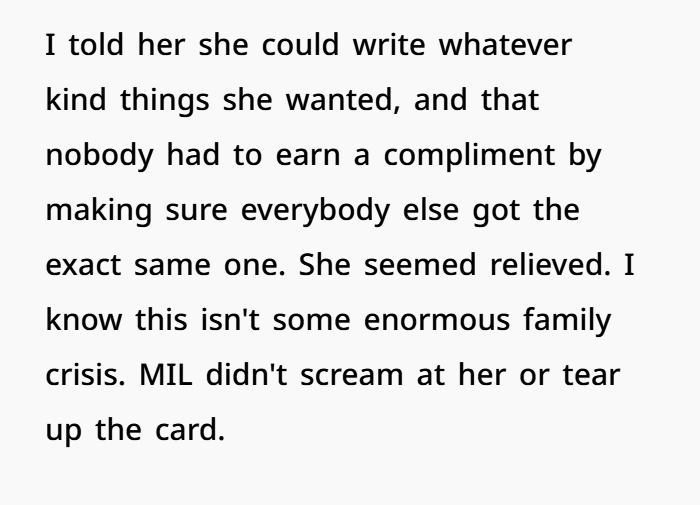
She explained that her daughter did not need to give everyone the same compliment or make every card equal.
That is an important lesson in healthy emotional development.
Children should learn to be kind, thoughtful, and respectful. But they should also feel comfortable expressing their own feelings.
They should not have to hide their happiness because someone else might feel left out.
Grandparents deserve love and respect, but they are adults. They can manage their own disappointment without placing that responsibility on a child.
A handmade thank-you card should be a sweet memory of a happy afternoon.
It should never become a test of how much a child loves each family member.
Sometimes, the best thing parents can do is give their children the freedom to love people in their own way.
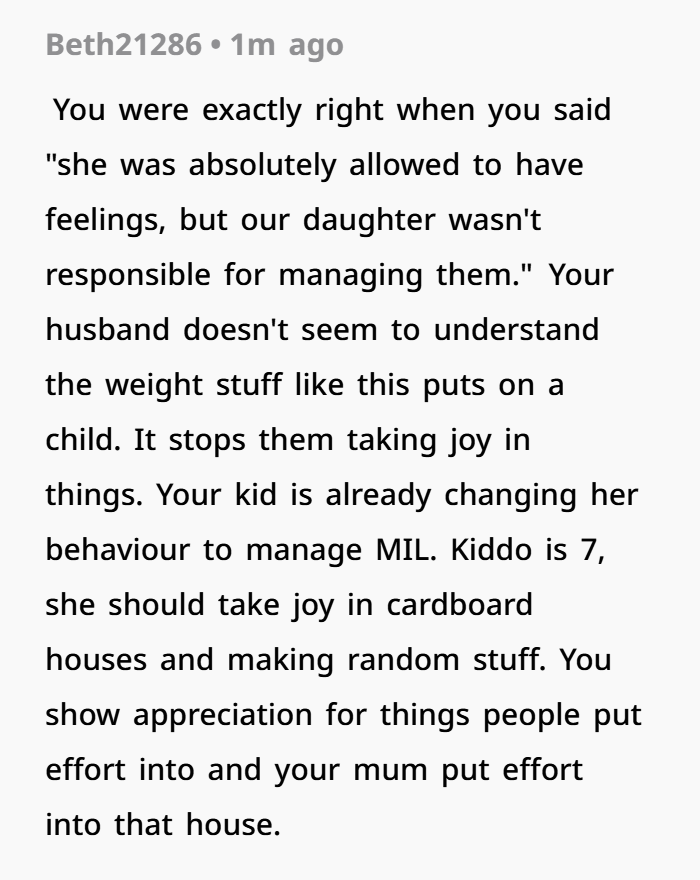
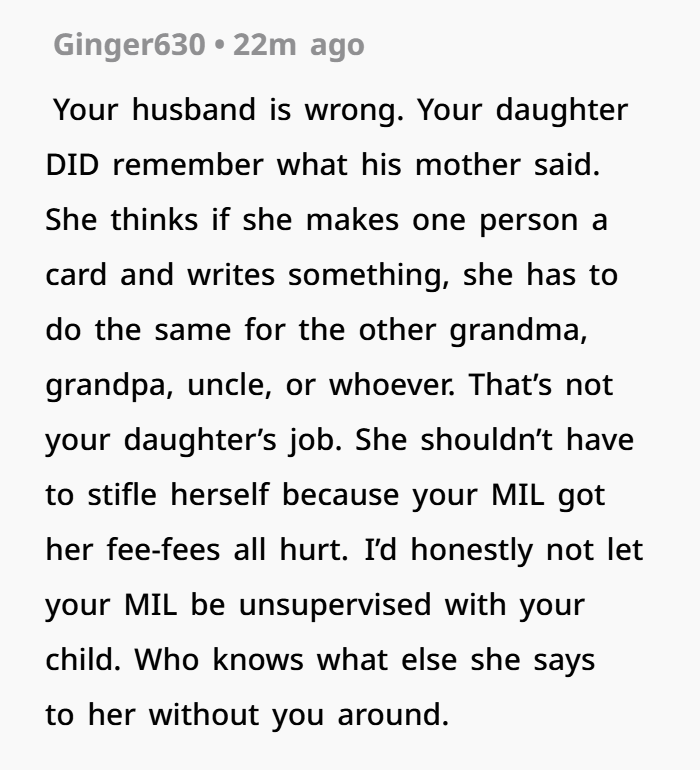
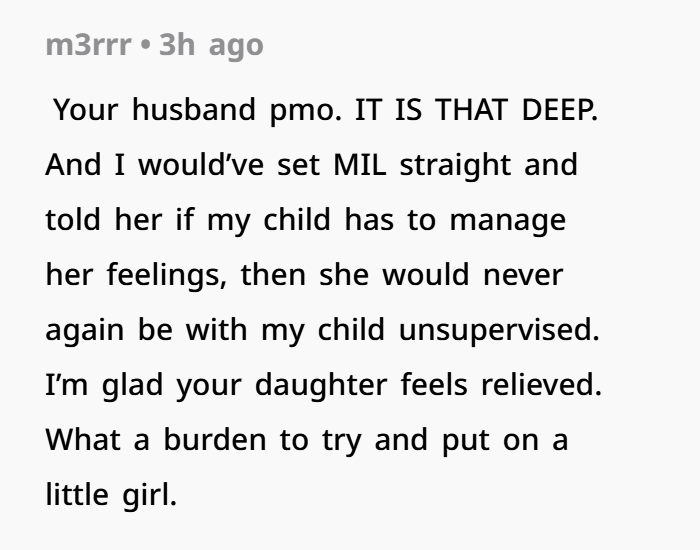
What The Comments Reveal