AITA for Refusing to Risk Our New Furniture Because My MIL Won’t Wear Incontinence Protection?

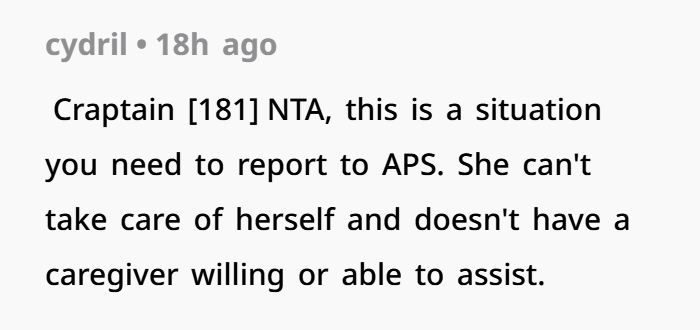
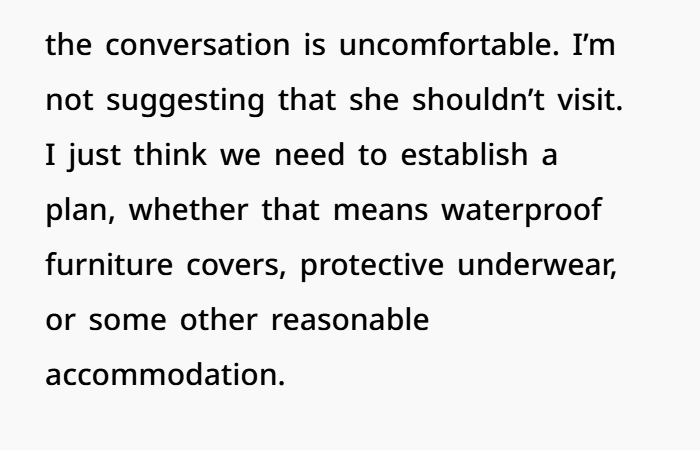
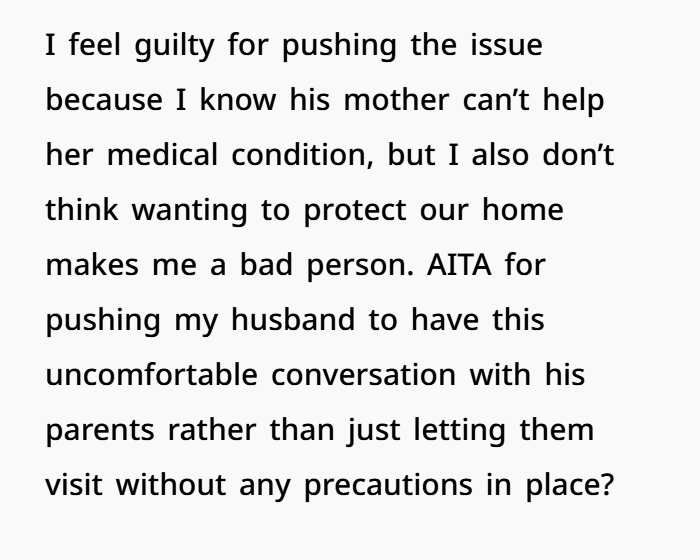
A new home should bring happiness and fresh memories, but one woman is already worried about a family visit. She and her husband are moving to a new home in another part of the country. Before they have even settled in, her in-laws have started talking about visiting. She is not against having them over, but she has concerns about her mother-in-law’s health condition and how it may affect their new furniture.
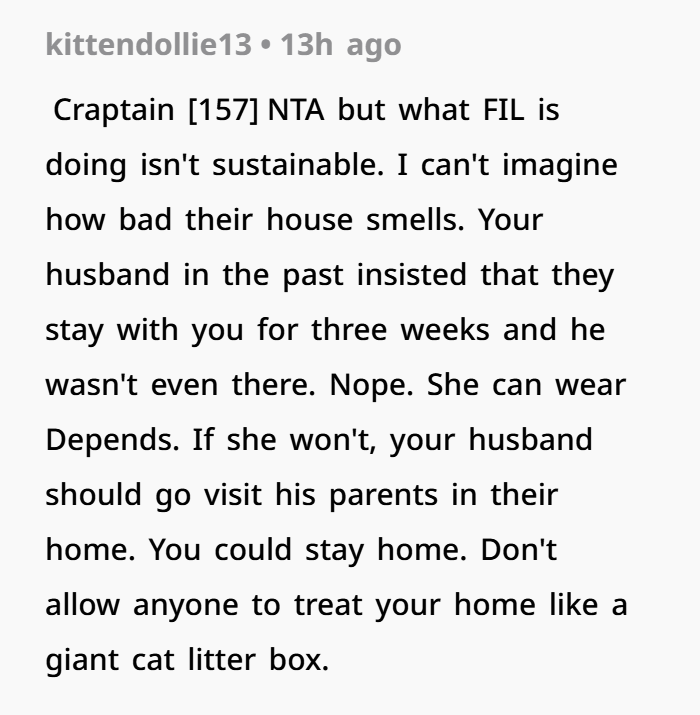
Her mother-in-law has been dealing with physical and mental health challenges since a medical emergency several years ago. She also experiences bladder control problems and has frequent accidents. According to her father-in-law, she does not like wearing protective underwear. Their previous couch was even replaced because of these accidents. Now, the woman is worried about keeping her new sofa and other household furniture clean.
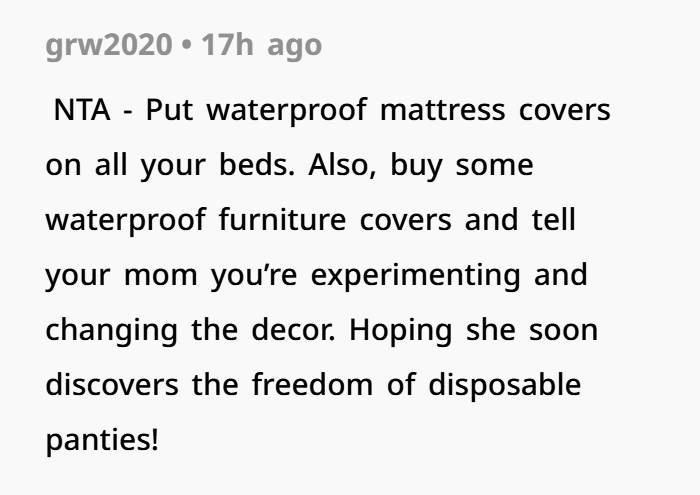
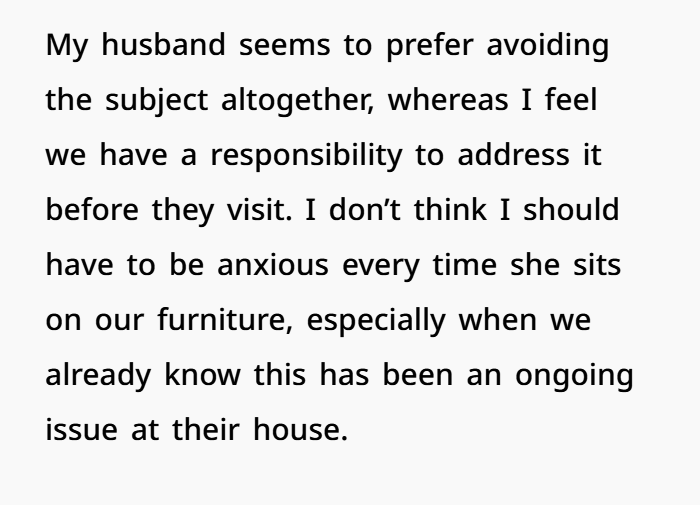
She wants her husband to talk about a few practical solutions before the visit. For example, waterproof couch covers, washable sofa protectors, absorbent pads, and easy-to-clean furniture materials could help prevent damage. These home care products are simple ways to make a living space more comfortable for everyone. However, her husband avoids the conversation because he finds it difficult to discuss his mother’s personal health issues. As a result, she feels alone in trying to prepare their home.
She believes that caring for family members should also include practical planning. A medical condition is not something a person can always control, and nobody should be made to feel embarrassed about it. At the same time, homeowners can take reasonable steps to protect their property. With open communication, respect, and a little preparation, families can create a comfortable space without ignoring anyone’s needs.

The Real Problem Behind This Family Disagreement
Incontinence Is Not Something a Person Can Always Control
Urinary incontinence can be a difficult part of life, especially for older adults and people living with disabilities.
Sometimes, a person cannot reach the bathroom quickly enough. They may have trouble walking, recognizing the need to use the restroom, or managing their daily activities without help.
Some medications and medical conditions can also affect bladder control.
That is why it is important not to judge someone for having accidents.
There may also be a reason why the mother-in-law does not want to wear adult diapers or protective underwear.
She may feel uncomfortable wearing them. She may feel embarrassed or believe that using these products makes her less independent.
For some people, accepting help with personal care is a big emotional step.
The World Health Organization’s 2025 guidance on care for older adults explains that incontinence care involves more than absorbent products. It can also include bathroom assistance, dressing, personal hygiene, skin care, and support from family caregivers.
So, the family needs to think about the bigger picture.
The mother-in-law needs care and understanding, but the family also needs a practical way to manage the situation.
Avoiding the Conversation Will Not Solve the Problem
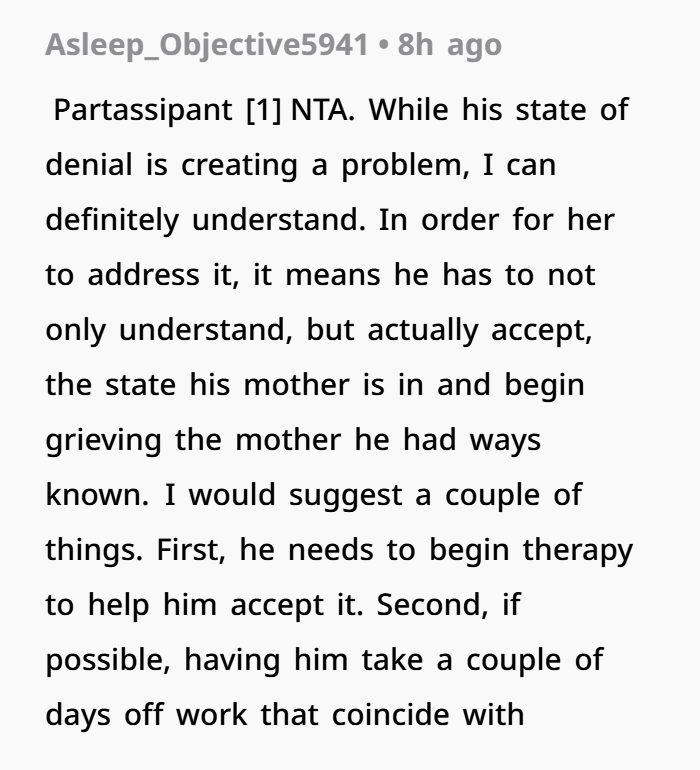
One thing that makes this disagreement harder is the husband’s unwillingness to talk about his mother’s condition.
This is understandable to some extent.
Many people feel uncomfortable talking about incontinence. It is a personal subject, and nobody wants to make an older parent feel embarrassed.
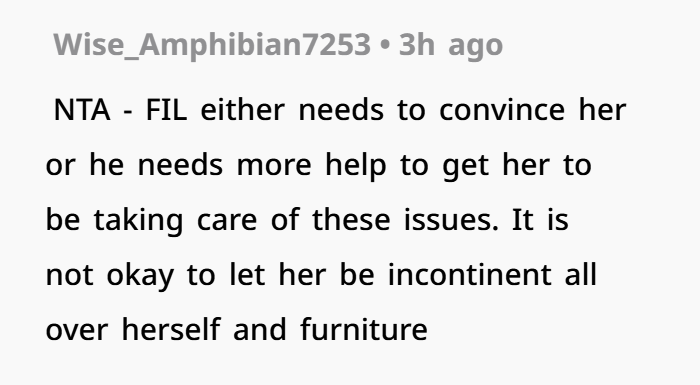
But staying silent can make things more difficult.
If everyone knows that accidents may happen, why wait until something goes wrong before making a plan?
The University of California, San Francisco’s Memory and Aging Center suggests handling incontinence with patience. Regular bathroom visits, suitable absorbent products, waterproof coverings, and a calm response can all help.
The husband does not have to tell his mother what she must wear.
Instead, he can have a kind conversation with her about what would make the visit easier.
Maybe she needs help reaching the bathroom. Maybe she would feel more comfortable with washable pads or protective underwear. The family can discuss different options without putting pressure on her.
The main goal should be to find something that works for everyone.
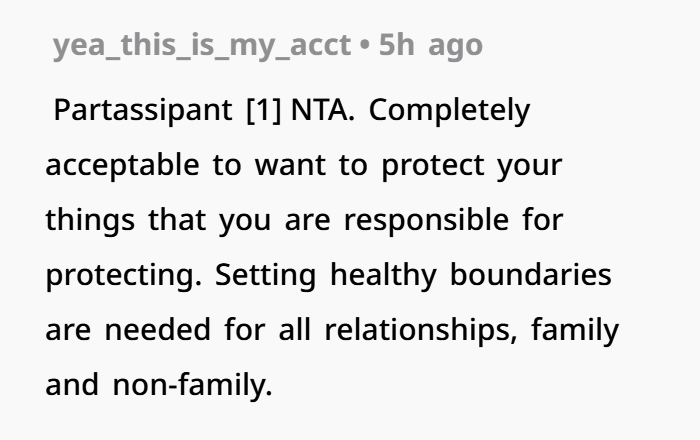
Wanting to Protect Your New Home Is Not Wrong
Let’s be honest. A new home is a big investment.
People spend a lot of money choosing furniture, decorating rooms, buying mattresses, and making their homes comfortable.
Nobody wants to see their new sofa damaged or deal with difficult cleaning problems.
Urine accidents can leave stains and unpleasant smells, especially when they happen repeatedly. Cleaning upholstered furniture can also take extra time and effort.
So, is it wrong to want to protect your furniture?
No.
Protecting your home does not automatically mean you lack compassion.
There are many simple ways to make a home more suitable for someone who needs extra care.
Here are a few ideas:
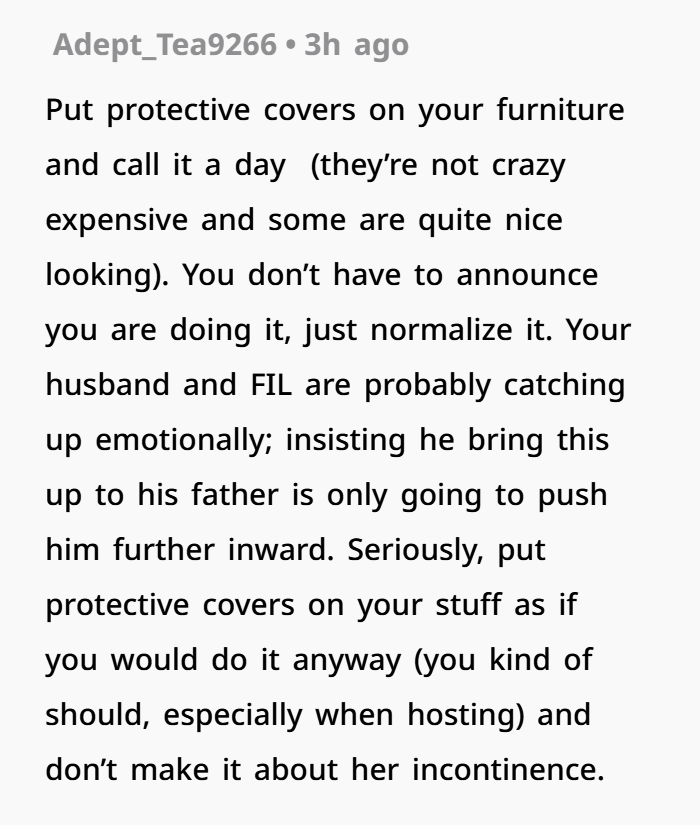
- Use washable waterproof sofa covers.
- Place absorbent pads on chairs and sofas.
- Keep the bathroom easy to reach.
- Offer bathroom breaks at regular times.
- Keep spare clothes and cleaning supplies nearby.
- Use suitable products for furniture and upholstery care.
- Ask a healthcare provider about comfortable incontinence products.
These steps are simple, but they can make a family visit much easier.
They also help the mother-in-law feel more comfortable because the family has already prepared for her needs.
Personal Hygiene and Skin Care Matter Too
There is another reason why incontinence should not be ignored.
Long periods of contact with urine can irritate the skin. This may lead to redness, soreness, and other skin problems.
Older adults and people who need help with personal care may be more likely to experience these problems.
Regular cleaning, changing wet clothing, gentle skin care, and using suitable absorbent products can help protect the skin.
This means the family should not focus only on furniture and household cleaning.
The mother’s comfort and health should be part of the plan, too.
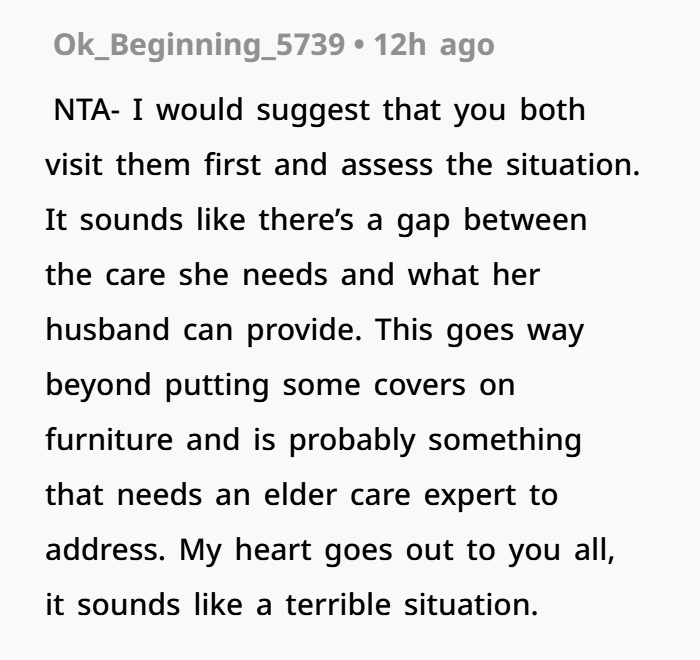
A healthcare professional can also suggest suitable products and care routines based on her needs.
Disability Does Not Mean Families Cannot Have Household Boundaries
Some people may also wonder whether asking for certain arrangements is unfair to a person with a disability.
In the United States, the Americans with Disabilities Act protects people with disabilities in many public places and other covered areas.
However, an ordinary privately owned home is generally not covered by the ADA just because a disabled family member visits.
This does not mean that families should ignore someone’s needs.
It simply means that this situation is mostly about finding a respectful agreement within the family.
The couple can make practical changes to help the mother-in-law while also protecting their home.
There is room for both kindness and reasonable household boundaries.
The Husband May Be Struggling With His Own Feelings
It is also worth looking at the husband’s side of the situation.
Sometimes, watching a parent grow older is harder than people expect.
Seeing a mother struggle with everyday activities can bring sadness, worry, and frustration. He may not want to accept how much her health has changed.
He may also be afraid that talking about incontinence will hurt her feelings.
These are real concerns.
But avoiding the subject does not help his wife or his parents.
His father is already dealing with similar problems at home. He has experienced the cleaning work and the cost of replacing furniture.
This is a sign that the family needs to prepare rather than hope nothing happens.
The husband could start by talking privately with his father.
He can ask what works at home, what kind of help his mother needs, and what products or routines they already use.
After that, he and his wife can decide how to prepare their home before the visit.
This way, nobody has to feel blamed or embarrassed.
Can You Be Kind Without Putting Your Home at Risk?
This family disagreement is really about finding a balance.
The woman wants to protect her new home. She knows that accidents may happen and wants to prepare before the visit.
The mother-in-law deserves to feel welcome, respected, and comfortable. She should not be judged because of a health condition.
And the husband needs to understand that avoiding an uncomfortable conversation is not always the kindest choice.
The best answer is probably somewhere in the middle.
The parents can still visit. The couple can use waterproof furniture covers, prepare the bathroom, and keep useful cleaning supplies nearby. They can also discuss suitable care products without making the mother-in-law feel pressured.
Both spouses should have a say in the final decision.
After all, a happy family visit should not come at the cost of someone’s dignity or another person’s peace of mind.
Sometimes, a little preparation and an honest conversation can prevent a much bigger disagreement later.
Comments From The Community