
Laid Off, Then Blamed When the System Crashed
Getting laid off is already very stressful. But it becomes even worse when a company starts blaming the employee for problems that were actually caused by poor planning and bad management. This is what happened to one senior software developer who worked for a logistics company for almost four years. He helped build and maintain their internal tracking system and often worked long hours to keep everything running smoothly.
During his time there, he repeatedly told management that the system needed better documentation, proper IT support, and stronger backend maintenance. However, the company focused more on cutting costs and adding new features instead of investing in system stability, software maintenance, and long-term infrastructure. Later, during a company restructuring, his role was removed, and he was let go, even though he had been a key part of the system’s development.
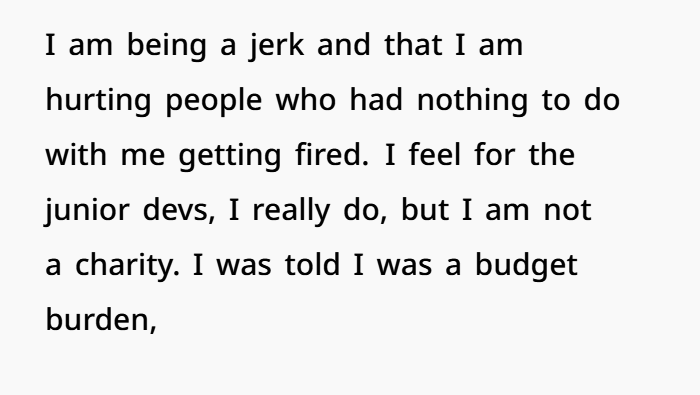
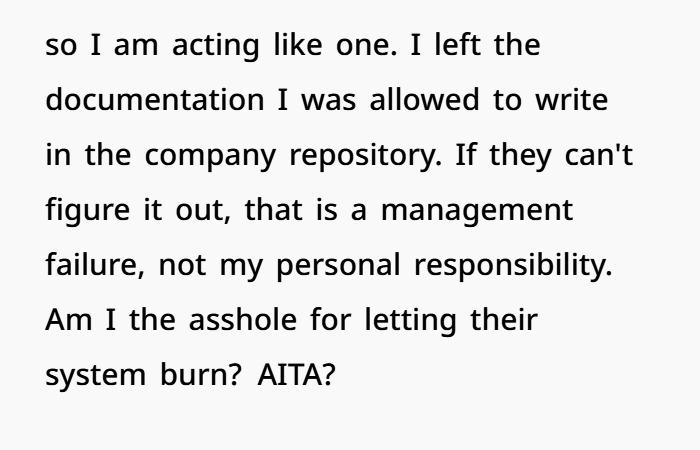
A few weeks after the layoff, the company faced a serious issue. A server update caused their logistics software to crash, and operations were badly affected. In panic, his former manager contacted him and asked for quick help to fix the system. Instead of providing free support, the developer responded professionally and offered IT consulting services at $250 per hour with a minimum contract requirement. This led to frustration from the company, and they accused him of being unhelpful and even blamed him for “bad code,” which caused debate about workplace accountability.
The situation raised an important question about modern workplace practices, software development jobs, and employee rights. Was the developer wrong for charging for his technical expertise after being laid off, or was the real issue the company’s lack of proper software engineering management, ignoring system maintenance, and poor decision-making that led to the failure in the first place?


This situation is very common in the software development industry and IT support jobs, even if companies do not always talk about it openly.
It often happens when a business depends too much on one senior developer to manage important systems. Everything seems fine for years, but problems start when that person leaves and the company suddenly cannot maintain the system properly.
One key developer holding everything together
In many tech companies, one experienced software engineer ends up knowing most of the system.
This happens because:
- There is not enough time for proper technical documentation
- Management focuses more on deadlines than system maintenance
- Old fixes and updates build up over time
- Knowledge stays in one person’s head instead of being shared
This creates a serious risk known in IT as the “bus factor.” It means if one key person leaves, the whole system becomes hard to manage.
Why documentation is so important in IT
The developer in this situation had already asked for time to write proper system documentation.
Good documentation helps teams:
- Understand the codebase
- Maintain software systems
- Fix bugs faster
- Onboard junior developers
- Reduce long-term technical problems
But in many companies, documentation is ignored because it does not bring fast results or immediate profit. Instead, companies focus on new features and quick delivery.
Over time, this creates technical debt, which makes systems harder to manage.
When the system starts breaking after layoffs
After the senior developer was let go, the company started facing problems.
This is a common issue in enterprise software systems when:
- Critical knowledge is lost
- Junior developers are left alone
- No proper training or handover exists
- Complex systems are not fully understood
Many companies wrongly assume that all developers can easily understand any code. But real-world systems are often built over many years and include complex logic, patches, and old updates.
Without proper documentation, even a strong codebase becomes difficult to manage.
Why blaming the developer is unfair
Instead of accepting internal mistakes, management is blaming the former employee.
But the developer:
- Did not sabotage the system
- Did not refuse work during employment
- Asked for documentation time before leaving
- Left the company in a professional way
This situation is not about poor coding. It is about poor project management and weak IT leadership decisions.
Blaming one person after a layoff often happens when companies face pressure and need someone to take responsibility.
Consulting work after employment ends
After leaving a company, a developer is not required to work for free.
If a business still needs help, they usually hire:
- IT consultants
- Freelance software developers
- Remote system engineers
This is standard practice in the software consulting industry.
Professional consulting rates can be high because the work is urgent and requires expert knowledge. In many cases, experienced developers charge high hourly rates for emergency system support.
This is not unusual in enterprise IT consulting.
Pressure on junior developers
Another big issue is the pressure placed on junior staff.
After the senior developer left, junior engineers are now trying to:
- Understand complex systems
- Fix production issues
- Handle system downtime
- Manage urgent technical problems
This is very stressful and can lead to burnout in IT support teams and software engineering jobs.
But the original developer is not responsible for this situation. The staffing and planning decisions were made by management.
The real problem: poor planning and technical debt
This situation highlights a common issue in many companies:
- Short-term cost cutting
- Ignoring system maintenance
- Lack of proper onboarding
- No long-term engineering planning
Over time, this creates unstable systems that depend too much on one person.
When that person leaves, the company faces serious operational problems.
Final thoughts
This is not about blaming one developer. It is about understanding how important software system maintenance, technical documentation, and good IT project management really are.
Strong systems are built on teamwork, shared knowledge, and proper planning.
When companies ignore these basics, they often face expensive problems later in the form of downtime, urgent fixes, and costly IT consulting services.
In the end, this situation shows a simple truth:
A healthy software system should never depend on just one person.