Wife Wants Me to Quit After I Rejected a Coworker’s Affair — But I Refused

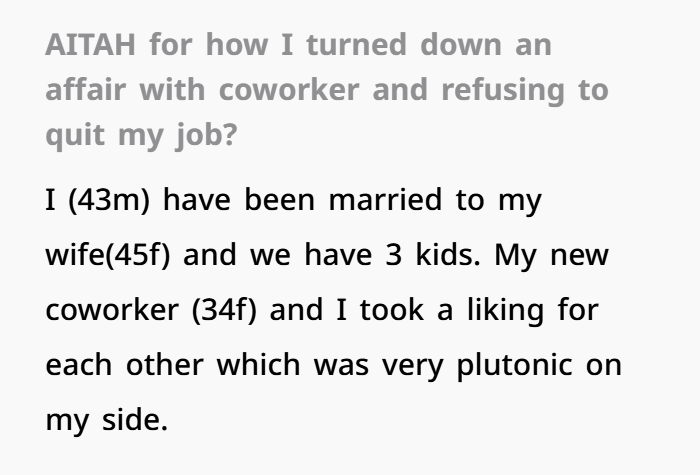
Sometimes the biggest problems in a marriage are not about what actually happened, but about what almost happened. In this case, a 43-year-old married father of three became friendly with a new coworker. From his side, the relationship was only professional and friendly. They talked and texted sometimes, but he did not see it as anything more than a normal workplace friendship.
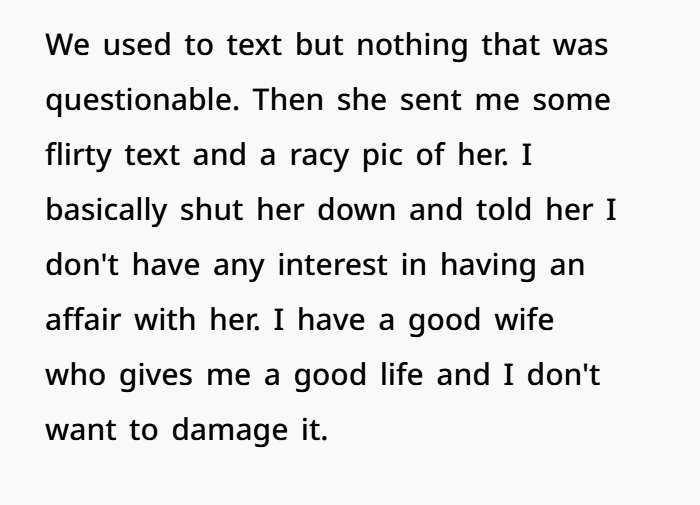
Later, the coworker sent him flirty messages and a private photo. He did not respond to it and immediately made it clear that he was not interested in an affair. He also said he values his marriage, his wife, and his children, and does not want to damage his family life or long-term stability.
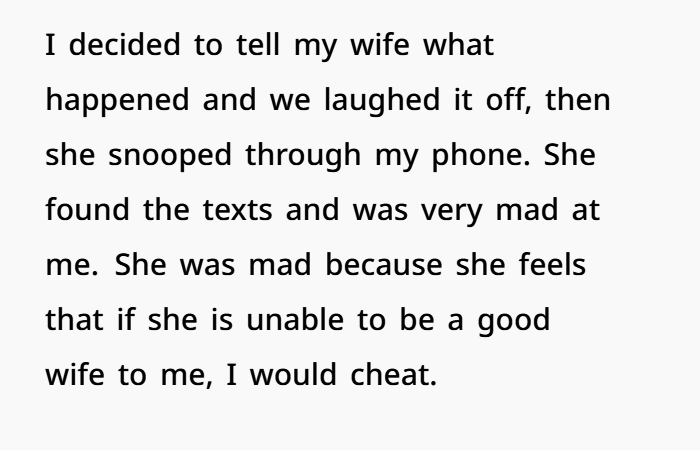
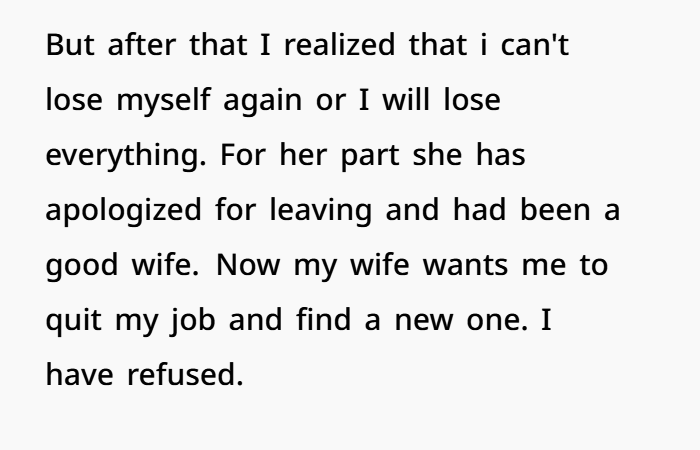
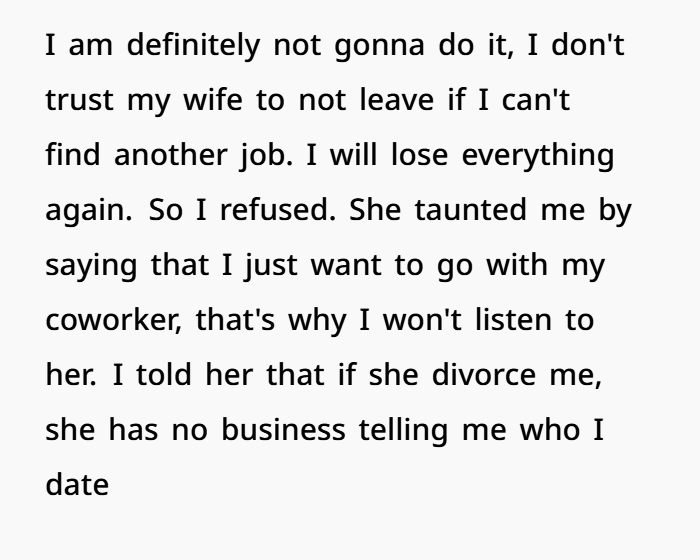
He decided to be honest with his wife and told her everything. Instead of feeling reassured, his wife became upset. She checked his phone, felt hurt by what she saw, and asked him to leave his job. This led to a serious conflict between them.
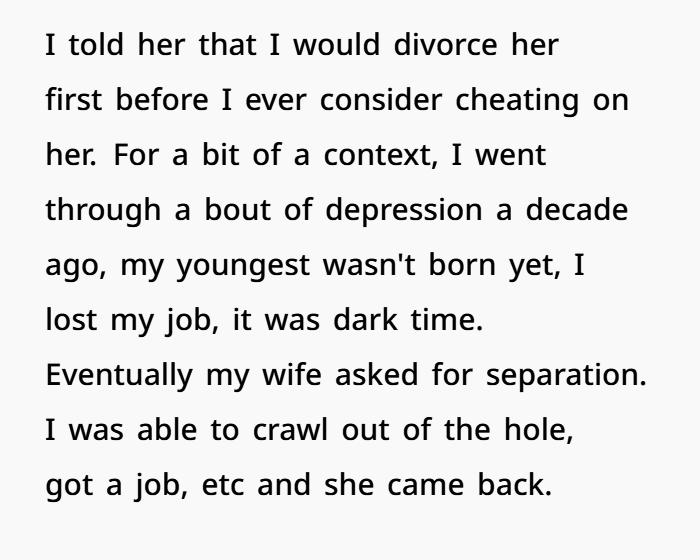
The situation is also connected to past experiences in their marriage. In the past, during a difficult time when he was struggling with unemployment and depression, they had separated for a while before later getting back together. Because of that history, both of them still carry emotional pain and trust issues.
Now they are stuck in a difficult situation where trust, emotional insecurity, workplace boundaries, and financial stability are all mixed together. The husband wants to keep his stable job, while the wife wants stronger reassurance and distance from the coworker. This has created ongoing stress in their marriage and shows how past experiences can affect present relationship decisions.

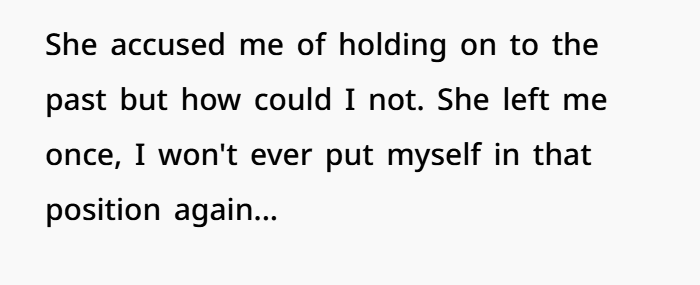
This situation is no longer just about a coworker. That was only the trigger. The real issue is deeper—long-term marriage problems, trust issues, emotional stress, and financial pressure that were already present in the relationship.
On the surface, it may look simple. A married husband gets attention from a female coworker. He does not respond in a romantic way. He tells his wife honestly. Case closed.
But real marriages are never that simple.
Why This Became a Big Marriage Problem
Both husband and wife are looking at the same situation, but in completely different ways.
The husband feels he did the right thing. He did not hide anything. He stopped the inappropriate behavior quickly. He did not continue texting or build a secret relationship. From his side, this feels like honesty, loyalty, and responsible behavior. He believes he protected the marriage.
But the wife may feel something very different.
The Wife’s Emotional Response
For her, the issue is not only the messages. It is what those messages might mean.
Another woman sending flirtatious texts or photos can create fear and insecurity. Even if nothing physical happened, it can still feel like emotional cheating or emotional closeness. She may start questioning how much interaction happened before she knew about it.
This is where jealousy and emotional insecurity become powerful. In marriage, feelings often react faster than logic. That is why trust issues in relationships can grow quickly, even without clear proof of cheating.
Past Trauma Is Affecting the Present
This couple is not only dealing with today’s problem. They are also carrying old emotional wounds.
In the past, the husband went through job loss, depression, and serious financial stress. During that time, the marriage also went through a separation.
Events like this often leave deep emotional scars. Even after couples stay together, the fear of “it could happen again” usually stays in the background.
This is why the current situation is so sensitive.
Job Security and Financial Stress
The wife now wants him to quit his job because of the coworker situation. She likely sees this as a way to remove the risk completely.
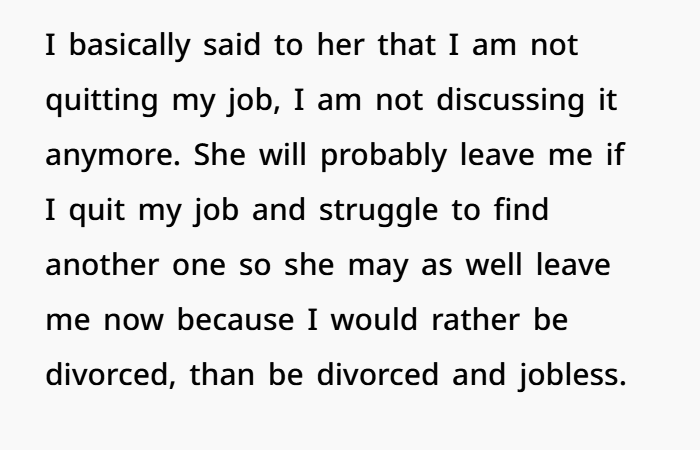
But for the husband, this is not just about a job. It is about survival, stability, and family financial security.
Leaving a stable job can feel extremely risky, especially for someone supporting a spouse and children. In today’s economy, finding a new job is not always quick or easy. That is why many people search for advice on financial planning for families, stable income strategies, and long-term career security before making big decisions.
For him, quitting the job feels like repeating one of the worst moments of his life.
Two Different Fears Driving the Conflict
Right now, both people are reacting based on fear instead of trust.
- The wife fears emotional cheating or future betrayal
- The husband fears unemployment and being abandoned again
Neither side fully trusts the other’s intentions at this point. This is why the conflict keeps growing instead of settling down.
In many cases like this, couples end up stuck in a cycle where every decision is seen through suspicion instead of understanding.
Why Ultimatums Don’t Fix the Real Issue
Telling someone to quit their job immediately may solve the surface problem, but it does not rebuild trust.
In fact, it can make things worse.
The real issue here is not only workplace boundaries. It is emotional safety in the marriage. Both partners are unsure if they can rely on each other during stress, financial hardship, or emotional pressure.
This is where marriage counseling or couples therapy can help. A trained professional can help both partners talk openly without blame and rebuild communication in a healthy way.
What This Situation Is Really About
This is not just a coworker issue.
It is about:
- Trust issues in marriage
- Emotional insecurity and jealousy
- Financial stress and job stability
- Past trauma from separation
- Fear of abandonment
- Long-term relationship anxiety
When all of these combine, even a small incident can feel very large.
Moving Toward a Healthier Solution
The coworker situation may disappear, but the emotional tension will not go away on its own.
For real healing, both partners need honest conversations about:
- What makes them feel safe in the relationship
- How to rebuild trust step by step
- How to handle workplace boundaries in a healthy way
- How to create a financial safety plan together
- How to support each other during career stress
This is where relationship advice and structured communication can make a real difference.
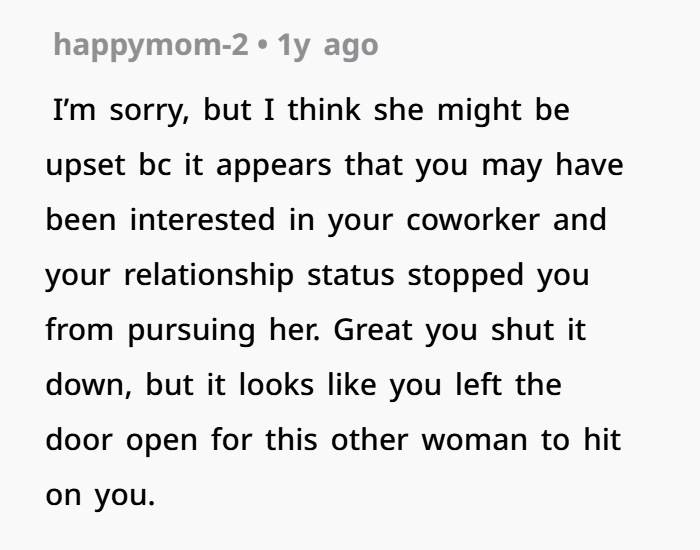
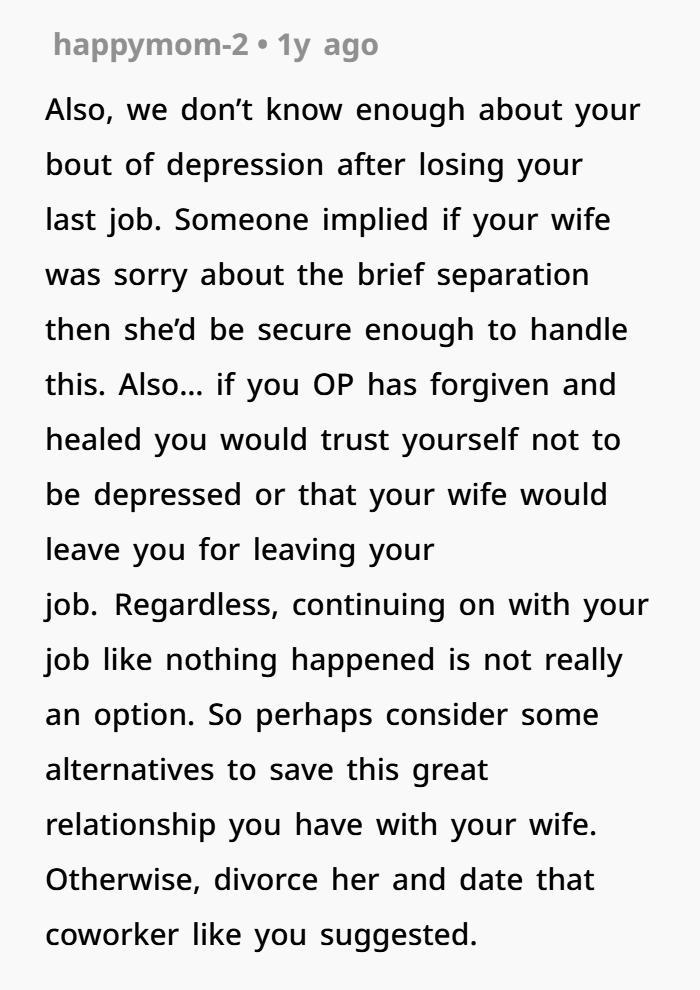
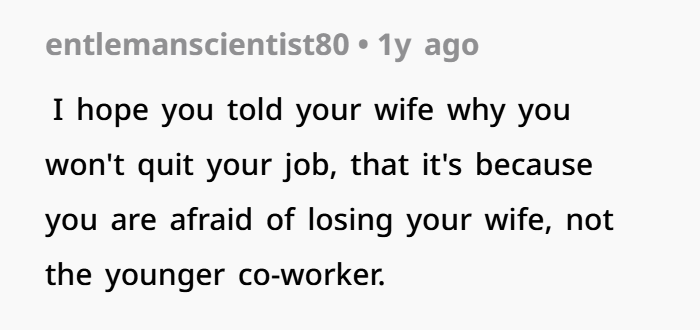
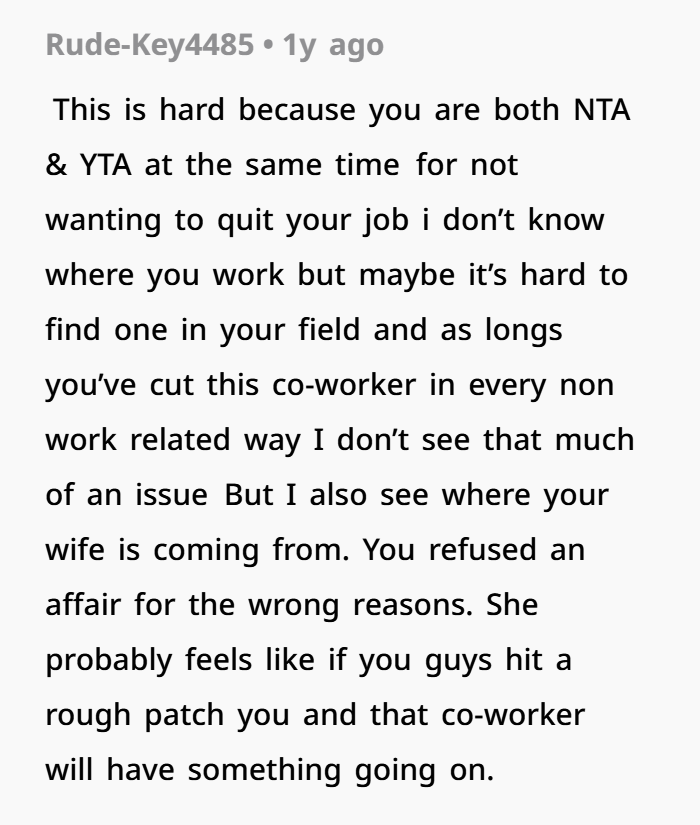
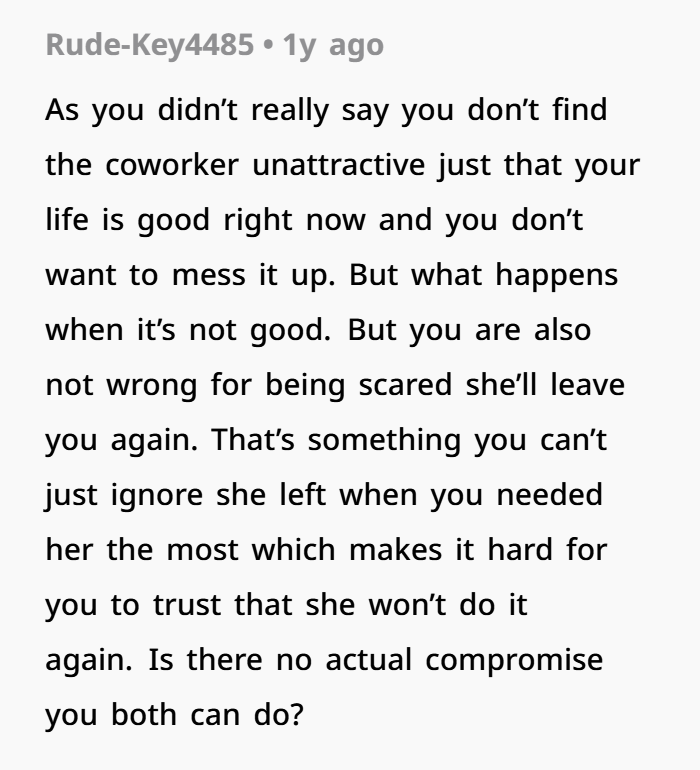
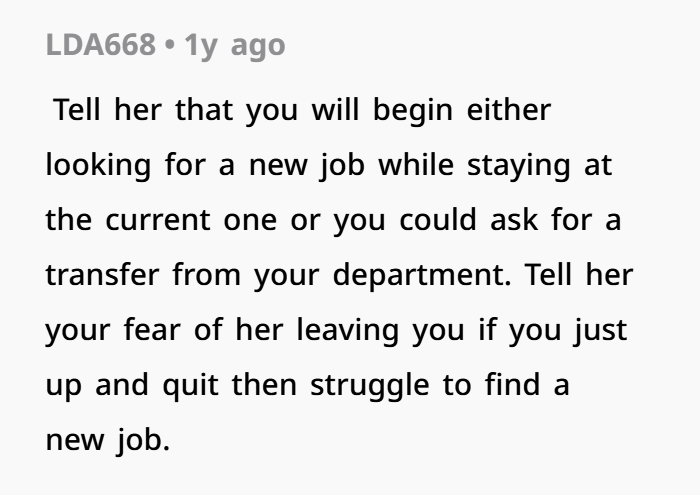
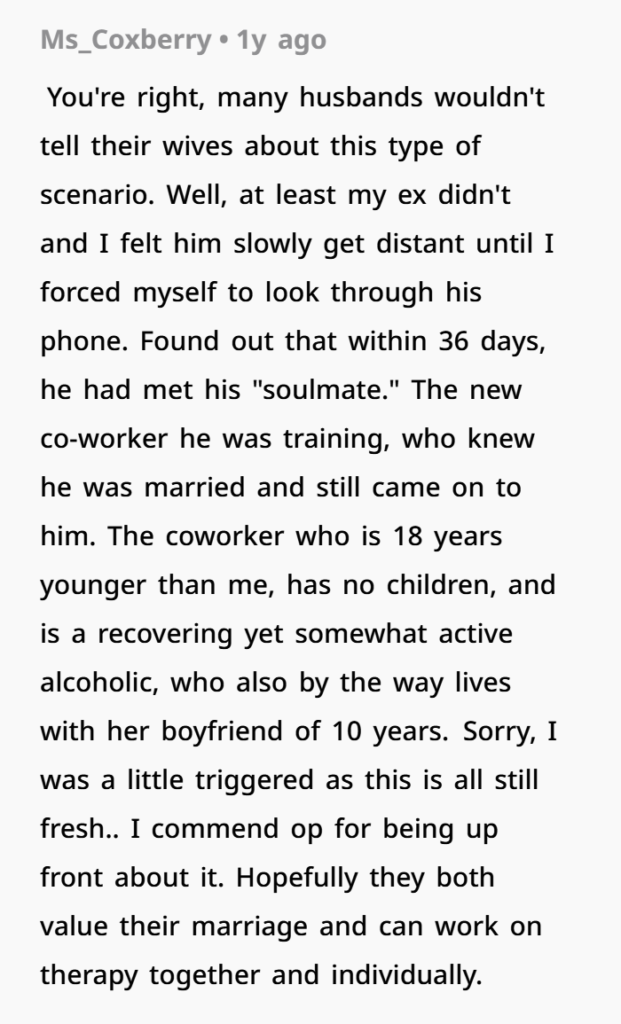
The Comments Are In

Final Thought
At its core, this is not just about one workplace interaction. It is about two people who are still carrying old pain, fear, and insecurity into their present marriage.
Until those deeper issues are addressed, every new problem will feel bigger than it really is.
Real healing will come from rebuilding trust, improving communication, and creating emotional and financial stability together—not from reacting to fear or making rushed decisions.