AITA for telling my dad his ‘favorite Christmas memory’ is one of my worst?
Growing up, Christmas Eve by the lake was a beloved ritual — just you and your mom, soaked in memories and quiet traditions. But after she died and your dad remarried, everything changed. What you hoped would be a final, private moment of closure with him turned into a “first family Christmas” with your new stepfamily in tow. Your dad saw it as a fresh start — a memory worth treasuring. You saw it as the moment everything you held dear was lost: the last chance for a mother‑daughter holiday, gone.
Years later, the difference in how you experienced that Christmas still hurts. When your dad recently brought it up as one of his favorite memories, you couldn’t stay silent. You told him you hated it. Not because he found joy, but because that joy came at the price of your grief, your sense of loss, and your unmet hope for closure. Now you’re left questioning — AITA for demanding he stop painting that painful memory as “happy” for both of you?
A woman wanted to celebrate Christmas Eve by remembering her late mother

However, her father ruined those plans
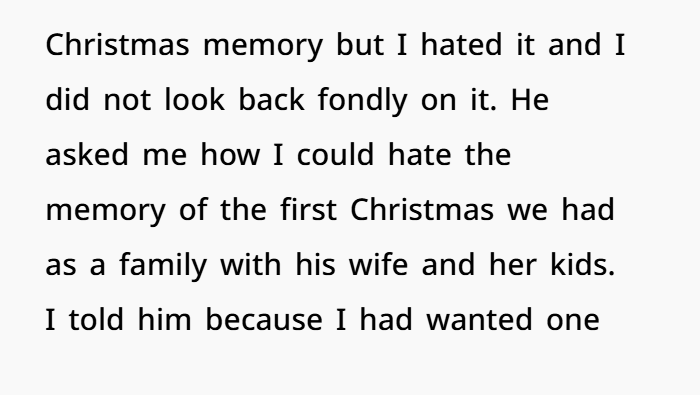
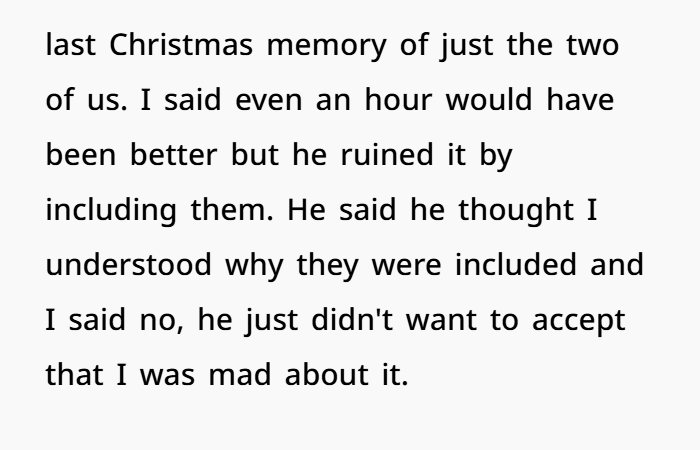
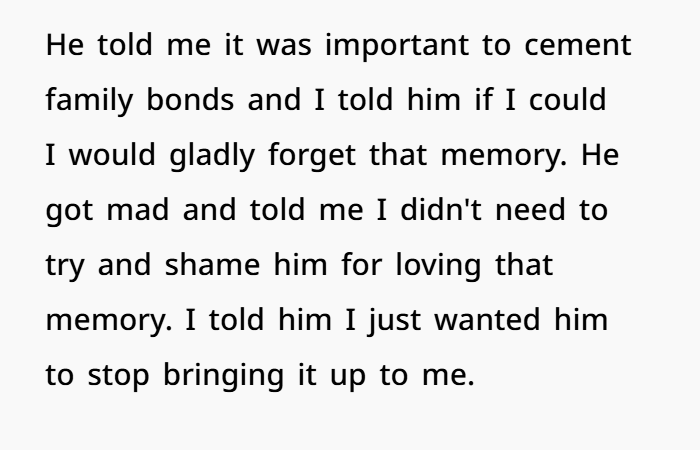
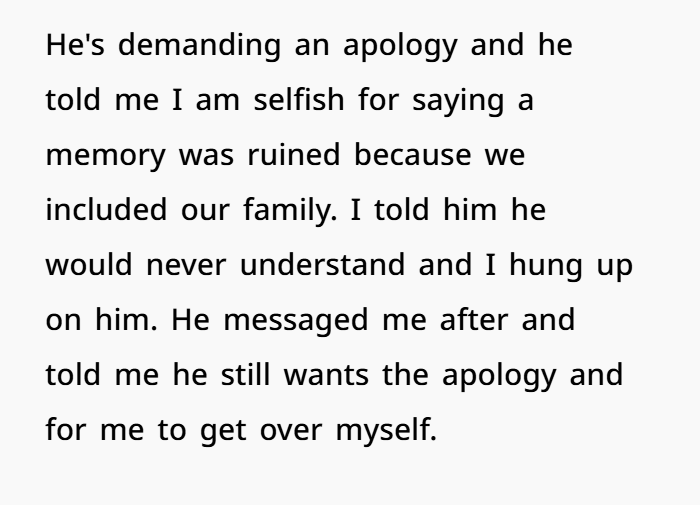
Man. There’s a lot tangled in this. Grief, loss, hope, expectations, time — and the messy aftermath they leave behind. I don’t think you’re automatically “the asshole” for saying what you felt. Sometimes honesty hurts. Especially when the “honesty” means slapping someone’s cherished memory in the face with somebody else’s pain. But maybe that’s what needed to happen. Because if you don’t speak up, pain stays hidden. And hidden pain doesn’t disappear — it grows, festers, echoes.
🎯 Why that Christmas could never be “just a good memory” for you
See, when a parent dies — especially the one you associated with all your warm, safe memories — you kind of hold on to just one simple wish: a chance to remember things the way they were. That final cozy Christmas with just you and your mom and dad by your side was your last “normal.” And you asked for one more. That “few hours at the lake” was more than a plan. It was hope. Hope that maybe the world would give you a sliver of closure, of familiarity, one more time.
When your dad said yes — but brought the step‑mom and her kids — it wasn’t just disappointing. It felt like a betrayal. Suddenly, like the grief you carried was invisible. Like your grief got replaced, sidelined. You weren’t just sad that the day changed — you were crushed that what you needed most was ignored. And that matters. Because grief — especially childhood grief — doesn’t go away neatly just because there’s a “new family.” It lingers. It shapes you.
When a parent remarries after the death or loss of a partner, psychologists and family‑psychology experts note the risks: children often have leftover grief, unmet expectations, maybe even a strong sense of loss for what “should have been.” HelpGuide.org+2CSI Pressbooks+2
Blending families doesn’t automatically fix grief. And bringing everyone together for holidays might feel “normal” on the surface — but underneath, there can be a swirl of complicated feelings: jealousy, sadness, resentment, shame, longing. Merel Family Law+1
That’s where you were — an 8‑year‑old kid wanting one last “normal” moment. And instead you got a “new normal” shoved in front of you, without permission. No wonder that Christmas became one of your worst memories.
🧠 Why your dad remembers it as a good time — and why that’s not wrong for him
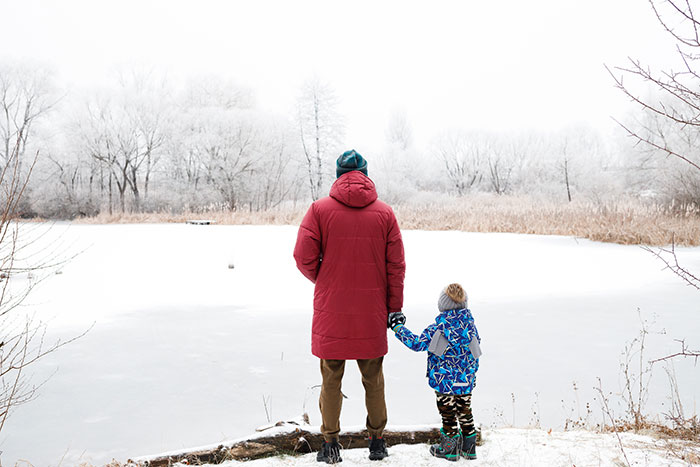
From your dad’s side, I get it. He probably thought: “This is new family. We’re bonding. Let’s create new, positive memories.” From his grief, from your mom’s death, maybe he was desperate to rebuild stability. Maybe having the new wife and her kids around felt like healing. Or “moving on.”
When people form blended families, research says many parents hope to get everybody comfortable together — quickly. They want the chaos of loss and separation to fade. They want unity, acceptance, a new start. Social Sci LibreTexts+2Merel Family Law+2
So him seeing that Christmas as a “favorite memory” — for him — isn’t “wrong.” People cope with loss different ways. He’s allowed to cherish what he saw as a new beginning.
But—and this is key—just because someone else treats a memory as good doesn’t magically erase the pain of those who suffered. Memories aren’t universal. They’re personal. Each person experiences the same event differently, depending on their history and mental space. And just because it felt like hope and healing for him doesn’t make it that for you.
💔 Why you asked him to stop bringing it up — and why that was valid
When he brought up that Christmas again — as light-hearted memory-talk — what did you hear? Maybe: “Your pain never mattered. I forgot about it. I rewrote our history as though it didn’t hurt you.” That stings.
He asked you to “apologize” for calling his memory “ruined.” But from your side, it wasn’t rude to call it ruined — because from your emotional reality, it was. And expecting you to pretend otherwise? That’s asking you to betray yourself.
Your feelings are valid. You weren’t asking him to delete the memory. You asked him to respect that it meant something different for you. To stop framing it like it was good for everyone. Because it wasn’t.
What you did wasn’t about shaming him for happiness — it was about asking for empathy. Asking him to accept you as you are, not as what his “new family ideal” wanted you to be.
🔄 Blended families don’t heal all pain — they just add layers
Here’s something a lot of people gloss over: remarriage doesn’t erase grief. It complicates it. Sure, adding new family members might bring joy. But it often brings complexity for children of loss. Feelings of betrayal, abandonment, jealousy, fear of being replaced, or of becoming invisible. That doesn’t vanish just because there’s a “new parent.” HelpGuide.org+2CSI Pressbooks+2
For many kids — even if they grow into adults — the holidays remain tough. They don’t just celebrate. They grieve. Because holidays keep reminding them of what was lost. The same holiday that brought laughter to new kids becomes the painful echo of memories, replaced traditions, and unfulfilled closure. FamilyLife® – A Cru Ministry+1
So when your dad tries to “fix” a memory by casting it as a fresh happy moment, from his side, he’s healing. But from yours, he’s rewriting. And rewriting grief doesn’t heal it — it hides it.
💡 What this means for relationships — even beyond family
Your situation highlights a bigger truth about grief, loss, and blended families, especially when children are old enough to remember the “before.”
- Everyone copes differently. What’s healing for one might be hurting for another.
- It’s possible — even likely — for the same event to leave wildly different emotional residues on different people.
- Remarriage and “new families” don’t automatically heal the past. They just build a new layer on top of it. Without acknowledgement, the old layer stays.
- Communication and empathy are everything. If people involved don’t talk about grief and expectations, there’s no real healing — just suppression disguised as “moving on.”
For you to demand that your dad stop celebrating that Christmas the way he does — that’s not “being selfish” or “shaming him.” It’s asking for emotional honesty. It’s about making space for your grief, your truth, and your healing.

If families don’t make space for that — for grief, for loss, for old memories — then “togetherness” becomes a pressure cooker of unresolved feelings. And someday, resentment bursts out, usually during moments meant to bring joy: birthdays, holidays, anniversaries.
The author provided more information about her story
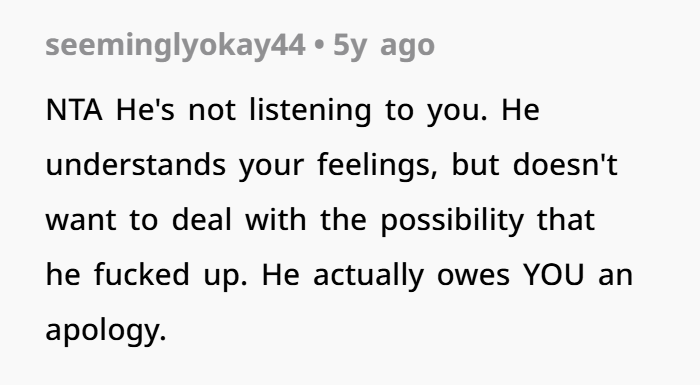
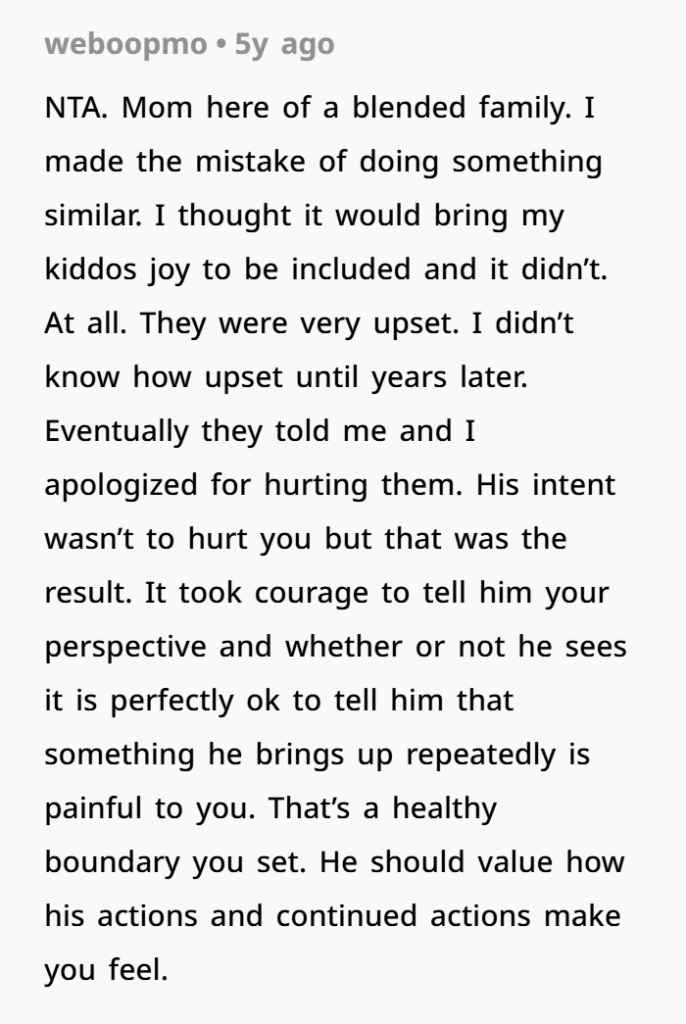
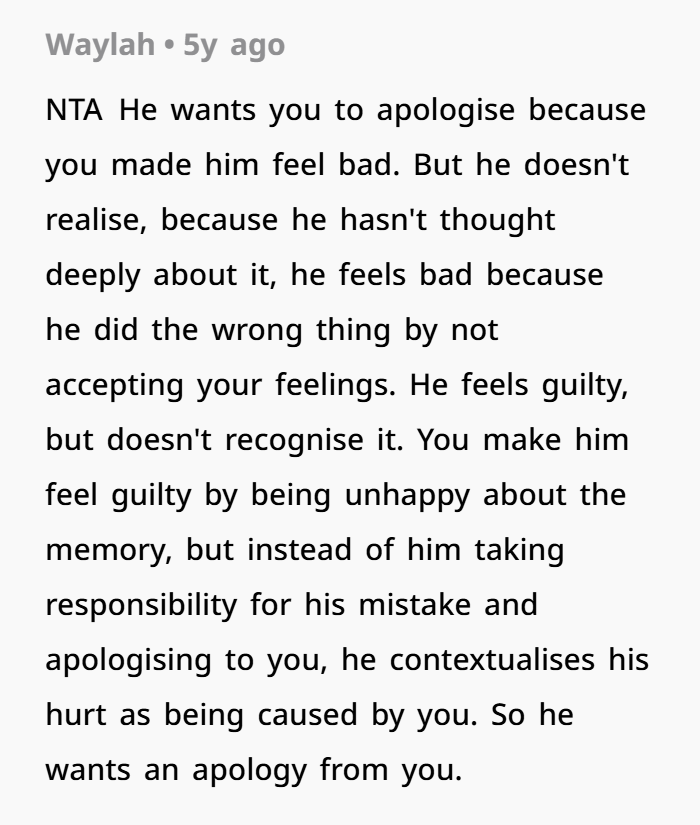
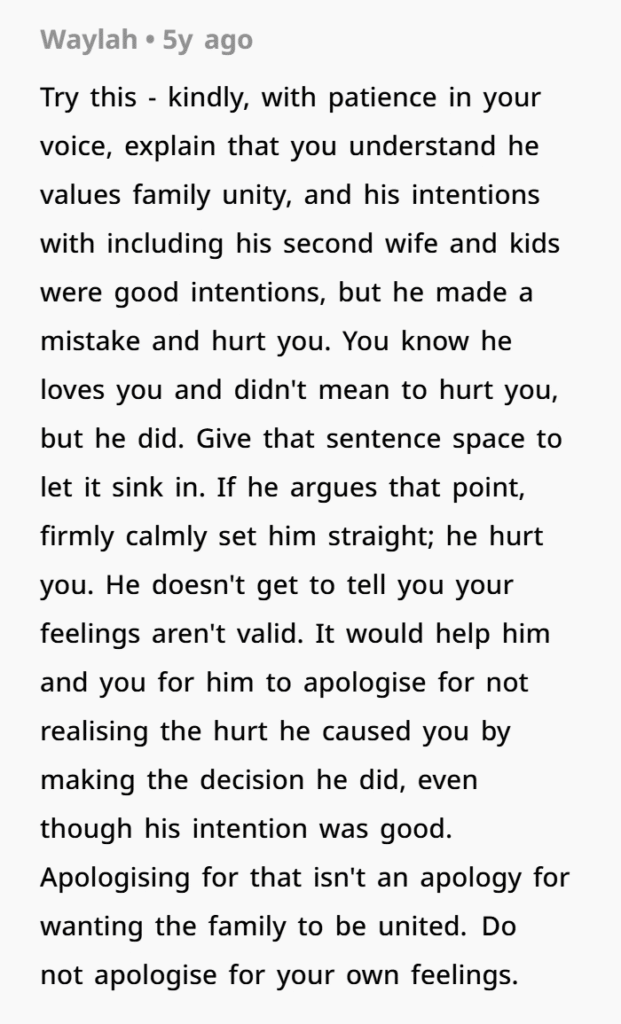
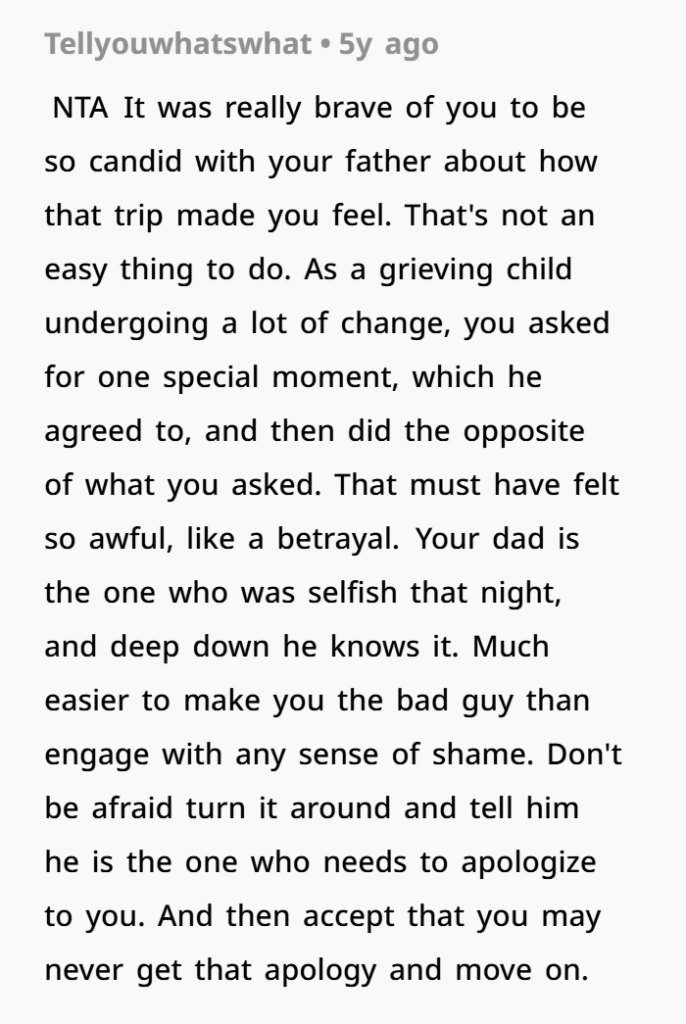
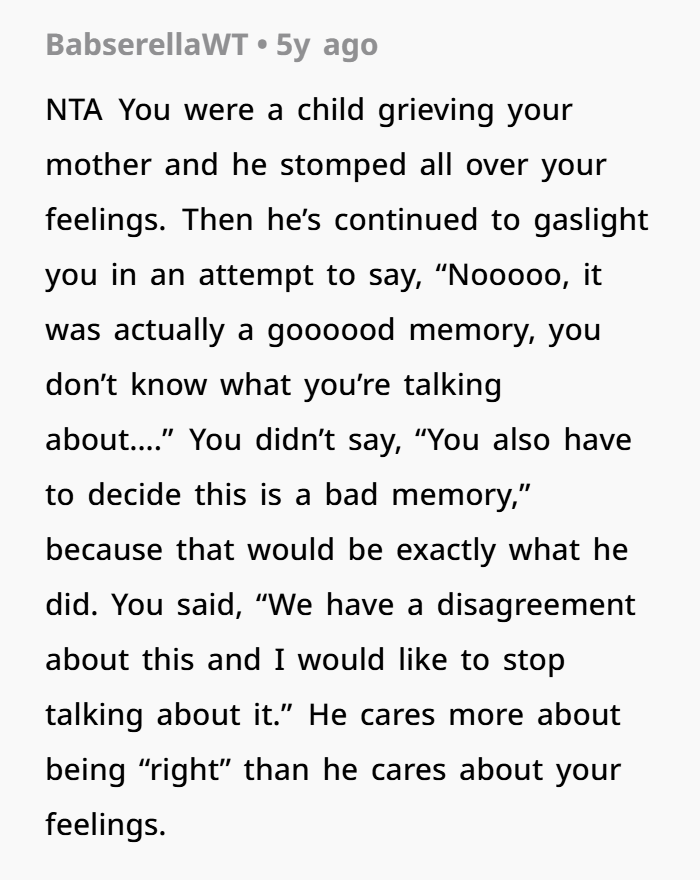
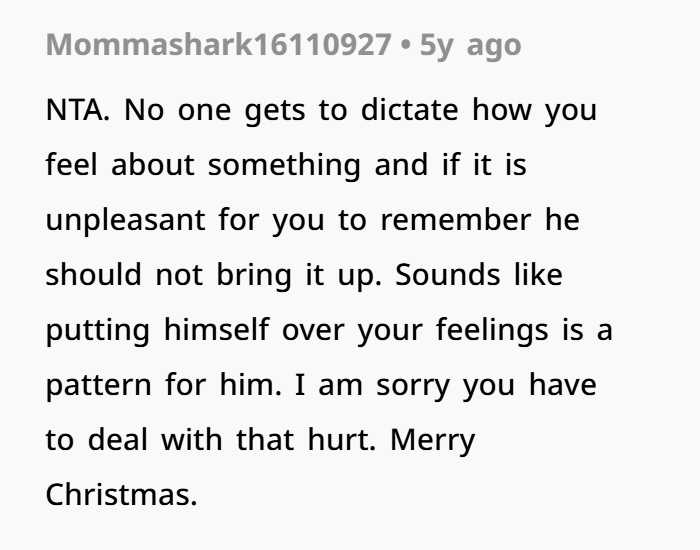
🎯 So — are you “TA”?
No. Not really.
You were robbed of a chance at closure. Your grief shouldn’t be repackaged as “just another memory.” And asking for boundaries — that when Dad talks about that memory, you don’t have to smile — is fair. Valid. Real.
Yes, maybe it came out harsh. Maybe “I hated that memory” felt like salt on a wound. But sometimes salt cleanses. It forces honesty. It makes people see the scars we carry.
If anything — the real “mistake” would’ve been staying silent. Because silence only lets trauma hide in the shadows.