AITA for Cutting Off My MIL After She Crossed a Line With My Newborn?
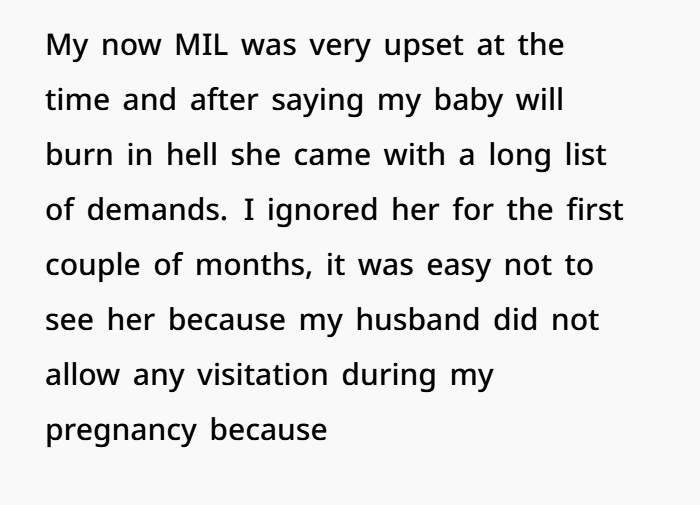
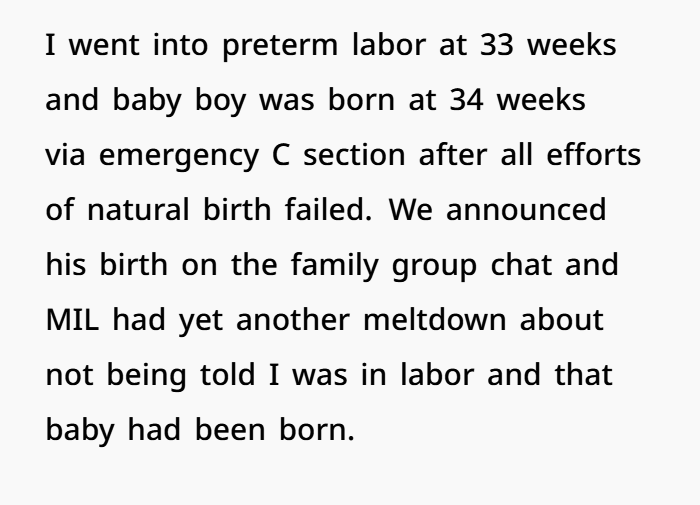
A 22-year-old new mother and her 27-year-old husband were already under a lot of stress during pregnancy, which started before their marriage. From the beginning, there were family tensions, especially with the mother-in-law. She reacted badly to the pregnancy news and made comments that caused more conflict instead of support.
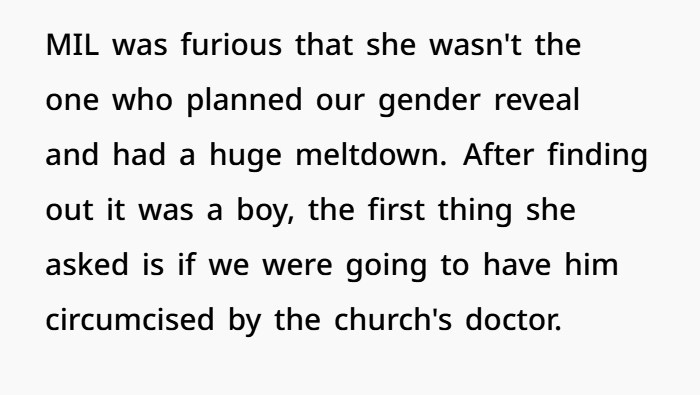
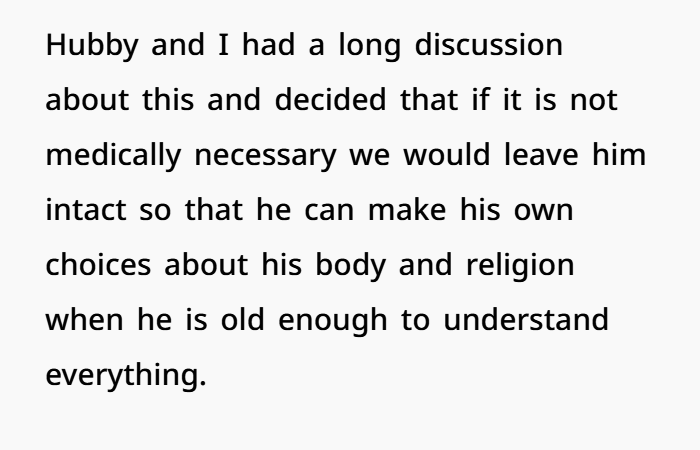
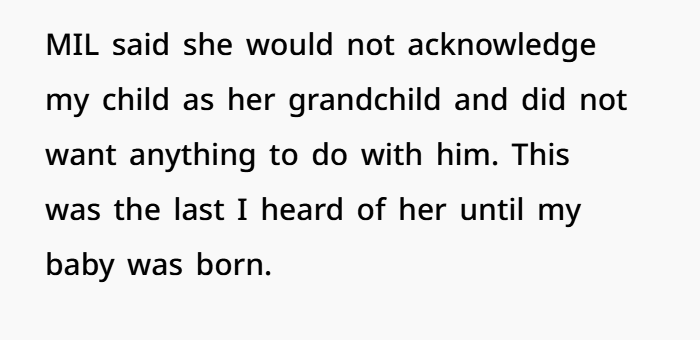
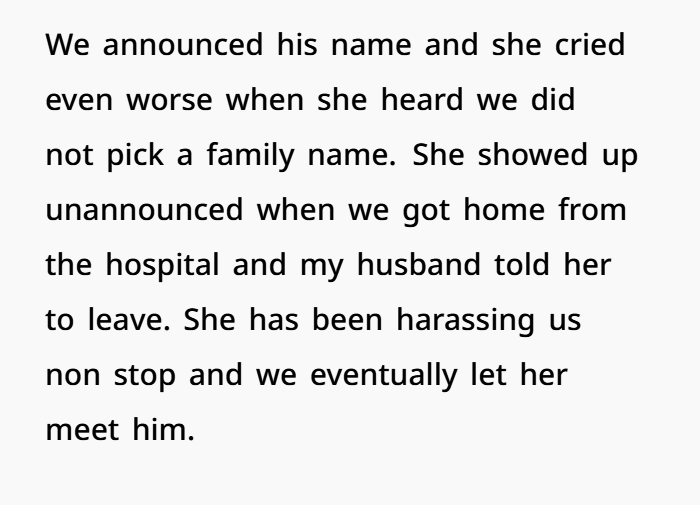
As time went on, the mother-in-law became more controlling. She tried to influence decisions like pregnancy announcements and even pushed personal and religious preferences, which made the couple feel uncomfortable. They started keeping some distance to protect their mental peace and reduce family drama, but the situation kept getting worse with every interaction.
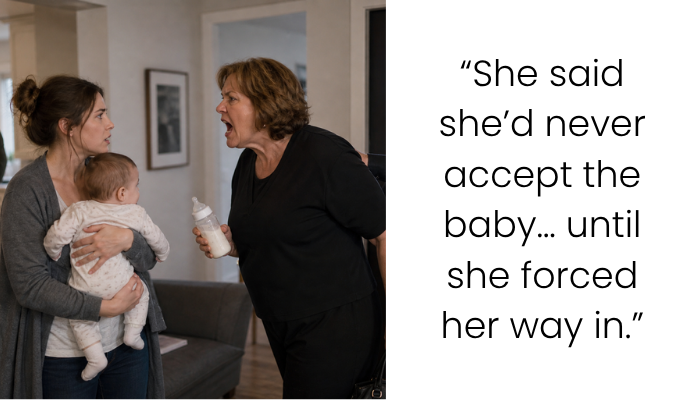
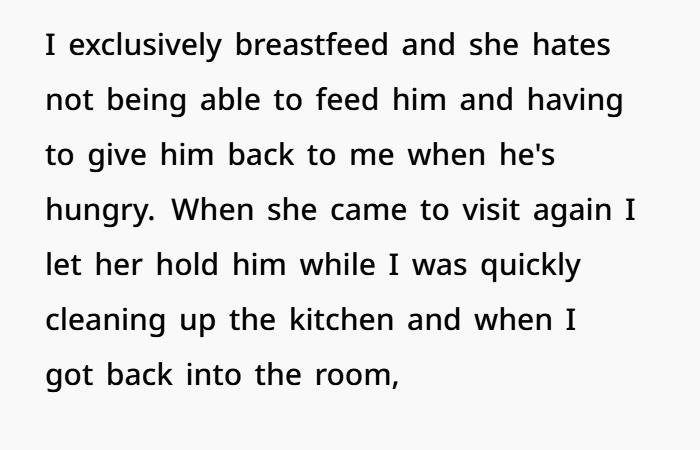
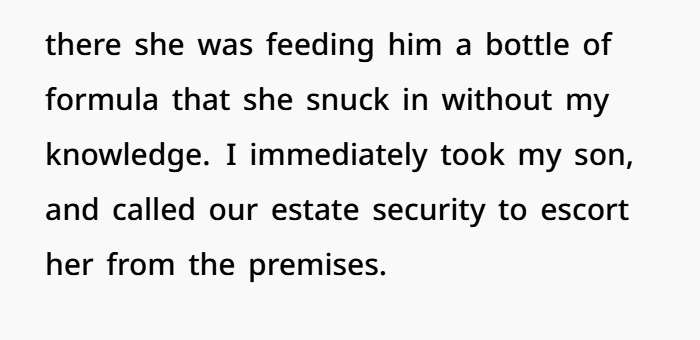
After an emergency C-section and the baby being born early, the stress did not stop. The mother-in-law showed up without permission and did not respect the parents’ rules. The most serious issue happened when she reportedly gave formula to a breastfed newborn without asking the parents. The mother saw this as a major violation of baby care decisions and child safety guidelines, so she asked her to leave. The husband supported his wife and also cut contact to protect their new family.
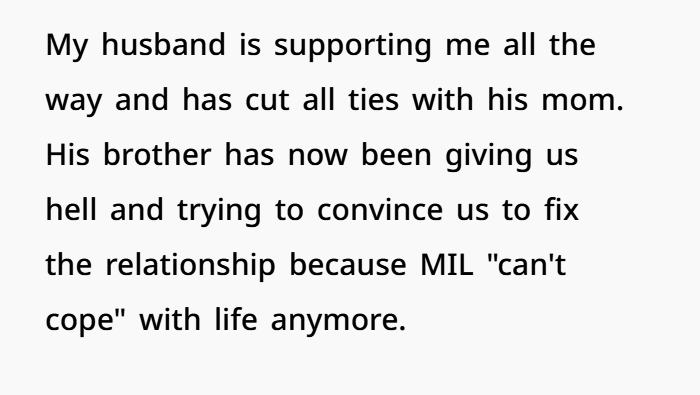
Later, another family member suggested the mother-in-law may need mental health support and blamed the new mother for overreacting, which created more family conflict. Now the situation has turned into a difficult debate about parenting boundaries, postpartum mental health, family interference, and who has the right to make decisions for a newborn baby.




This situation is not just a normal family disagreement. It involves newborn baby care, parental rights, child health safety, and family boundaries.
Parents have the main decision-making rights
In any situation involving a baby, the parents are the main decision-makers. This includes:
- feeding choices
- medical care
- who can handle the baby
- daily care routines
These are part of basic parental rights and child care responsibility.
When someone outside the parents makes decisions without permission, it becomes a serious boundary issue.
Why the baby’s age matters
The baby in this case was born at 34 weeks, which is considered late preterm.
Babies born early often need extra care because:
- their immune system is still developing
- feeding needs to be carefully managed
- digestion can be sensitive
- weight gain is closely monitored
Because of this, doctors often recommend a very specific feeding plan, sometimes including exclusive breastfeeding or medically guided feeding.
Changing feeding methods without medical advice can cause:
- stomach problems
- feeding issues
- possible allergic reactions
- stress for the newborn
This is why infant health safety is taken very seriously.
What went wrong with the mother-in-law’s actions
In this situation, the mother-in-law:
- did not follow the parents’ instructions
- gave formula without permission
- ignored feeding rules set by the parents
This is not just “helping.” It is called boundary crossing in family relationships.
In serious cases, interfering with a baby’s care without consent can also create legal concerns related to child safety and custody rights.
Why this behavior is a red flag
From a relationship and psychology point of view, this kind of behavior often connects to control issues in family relationships.
Sometimes, family members:
- struggle to accept boundaries
- feel they should have authority over the baby
- believe their experience matters more than parents’ decisions
This can lead to:
- guilt pressure
- emotional manipulation
- ignoring rules
- repeated boundary breaking
The issue of consent in parenting
Even though babies cannot give consent, parents give consent on their behalf.
That means:
- parents decide what is safe
- parents approve feeding and care
- parents control medical decisions
When someone ignores these choices, it becomes a serious consent and parenting responsibility issue.
Husband’s response
The husband fully supported his wife.
This is important in marriage and in-law conflict situations because experts often say couples should stay united when dealing with family pressure.
A strong relationship usually means:
- supporting your partner
- setting clear boundaries with family
- protecting the baby’s safety first
Why “just keep her happy” is a problem
Some family members suggested avoiding conflict by keeping the mother-in-law happy.
But this often leads to unhealthy patterns.
This is known in family psychology as:
- avoiding conflict instead of solving it
- ignoring boundaries to prevent drama
- allowing repeated behavior to continue
In the long term, this can make the situation worse, not better.
Mental health and emotions
It is possible the mother-in-law is also dealing with emotional or mental stress.
But mental health struggles:
- explain behavior
- do not excuse unsafe actions
If someone is struggling emotionally, the correct response is support or therapy, not allowing unsafe behavior around a newborn.
Why postpartum period matters
The mother is also in the postpartum recovery stage, which is a sensitive time.
New mothers may experience:
- postpartum anxiety
- postpartum depression
- physical recovery stress
- emotional exhaustion
Adding family conflict during this time can increase stress for both the mother and baby.
Pattern of behavior in the story
This was not a single incident. There was a clear pattern:
- negative behavior during pregnancy
- emotional pressure and conflict
- ignoring rules and boundaries
- showing up uninvited
- secretly feeding the baby without permission
The final incident was the most serious because it involved direct infant care and feeding decisions without parental consent.
Why trust was broken
In situations involving a newborn, trust is very important.
Once parents feel that someone:
- ignores rules
- makes secret decisions
- disrespects safety instructions
it becomes very difficult to rebuild trust.
This is especially true in newborn care and family safety situations.
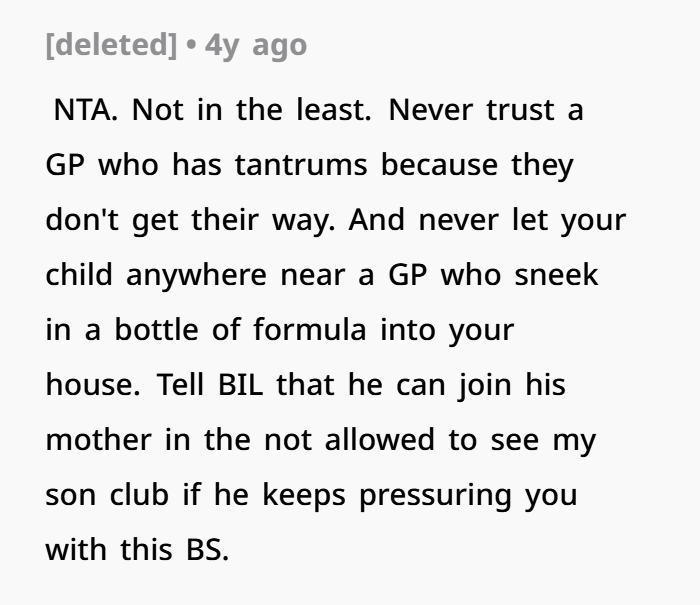
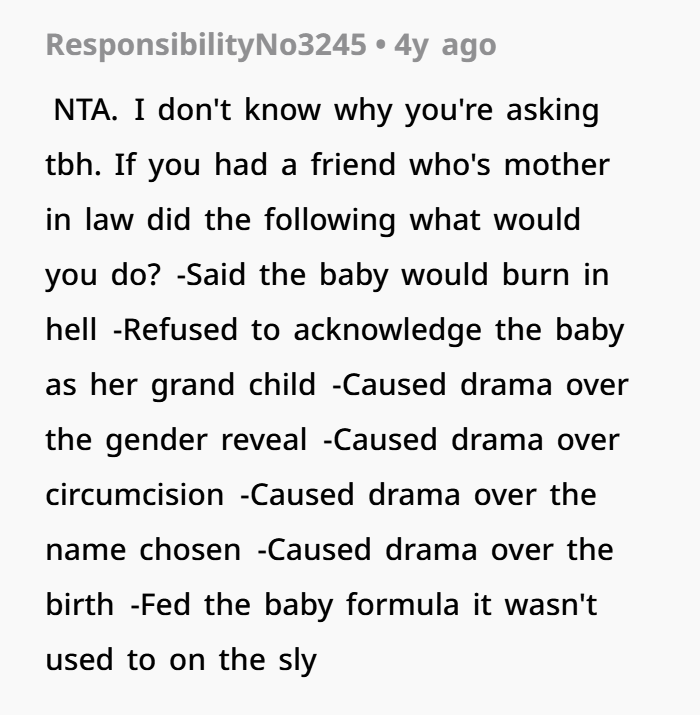
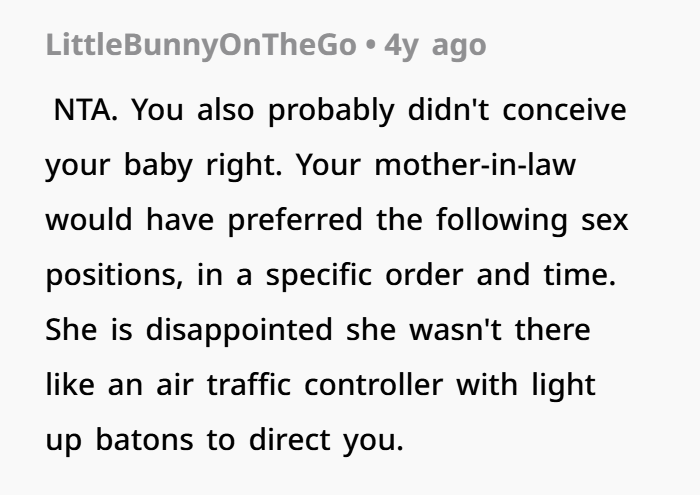
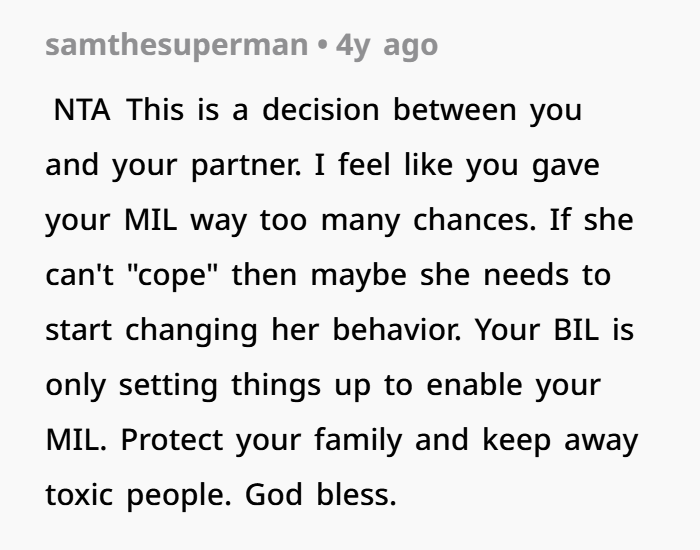
What The Comments Reveal



Final thoughts
This story is not only about family conflict. It is about:
- parental rights and decision-making
- infant health and feeding safety
- family boundaries and respect
- child care responsibility
- postpartum stress and recovery
In the end, the biggest issue is simple:
When it comes to a newborn baby, safety rules set by parents must be respected. Even well-meaning actions can become harmful when they are done without permission.