My Boyfriend Asked Me for a $1,500 Loan for a Spider-Man Costume
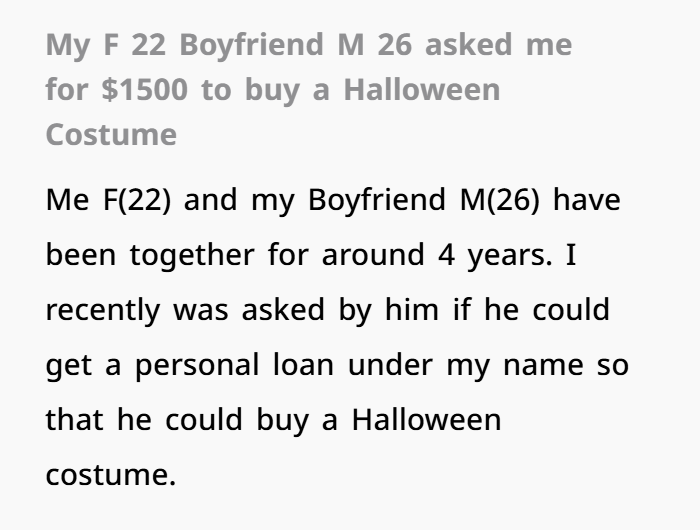
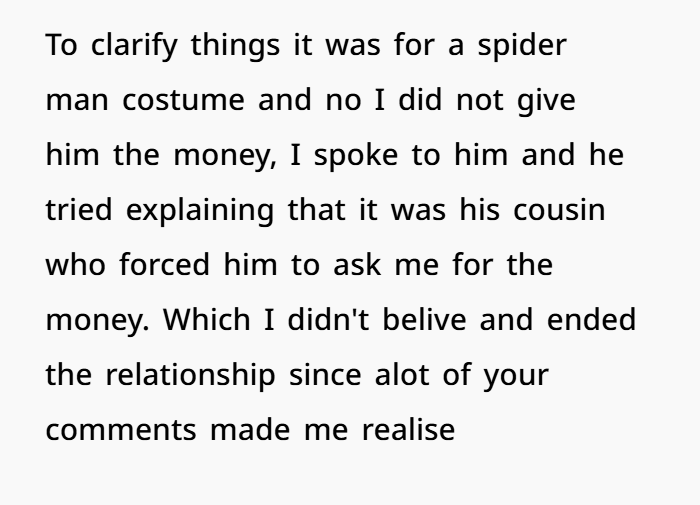
The story begins with OP, a 22-year-old woman who has been dating her 26-year-old boyfriend for four years. What used to be a long-term relationship built on familiarity and shared history has slowly turned into a financial and emotional nightmare.
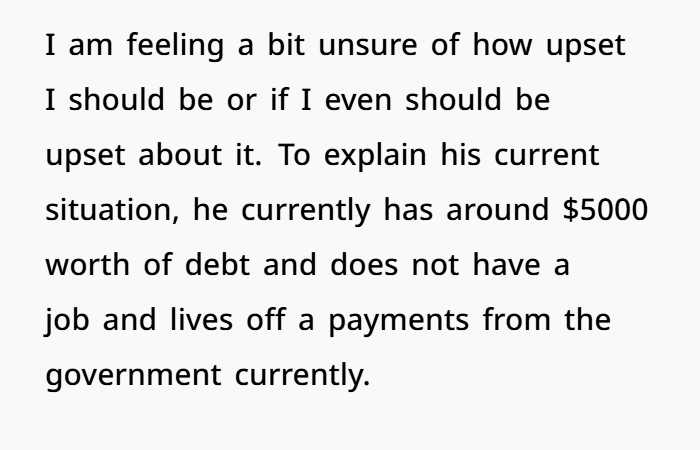
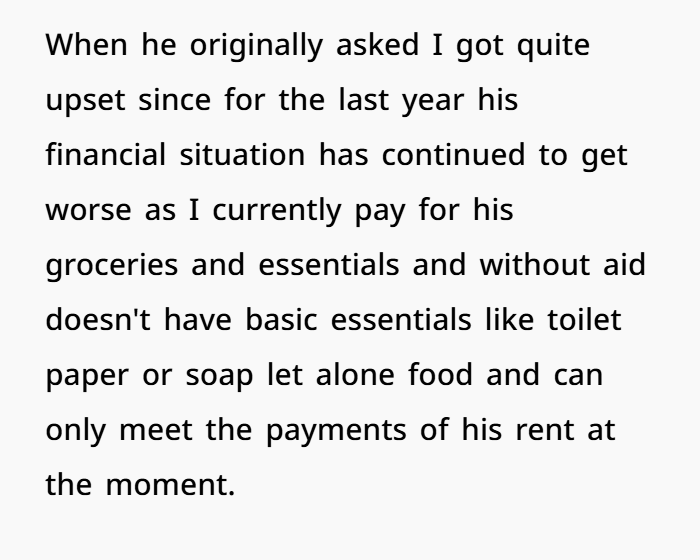
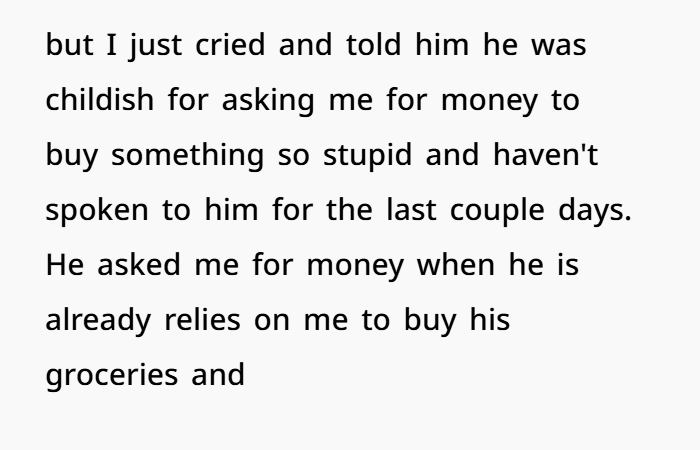
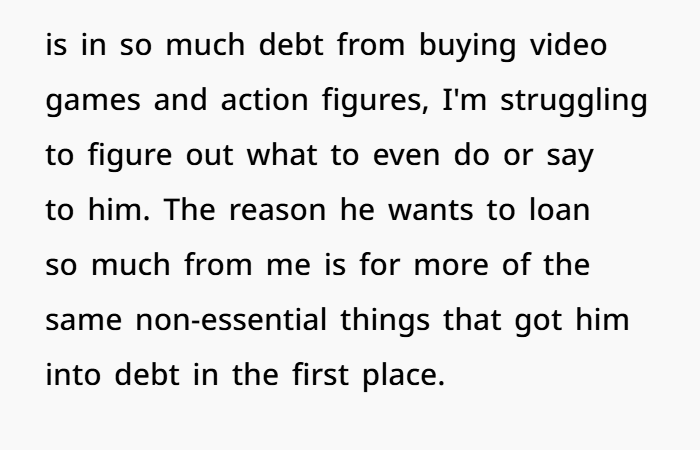
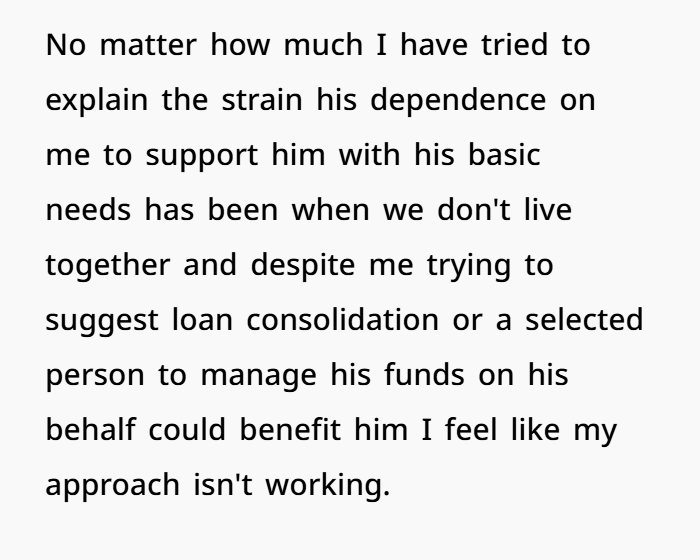
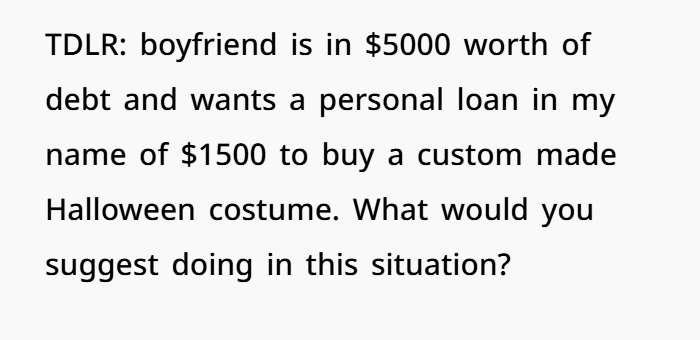
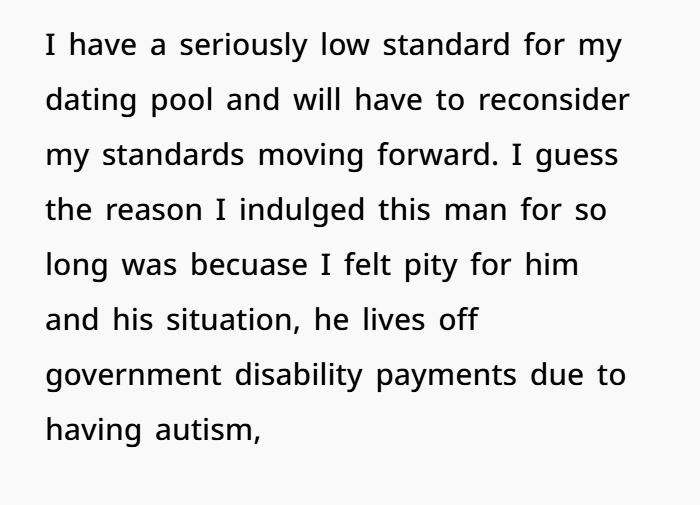
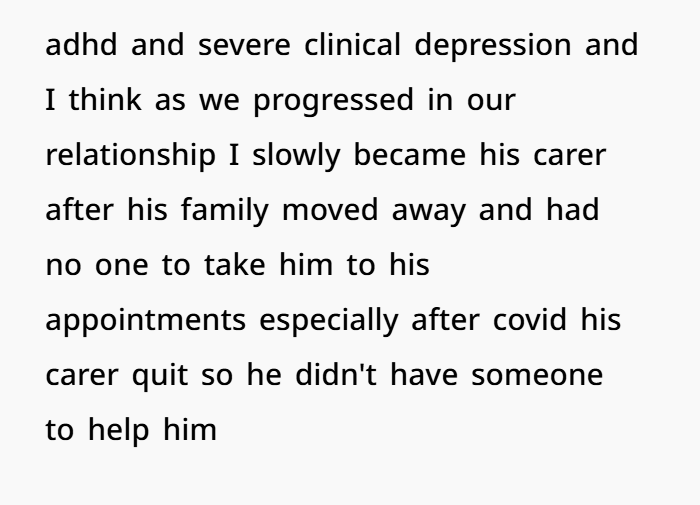
Her boyfriend, who hasn’t held a job in quite some time, already carries about $5,000 in debt from impulsive spending — things like video games and collectibles. He lives off government assistance, and OP has been quietly footing the bill for his groceries, toiletries, and daily needs. She’s essentially functioning as his financial caregiver.
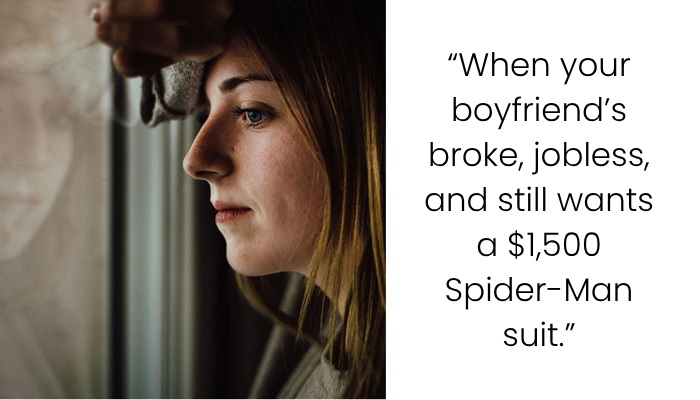
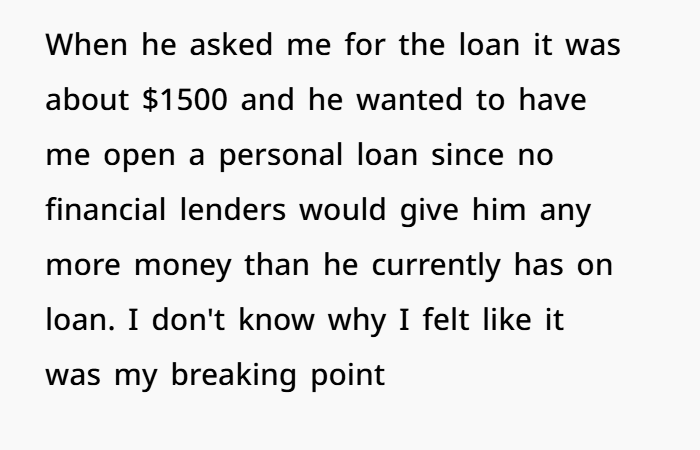
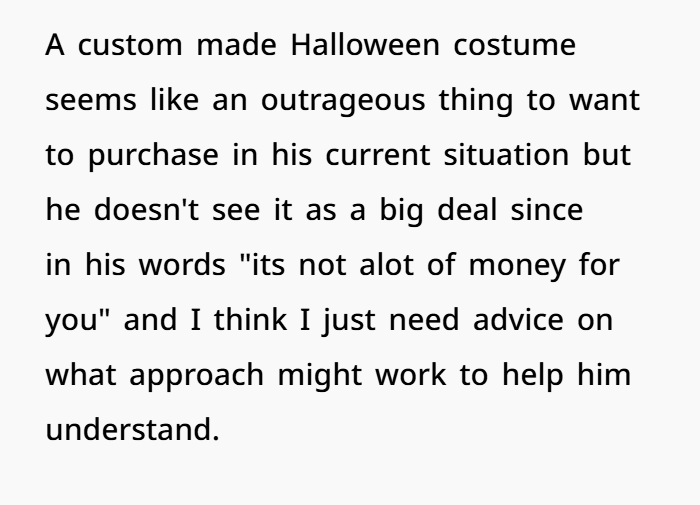
Then comes the tipping point: he asks her to take out a $1,500 loan — in her name — so he can buy a custom-made Halloween costume. When she reacts with shock and tears, he can’t seem to understand why it’s such a big deal, brushing it off with “It’s not a lot of money for you.”
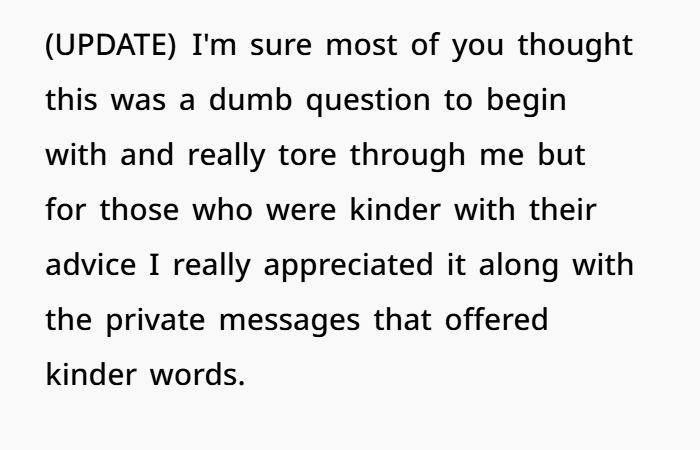
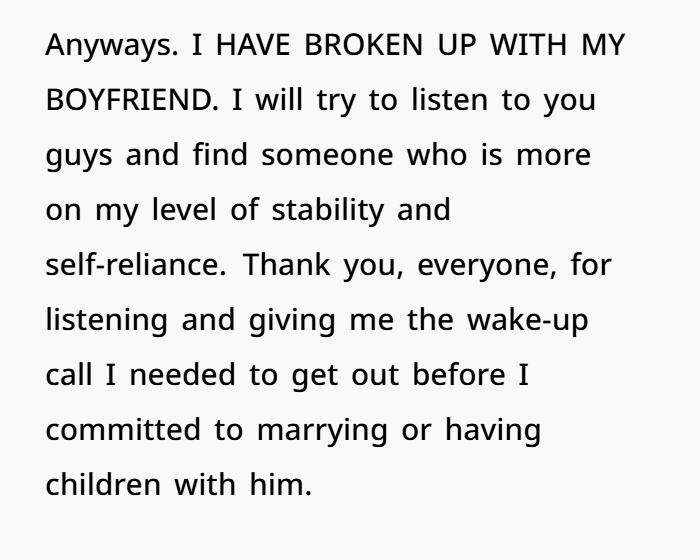
That line — minimizing her hard work while expecting her to subsidize his fantasy spending — is where things finally break. OP realizes she’s been enabling not love, but dependence. After talking it through (and seeing hundreds of Reddit comments telling her what she already knew deep down), she finally breaks up with him.
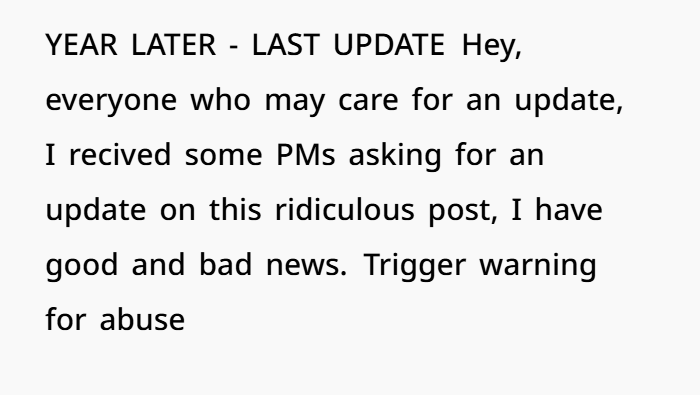
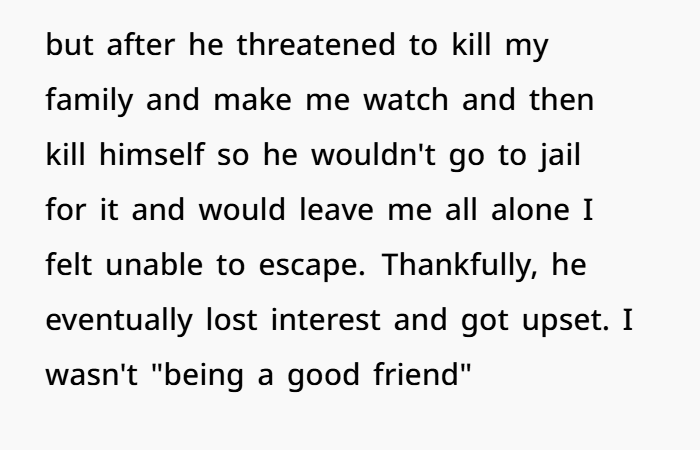
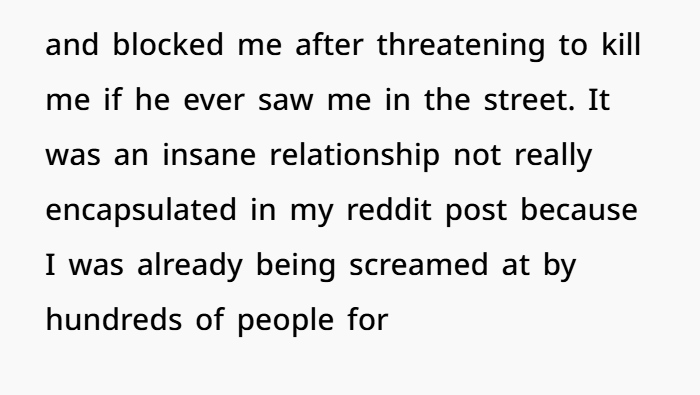
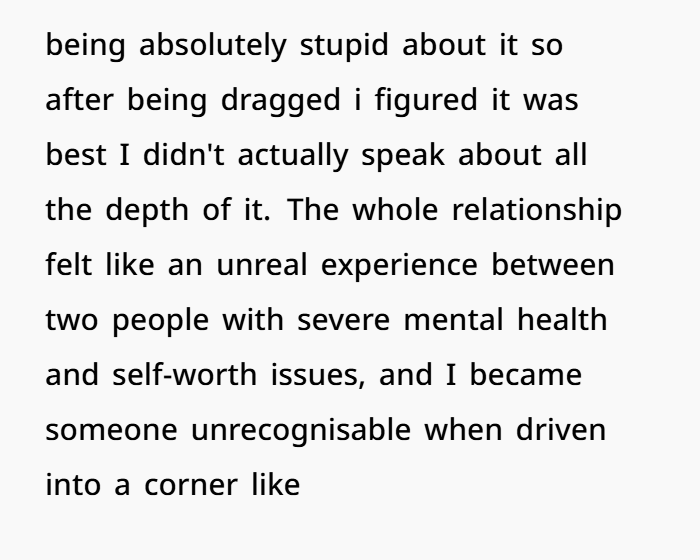
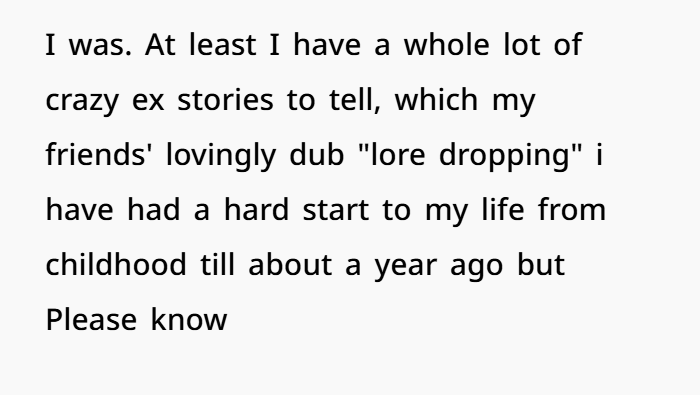
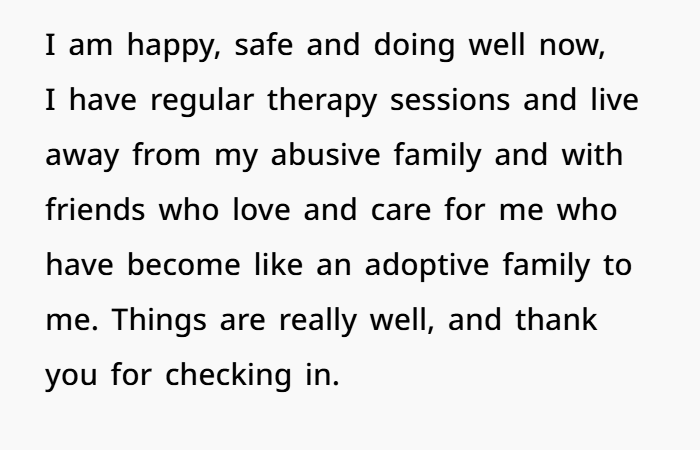
But a year later, she returns to share an update that shows how deep emotional manipulation can go — and how hard it is to truly leave.
One woman, who felt stuck in a relationship with a parasite, shared how he tried to pressure her into taking out a massive personal loan under her name

What seemed at first to be a clear-cut argument about money actually turned out to be much more toxic and disturbing
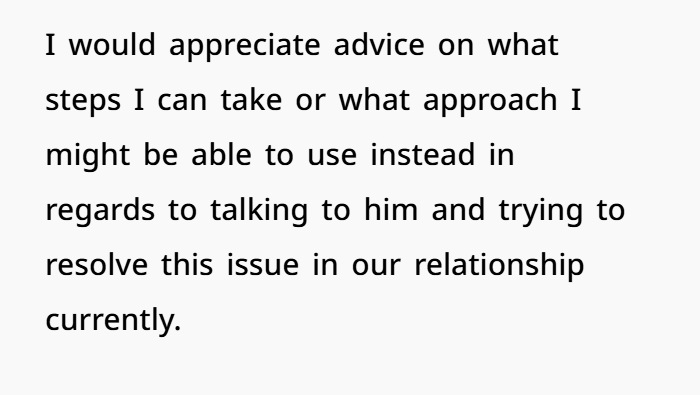
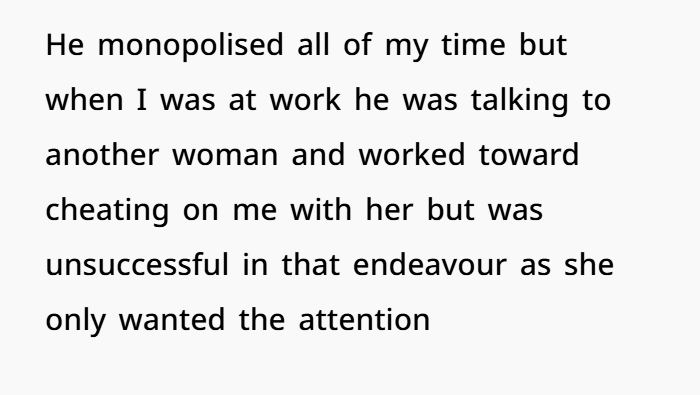
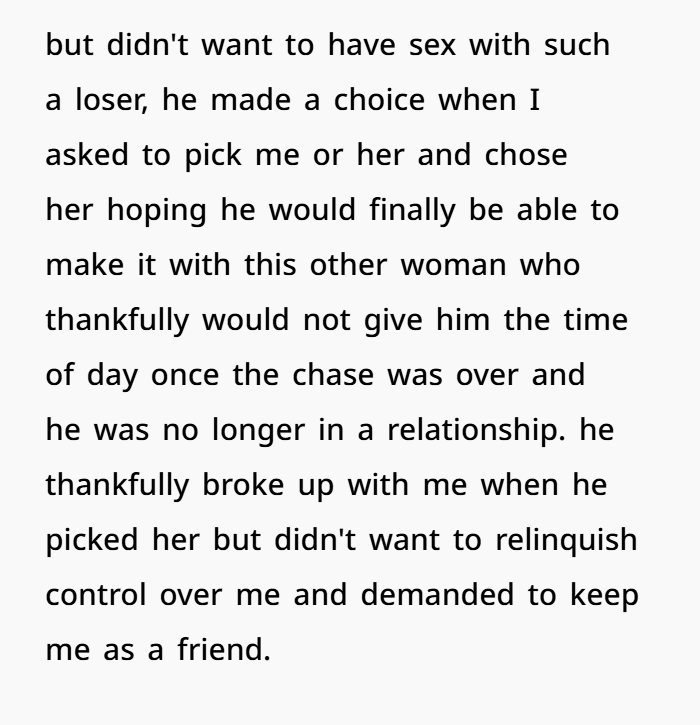
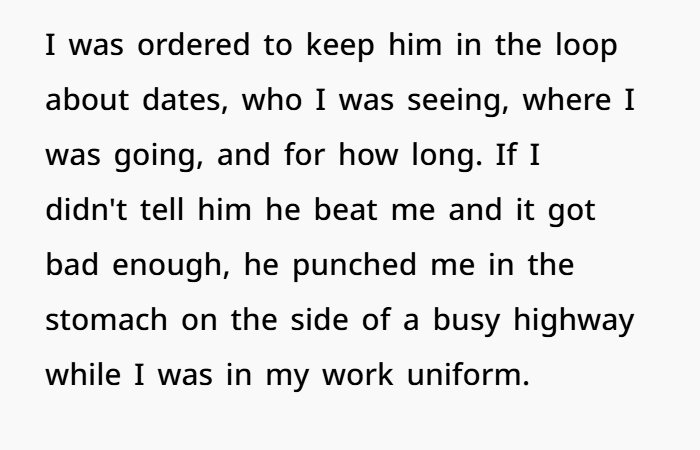
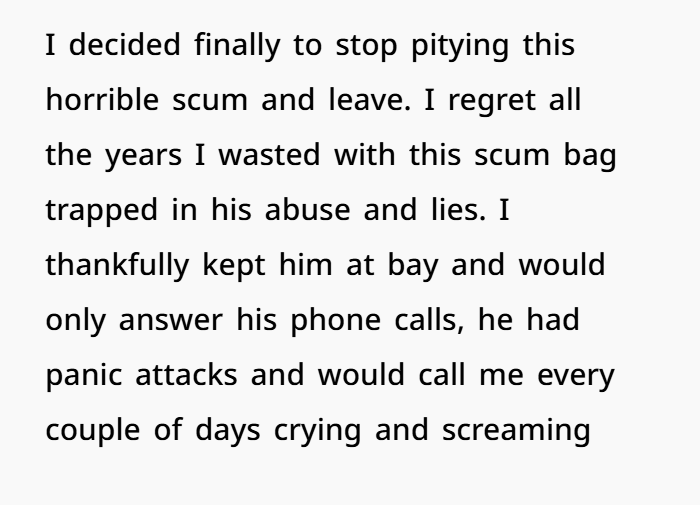
This story is messy, sad, and incredibly real. It’s not just about a Spider-Man costume — it’s about financial control, emotional manipulation, and how love can quietly morph into caretaking before you even notice it happening.

Let’s unpack what’s going on here, why this dynamic is so common, and what lessons can be learned from it.
1. The “Caretaker Trap” — When Love Becomes Responsibility
Many people, especially women raised to be nurturing or accommodating, fall into what’s known as the caretaker trap. It starts small: you help your partner when they’re struggling, maybe cover dinner, or spot them for gas. But over time, the dynamic subtly shifts — your partner stops trying.
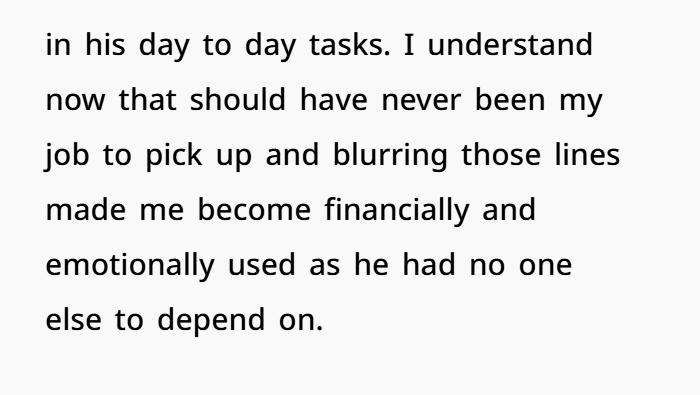
In OP’s case, what began as small gestures evolved into her fully supporting a grown man. She wasn’t in a relationship anymore; she was in a caretaking arrangement. Her boyfriend wasn’t looking for partnership — he was looking for a safety net.
Psychologists call this pattern codependent reinforcement: one partner’s helplessness keeps the other locked in a savior role. The “rescuer” feels needed, and the “helpless” partner feels protected — but neither person actually grows. It’s an emotional loop of dependency disguised as loyalty.
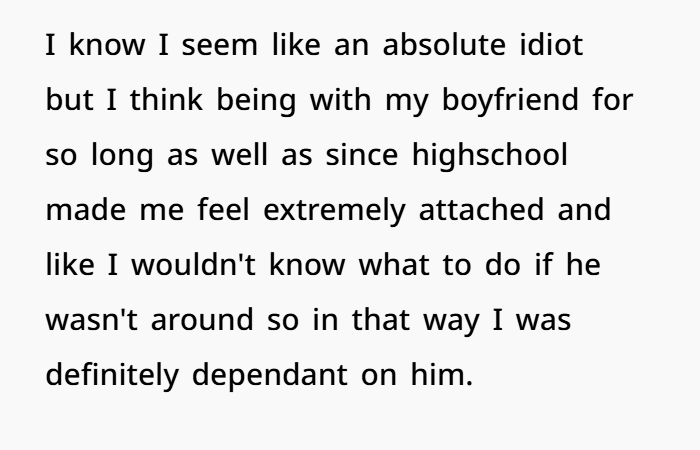
OP even admits this herself:
“I think being with my boyfriend for so long since high school made me feel extremely attached and like I wouldn’t know what to do if he wasn’t around.”
That’s the heartbreaking part. When you equate love with obligation, leaving starts to feel cruel — even when it’s saving your life.
2. Financial Abuse Isn’t Always Loud
Financial abuse doesn’t always look like someone stealing your money. Sometimes it’s quieter. It’s a partner slowly conditioning you to pay for everything, guilt-tripping you for saying no, or making you feel selfish for wanting financial independence.
In OP’s story, her boyfriend’s phrase — “It’s not a lot of money for you” — is a perfect example of this kind of manipulation. It minimizes her effort, reframes her generosity as an expectation, and uses guilt as leverage.
Financial abuse often overlaps with emotional manipulation, where one person weaponizes vulnerability — in this case, mental health struggles — to justify irresponsible behavior. Her boyfriend lives with autism, ADHD, and depression, which are real and serious conditions. But instead of seeking structure or professional help, he used them as shields to avoid accountability.
The line between compassion and exploitation is razor-thin — and OP got caught on it for years.
3. The Cycle of Abuse: From Guilt to Violence
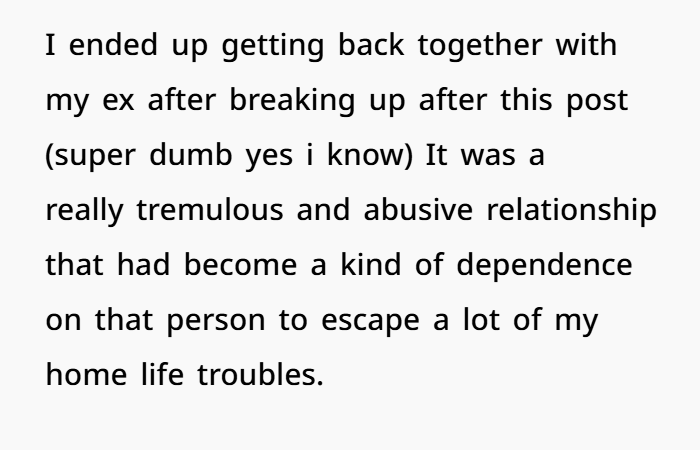
When OP returned with her final update, her story took a darker turn. What began as financial dependency evolved into emotional abuse and physical violence.
This escalation follows a disturbingly predictable cycle:
- Dependency and sympathy – The abuser gains control by appealing to pity or helplessness.
- Control and isolation – They begin to monopolize your time and attention, cutting off independence.
- Rage and violence – When you resist control, they lash out physically or verbally.
- Remorse and manipulation – They apologize, break down, cry, or threaten harm to regain sympathy.
Her ex used all four. He demanded constant updates about her life, threatened her family, and ultimately resorted to physical assault. These behaviors are not random — they are methods of control.
When he realized she was slipping out of his influence, he escalated. That’s what abusers do when their control weakens.

The good news? She got out. The even better news? She’s in therapy, living independently, and building a life outside of survival mode. That’s not weakness. That’s resilience.
4. Why People Stay — And Why Leaving Feels Impossible
People on the outside often say, “Why didn’t you just leave?” But leaving an abusive or codependent relationship is rarely about logic — it’s about psychological conditioning.
Abuse rewires your self-worth. Over time, you start believing you deserve the mistreatment, or that no one else will ever want you. That’s exactly how her ex kept her trapped: by convincing her that chaos was better than loneliness.
There’s also a trauma bond — the intense, addictive attachment that forms when cycles of love and abuse repeat. It creates emotional whiplash that mimics chemical addiction. Your brain starts craving the highs after the lows, even though it knows it’s harmful.
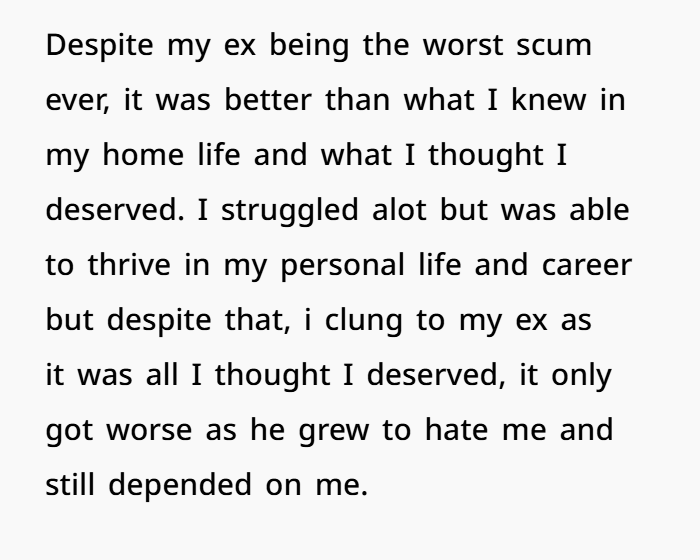
OP described this perfectly when she said:
“Despite my ex being the worst scum ever, it was better than what I knew in my home life and what I thought I deserved.”
That’s the quiet truth behind so many abusive relationships. Sometimes, the pain feels safer than the unknown.
5. Healing: Reclaiming Control After Abuse
The final chapter of OP’s story isn’t tragic — it’s victorious. She’s doing the hard work now: therapy, rebuilding trust, and surrounding herself with people who genuinely care. That’s what real healing looks like — not instant happiness, but intentional rebuilding.
Here are some lessons from her story that others can take away:
- Set financial boundaries early. Never take out loans, credit cards, or debts for a partner. Love does not require financial sacrifice.
- Watch for guilt-based manipulation. If someone frames your boundaries as cruelty, that’s a red flag.
- Compassion has limits. You can care about someone’s struggles without taking on the role of their caregiver.
- Therapy isn’t weakness. It’s how you learn to separate love from obligation, guilt from generosity.
- Leaving isn’t failure. It’s self-preservation.
6. The Spider-Man Suit That Sparked an Awakening
It’s poetic in a way — that something as absurd as a $1,500 Spider-Man costume became the catalyst for OP’s awakening. But that’s how these moments often work. It’s not the big betrayals that finally break you — it’s the ridiculous ones.
When you’re deep in codependency, sometimes it takes something stupidly outrageous to make you see the truth. That one wild request forces you to look around and realize, “Wait. How did I get here?”
And that’s the beauty of OP’s journey. What started as disbelief turned into self-awareness, and eventually into freedom.
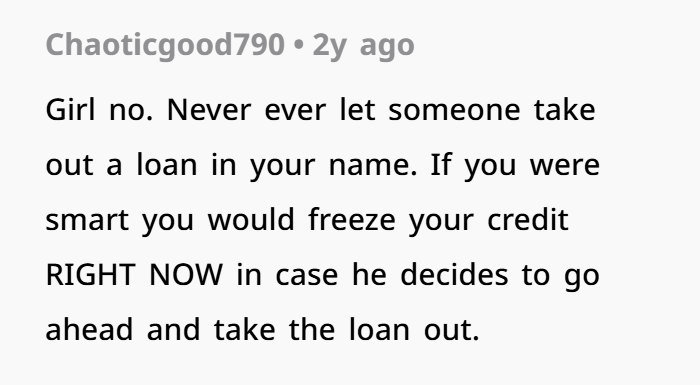
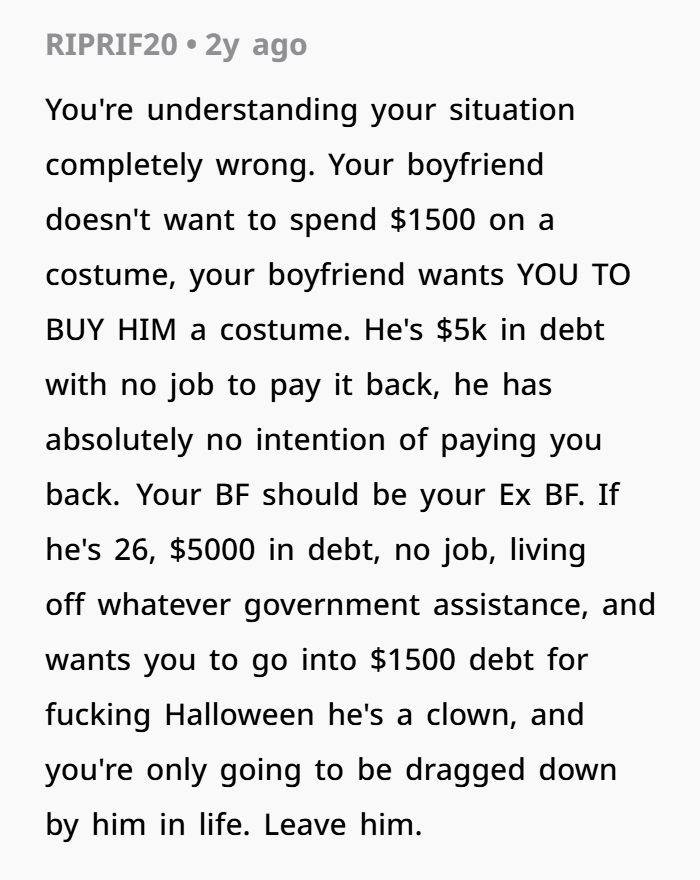
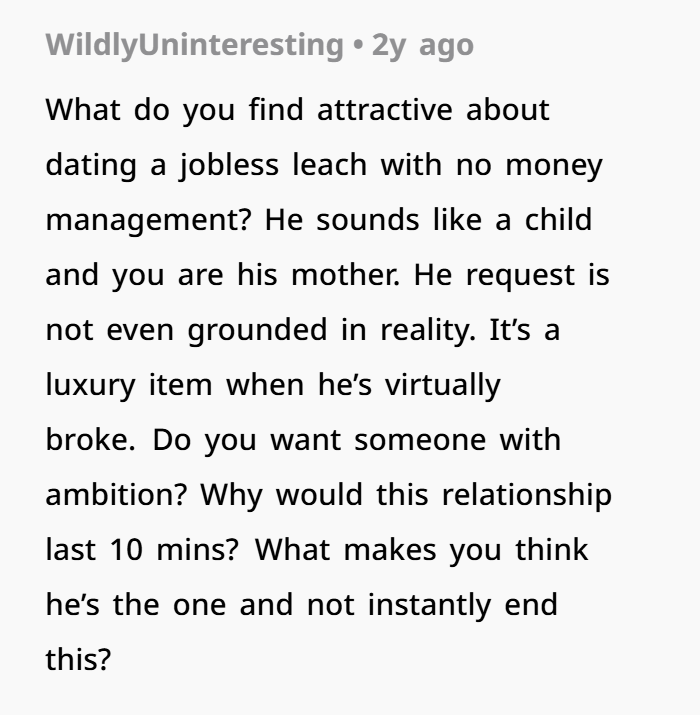
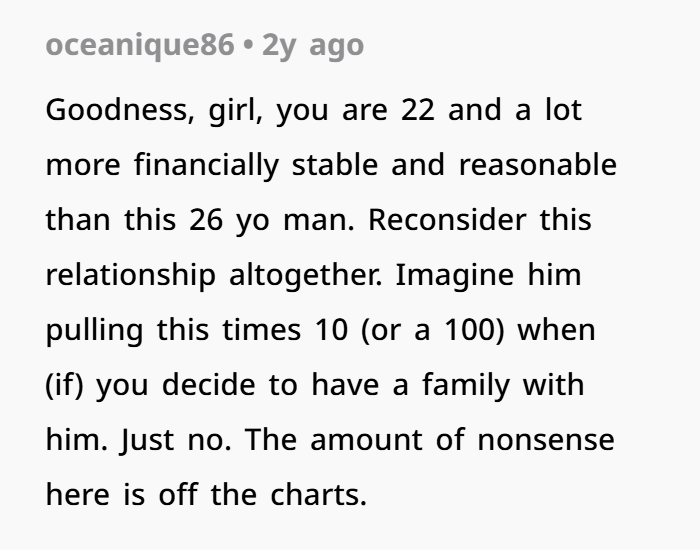
The internet soon weighed in with some brutally honest advice
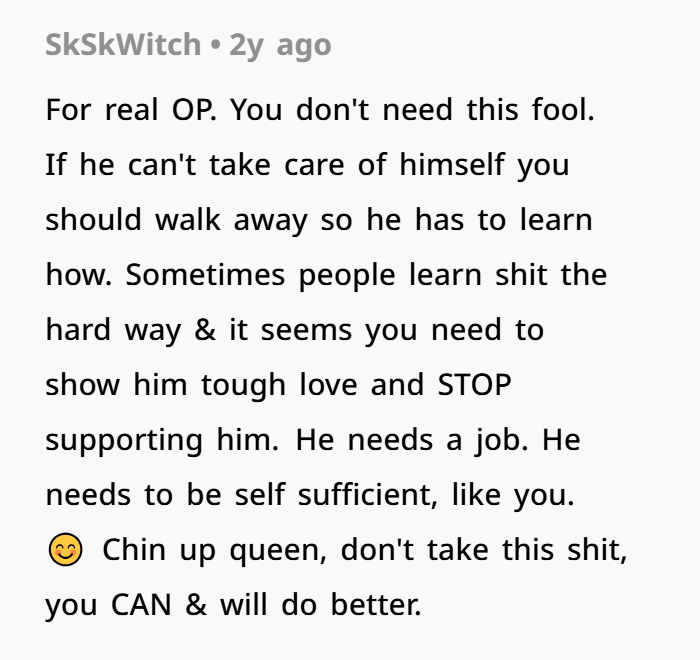
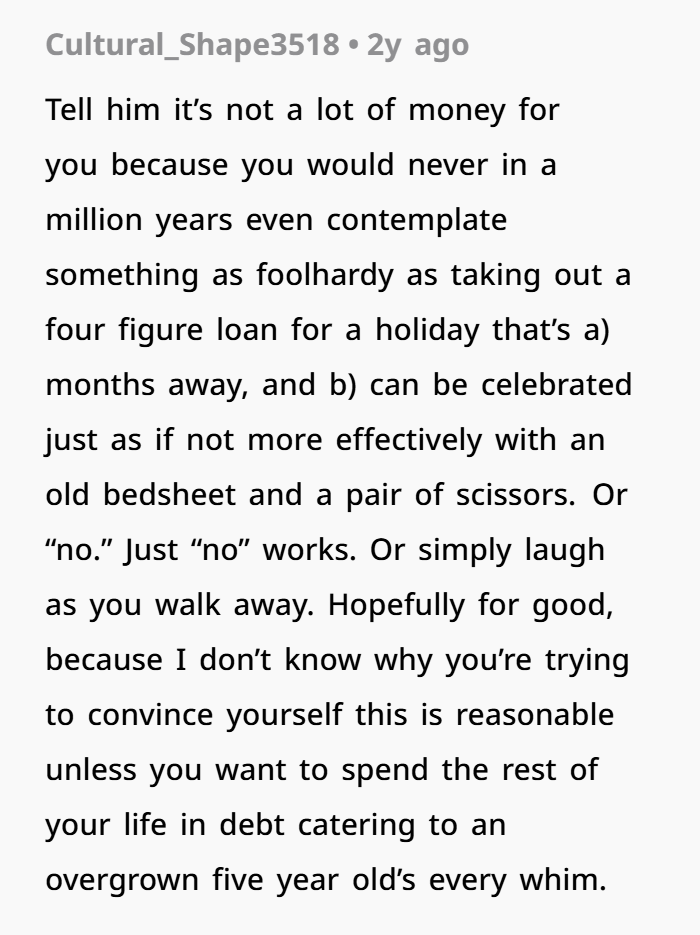
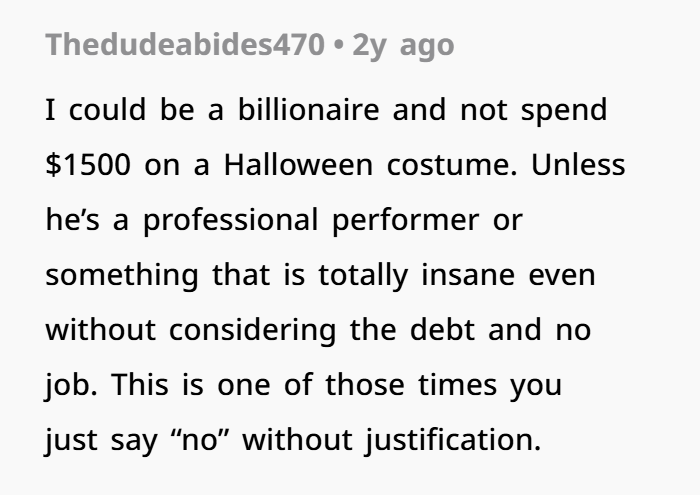
OP’s story isn’t about stupidity or weakness — it’s about the slow erosion of boundaries that happens when love, pity, and control mix together. It’s about the courage it takes to walk away, even after years of being convinced you can’t.
She went from being a 22-year-old paying for groceries and action figures, to a woman rebuilding her life, her boundaries, and her self-worth.
So if you’ve ever stayed too long, forgiven too much, or felt trapped by someone else’s needs — you’re not alone. You don’t have to wait for the next absurd request to realize it’s time to go.
Sometimes, the “Spider-Man costume moment” is all it takes to remind you that you deserve peace, not pity.