Woman Agrees To Move In With Her Boyfriend On One Condition, He Freaks Out And Completely Destroys The Relationship
A man wanted to move in with his girlfriend, but refused to do household chores

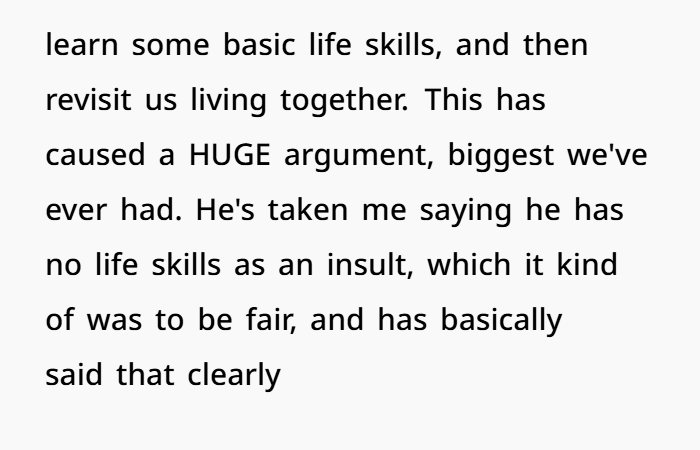
His girlfriend asked him to live alone first and learn basic life skills

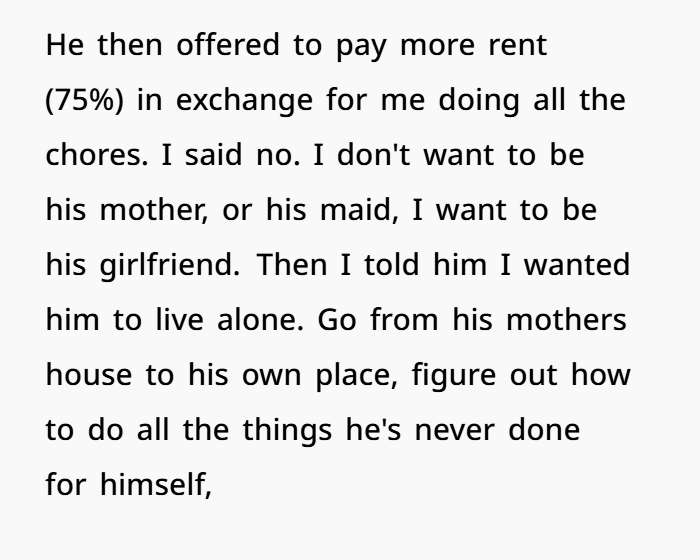
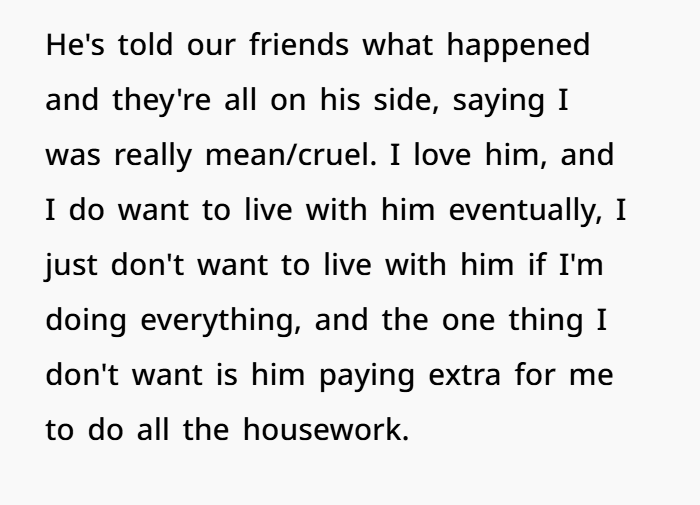
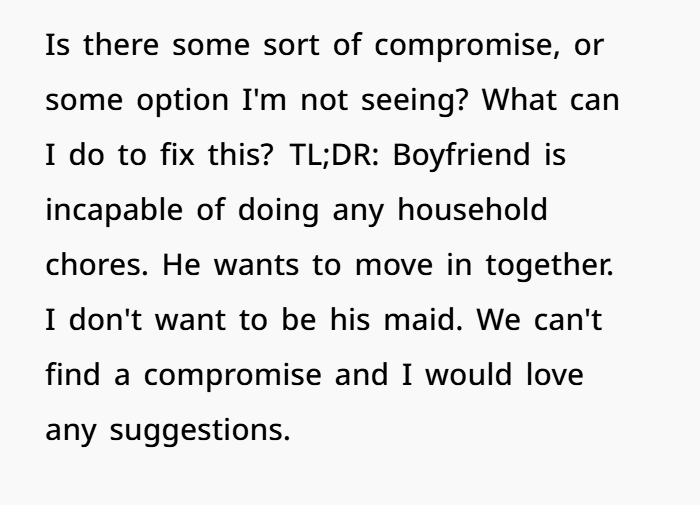
Let’s call this what it is: a classic clash between romantic fantasy and domestic reality. OP isn’t wrong to be cautious. In fact, her instincts are spot on—and what’s more, this scenario speaks to much larger issues in modern relationships: emotional labor, gender roles, and the burden of “teaching” grown adults how to adult.
1. The “I’ll Pay You To Be My Mother” Offer
Let’s start here. His offer to pay 75% of rent if OP handles 100% of the chores isn’t a compromise—it’s a red flag.

What he’s proposing is a transactional relationship, not an equal partnership. It reflects a lack of understanding of what it takes to share a home—not just money, but effort, awareness, and daily contributions. The math may work on paper, but emotionally, it’s loaded with imbalance.
In relationships, there are two currencies: money and labor. If one person’s contribution is always measured by dollars and the other’s by effort, resentment builds fast. Especially if the “effort” is invisible work—like planning meals, doing laundry, or remembering to buy toilet paper.
2. Living Alone Builds Core Life Skills—And Accountability
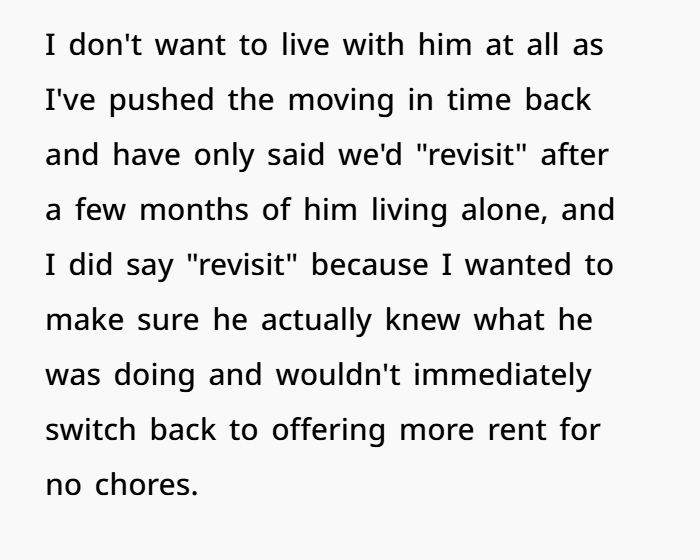
OP’s request for him to live alone before moving in together isn’t some power play. It’s a practical test.
Living solo teaches:
- How to manage a home.
- How to cook a meal that doesn’t come from a microwave.
- How to clean up without being told.
- How to take care of yourself when no one else will.
These are foundational adult skills, and more importantly, they’re relationship skills. No one wants to feel like they’re carrying the weight of two people just because their partner was never taught to adult.
3. The Emotional Weaponization of “Cruelty”
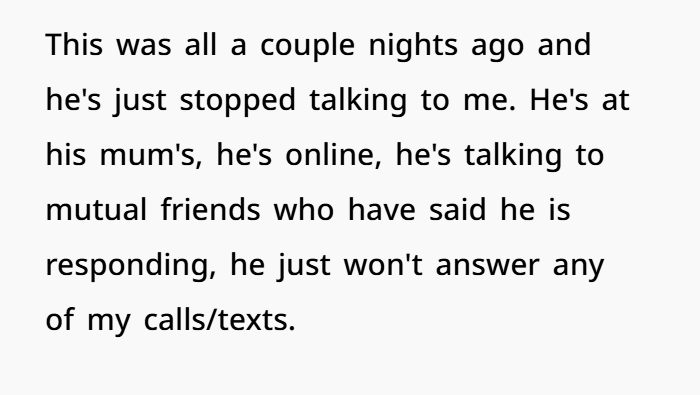
What’s especially upsetting is how quickly the situation turned on OP. She made a fair request, and instead of engaging in dialogue, he shut down, refused contact, and triangulated friends into taking his side.
This is textbook emotional avoidance. Instead of facing his insecurities (“I can’t cook” → “I’m not ready”), he flipped it: You’re saying I’m worthless. You’re being cruel.
That’s not fair. It shifts the conversation from “How do we prepare for cohabitation?” to “You’ve hurt my feelings,” without acknowledging why OP feels the way she does.
And for mutual friends to blindly support him without knowing the full story? That’s classic misplaced empathy. They’re seeing a hurt guy, not a pattern of dependency OP is trying to gently avoid.
4. Why This Feels So Familiar: Gender Roles at Work
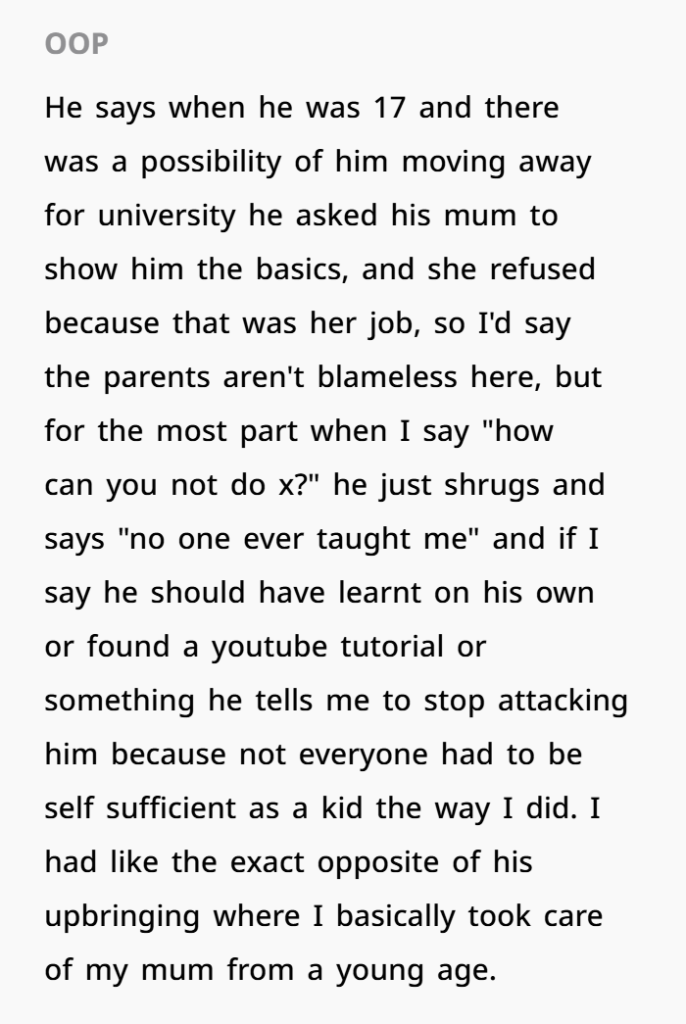
This hits a nerve for many women—because society has long normalized men being raised in homes where moms do everything. Then, they get into relationships and expect the same, except now the woman also works full time.
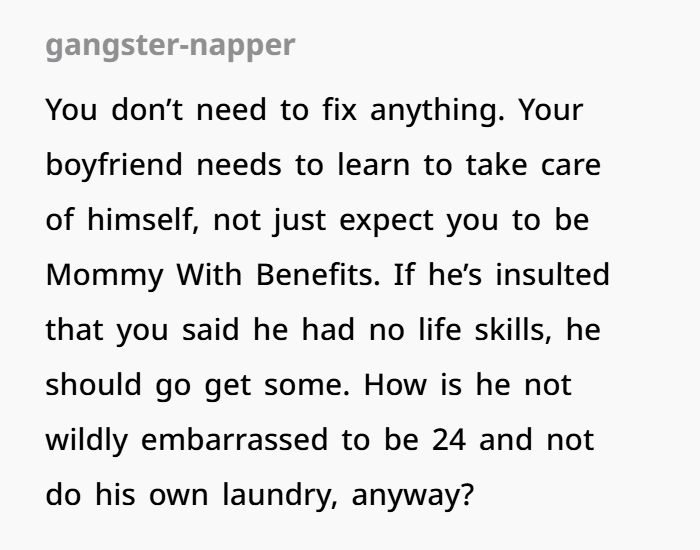
In this case, the boyfriend was literally raised to be dependent. That’s not his fault, but it is his responsibility to unlearn.
And OP is under no obligation to pick up where his mom left off.
5. Compromise? Yes. But Not at the Cost of Self-Respect
OP is asking for independence and accountability. That’s not unkind—it’s healthy. But is there a middle ground?
Here are some realistic compromises if they both want to move forward:
Option A: A “Practice Period” at OP’s Place
He stays at her place for 2–4 weeks as a “trial,” during which:
- He handles set tasks: cooking dinner twice a week, doing his laundry, cleaning the bathroom, etc.
- They agree on clear, shared expectations.
- OP observes: does he step up? Does he learn, ask, participate—or does he wait to be told?
If it goes well, great. If not? OP’s point is proven without the need for full solo living.
Option B: A “Skills Bootcamp”
If moving solo is financially unworkable, create a structured plan:
- He spends weekends learning key tasks.
- He agrees to be coached (respectfully) without resistance.
- They set a 3-month goal: “Here’s what you need to be able to do before we live together.”
This turns the process into a shared challenge—not a rejection.

Option C: Take a Breather
If he’s not open to either option and is still stonewalling? Then OP should reconsider whether he’s ready for a serious partnership at all.
6. What OP Can Do Now
Since he’s not speaking to her, here’s a game plan:
- Write him a clear, calm message explaining:
- This wasn’t about rejecting him.
- She wants to build a healthy life together, not a situation where she’s parenting him.
- She’s open to working through this if he’s ready to meet her halfway.
- Detach from the friends’ opinions. They’re hearing one side and projecting. OP doesn’t owe them emotional labor.
- Stand firm. It’s tempting to give in, but OP’s boundary is legitimate. If he refuses to engage or grow, that tells her more than any argument ever could.
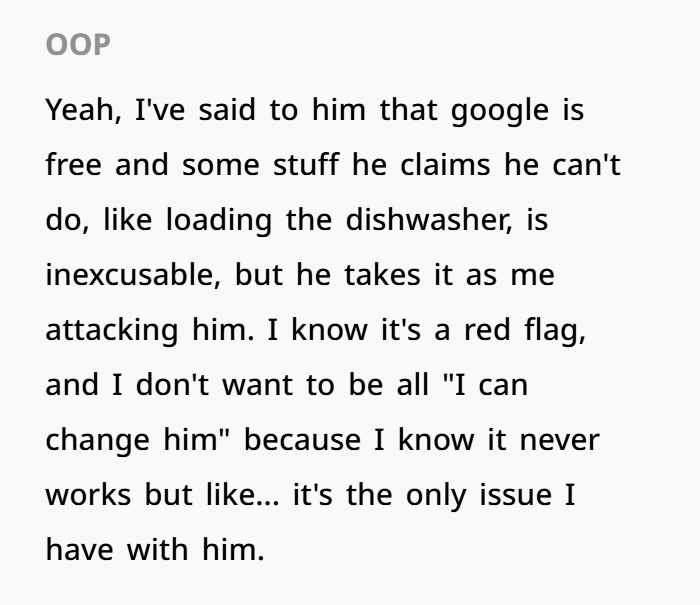
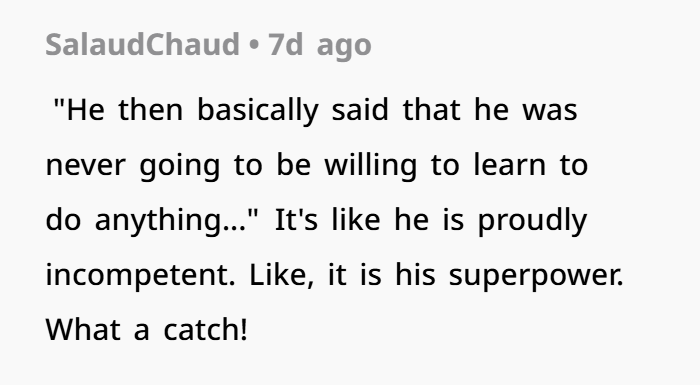
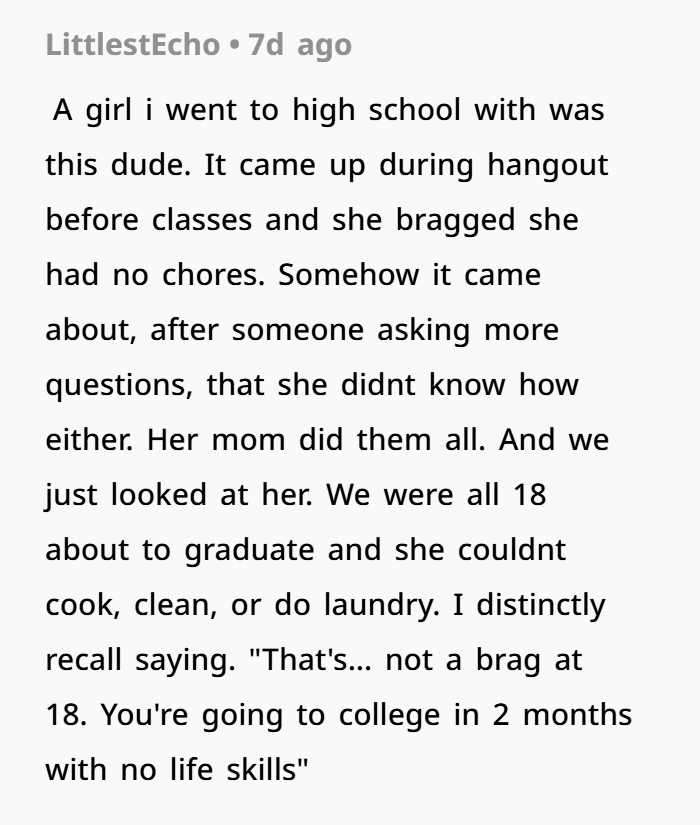
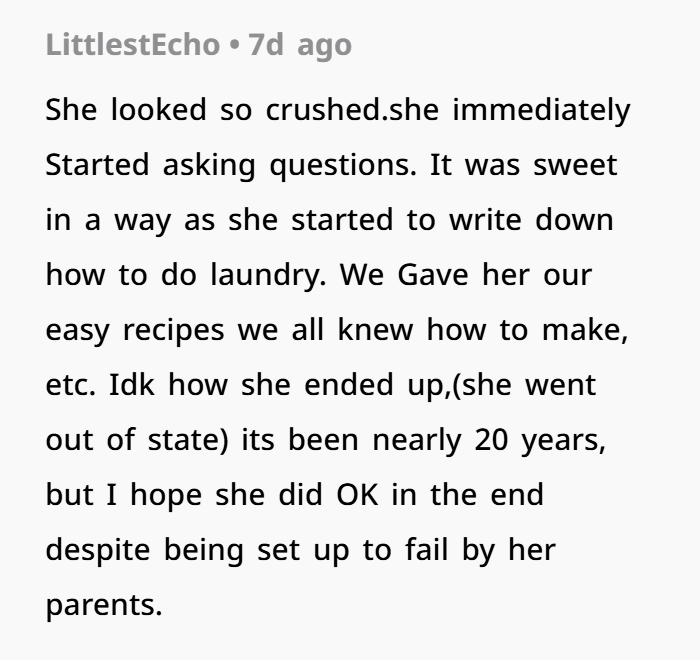
The woman gave some more updates about her situation

OP isn’t mean. She’s not cruel. She’s doing what many people wish they had done before moving in with a partner who didn’t know how to boil water or run a vacuum.
Setting expectations doesn’t make you controlling. It makes you emotionally intelligent.
If he wants to be a cohabiting partner, then he needs to be a partner in full—not a grown man outsourcing adulthood.