He Didn’t Change a Single Nappy in 6 Hours I’m Fuming and So is My Baby

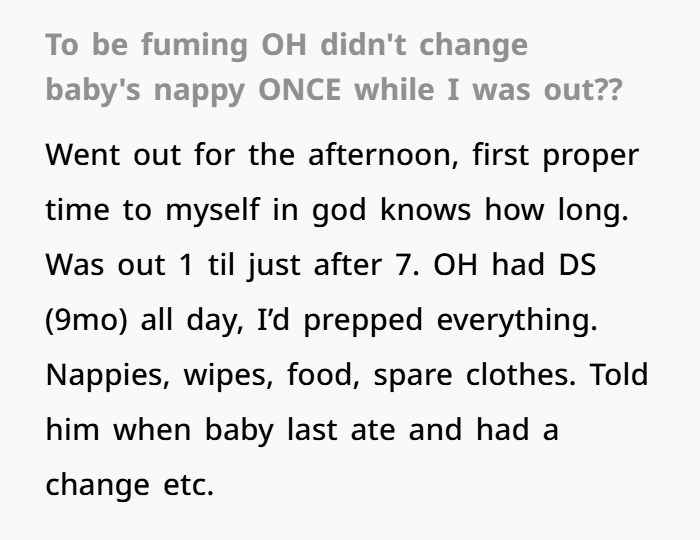
A mother finally got her first short break since having her baby. She left her 9-month-old son with his father for the afternoon. Before leaving, she made sure everything was ready. She packed nappies, wipes, food, and clean clothes so the baby would be well taken care of.
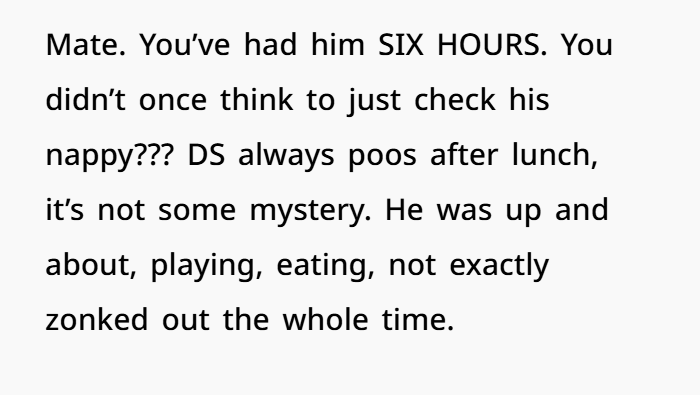
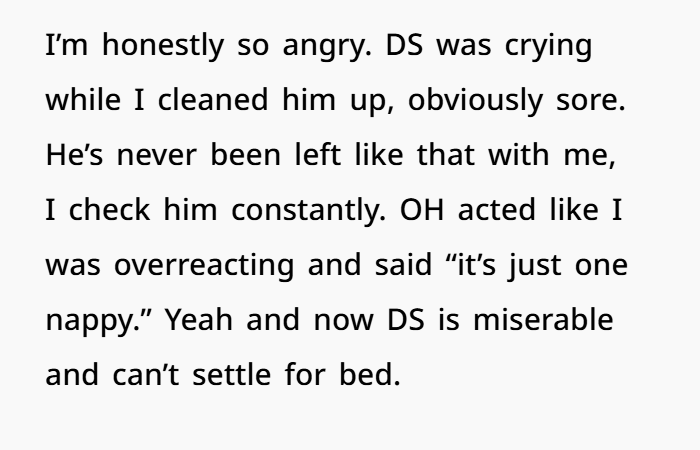
When she came back home after about six hours, she noticed something was wrong. Her baby was crying and seemed uncomfortable. His nappy was very full and had not been changed, and he also had a red rash on his bottom. She was upset and worried about his care and comfort.
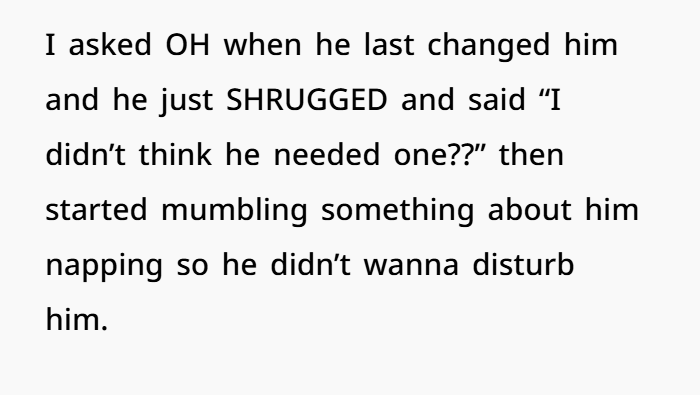
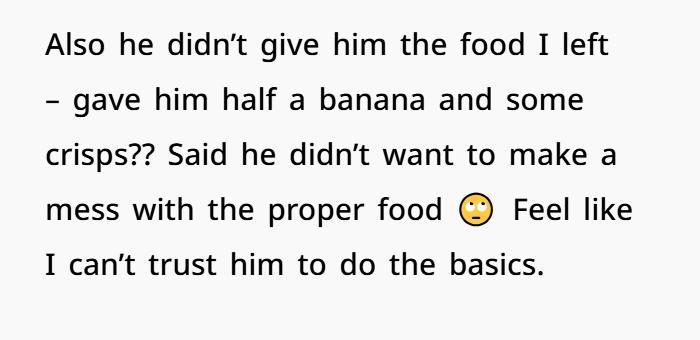
When she asked her partner about it, he said he did not think the baby needed a nappy change during that time. He also did not use the meals she had prepared. Instead, he gave the baby a banana and some crisps because he did not want to make a mess.
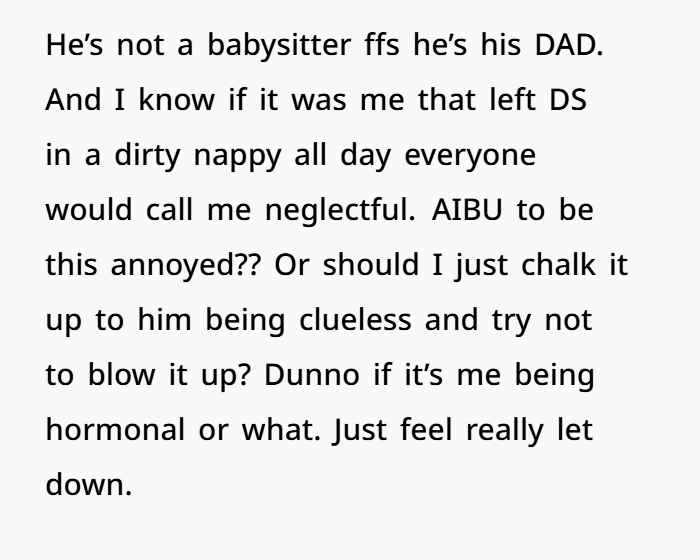
The mother felt very disappointed and stressed after this experience. She is now questioning whether she can trust him with solo childcare again. The situation has raised concerns about parenting responsibility, infant care, and basic baby hygiene during shared parenting duties.
The author of the post has a 9-month-old baby son, and recently she went out alone for the first time, leaving the baby with the dad

Parenting Responsibility, Mental Load, and Baby Care Basics
This situation is frustrating for many parents because it touches on real issues like shared parenting responsibility, mental load in childcare, and basic infant care routines.
Let’s explain it in simple, clear English.
1. It’s Not Just About One Diaper
At first, it may sound like a small issue — one diaper not changed.
But the real problem is bigger than that.
Taking care of a baby includes many small tasks, such as:
- Changing diapers on time
- Feeding the baby properly
- Keeping the baby clean and comfortable
- Following a routine
When one parent does all the planning and thinking, it creates something called the mental load in parenting. This means one person is doing most of the invisible work, like remembering everything the baby needs.
2. Parenting Is a Shared Responsibility
Both parents are responsible for childcare. It is not just one person’s job.
Sometimes one parent may not realize how much effort is needed. But basic care tasks like diaper changes and feeding are not optional.
In co-parenting and shared parenting situations, both parents should:
- Know the baby’s routine
- Be able to handle basic care
- Take responsibility without reminders
- Treat parenting as equal work
Babies are not “helping tasks.” They need full-time care from both parents.
3. Baby Hygiene and Health Matter
Leaving a baby in a dirty diaper for too long can cause problems.
It may lead to:
- Diaper rash
- Skin irritation
- Discomfort and crying
- Possible infection
This is why baby hygiene and infant health care is very important. Babies cannot speak, so they show discomfort through crying or stress.
Good childcare means keeping the baby clean, dry, and comfortable at all times.
4. Proper Feeding Is Important
Feeding a baby is not just about filling their stomach. It is about nutrition and healthy growth.
Babies need:
- Balanced meals
- Nutrient-rich foods
- Regular feeding times
- Age-appropriate food choices
Giving snacks like chips instead of proper baby food is not a healthy choice in most cases.
In infant nutrition and baby feeding guidelines, proper meals are important for growth, digestion, and development.
5. Trust Between Parents Can Break Easily
When one parent feels the baby was not properly cared for, it can damage trust.
Common feelings include:
- Worry about leaving the baby alone
- Stress about safety and care
- Feeling unsupported in parenting
- Emotional frustration
This is why strong co-parenting trust and communication is very important.
Without trust, even short breaks or help from a partner can feel stressful.
6. Communication Is Important
Instead of ignoring the issue, parents need calm and honest communication.
A helpful conversation may include:
- What care steps were missed
- Why it matters for the baby’s health
- Clear expectations for next time
- Agreement on shared responsibilities
This is part of healthy parenting communication and relationship teamwork.
7. Parenting Should Not Feel One-Sided
One of the biggest issues in many families is uneven responsibility.
When one parent does most of the work, it creates stress and burnout. This is known as parenting imbalance or unequal childcare load.
Healthy parenting means:
- Both parents share daily tasks
- Both understand the baby’s needs
- Both are able to care for the child alone if needed
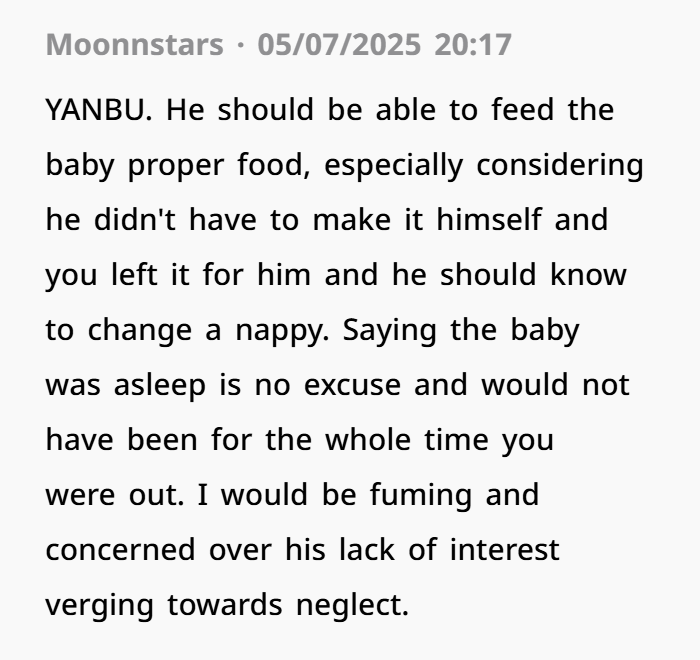
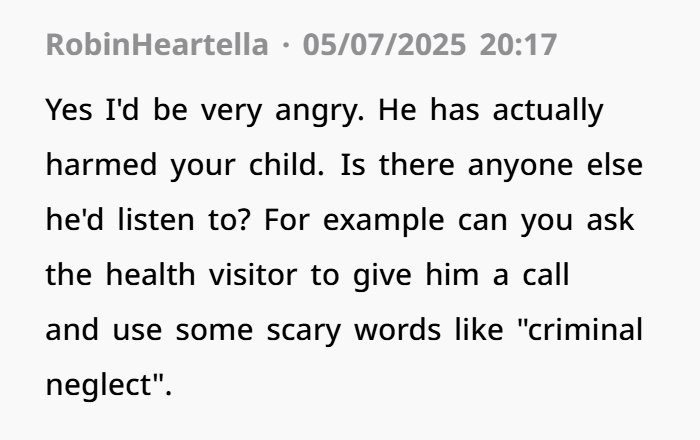
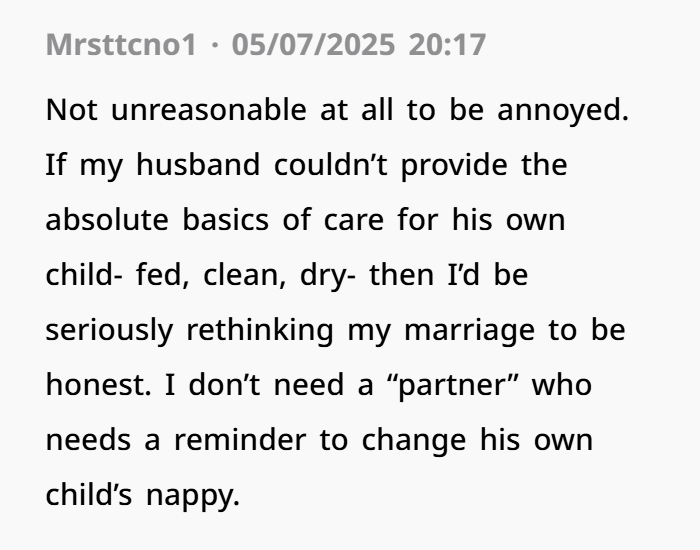
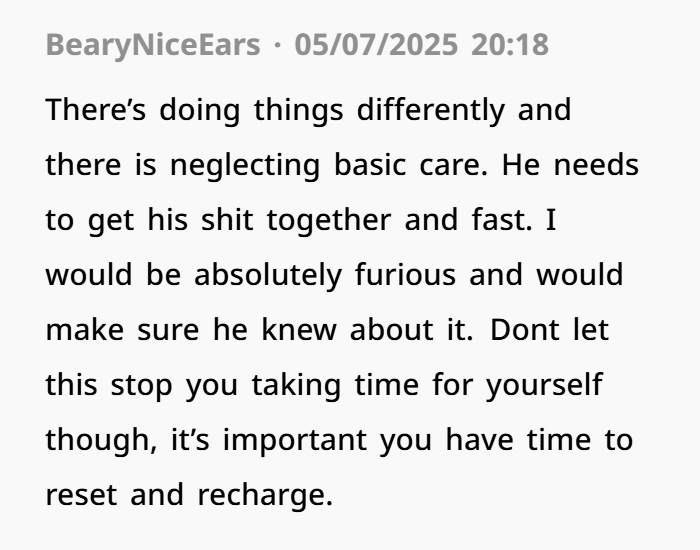
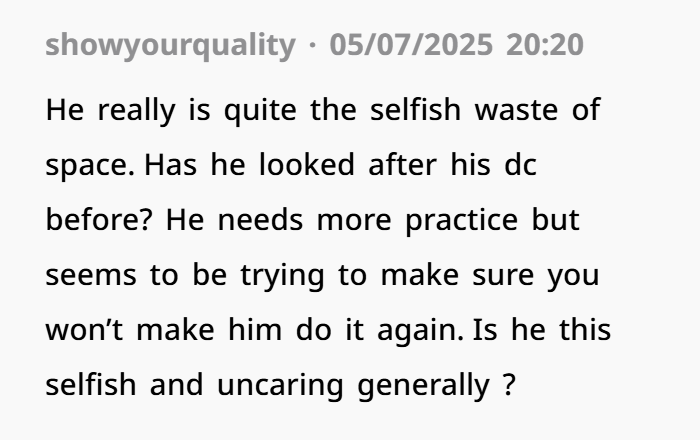
Netizens mostly gave the woman their sincere support and also criticized her spouse heavily


8. Final Thoughts
This situation is not about perfection. Parenting is always messy and tiring.
But some basics are important:
- Diapers should be changed regularly
- Babies should be fed proper meals
- Both parents should share responsibility
- Communication should stay open and honest
- Baby health and comfort must come first
At the end of the day, responsible parenting, infant care, and co-parenting teamwork are what keep a baby safe, healthy, and happy.