
Seat Dispute on Delta Flight: A Lesson in Passenger Etiquette
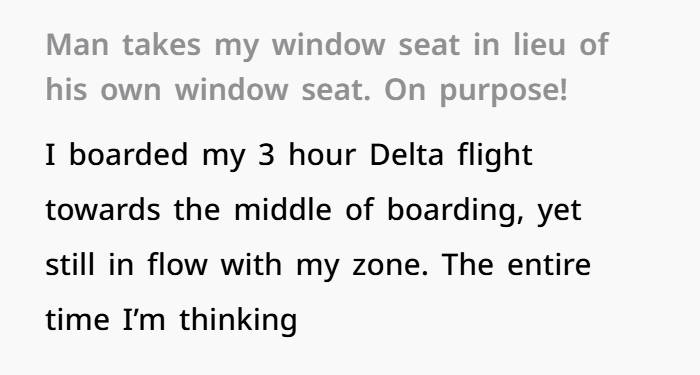
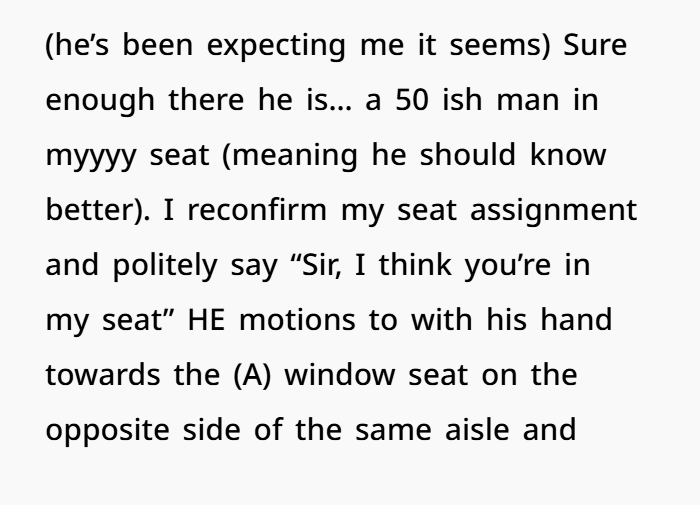
In a recent travel tale that hit a nerve with frequent flyers, a passenger boarded her Delta flight only to find a 50-something man occupying her assigned window seat in Comfort Plus. Instead of apologizing or explaining, the man casually directed her to the opposite window seat across the aisle—one next to a large, visibly cramped passenger. What followed was a silent but powerful confrontation as the original seat holder stood her ground, refusing to accommodate his manipulative seat swap attempt. His dismissive comment—“If you want to make three men get up…”—only reinforced how premeditated and entitled his behavior truly was.
This subtle but infuriating form of seat theft on airplanes has become increasingly common in today’s packed cabins, where seat preferences, particularly window or aisle choices, can significantly affect comfort. The story is a prime example of the social power dynamics in confined public spaces and the quiet assertiveness required to maintain personal boundaries against presumptive behavior.
The author politely asked the man to occupy his own seat, to which he suggested she take his one instead


There’s something unspoken—but universally understood—about air travel: your assigned seat is your tiny, sacred bubble of control in a sea of chaos. Whether it’s a window view to escape into the clouds or an aisle for those with long legs and short bladders, people choose seats deliberately. So when someone takes your seat and shrugs it off like it’s just a number, it’s not just an inconvenience—it’s a disruption of the delicate, unspoken code of flight etiquette.
And that’s exactly what happened here.
Let’s start with the basics. When you book a flight, especially with airlines like Delta, American Airlines, or United, you’re often given the choice to select your seat. This isn’t just a courtesy—it’s part of the service you’re paying for. According to Delta Air Lines’ own policy, once a seat is assigned and confirmed during booking, it is yours unless the airline needs to move you due to operational issues or aircraft changes (Delta.com). In all other cases, passengers are expected to sit where they’re told.
But here’s the issue: the rules are clear, yet enforcement is left largely to passengers themselves—until a dispute reaches a boiling point.
In this Reddit tale, we’re dealing with more than just a misplaced man—this was a calculated seat takeover. The man wasn’t confused. He wasn’t bumped by accident. He deliberately chose to take a more desirable seat across the aisle and expected the rightful owner—our storyteller—to just go along with it. The implied arrogance of “just take that one” underscores a deeper, frustrating trend that’s emerged in recent years.
The Psychology Behind Seat-Switching on Flights
Believe it or not, the psychology of seat selection and switching has been studied. According to Dr. Becky Spelman, a psychologist specializing in human behavior, people often attempt to switch seats based on comfort, perceived status, or convenience—especially if they think the person affected won’t challenge them (The Independent). This can come off as entitlement masked as spontaneity.
And while most requests to switch are harmless—say, a parent asking to sit with their child—there’s a rising number of reports where travelers, particularly women, are pressured to move under the guise of being “difficult” if they decline. It’s a subtle form of social coercion, relying on guilt or public embarrassment to get their way.
That’s what makes this Reddit post hit so hard. The line—”Fine, if you want to make three men get up”—wasn’t just a complaint. It was a guilt trip. A passive-aggressive way of saying, “You’re causing trouble by asserting your rights.” It’s a manipulative tactic that puts the onus on the person being wronged to “keep the peace.”
Let’s be clear: You are never the problem for asking someone to move out of your paid-for airline seat. Period.
Why It’s More Than Just a Seat: Customer Rights in Airline Travel
Let’s pivot to what you’re entitled to under airline seating policy. When you purchase a seat assignment—whether it’s through base fare or an upgrade like Comfort+ or Economy Plus—you’ve entered into a contract of carriage with the airline. This contract binds them to provide you with the exact service promised, including seating preferences. Any deviation without consent can be contested. If a fellow passenger takes your seat and refuses to move, you are well within your rights to escalate the issue to a flight attendant.
Consumer advocacy groups like FlyersRights.org stress that passengers should not feel afraid to assert these rights. In fact, Delta’s own boarding policy encourages passengers to speak up about seating disputes before takeoff to ensure timely resolution (Flyers Rights). Flight attendants are trained to handle these issues precisely because of scenarios like the one described.
So why don’t more people speak up?
The short answer is social conditioning. Most people avoid confrontation at all costs—especially in public settings like airplanes, where space is tight and tempers are already running thin. But that silence often enables repeat behavior.
The Real Cost of Politeness on Planes
There’s a reason this post blew up. It’s not just because someone stole a window seat. It’s because we’ve all been there—in planes, in movie theaters, even in lines at grocery stores—where someone cuts corners and expects the rest of us to just let it slide.
For many travelers, particularly women and marginalized individuals, this isn’t just about courtesy—it’s about safety, comfort, and asserting your place in public space. Being expected to “just go along with it” is exhausting.
This is also where the travel industry needs to step in. Airlines profit from premium seat sales, boarding privileges, and loyalty programs. With revenue from ancillary fees reaching over $109 billion globally in 2022 alone (IdeaWorksCompany), the least they can do is empower crew members to enforce seating policies decisively and respectfully. A simple PA announcement reinforcing the importance of staying in your assigned seat could preempt many such disputes.
Flight Etiquette Isn’t Just Courtesy—It’s a Code of Conduct
Air travel is one of the few shared experiences where people from vastly different walks of life are squeezed into a tight tube for hours. That makes etiquette crucial. Whether it’s staying in your assigned seat, respecting overhead bin space, or not reclining into someone’s knees, these unwritten rules are what keep the peace.
When someone violates that system—like deliberately taking someone else’s window seat and then acting like you’re the difficult one—they’re not just being inconsiderate. They’re disrupting a fragile ecosystem.
So yes, you were right to stand your ground.
And as more stories like this emerge online, from TikTok to Reddit to personal blogs, we’re starting to see a shift. People are becoming more vocal about their rights, more resistant to manipulation disguised as civility, and more confident in pushing back when something feels off.
People in the comments praised the author for being so confident and for putting the entitled guy in his place


If this sounds familiar, it’s because it is. And as frustrating as it can be to deal with midair mind games and seat-jacking strangers, every time someone stands their ground—like you did—it makes it a little easier for the next person to do the same.
Because that window seat? It’s not just a seat. It’s yours. And that’s worth holding onto.