My Dying Sister Spent Our Parents’ Fortune on Drugs—Now She Wants More Money, but I’m Refusing Until She Sells Her Luxuries

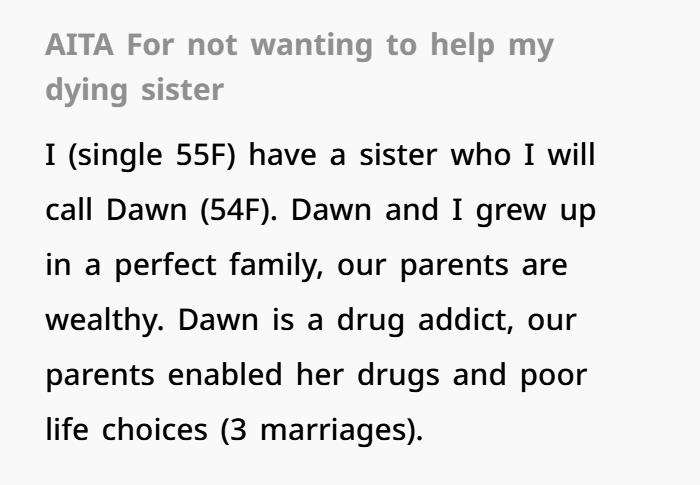
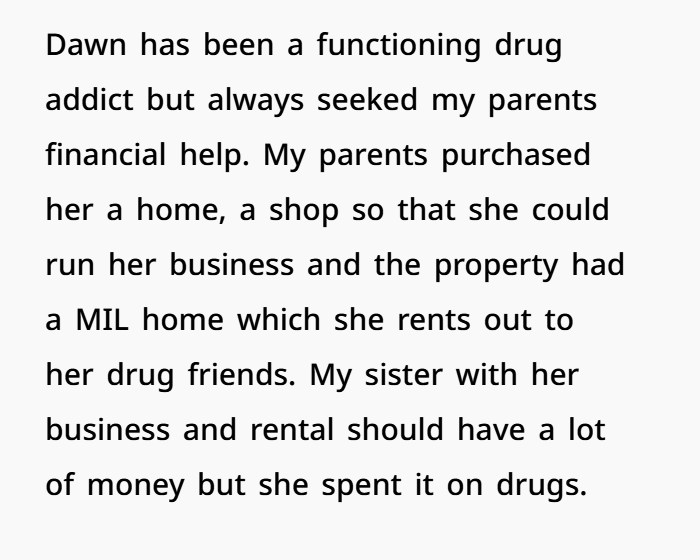
A woman, 55, is struggling with a decision involving her younger sister, Dawn, who is seriously ill. Their family always had enough money, and their parents helped both daughters in different ways. The older sister built her own career, opened a business, and became a homeowner. Dawn had a harder time managing her life and money because of a long history of substance use. Their parents supported her financially for years, even purchasing a home and commercial property for her. She also earned money from renting out property, but her financial troubles continued. Now Dawn is facing a terminal illness and needs help paying her everyday expenses.
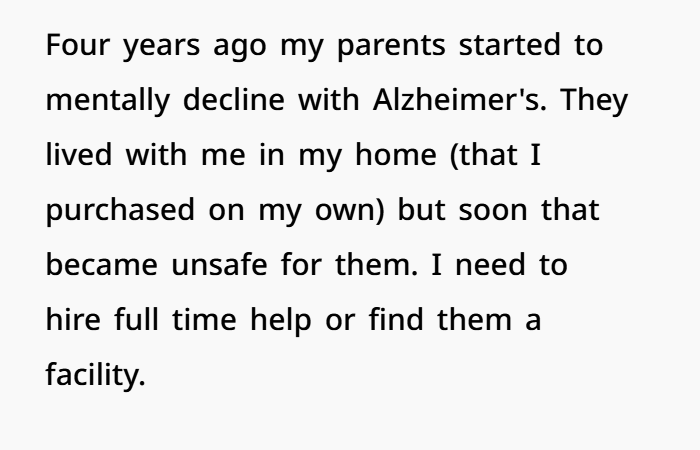
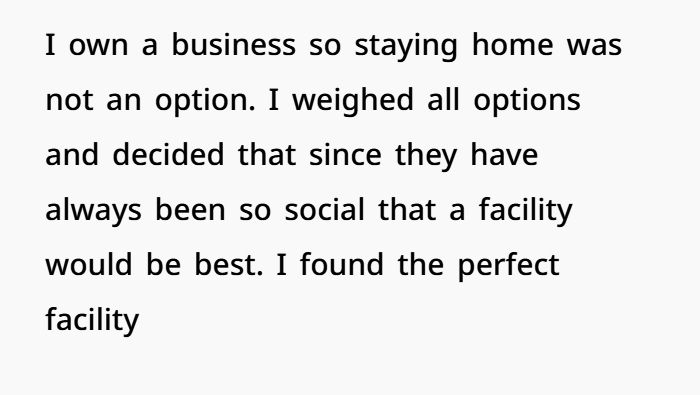
For the past four years, the older sister has also been caring for their parents, who both have Alzheimer’s disease. She first tried looking after them at home but later found an assisted living community with extra private care. As their legal power of attorney, she became responsible for handling important financial matters. While reviewing bank records, she found that Dawn had received over $150,000 from their parents in one year. She believes her sister took advantage of their memory loss by asking for money more than once. Dawn also offered little help with their parents’ care or preparing their family home for sale. Instead, she accused her older sister of making money from managing their affairs, something the older sister strongly denies.
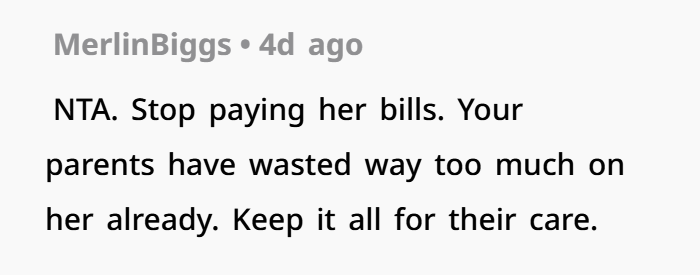
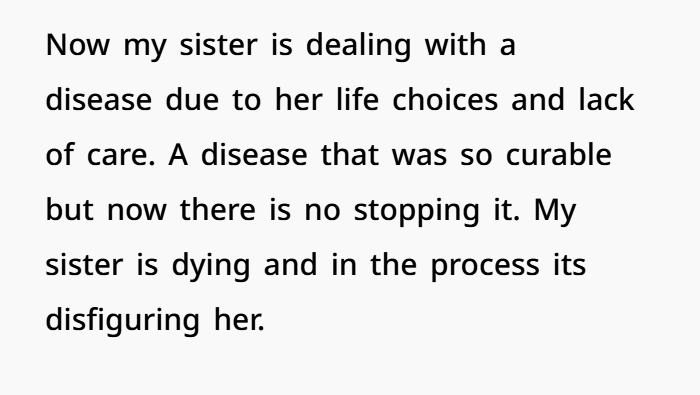
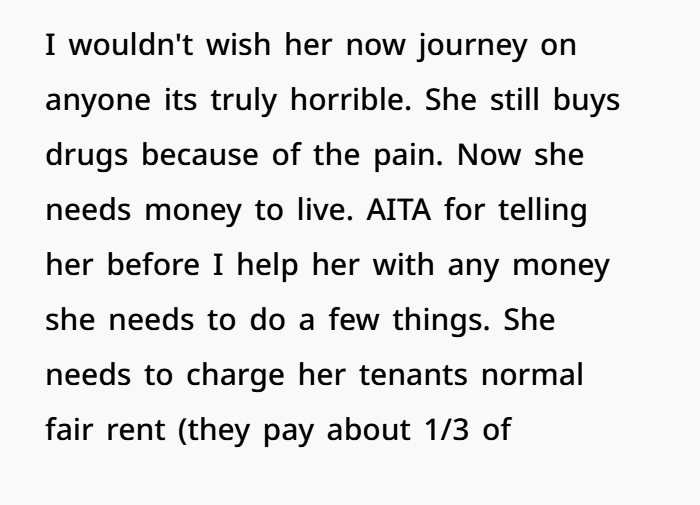
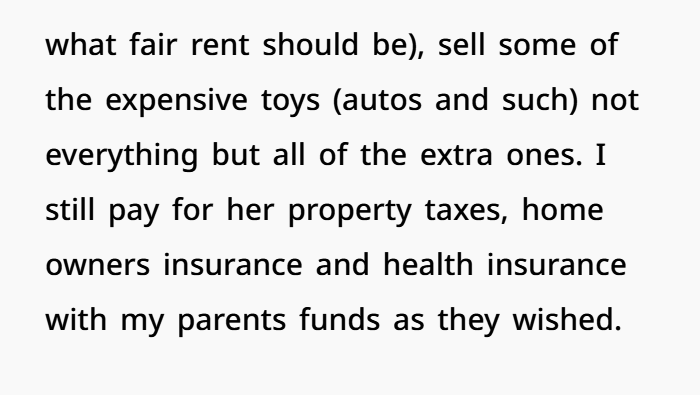
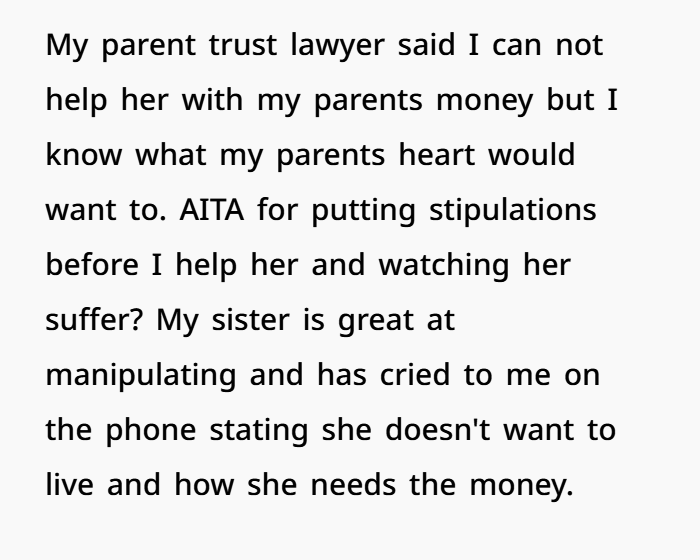
Dawn’s health has now become much worse, and she is living with serious pain. She continues to deal with substance use problems and has started asking her older sister for financial assistance. The older sister wants to help but feels Dawn should take some steps to improve her finances first. For example, she could increase the rent on her properties to a fair market rate or sell some of her costly vehicles and belongings. These changes could help cover her living expenses without needing more family money. The older sister already pays certain property and insurance bills using funds their parents had set aside for those purposes. But after speaking with their estate planning attorney, she learned that she cannot give Dawn additional money from the family trust.
The situation has become even more painful because Dawn has made concerning statements about not wanting to live anymore. Her older sister worries about her health and wants her to receive the care and support she needs. At the same time, she must protect the money meant for their parents’ long-term care. Managing assisted living expenses, healthcare arrangements, estate matters, and family responsibilities has already placed a lot of pressure on her. She is now wondering how to show compassion without ignoring the financial problems that have continued for years. She wants to be a caring sister, but she also needs to respect her legal duties and personal limits.

She Won’t Give Her Seriously Ill Sister More Money, Even Though Her Sister Needs Help
When someone in your family becomes seriously ill, you naturally want to help.
But what if that person has already received years of financial support and keeps asking for more?
That is the difficult situation one woman is facing with her younger sister, Dawn.
Dawn is very ill and struggling with money. She has asked her older sister for financial help, but their family has a long history of money problems.
Their parents have already helped Dawn with property, business expenses, and other financial needs.
Now, both parents have Alzheimer’s disease and need ongoing care.
The older sister is responsible for managing their money and making sure they can afford the care they need.
She feels bad for Dawn, but she is also worried about protecting her parents’ savings.
So, is she wrong for refusing to give her sister more money without setting some limits?
Her Parents Have Supported Dawn for Years
According to the older sister, Dawn has received financial help from their parents for a long time.
They helped her with property, supported her business, and gave her money when she was struggling.
They probably hoped that this support would help her become financially independent.
But that did not happen.
Dawn continued to need more money.
The older sister also says Dawn has struggled with substance use, which has added to the family’s concerns.
Helping a family member is not always a bad idea.
Sometimes, paying a bill, helping with housing costs, or covering an important expense can make a big difference.
But when financial support continues for years, it can become difficult for everyone involved.
The person receiving help may start depending on it.
And the people giving money may feel they cannot say no.
That is especially concerning when the money belongs to older parents who now need care themselves.
More Than $150,000 Was Reportedly Given to Dawn
One of the most serious details involves money Dawn received from her parents.
According to the older sister, Dawn received more than $150,000 while their parents were having memory problems.
She says they sometimes forgot they had already given Dawn money and wrote more checks.
If that happened as described, it raises concerns about financial abuse of older adults.
People living with Alzheimer’s disease may have trouble remembering financial transactions or making complicated money decisions.
They may forget payments, lose track of their bank accounts, or have difficulty understanding repeated requests.
This can make them more vulnerable to financial problems.
The National Institute on Aging explains that financial abuse can include the misuse of an older person’s money or property.
That is why families may need to take extra steps to protect loved ones who have dementia.
These steps can include keeping financial records, reviewing bank statements, and working with an attorney.
The older sister became involved because she believed her parents’ savings needed protection.
Considering their medical needs, that concern is understandable.
Their Parents Need Money for Long-Term Care
Both parents now need ongoing support because of Alzheimer’s disease.
The older sister has been handling their care, finances, and living arrangements.
She has also managed the sale of their large family home while continuing to run her own business.
That is a lot of work for one person.
Long-term care can be expensive.
Depending on someone’s health, families may need to pay for assisted living, memory care, nursing home services, private caregivers, and medical treatment.
There may also be costs for medication, transportation, and everyday personal care.
These expenses can continue for years.
That is why retirement savings and other family assets need to be managed carefully.
The parents’ money should be available for their own needs.
If too much is given away, they may not have enough to cover future care expenses.
The older sister is not simply trying to control the family finances.
She is trying to make sure her parents are properly cared for.
Power of Attorney Comes With Legal Responsibilities
The older sister has power of attorney for her parents.
This means she has legal authority to manage certain matters on their behalf.
But it does not mean she can use their money however she wants.
The exact rules depend on state law and the legal documents.
In many cases, someone acting under a financial power of attorney must make decisions in the person’s best interests.
That may include paying medical bills, managing bank accounts, and protecting property.
It does not automatically allow someone to give large amounts of money to relatives.
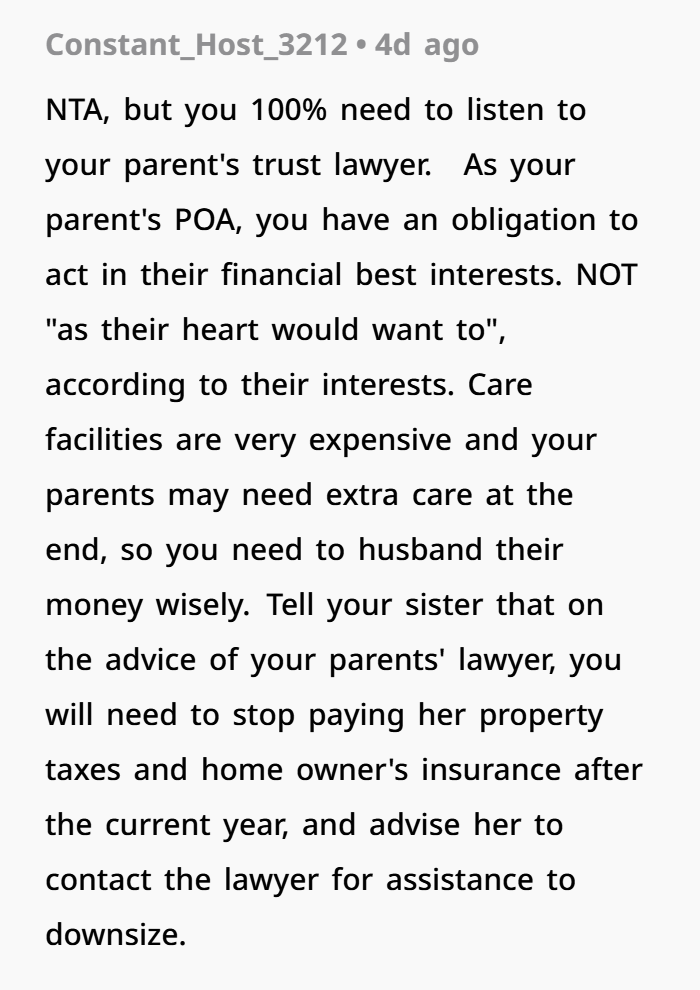
The older sister says the family’s trust attorney has already warned her against giving Dawn more money from their parents’ funds.
That advice matters.
Ignoring it could create legal and financial problems.
There may also be separate rules for property or money held in a family trust.
A trustee and someone acting under power of attorney may have different responsibilities.
The older sister should continue following the attorney’s advice.
Protecting her parents’ savings is not selfish. It is part of her responsibility.
Dawn’s Illness Makes the Situation Much Harder
The money problems are important, but Dawn’s health also deserves attention.
According to the older sister, Dawn has a serious illness that has become much worse.
She is dealing with significant pain and other health problems.
Her condition may be approaching the final stage of life.
That makes this situation especially emotional.
The older sister may still feel hurt by what happened in the past.
But she may also feel worried about Dawn’s health.
Both feelings can exist at the same time.
Dawn’s past financial decisions do not mean she should go without proper medical care.
At the same time, being seriously ill does not mean her older sister must provide unlimited financial support.
There may be other ways to help.
For example, Dawn could benefit from palliative care.
Palliative care focuses on improving comfort and quality of life for people living with serious illnesses.
It may include pain management, emotional support, and help with daily care needs.
A healthcare social worker may also be able to explain available medical services and financial assistance programs.
These options could help Dawn without putting all the financial pressure on her older sister.
Helping Does Not Always Mean Giving Cash
The older sister is worried that giving Dawn more money may not solve her problems.
That concern comes from years of seeing financial help fail to create lasting stability.
But there are other ways to support someone.
For example, she could help Dawn arrange medical appointments or contact a healthcare social worker.
She could also help Dawn’s daughter explore health insurance benefits, medical financial assistance, or community support services.
Some hospitals offer financial assistance to eligible patients who cannot afford certain medical expenses.
The available options depend on the hospital, location, income, and insurance coverage.
If the older sister wants to help using her own money, she could choose to pay a specific necessary expense directly.
That would allow her to decide how much she can afford.
She would not have to take responsibility for every bill.
The goal should be to offer useful help without creating more financial problems.
Dawn May Have Other Financial Resources
According to the older sister, Dawn still has access to valuable possessions and rental income.
She reportedly owns expensive vehicles and receives money from tenants.
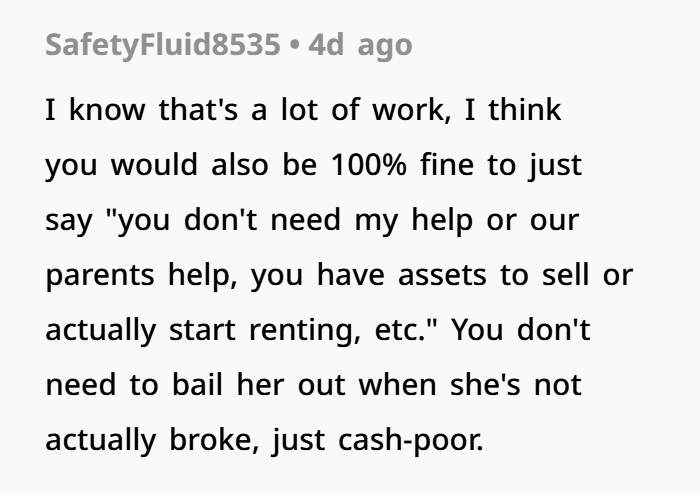
The older sister believes Dawn should look at these resources before asking for more financial support.
That is a reasonable concern.
Selling an extra vehicle or other valuable personal property could help cover important expenses.
Dawn and her daughter could also review her monthly income, debts, and medical costs.
A financial counselor may be able to help them create a simple budget.
However, there is an important detail about the property.
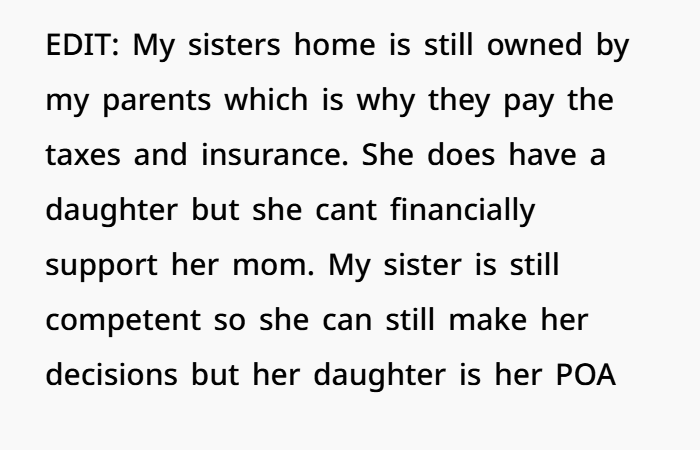
The house where Dawn lives is still legally owned by her parents.
That means Dawn may not have the right to sell it or make certain decisions about it.
Any changes would need to follow the ownership documents and local laws.
The older sister also says some tenants are paying rent below current market rates.
Reviewing rental income may be useful, but raising rent is not always simple.
Existing leases and landlord-tenant laws may limit what can be changed.
Because Dawn is seriously ill, she may need help managing these tasks.
Her daughter reportedly has power of attorney and may be able to assist within the limits of that authority.
The goal should be to understand what resources are available and make a realistic financial plan.
The Older Sister Has Been Carrying Most of the Responsibility
Another difficult part of this story is that the older sister has been handling most of the family responsibilities.
She has arranged care for her parents, managed their money, handled property matters, and continued running her business.
Meanwhile, she says Dawn has done very little to help with their parents’ care.
That can create frustration.
Caring for parents with Alzheimer’s disease takes time, patience, and emotional energy.
There are medical appointments, financial decisions, care arrangements, and everyday problems to manage.
It can feel overwhelming, especially when one person is doing most of the work.
The older sister may feel that she has spent years taking care of everyone else.
Now, she is being asked to take on another major responsibility.
It makes sense that she feels tired and conflicted.
She can care about Dawn while still feeling hurt by the past.
Those feelings do not make her a bad sister.
Dawn’s Emotional Health Should Be Taken Seriously
The older sister also says Dawn has made worrying comments about not wanting to continue living.
Because Dawn is seriously ill and dealing with significant pain, those statements should be taken seriously.
They should not automatically be treated as a way to ask for money.
People living with advanced illness may experience fear, sadness, and emotional distress.
A healthcare professional can help understand what is happening and recommend support.
The older sister could share her concerns with Dawn’s medical team and daughter.
Dawn may need better pain management, mental health care, or additional support from a palliative care team.
If she appears to be in immediate danger of harming herself, emergency services should be contacted.
Taking her emotional health seriously does not mean agreeing to every financial request.
It means making sure her medical team knows she may need more help.
She Can Help Without Risking Her Own Financial Future
The older sister does not have to choose between giving Dawn everything and refusing all support.
There may be a middle ground.
She can explain that their parents’ money must be protected for their care.
She can also be honest about what she is personally willing to do.
For example, she may be comfortable helping Dawn find medical services or reviewing financial assistance options with her daughter.
She may also choose to offer limited help with a necessary expense if she can afford it.
But she should not feel pressured to use her retirement savings, business income, or emergency fund.
Her own financial security matters too.
She has already accepted major responsibilities for her parents.
Adding unlimited financial support for Dawn could make her situation harder.
Setting a clear limit may be uncomfortable, but it can prevent more problems later.
Final Verdict: NTA — Not the Asshole
The older sister is not wrong for refusing to give Dawn unlimited financial support.
She has spent years helping manage her parents’ needs and protecting their money.
She also has legal responsibilities that may prevent her from giving away their savings.
Those responsibilities should come first when handling her parents’ assets.
At the same time, Dawn is seriously ill and deserves compassionate medical care.
Her past financial problems should not stop her from receiving appropriate treatment, pain management, and emotional support.
The older sister can help explore medical services, health insurance benefits, and financial assistance programs without taking responsibility for every bill.
She can also decide how much personal support she is comfortable offering.
Being a caring family member does not mean putting your own savings, retirement plans, or financial future at risk.
The best approach is to protect the parents’ money, follow the family’s legal advice, and help Dawn find support for her immediate needs.
The older sister cannot solve every problem in the family.
But she can make careful decisions, show kindness where possible, and set limits that protect everyone involved.
Readers’ Comments Speak Out