he Slept With Other Guys Before We Were Official — And Lied. Now What?
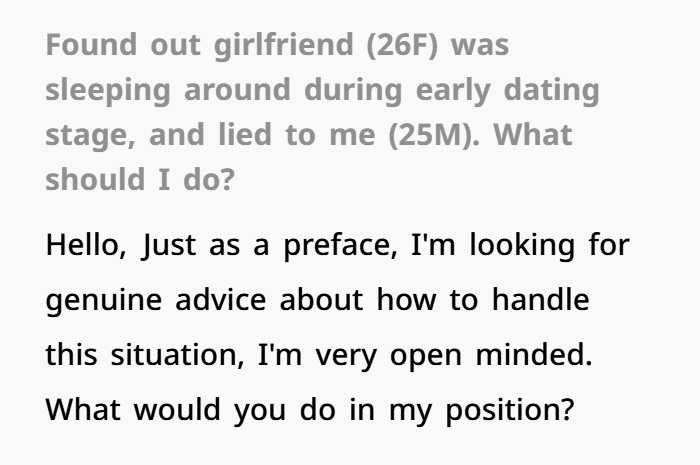
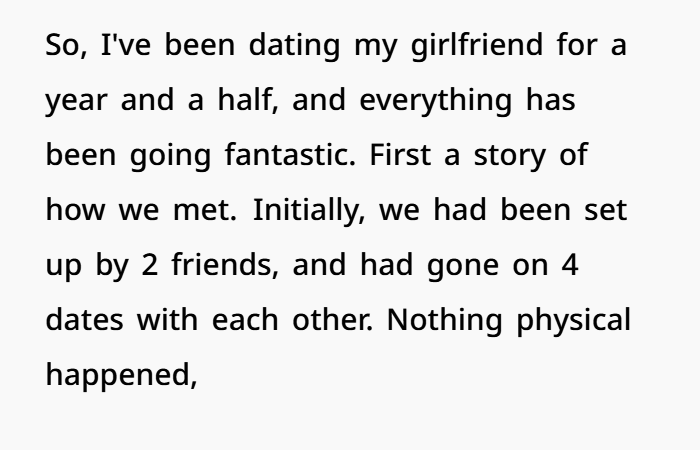
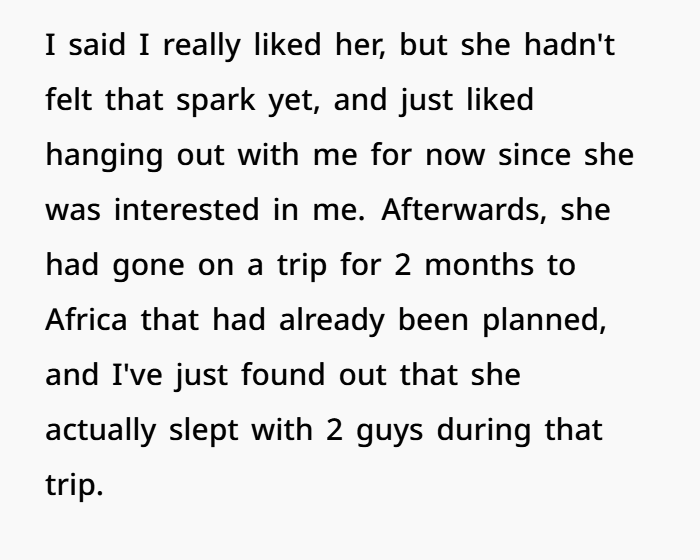
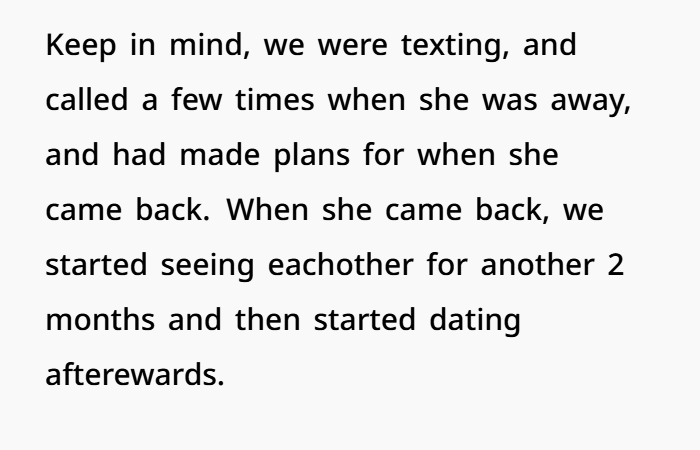
You met through mutual friends. Four real dates. Nothing physical. Just chemistry building slow. You told her you liked her. She said she hadn’t fully felt that spark yet but wanted to keep seeing where it goes. That’s normal in modern dating. Then she left for a pre-planned two-month Africa trip. You stayed connected. Text messages. Late night phone calls. Even made future plans for when she got back. That’s emotional investment. That’s relationship intention. Not some casual swipe-right situation.
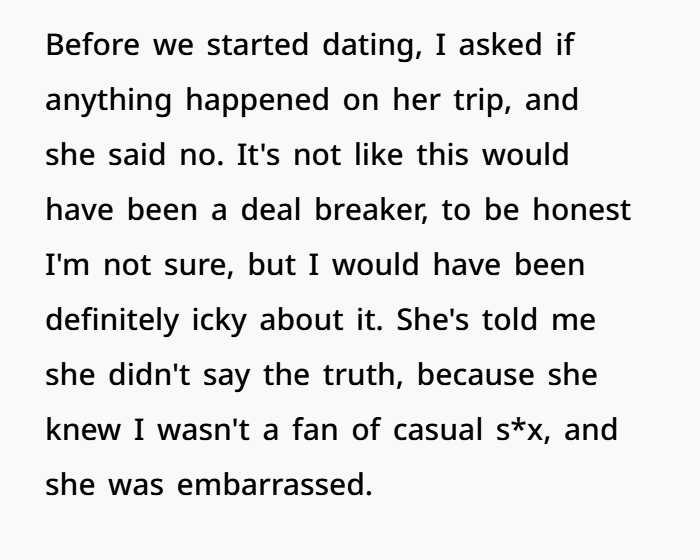
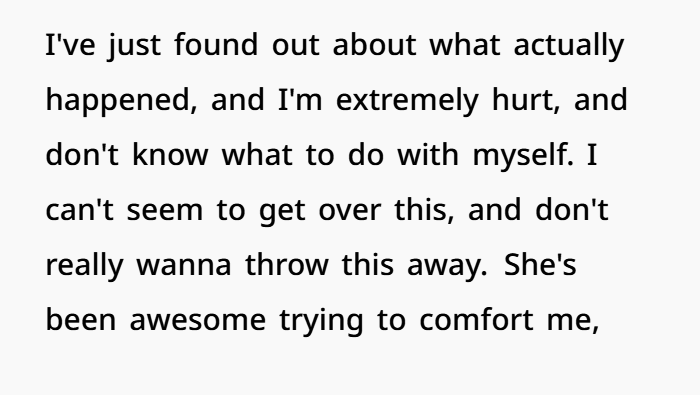
Now here’s the gut punch. During that trip, she hooked up with two guys. Casual s*x. No strings. When she came back, you two kept dating. Two months later, you made it official. Before committing, you asked if anything happened while she was away. She said no. That’s the part that hits different. Not just the intimacy. The lie. She admits she hid it because she knew you value commitment, not casual hookups. She felt embarrassed. Maybe guilty. Fast forward a year and a half. The relationship has been solid. No cheating. No red flags. No shady behavior. But finding this out triggered something deep. Trust issues. Emotional damage. That feeling of being second choice. Like your relationship timeline wasn’t aligned. You don’t want to sabotage a healthy relationship over pre-commitment behavior. But you also can’t just switch off betrayal trauma like it’s nothing.

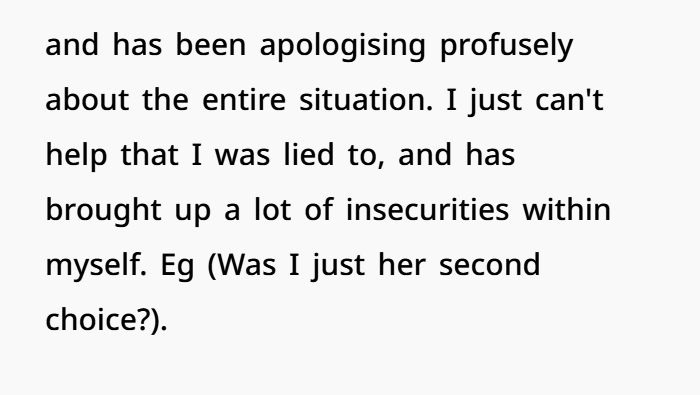
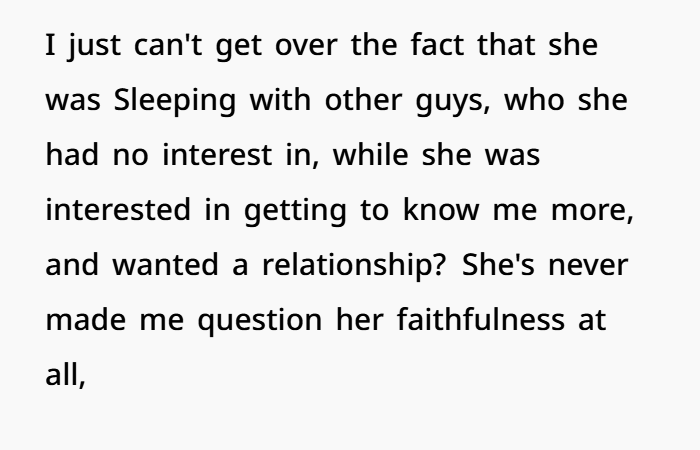
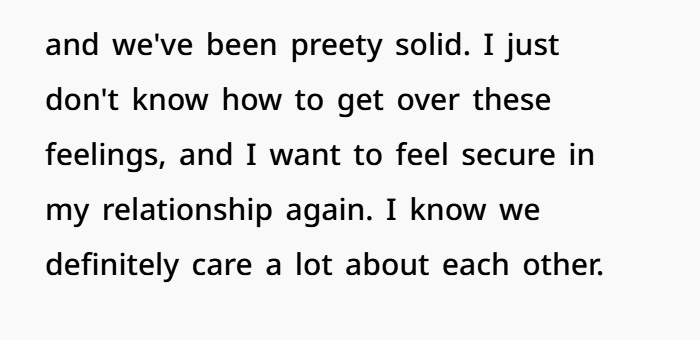
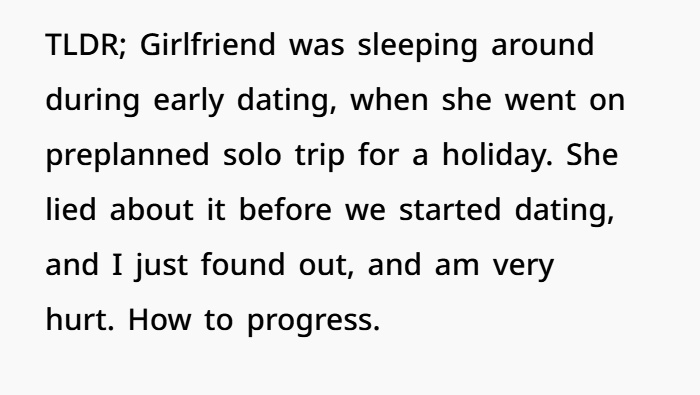
Okay. Pause for a minute. Because this isn’t just about who she slept with. It’s about relationship trust, emotional security, and how confusing modern dating expectations can be. Especially in that gray area before exclusivity.
If we’re being technical, she didn’t cheat. You weren’t in an exclusive relationship. There was no commitment agreement. In today’s dating world, until two people clearly define the relationship, seeing other people is often considered normal. Studies in the Journal of Social and Personal Relationships highlight how unclear communication in early dating stages leads to mismatched emotional investment. One person thinks it’s heading toward long-term commitment. The other still sees it as open-ended. That disconnect creates pain later.
But the real issue isn’t s*xual freedom.
It’s broken trust.
The American Psychological Association (APA) has published research showing that dishonesty in romantic relationships can create lasting insecurity because it disrupts emotional safety. And emotional safety is the foundation of healthy relationships. When someone lies, the brain reacts to more than the words. It reacts to unpredictability. And unpredictability fuels relationship anxiety, doubt, and even mild attachment insecurity. That’s why this doesn’t feel small. It doesn’t feel “in the past.” It feels like something fundamental shifted.
Your mind is likely looping on a few key thoughts:
- Was I just her backup option?
- Did she choose me after “testing the field”?
- If she hid this, what else could she hide?
- Was I more invested than she was?
These thoughts are normal. They’re not toxic. They’re human.
There’s a term for what you might be feeling — retroactive jealousy. It’s when someone becomes anxious or distressed about their partner’s s*xual past. Therapists in couples counseling say it’s rising fast in modern relationships. Dating apps. Hookup culture. Social media comparisons. All of it amplifies insecurity. And it cuts deeper when those past experiences happened during a time you felt emotionally connected and invested. That timing makes it personal.
Still, here’s the hard truth. She didn’t owe you exclusivity during that trip. There was no official commitment. In modern dating norms, until exclusivity is clearly defined, people technically have freedom. But when you asked her directly before committing? That’s different. That’s where relationship honesty matters. Transparency builds trust. Without it, emotional security takes a hit.
The fracture isn’t the s*x.
It’s the dishonesty.
Now, why would she lie? Not to justify it. Just to understand it from a relationship psychology angle.
She admitted she felt embarrassed and knew your values around casual s*x. That suggests fear of rejection. According to research on impression management in dating, people often hide parts of their past early on to avoid losing a potential long-term partner. They shape the narrative to look more aligned. It’s a protective move. Not always malicious. But when that protection involves deception, it plants seeds of trust issues later.
It was immature. But it doesn’t automatically mean she’s unfaithful or manipulative.
What matters more is: how has she acted for the last 1.5 years?
You said:
- She’s never made you question her loyalty.
- She’s been solid.
- She’s apologizing.
- She’s trying to comfort you.
That behavior aligns with someone who regrets hiding something — not someone living a double life.
Let’s also address your biggest emotional wound: feeling like second choice.
When someone hooks up with other people while saying they’re interested in you, it hits the ego. It triggers comparison. Makes you question your value in the dating market. That’s normal. It feels like rejection, even if technically it wasn’t. But early dating isn’t black and white. Emotional attraction and s*xual behavior don’t always line up perfectly. She may have liked you but still felt single. Still undecided. That doesn’t automatically make you second choice. It means she hadn’t made a commitment decision yet.
And look at the outcome. After the trip, she chose you. She invested. She committed. She built something long term. That signals emotional clarity, not backup planning. People don’t usually stay in healthy, stable relationships for 18 months if they see someone as a placeholder.
Now flip the scenario. If she had told you the truth when you asked, what would’ve happened?
You probably would’ve pulled back. Maybe ended it. That’s honest. So the lie functioned as a shield. It protected the relationship in the short term. But it damaged relationship trust in the long run. That’s the cost of impression management in dating. Avoid rejection now… risk emotional fallout later.
Now, where do you go from here?
There are really only three healthy paths:
- You decide this is a boundary violation you can’t move past.
If honesty about s*xual history during early dating is a core value for you, and this permanently changes how you see her, that’s valid. Breaking up doesn’t mean she’s evil. It means compatibility on values didn’t align. - You forgive, but don’t process it.
This is the dangerous one. You say “it’s fine,” but internally you keep replaying it. That turns into resentment. Passive aggression. Emotional distance. - You rebuild trust intentionally.
This is the hardest — and most mature — option.
Rebuilding trust means:
- Having one or two deeper conversations. Not 20 interrogations.
- Asking for reassurance in healthy ways.
- Setting future transparency boundaries.
- Possibly doing a few sessions of couples therapy (yes, even for this).
According to relationship therapy models like the Gottman Method, trust is rebuilt when three things happen:
- The person who lied shows genuine remorse.
- They answer questions openly without defensiveness.
- Their behavior consistently aligns with honesty over time.
From what you’ve written, she’s doing those things.
Now the final question you need to ask yourself isn’t, “Was she wrong?”
It’s this:
Can I see her the same way again?
If every time you look at her, your brain replays those images, that’s something you’ve gotta work through on your end. That’s not relationship betrayal anymore. That’s intrusive thoughts. That’s attachment style stuff. That’s your mind struggling to separate past from present. And if you don’t deal with that internally, it’ll follow you into any relationship, not just this one.
And here’s the part most people avoid saying. A lot of men carry ego wounds around s*xual competition. It’s wired deep. Comparison. Pride. That feeling of “was I the best?” It doesn’t make you insecure or weak. It makes you human. But ignoring it won’t help. Understanding it will.
If you genuinely believe she loves you now, has been loyal, and chose you with full clarity, then this becomes a story about imperfect beginnings. Not ongoing betrayal. Not cheating. Just messy early dating decisions and poor communication.
But if something inside you feels fundamentally broken — like the trust foundation cracked in a way you can’t repair — you need to be honest about that too.
There’s no moral high ground here. No perfect relationship advice. Just the choice that lets you sleep at night without resentment building up over time.
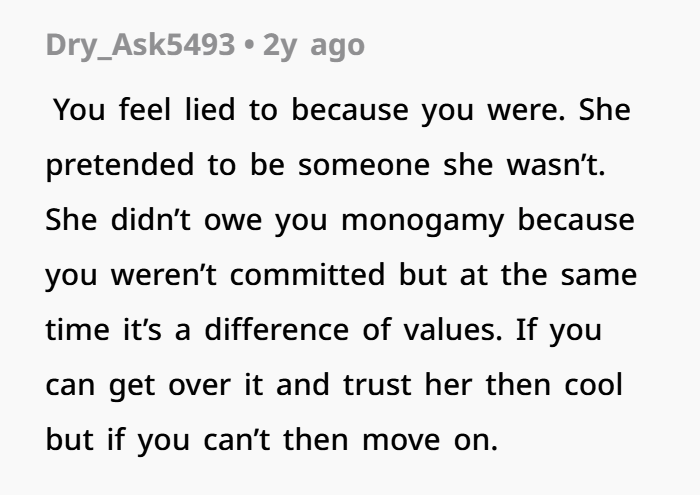
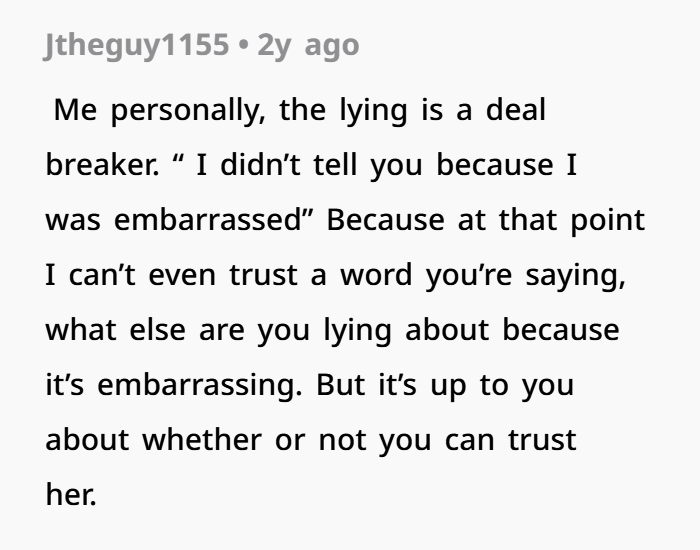
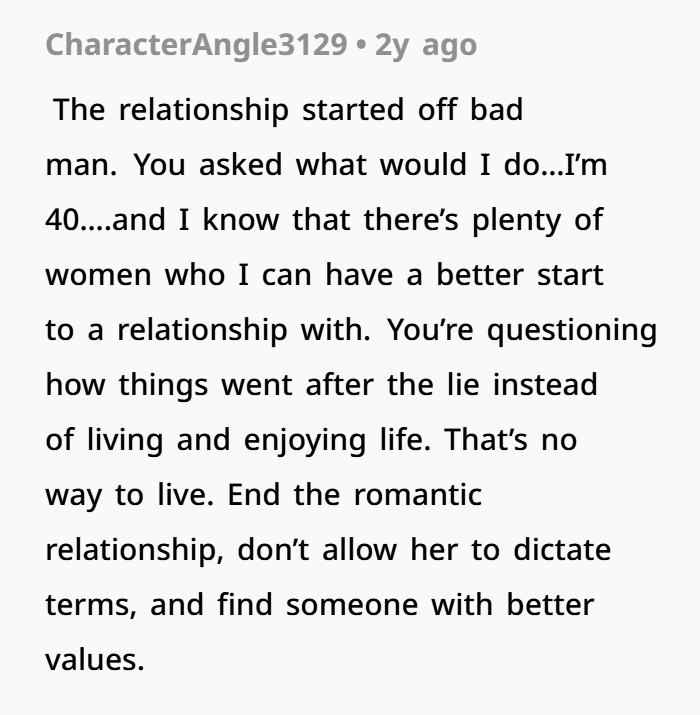
Comments That Say It All
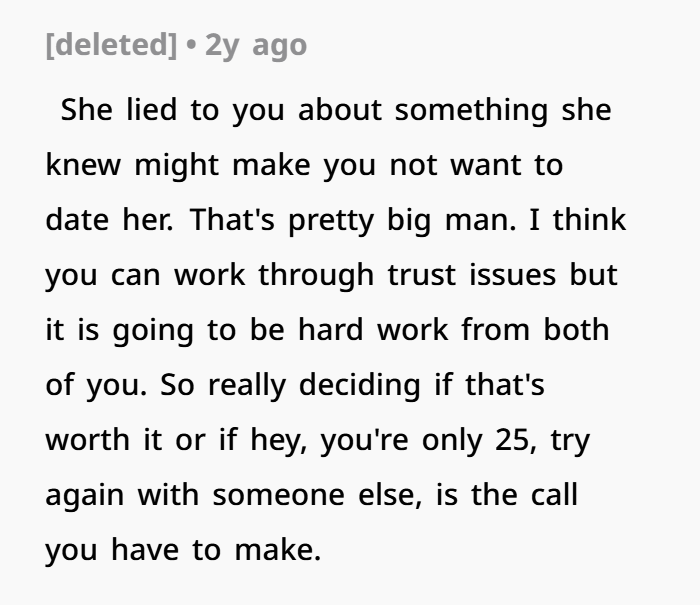
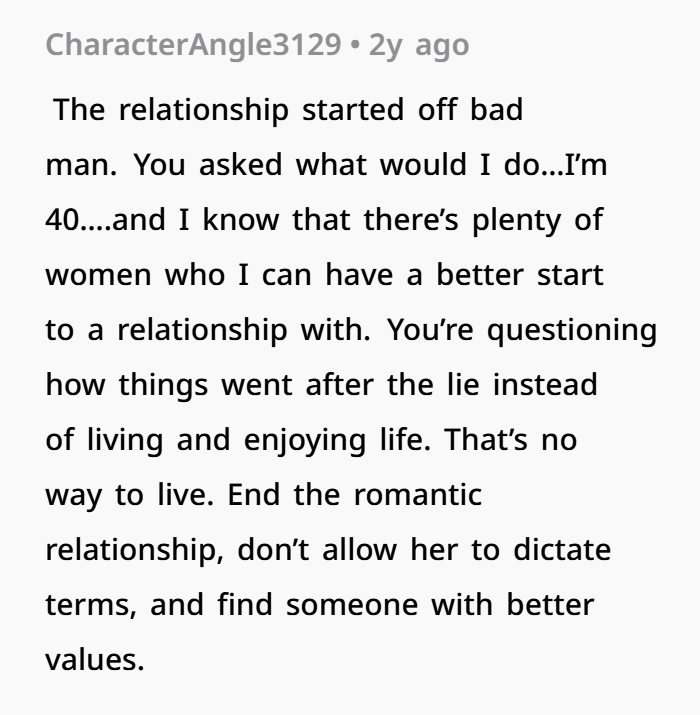
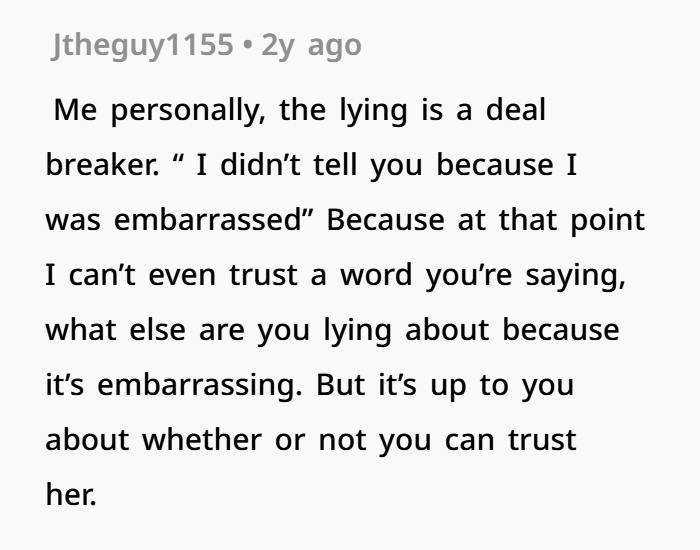
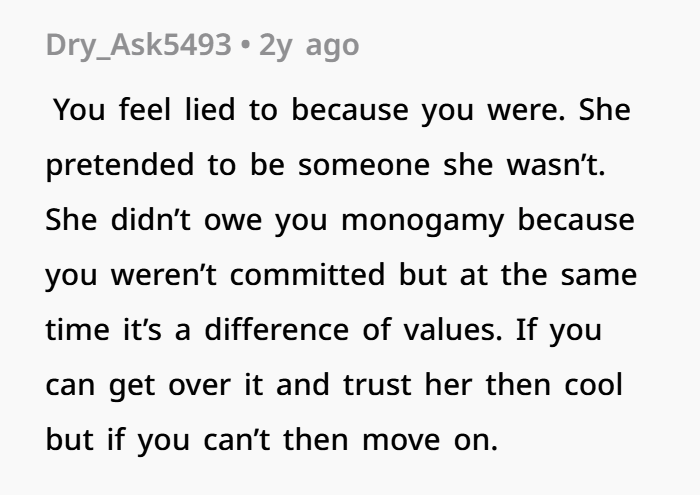
So What Should You Do?
Take a week. Don’t decide anything dramatic.
Have one calm conversation. Tell her exactly what part hurt most — the lie, not the s*x. Ask for reassurance about being chosen. Watch how she responds.
Then ask yourself:
Do I want to be right, or do I want to be with her?
Sometimes you don’t get both.
And if after honest effort you still feel unsettled? It’s okay to walk away from a good person because the foundation cracked.
But if you stay, stay fully. Don’t punish her for something that happened before you were official.
That’s the real crossroads here.