Not Invited, But Expected to Pay? The Wedding Gift Drama That Split a Family

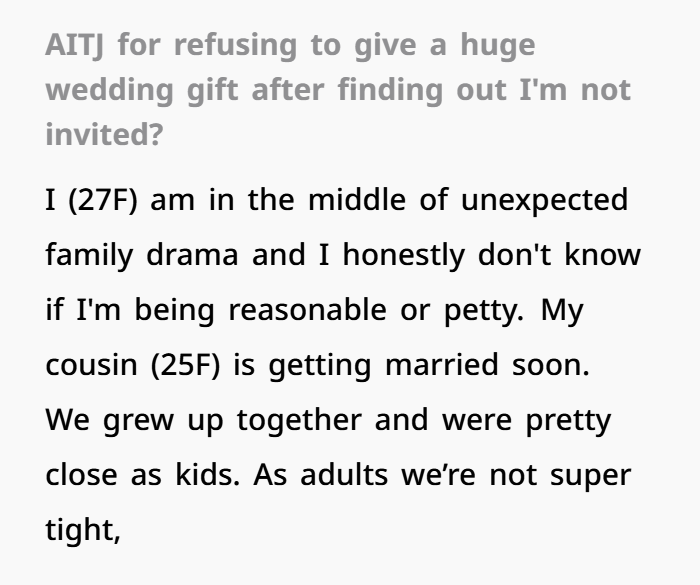
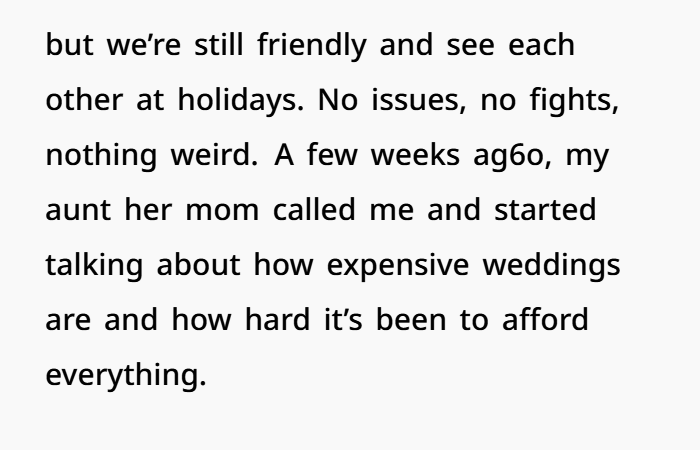
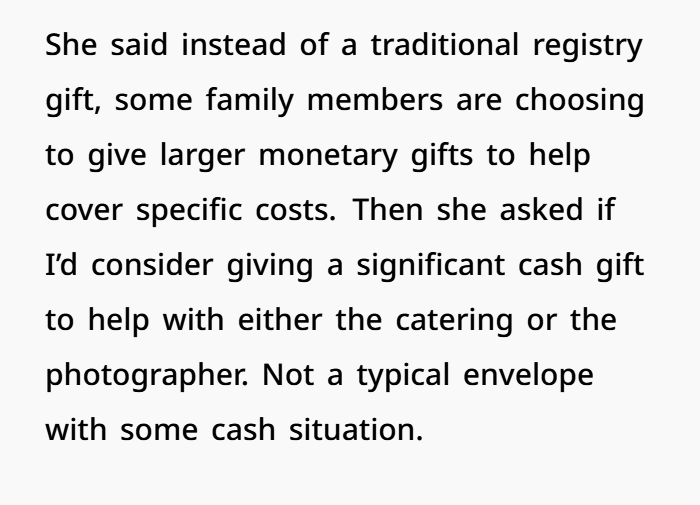
A 27-year-old woman was surprised when a conversation with her aunt about her cousin’s upcoming wedding suddenly became about money. At first, they were talking about the wedding plans. Then her aunt explained that some family members were giving large cash gifts to help pay for the wedding budget, including costs like the venue, catering, and professional photography. Instead of a traditional wedding gift, relatives were being asked to make much bigger financial contributions. She did not agree right away and simply said she would think about it.
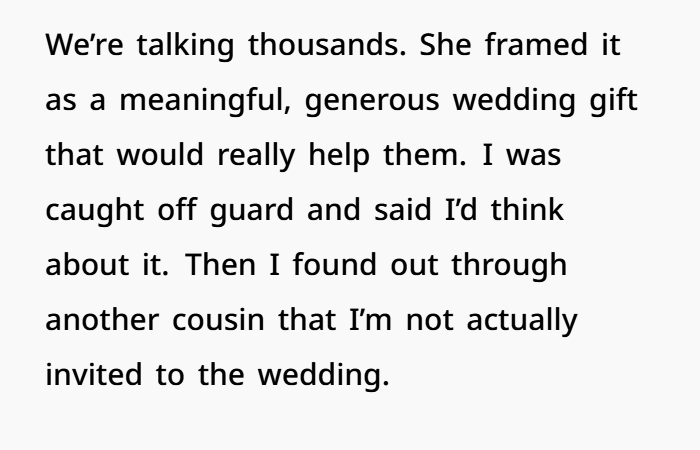
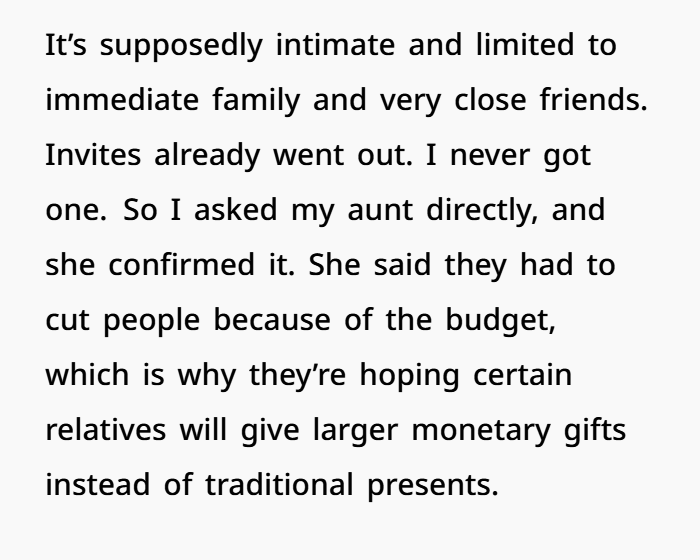
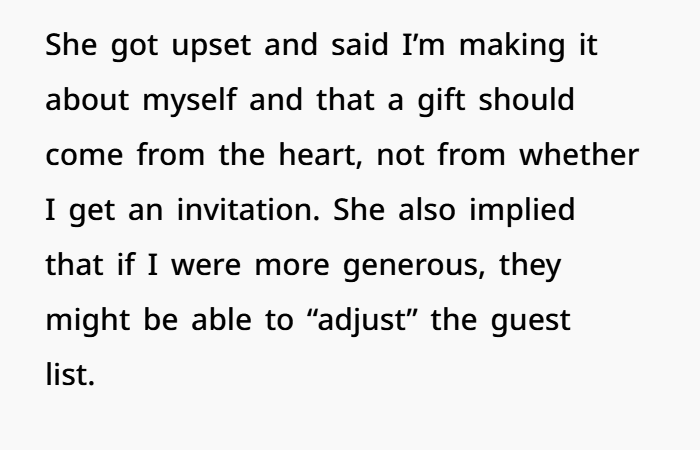
A short time later, she learned something unexpected. She found out that she was not invited to the wedding. When she asked her aunt about it, she was told the guest list was very small because of budget limits. Even though she was not invited, the family still hoped she would help pay for some of the wedding expenses. This left her feeling confused and hurt.
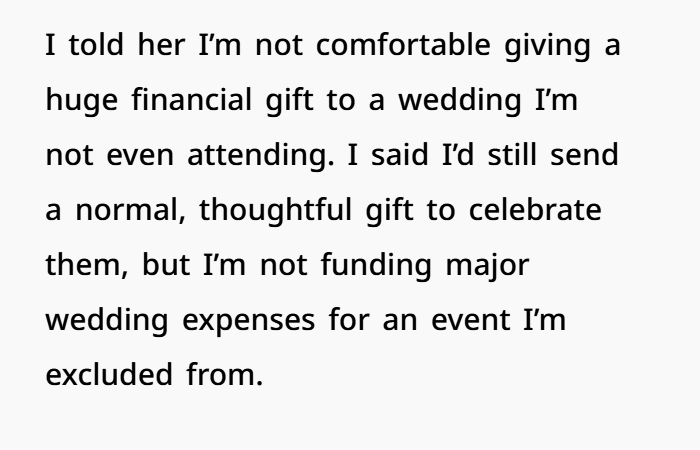
After thinking about it, she decided not to contribute money to a wedding she would not be attending. She believed it was important to set healthy financial boundaries and make responsible personal finance decisions. However, some family members felt disappointed and said she should help because they were relatives.
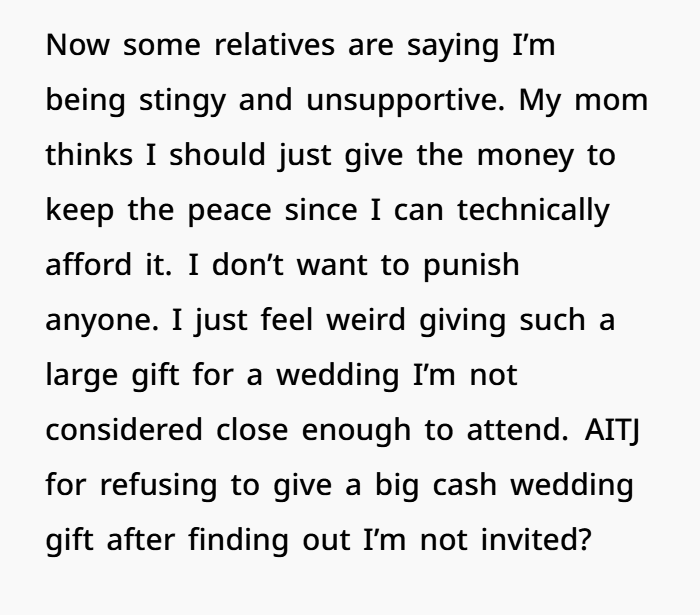
Now, she is wondering if she made the right choice. The situation has raised questions about family relationships, wedding expectations, money management, and respecting personal financial decisions. Many people believe that supporting loved ones should always be a personal choice and that open communication can help prevent misunderstandings.
The author was asked by her aunt to contribute thousands of dollars toward her cousin’s wedding expenses, instead of giving a traditional gift
Should You Pay for a Wedding You Are Not Invited To?
Weddings can be expensive.
Many couples spend a lot of money on the venue, food, decorations, photography, music, and other details. Every couple has a different wedding budget, and many families look for ways to reduce costs.
There is nothing wrong with planning a smaller wedding if money is limited.
However, asking someone for a large amount of money when they are not even invited is a very different situation.
A Wedding Gift Should Always Be a Choice
A wedding gift is meant to be a kind gesture.
People give gifts because they want to celebrate the couple and wish them happiness in their new life together.
A gift should never feel like a payment or an obligation.
Everyone should be free to decide what they are comfortable giving based on their own financial situation.
Being Left Out Changes Things
In this case, the couple decided to keep their guest list small because of their budget.
That is completely understandable.
No one is automatically entitled to an invitation.
But asking someone to contribute thousands of dollars after telling them they are not invited can feel unfair.
It changes the situation from celebrating a wedding to helping pay for it.
Financial Boundaries Matter
Good personal finance is about making thoughtful decisions with your money.
Many people work hard to build savings, pay off debt, invest for retirement, or prepare for unexpected expenses.
Because of that, it is important to have healthy financial boundaries.
Just because someone has money does not mean they should feel responsible for paying for someone else’s celebration.
Good financial planning means spending money in ways that match your own goals and priorities.
Weddings Are Personal Choices
Every couple has the right to plan the wedding they can comfortably afford.
If the cost becomes too high, many couples choose simple ways to lower their expenses.
They may invite fewer guests, choose a smaller venue, simplify the decorations, or select a less expensive menu.
These are common parts of wedding planning.
It is usually not expected that extended family members will cover large wedding costs, especially if they are not attending.
Family Pressure Can Be Difficult
Money conversations inside families are often emotional.
Sometimes relatives encourage someone to give money simply to avoid conflict.
While keeping peace in the family is important, it should not come at the cost of your own financial well-being.
Healthy family relationships include respecting each person’s financial choices.
Setting Clear Money Boundaries
Many financial advisors recommend setting clear boundaries when it comes to lending or giving money to family members.
Without clear limits, expectations can continue to grow over time.
Learning to say “no” politely can protect both your finances and your relationships.
Clear communication often prevents misunderstandings later.
A Small Gift Can Still Be Thoughtful
Even if someone is not invited to a wedding, they may still choose to send a small gift or a congratulations card.
That is a kind gesture, but it should always be voluntary.
There should never be pressure to give more than someone feels comfortable giving.
Generosity has different meanings for different people.
A Respectful Response
In this situation, the family member politely explained that they were not comfortable giving such a large amount of money.
They did not argue or criticize anyone.
They simply made a financial decision that felt right for them.
Setting a respectful boundary is not the same as being unkind.
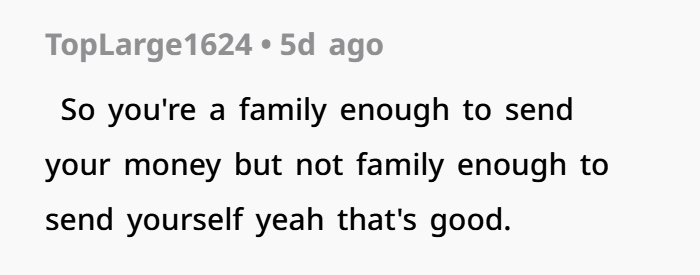
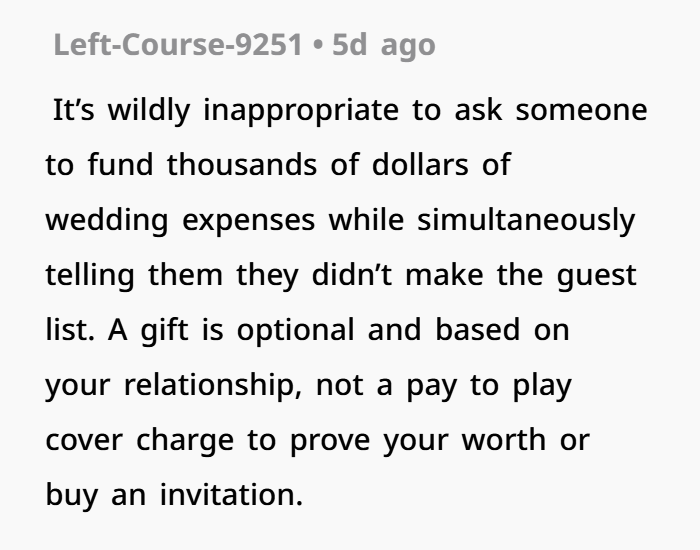
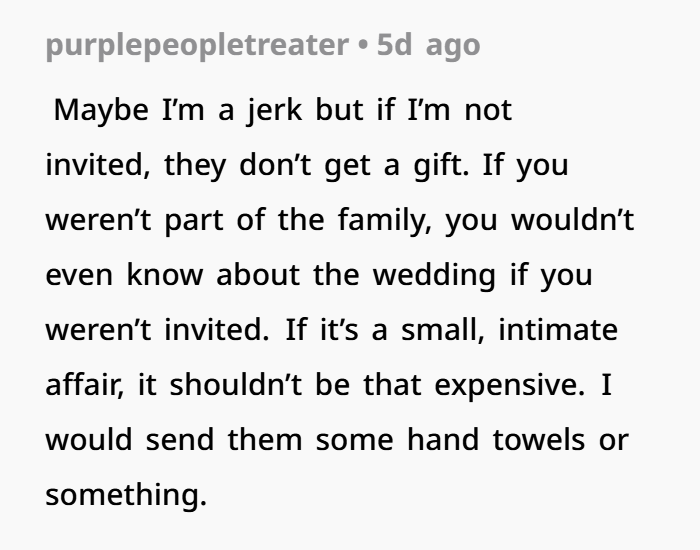
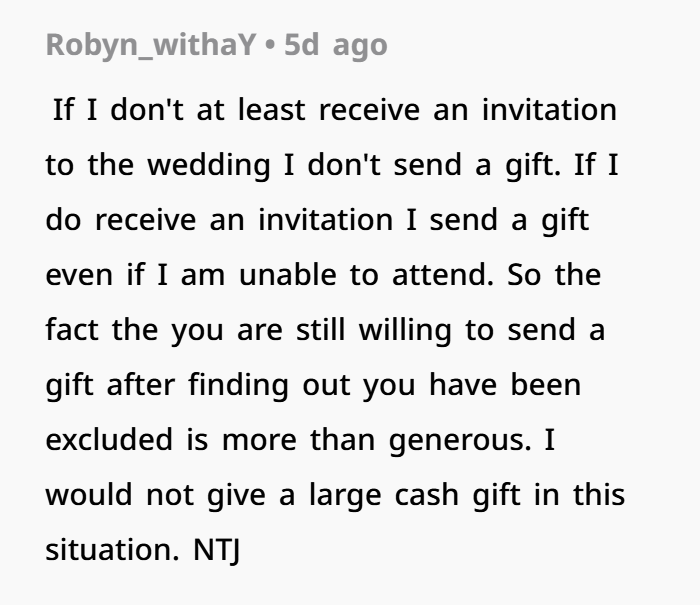
Netizens called the request “wildly inappropriate”, stressing that a wedding gift is optional and rooted in genuine connection




Final Thoughts
Weddings are special celebrations, but they should not create financial pressure for family members.
A gift should always come from kindness, not obligation.
Making smart financial decisions, following a personal budget, and protecting your long-term financial planning are important for everyone.
Healthy family relationships are built on respect, honest communication, and understanding. When people respect each other’s financial boundaries, it becomes much easier to celebrate important moments without creating unnecessary stress or resentment.