AITA for Getting Angry Over Missing Bedsheets After My Husband Forgot?

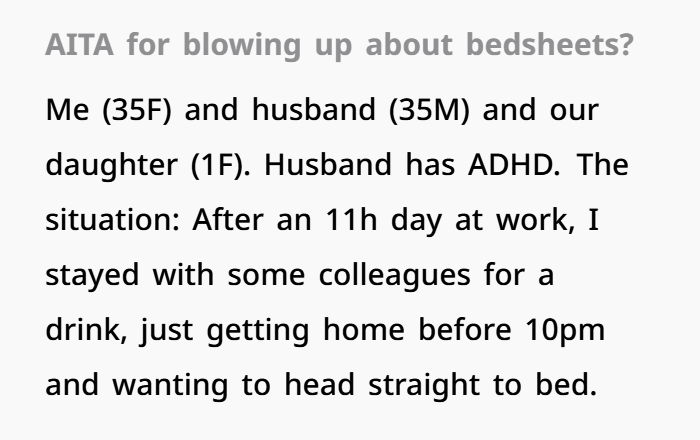
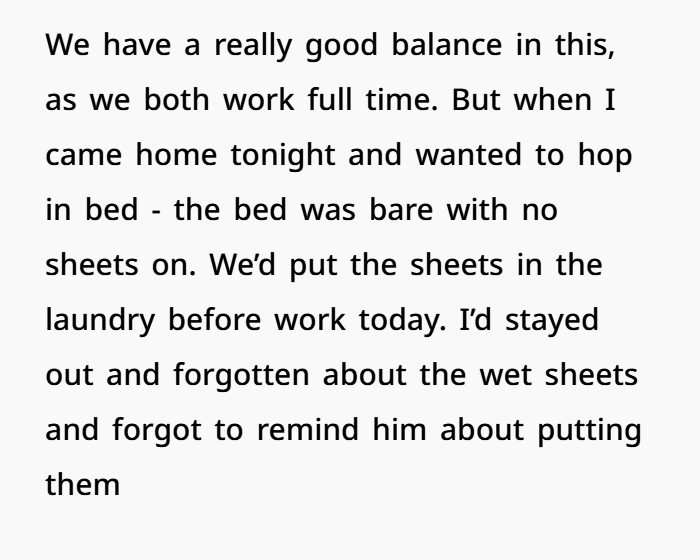
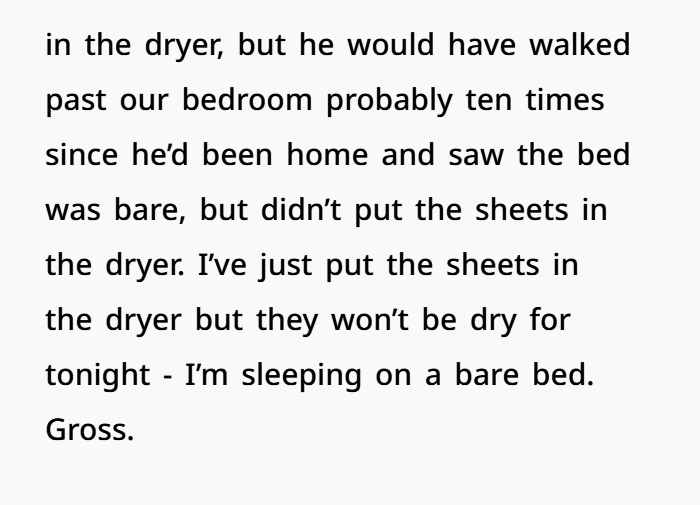
A mother recently shared a story about a stressful moment with her husband after she returned home from work. When she entered the bedroom, she found that the bed still had no clean sheets, which made her feel disappointed and overwhelmed.
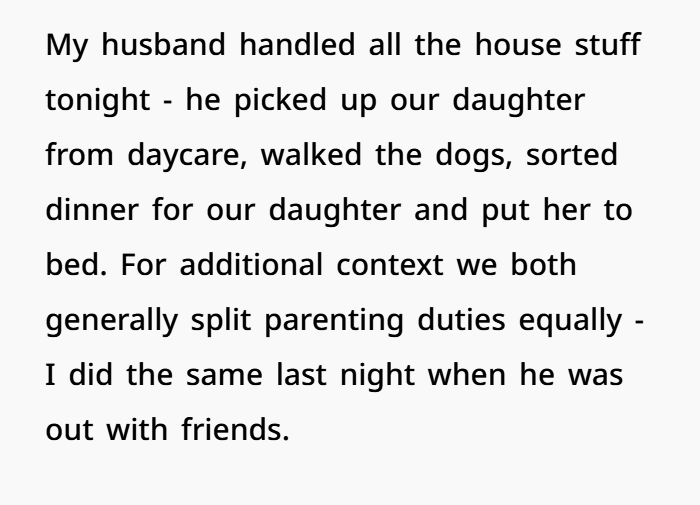
The couple normally tries to divide parenting duties and household responsibilities equally. Her husband had spent the evening caring for their daughter, making dinner, and completing other chores while she was away.
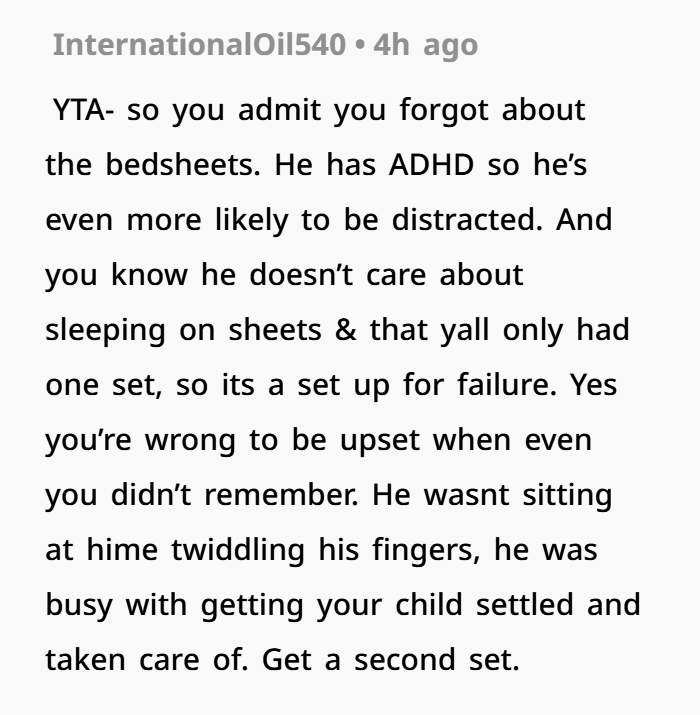
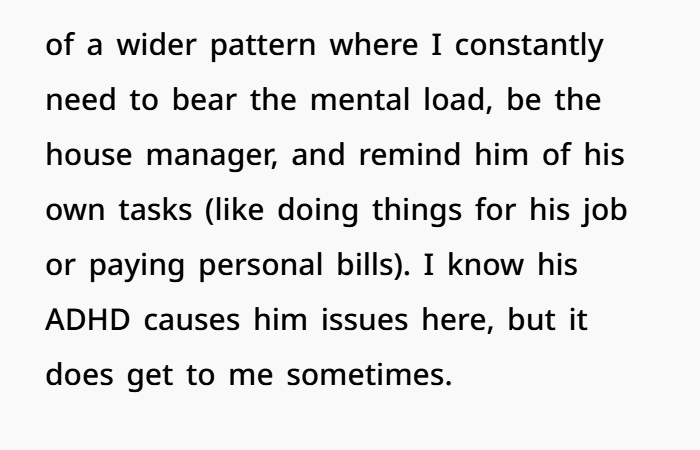
The problem was not only about the missing sheets. She felt that she was carrying the responsibility of noticing and remembering small household tasks. She was also dealing with the challenge of her husband’s ADHD, which sometimes affects organization, focus, and completing tasks.
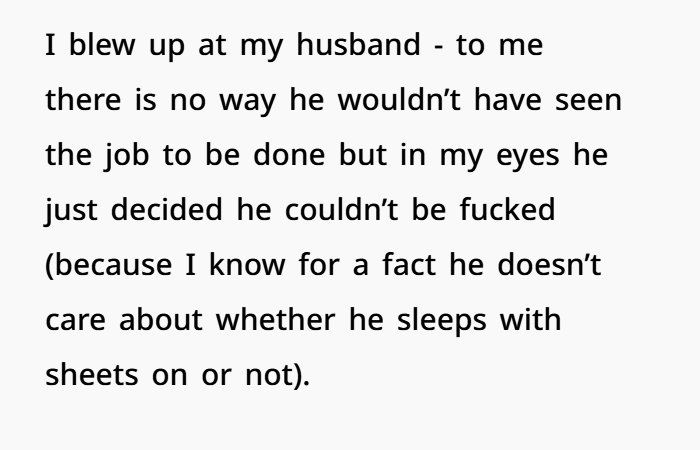
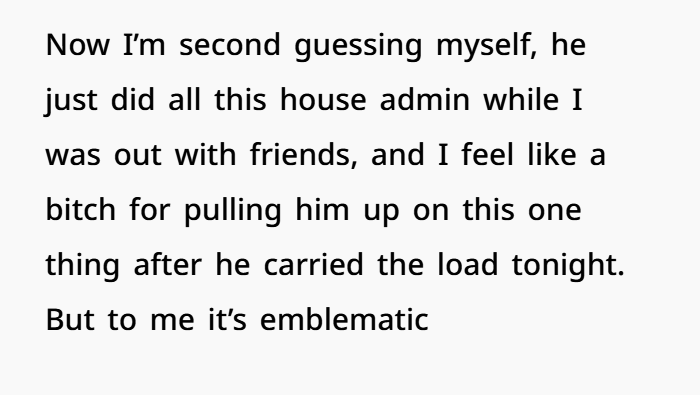
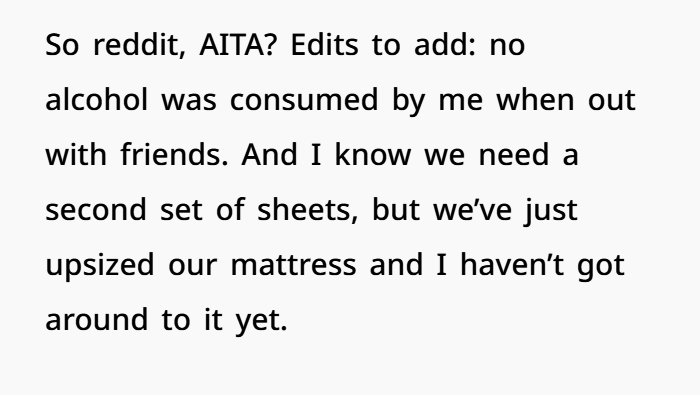
After their argument, she reflected on the situation and wondered if she could have handled it differently. She explained that the disagreement was less about the bed and more about finding a fair balance in family life, communication, and daily home management.

When a Small Chore Becomes a Big Relationship Problem
Sometimes, a small household mistake can lead to a much bigger argument.
A forgotten laundry load, missing bedsheets, or an unfinished chore may seem like a simple problem. But in many relationships, the real issue is not the task itself. The frustration often comes from feelings that have been building for a long time.
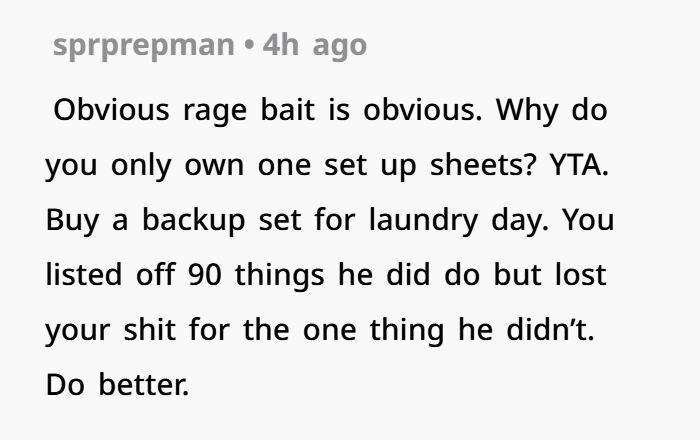
In this situation, the wife explains that her husband does many things to help the family. He picked up their daughter, walked the dogs, prepared dinner, and handled bedtime while she was away after a busy workday.
She also shared that they usually divide parenting responsibilities fairly.
So why did the forgotten bedsheets become such a difficult moment?
Because household responsibilities are not only about doing tasks. They are also about noticing what needs to be done.
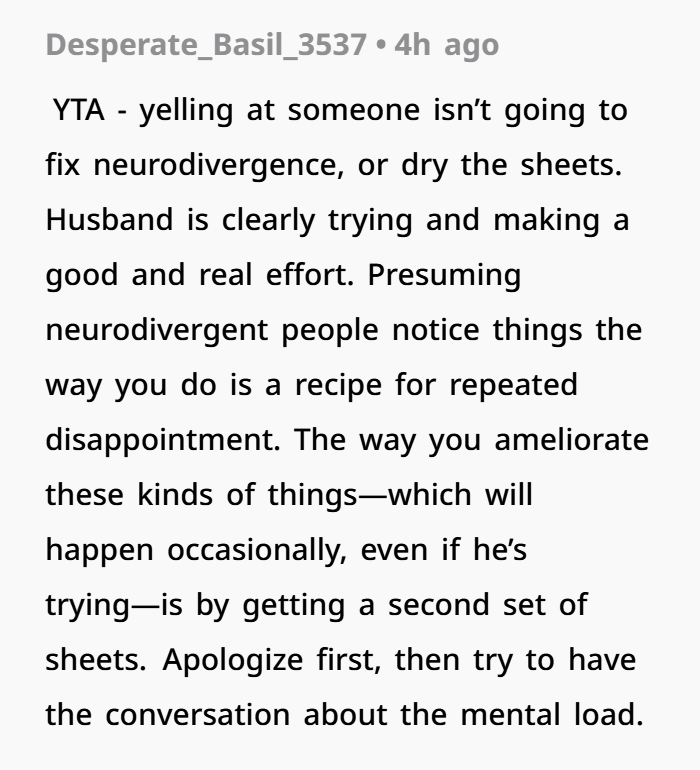
This is often called the mental load in relationships.
What Is the Mental Load in a Relationship?
The mental load is the invisible work involved in managing a home and family.
It is the thinking, planning, and remembering that often happens behind the scenes.
A person carrying more of the mental load may not always do every physical chore. Instead, they may be the person who remembers everything and makes sure things happen.
Examples of mental load include:
- Remembering appointments
- Planning family meals
- Checking household supplies
- Managing schedules
- Paying attention to bills
- Buying items before they run out
- Keeping track of children’s needs
Over time, carrying too much mental responsibility can make someone feel tired and overwhelmed.
A person may start feeling like they are managing the entire household instead of working together with their partner.
In this situation, the bedsheets became a symbol of a bigger feeling. The wife felt that if she did not notice the problem, it might never get solved.
That feeling can become stressful over time.
ADHD and Managing Household Tasks
The husband’s ADHD is also an important part of this situation.
ADHD can affect skills like planning, organization, memory, and completing tasks. These skills are often called executive functions.
For some people with ADHD, they may start a task but forget the final step. They may also become distracted or have trouble deciding which task needs attention first.
Common household challenges related to ADHD can include:
- Forgetting unfinished tasks
- Losing track of time
- Getting distracted easily
- Struggling with routines
- Having difficulty prioritizing tasks
However, ADHD does not mean someone does not care about their family or responsibilities.
Many couples successfully manage ADHD by creating better systems instead of depending only on memory.
Helpful strategies may include:
- Shared calendars
- Family planning apps
- Written reminders
- Weekly household check-ins
- Clear responsibility lists
The goal is not for one partner to become the reminder system for the other. The goal is to create a home routine where both people can contribute.
Forgetting Something Does Not Always Mean Not Caring
One of the hardest parts of these situations is understanding what a mistake really means.
The wife may have felt:
“He noticed the problem and did not care enough to fix it.”
The husband may have felt:
“I handled many responsibilities today, and I simply forgot one thing.”
Both people may have different experiences of the same event.
A forgotten chore does not always mean someone is lazy or careless. However, repeated problems without communication can create frustration.
Both partners’ feelings matter.
The important thing is finding a solution instead of only focusing on blame.
Why Small Chores Can Cause Big Arguments
Many couples argue about small things like:
- Laundry
- Dishes
- Cleaning
- Grocery shopping
- Childcare tasks
- Household bills
Often, the argument is not really about the chore.
A complaint about laundry may actually mean:
- “I need more support.”
- “I want to feel like we are a team.”
- “I want my effort to be noticed.”
- “I do not want to feel alone in managing the home.”
The small task becomes connected to bigger emotional needs.
This is why couples may have strong reactions to everyday problems. The issue on the surface may be small, but the feelings underneath can be much bigger.
Building Better Communication in Marriage
Healthy relationships do not mean couples never disagree.
Every couple has moments of frustration. What matters is how they handle those moments.
Instead of saying:
“You never help.”
or
“I always have to remind you.”
Couples can try focusing on the solution:
“How can we make this easier next time?”
Simple changes can make daily life smoother:
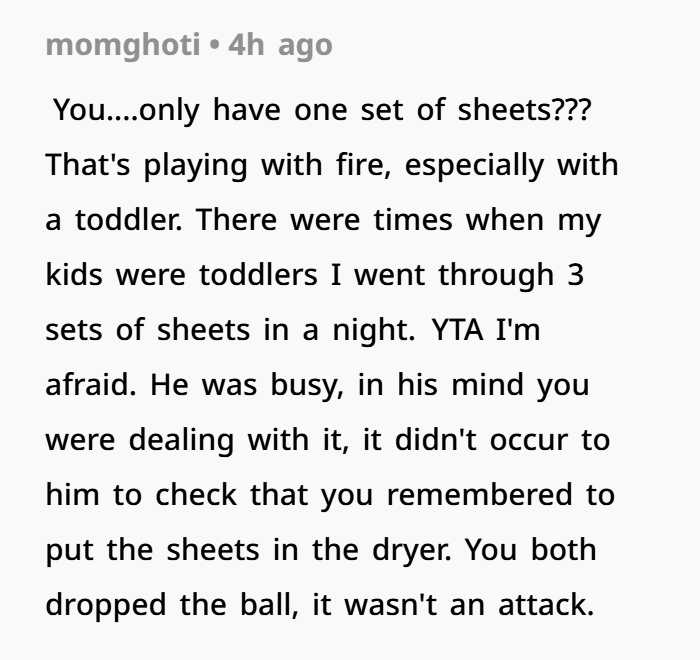
- Keep extra household supplies available
- Create a regular laundry routine
- Divide responsibilities clearly
- Discuss expectations openly
- Use tools that help with organization
The goal is not to prove who was right.
The goal is to work together.
Taking Responsibility Without Blaming Each Other
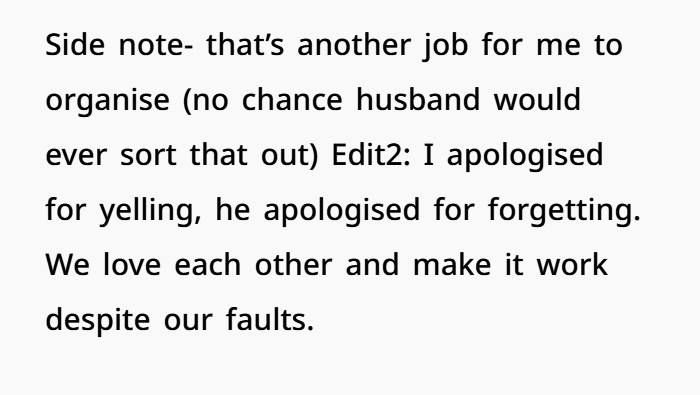
One positive part of this story is that both partners apologized.
The wife apologized for reacting with anger. The husband apologized for forgetting the task.
This is an important part of a healthy relationship. Both people can accept responsibility without turning the situation into a competition.
Problems often grow when couples start keeping score:
“I did more than you.”
“You forgot this again.”
“I always handle everything.”
“You always complain.”
This type of communication can create more distance.
Instead, couples can focus on understanding each other and finding practical solutions.
The Bigger Lesson About Relationships and Teamwork
Almost every couple has a moment where a small problem creates a big reaction.
It may be laundry, dishes, a forgotten bill, or a missed responsibility.
The real question is usually not:
“Who was wrong about this one thing?”
A better question is:
“Do both people feel respected, valued, and supported?”
The wife’s frustration was not only about sleeping without clean bedsheets. It was about feeling responsible for noticing everything.
The husband’s mistake does not automatically mean he did not care. He had already helped with many family responsibilities and may have simply missed one task.
Strong relationships are not built by perfect people.
They are built by people who are willing to communicate, understand each other, and create systems that support their shared life.
Sometimes a forgotten chore is just a forgotten chore. But sometimes it is a reminder that couples need to talk about the invisible work that keeps a home running.
Comments From The Community