My Best Friend “Tested” Me… and Broke My Trust in Seconds
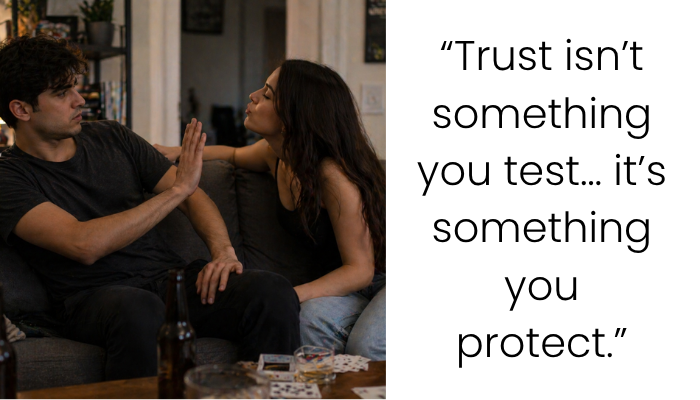
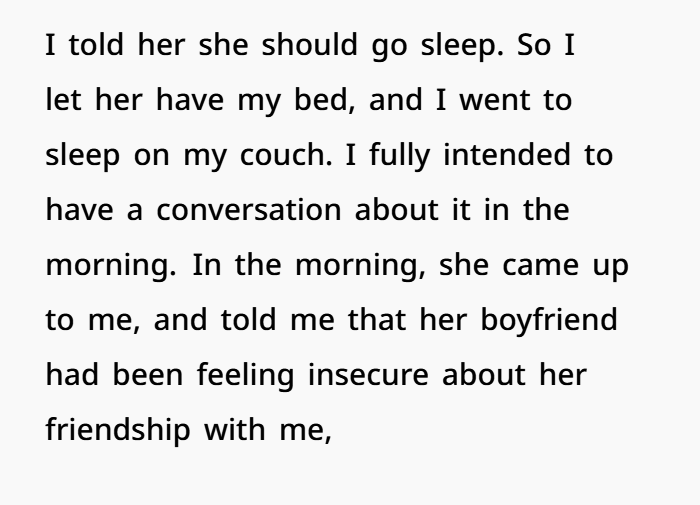
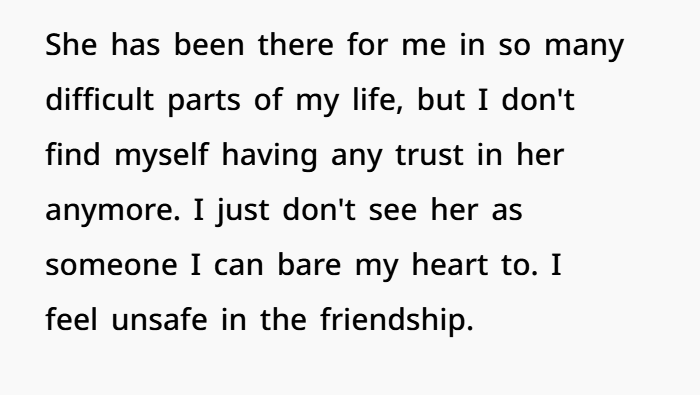
A 23-year-old man shared a painful experience online about his long-time friendship. He had been friends with a girl for 11 years, and they were very close. One day, she suddenly tried to kiss him. He was surprised and stopped it immediately, thinking it might just be a misunderstanding.
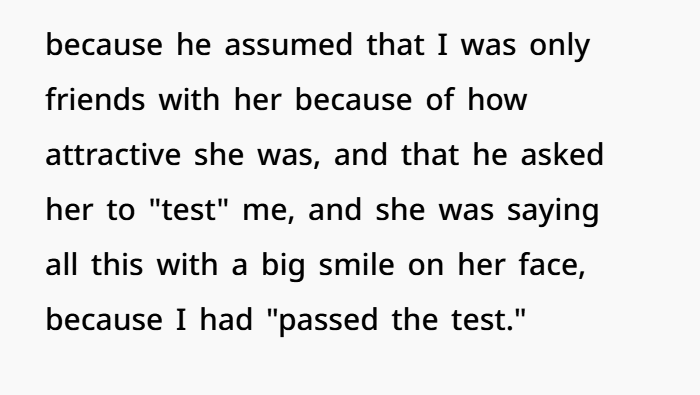
The next morning, she explained that it was not random. She said it was a “loyalty test” planned by her boyfriend to see if her male friends had feelings for her. She acted like it was not a serious issue, which made the situation even more uncomfortable for him.
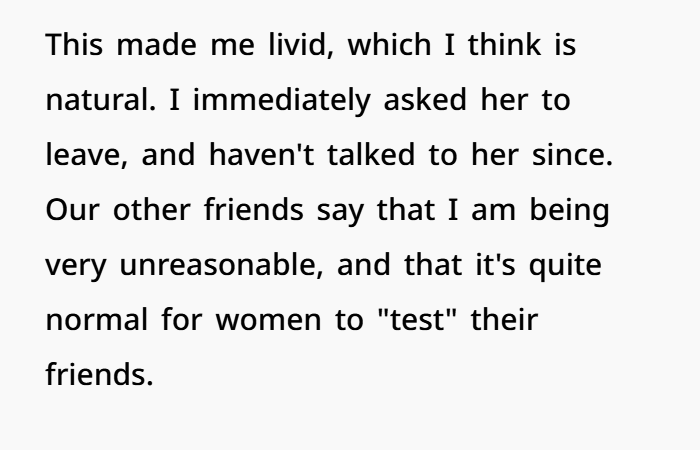
After hearing this, he felt deeply hurt and confused. What he believed was a real and trusted friendship now felt fake and planned. He felt like he was used in a situation he never agreed to, which created emotional betrayal and trust issues.
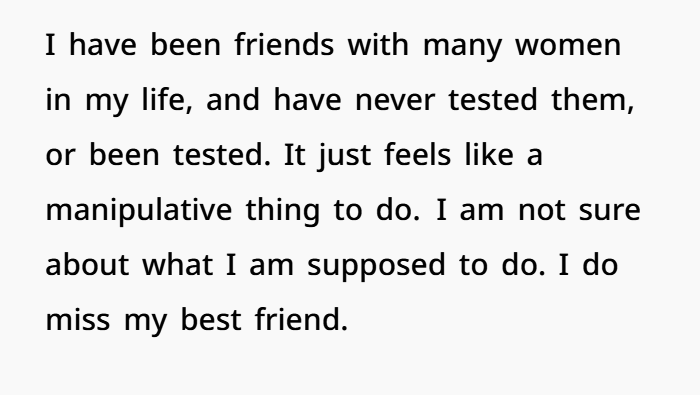
Now he is struggling with mixed feelings. He misses the friendship, but he also feels disrespected and used. The situation raises questions about trust in friendships, emotional boundaries, and whether relationships can be repaired after manipulation or if it permanently damages the connection.

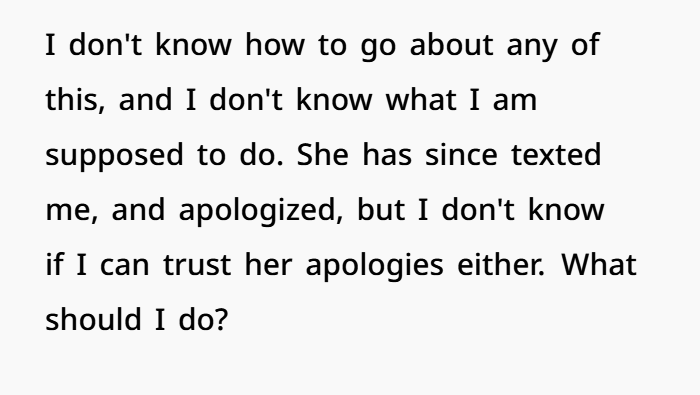
This situation is serious, and it makes sense if you feel hurt or confused. It is about trust, friendship boundaries, and emotional safety in relationships.
A “test” is not healthy in friendship
In a healthy friendship or relationship, people talk openly. They do not “test” each other.
When someone creates a test without telling you, it usually means:
- there is already a trust problem
- communication is not honest
- someone is trying to “check” your reaction instead of talking
In this case, you were not told anything. You thought it was a normal visit with your friend.
So you did not agree to be part of any test.
Why this felt wrong
The situation was planned without your knowledge. That is why it feels uncomfortable.
You were placed in a situation where:
- you were being observed secretly
- your reaction was being judged
- you did not know it was a setup
This is a clear issue of personal boundaries and consent.
Your friend’s role in this
Even if the idea came from her boyfriend, your friend still agreed to it.
That means:
- she chose to take part in the test
- she crossed a boundary in the friendship
- she put her relationship above your trust
This can feel like betrayal, especially in a long friendship.
Why trust feels broken
Trust in friendship means:
- feeling safe
- not being judged or tested
- being treated honestly
In this situation, that safety was broken.
Even if nothing “serious” physically happened, the planning itself is what caused the hurt.
Why it feels so emotional
This situation can feel heavy because of:
- surprise and confusion
- feeling used in a setup
- loss of emotional safety
- betrayal from a close friend
Even small actions can feel very painful when trust is involved.
Why people should not do “loyalty tests”
Loyalty tests in friendship and relationships are usually unhealthy.
They often come from:
- insecurity
- fear of losing someone
- lack of communication
Instead of solving problems, they create more problems.
Your feelings are valid
It is normal to feel:
- hurt
- unsafe in the friendship
- confused about what to do next
- sad about the distance
These feelings make sense after trust is damaged.
Missing the friendship is also normal
Even if you are hurt, it is still normal to miss your friend.
Long friendships include:
- shared memories
- emotional support
- daily connection
- years of history
So feeling torn is completely normal.
Can the friendship be fixed?
That depends on a few things:
1. Real apology
Your friend needs to understand what went wrong, not just say sorry quickly.
2. Accountability
She must accept that involving you in a hidden test was not okay.
3. Clear boundaries
If the friendship continues, there must be rules like:
- no more tests
- no hidden setups
- no involving you in relationship issues
Why space is important
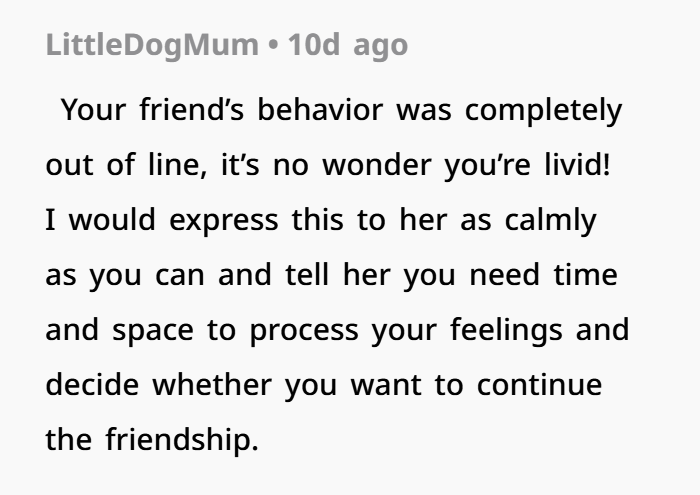
Taking distance was a healthy choice.
Space helps you:
- calm your emotions
- think clearly
- decide what you want
- protect your mental health
This is normal in relationship conflict and emotional recovery.
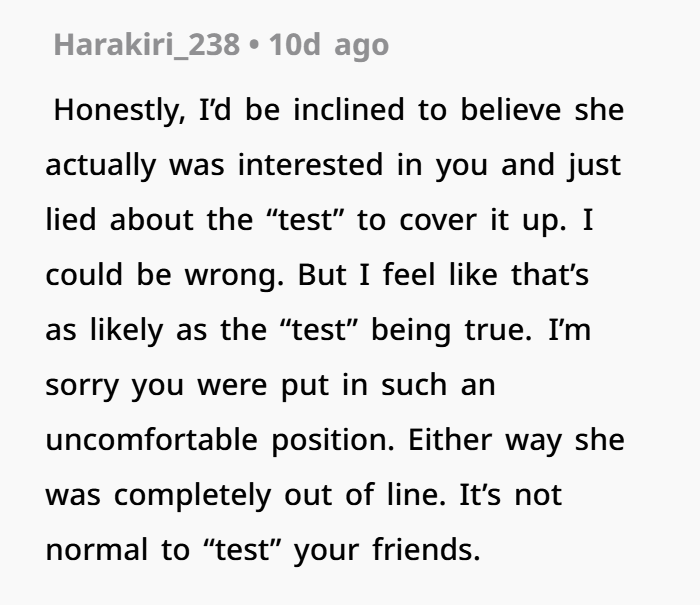
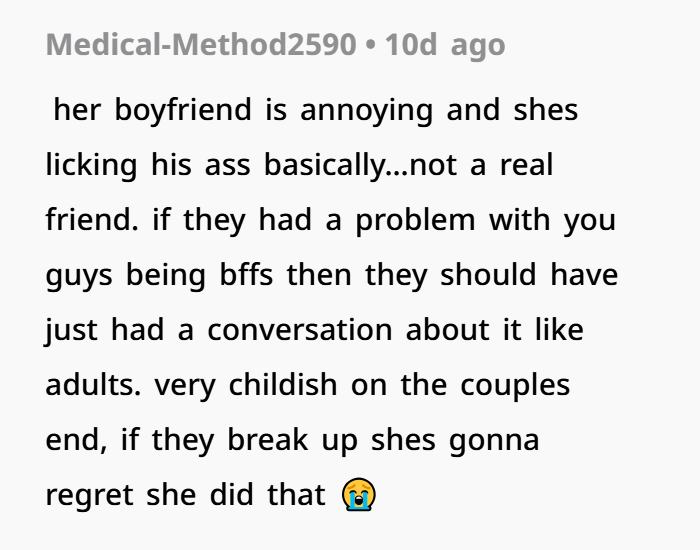
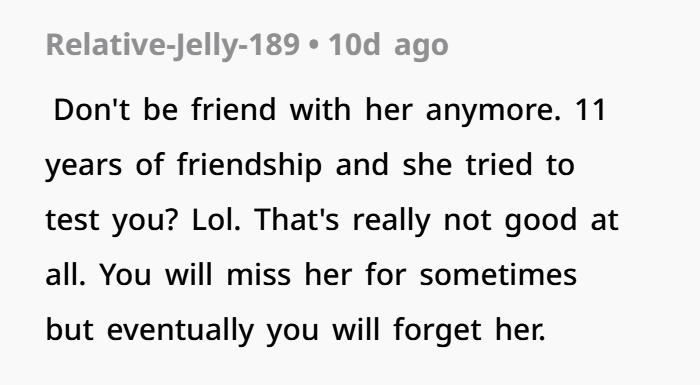
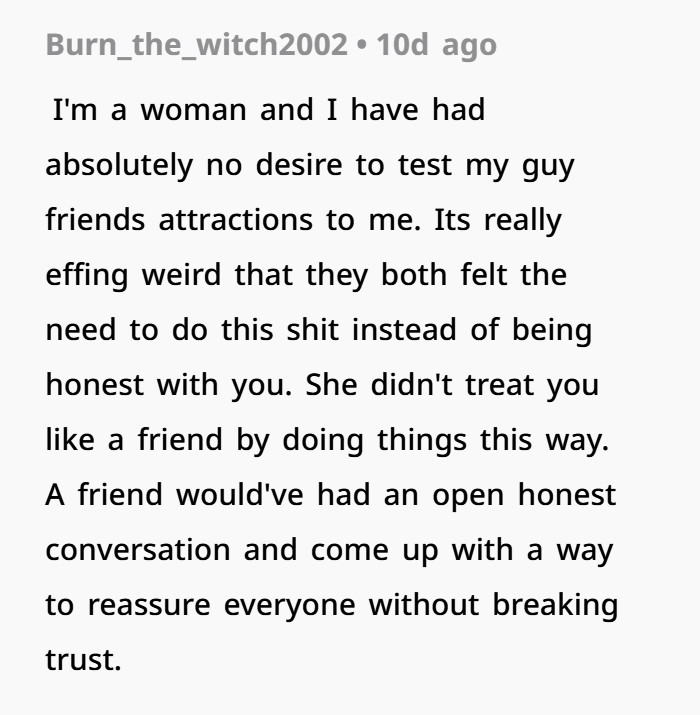
See The Comments Below
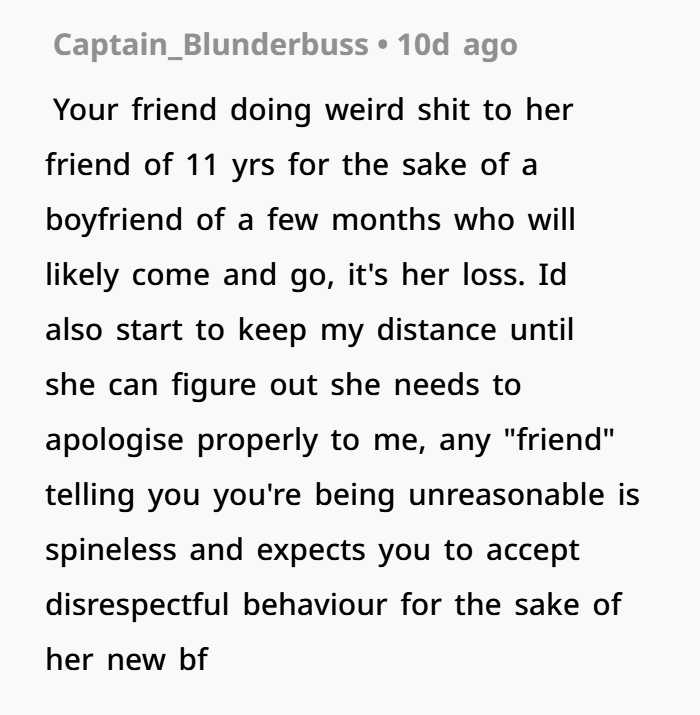
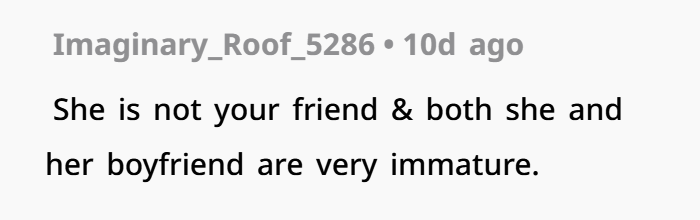
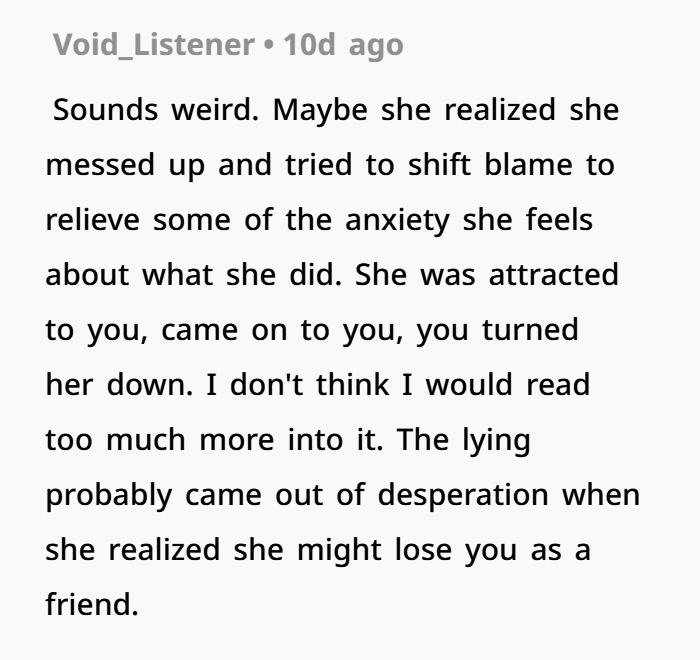
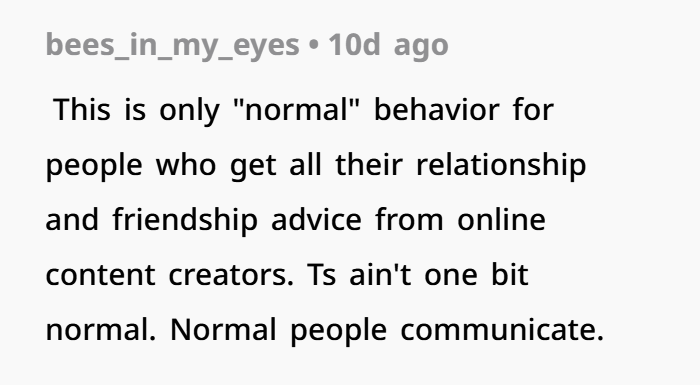
Final thoughts
This situation is not just a small misunderstanding. It is about trust issues, emotional boundaries, and respect in friendships.
You were put in a situation without your knowledge, and that is why it feels so wrong.
Your reaction is valid. Wanting distance is also valid.
And most importantly, real friendships should feel safe—not like a test you didn’t agree to take.