
Did I Have to Give Up My Inheritance for My Sister’s Wedding?

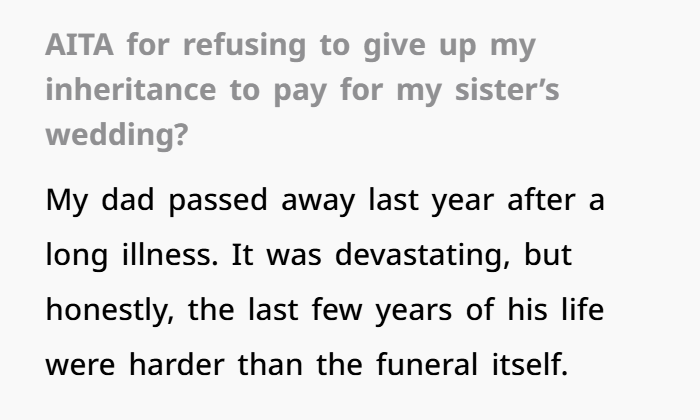
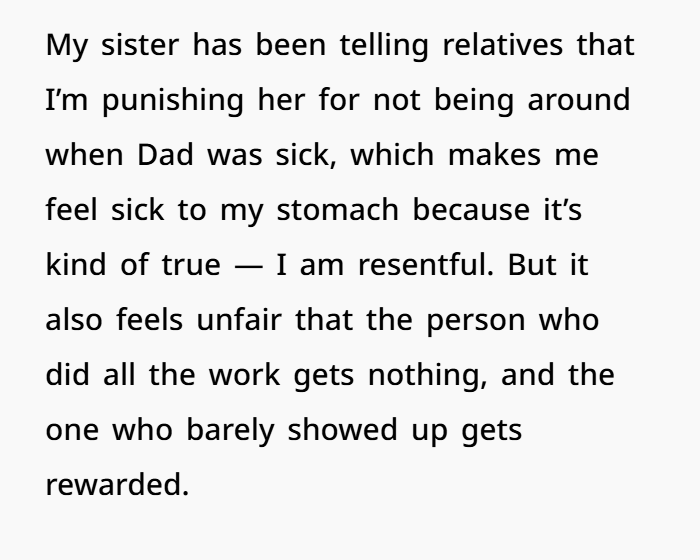
You were the main caregiver for your father during his illness. You moved back home and handled most of his care, including doctor appointments, bills, emergencies, and daily support. You were basically running the household and taking care of him as his health declined.
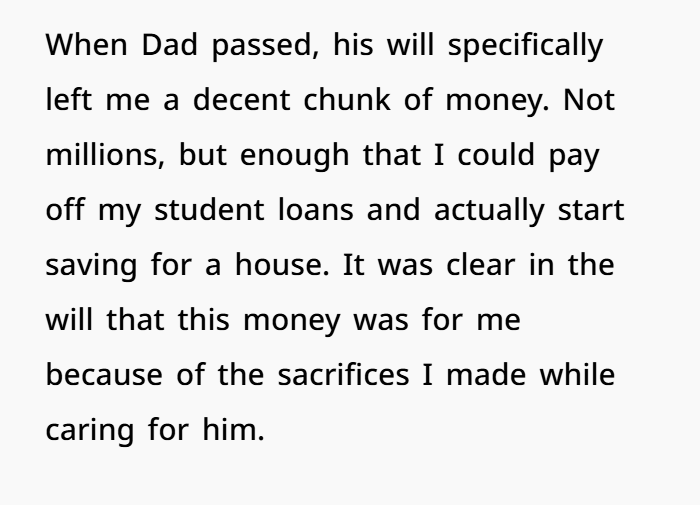
After your father passed away, his will left most of his savings and liquid assets to you. The will clearly mentioned that this was because of the care and sacrifices you made while looking after him. Your sister lived in another state, visited only a few times, and did not take part in his care.
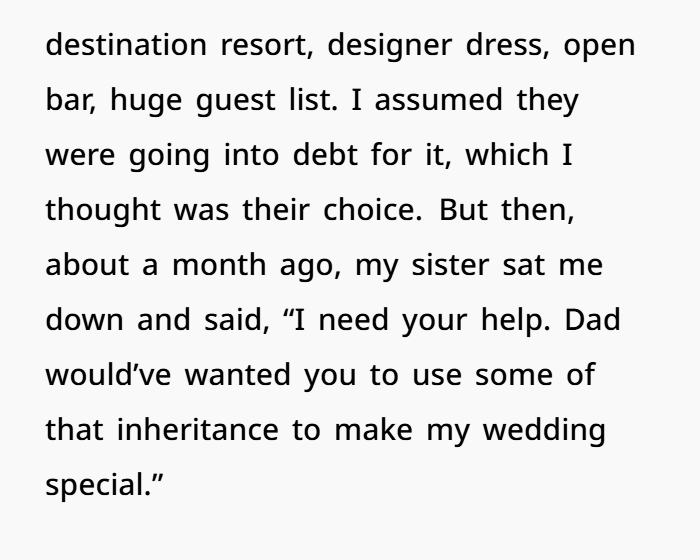
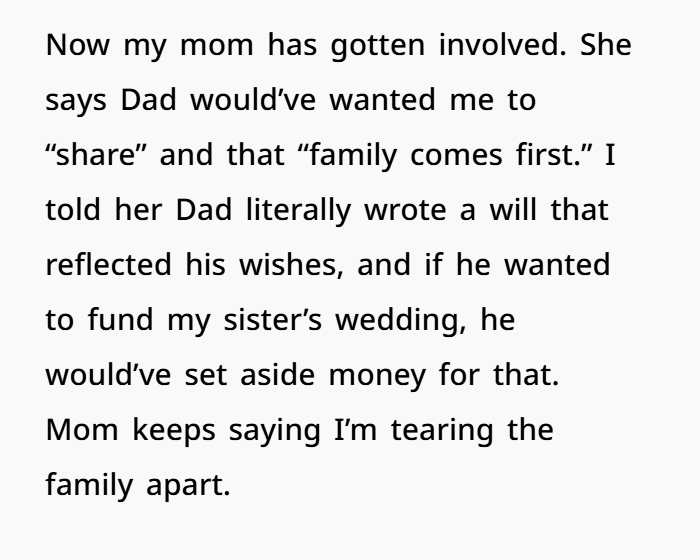
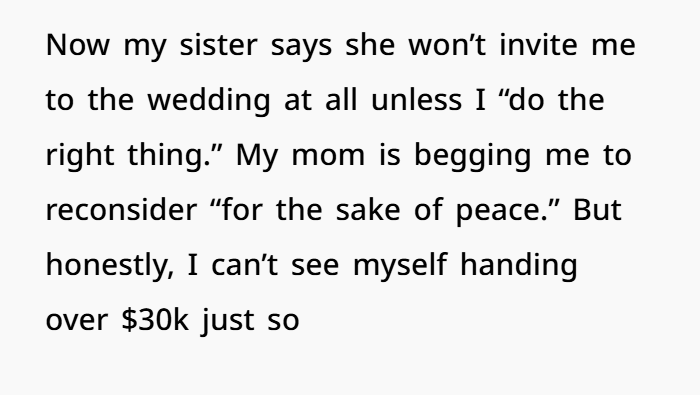
Now your sister is asking you for $30,000 from your inheritance to help pay for her expensive wedding. She says that your father would have wanted you to share the money with family. Your mother is also pressuring you, saying that family support and unity should come first.
You feel that this is not fair because the inheritance was meant for your future after years of caregiving responsibility. You are being asked to give up a large amount of money for a personal celebration, while your role in your father’s care was much greater. Now you are stuck in a family conflict over money, inheritance rights, and expectations, and you are wondering if refusing makes you wrong.
It happened to these two sisters after one of them was due to receive a large inheritance from their late father






Family Inheritance, Boundaries, and Emotional Pressure
Family money issues can quickly turn into emotional stress. What looks like a simple request on the surface is often deeper — involving family inheritance disputes, emotional pressure, and financial boundaries between siblings.
Let’s break it down in a simple and clear way.
1. Caregiving Work Is Real Work
Taking care of a sick or dying parent is not easy. It takes time, energy, and emotional strength. Many people call this caregiver responsibility, and it often goes unnoticed.
If one child was more involved in caring for the parent, while another was less present, it is natural to feel that the effort should be recognized.
When someone asks for a large share of money after not being involved in caregiving, it can feel unfair. This is where family conflict over inheritance often begins.
2. Wills Usually Show the Parent’s Wishes
A legal will is not just about money. It is also about the parent’s final wishes.
If a parent clearly leaves most of their estate to one child, it usually means they wanted to recognize that child’s support or sacrifices. This is part of estate planning and inheritance law.
Unless the will says otherwise, the inheritance belongs to the person named in it. It is not meant to be automatically shared unless the owner decides to share it.
3. No Legal Duty to Pay for Someone Else’s Wedding
In most cases, there is no legal rule that says you must use your inheritance to pay for a sibling’s wedding.
Even if family members feel it is “fair,” that feeling is not the same as a legal requirement.
This means:
- The money legally belongs to the heir
- Family requests are not legal demands
- No one can force you to fund personal expenses like a wedding
This is a common issue in inheritance disputes between siblings.
4. Pressure and Guilt Can Feel Like Control
Sometimes family members use emotional pressure to get what they want. They may say things like:
- “Dad would have wanted this”
- “It’s only fair to share”
- “If you don’t, you are selfish”
This creates emotional stress and guilt. But in reality, this is not a legal argument — it is an emotional one.
Using guilt to control money decisions can damage family relationships and create long-term resentment in family financial conflict situations.
5. Boundaries Are Important for Financial Protection
Setting boundaries does not mean you do not care about your family. It simply means you are protecting your financial future.
Healthy boundaries in family finance and inheritance planning can include:
- Choosing how to use your inheritance
- Saying no to large financial demands
- Offering non-money support instead (like help with planning or advice)
- Keeping long-term financial goals safe
You can still love your family without giving up your financial stability.
6. Fear of Family Rejection Is Common
It is normal to feel worried about being judged or excluded by family members. Money conflicts can lead to arguments, silence, or taking sides.
But many people in similar situations eventually realize that protecting their future was the right choice. In online discussions like Reddit inheritance advice threads, many users often support the idea that inheritance should follow the will, not emotional pressure.
Still, approval from others is not the most important part. What matters is fairness based on the will and your long-term financial security.
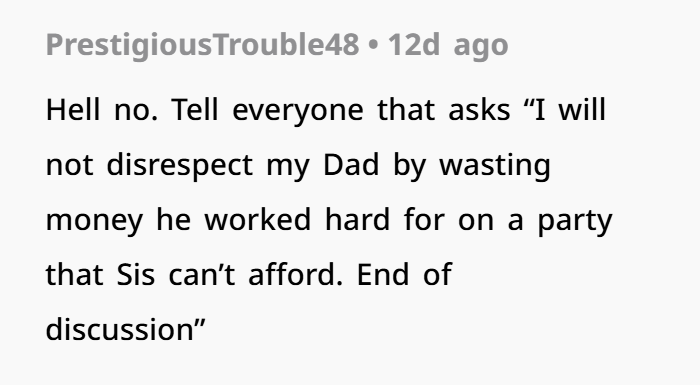
People in the comments sided with the author, with most of them encouraging her to stand her ground



Final Thoughts
Family inheritance situations are often emotional and complicated. They mix grief, expectations, and money, which can easily lead to conflict.
The key points are:
- Caregiving work should be respected
- A legal will shows the parent’s wishes
- There is no legal duty to fund a sibling’s wedding
- Emotional pressure is not the same as fairness
- Setting boundaries protects your financial future
At the end of the day, inheritance planning, estate distribution, and family financial boundaries should be guided by legal documents and personal responsibility — not guilt or pressure.