I Kissed a Friend at 17 Now My Partner Thinks It Changes Everything
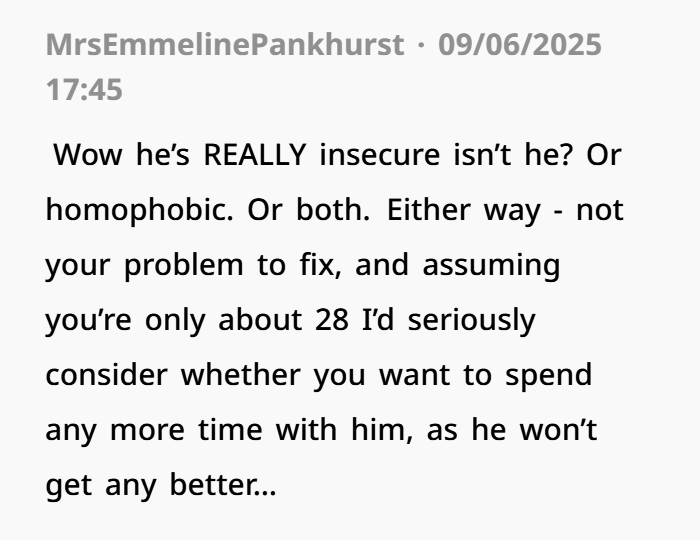
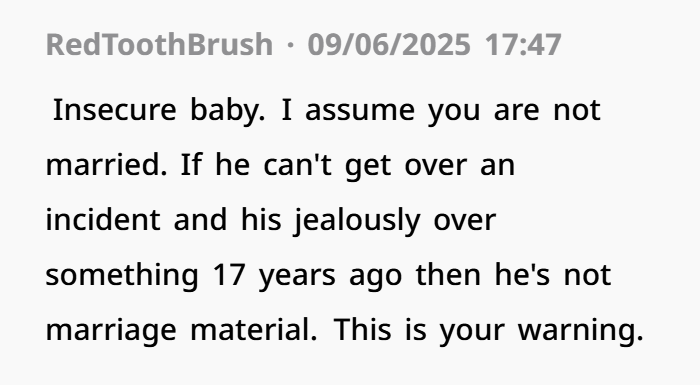
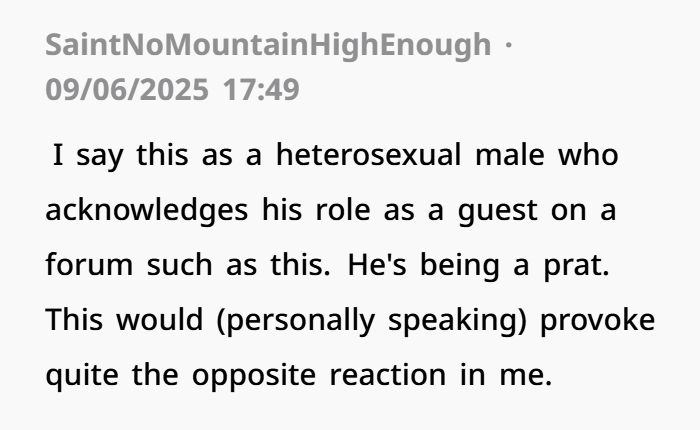
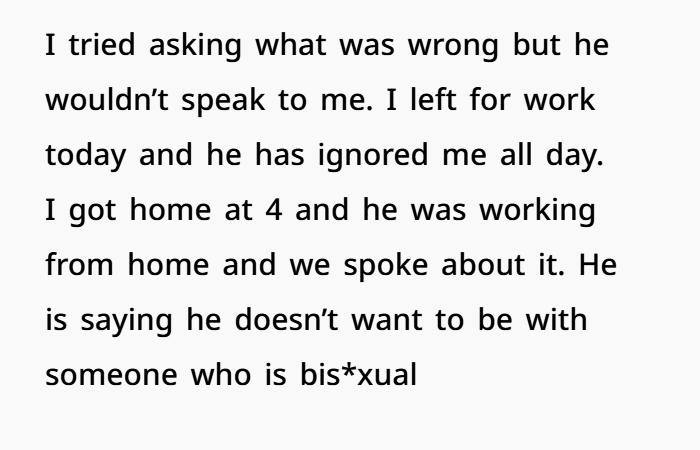
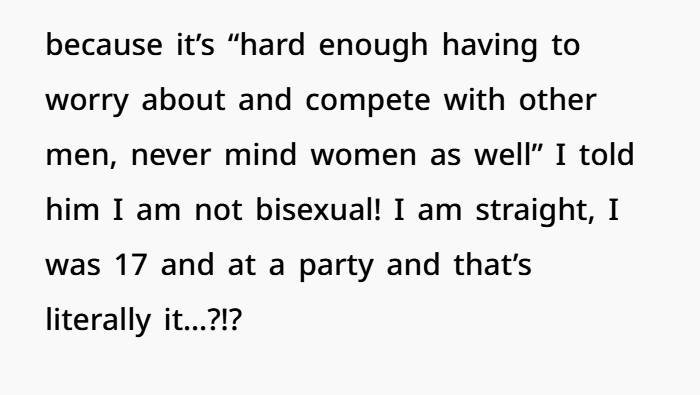
A woman is left feeling confused and honestly a bit shaken after what started as a normal, casual chat with her partner suddenly turns intense. Out of nowhere, he asks if anyone ever thought she might be a lesbian. She answers openly—no hiding, no overthinking—just shares that when she was 17, she once kissed a female friend at a party. To her, it was just a random teenage moment. Nothing serious. But in his mind? It turns into something way bigger. His whole vibe changes. He shuts down, pulls away emotionally, and later comes back with anger and discomfort, saying he doesn’t want to be with someone who might be bis*xual. That’s when things start feeling less like a conversation and more like emotional conflict and relationship insecurity showing up.
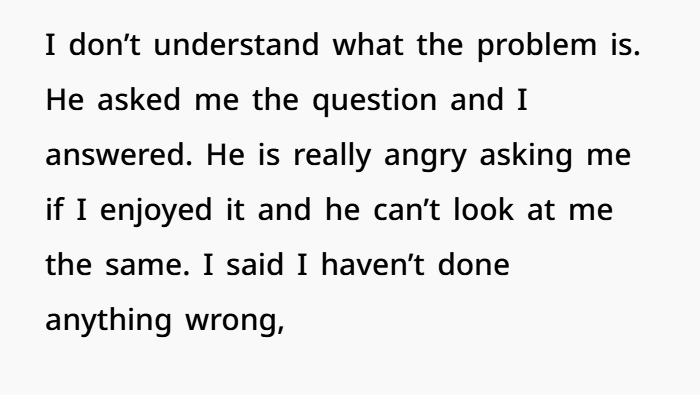
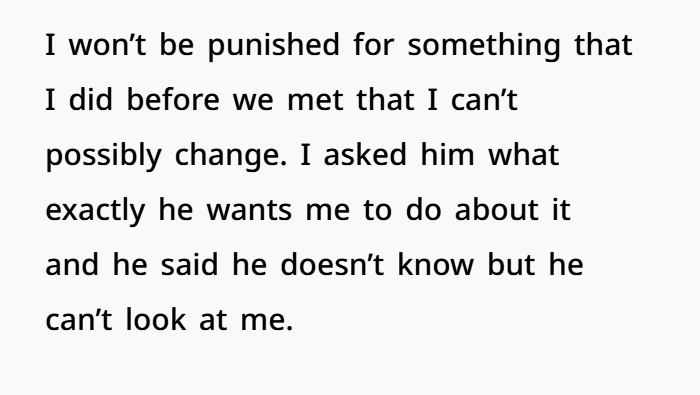
She tries to explain calmly. Says it was a one-time thing, years before they even met. It has nothing to do with her identity, nothing to do with their relationship, nothing to do with trust or commitment. But he keeps overanalyzing it. Starts questioning if she liked it, reading into her reactions, even taking her smile as some kind of “proof.” Eventually, he says he can’t see her the same way anymore. And now she’s stuck in this loop—wondering if she said something wrong, if she’s missing something, or if this is more about his own emotional triggers, insecurity, or even deeper issues around trust and acceptance in relationships.

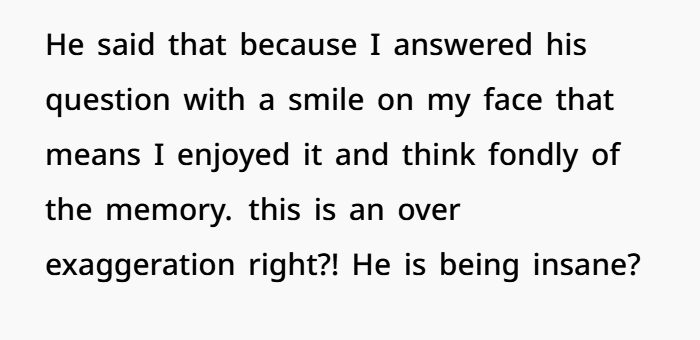
Short answer? Yeah… this is definitely an overreaction. But instead of brushing it off, let’s actually look deeper. Because the real issue here isn’t that kiss. Not even a little. What’s really happening is a mix of emotional insecurity, lack of understanding about s*xuality, and a bit of controlling mindset creeping in. And when all that builds up, even something small from the past can feel like a huge deal in the present.
Let’s simplify it.
You were 17.
At a party.
You kissed a friend.
That’s a pretty normal situation.
In fact, in psychology and adolescent behavior studies, this is often labeled as “exploratory behavior.” It happens more than people think. Research around identity and s*xual development shows that these kinds of experiences don’t define who you are long-term. They don’t predict cheating, they don’t predict future behavior, and they don’t say anything about your commitment in a serious relationship.
So from a relationship counseling and mental health perspective, this isn’t a red flag. It’s not something that should create insecurity, trust issues, or emotional distance in a stable, healthy relationship.
Now let’s look at his reaction.
His statement:
“It’s hard enough competing with men, never mind women too.”
That line tells you everything.
This is rooted in scarcity mindset and relational insecurity.
In simple terms:
He sees relationships as competition.
Not connection.
Instead of thinking:
“My partner chooses me.”
He’s thinking:
“I have to constantly win against others to keep my partner.”
That’s already a shaky foundation. But then you add in a misunderstanding of bis*xuality—and it amplifies the fear.
There’s a well-documented psychological bias called “bis*xual threat perception.” Some people wrongly believe that being attracted to more than one gender means:
- Higher likelihood of cheating
- Less ability to commit
- More “options,” therefore more risk
None of that is supported by research.
In reality, studies show that commitment and fidelity are tied to personal values and attachment styles—not s*xual orientation.
But your partner isn’t operating from data. He’s operating from fear.
And fear doesn’t need logic to feel real.
Now let’s talk about his behavior—because this part matters just as much as what he’s thinking.
He:
- Shut down communication
- Ignored you for a full day
- Withdrew affection
- Then came back with accusations and judgment
That pattern is actually more concerning than the belief itself.
It aligns with what relationship experts call “emotional withdrawal as punishment.”
It’s a way of saying:
“You’ve done something I don’t like, so I’m going to make you feel it.”
Even if it’s not intentional, it creates a dynamic where:
You’re left anxious, confused, and trying to fix something…
that you didn’t actually do wrong.
And that’s where this starts crossing from “overreaction” into unhealthy territory.
Because let’s be clear:
You didn’t lie.
You didn’t cheat.
You didn’t hide anything.
You answered a direct question honestly.
And now you’re being treated like you violated trust.
That disconnect can make you question yourself:
“Did I do something wrong?”
That’s a really common response when someone else’s reaction is disproportionate.
But no—this isn’t on you.
Now, the part about your smile.
This is subtle, but important.
He said:
“You smiled, so you must have enjoyed it.”
This is a classic example of confirmation bias.
He already felt uncomfortable.
So he searched for “evidence” to justify that feeling.
Your smile—probably just a natural, slightly awkward reaction—gets reinterpreted as proof of something bigger.
Once that happens, logic doesn’t really get through anymore. Because he’s no longer reacting to what actually happened—he’s reacting to the story he built around it.
And that story is:
“My partner is not who I thought she was.”
That’s why he says he “can’t look at you the same.”
Not because of the kiss itself…
But because it disrupted his internal image of you.
Now here’s where things get a bit uncomfortable—but necessary.
His reaction also hints at rigid beliefs around s*xuality and identity.
The idea that:
- One same-s*x kiss = bis*xual
- And bis*xual = unacceptable partner
That’s not just insecurity—that’s a lack of nuance, and possibly underlying bias.
And when those beliefs show up in a relationship, they can lead to:
- Policing past behavior
- Overanalyzing harmless details
- Making you feel like you need to “prove” who you are
That’s not a healthy dynamic long-term.
Now, does this mean the relationship is doomed?
Not necessarily.
But it does mean something needs to shift.
Because right now, the burden is being placed on you to:
- Reassure him
- Explain yourself
- Fix his discomfort
When in reality, this is something he needs to process internally.
You can support a partner through insecurity.
But you can’t take responsibility for it.
And you definitely shouldn’t shrink your own reality to make someone else feel safer.
So to answer your question clearly:
No—you’re not crazy.
Yes—this is an overreaction.
But more importantly…
It’s a revealing one.
It tells you how he handles discomfort.
How he views trust.
And how quickly he can turn something small into something heavy.
And that’s the part worth paying attention to.
Top Comments From Readers