I Bought a Couch for Our Apartment—Now My Friends Want Their Money Back

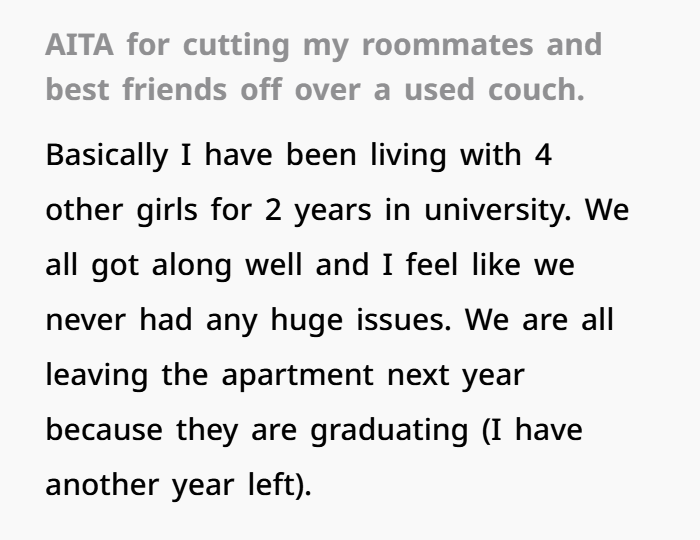
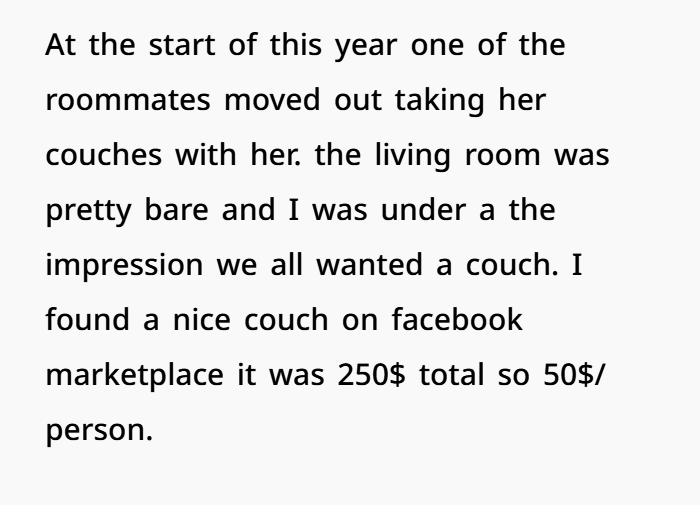
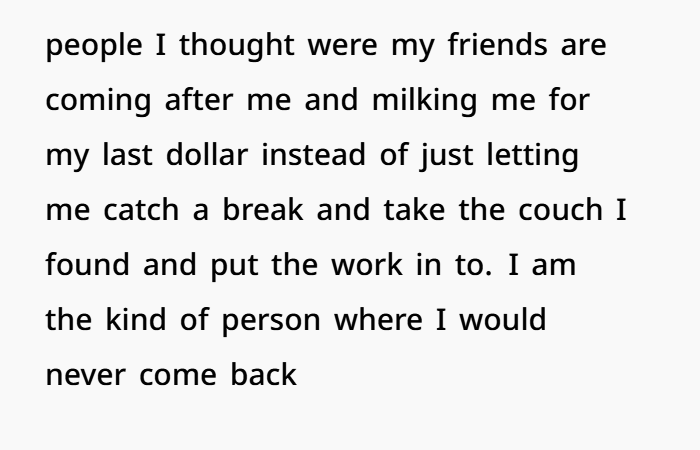
A college student had been living with four roommates for almost two years. Most of the time, they got along well and shared household responsibilities without many problems. After one roommate moved out and took her furniture, the living room was left almost empty. To make the shared space comfortable again, one roommate found a used couch on Facebook Marketplace for $250. Everyone agreed to split the cost equally, so each person paid $50.
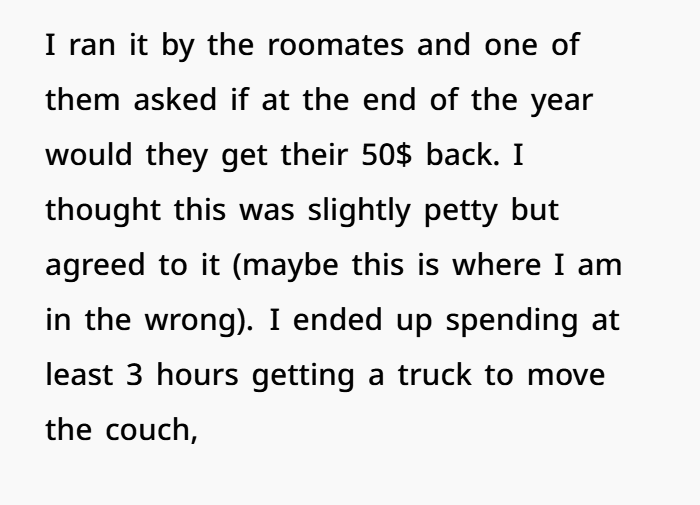
Before sending the money, one roommate asked an important question. She wanted to know if everyone would receive their $50 back when they moved out at the end of the lease. To avoid any future disagreements, the person buying the couch agreed. She then arranged the pickup, found a truck, and asked family members to help move the couch into the second-floor apartment.
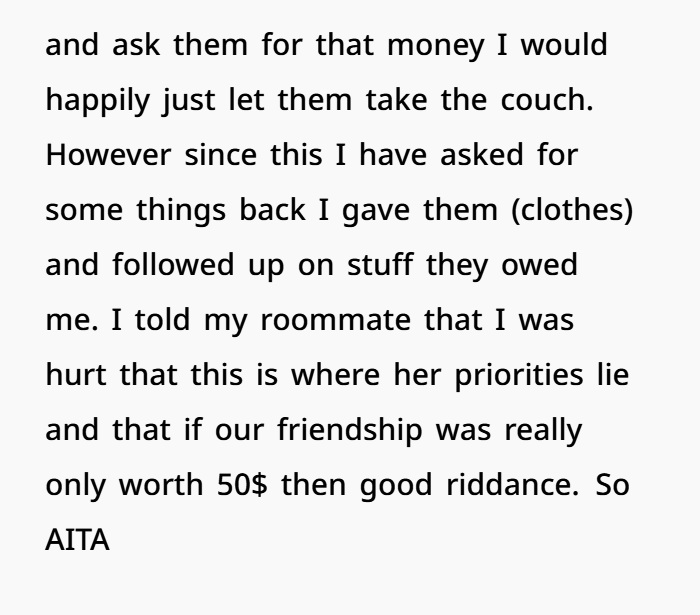
A year later, the rental agreement was ending, and everyone was preparing to move. The student who organized the purchase thought it would be reasonable to keep the used couch because it had already lost value over time. However, the other roommates reminded her about the earlier agreement. They expected to receive their $50 back through cash or a payment service before she kept the couch. If not, they wanted to sell the couch and divide the money fairly.
What began as a simple furniture purchase became a disagreement about fairness and shared expenses. Situations like this show why clear communication and written agreements are helpful when friends share housing and split costs. Good budgeting, personal finance planning, and respectful conflict resolution can help roommates avoid misunderstandings and protect both their finances and their friendships.

A $250 Couch Turned Into a Big Roommate Money Problem
Living with roommates can save money, but it can also create problems when people share expenses.
Many roommates split the cost of furniture, groceries, or household supplies. Most of the time everything works well. But if people do not agree on who owns something, small purchases can turn into big disagreements.
That is exactly what happened with this couch.
The Original Plan
The couch cost $250 from Facebook Marketplace.
There were five roommates, so each person paid $50.
At first, the plan seemed simple. Everyone wanted a couch for the shared living room, so everyone helped pay for it.
The problem started later when one roommate asked if everyone would get their $50 back when they moved out.
That question changed everything.
Different People Had Different Expectations
The buyer believed everyone was sharing the cost of using the couch during the lease.
The other roommates believed they still owned part of the couch and expected their money back later.
Neither side may have been trying to be unfair.
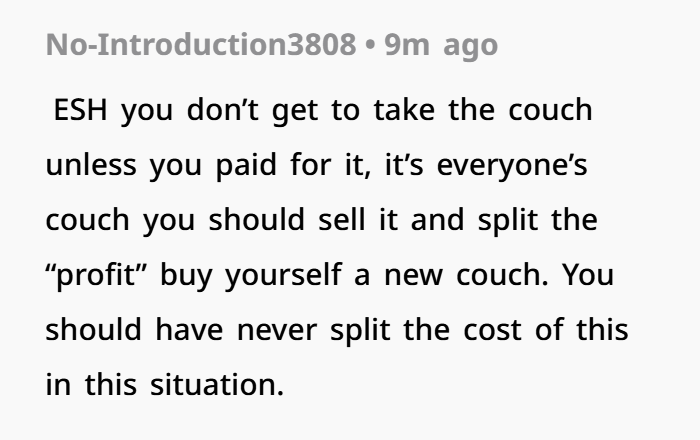
The real problem was that nobody clearly discussed ownership before buying the couch.
Furniture Loses Value Over Time
Used furniture usually becomes less valuable after regular use.
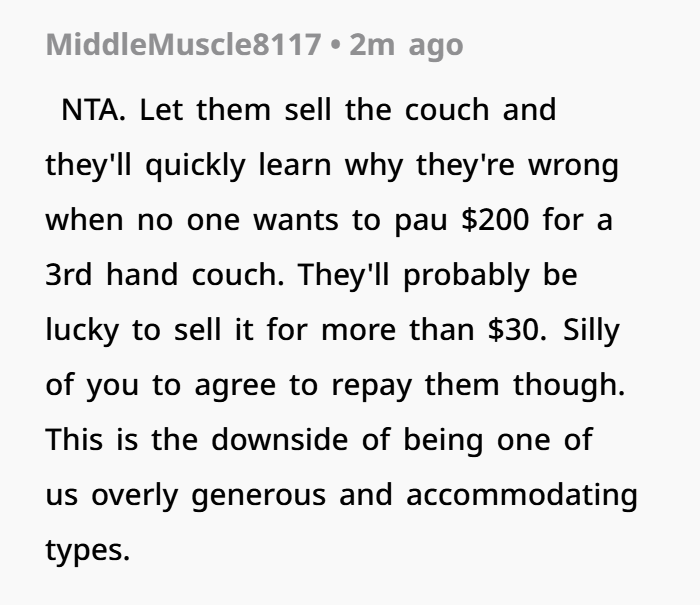
A couch that cost $250 a year ago probably would not sell for the same price today.
After a year of daily use, it may only be worth around $100 to $150, depending on its condition.
Because of this, many shared apartments treat furniture as a shared living expense instead of an investment.
Everyone enjoys using it during the lease, and when the lease ends, someone keeps the used furniture without paying everyone back.
Buying the Couch Took Time and Effort
The buyer did more than simply pay for the couch.
She found the listing, contacted the seller, arranged transportation, and helped move the couch into the apartment.
That takes time and effort.
In many roommate situations, the person who organizes everything often ends up keeping the furniture later.
While this is common, it should never be assumed. It is always better to discuss ownership before making the purchase.
Shared Household Costs Add Up
The buyer also mentioned regularly buying shared household items, including:
- Toilet paper
- Dishwasher pods
- Cooking oil
- Other common supplies
These everyday purchases may not seem expensive at first.
However, over the course of a year, they can cost much more than $50.
Many roommates forget about these shared expenses because nobody keeps track of them.
Good money management and simple budgeting can help avoid these problems.
Money Can Affect Friendships
Living with friends often makes financial boundaries less clear.
People share food, lend small items, and cover expenses without thinking much about it.
That usually works well until someone starts keeping score.
Once money becomes part of the conversation, friendships can become strained.
That is why clear communication is so important.
The Conversation Became More Difficult
Things became more stressful when the roommates suggested selling the couch if they did not receive their $50 back.
At that point, the discussion stopped being about furniture.
It became about fairness, trust, and respect.
Arguments like this often become emotional because people feel they are not being treated fairly.
Could Both Sides Be Right?
There are reasonable arguments on both sides.
The roommates contributed money toward the purchase, so they may feel they deserve something in return.
The buyer handled all the work and allowed everyone to use the couch for an entire year.
Both sides viewed the agreement differently.
That difference created the conflict.
Why Written Agreements Help
Many personal finance experts recommend writing down agreements for shared purchases.
Even a simple group message can answer important questions like:
- Who owns the item?
- Will anyone receive money back later?
- What happens if someone moves out?
- Who keeps the furniture after the lease ends?
Having clear expectations helps prevent future disagreements.
Good Financial Planning Makes Shared Living Easier
When roommates share expenses, basic financial planning can save everyone time and stress.
Many people use budgeting apps or expense-sharing apps to track costs for:
- Furniture
- Household supplies
- Utility bills
- Groceries
- Cleaning products
Keeping simple records helps everyone understand what has been paid and what is still owed.
It can also prevent misunderstandings later.
Know Your Rental Agreement
Most rental agreements do not explain who owns shared furniture.
Because of that, roommates should create their own agreement before buying expensive items.
If a disagreement becomes serious, getting basic legal advice may help explain your rights, although most roommate issues are easier to solve through open communication.
Some renters also choose renters insurance to protect their personal belongings, especially when sharing an apartment with others.
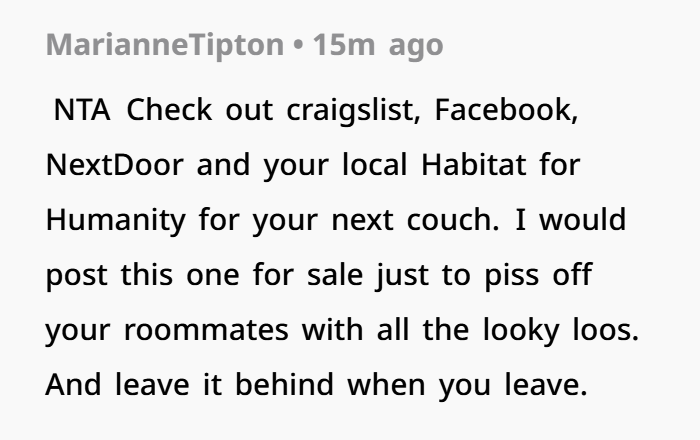
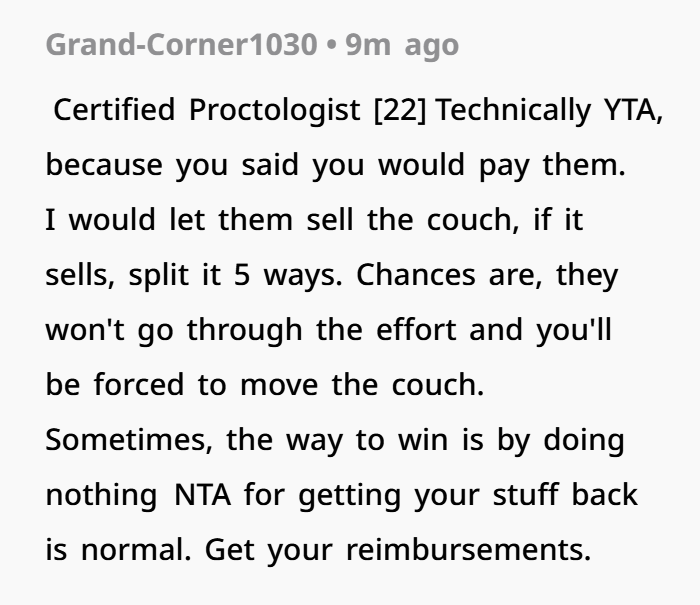
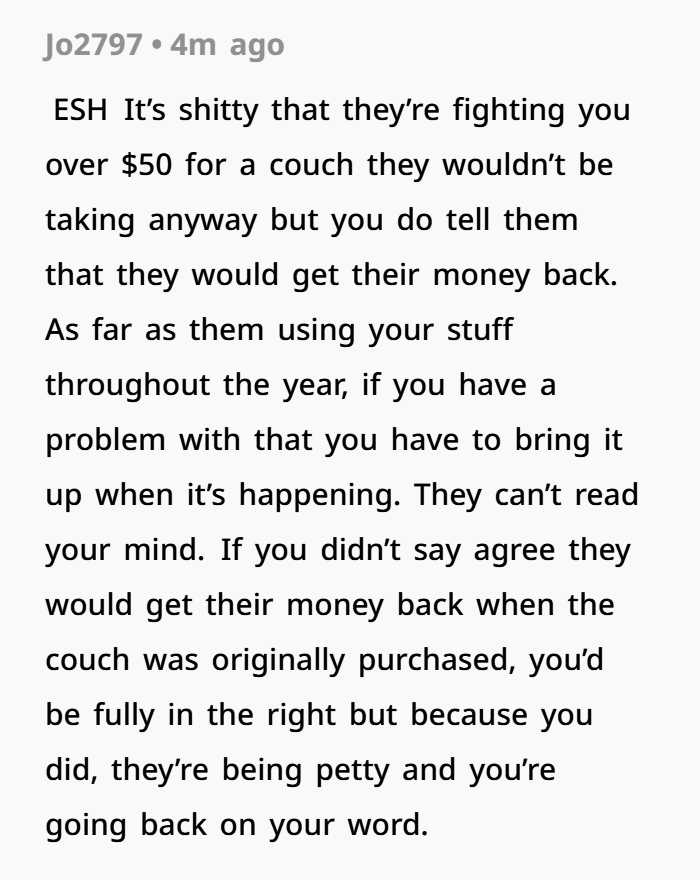
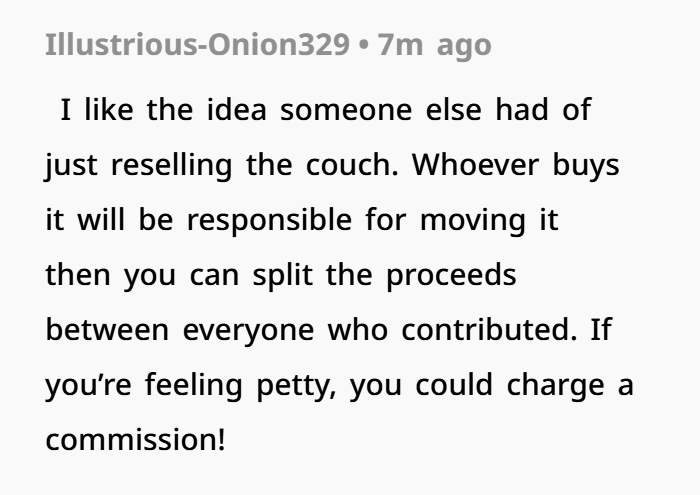
Here Are The Comments
Final Thoughts
This story is not really about a couch.
It is about communication, shared expenses, and clear expectations.
A simple conversation before buying the furniture could have prevented the entire disagreement.
When roommates openly discuss ownership, budgeting, and future plans, shared living becomes much easier.
Good communication, smart money management, and clear agreements are often worth much more than the $50 everyone was arguing about.