“She Kept Reaching Across Me to Shut My Window Shade” A Plane Passenger’s Petty Revenge Is Dividing the Internet
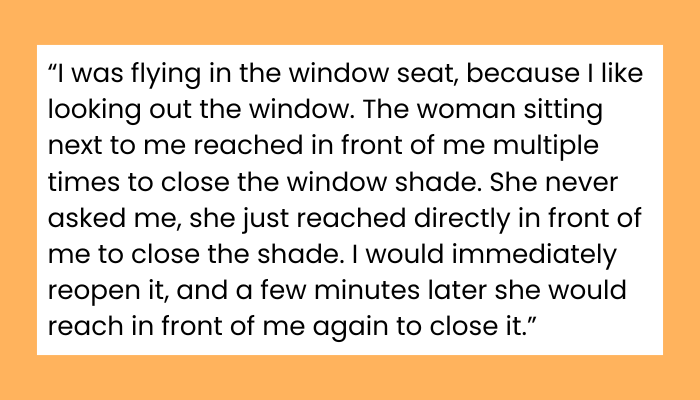
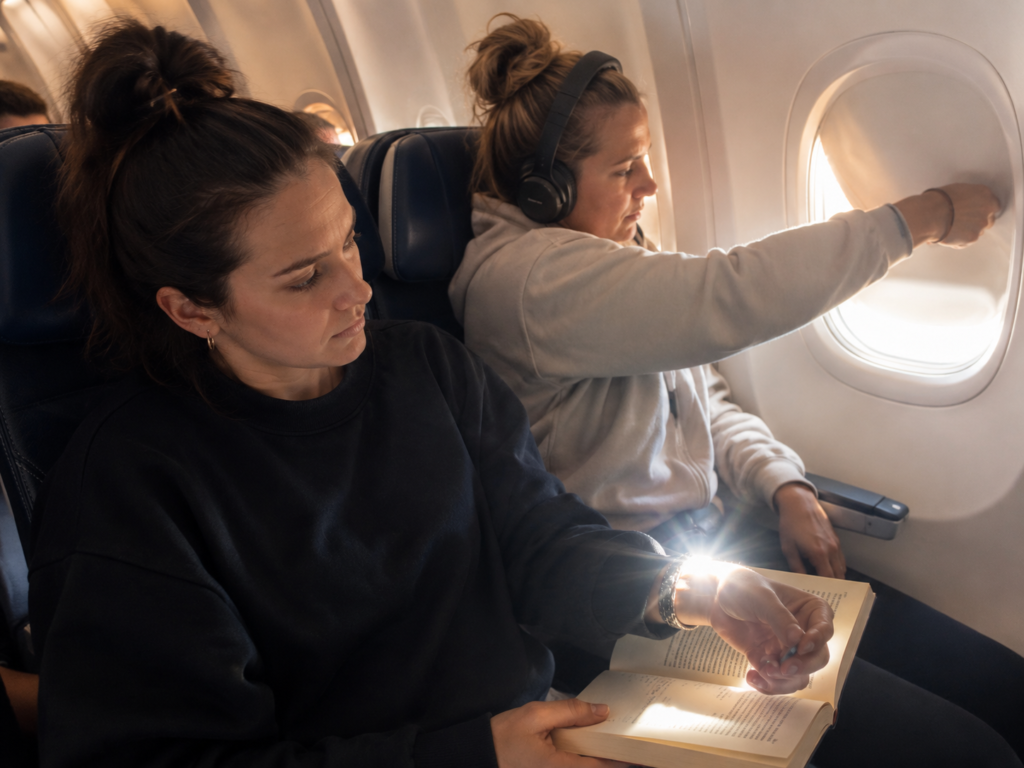
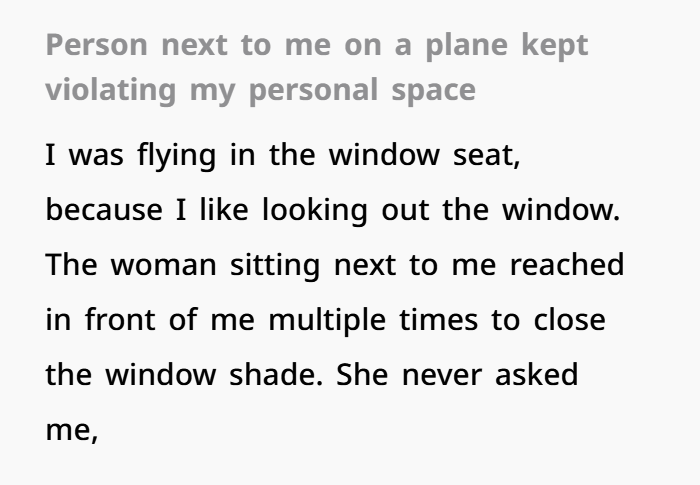
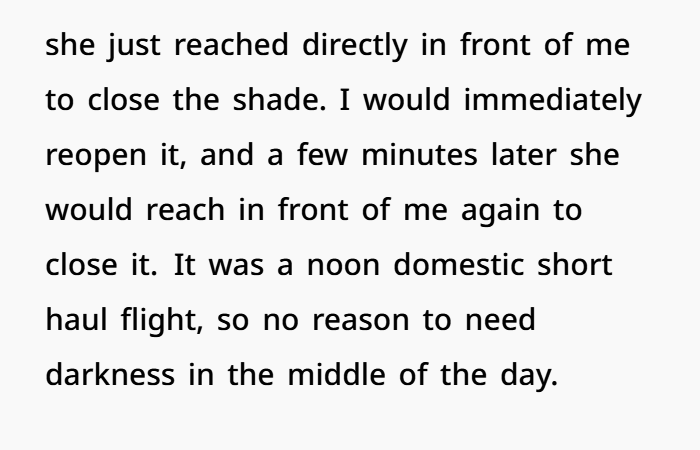
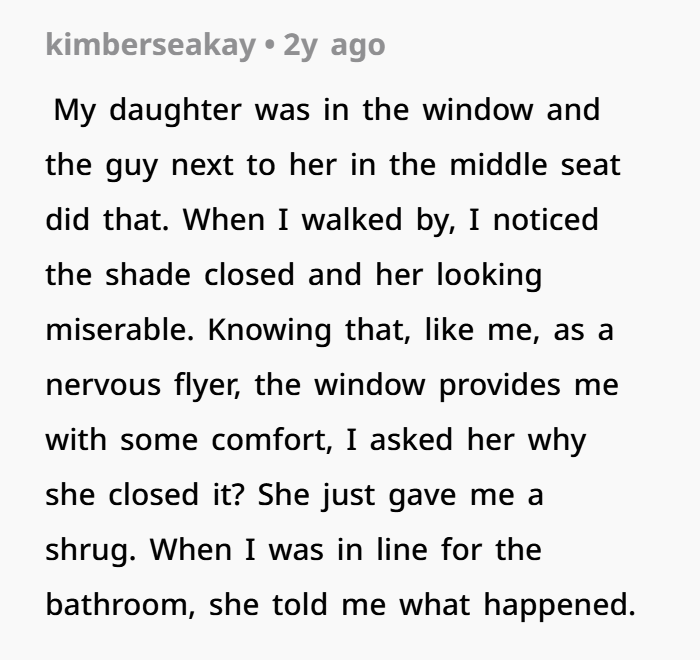
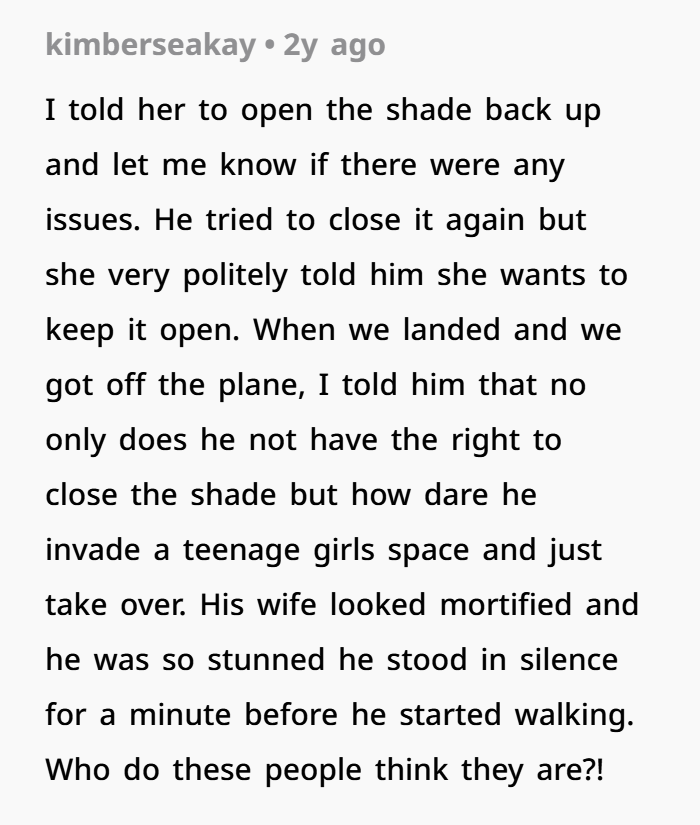
A traveler sitting in a window seat recently shared an airplane drama story online that quickly turned into full petty revenge mode. During a short domestic flight, the woman seated beside them repeatedly reached directly across their body to shut the airplane window shade without asking permission or even acknowledging them first. Every time the traveler reopened the shade, the passenger allegedly leaned over again a few minutes later and closed it. What frustrated the traveler most wasn’t even the window itself — it was the invasion of personal space, rude passenger behavior, and complete lack of basic travel etiquette.

ADVERTISEMENT

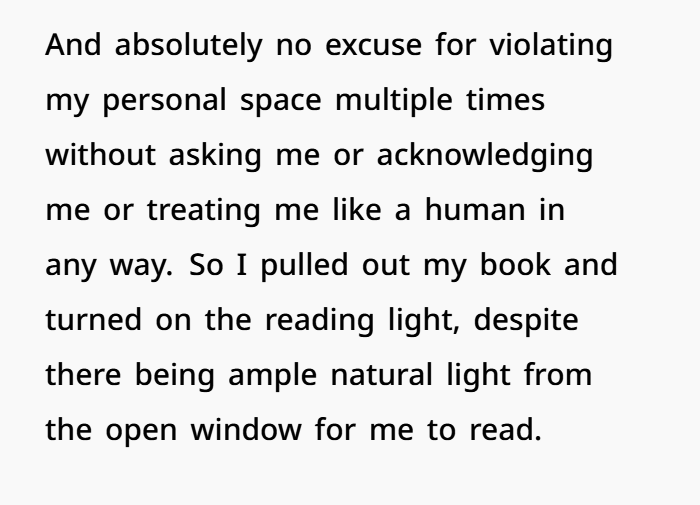
Instead of starting an argument right away, the traveler decided to get quietly petty instead. They switched on the overhead reading light even though the cabin already had plenty of daylight, then angled their watch to bounce sunlight glare directly toward the woman for most of the flight. After the plane landed, the airport drama escalated further with sarcastic comments, passive-aggressive walking through the terminal, and even a subtle middle-finger gesture while leaving. The story immediately exploded online and sparked huge debates about airplane etiquette, annoying airline passengers, travel stress, passive aggression, and whether the revenge was understandable frustration or simply immature behavior taken too far.

DELL-E
ADVERTISEMENT
ADVERTISEMENT

Airplane etiquette always sparks intense online debates for a reason. Few situations force complete strangers into such cramped, stressful, uncomfortable spaces for hours at a time. People are tired, overstimulated, anxious, and desperately trying to protect the tiny bit of personal space they still have left during air travel. That pressure-cooker environment is exactly why small travel annoyances suddenly feel massive at 35,000 feet.

ADVERTISEMENT

And honestly, this airplane story is a perfect example of that.

At first, the issue sounds tiny. One passenger kept closing the airplane window shade. But the reason so many people reacted strongly online is because the real problem wasn’t actually the window. It was the complete lack of communication, travel courtesy, and respect for personal boundaries.

The traveler telling the story specifically pointed out that the woman never asked permission. She didn’t say excuse me. She didn’t acknowledge them at all. She simply reached directly across another passenger multiple times to control something attached to their seat area. That small detail completely changed how many readers viewed the situation.

ADVERTISEMENT

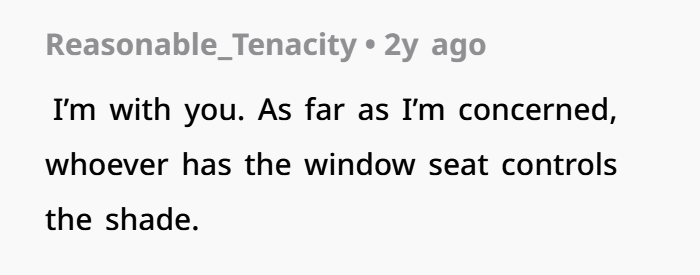
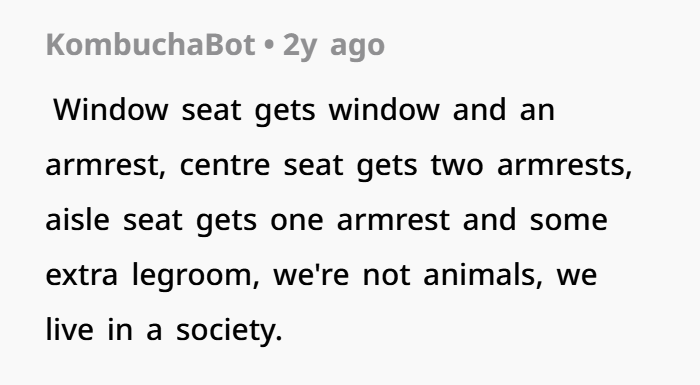
There’s basically an unwritten social contract on airplanes about seat territory and passenger etiquette. The window-seat passenger usually controls the shade, the aisle-seat passenger gets easier bathroom access, and the middle seat gets both armrests as compensation for being stuck in the worst seat on the plane. Most frequent travelers understand those unspoken airline rules automatically.

So when somebody repeatedly ignores those boundaries, frustration builds extremely fast.

What makes the story more interesting though is how quickly the situation became passive aggressive instead of direct communication. Instead of immediately saying, “Please stop reaching across me,” the passenger decided to go full petty revenge mode instead. And honestly, not even mild revenge. They spent almost the entire flight intentionally reflecting sunlight into the woman’s face with their watch while pretending to casually read.

ADVERTISEMENT

That level of commitment honestly impressed some readers while making others cringe immediately.

Petty revenge stories are incredibly popular online because they tap into a fantasy most people secretly understand. Almost everyone has dealt with rude passengers, selfish strangers, or disrespectful public behavior before. Most people stay quiet because social norms discourage confrontation, especially during travel. So when someone finally retaliates, readers sometimes experience secondhand satisfaction through the story.

But there’s also a point where revenge stops feeling funny and starts feeling uncomfortable.

ADVERTISEMENT

For many readers, the airport behavior after landing crossed that line completely.

The storyteller didn’t simply confront the woman after the flight ended. They intentionally slowed her down on moving walkways, blocked her pace on escalators, acted passive aggressive through the airport terminal, and subtly flipped her off while walking toward baggage claim and pickup areas. At that point, the conflict had evolved way beyond a simple airplane window shade disagreement.

That’s exactly why online reactions became so divided.

ADVERTISEMENT

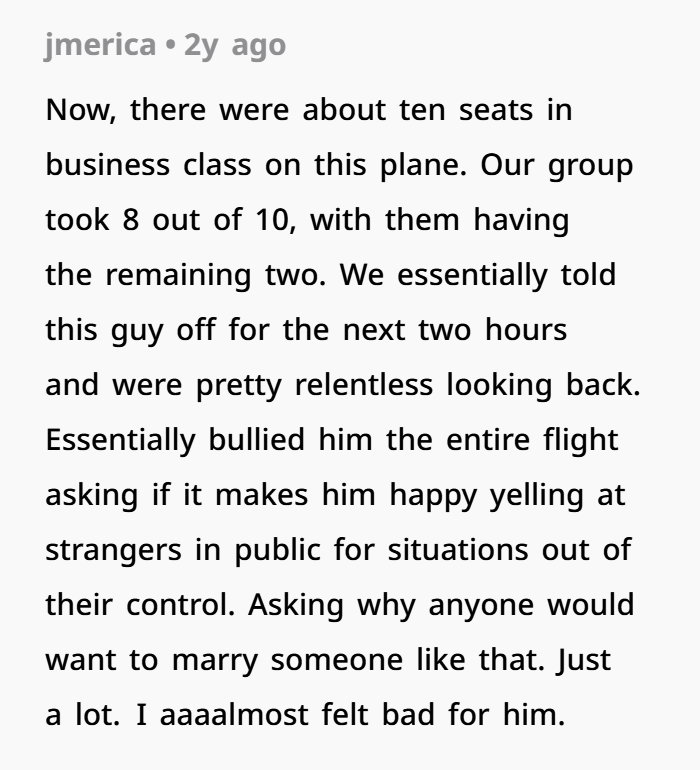
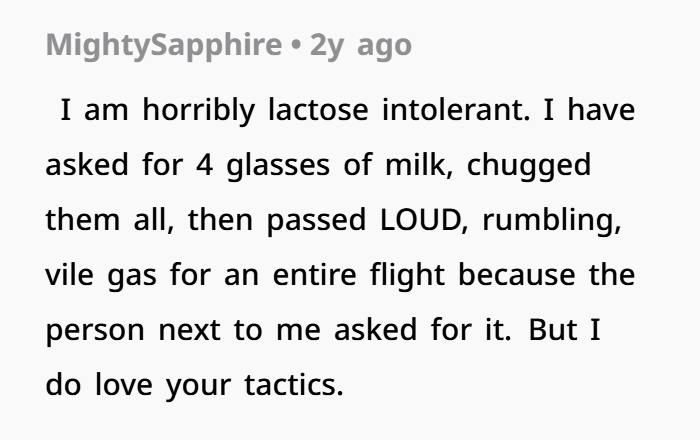
Some readers argued the middle-seat passenger absolutely deserved criticism for repeatedly invading personal space and ignoring basic airplane manners. Others felt the retaliation became emotionally immature, excessive, and unnecessarily hostile. And honestly, both sides probably have a fair point.

The story also highlights something psychologists talk about all the time when it comes to public conflict — escalation cycles. Small moments of disrespect can snowball incredibly fast when nobody addresses the problem directly in the beginning. Instead, both people quietly escalate tension until emotions become way bigger than the original issue ever was.

And honestly, that happens everywhere.

You see it in airports, road rage situations, grocery store lines, crowded public spaces, and public transportation constantly. One rude action triggers another reaction. Then another. Eventually both people are acting worse than the original situation probably deserved.

That honestly feels exactly like what happened during this flight.

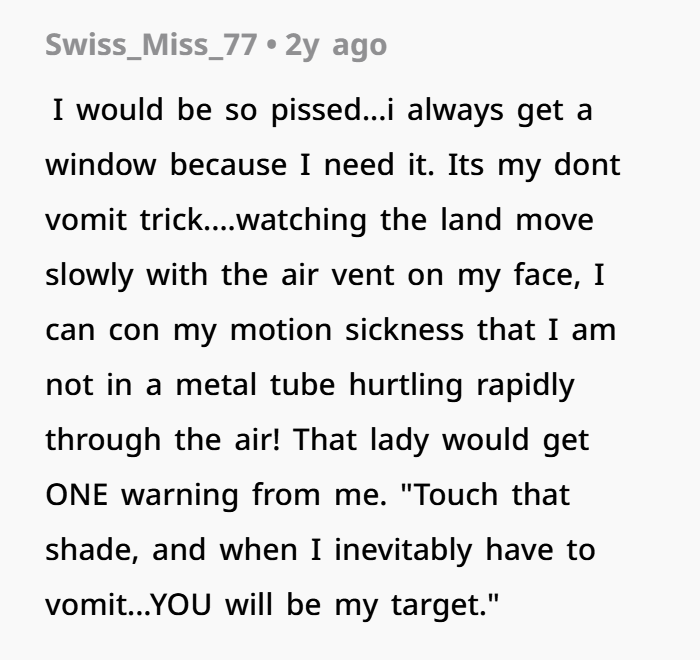
Interestingly, airplane window shade debates have become surprisingly controversial in recent years too. Some travelers strongly believe daytime flight window shades should stay open, especially for people seated by the window. Others prefer them closed for comfort, glare reduction, anxiety, headaches, or better screen visibility during travel. There’s honestly no universal airline etiquette rule everyone agrees on.

Most airlines only step in during takeoff, landing, or overnight flights.

Outside of that, it basically becomes a social negotiation between passengers.

And honestly, negotiation is the real issue at the center of this whole story.

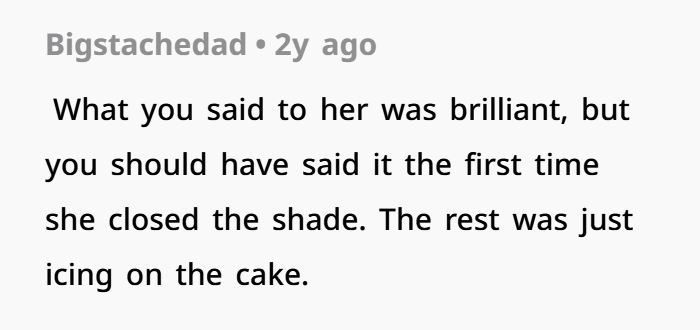
A huge number of commenters pointed out this entire conflict probably could’ve been avoided with one polite sentence.

“Hey, would you mind closing the shade? The light is bothering me.”

That’s literally it.

Maybe the traveler still would’ve said no. But simply asking acknowledges another person’s personal space, comfort, and basic humanity. That social respect matters more than people realize. Most humans tolerate inconvenience much better when they feel respected and included in the interaction.

Without communication, every action suddenly starts feeling aggressive.

The revenge itself also says something interesting about modern social behavior and conflict avoidance. A lot of people today avoid direct confrontation until frustration reaches a boiling point emotionally. Instead of calmly addressing issues early, people stay quiet while resentment and passive aggression slowly build internally.

Part of that probably comes from how socially risky public conflict feels now. Nobody wants to become the “crazy airplane passenger” filmed on someone’s phone and uploaded online. Especially during flights where public meltdowns constantly go viral on social media. So instead of direct communication, irritation gets redirected into sarcasm, subtle revenge, and passive-aggressive behavior instead.

Honestly, the watch-reflection revenge trick feels like the perfect example of that mindset.

Subtle enough to avoid direct confrontation. Annoying enough to communicate anger anyway.

Another reason this airplane story exploded online is because modern air travel already leaves people emotionally exhausted before problems even start. Airports strip away comfort, privacy, patience, and control almost immediately. Flight delays, security lines, cramped seating, loud passengers, crying babies, lack of sleep, and travel anxiety all lower emotional tolerance dramatically.

Research around travel stress and crowded transit environments actually shows people become more emotionally reactive in overstimulating spaces. Irritability increases. Emotional sensitivity increases. And suddenly tiny inconveniences start feeling weirdly personal.

That’s why airplane conflicts can escalate absurdly fast compared to normal life.

The final detail about “city walking speed” ended up being unexpectedly hilarious to a lot of readers because experienced travelers instantly recognized the stereotype. Airports always create this strange battle between hyper-efficient fast walkers and people casually wandering around with zero awareness of everyone behind them. For some travelers, slow walking in a crowded airport honestly feels more offensive than the original airplane argument itself.

Still, even people supporting the storyteller admitted the revenge eventually crossed into excessive territory. Reflecting sunlight into someone’s face with a watch for an hour is one thing. But following someone through the airport, intentionally slowing them down, blocking their pace, and subtly flipping them off felt way more emotionally intense than satisfying.

And honestly, that’s probably why the story felt so believable.

Real anger usually isn’t clean, logical, or perfectly justified. Sometimes frustration builds until irritation spills over into pettiness, passive aggression, or emotionally immature behavior because someone feels trapped, ignored, or disrespected. And airplanes are honestly perfect environments for creating that kind of emotional pressure and travel stress.

But at its core, this airplane drama really wasn’t about the window shade at all.

It was about personal boundaries.

The traveler felt their personal space was repeatedly invaded without even basic acknowledgment or courtesy. Meanwhile, the woman sitting beside them was probably irritated by the sunlight and chose entitlement instead of communication. Neither person handled the situation especially well, and both slowly escalated the tension instead of resolving it like adults.

Which honestly sums up a surprising amount of human conflict in general.

See The Comments Below

ADVERTISEMENT
ADVERTISEMENT
ADVERTISEMENT
ADVERTISEMENT

Similar Posts