
Curfew for the Nanny? When ‘living in’ turns into walking on eggshells
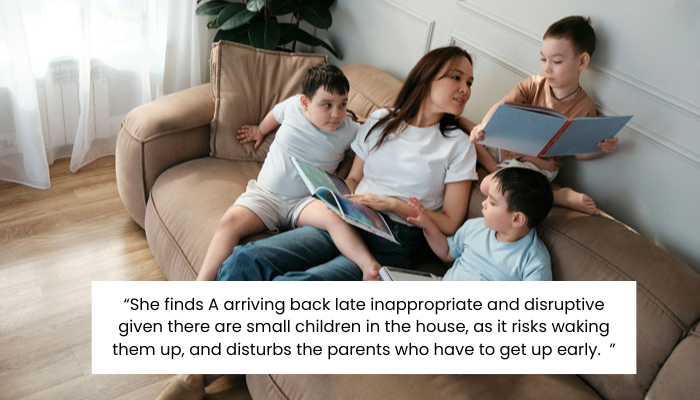
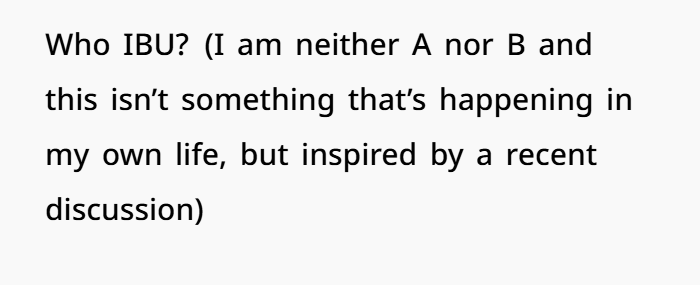
This story is about a live-in nanny (“A”) and her employer (“B”), who also owns the home where the nanny lives.
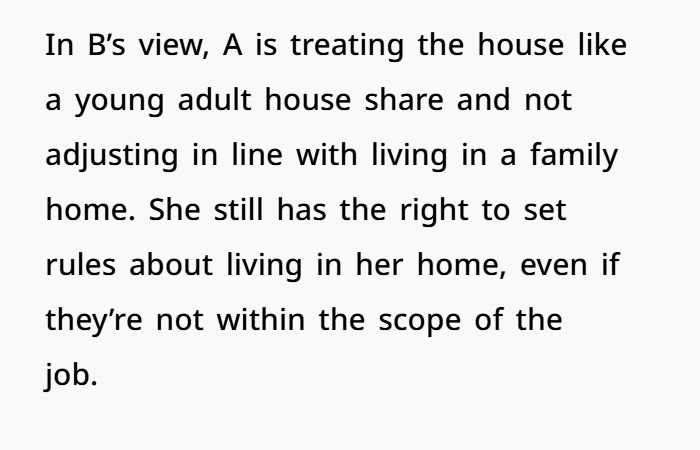
The nanny has free time in the evenings on her days off. During this time, she often goes out to meet friends and usually returns home around 10 or 11 p.m. She feels this is normal and part of her personal life, especially since she is not working during those hours.
However, the employer is not comfortable with this. Because young children live in the house, she feels the nanny coming home late is disruptive. She has asked the nanny to return home by dinner time, even on nights when she is off work.
The nanny feels this request is unfair. She believes that having a live-in job should not mean she loses her freedom during her off hours. She thinks she should be allowed to manage her own time when she is not working.
Now there is tension between them. The employer believes it is about household rules and responsibility, while the nanny feels it is about personal boundaries and work-life balance. The situation raises questions about live-in employment, nanny responsibilities, home rules, and how to set fair boundaries when someone both works and lives in the same house.
Her employer has decided bedtime isn’t just for children and believes that she too should have a curfew
Live-in Nanny Rules, Curfews, and Work-Life Boundaries
This situation is about live-in nanny employment, workplace boundaries in the home, and what is fair between employers and domestic workers.
When someone lives where they work, things can become complicated very quickly. Let’s explain it in simple English.
1. Work Time vs Personal Time
A live-in nanny may stay in the employer’s home, but that does not mean she is working all the time.
In most countries like the UK, US, and Australia:
- A nanny has set working hours
- Free time is not work time
- Nights off belong to the employee
- They can go out during their personal time
In domestic work employment law, personal time must be respected unless the nanny is officially on duty.
So if a nanny comes home at night during her off hours, she is not “working late.” She is simply returning home.
2. House Rules vs Personal Freedom
Living in the same home creates shared expectations.
The employer may want:
- Quiet evenings
- No noise at night
- Stable routines for children
The nanny also needs:
- Freedom during off hours
- Privacy and personal life
- Time away from work stress
This creates a balance challenge in live-in childcare arrangements.
Respect works both ways. It is not just about rules, but fairness.
3. Noise and Respect in the Home
One main concern is disturbance at night.
In most cases:
- Quiet entry into the home is reasonable
- Loud noise late at night is not acceptable
- Respect for sleeping children matters
A better solution than a strict curfew is household quiet hours rules, such as:
- No loud talking after a certain time
- Respecting sleeping areas
- Being mindful when entering late
This is part of shared living etiquette in domestic work settings.
4. Live-In Jobs Have Trade-Offs
Live-in nanny jobs often sound convenient, but they come with challenges.
Benefits may include:
- Free housing
- Meals provided
- No rent cost
But downsides include:
- Less privacy
- Blurred work-life separation
- Feeling “always available”
- Limited personal space
In domestic worker rights and live-in employment studies, lack of privacy is a common concern.
So while housing is provided, personal freedom should still be respected.
5. Power Imbalance in the Relationship
In this type of job, the employer usually has more power because they:
- Provide the job
- Provide the housing
- Can end employment
This can make the nanny feel unable to disagree, even if she feels restricted.
In employment rights and workplace power balance, this is why clear rules and fair treatment are important.
A nanny is an employee, not a family member or a 24-hour worker.
6. Finding a Fair Middle Ground
A strict curfew is usually not necessary. Instead, both sides can agree on simple rules like:
- Quiet hours at night
- Respect for sleeping children
- Courtesy notice if returning very late
- Clear written work schedule
This creates a more balanced live-in childcare agreement.
If no agreement can be reached, a live-out nanny arrangement may be a better option for both sides.
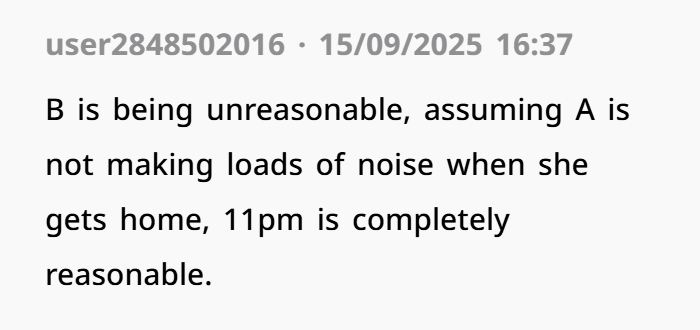
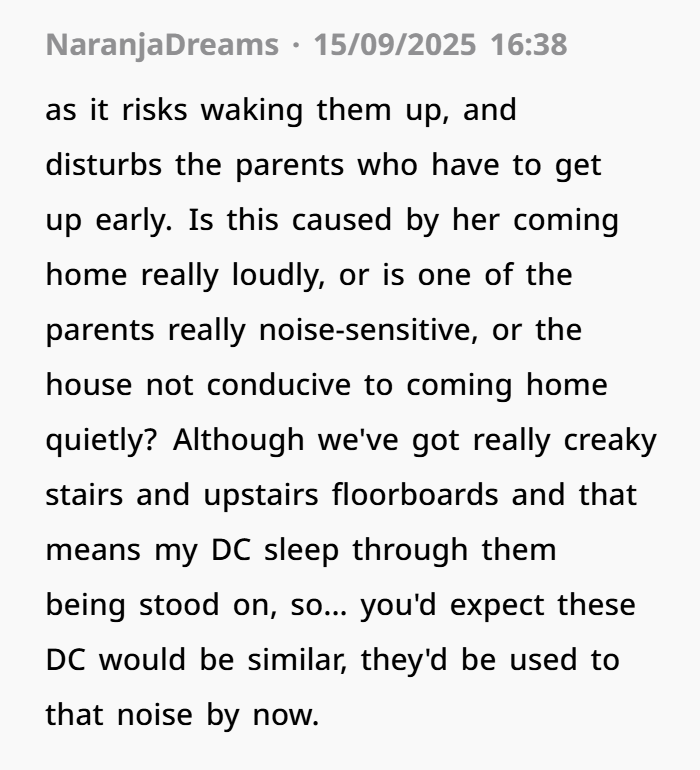
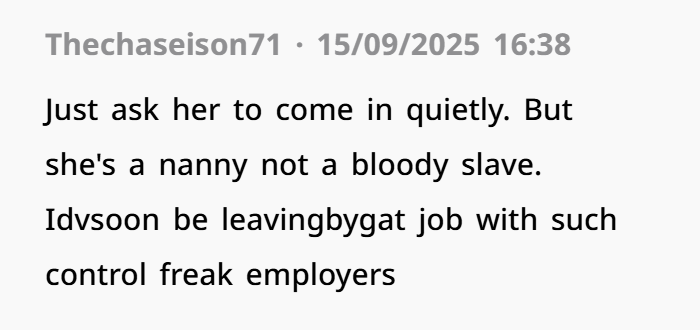
“Absolutely nuts”: many people felt the employer was being unreasonable



7. Final Thoughts
Live-in nanny arrangements can work well, but only with clear boundaries.
The key points are:
- Off-duty time is personal time
- Employers cannot control an employee’s private life
- Quiet and respect in the home is important
- Power balance must be fair
- Clear communication avoids conflict
In the end, good domestic employment relationships and childcare arrangements depend on respect, clear rules, and understanding that personal freedom still matters.