My Brother Got Furious After I Started Hiding Snacks for His Daughter
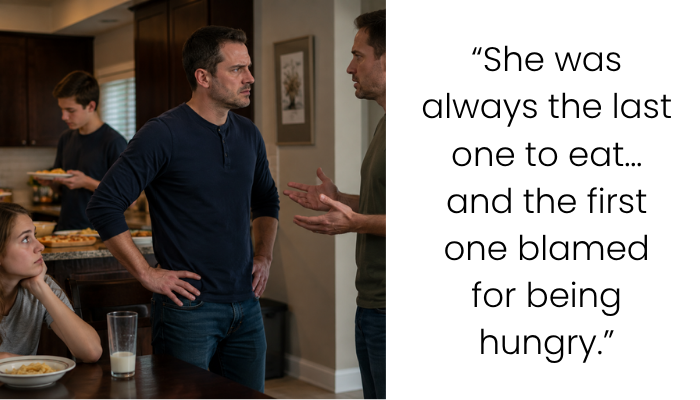
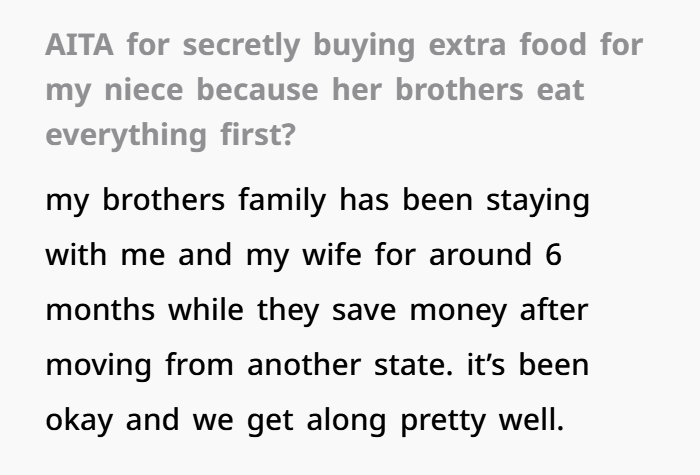
A man is wondering if he did something wrong after secretly buying extra snacks for his 14-year-old niece. His brother, sister-in-law, and their three children have been living in his home for about six months while they save money after moving from another state. Overall, the living arrangement has been mostly peaceful, but food at mealtimes has become a growing concern.
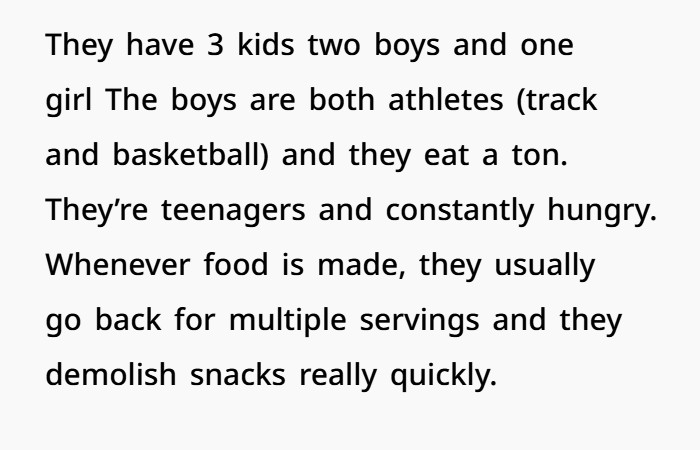
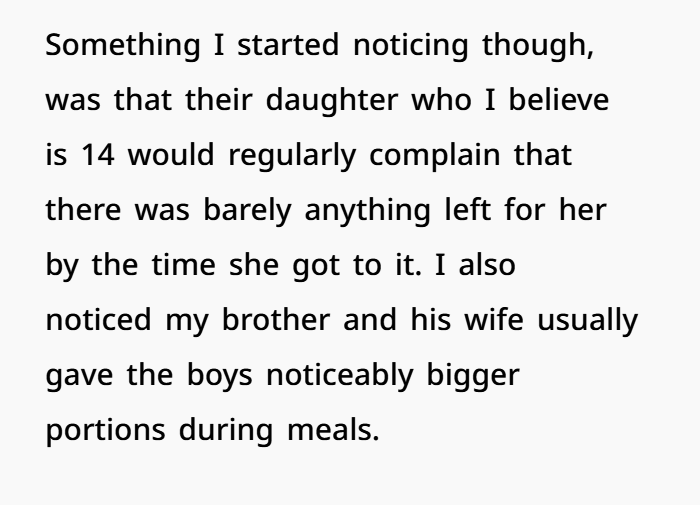
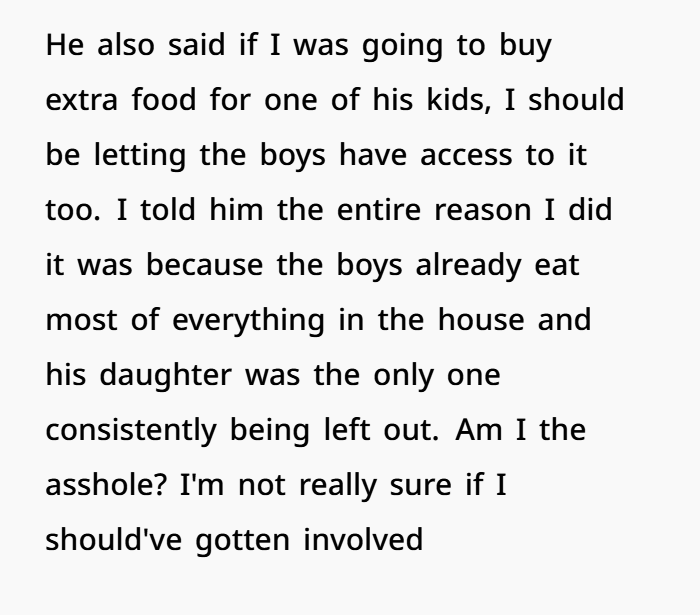
The couple’s two teenage sons are very active in sports like basketball and track. Because of this, they eat a lot, and most of the food and snacks in the house get finished quickly. Dinner portions often go mostly to the boys, and leftovers rarely last long. The uncle noticed that the daughter in the family often did not get enough to eat and sometimes complained that there was little food left for her.
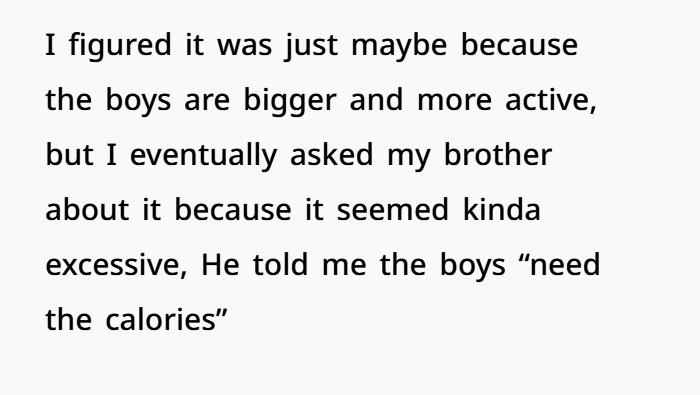
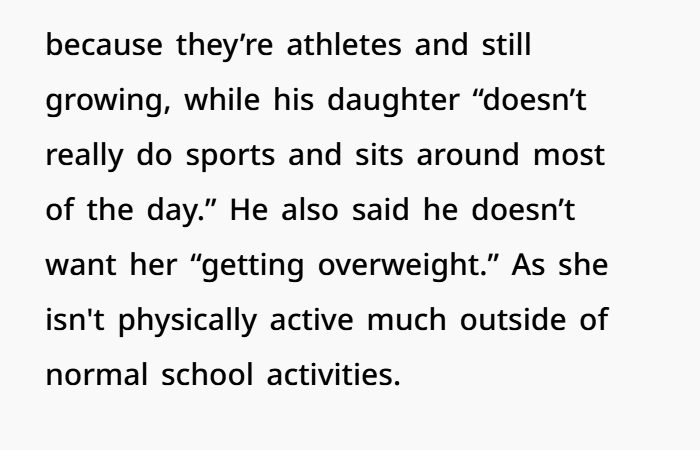
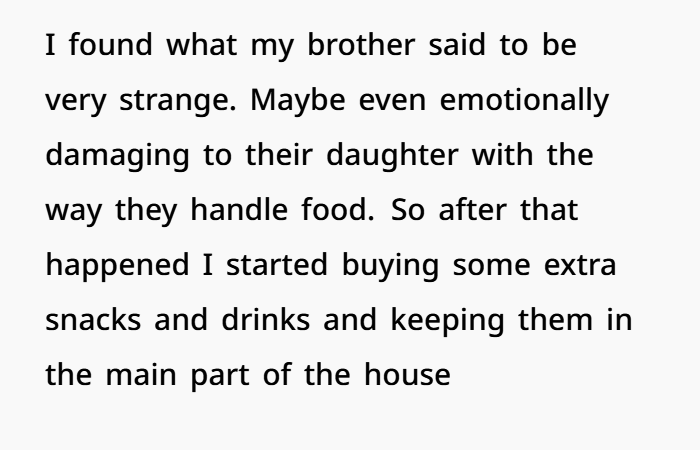
When he spoke to his brother about it, he was surprised and uncomfortable with the response. His brother said the boys needed more food because they were active and growing, while his daughter did not play sports and should not “gain weight.” The uncle felt this way of thinking was unfair and could affect his niece’s self-esteem and healthy eating habits.
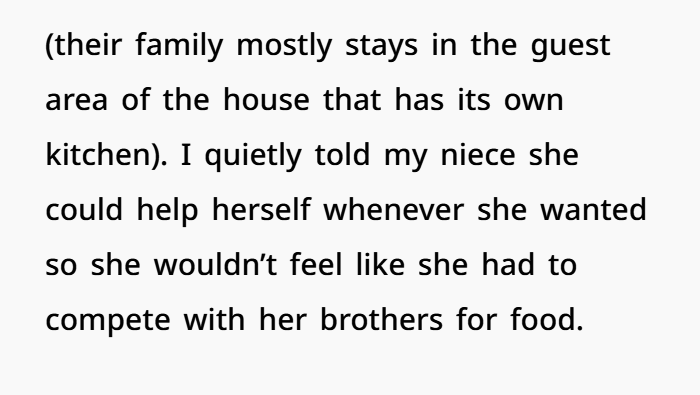
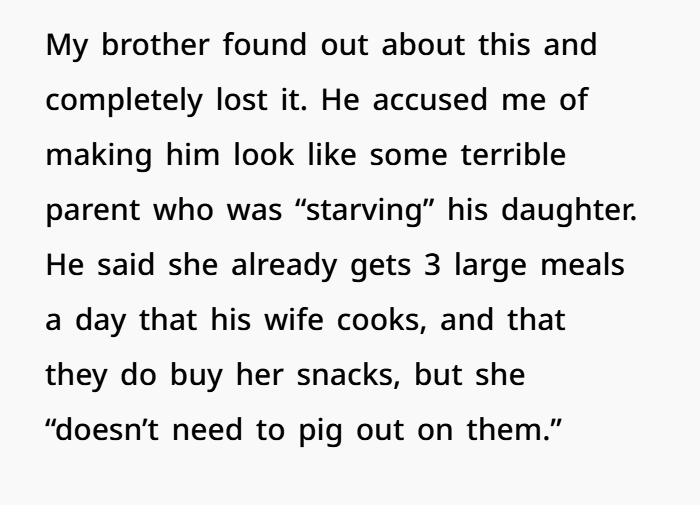
Because of this, he started quietly buying extra snacks and told his niece she could eat them whenever she wanted. When her father found out, he became upset and said the uncle was interfering with parenting decisions. Now the family is arguing over food rules, parenting boundaries, child nutrition, and how to fairly share resources in a shared household.

This situation is not really just about snacks or eating habits. It is about how food, fairness, and parenting can affect a teenager’s confidence and emotional health.
Many readers reacted strongly because it shows how boys and girls can sometimes be treated differently in the same home without anyone fully noticing it.
The Main Problem in the Household
On the surface, the parents may think they are just managing food for active teenage boys. Teen boys who play sports often eat a lot because they burn more energy.
But the concern in this story is not about the boys eating more.
The concern is that the daughter often feels like she is not getting enough food.
In child psychology and family nutrition studies, feeling ignored around basic needs like food can affect a child’s emotional well-being.
Why the Father’s Comments Raised Concern
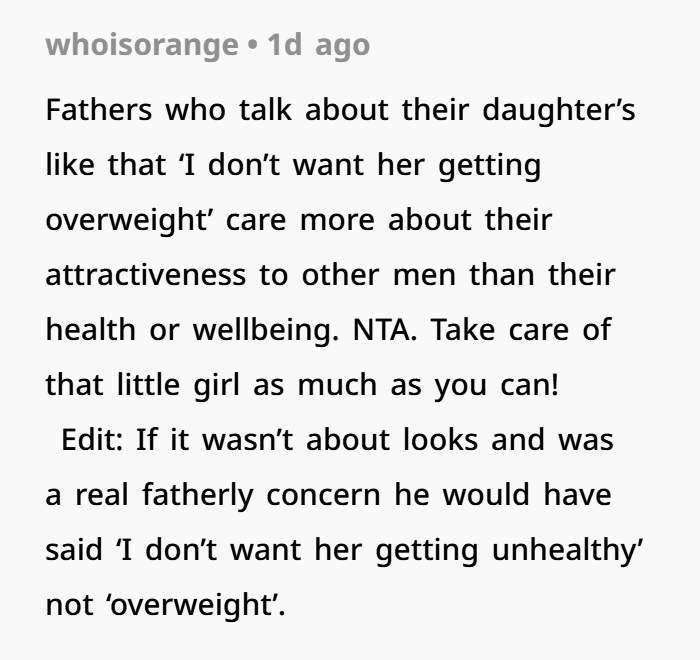
The father’s comment about not wanting his daughter to “get overweight” changed how people viewed the situation.
Instead of just planning meals, it started to sound like:
- Food limits based on body image
- Worry about weight in a teenage girl
- Unequal attention to children’s needs
In adolescent health and eating behavior research, comments about weight during teenage years can strongly affect self-esteem and body confidence.
Teen Years and Body Image Pressure
Teenage girls are especially sensitive to comments about food and weight. In many cases, this can lead to:
- Low self-confidence
- Stress around eating
- Unhealthy food habits
- Anxiety during meals
In child development and teen mental health studies, early comments about eating habits can stay with children for many years.
Why the Uncle Stepped In
The uncle did not make a big public issue. He simply made sure his niece had extra snacks so she would not go hungry.
He did things like:
- Quietly buying snacks
- Making sure she had food available
- Avoiding direct conflict
In family support and child welfare discussions, this kind of action is often seen as informal protection rather than confrontation.
Why the Father Reacted Strongly
The father became defensive because it may have felt like criticism of his parenting.
In family relationship psychology, parents can feel attacked when others step in about their children, even if the intention is help.
But his reaction also focused heavily on controlling how much his daughter eats, which made readers more concerned.
The Gender Difference in Food Expectations
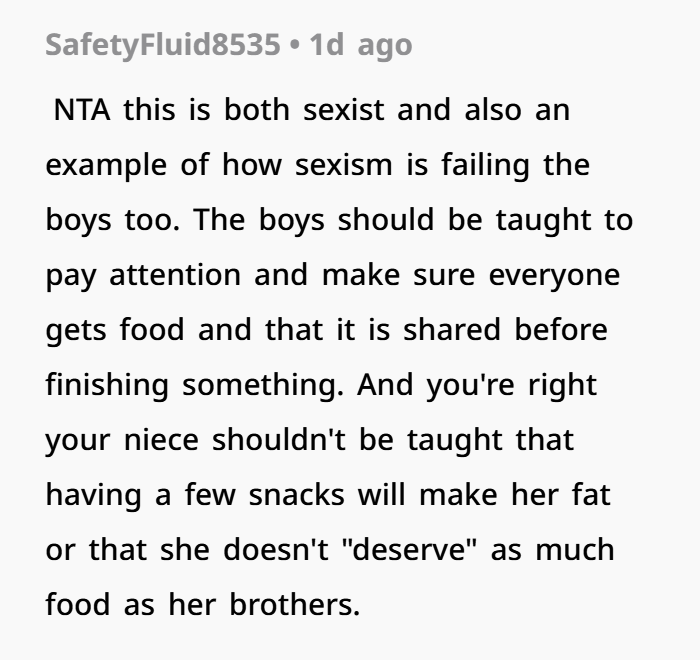
A big issue in this story is how boys and girls are treated differently.
Often:
- Boys are encouraged to eat more, especially if they are active
- Girls are told to eat less or be careful about weight
- Boys’ hunger is seen as normal
- Girls’ hunger is sometimes questioned
In gender and family behavior studies, this is a common pattern that can affect self-image over time.
Why Food Matters More Than It Seems
Food is not just about nutrition. For children and teenagers, it is also about:
- Feeling safe
- Feeling cared for
- Feeling treated fairly
- Feeling included
In child psychology and emotional development, consistent access to food is linked to emotional security at home.
Possible Long-Term Impact
When a child feels like they do not get enough food or feel judged for eating, it can sometimes lead to:
- Food anxiety
- Secret eating habits
- Low self-esteem
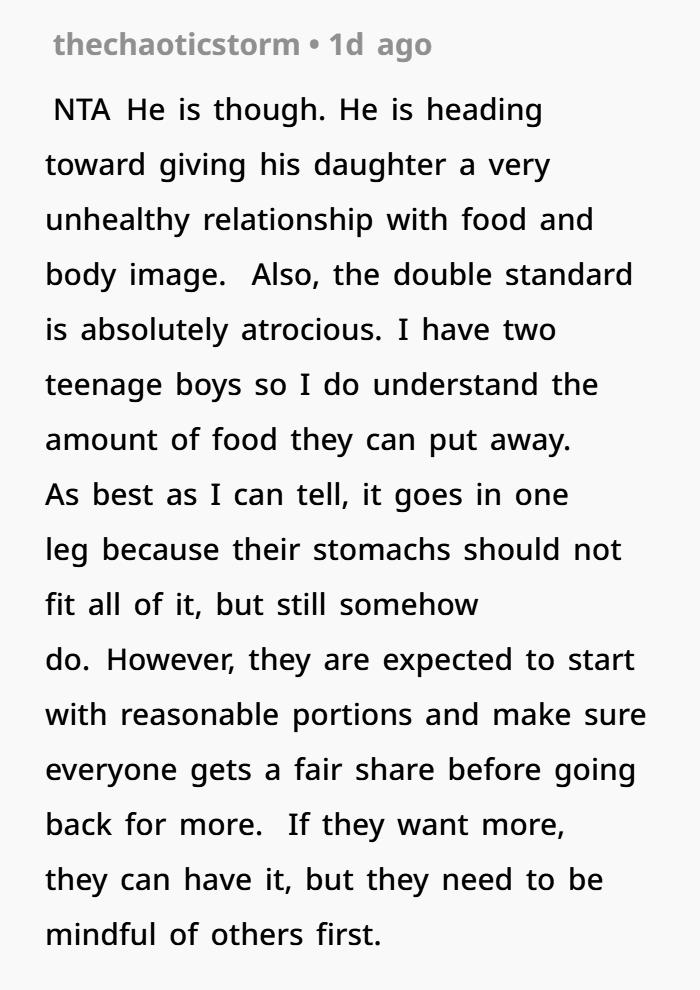
- Unhealthy relationship with food
That is why many readers reacted strongly to this situation.
Was the Uncle Wrong?
Some people think the uncle should have talked directly to the parents. Others feel he did the right thing by quietly helping.
From a family support and parenting perspective, both views exist:
- Direct communication may solve the issue openly
- Quiet support may protect the child emotionally in the short term
There is no simple answer.
The Bigger Issue in This Story
The real issue is not snacks. It is:
- Unequal attention between siblings
- Pressure around body image
- Lack of clear communication in parenting
- A teenager feeling unheard about basic needs
In family wellness and parenting support studies, these small patterns can build emotional stress over time.
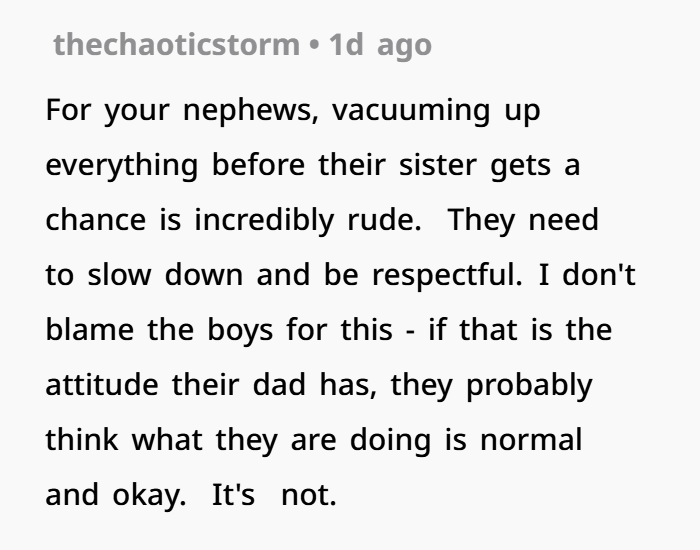
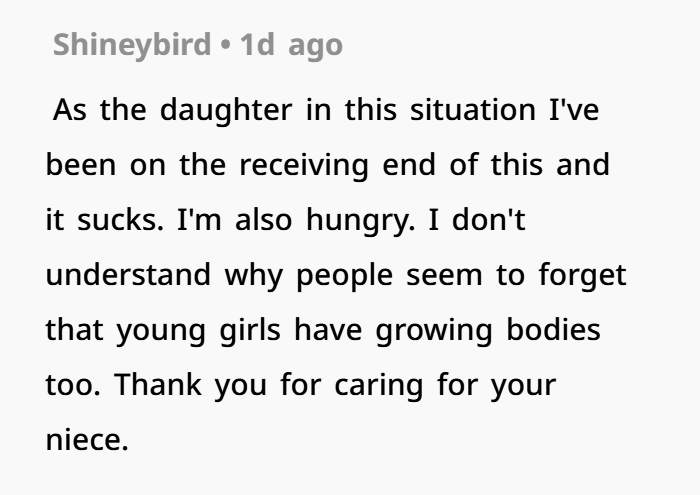
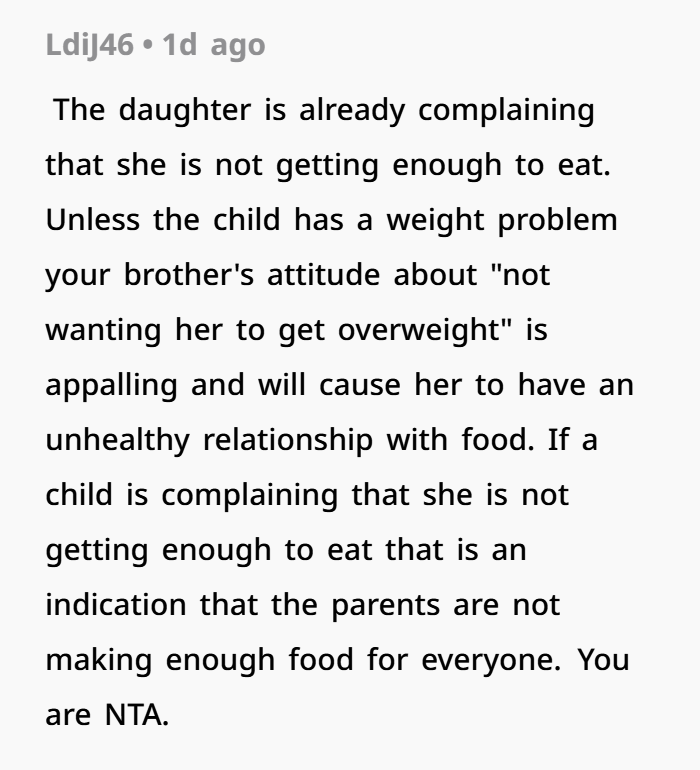
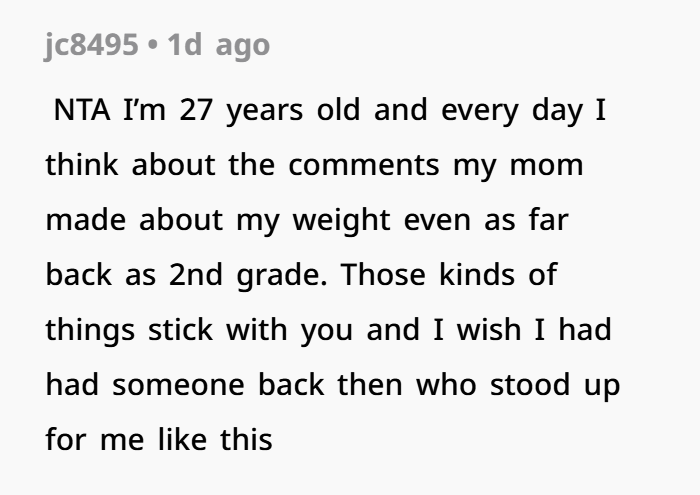
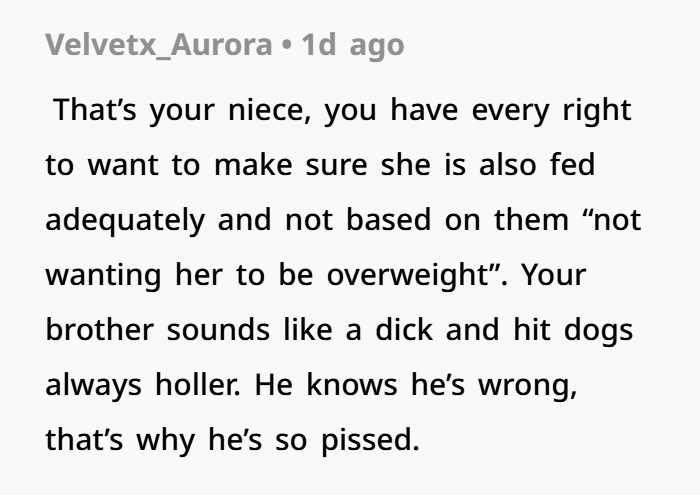
Top Comments From Readers
Final Thoughts
This story connects with many people because it reflects real issues in family relationships, parenting, and child nutrition.
At the center of it is a simple idea:
Every child, regardless of gender or activity level, deserves enough food, fairness, and respect in the home.
What starts as small comments about eating can slowly affect a teenager’s confidence, self-image, and emotional health in the long run.