Woman Refuses to Refer Unemployed Best Friend for Job Over Past Workplace Conflict

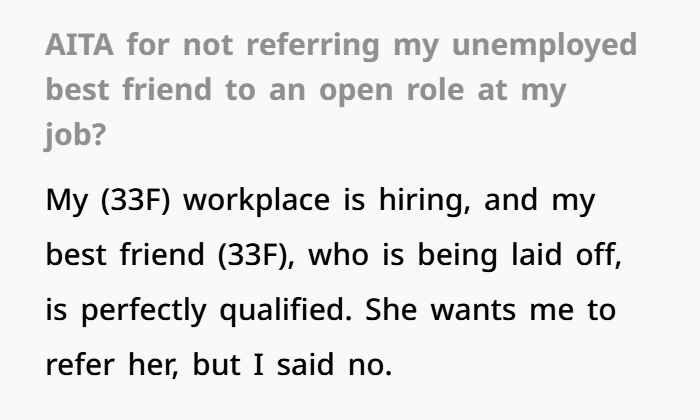
A woman, 33, is unsure what to do after her longtime best friend asked her for help finding a new job. They have been friends for nearly ten years, and her friend is now facing a possible layoff. Luckily, there is a job opening at the woman’s workplace that matches her friend’s experience. Her friend wants a recommendation to improve her chances of getting hired. While helping a friend with a job search sounds like a kind thing to do, the woman has a good reason for feeling uncomfortable about it.
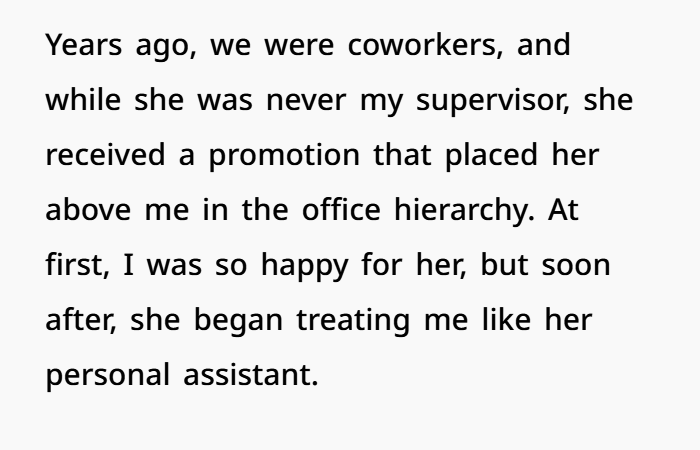
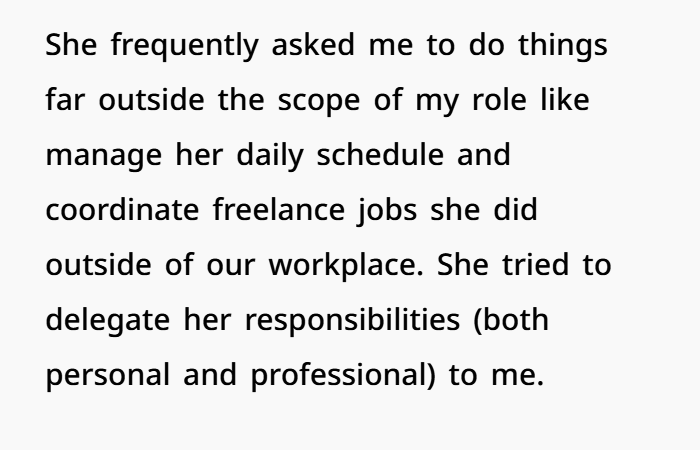
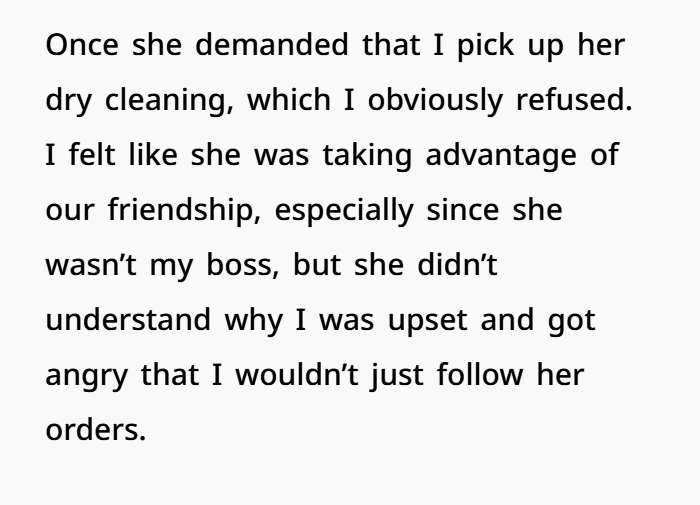
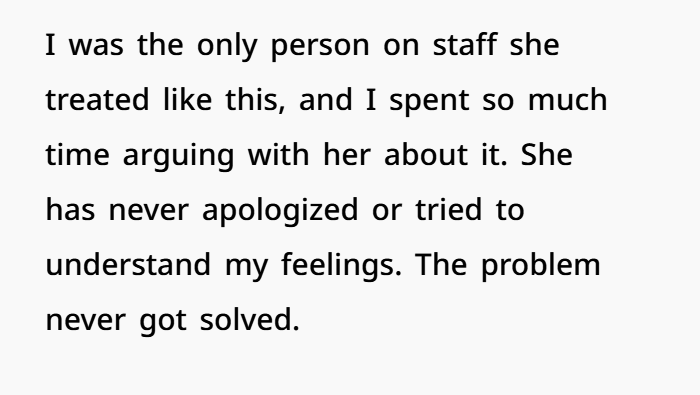
The two friends worked together at another company several years ago. At first, everything was fine. Then her friend received a promotion, and their workplace relationship changed. She started acting like the woman’s boss, even though she had no direct authority over her. She expected her to handle personal tasks, arrange her schedule, and help manage freelance work outside the office. She even asked her to collect dry cleaning. The woman refused because these tasks had nothing to do with her job responsibilities. This led to arguments, but her friend never admitted she had done anything wrong.
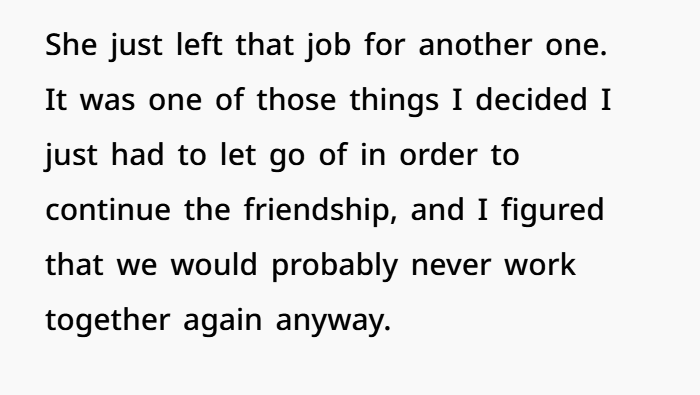
When the friend eventually left that company, the woman was relieved. She chose to leave the arguments in the past and focus on keeping their friendship strong. Now her friend wants to join her current workplace, and the available position would put her in a higher role again. The woman worries that the same problems could return. She has worked hard to build a good professional reputation and wants a healthy work environment. Giving a job referral could put her career and workplace relationships in an uncomfortable position.
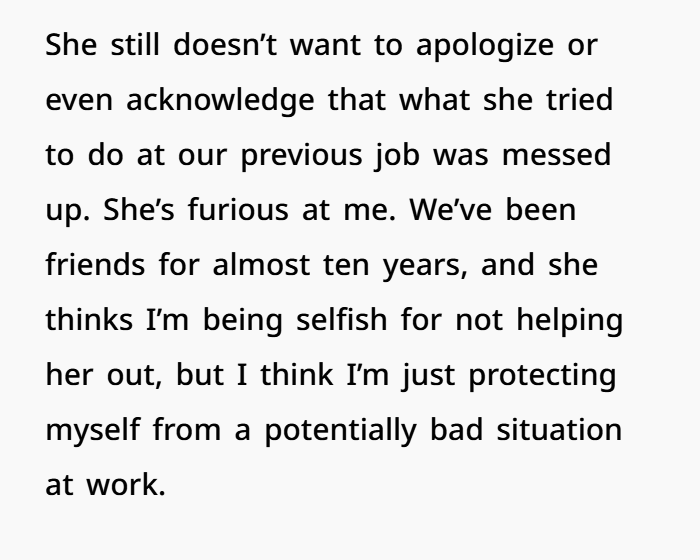
Her friend does not agree with her decision. She thinks a best friend should help during a job loss, especially when a suitable career opportunity is available. But the woman points out that her friend has money saved and enough freelance work to pay her bills for now. She is not sure why she should risk her own job satisfaction when their past problems were never resolved. The situation has left her wondering whether saying no to a friend is unfair or simply a way to protect her professional boundaries.


Woman Refuses to Help Best Friend Get a Job After Their Past Workplace Problems
A woman is facing a difficult choice after her best friend asked for help getting a job at her company.
The two women have been friends for almost ten years. They know each other well and have even worked together before.
But that is exactly why the woman does not want to help.
Their last experience as coworkers was not a happy one.
After her friend received a promotion, she began expecting personal favors during work hours.
Now, the friend is losing her job and wants a referral for a new position.
The woman is worried that the same problems could happen again.
Her friend thinks she is being selfish for saying no.
But is refusing a job referral really a bad thing?
Their Problems Began After a Promotion
The two friends once worked at the same company.
At first, everything seemed fine.
They were close outside work and got along as coworkers.
Then one of them received a promotion.
Although she did not become the woman’s direct manager, her new position gave her more authority at work.
That was when things started to change.
According to the woman’s account, her friend began asking her to handle personal tasks.
These included managing her personal schedule, helping with freelance projects, and even picking up dry cleaning.
None of these tasks were part of the woman’s regular job.
What bothered her most was that her friend did not ask other employees to do the same things.
She only expected these favors from her.
The woman felt that their friendship was being used as a reason to give her extra responsibilities.
She wanted to be supportive, but she did not want to become her friend’s personal assistant.
Why Workplace Boundaries Matter
Having a friend at work can make a job more enjoyable.
You have someone to talk to, share ideas with, and ask for help when things get busy.
But friendship can become a problem when work responsibilities are not respected.
A promotion does not mean someone can ask coworkers to handle personal errands.
Employees have their own tasks, deadlines, and job responsibilities.
When someone keeps adding unrelated work, it can create stress and frustration.
The National Institute for Occupational Safety and Health explains that workplace conditions and unclear job expectations can contribute to work-related stress.
That is why setting professional boundaries is important.
A person should be able to focus on their job without feeling pressured to do personal favors.
In this case, the woman felt that her friend crossed that line.
And she has not forgotten the experience.
Now Her Friend Wants a Job Referral
Years later, the friend is being laid off from her current job.
She has started looking for new career opportunities.
During her job search, she found an opening at the woman’s current company.
The position appears to match her skills and experience.
She believes she would be a good candidate.
So, she asked her best friend for a job referral.
Many companies have employee referral programs that allow workers to recommend people they know.
Some employers also offer referral bonuses when a recommended candidate gets hired.
But the woman does not want to recommend her friend.
She remembers how difficult their previous working relationship became.
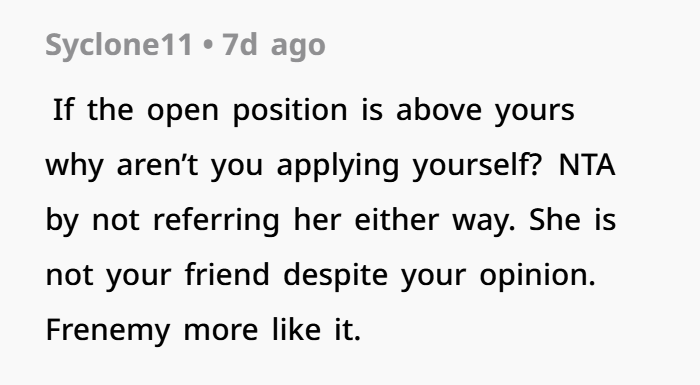
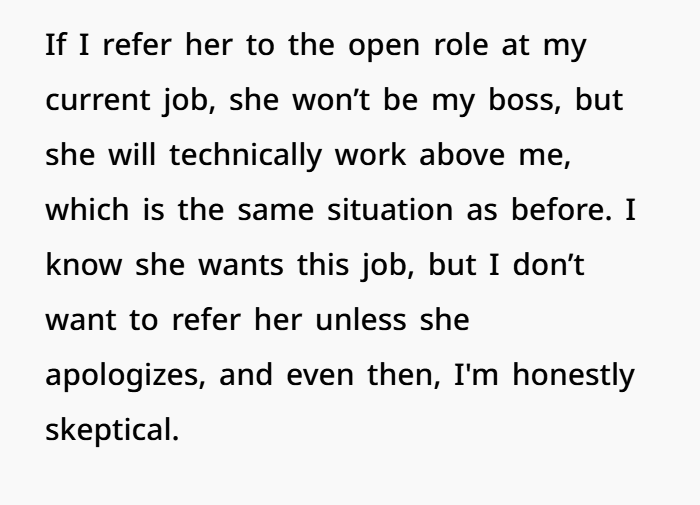
And the new job would reportedly place her friend in a higher position again.
Although she would not be her direct manager, the situation would be similar to their old workplace.
That makes the woman uncomfortable.
A Job Referral Is Not Just a Friendly Favor
Some people may think the woman should simply recommend her friend and let the company decide whether to hire her.
After all, a referral does not guarantee a job offer.
The hiring manager still needs to review the candidate’s resume, experience, and qualifications.
But a job referral can carry professional weight.
Depending on the company, recommending someone may show that you trust their work habits and professional behavior.
That is why employees should be careful about whom they recommend.
The Society for Human Resource Management provides resources about recruitment and employee referral programs.
A person can have the right skills for a job without being someone you feel comfortable recommending.
That is the main issue here.
The woman is not saying her friend is unqualified.
She simply does not want to be responsible for recommending someone whose past workplace behavior caused problems for her.
She Does Not Want to Repeat the Same Experience
The woman has already seen what happened when her friend received a promotion.
She does not want to go through that again.
At her current company, she has built professional relationships and settled into her role.
She wants to focus on her work without worrying about personal demands from a friend.
A good job is about more than salary.
Employee benefits, career growth, job security, and workplace culture also matter.
Feeling respected by coworkers can make a big difference in everyday work life.
The woman worries that if her friend joins the company, the old problems could return.
And if they do, it might affect both her career and their friendship.
She would rather avoid that risk.
Her Friend Has Never Apologized
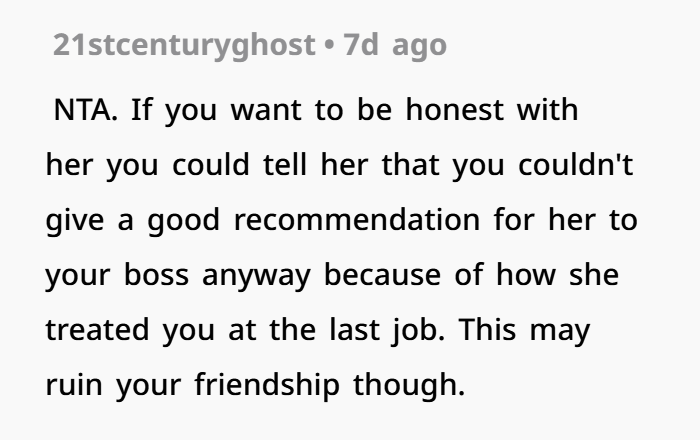
Another important detail is that the friend has never apologized for what happened.
According to the woman, they have discussed their old workplace problems.
But her friend does not seem to believe she did anything wrong.
Instead, she reportedly becomes upset when the subject comes up.
That makes it difficult for the woman to believe things would be different now.
People can change over time.
Someone who behaved poorly years ago may have learned from the experience.
But rebuilding trust often begins with accepting responsibility.
A study on effective apologies found that acknowledging responsibility is an important part of a meaningful apology.
The woman wants her friend to understand why the personal requests were inappropriate.
She has said that an apology might make her more willing to consider a referral.
Even then, she would still have concerns.
And she would still be allowed to say no.
Does Being Best Friends Mean You Must Help?
Friendship often means supporting each other during difficult times.
When someone loses a job, their friends may want to help.
They might share job openings, review a resume, or offer interview preparation tips.
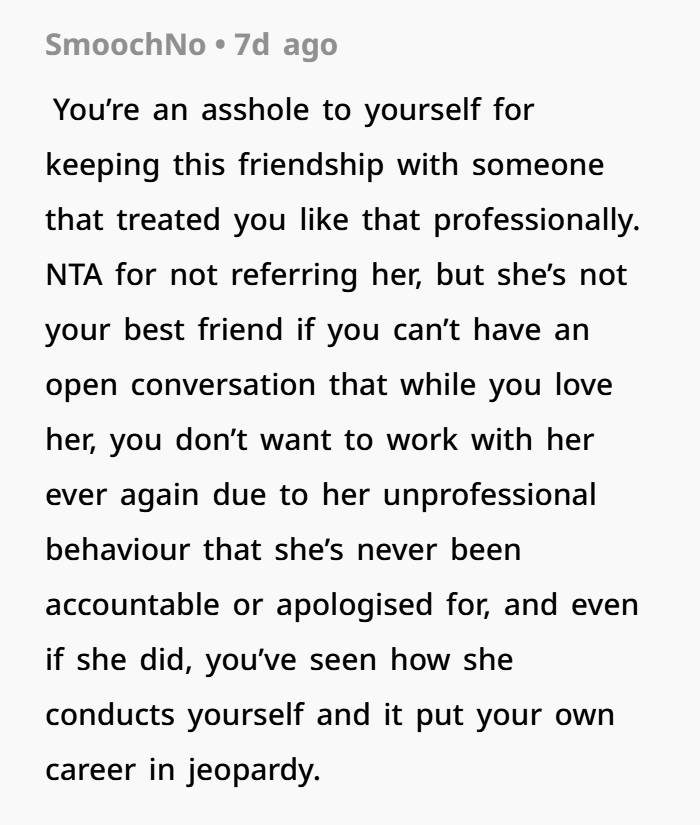
But being a good friend does not mean agreeing to every request.
The woman can care about her friend without wanting to work with her again.
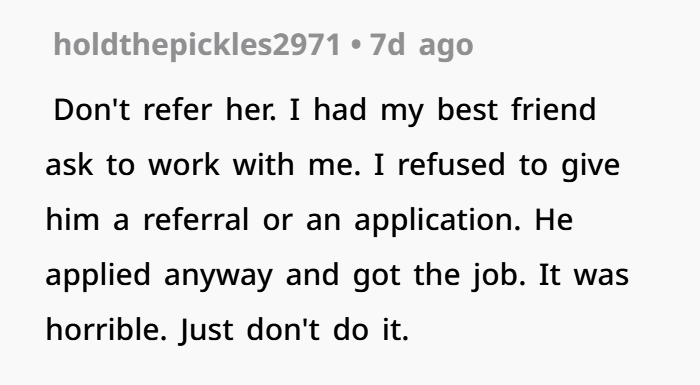
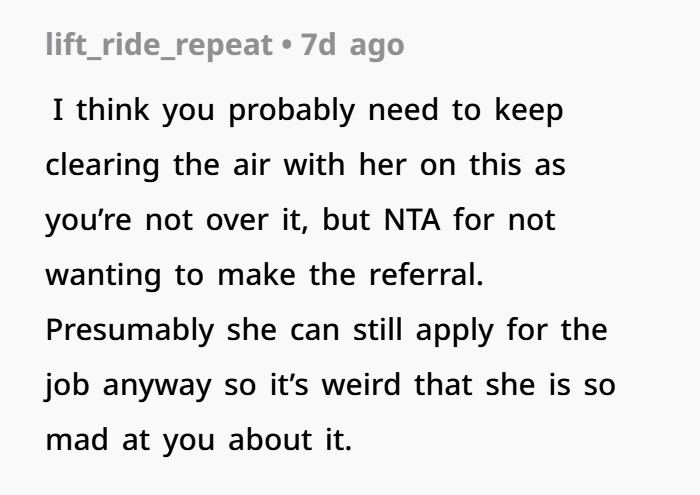
She is not preventing her friend from applying for the position.
She simply does not want to recommend her personally.
If the job opening is public, her friend can apply through the normal hiring process.
The company can then decide whether she is the right person for the role.
A referral may help someone get noticed, but it is not the only way to find a job.
The Friend Has Savings and Freelance Income
Losing a job can be stressful.
A layoff can affect career plans, monthly income, and future financial goals.
People may also worry about health insurance and other employee benefits.
That is why emergency savings and financial planning can be helpful during a career change.
However, the friend in this story is not facing an immediate financial crisis.
According to the woman, her friend has substantial savings.
She also earns enough freelance income to cover her living expenses.
This gives her some time to search for another position.
It does not mean losing her job is easy.
But it does mean she has other options.
She can continue applying for jobs, exploring career development opportunities, and building professional connections.
Her best friend does not have to risk her own work environment to help her find employment.
There Are Other Ways to Help With a Job Search
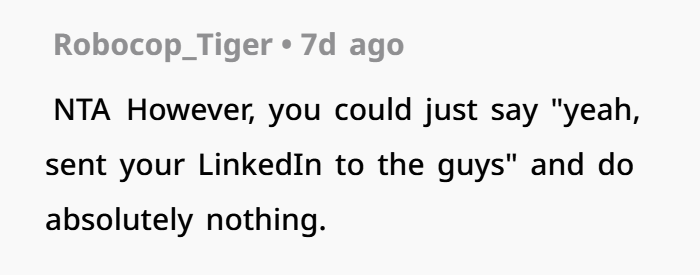
The woman can still offer support without giving a referral.
She could share job listings from other companies.
She might help review her friend’s resume or suggest useful interview preparation resources.
Professional networking and career development services can also help people looking for work.
These are practical ways to support someone during a job search.
And they do not require the woman to make a personal recommendation at her own workplace.
Of course, she does not have to offer these things if she does not feel comfortable.
But if she wants to protect the friendship, offering another kind of help could be a good middle ground.
The important thing is that her friend respects her decision.
Asking for help is reasonable.
Expecting someone to say yes is not.
Could This Decision Hurt Their Friendship?
The two women have been friends for almost ten years.
That makes the disagreement more emotional.
The friend may feel disappointed because someone close to her is refusing to help with an important career opportunity.
She may believe their friendship should matter more than an old workplace problem.
But the woman sees things differently.
For her, the problem was never fully resolved.
Her friend has not accepted responsibility for the personal requests she made at their old company.
Now, she wants to work in a similar position again.
The woman worries that the same problems could return.
Sometimes, keeping friendship and work separate is the better choice.
They may be able to remain friends without becoming coworkers again.
But that will depend on whether both women can respect each other’s boundaries.
Does Her Friend Deserve Another Chance?
It is possible that the friend would behave differently today.
People learn from experience and sometimes change their habits.
But the woman has no clear reason to believe the old problem has been resolved.
Her friend has not apologized or acknowledged why her behavior was upsetting.
That does not prove she would act the same way again.
It simply explains why the woman is being careful.
A second chance does not have to mean working together.
The women can try to rebuild trust in their friendship without bringing the same problems into another workplace.
That may be the better option for both of them.
Final Verdict: The Woman Is Not Wrong
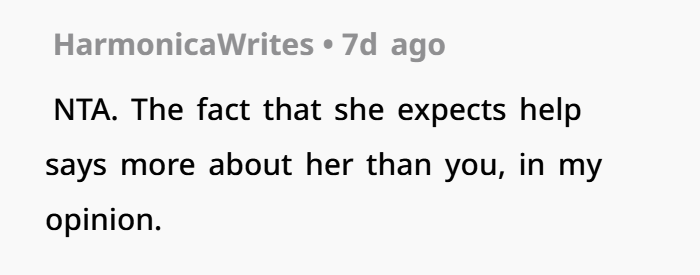
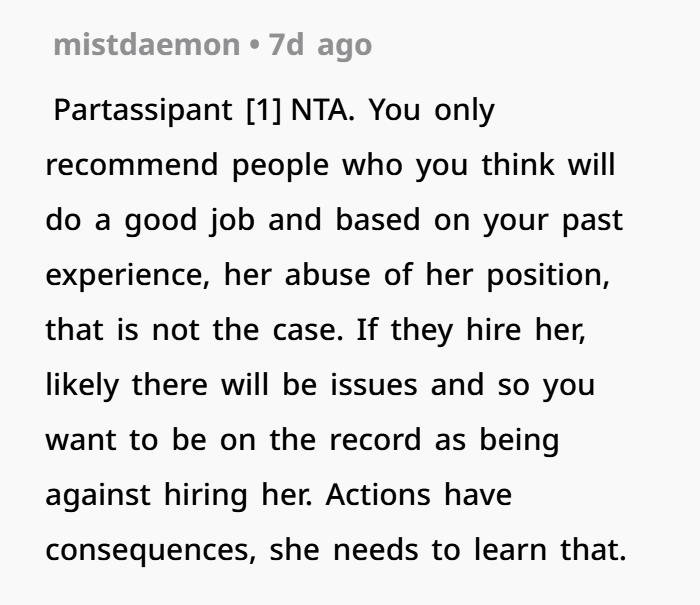
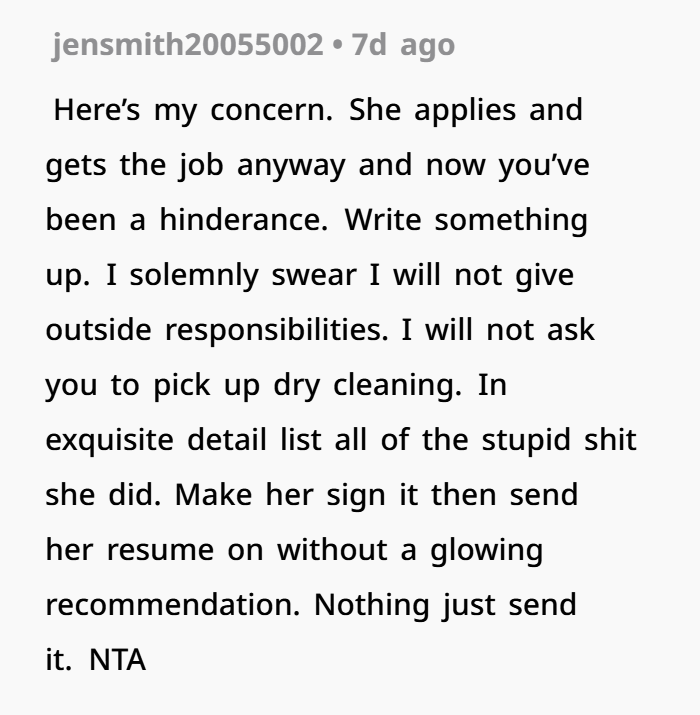
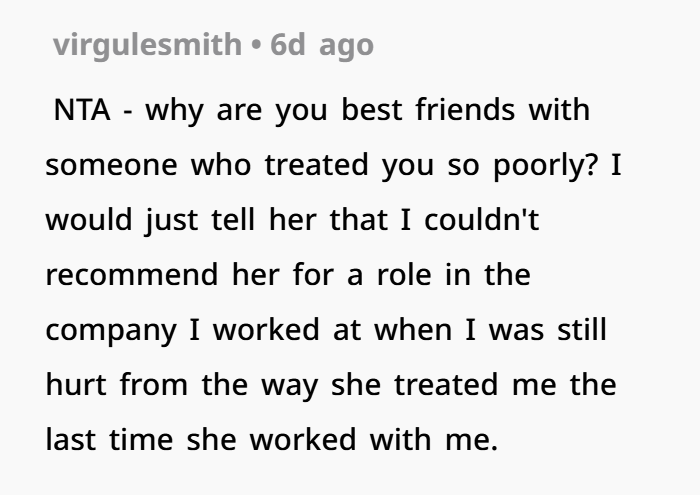
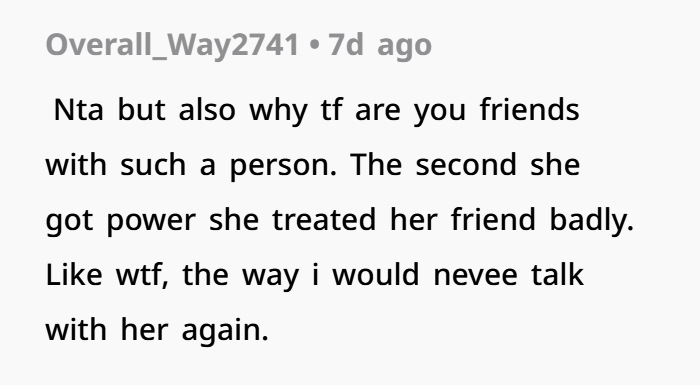
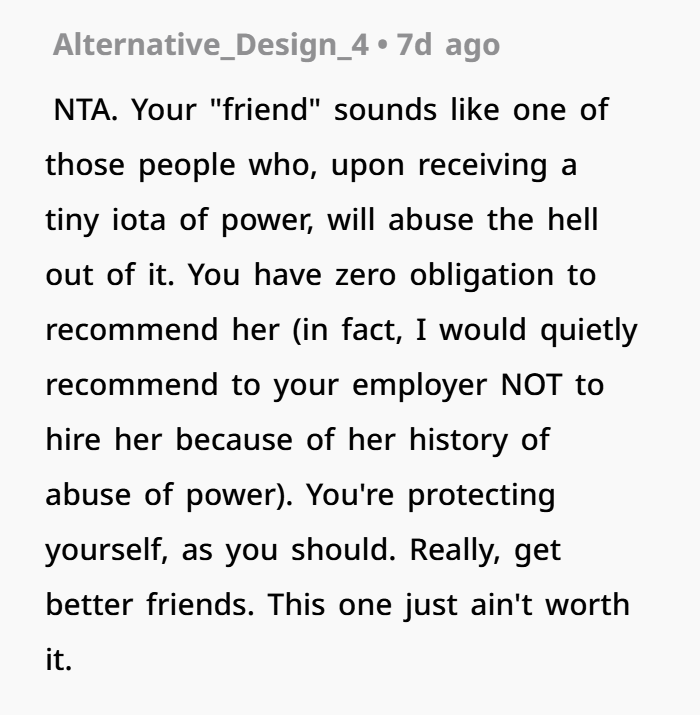
Based on the woman’s account, she is not wrong for refusing to give her best friend a job referral.
Her friend may be qualified for the position.
But a referral is a professional recommendation, not something a person automatically receives because of a friendship.
The woman has already experienced problems working with her friend.
The new position could bring back a similar situation, and the friend has never acknowledged what went wrong before.
It makes sense that the woman wants to protect her career and professional relationships.
She is not stopping her friend from applying independently.
She is simply choosing not to put her own name behind the application.
Her friend is allowed to feel disappointed.
But she also needs to respect the decision.
A strong friendship should leave room for personal boundaries, even when the answer is no.
What do you think? Should the woman recommend her best friend for the job, or is she right to keep their friendship separate from her career?
See The Comments Below