Why I’m Not Letting My Kids Go Back to My MIL’s Until She Respects Me
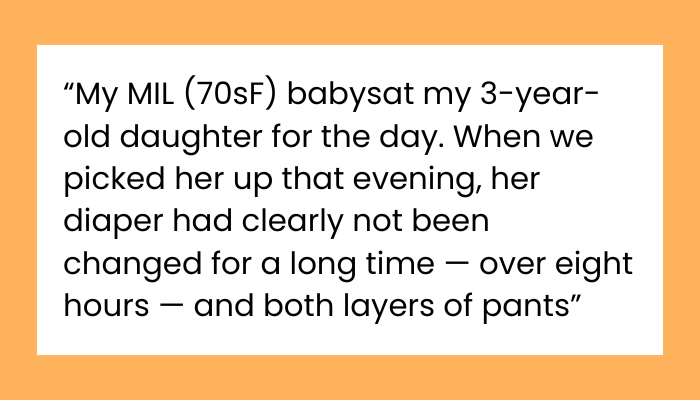
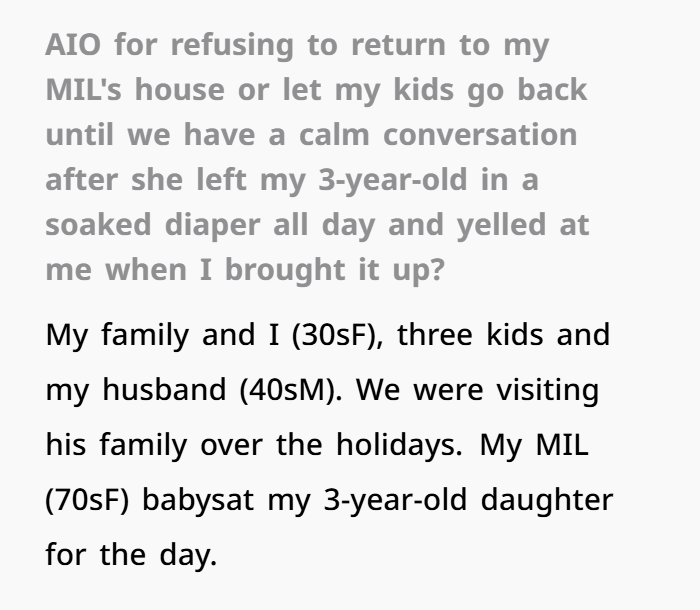
I get it — when family drama hits, especially with in‑laws, emotions can go everywhere fast. You and your family were visiting your husband’s mom over the holidays. During that visit, your MIL babysat your 3‑year‑old — and when you picked her up, her diaper was still soaking wet after hours. All through the day. Like urine soaked through two layers of clothes.
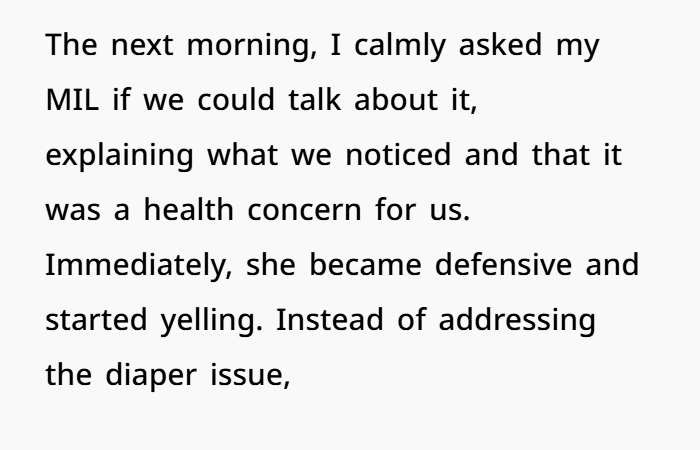
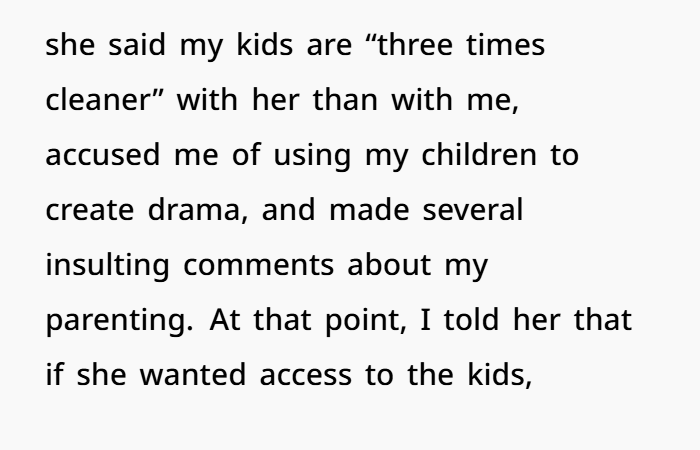
You raised it calmly the next morning. Instead of listening, your MIL yelled, got defensive, insulted your parenting, and dodged the real issue. You set a boundary: no respectful conversation, no returns. Your husband thinks you’re overreacting and wants you to just “move on” because she supposedly apologized privately.
You’re not comfortable resuming visits without clarity or accountability — and that’s valid.
A mom discovered her MIL had left her 3-year-old in a soaked diaper for over eight hours

Let’s talk about this in a way that feels honest, straight forward, and human. Because what you’re dealing with isn’t just a diaper incident. It’s about respect, communication breakdown, child safety, and clear boundaries with family — especially in‑laws.
1. This Wasn’t “Just a Mistake” — It Was a Health Concern
I want to start here. A wet diaper for eight hours isn’t something small. Medical and childcare professionals agree that leaving a child in a wet diaper for too long can lead to diaper rash, urinary tract infections, skin irritation, and discomfort. It’s not just a “messy moment.” It’s a health issue.
Anyone caring for a toddler is expected to handle basic needs like diaper changes. If you were dealing with a pet that was wet for hours — you’d be upset. With a child? It’s even more serious. You weren’t dramatic for noticing something was off. You were observant. And concerned.
That’s called being a responsible parent — not overreacting.
2. Boundary Setting Isn’t “High‑Conflict,” It’s Healthy
Now let’s talk about boundaries. You told your MIL you wanted a calm conversation before resuming visits. That’s not unreasonable. In healthy relationships — with anyone — we set expectations and talk things through. That’s how trust is rebuilt.
Your boundary isn’t “You can never see the kids again.” It’s, “I want respect, clarity, and an apology that acknowledges the issue and the way I was spoken to.”
That’s it.
Healthy boundaries:
- protect your children
- protect your mental wellbeing
- show others how you expect to be treated
It’s not dramatic. It’s self‑respect and emotional safety.
3. Respect in Communication Matters
When you brought it up calmly the next morning, you didn’t scream. You weren’t aggressive. You asked for a conversation. That’s emotional intelligence — not drama.
Your MIL’s reaction — yelling, deflecting, insulting your parenting — was defensive and dismissive. Instead of acknowledging a concern about a child’s care, she made it about your character. That’s not a misunderstanding. It’s a communication problem.
Good communication is:
- acknowledging feelings
- listening first
- responding without attack
Her reaction showed she wasn’t ready for that.
4. Apologizing to Your Husband Isn’t the Same as Apologizing to You
You mentioned your husband said she apologized privately to him. This is a common dynamic in families — especially where in‑laws feel more comfortable addressing the son rather than the daughter.
But here’s the key: that isn’t an apology to you. You confronted her. You were the one talked over and dismissed. A private apology to someone else doesn’t erase that.
An apology has three parts:
- Acknowledgment of what happened
- Recognition of why it was wrong
- Saying it directly to the person harmed
If she didn’t do all three with you — then what’s changed?
You deserve that closure before you let her back into your home.
5. “Keeping the Peace” Doesn’t Always Mean Peace
Your husband thinks refusing to return is unnecessary because it was “one time” and she’s cared for the kids before.
But here’s the truth: peace without respect isn’t peace. It’s compromise disguised as avoidance.
When someone:
- avoids accountability,
- refuses to listen,
- continues ignoring the person they hurt,
that isn’t peace. It’s tension waiting to happen again.
You’re not trying to punish anyone. You’re trying to reset how your family interacts with hers.
And that requires a real conversation — not pretending nothing happened.
6. Your Comfortable Home Should Be Just That — Comfortable
Your comfort matters. Your kids’ comfort matters. When you walk into a place, you should feel safe and secure that your values — especially about your children’s care — are respected.
The last thing you want is to endure:
- awkward interactions
- unresolved tension
- fear of another incident
Because that’s not what family visits should feel like.
Family gatherings should be warm, respectful, peaceful — not anxiety‑inducing or stressful.
7. Boundaries Help Prevent Future Problems
Think of this boundary as prevention, not punishment.
By saying:
“We won’t return until we’ve had a calm conversation about this.”
You’re protecting:
- your child’s physical wellbeing
- your emotional wellbeing
- your family’s long‑term relationship with her
This isn’t about controlling her. It’s about setting expectations so everyone can move forward in a way that feels safe and healthy.
8. You’re Allowed to Stand Firm Even If Others Don’t Understand
People will always have opinions. Some will say you’re dramatic. Others will think you’re too sensitive. That doesn’t mean your feelings aren’t valid.
Your discomfort doesn’t need approval. Your peace doesn’t need justification.
You are allowed to:
- prioritize your child’s well‑being
- expect respect
- take time before resuming visits
That’s not high conflict. That’s wise conflict management.
9. What a Real Conversation Should Look Like (When It Happens)
When you do get that calm conversation, these are the things that matter:
Acknowledge what happened.
Not “Well, it was snowing.” Not “Kids are fine.” But: “I messed up by not changing the diaper.”
Talk about how it made you feel.
Not to guilt trip — but to clear the air.
Agree on expectations going forward.
Next time, if you watch the kids, here’s how we handle diapers, snacks, nap time, communication, etc.
End with mutual respect.
Not grudges.
That’s it.
And that’s what you want. Not to punish her. But to ensure peace, clarity, and respect.
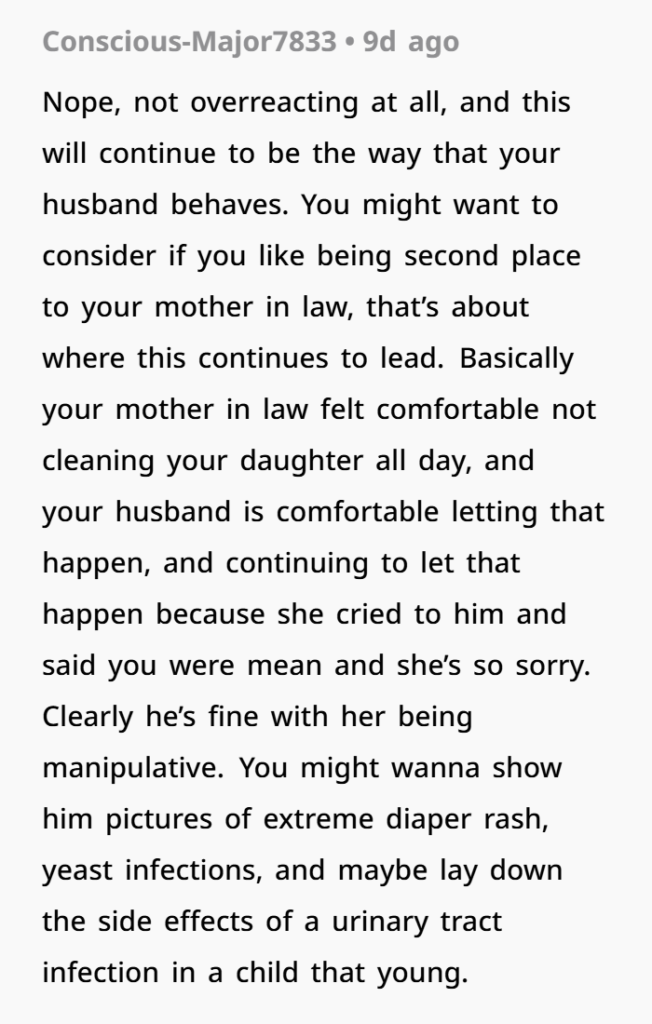
The internet unanimously agreed that this mother-in-law is the type that all bad stereotypes are probably based on






So many parents struggle with in‑laws. So many dismiss their own needs for “keeping the peace.” But peace isn’t real if you’re the only one giving in.
You’re doing something brave:
Putting your child’s wellbeing and your own emotional safety first.
Not ignoring an issue.
Not sweeping it under the rug.
That’s strength. That’s parenting with intention.