My Sister Refused to Attend My Wedding Because I Didn’t Invite Her Boyfriend—Now My Entire Family Says I Ruined Everything
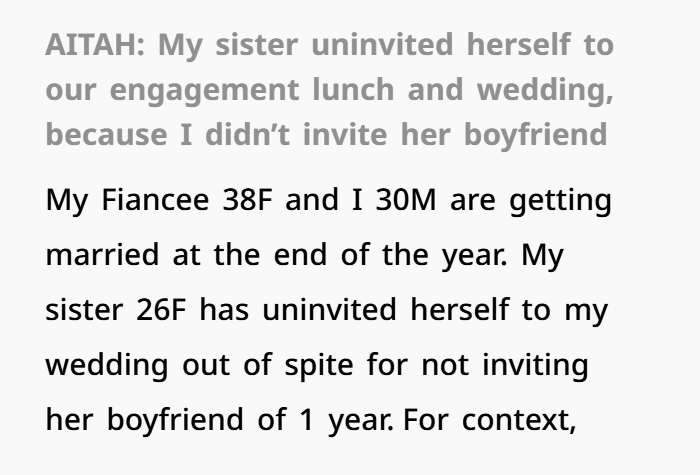
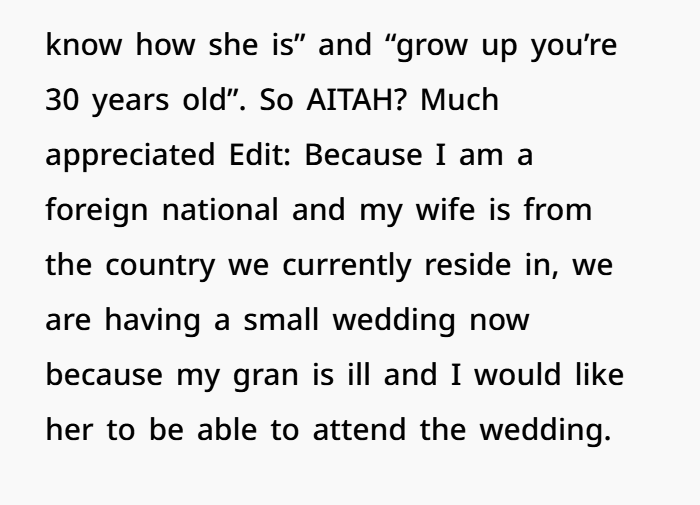
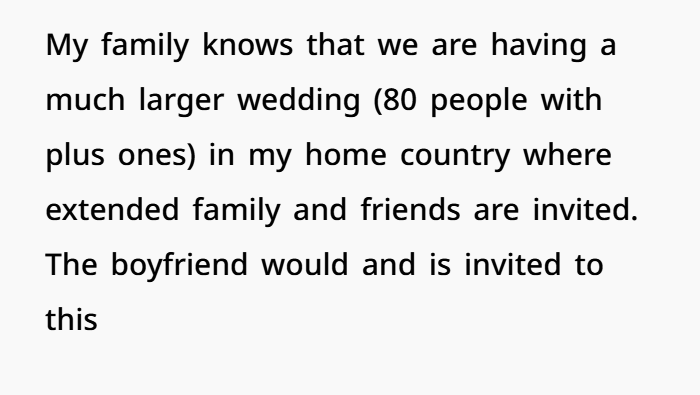
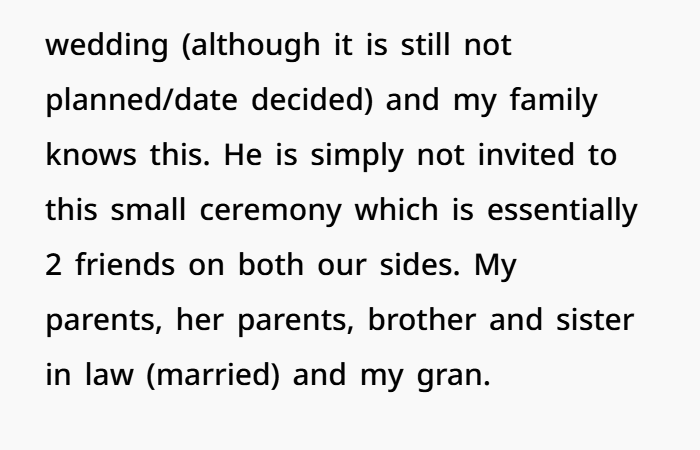
Planning a wedding should be a happy time, but one 30-year-old groom found himself dealing with family problems instead. He and his 38-year-old fiancée had planned a private wedding with just 16 guests. They wanted his grandmother, who was not feeling well, to be part of their special day. A small wedding also made the arrangements easier. They were not trying to leave anyone out, as they had already planned a larger wedding reception in his home country for more relatives and friends.
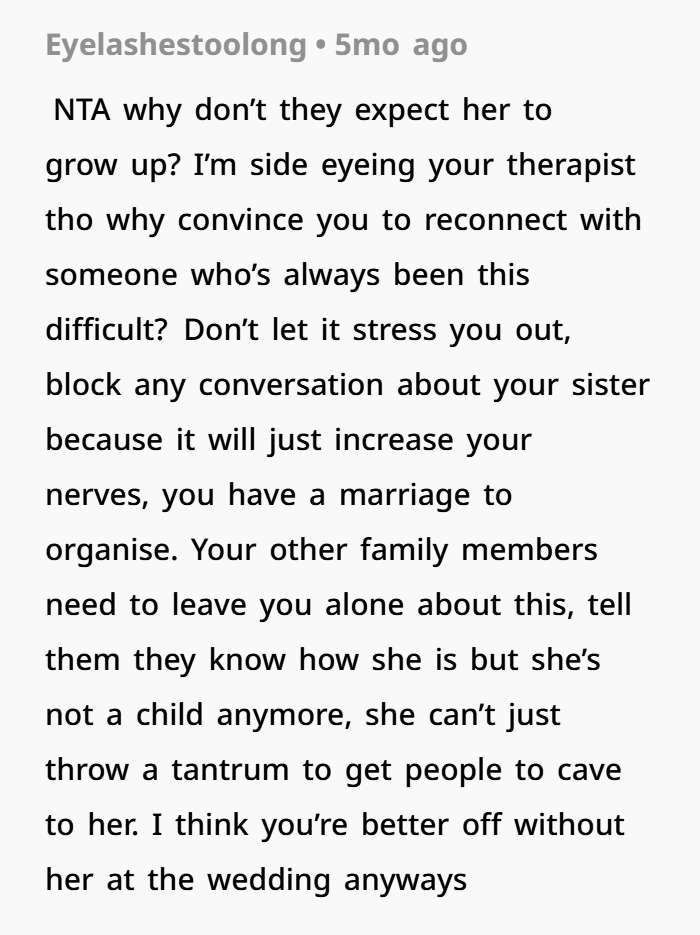
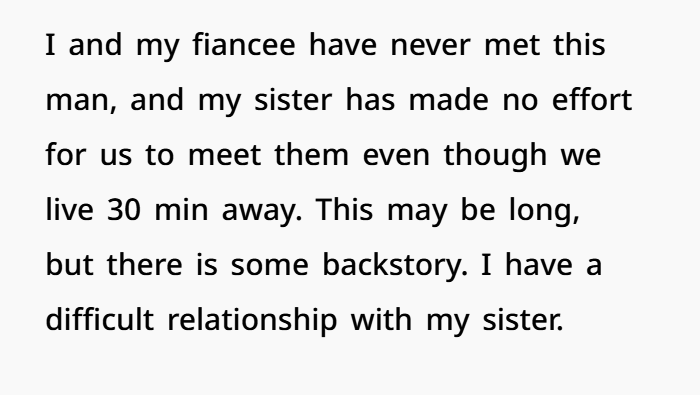
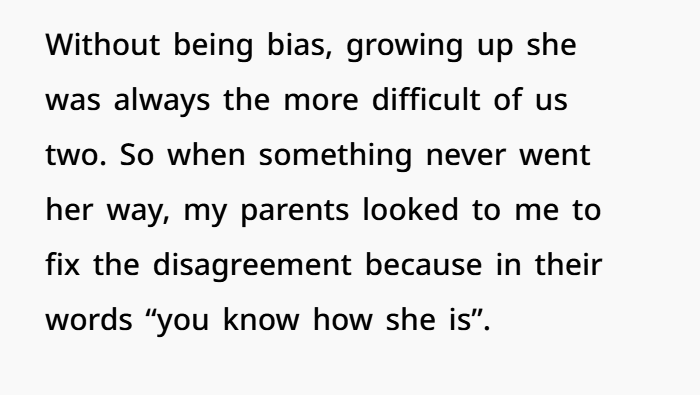
The groom shared that he had always had a difficult relationship with his younger sister. Whenever they argued, his parents expected him to fix the problem. He often felt that his feelings were being ignored. Their relationship became so difficult that they stopped talking for 18 months. Even after another disagreement, he tried to make things better by inviting her to his wedding. His fiancée and therapist had encouraged him to give their relationship another chance.
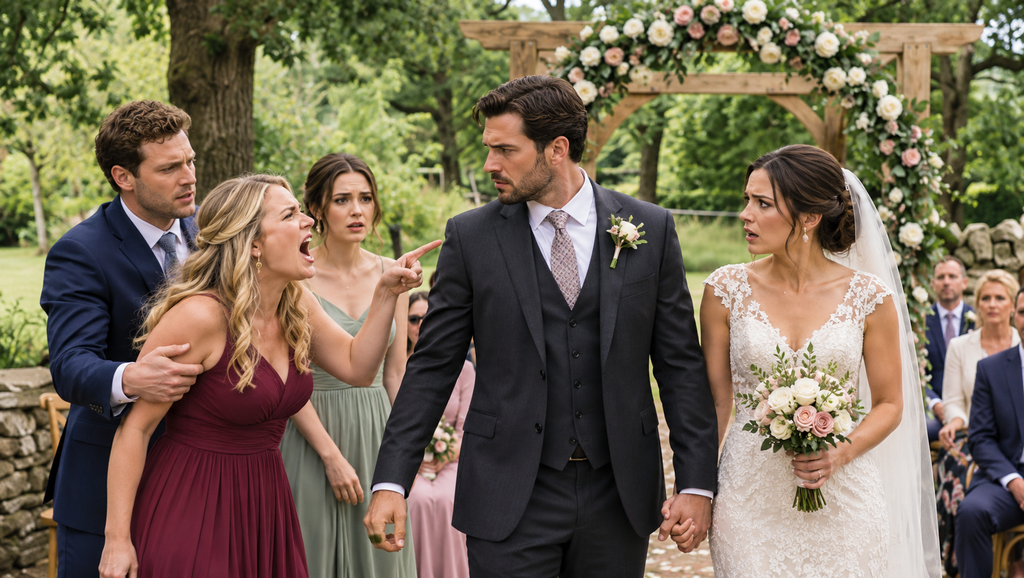
The problem started when his sister found out that her boyfriend was not on the wedding guest list. She had been with him for about a year, but the groom and his fiancée had never met him. Since the couple had chosen a very small wedding, they were not offering plus-one invitations to anyone. Some of the bride’s longtime friends were also unable to attend. The couple simply wanted to keep their wedding plans manageable and spend the day with their closest loved ones.
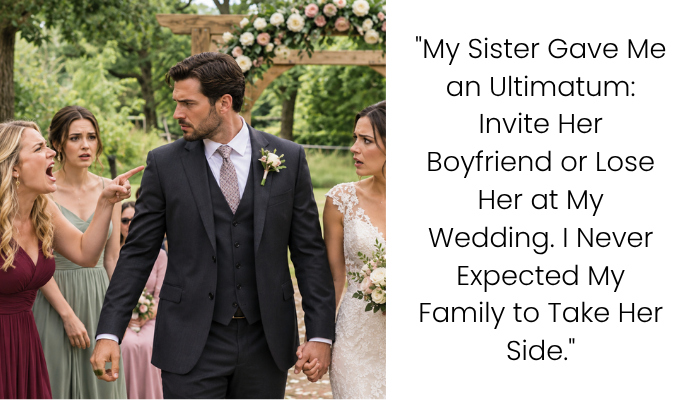
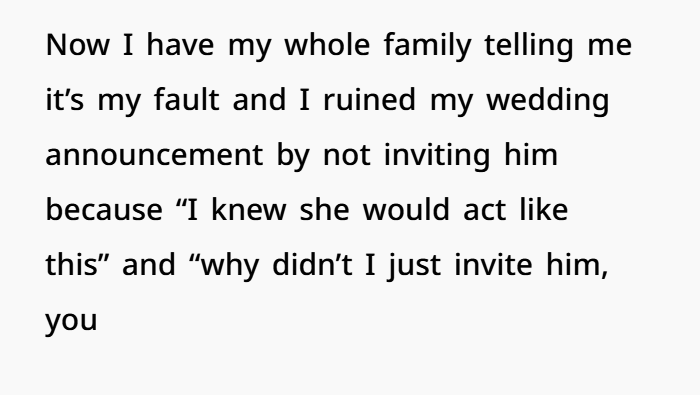
His sister did not agree with the decision. She canceled her plans to attend the engagement lunch and said she would skip the wedding too. Soon, their mother and other relatives became involved and blamed the groom for the situation. What bothered him most was that her boyfriend was already welcome at the bigger wedding celebration. He had tried to be fair while keeping his wedding arrangements simple. Now he was left wondering whether he should change his plans just to avoid another family argument.
Groom Says No to Sister’s Boyfriend at His Small Wedding, but His Family Wants Him to Change His Mind
A wedding is supposed to be a happy day. But sometimes, even a small decision about the guest list can lead to a big family disagreement.
That’s what happened to one groom who was planning a wedding with only 16 guests.
He wanted a quiet ceremony with the people closest to him. His sister, however, wanted to bring her boyfriend.
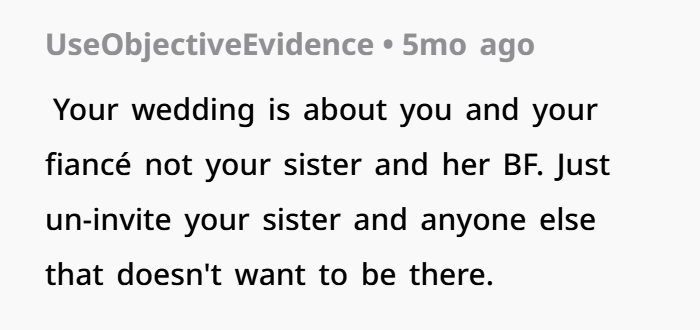
The groom said no because the couple had already decided not to allow plus-ones.
His sister wasn’t happy with the answer, and soon his parents got involved.
What started as a simple wedding invitation issue turned into a much bigger question about family expectations and personal boundaries.
Why the Groom Chose a Small Wedding
The groom had a very personal reason for keeping his wedding small.
His grandmother was ill, and he wanted her to see him get married.
Instead of waiting to plan a large wedding, he and his partner decided to have a small ceremony with just 16 people.
They also planned to have a bigger wedding celebration later, where more family members and friends could attend.
Small weddings can be a good option for couples who want a simple and personal day.
They can also help reduce wedding expenses.
With fewer guests, couples may spend less on wedding catering, venue rental, decorations, and other costs.
But for this groom, the main reason wasn’t the wedding budget.
He wanted to share an important moment with his grandmother.
That was what mattered most to him.
Why His Sister Wasn’t Happy With the Guest List
The couple had one clear rule for their small wedding.
No plus-ones.
Since there were only 16 places available, they wanted to invite people they personally knew.
The groom’s sister wanted her boyfriend to attend with her.
However, the couple had never met him.
The groom didn’t feel it was right to add another guest when the wedding was already so small.
He explained that her boyfriend would be welcome at the larger celebration in the future.
That seemed like a fair solution to him.
But his sister didn’t agree.
She wanted her boyfriend at the small ceremony, and she wasn’t willing to accept the decision easily.
His Parents Wanted Him to Make an Exception
Things became more difficult when the groom’s parents got involved.
Instead of accepting the guest list, they wanted him to change his mind.
Their explanation was something the groom had heard before.
“You know how she is.”
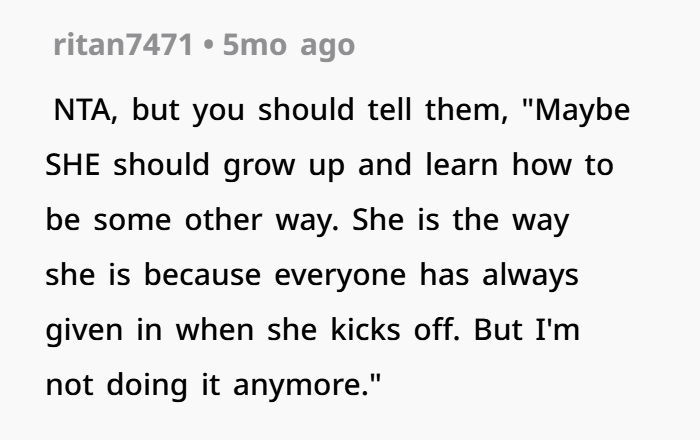
According to his account, his family often expected him to give in when his sister was upset.
He felt that he was usually the one asked to make things right.
This time, he didn’t want to do that.
It was his wedding, and he believed he should be able to make decisions with his partner.
He wasn’t trying to upset his sister.
He simply wanted to keep the plans they had already made.
Why Small Wedding Guest Lists Can Be Difficult
Planning a wedding guest list can be one of the hardest parts of wedding planning.
Even when couples have a clear idea of what they want, family members may have different expectations.
Some relatives may want to invite more people.
Others may expect their partners to be included.
But every additional guest can affect the wedding budget and available space.
For example, wedding catering costs are often based on the number of guests.
Wedding venues may also have limits on how many people they can hold.
For couples planning a small wedding, these details matter.
A ceremony with 16 guests doesn’t leave much room for extra invitations.
That’s why setting guest list rules early can make wedding planning easier.
In this case, the groom said the same no-plus-one rule applied to everyone.
His sister wasn’t being treated differently.
Was His Sister Wrong to Feel Disappointed?
It’s easy to understand why his sister might have felt upset.
Many people enjoy attending weddings with their partners.
She may have wanted her boyfriend to be part of an important family memory.
There’s nothing wrong with feeling disappointed.
But there’s a difference between being disappointed and expecting someone to change their plans.
The sister has the right to decide whether she wants to attend the wedding.
If she doesn’t want to go without her boyfriend, that is her choice.
At the same time, the groom and his partner have the right to decide who attends their ceremony.
Neither side has to agree with the other.
They just need to respect each other’s decisions.
Why His Grandmother Made the Wedding Special
One important detail in this story is the groom’s grandmother.
He wanted her to see him get married while she still had the chance.
That was a big reason behind the small ceremony.
The couple wasn’t trying to leave people out of their lives.
They were planning a special family moment that could happen sooner rather than later.
A larger wedding celebration was still part of their plans.
That meant the sister’s boyfriend could celebrate with them at another event.
The groom wasn’t saying that her boyfriend could never attend a family celebration.
He was only saying that this particular ceremony would remain small.
Why Family Boundaries Are Important
Family relationships can be complicated, especially during major life events.
Weddings often bring different opinions about money, traditions, guest lists, and planning decisions.
Parents may have one idea of the perfect wedding.
Siblings may have another.
But the couple getting married should have the final say.
Having boundaries doesn’t mean ignoring other people’s feelings.
It means being clear about what you have decided.
The groom could explain that he understands his sister’s disappointment but still wants to keep the original guest list.
He could also remind her that her boyfriend is welcome at the future celebration.
That would allow him to be kind without changing his plans.
And sometimes, that’s the best way to handle a family disagreement.
Would Inviting the Boyfriend Solve the Problem?
At first, inviting one more person might seem like the easiest solution.
The sister would be happy.
The parents might stop asking questions.
And the disagreement could end.
But the groom was worried about something bigger.
He felt that his family often expected him to give in whenever his sister was unhappy.
If he changed his decision this time, he might feel that the same thing would happen again.
Of course, families should be willing to compromise.
Helping each other and being flexible are important parts of healthy relationships.
But compromise should be a choice.
It shouldn’t happen only because someone feels pressured to avoid an argument.
What Other Couples Can Learn From This Story
This situation shows why clear wedding planning decisions are so important.
Before sending wedding invitations, couples should decide how many people they can invite.
They should also talk about plus-ones and whether partners will be included.
A realistic wedding budget can help with these decisions.
Knowing the costs of wedding venues, catering services, and other wedding expenses makes it easier to set a guest limit.
It’s also helpful to explain invitation rules clearly.
That way, family members know what to expect.
Still, even with careful planning, not everyone will be happy.
And that’s okay.
A wedding doesn’t have to meet every family member’s expectations to be meaningful.
Final Verdict: Was the Groom Wrong?
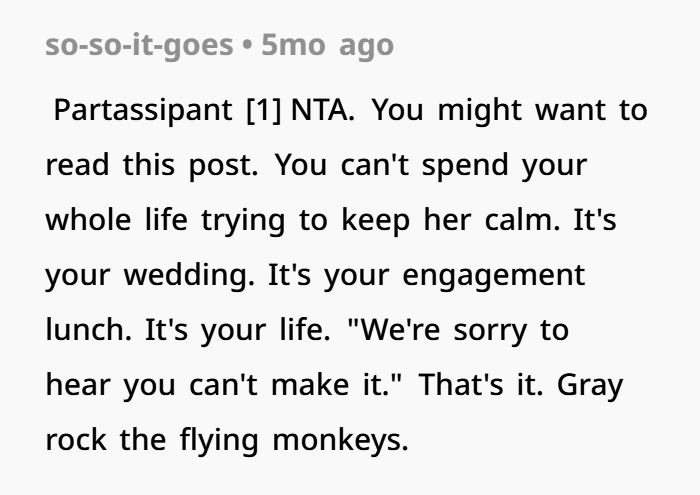
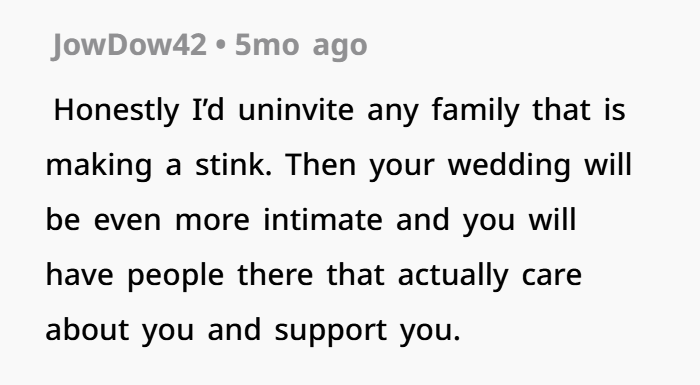
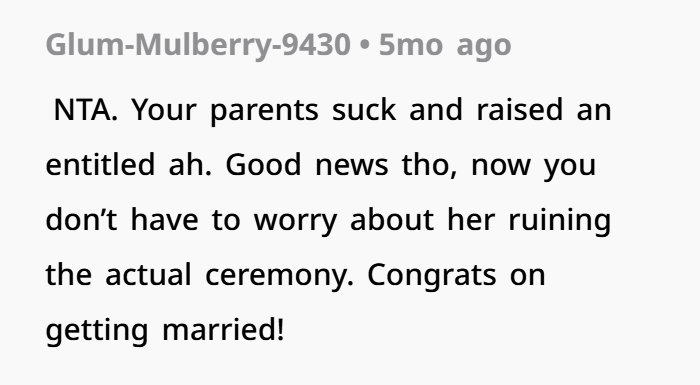
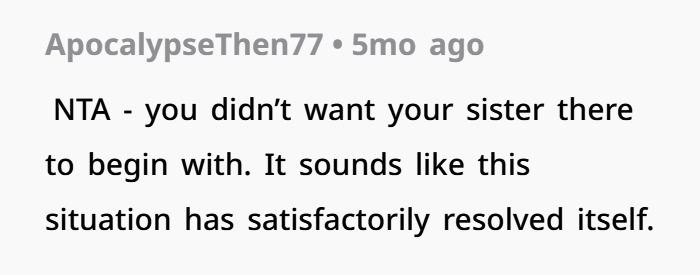
Based on the groom’s account, NTA (Not the A-Hole).
He had a clear reason for wanting a small wedding.
His grandmother was ill, and he wanted her to be there for an important moment.
The couple had limited the ceremony to 16 guests and decided not to allow plus-ones.
They also planned a larger celebration where the sister’s boyfriend would be welcome.
His sister is allowed to feel disappointed.
She’s also allowed to decide not to attend.
But that doesn’t mean the groom has to change his wedding guest list.
The bigger issue is the family’s expectation that he should always be the one to compromise.
Sometimes, keeping a good family relationship means accepting that people won’t always agree.
And sometimes, saying no is simply part of making your own decisions.
What do you think? Should the groom make room for his sister’s boyfriend, or should his family respect his small wedding plans?
See The Comments Below