Twin Brothers Swapped Places for a Prank Then One Wife Walked Into an Awkward Situation
A prank between identical twin brothers seemed funny at first. But it soon turned into an uncomfortable situation for both couples.
A 27-year-old woman shared that her 29-year-old husband and his twin brother are extremely close. The families live only five minutes apart, so they see each other often. Their wives are friends as well, and spending time together has been a normal part of their family life.
One Sunday, the brothers decided to have some fun. They swapped clothes and went to each other’s homes. They also placed a $100 bet to see which brother could fool the other wife for longer.
Neither brother expected their little joke to create such an awkward marriage and relationship problem.
The challenge was simple: see which twin could fool the other wife for the longest. Unfortunately, nobody seemed to think about what could happen if one of the wives truly believed the wrong twin was her husband. That is exactly what happened.

Two Sundays ago, the twin brothers put their plan into action.
At one house, the wife walked into the kitchen and saw the man she believed was her husband standing with his back to her while making lunch.
She had no reason to suspect anything was wrong.
Thinking she was alone with her husband in her own home, she went into the bedroom, removed her clothes, and returned to the kitchen. She then made a very suggestive comment about being his lunch instead.
That was when everything fell apart.
The man turned around, saw her, and immediately ran from the house in horror.
She quickly realized something strange was happening.
The person standing in her kitchen was not actually her husband. It was his identical twin brother.
What started as a $100 prank had suddenly created a serious relationship boundaries problem.
Who Was Actually Responsible for the Awkward Situation?
The wife has made her position very clear.
She does not believe she should feel ashamed or embarrassed about what happened. From her point of view, she believed she was speaking privately to her husband inside her own home.
The unexpected situation happened because the brothers intentionally switched identities without telling their wives.
That distinction matters when looking at healthy relationship boundaries.
According to Love Is Respect’s guidance on relationship boundaries, personal boundaries help people decide what they are comfortable sharing and how they expect others to treat them. Those boundaries can include physical and emotional privacy.
There is also an issue of informed choice.
The wife behaved intimately because she believed the person in front of her was her husband. She had not agreed to participate in the twins’ identity-switching prank.
Guidance from Love Is Respect on consent describes consent as an ongoing mutual agreement about what people are comfortable experiencing. Its guidance also stresses that people should not simply make assumptions about another person’s comfort.
Of course, that does not mean the brothers expected something like this to happen. Based on the story, their plan appears to have been a joke and a bet between twins.
But jokes can still have unexpected consequences.
And this one certainly did.
Sandra’s Reaction Made Things More Complicated
The twin brother’s wife, Sandra, was understandably affected by what happened too.
She became upset that her husband had accidentally seen his brother’s wife naked. Since then, she has acted cold toward both the woman and her husband.
The woman also feels Sandra may be uncomfortable with her refusal to feel ashamed about what happened.
That creates an interesting difference between responsibility and feelings.
Sandra can feel uncomfortable, embarrassed, jealous, or upset without those feelings automatically making someone else responsible for what happened.
At the same time, the other wife does not have to accept blame simply to make Sandra feel better.
Relationship boundaries are personal. Two people can experience the same event very differently. Love Is Respect explains that sometimes people’s boundaries or comfort levels simply do not match, and that does not necessarily mean one person’s feelings are more valid than another’s.
The bigger question is what everyone does with those feelings now.
Should She Reach Out to Sandra?
This may be where the situation can finally start getting better.
Reaching out does not have to mean saying, “I was wrong.”
There is a big difference between accepting blame and recognizing that another person feels uncomfortable.
The woman clearly misses spending time with Sandra and the other couple. If keeping that friendship matters to her, a calm conversation could give both women a chance to explain how the situation felt from their side.
The American Psychological Association’s advice on healthy relationships says that avoiding difficult subjects can allow resentment to grow. It recommends constructive communication, including listening to another person’s point of view and trying to understand their feelings.
That seems especially relevant here.
The conversation does not need to decide who should be embarrassed. It could simply acknowledge that the prank put everyone in an uncomfortable position.
Sandra could explain why the incident bothered her so much.
The other wife could explain that she never intended for Sandra’s husband to see her naked and that she was acting normally based on what she believed at the time.
Those two ideas can exist together.
The Husbands May Need to Take the Lead Too
There is another part of this story that should not disappear.
The twin brothers created the prank.
Their wives did not ask to participate in it, and neither woman knew she was interacting with the wrong husband.
Because of that, repairing the awkwardness should not become a problem that only the wives are expected to solve.
The brothers may need to openly acknowledge that their joke created an uncomfortable situation for everyone.
That could also help take some pressure off Sandra and her sister-in-law.
Healthy communication often works better when people talk directly about what upset them instead of withdrawing or allowing resentment to build. The APA notes that constructive communication and listening are healthier ways of handling relationship conflict than withdrawal or personal attacks.
There is also an obvious lesson for the twins.
Identity-switching pranks may sound funny when identical brothers are joking around together. But once spouses and private relationships become part of the trick, the situation can cross boundaries nobody expected to test.
Where Things Stand Now
Nobody planned for the prank to end this way.
The husband and his twin are deeply embarrassed. Sandra is upset and has become distant. The other wife refuses to carry shame for something she did while believing she was privately interacting with her own husband.
Now the four of them have a choice about what happens next.
They can allow one extremely awkward Sunday to damage a close friendship, or they can talk about what happened, set clearer marriage boundaries, and decide what kinds of pranks are off-limits in the future.
Reaching out would not require the wife to apologize for being naked in her own home or pretend she intentionally caused the situation.
It could simply mean saying that she misses the friendship, understands why the experience felt uncomfortable, and does not want one prank gone wrong to leave lasting tension between two families that were once extremely close.
Sometimes repairing a relationship is not about deciding who deserves the blame.
It is about making sure the same boundary is never crossed again.
See the comments to know what people said

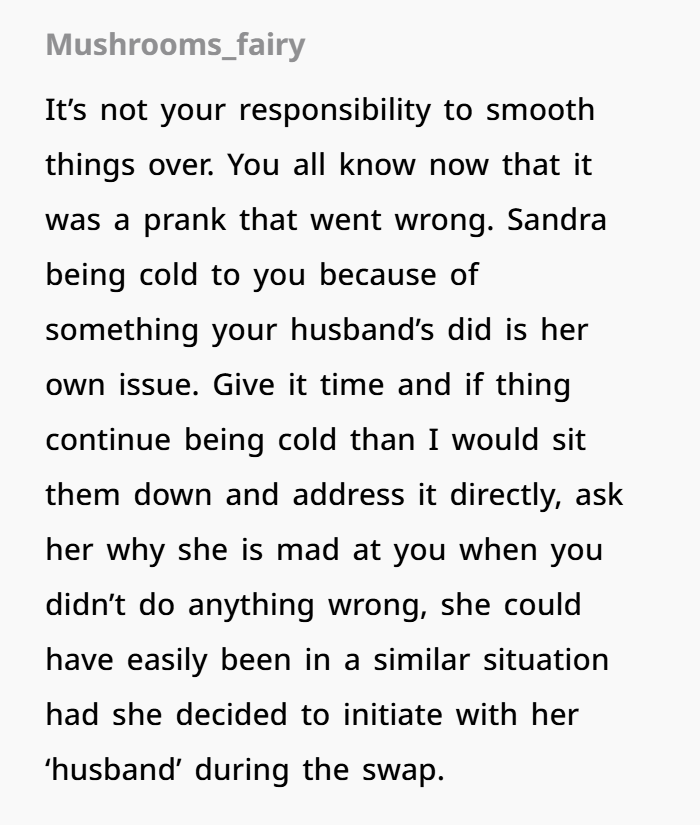
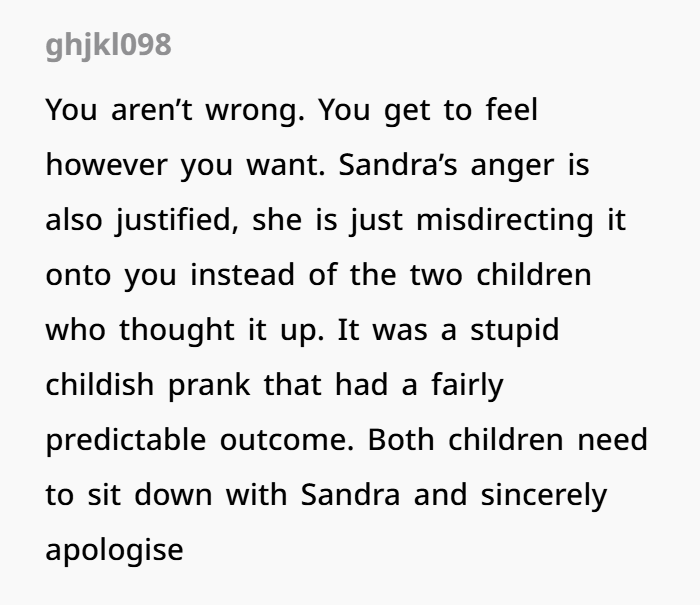
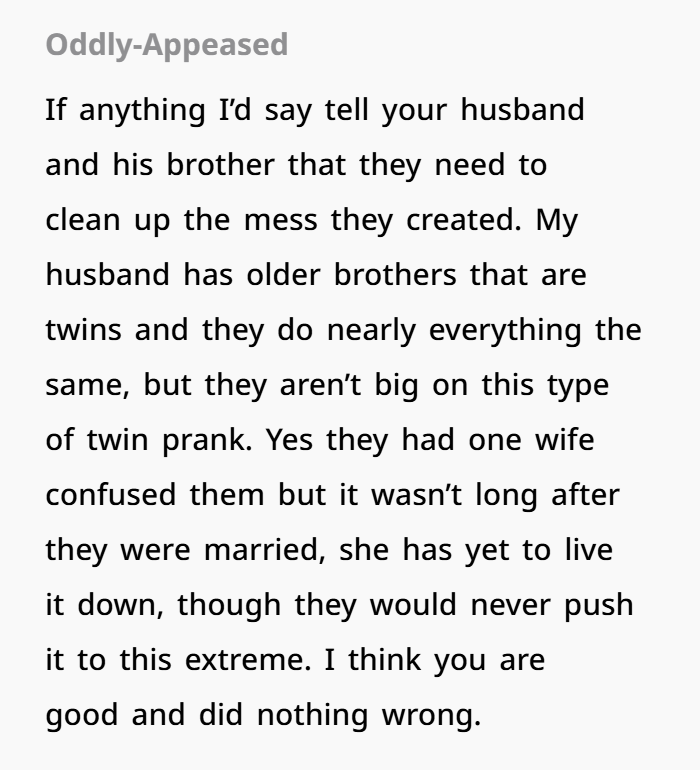
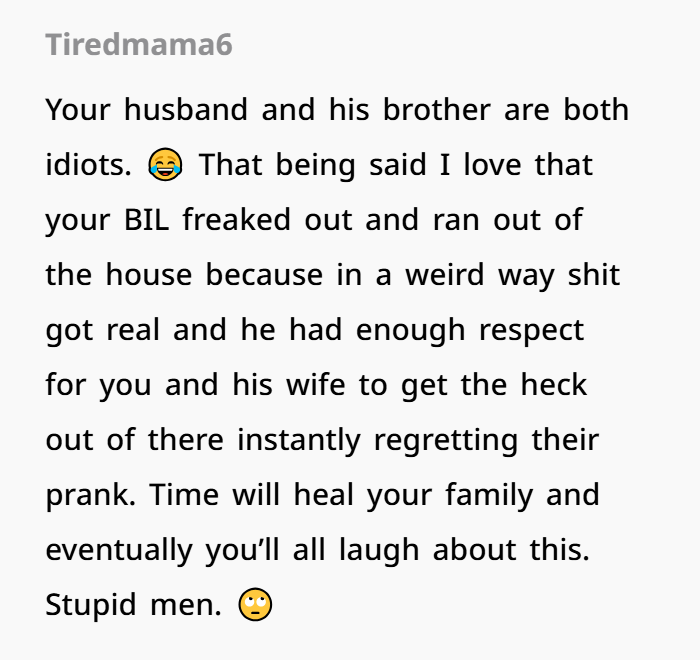
In the end, this was a prank that went much further than anyone expected.
The wife believed she was alone with her husband, so her actions made sense based on what she knew at the time. The awkward moment happened because the twins switched places without telling their wives. Nobody planned for things to become this uncomfortable, but sadly, that does not make the tension disappear.
Sandra is allowed to feel upset or weird about what happened. At the same time, those feelings do not mean the other wife has to carry shame for an honest mistake.
A calm conversation may be the best way forward. Reaching out does not mean accepting blame. It can simply show that the friendship still matters and that nobody wants one twin prank gone wrong to damage two close relationships.
The brothers also have a role to play. Since they started the prank, they should help repair the tension it caused and respect clearer marriage boundaries in the future.
Sometimes an embarrassing moment stays embarrassing. But with honest communication, understanding, and better boundaries, it does not have to become the thing that ends a friendship.